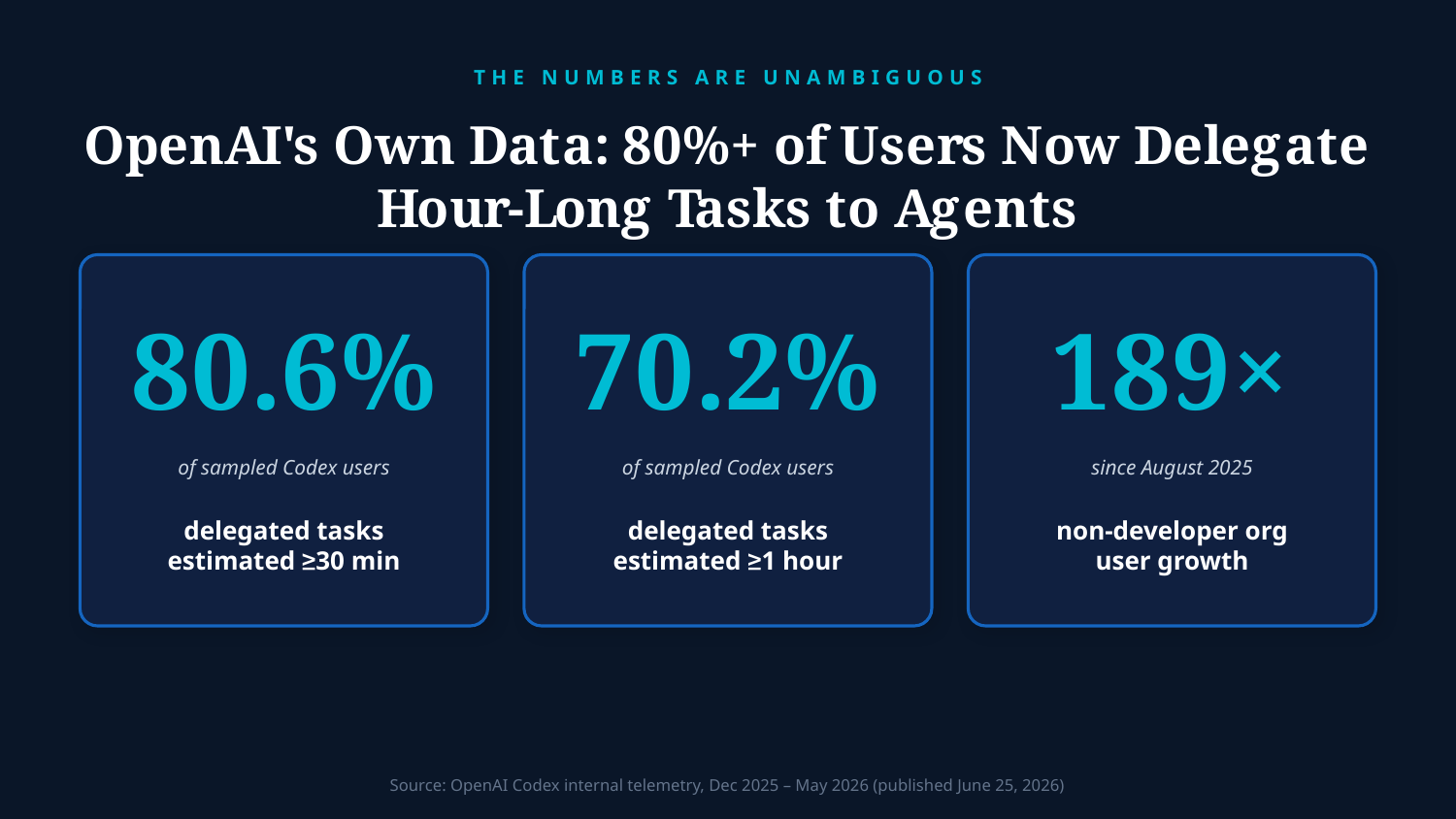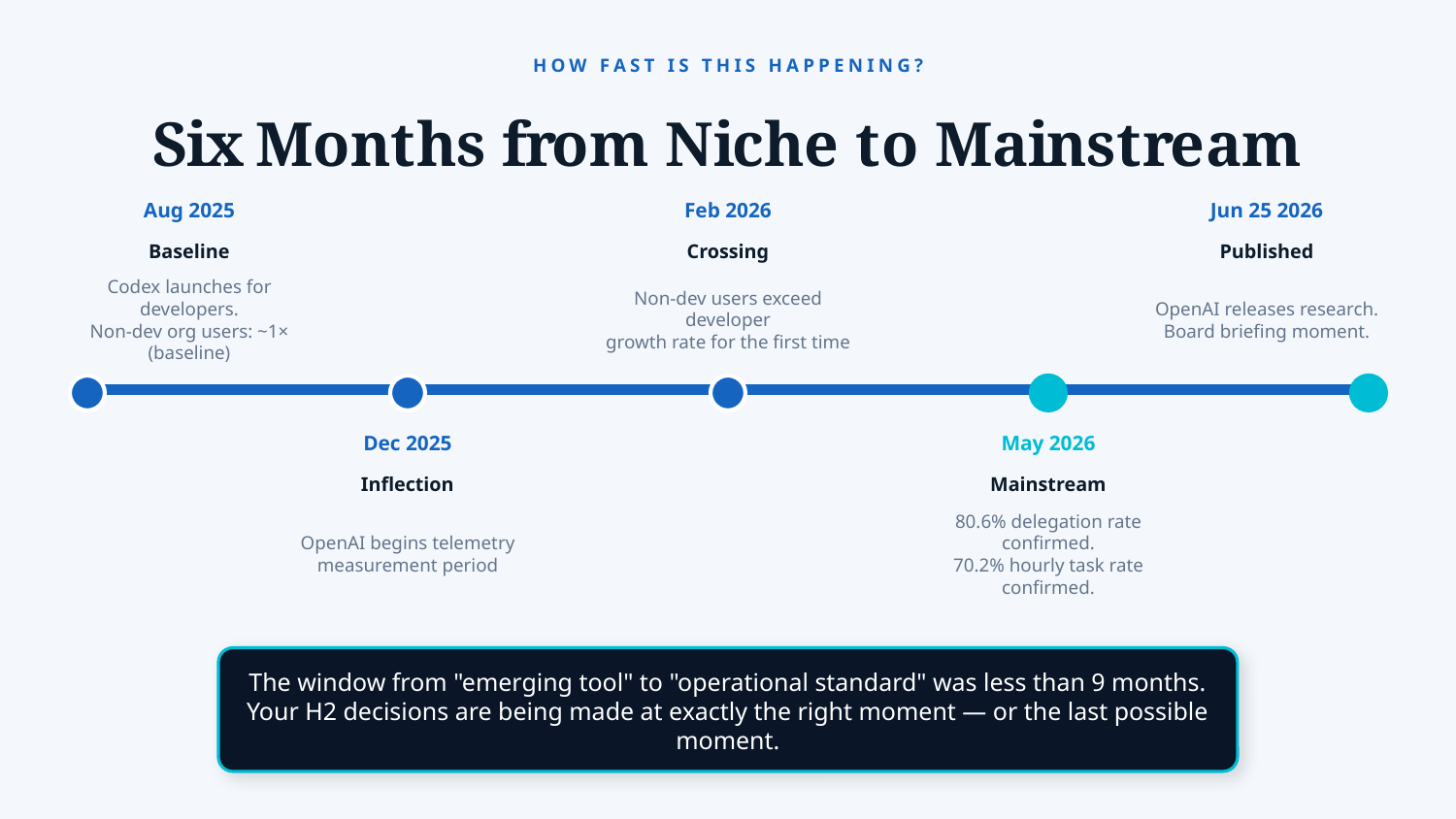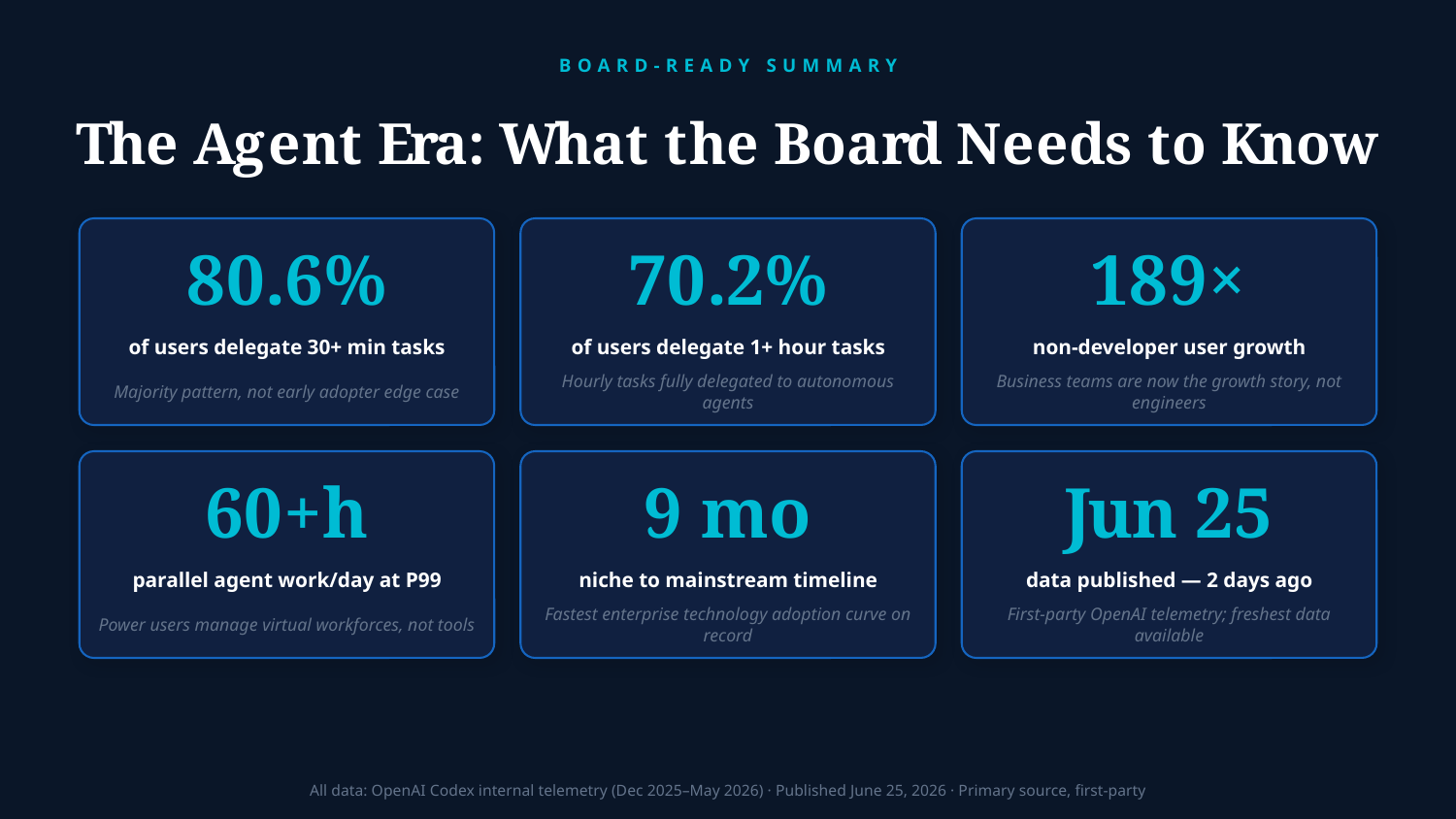
Between December 2025 and May 2026, first-party usage data from one of the largest AI labs recorded a clear behavioral shift: 80.6% of sampled users of its agentic coding tool made at least one request estimated to take a person more than 30 minutes, 70.2% delegated a task estimated to exceed an hour, and 25.6% handed off work estimated to run past eight hours. Published on June 25, 2026, the research is one of the first large-scale internal measurements of what people now call agentic delegation: the move from short chatbot exchanges to assigning software agents long, multi-step jobs they carry out on their own.
What agentic delegation actually means
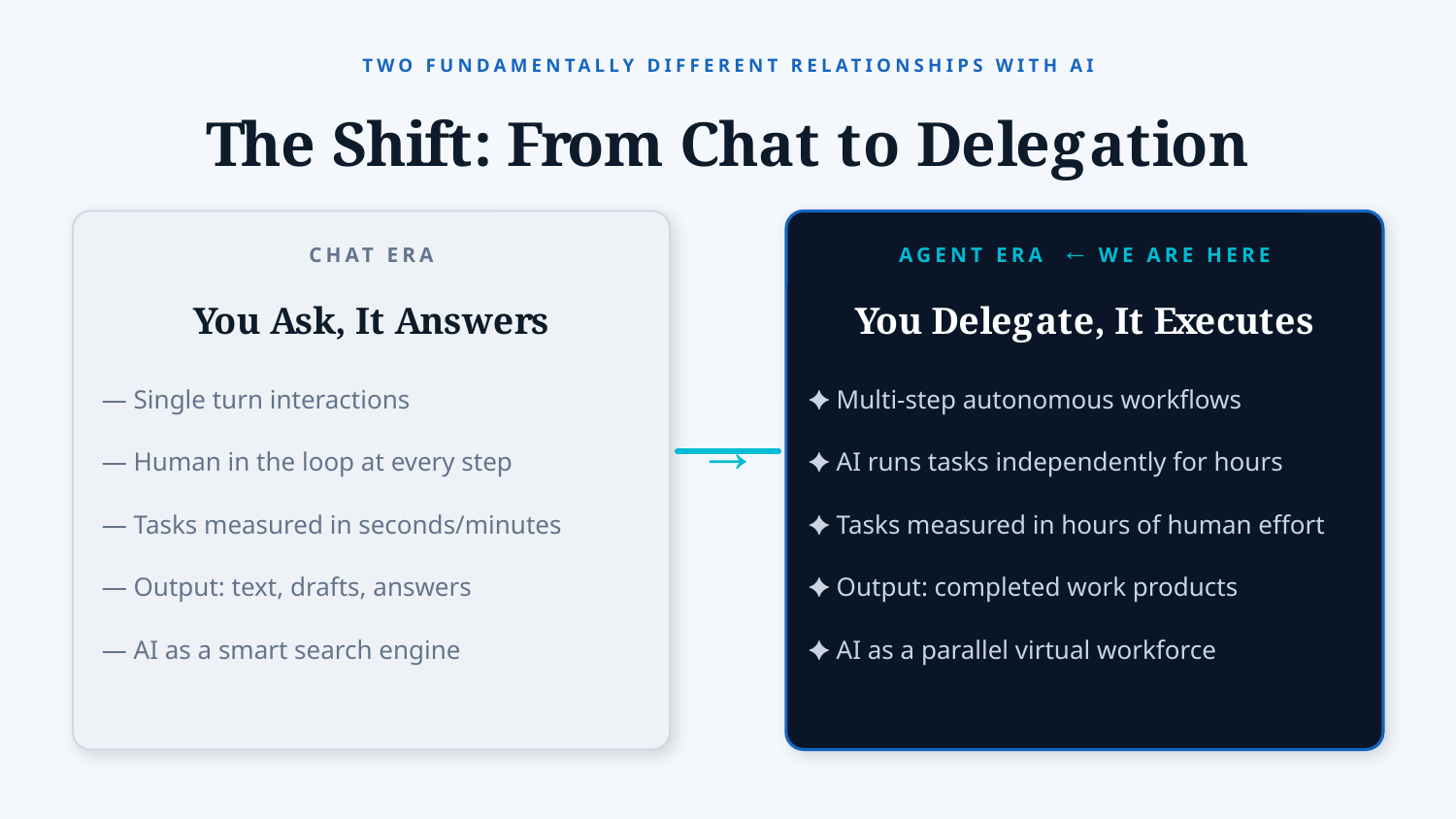
A chatbot interaction is usually short and self-contained: you ask, it answers, and you stay in the loop for every turn. An agent works differently. It can run for minutes or hours, calling tools, reading and writing files, interacting with live environments, and iterating toward a result before it reports back. That changes the basic unit of knowledge work from a single question-and-answer to a delegated task with a long time horizon. The useful metric stops being “how many prompts did you send” and becomes “how long a job can you hand off and trust to come back finished.”
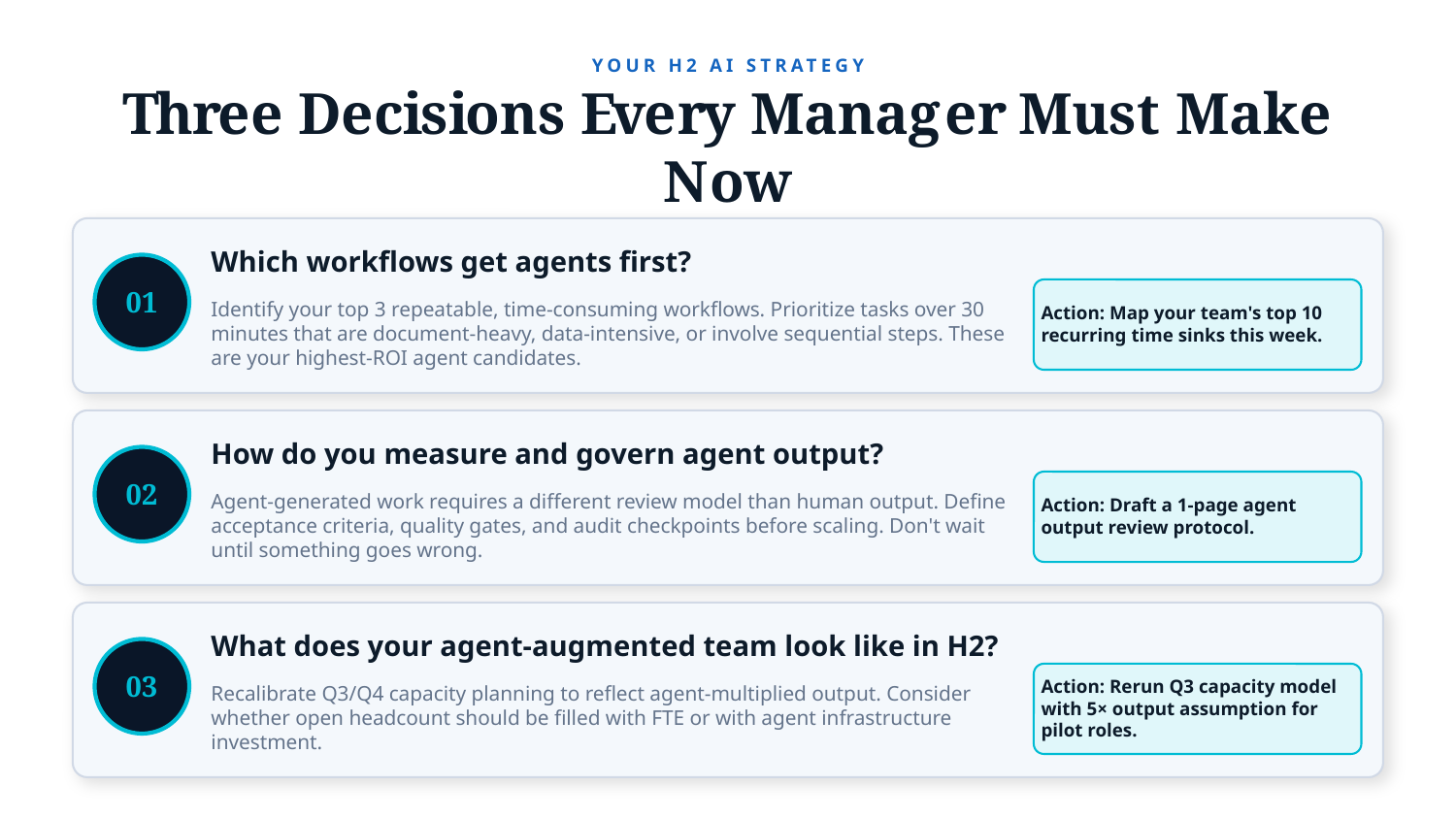
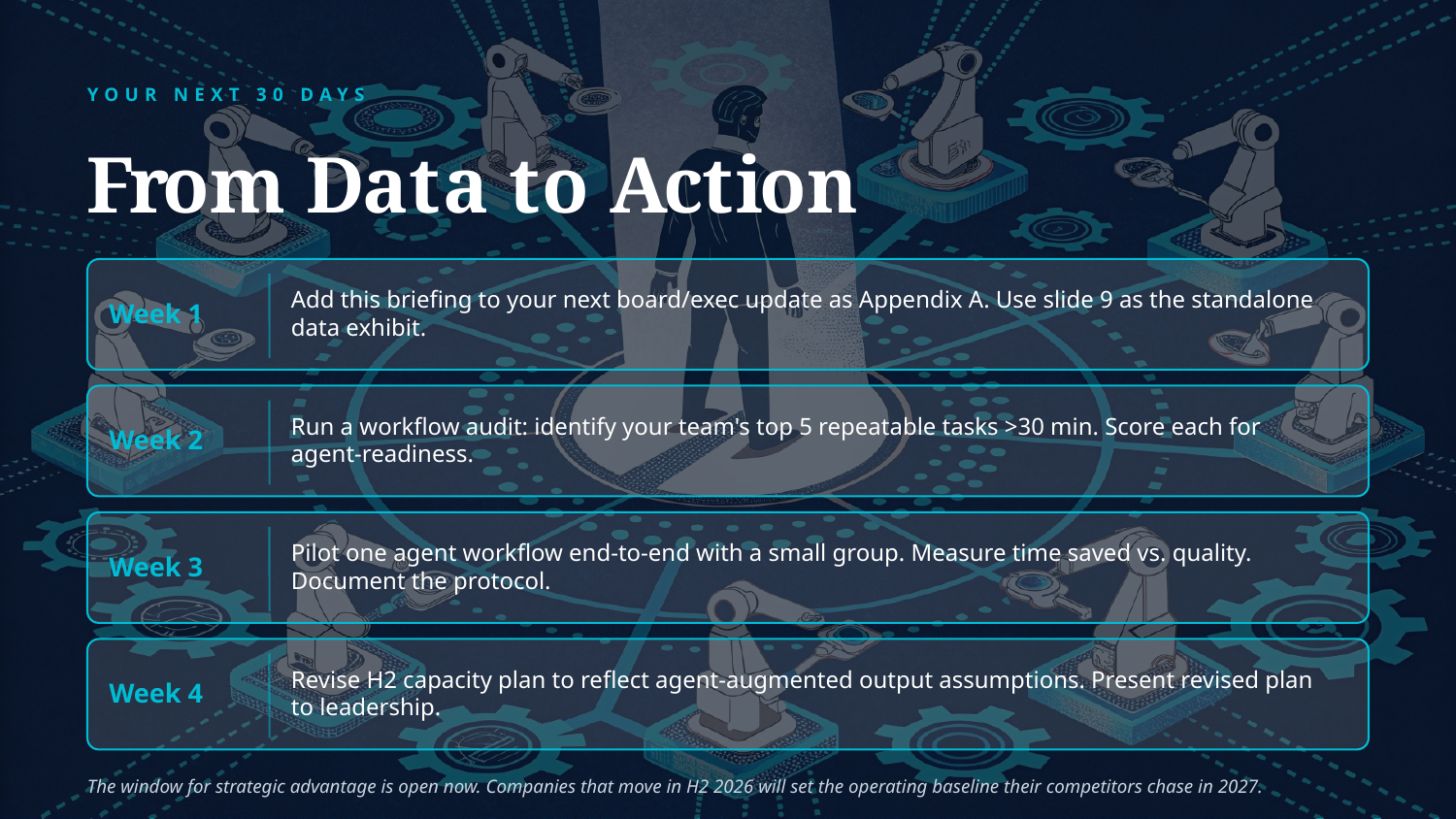
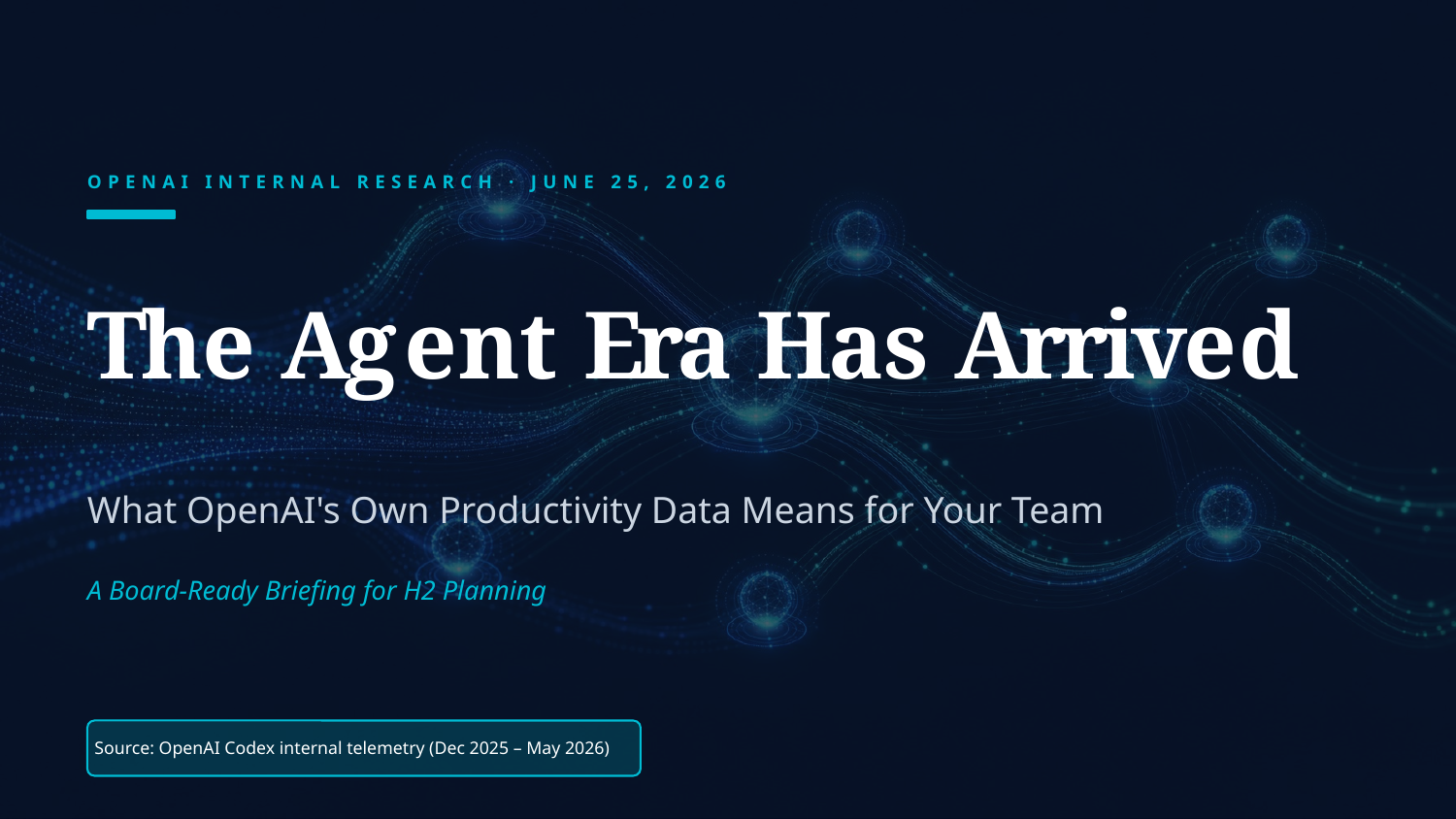
The 10-slide example deck embedded below this post turns these findings into a ready-to-use briefing, generated by AskDeck from a short brief. The substance, though, is in the data itself.
The delegation curve: 30-minute, hour, and eight-hour tasks
By May 2026, nearly a quarter of all agent requests in the sample were for tasks estimated to take a person over an hour. The share of users crossing each time threshold climbed steadily from December 2025: past 30 minutes (80.6%), past one hour (70.2%), and past eight hours (25.6%). The eight-hour bucket grew fastest, from a very low base, a sign that people are testing how much they can offload as the tools improve.
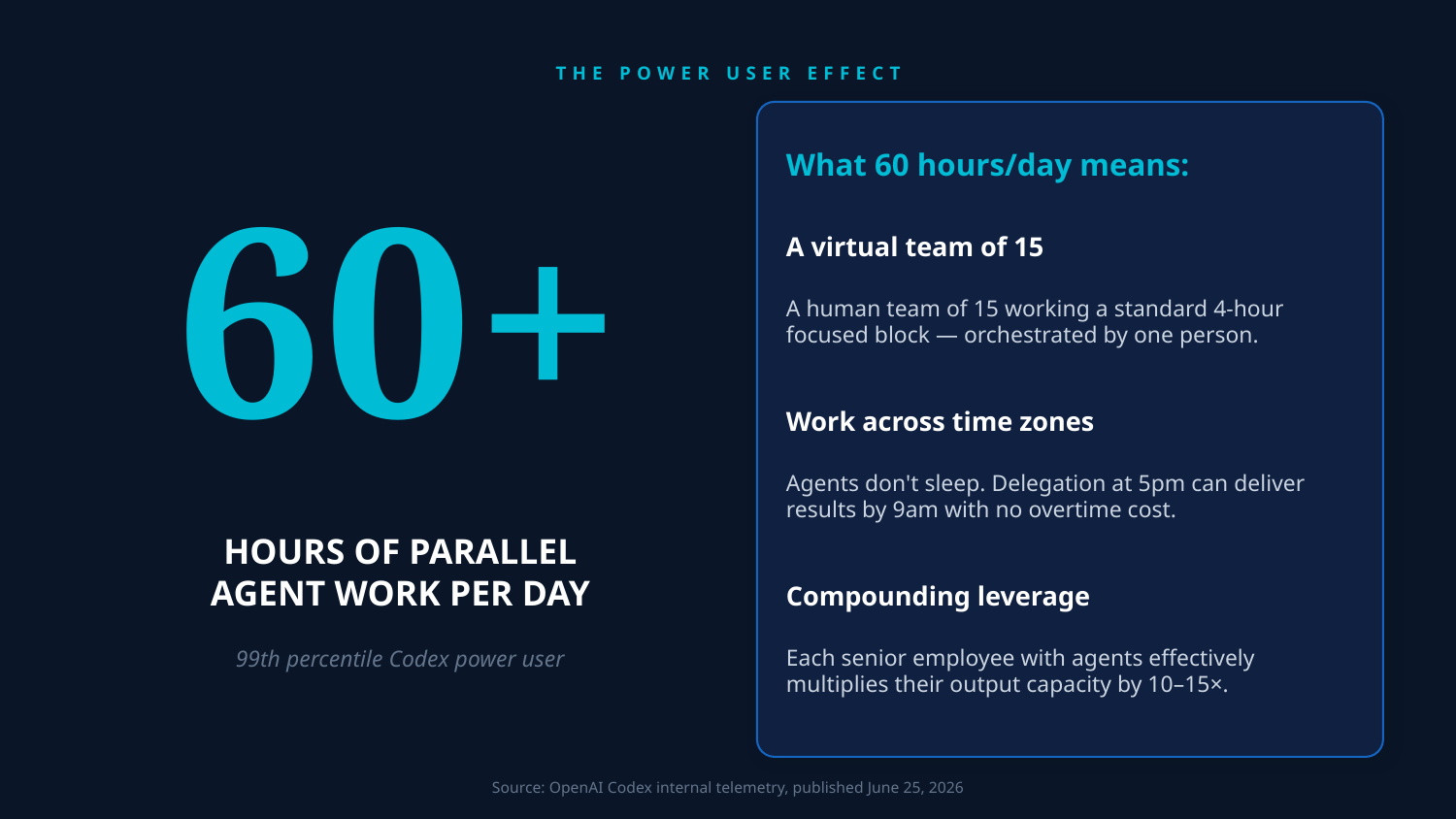
Raw runtime tells the same story. Among the heaviest daily users, those at the 99th percentile regularly generated more than 60 hours of agent work per day by June 2026, spread across several agents running in parallel. Instead of waiting for one answer at a time, power users now orchestrate multiple agents at once, closer to managing a team than querying a search box.
Who is adopting agents fastest
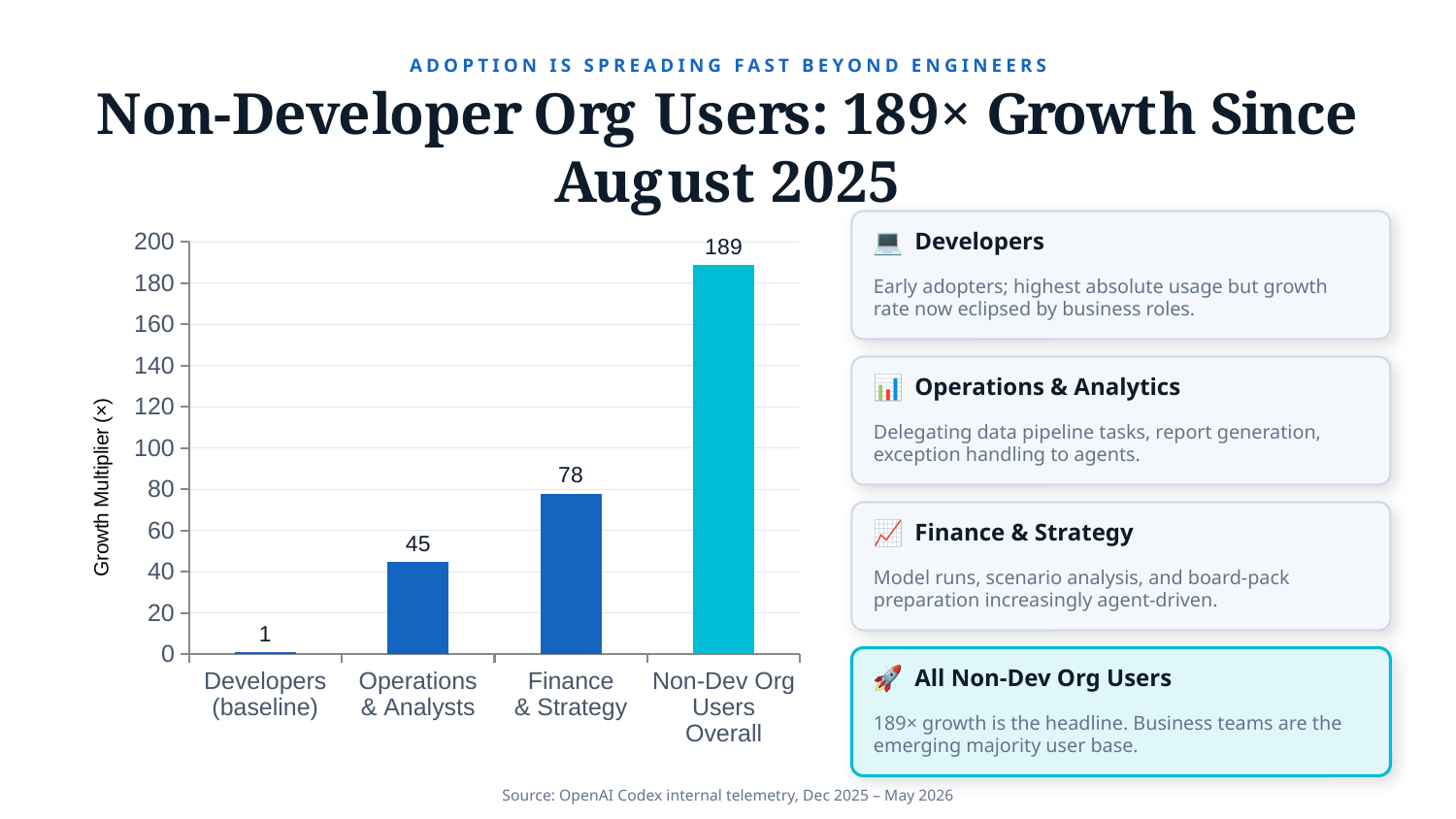
The tool started as a coding assistant, so engineers adopted it first and gradually. The surprise is who followed. Since August 2025, non-developer adoption outpaced developers everywhere the lab measured: individual non-developer users rose 137-fold, organizational non-developer users 189-fold, and non-developers inside the company 12-fold. Legal, finance, and recruiting teams crossed over to using agents as their primary AI tool around April 2026, later than engineering but far faster once they started.
Depth grew alongside reach. Measured by median output, Research usage in June 2026 was 56 times its November 2025 level, Customer Support 32 times, Engineering 27 times, and Legal 13 times.
Work is crossing old job boundaries
A heat map in the study compared people’s roles to the kind of work their agents actually produced. Engineers’ agent work was 72% coding, as expected. But finance and business-operations staff spent 31% of their agent output on engineering or coding and 34% on general knowledge work, while product, marketing, and operations teams ran 25% coding and 51% knowledge work. Agents lower the cost of stepping across a task boundary, letting a non-engineer take on automation, data transformation, or debugging that once required a specialist.
How to read these numbers
This is telemetry from users of a single company’s frontier tool, so it describes early adopters at the leading edge, not a whole economy. Task-length figures come from a model reading transcripts and estimating how long each job would take a person, so the thresholds are directional rather than exact. The individual-user statistics rest on a random 0.1% sample. Read the study as a leading indicator of where frontier adoption is heading, not a settled measure of workforce productivity.
Is an “hour-plus task” the same as replacing an hour of work?
No. The label estimates how long the same task would take a person, not proven output quality. A delegated job still needs a clear spec and human review; the metric captures ambition and trust, not guaranteed results.
What is the difference between a chatbot and an agent?
A chatbot responds turn by turn with you in the loop. An agent takes an objective, plans steps, uses tools, and works independently for a stretch before returning a result you check.
What should teams watch next?
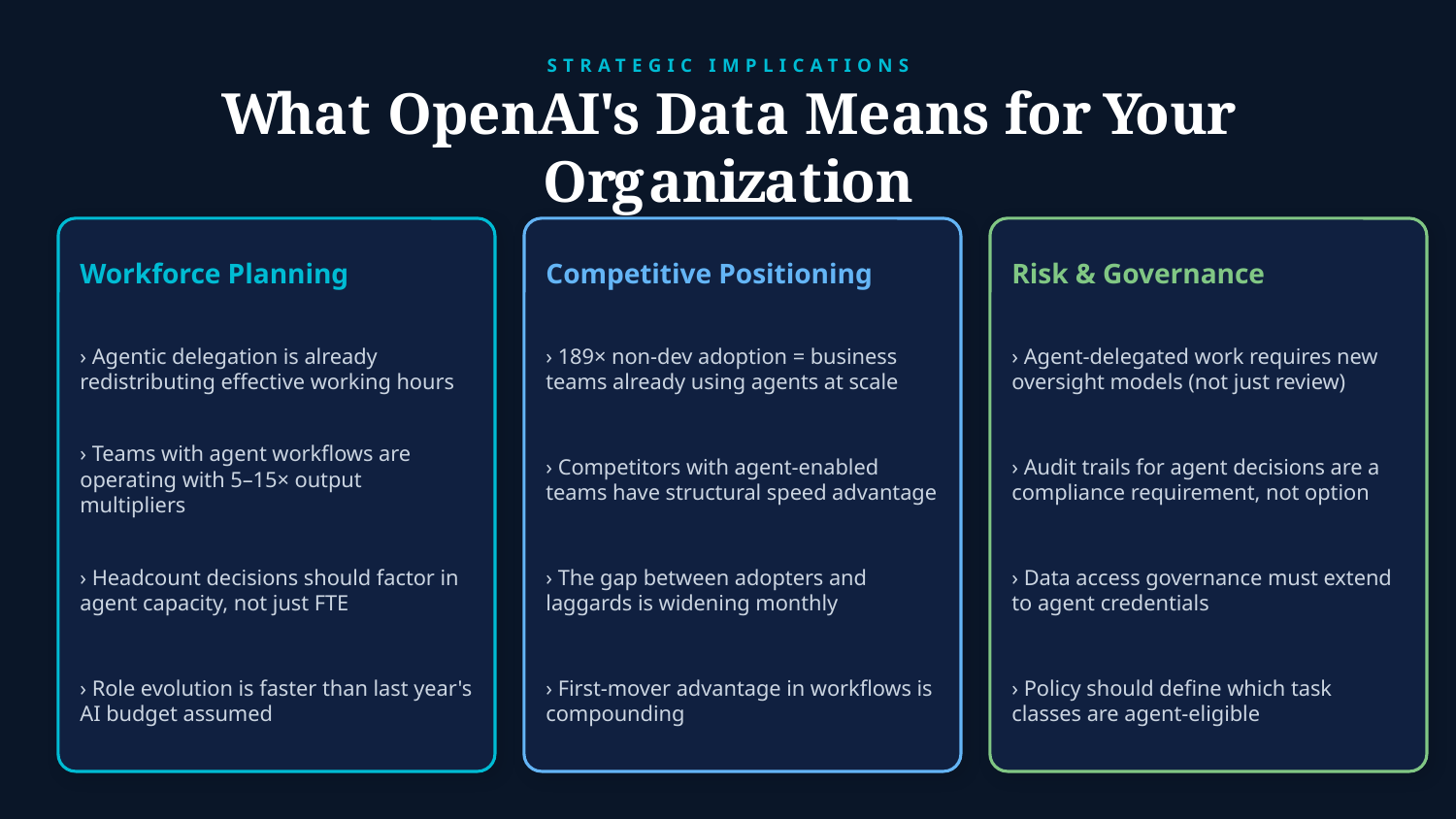
The clearest pattern is that adoption spreads beyond technical roles and toward longer tasks, so the useful thing to watch is how much work people can safely delegate, not just how often they prompt.
The example deck below was built with AskDeck from a brief on this topic; you can download it, edit the numbers for your own team, and make it your own. If you want a running start on a mid-year update, it is a reasonable place to begin.
See the deck