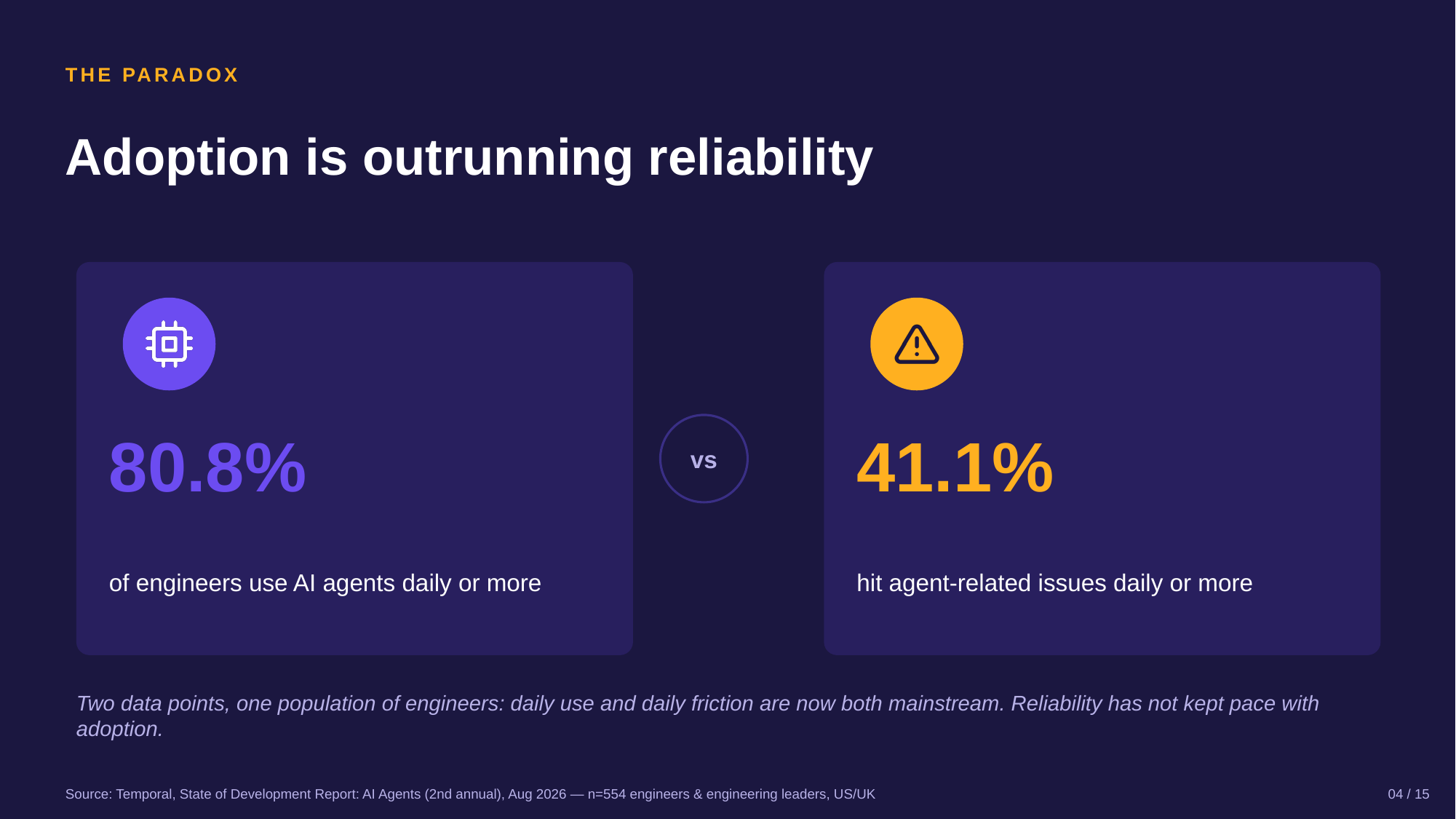
Four out of five software engineers now use AI agents daily, up from fewer than half a year ago. Nearly as many, four in ten, hit problems with those agents just as often.
Key takeaways
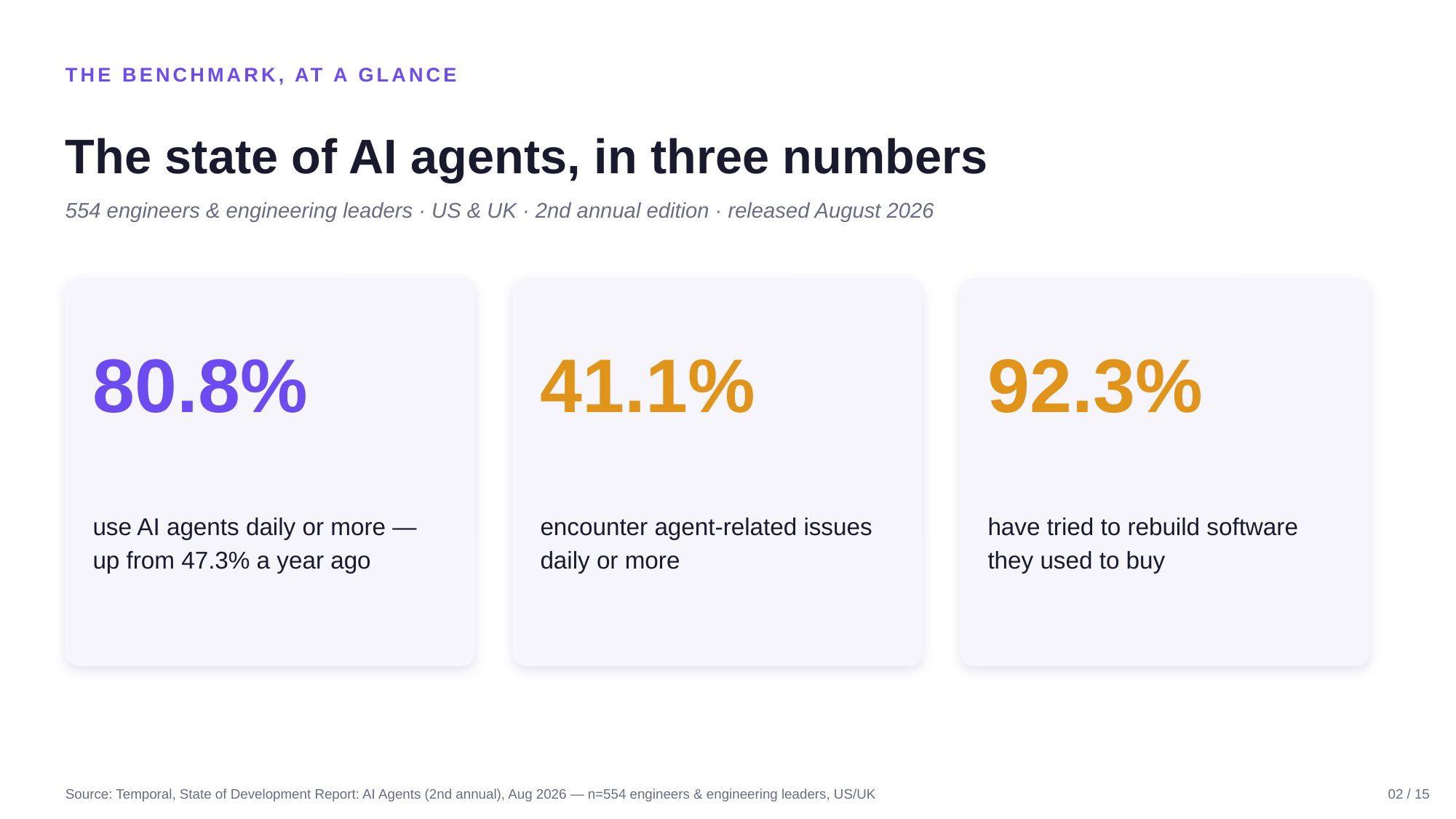
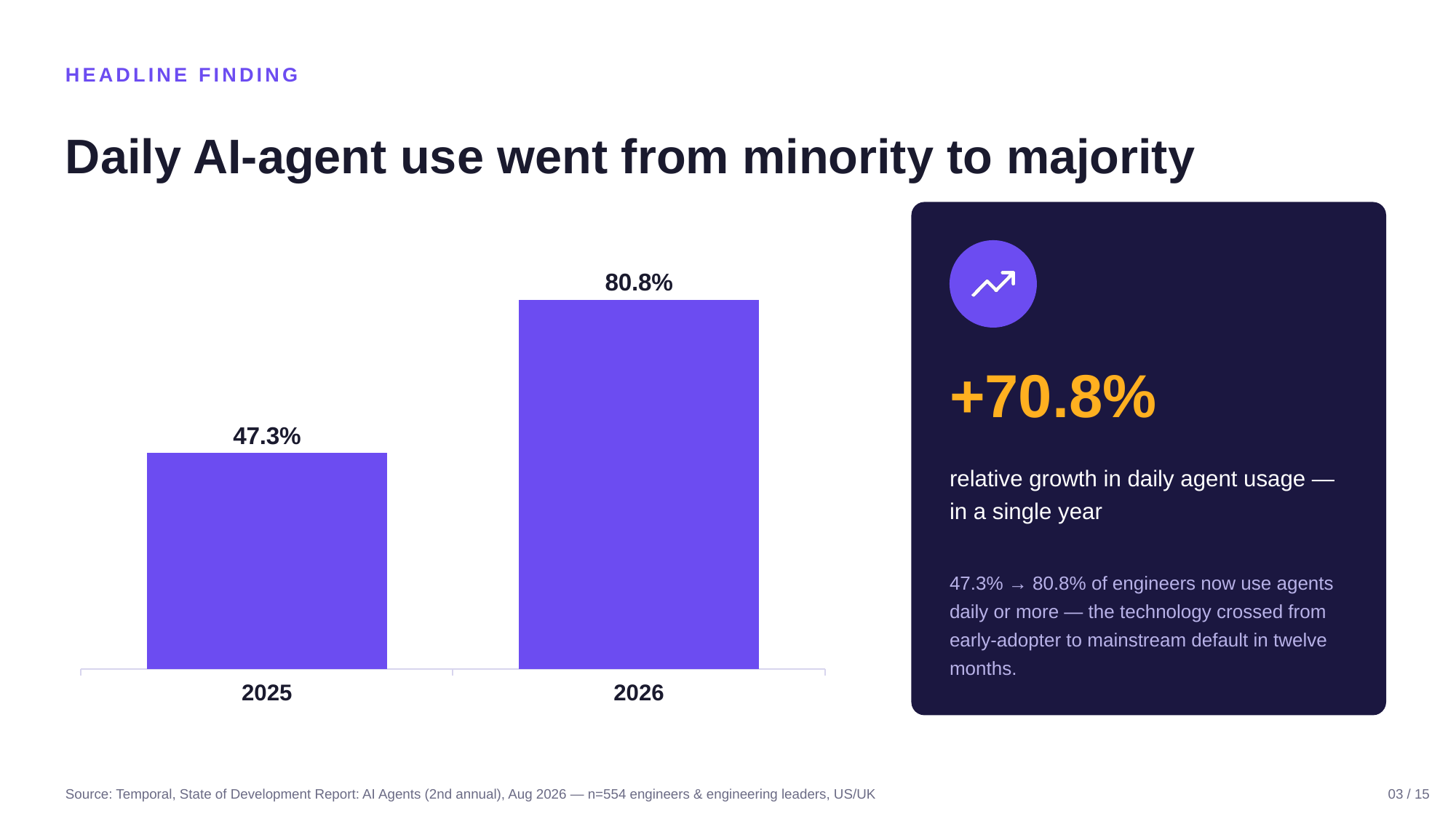
- Daily-or-more AI agent use jumped from 47.3% to 80.8% in a year, a 70.8% relative increase (2026 survey).
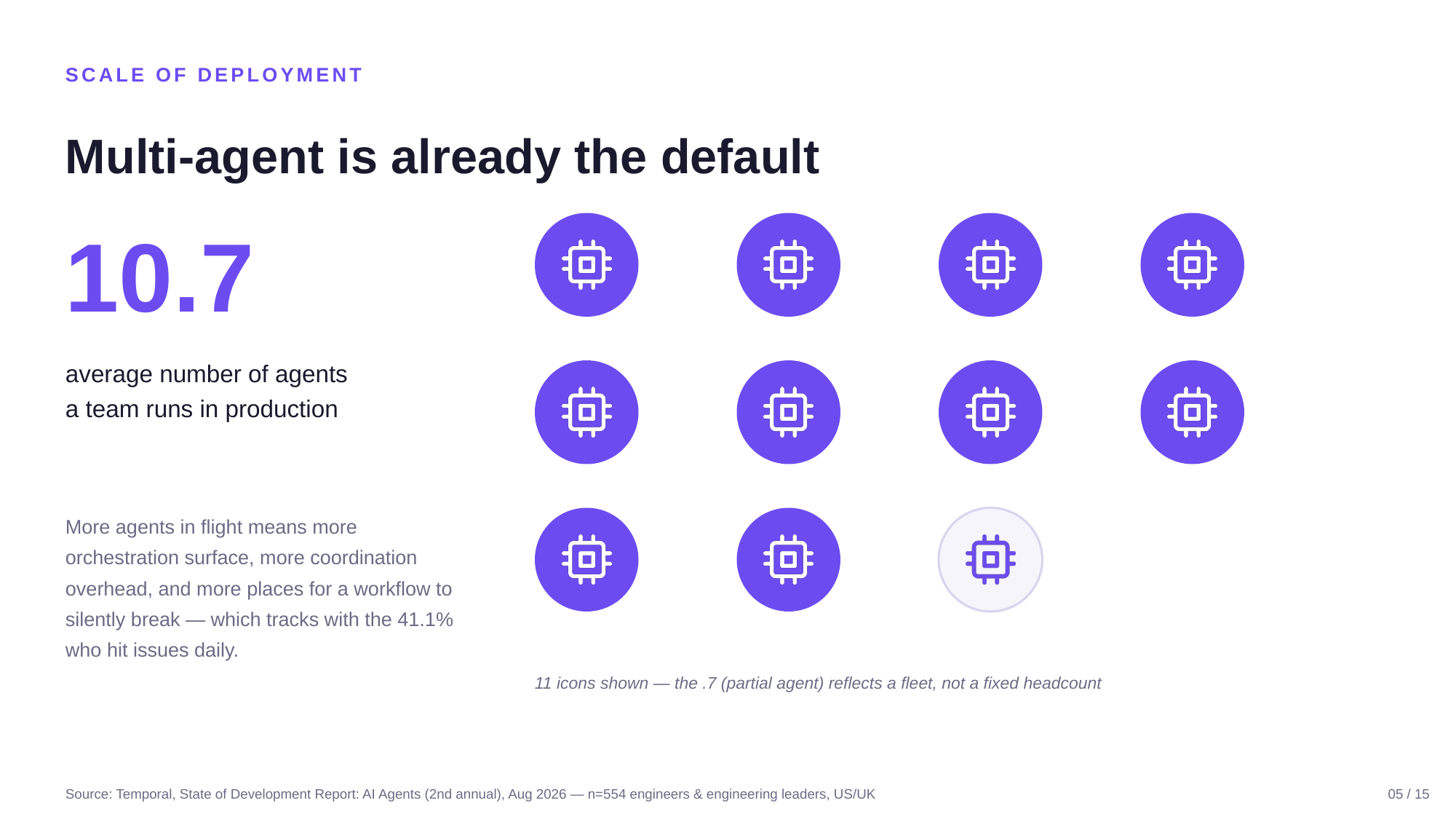
- The average team runs 10.7 agents, though the typical (median) team runs just 5.
- 41.1% of engineers hit agent-related issues daily or more, and issue frequency doesn’t track with how many agents a team runs.
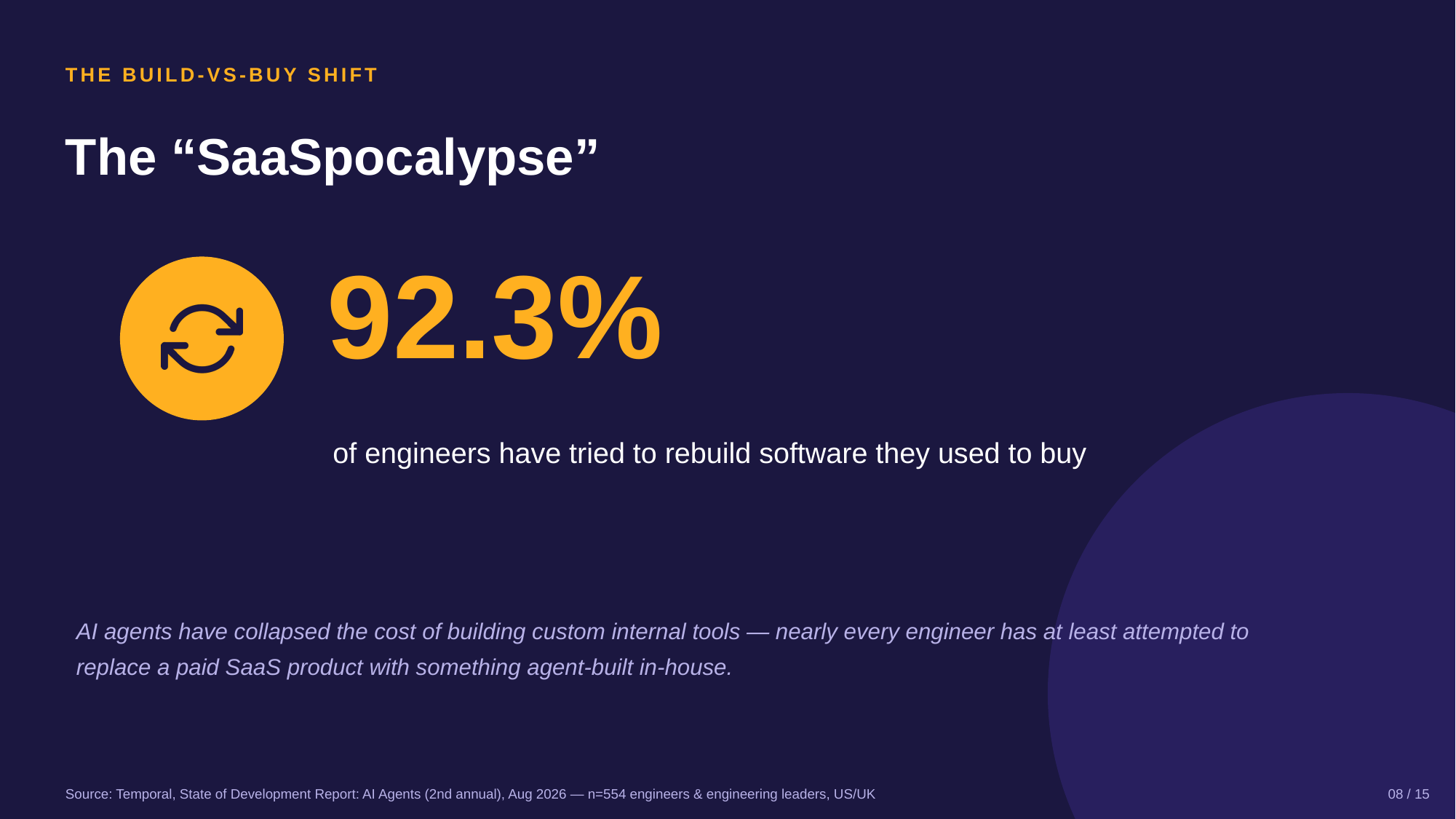
- 92.3% have tried building software in-house that they used to pay for; a quarter say it had a big impact.
The slides embedded below turn this same research into a scannable deck, an example of what AskDeck can put together from a short brief. Back to the substance.
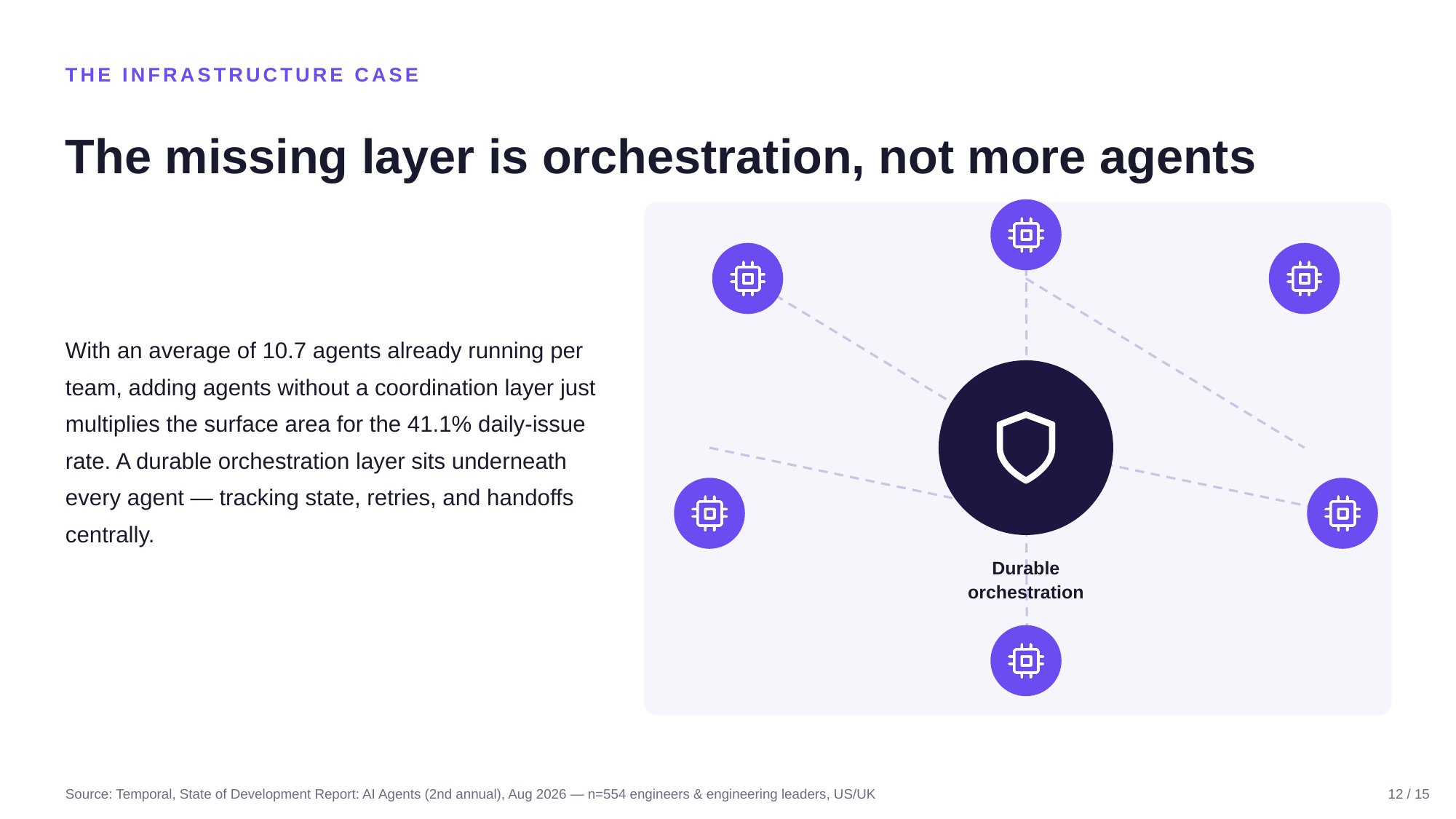
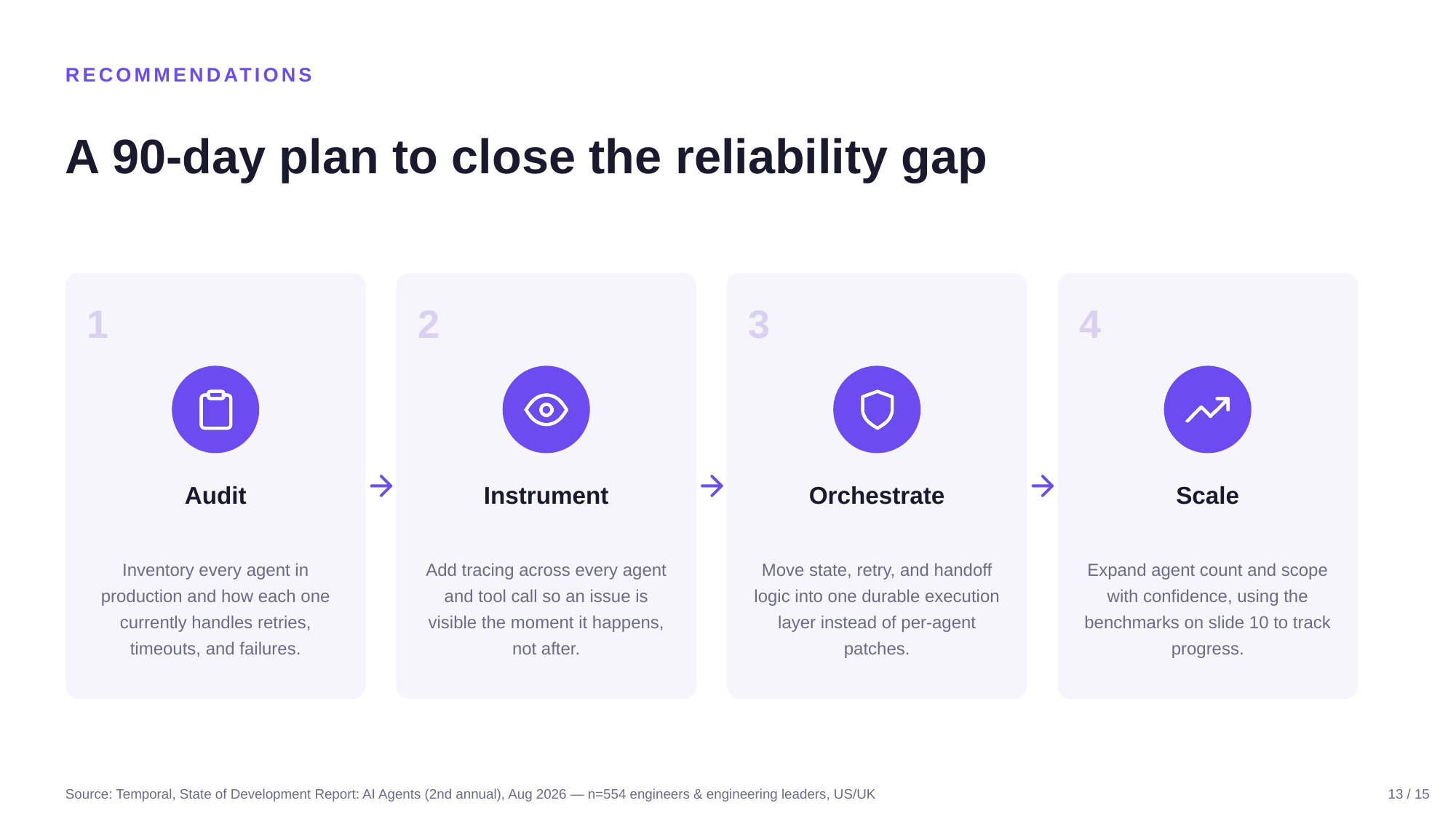
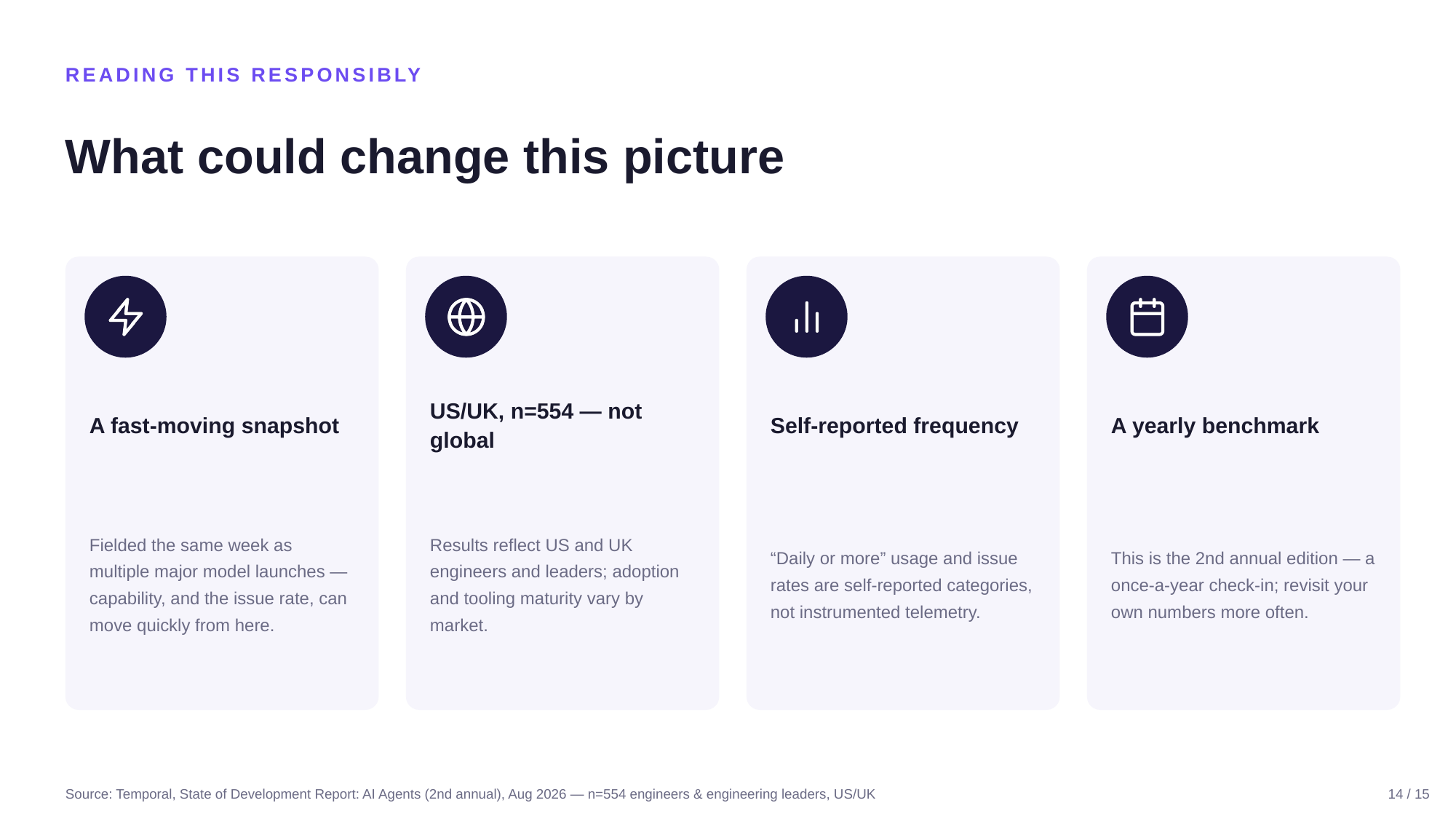
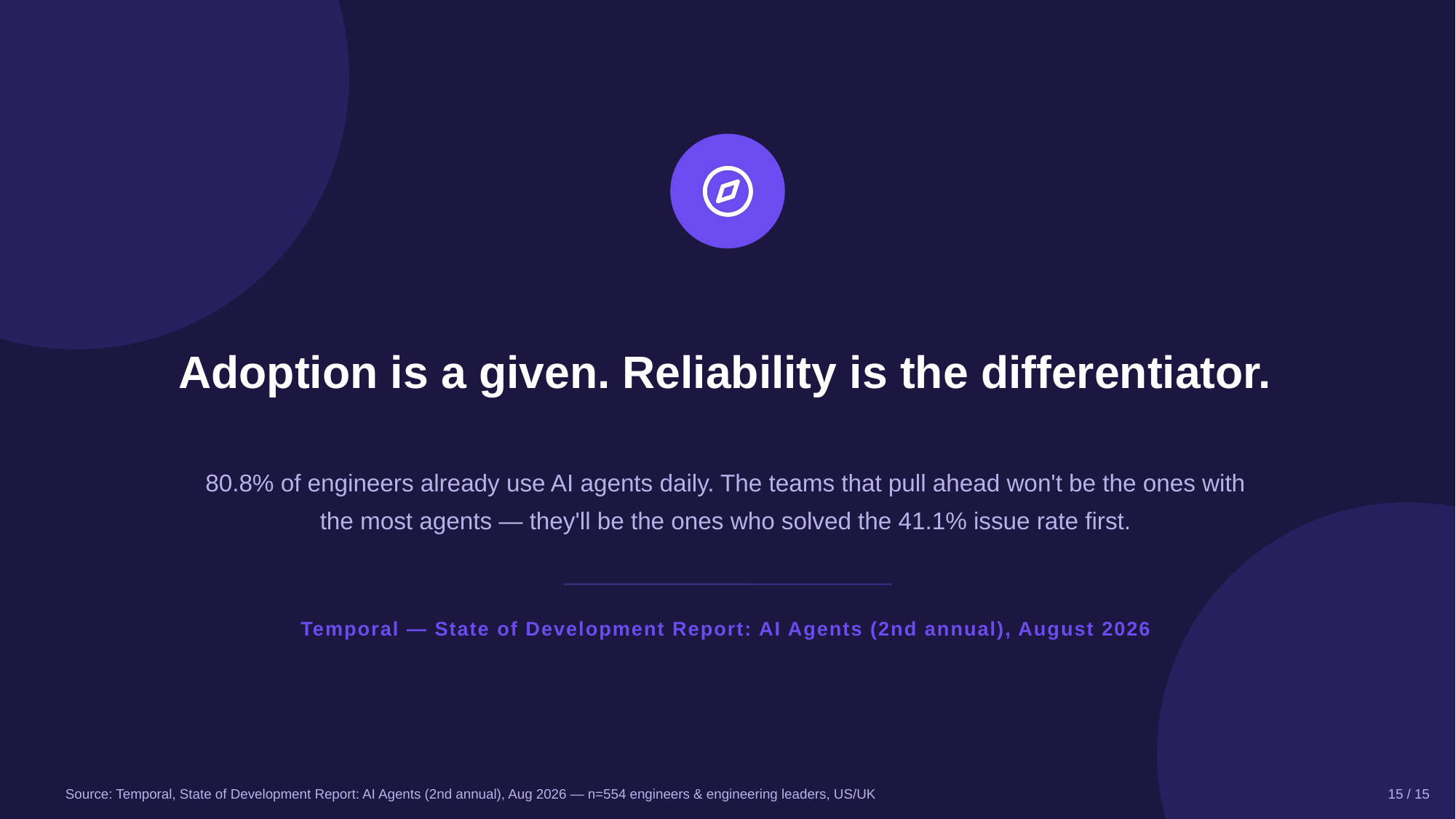
Swipe or scroll sideways to flip through the 15-slide deck →
How fast is daily AI agent use actually growing?
Faster than almost any prior developer-tooling shift. A 2026 survey of 554 engineers and engineering leaders in the US and UK found that daily-or-more agent use rose from 47.3% to 80.8% in twelve months. By comparison, agile methods took roughly 25 to 30 years to spread broadly across software teams. Agents have covered a similar arc in a fraction of that time.
Fielded between late April and late May 2026, the survey found 21.8% of respondents now use agents continuously, and 49.1% say agents are “in production” or “core to how they ship.” A quarter (25.5%) still treat agents as a helper tool, splitting the field into thirds: heavy reliance, routine use, and cautious experimentation.
How many agents is a typical team running?
Most run a handful, but a few run dozens or more, skewing the average well above the typical team. The mean is 10.7 agents, while the median is just 5.0, a gap driven by outliers, including one respondent who reported running 256 agents at once. Teams that call themselves successful run only modestly more (11 versus 9 on average), suggesting raw agent count matters less than how well a team manages what it already has.
Why do agents still break down daily for four in ten teams?
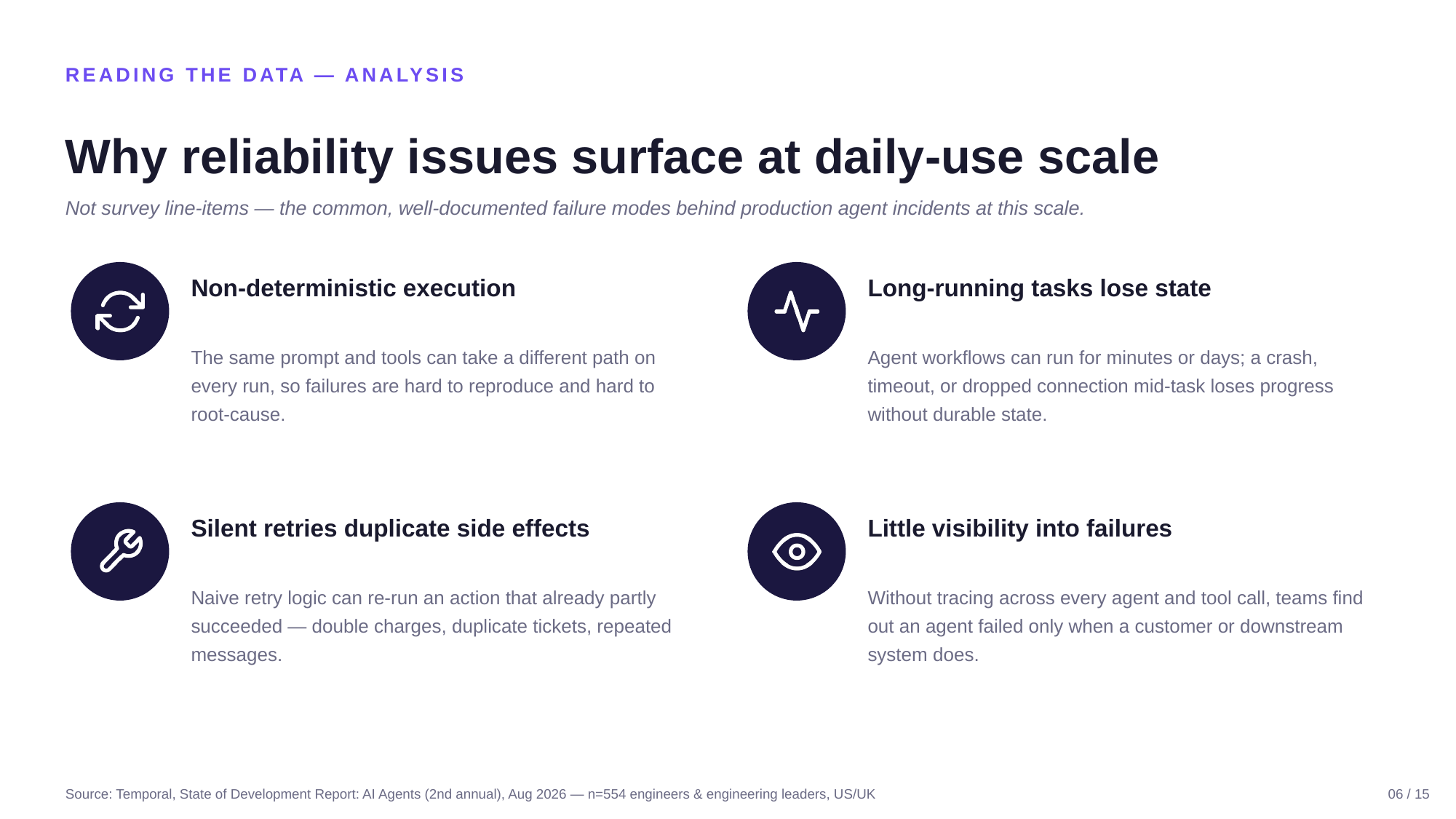
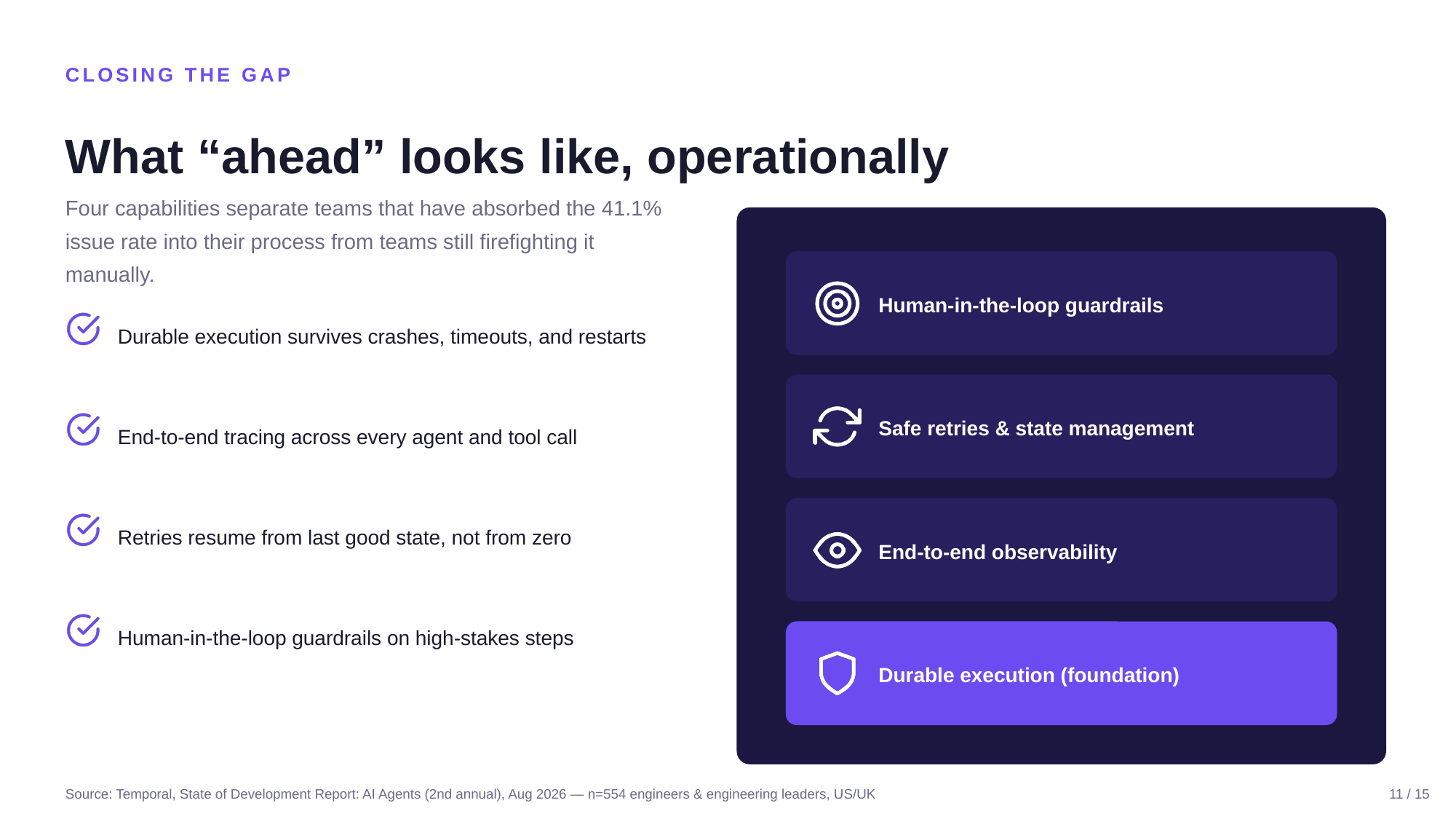
Because tracking state across long-running, multi-step tasks is still the biggest unsolved problem. Engineers ranked tracking state as their top blocker (35.7%), ahead of debugging and managing costs. Agents fail less often because a model gives a wrong answer and more often because nobody can tell what state the agent was in when something broke.
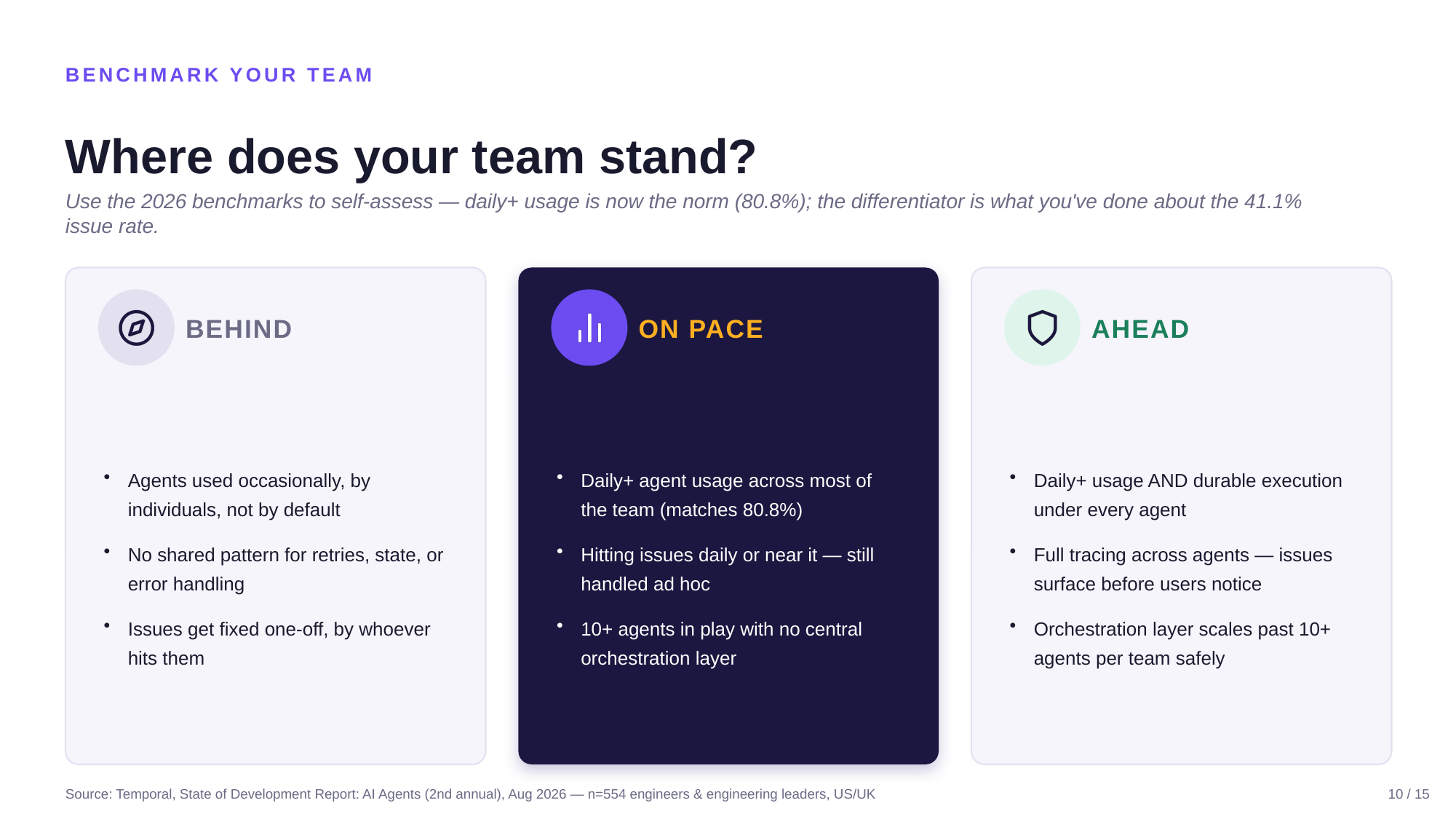
The gap is stark: 91.1% say agents have “improved” or “revolutionized” their productivity, yet 41.1% also report issues daily or more, and 16.4% say hourly or more. Issue frequency doesn’t correlate with agent count; teams running dozens report roughly the same rate of problems as teams running five.
Cost adds to the strain. 79.8% of engineers say token or compute cost meaningfully limits their agent use, which tracks with wider industry data: Big Tech firms announced $740 billion in AI capital expenditure this year, a 69% jump from 2025, even as one hardware executive has said compute still costs more than paying people directly. Teams absorb a smaller version of that math whenever an agent burns budget on something a human could have caught faster.
What is the “SaaSpocalypse,” and how real is it?
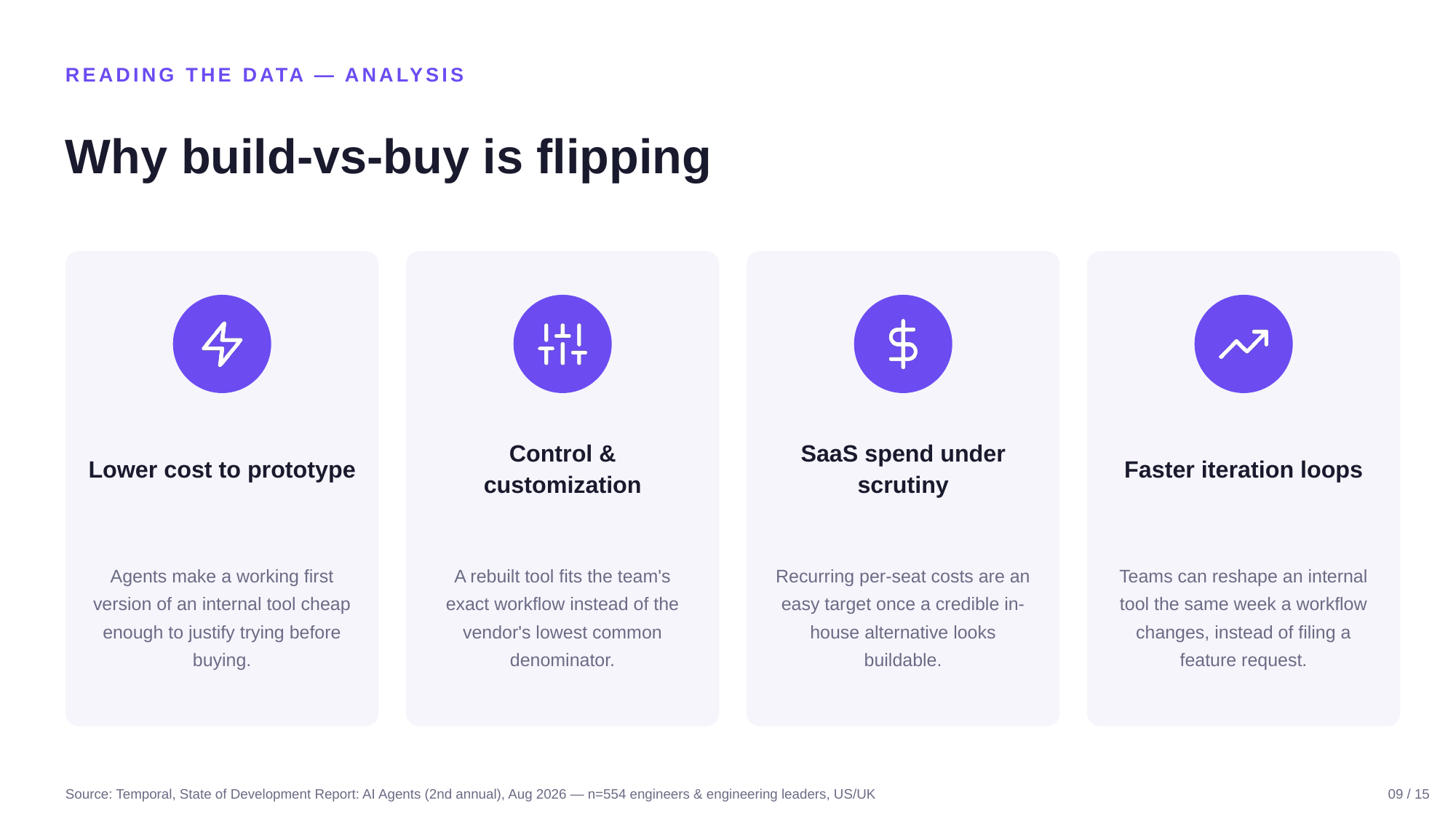
It’s the trend of building software in-house that teams previously would have bought, now that agents make the build option cheap enough to try. In the same survey, 92.3% had attempted an internal build they’d otherwise have paid for, and 25.6% said it succeeded with a big impact.
Self-described successful teams pull this off far more often, 8.5 times more likely to report a rebuild with big impact (29.7% versus 3.5%). Trying and succeeding are different skills that cluster in the teams also less stressed and more trusting of agent output.
Is trust actually catching up with adoption?
Mostly, but with a caveat. 85.5% of engineers trust agent output at least somewhat, and only 4.0% distrust it, well ahead of the public narrative about unreliable AI-generated code. Still, only 24.7% say they “completely” trust what agents produce, a reminder that letting an agent keep working and letting it ship unreviewed are different levels of confidence.
That gap shows up again around autonomy. 39.5% cite security concerns as the top reason their organization won’t let agents work without a human checking it. Trusting an agent to draft code is one thing; trusting it to merge, deploy, and own the outcome is another.
Are engineers more stressed because of all this?
Generally the opposite. 44.6% say they’re less stressed than a year ago versus 32.5% more stressed, and most in the more-stressed group point to workload and organizational issues, not agents. Only 26.4% say their company is slowing or stopping hiring over agents, even though most expect the job market to get harder for junior (56.7%) and senior (45.5%) candidates alike.
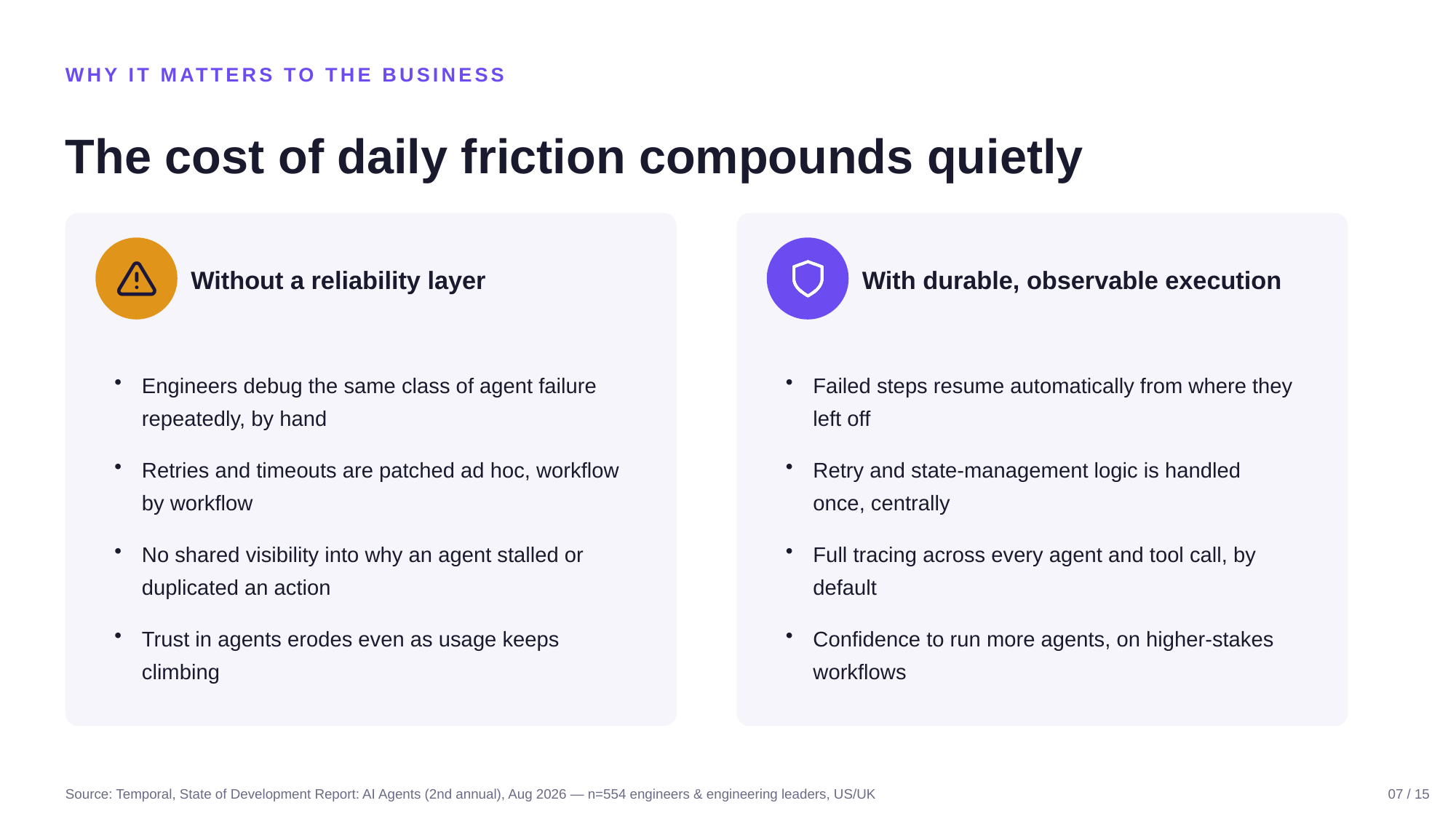
For any team deciding how much further to invest, the gap between adoption and operational maturity is the number worth planning around. Adding agents without fixing how a team tracks their state and reviews their output adds issues faster than it adds output.
The example deck below was built with AskDeck from a short brief on this research. It’s free to download and edit if you want a fast way to walk your team through where things stand.