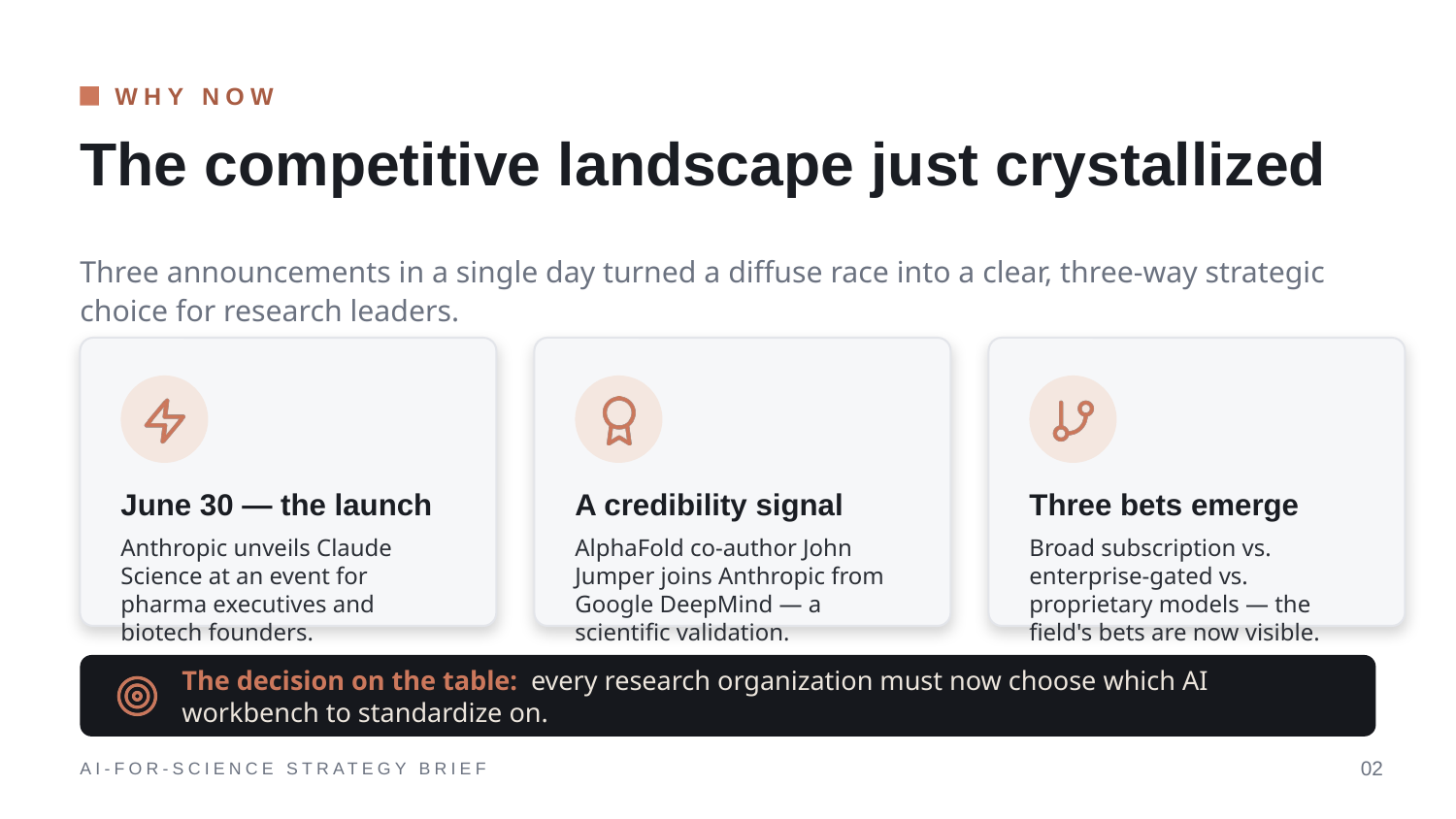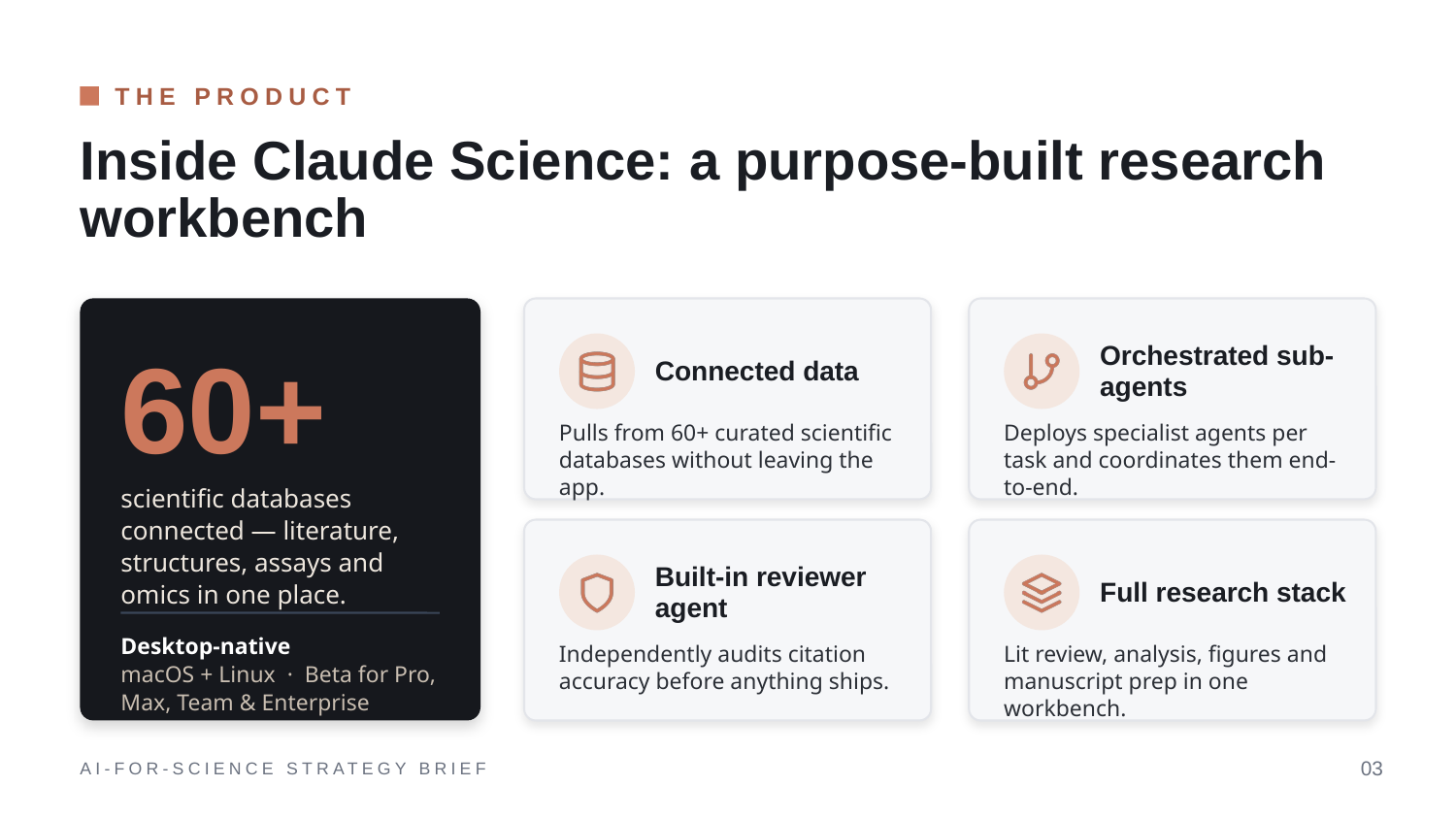
An AI research workbench is a desktop application that gathers a scientist’s whole workflow - literature search, data analysis, coding, running compute jobs, and drafting a manuscript - into one workspace and routes much of that work through coordinated AI agents. The category turned from concept into a shipping product on June 30, 2026, when a purpose-built research application launched in beta for macOS and Linux with more than 60 built-in connectors reaching scientific databases and tools across genomics, single-cell analysis, proteomics, structural biology, and cheminformatics. The problem it targets is mundane but costly: researchers lose hours moving between literature indexes, notebooks, statistical environments, and cluster terminals, each with its own format. A workbench collapses that into one auditable place.
It is not a new AI model trained for biology. It runs on the same general-purpose models already in wide use, and the change sits at the workflow layer - the approach that reshaped how software gets written, now pointed at the lab bench.
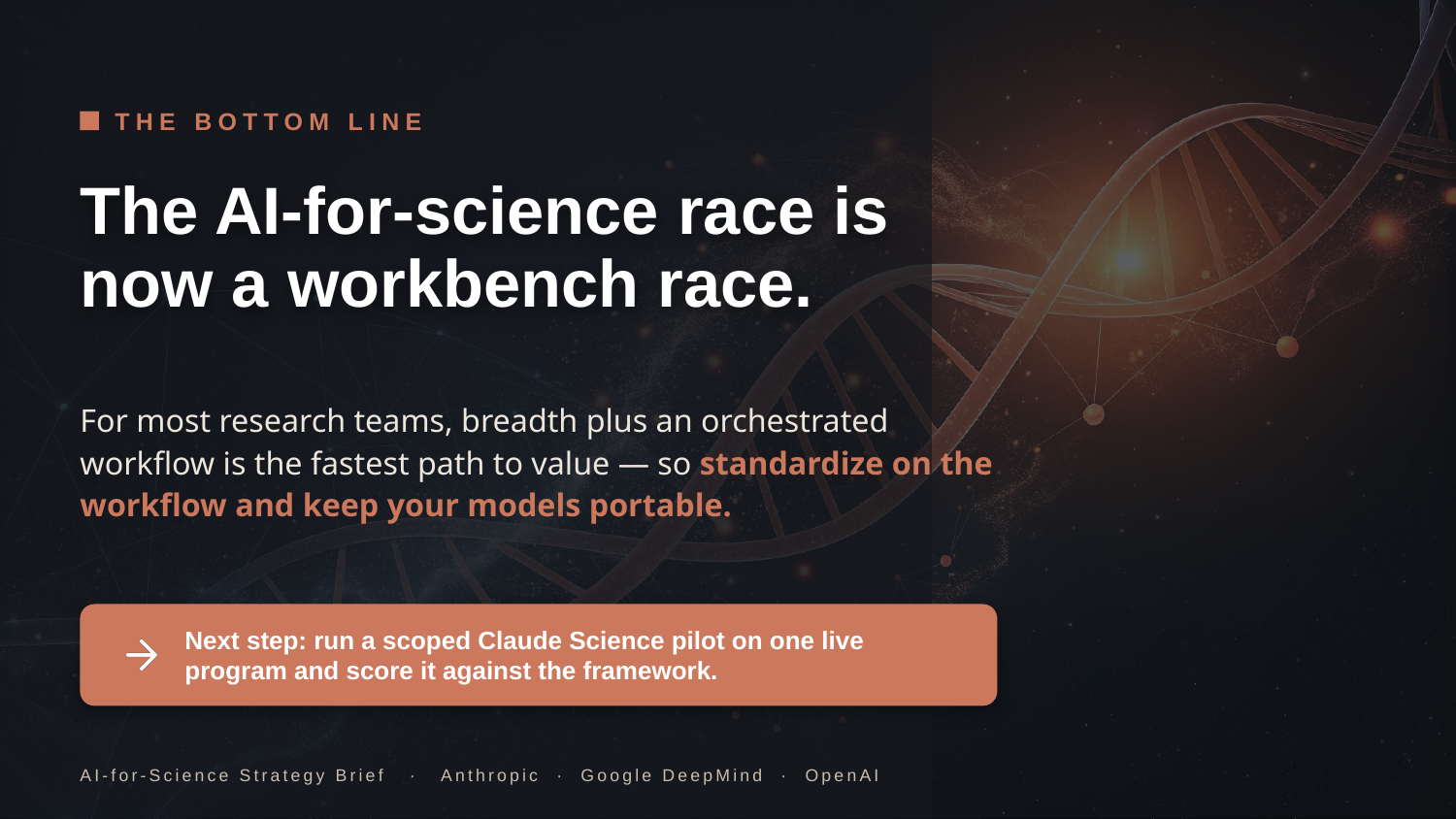
The slides embedded below cover this same subject on ten pages, a ready-made overview that AskDeck generated from a short brief. With that noted, here is how the tools actually work.
What separates a workbench from a chatbot
A chatbot answers mostly from its training and your prompt, and it often cannot show exactly where a claim came from. A workbench decomposes a request into steps, queries real databases, extracts specific findings, and returns an answer with sources you can trace back. Because it runs on the researcher’s own machine rather than a browser tab, it can hold a large dataset in memory so it loads once, and a session can be forked at any point to test a different approach without losing the original thread.
How the agent stack works
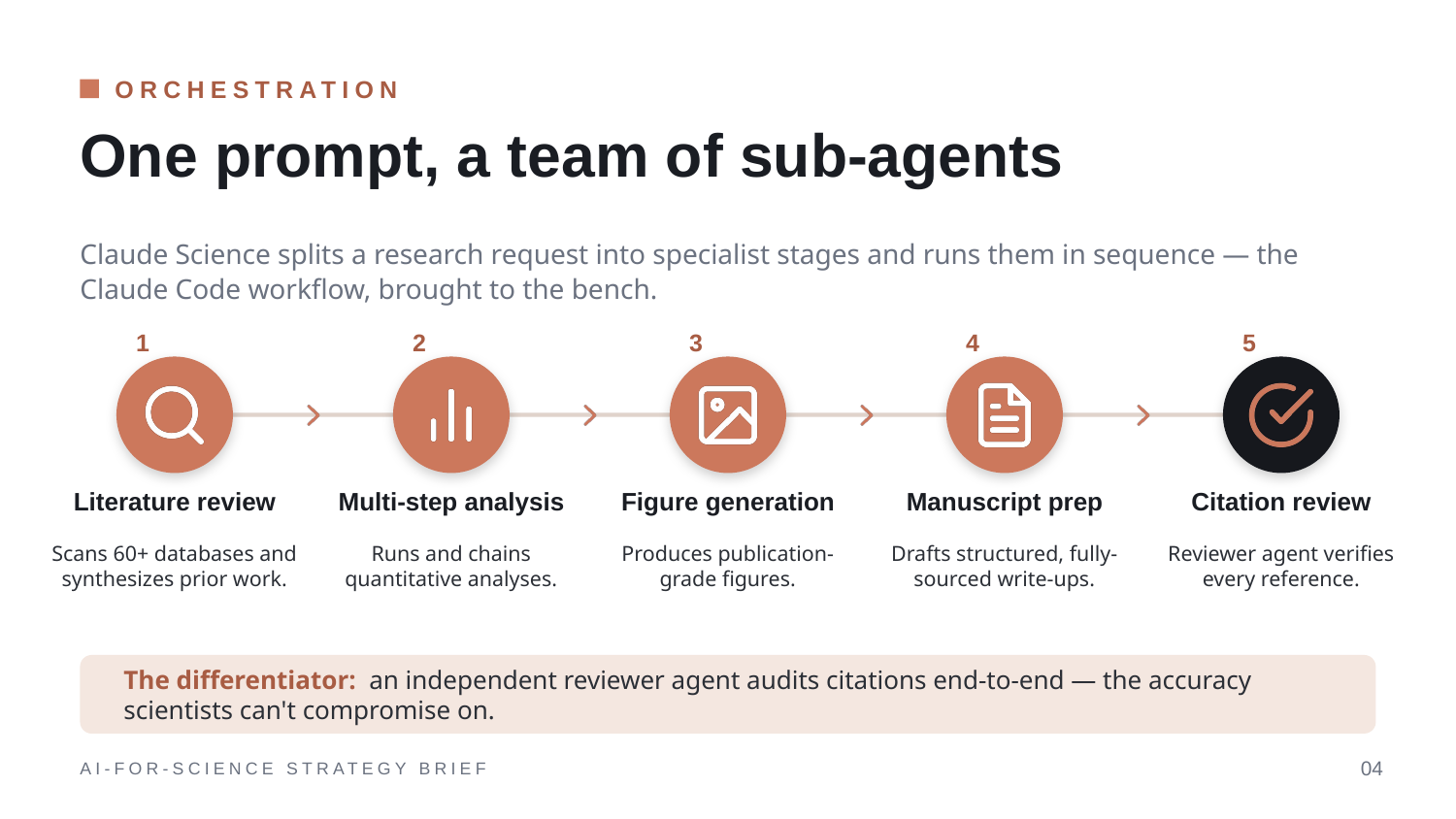
The design is a small team of agents. A generalist coordinating agent reads the goal and dispatches specialist sub-agents, each taking one slice of the job: querying a proteomics database, running an analysis, or generating a figure from code. Running alongside them is a dedicated reviewer agent that checks citations and calculations, flags incorrect references, untraceable numbers, or figures that do not match their underlying code, and corrects errors as it goes. That role matters because citation mistakes are common and varied: a reference that does not actually support the claim, one that drops an important caveat from the source, a finding attributed to the wrong study, or selective citing that ignores contradictory results.
The databases it plugs into
Coverage is the difference between a tool that can cite the right study and one that cannot. These workbenches connect natively to core scientific resources - UniProt, the Protein Data Bank, Ensembl, Reactome, ClinVar, and ChEMBL among them - alongside literature and trial indexes like PubMed and ClinicalTrials.gov. They can also render domain artifacts directly: 3D protein structures, genome browser tracks, and chemistry drawings, so results appear in the form a scientist expects rather than as plain text.
What it changes in practice
The early results are about compressing time, not magic:
- A neuroscience lab built a review pipeline of roughly 20 custom skills; work that once took up to two years now yields about ten 100-plus-page literature reviews, with citations checked by a reviewer agent.
- An epidemiology group studying brain tumors cut comprehensive germline genetic workups to roughly one-tenth of the time they used to take, with the results independently validated in the lab.
- In drug-discovery screening, one large team ran an initial literature screen about seven times faster, dropping from around 20 days to under three, and narrowed more than 4,700 documents to just over 600 out of roughly 35 million abstracts.
Where it can still go wrong
The open questions are about trust. AI can still fabricate or misattribute a citation, and a polished summary built on weak retrieval reads as convincingly as a sound one. In regulated settings, provenance matters: which model ran, in what environment, over which data, and whether that history is captured well enough to reproduce. The steady advice from practitioners is to treat outputs as drafts, keep a person in the loop, and verify every claim against its source. For work headed toward a regulatory submission, confirm the specifics with a qualified expert.
Is this a replacement for scientists?
No. These systems are strong at the mechanical parts of research - searching large corpora, screening for relevance, extracting data, and drafting - but interpreting findings, designing the questions, and judging methodology remain human work.
Who is it for?
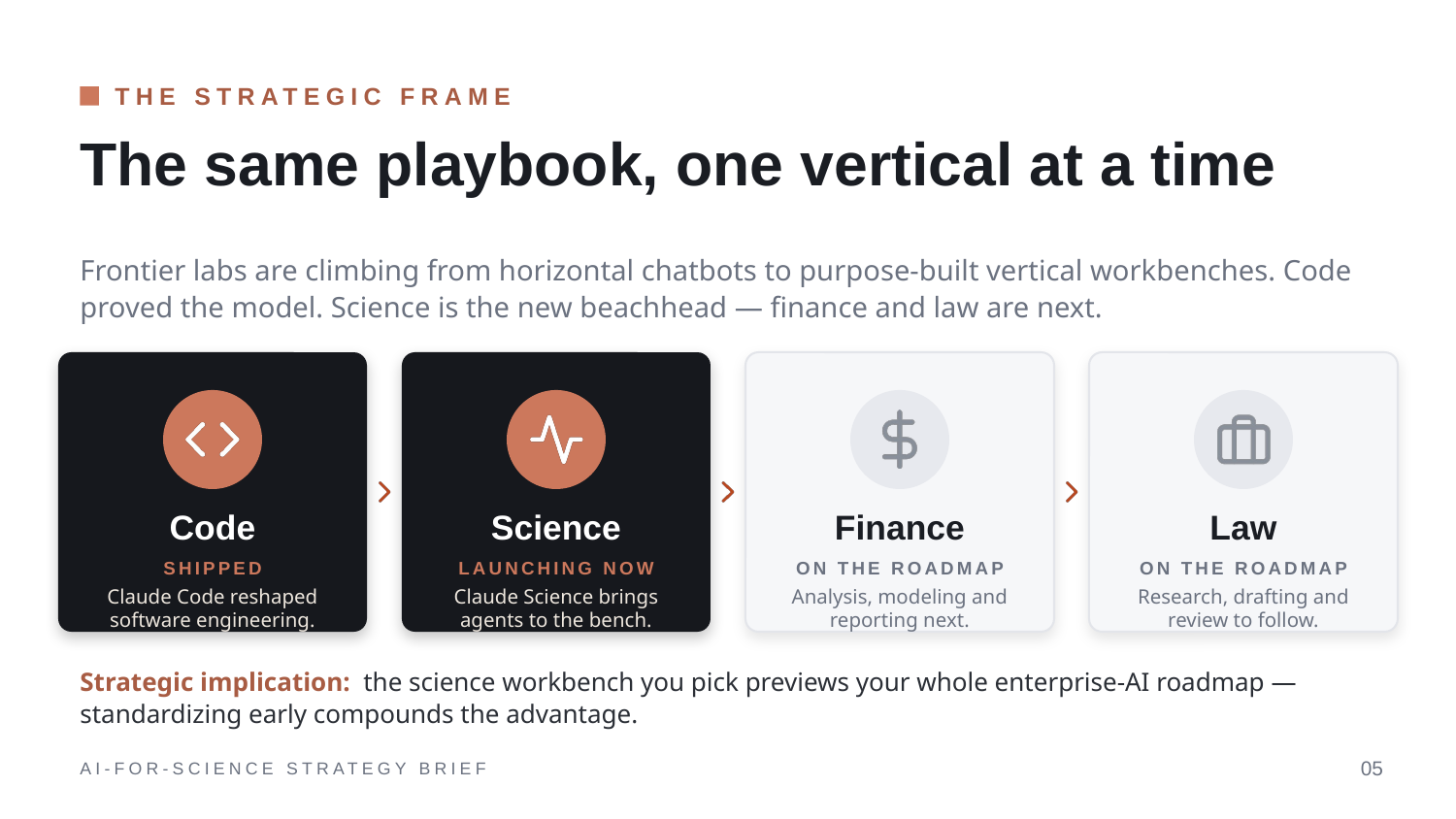
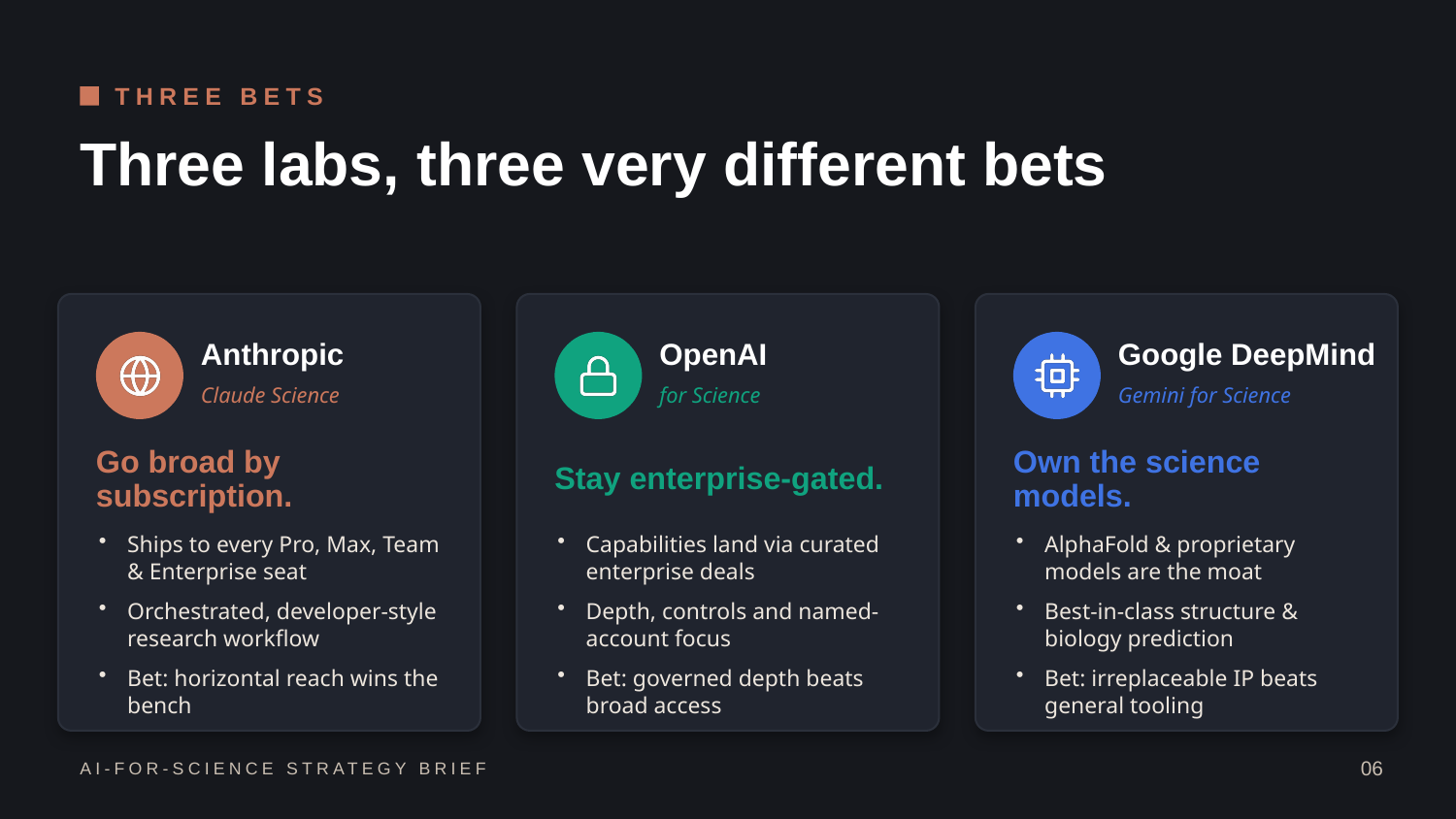
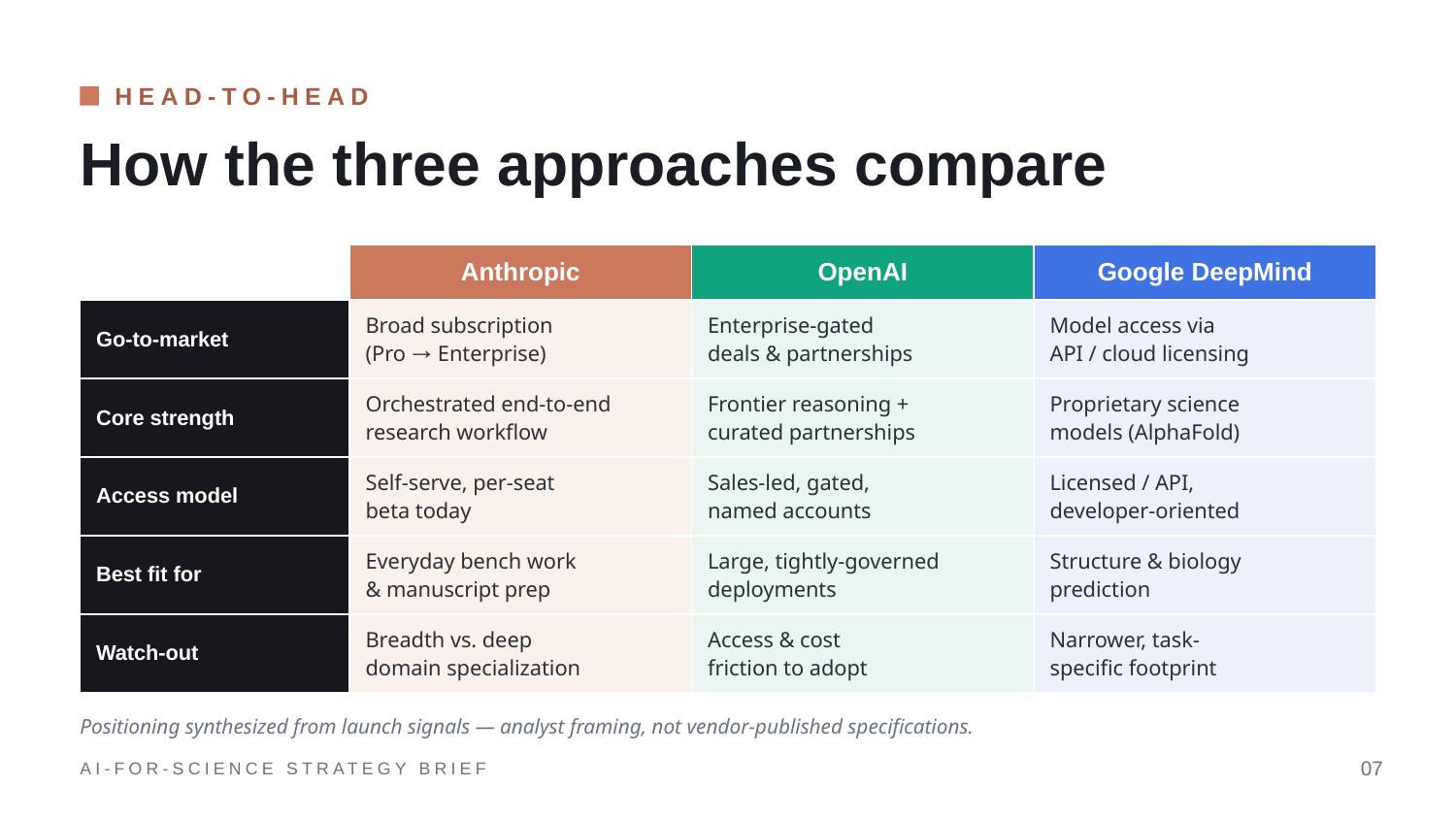
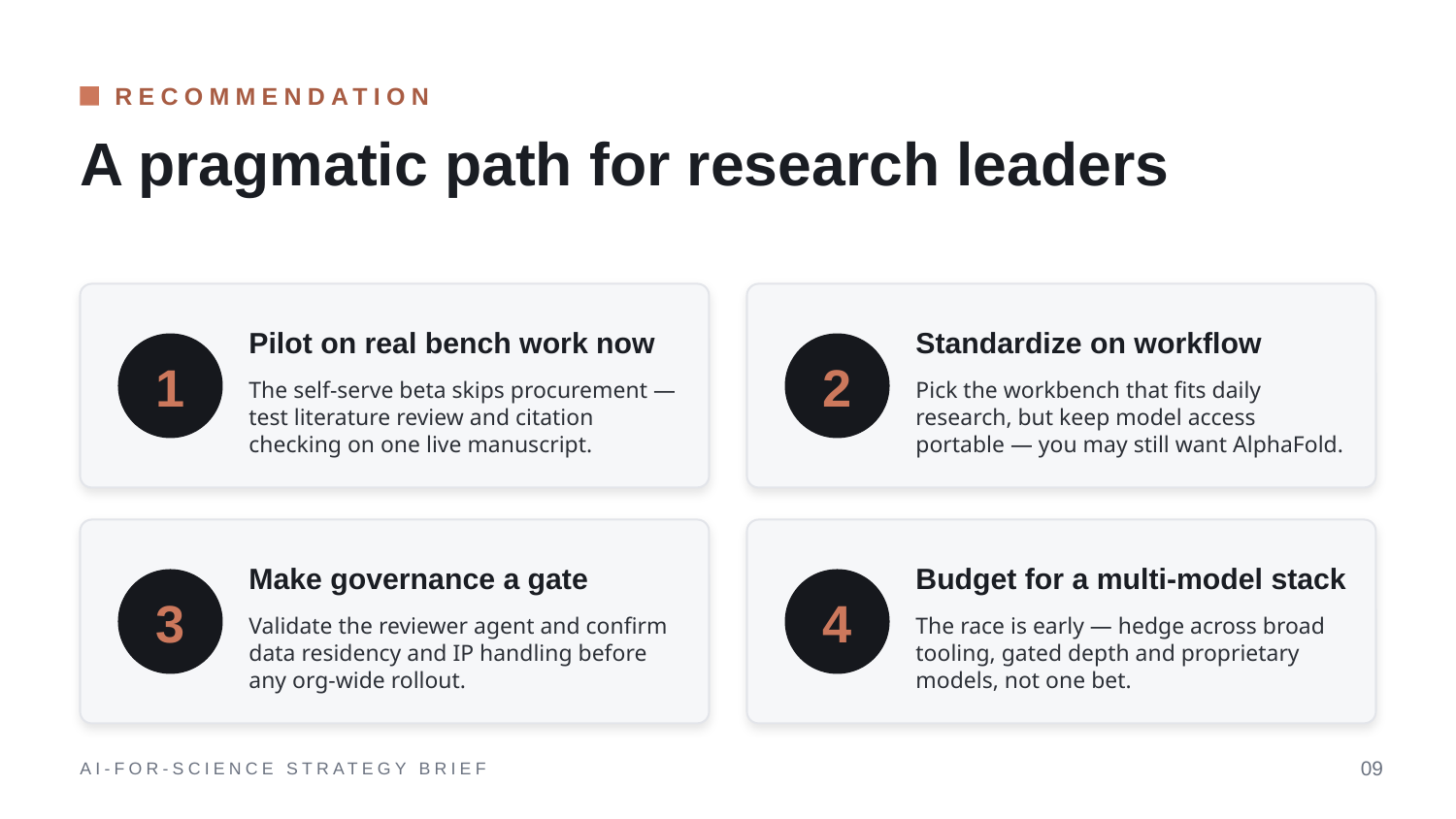
Pharmaceutical and biotech teams and academic labs are the first adopters, with the launch version available in beta to subscribers on macOS and Linux. The strategic question for research leaders is less which brand and more which workflow their teams can standardize on without losing traceability.
How should a team evaluate one?
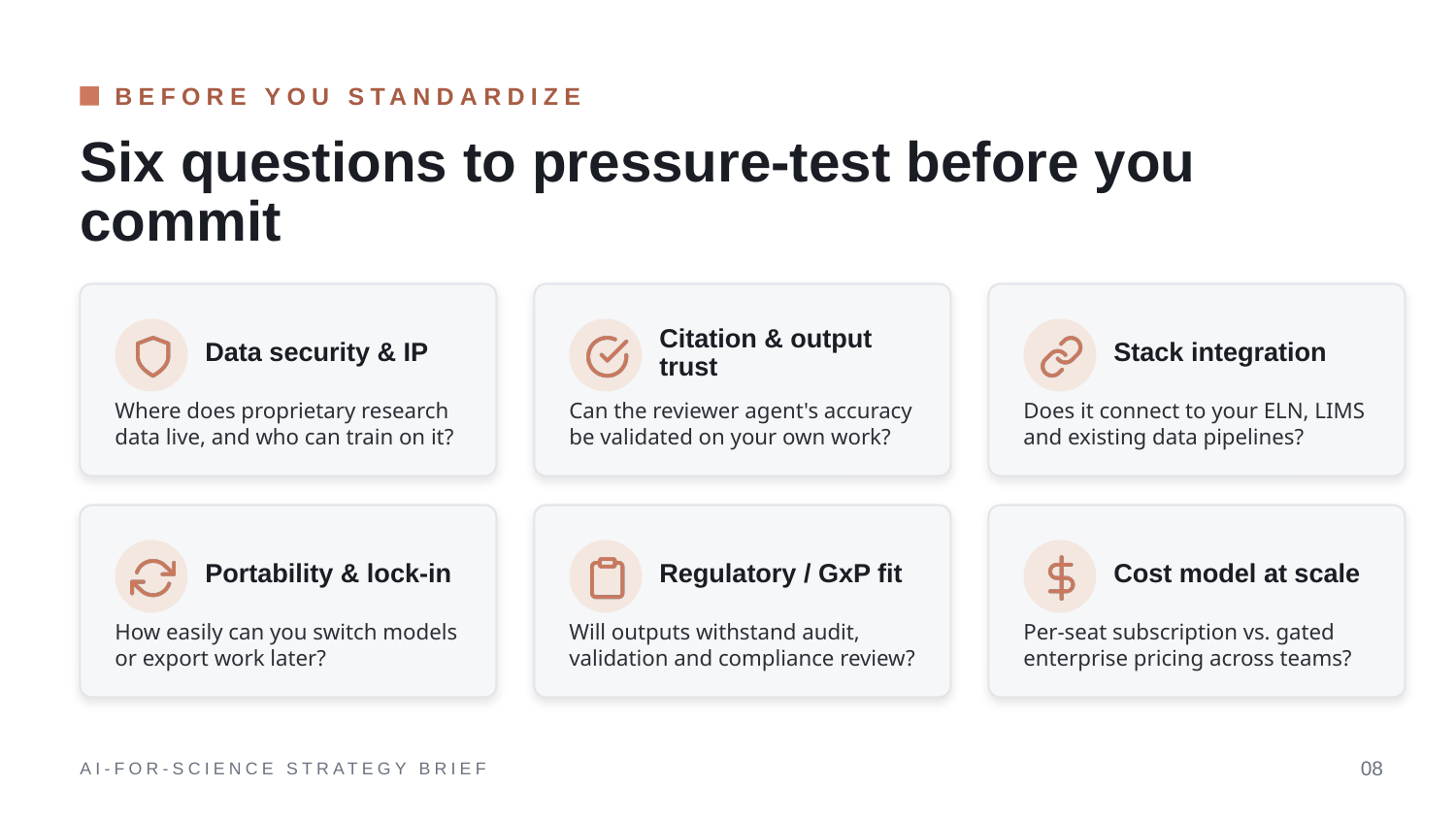
Look past the demo to the parts that decide reliability: sentence-level citations you can verify, reproducibility metadata, how much of your field’s databases the connectors actually reach, and how cleanly the tool records what each agent did.
The example set of slides below was generated by AskDeck from a brief on this exact topic. You can download it, edit any slide, and adapt it to your own team, a quick way to turn a subject like this into something you can present.
See the deck