There’s a comfortable lie running through a lot of engineering orgs right now: that shipping an AI feature is basically shipping a normal feature with a fancier API call bolted on. It isn’t. And if you want the cleanest proof, look at what Andrew Ng just published.
Ng put out an update to what he calls the AI Engineering Skills Map, and it’s the most clarifying thing I’ve read on this subject in months — not because any single item is a shock, but because it’s honest about what the work actually demands. His top-level breakdown names four skills: <cite index=“11-1”>building and deploying AI applications, software engineering fundamentals, using coding agents, and shaping the build</cite>. Notice what’s missing from that list. There is no line item for “chose the right model.” There is no ranking of vendors. The map is about what you can do, not what you can buy.
That’s the whole argument, and I’ll defend it: the model is a commodity input. The skill is everything wrapped around it.
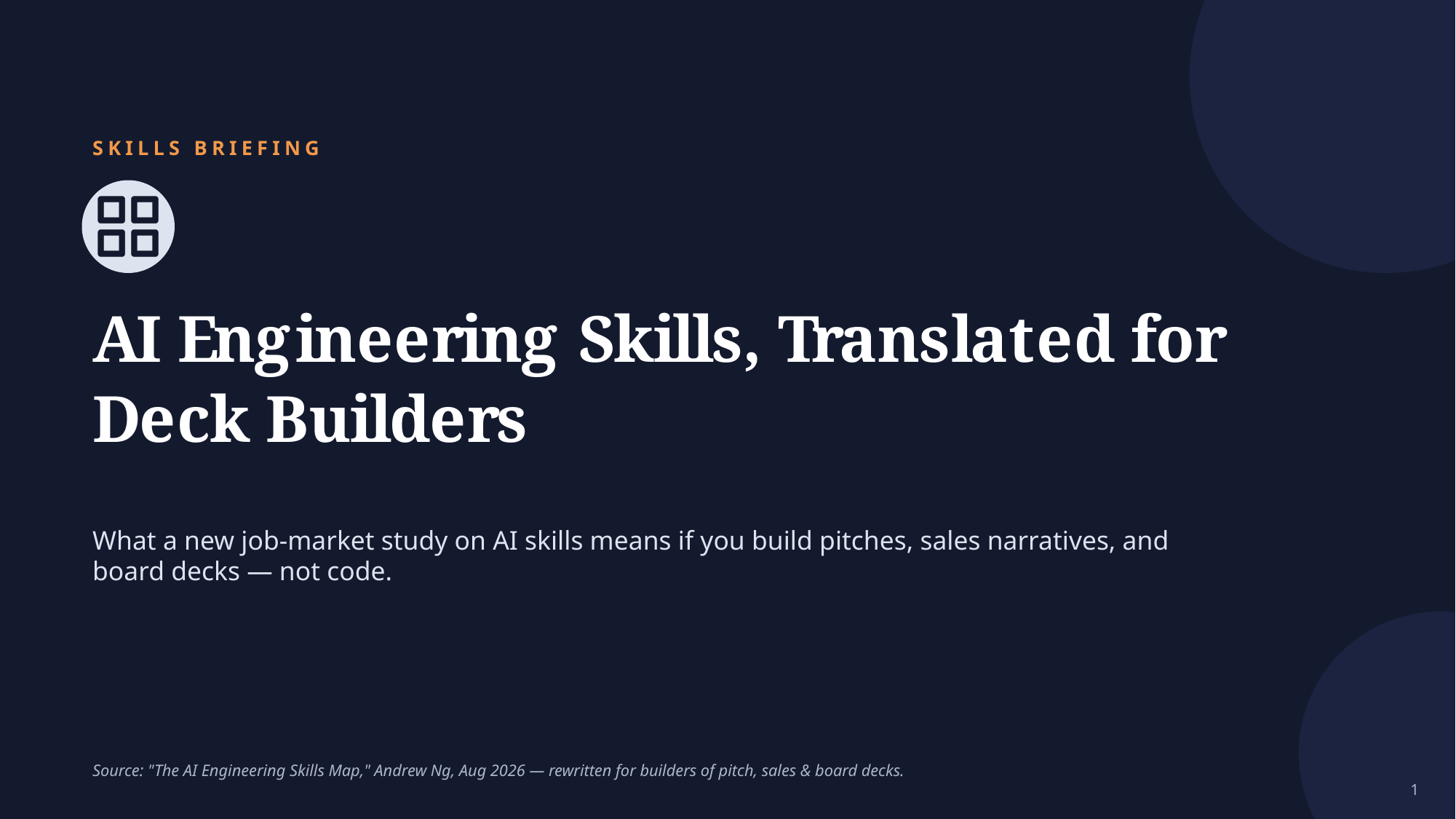
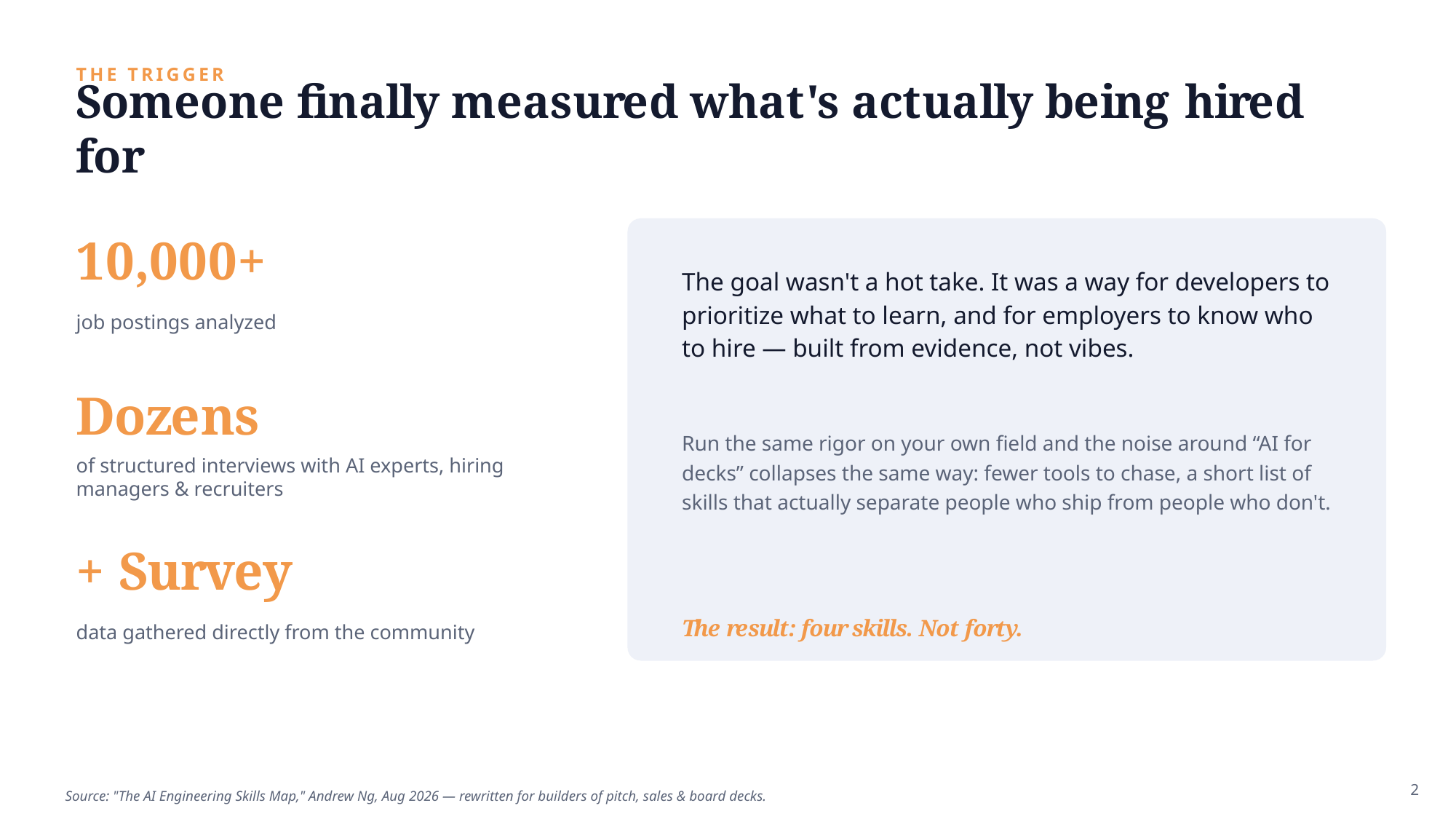
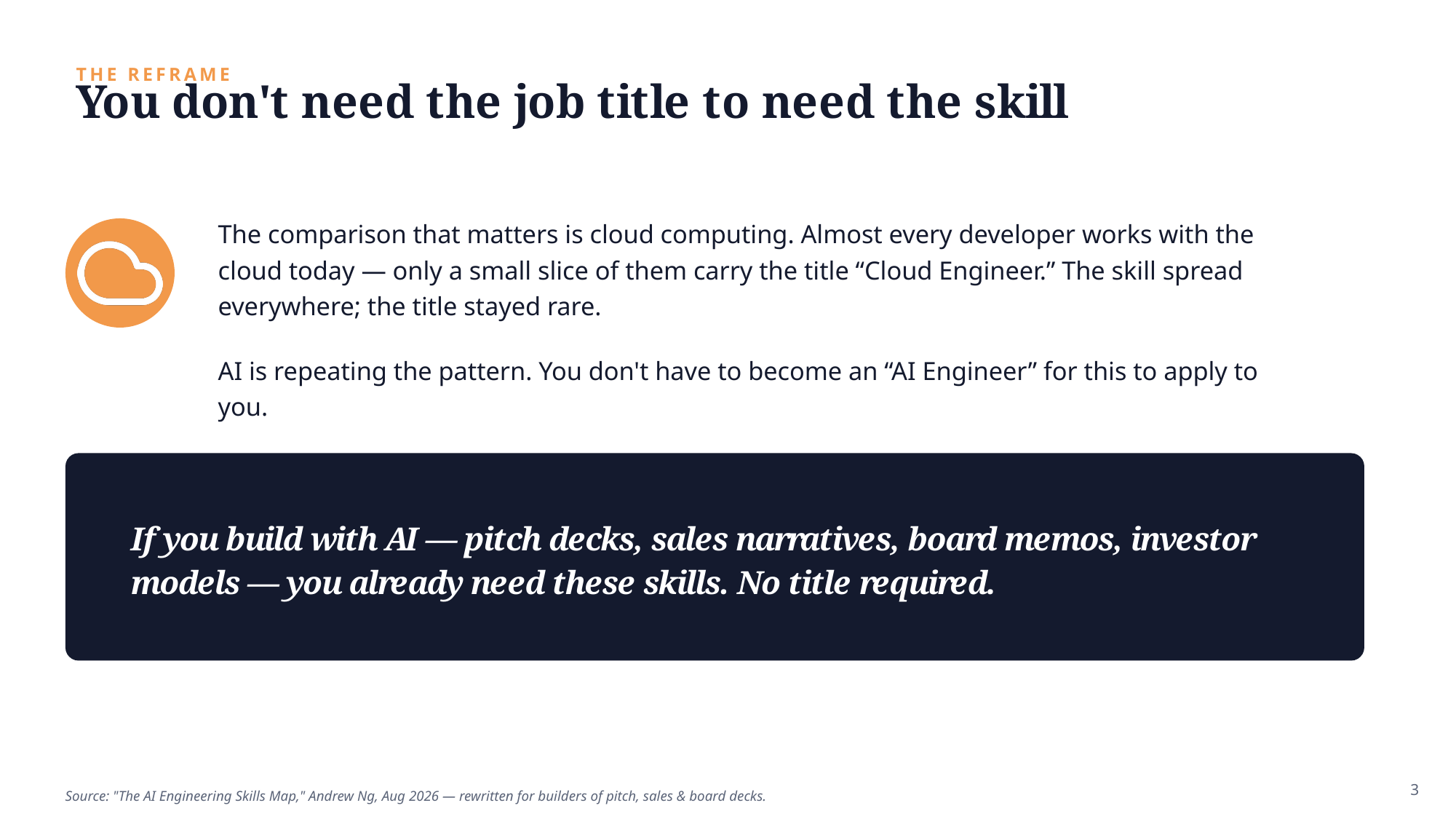
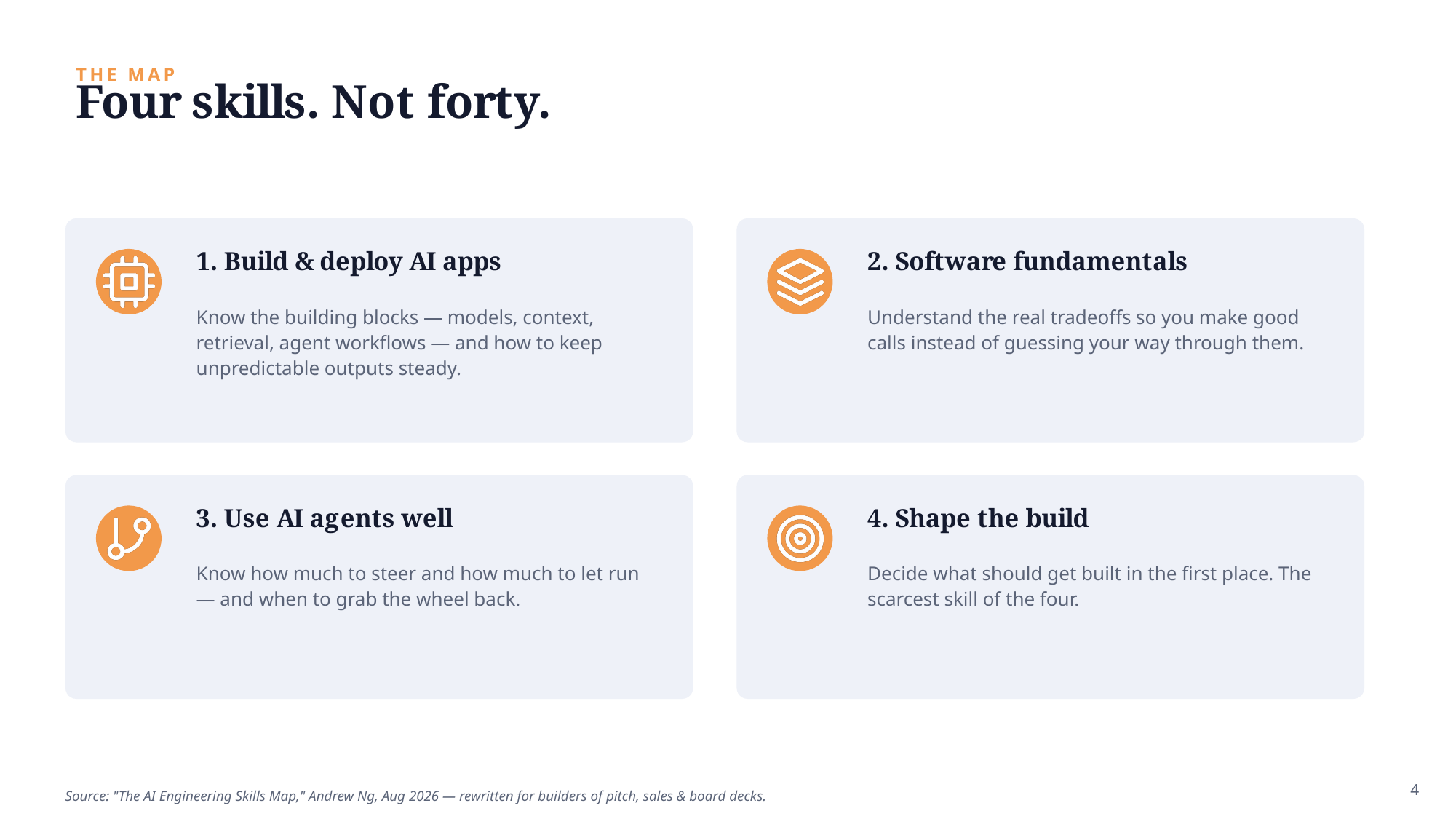
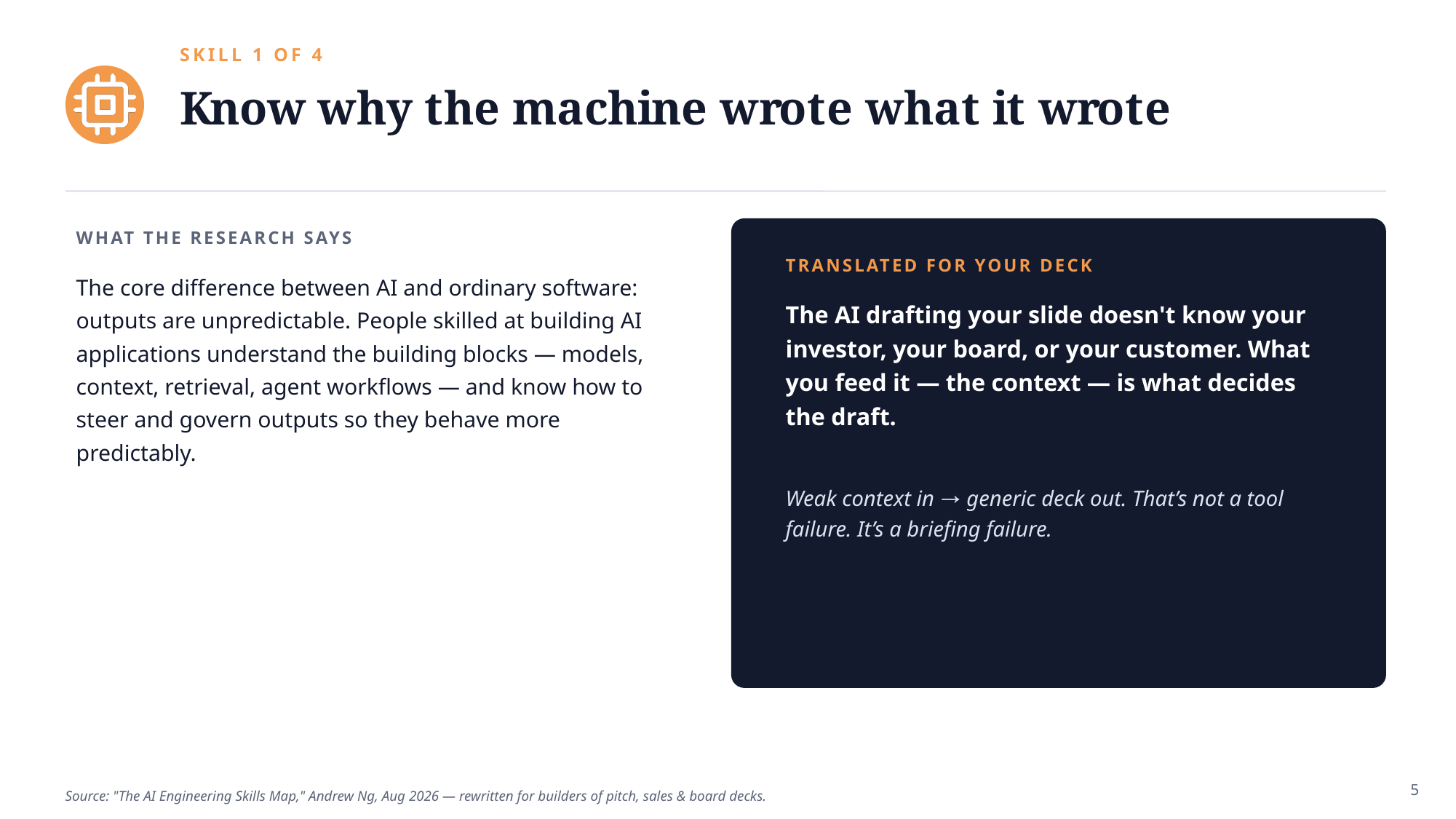
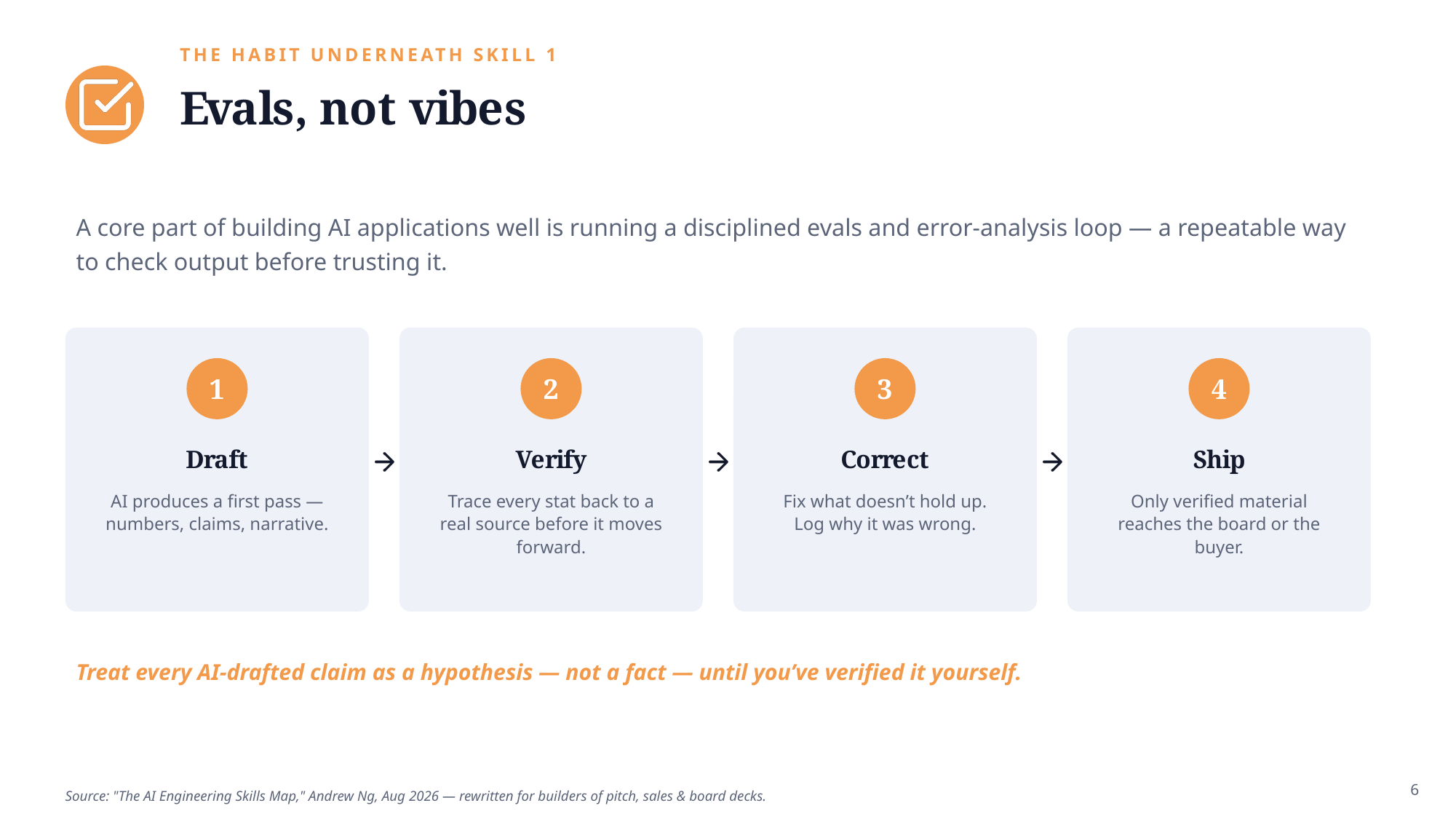
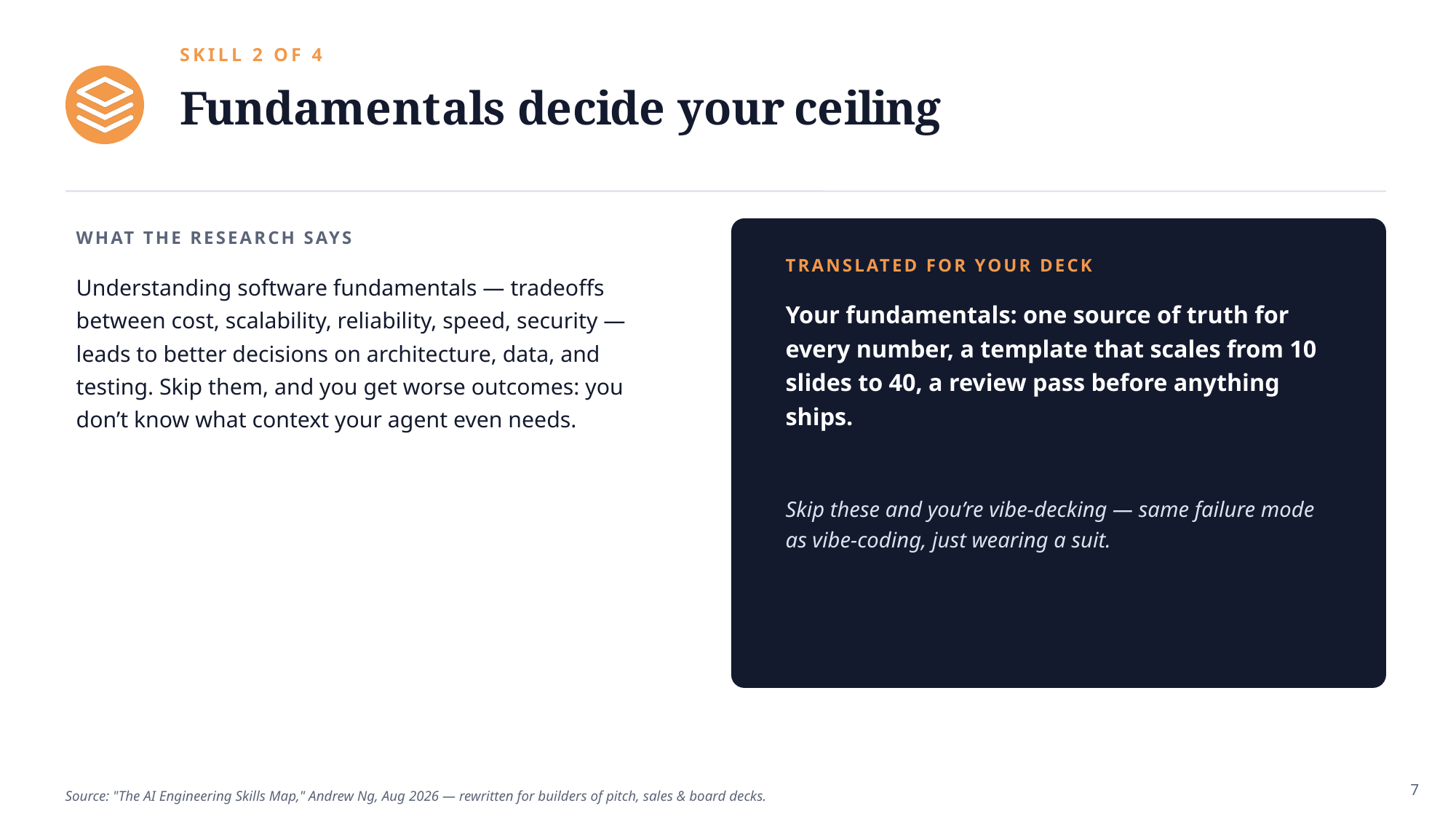
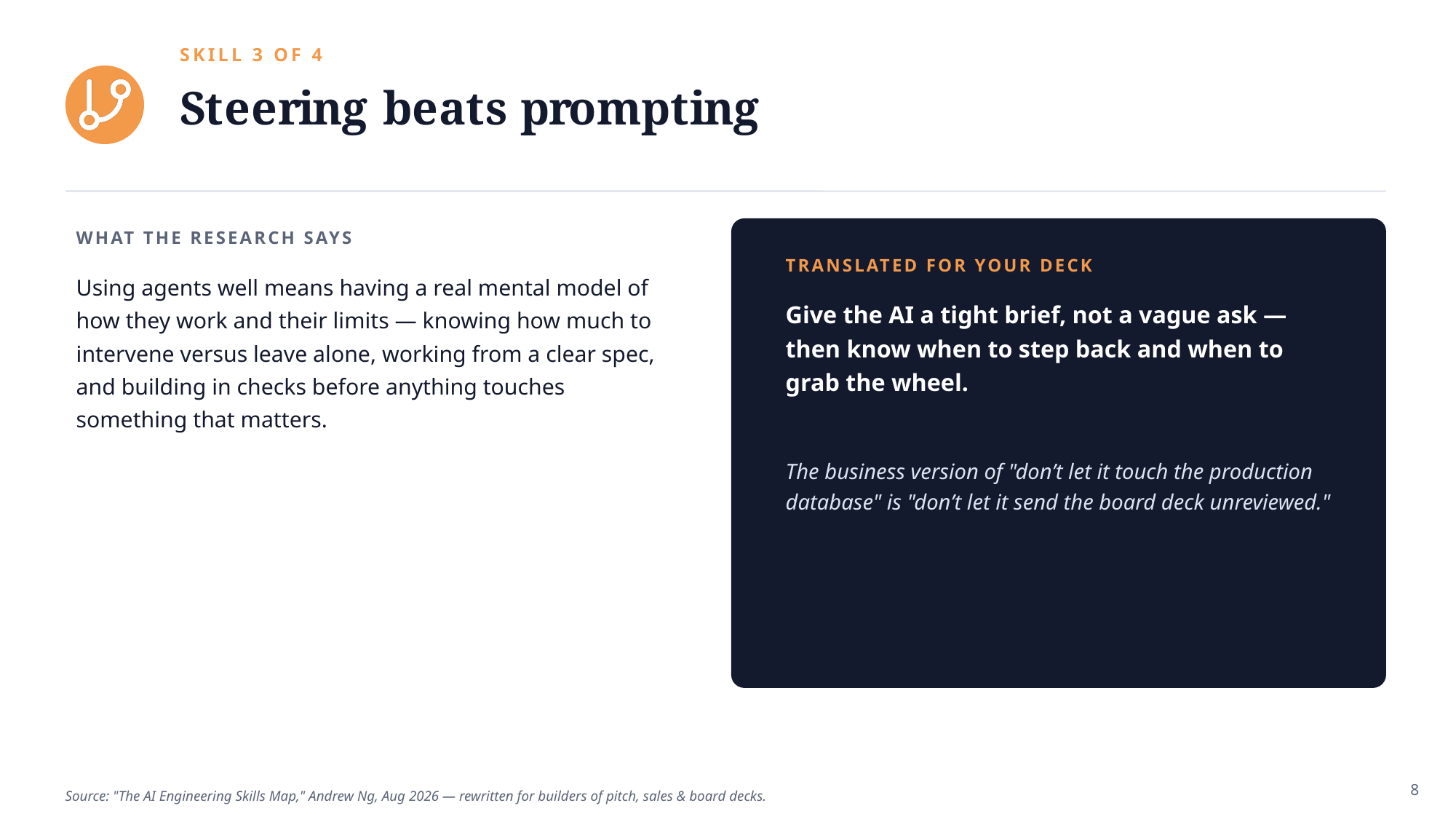
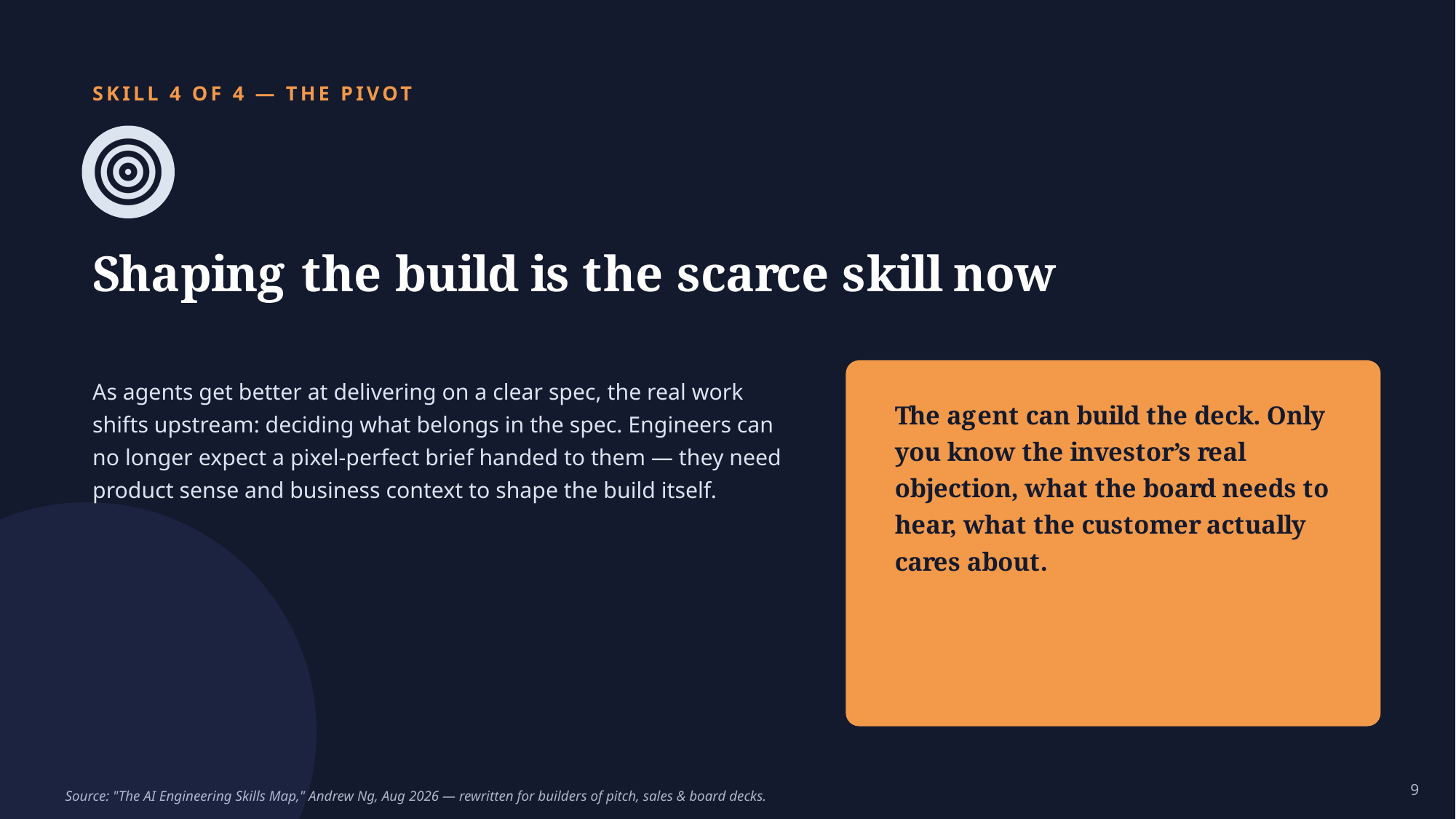
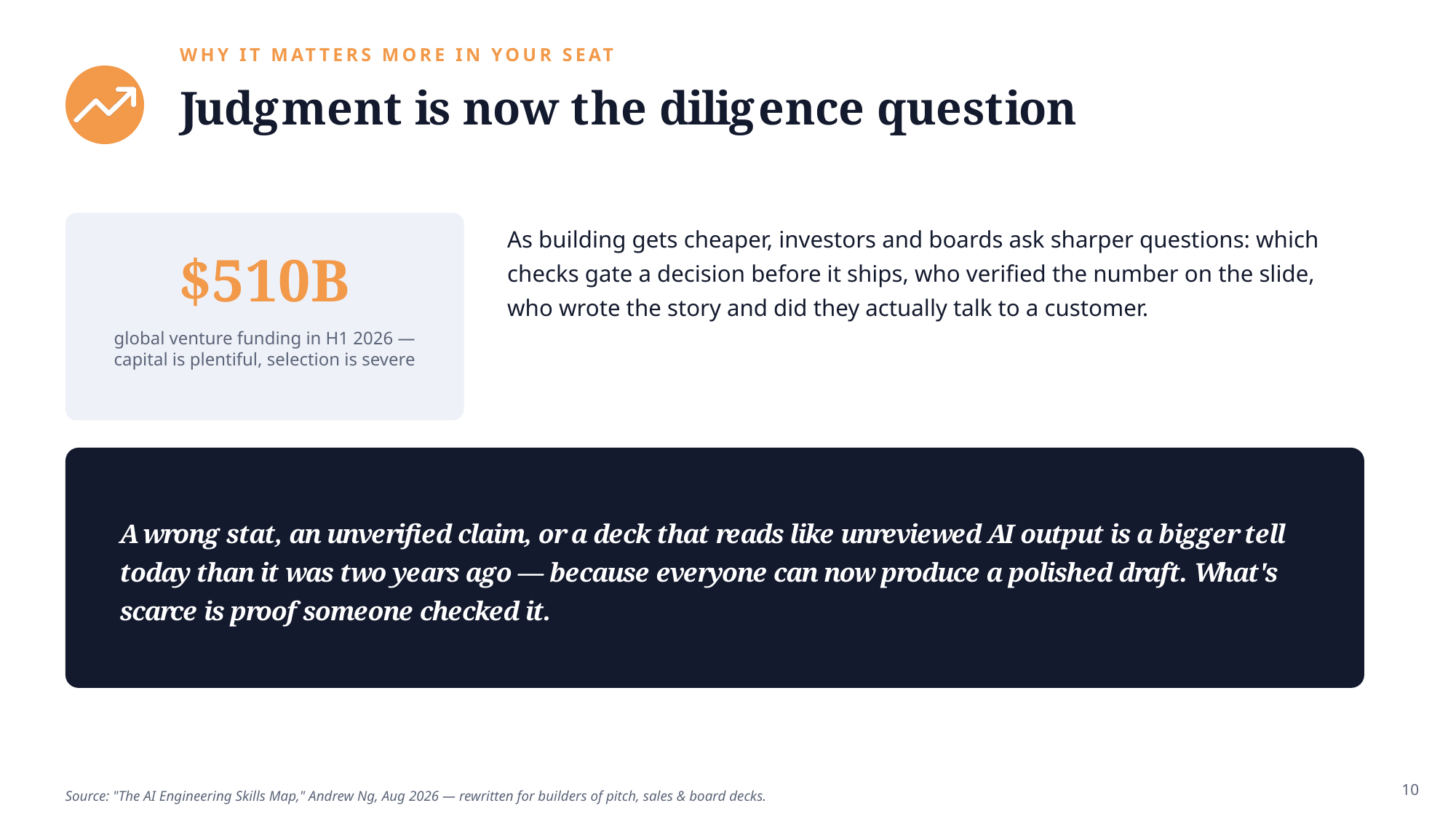
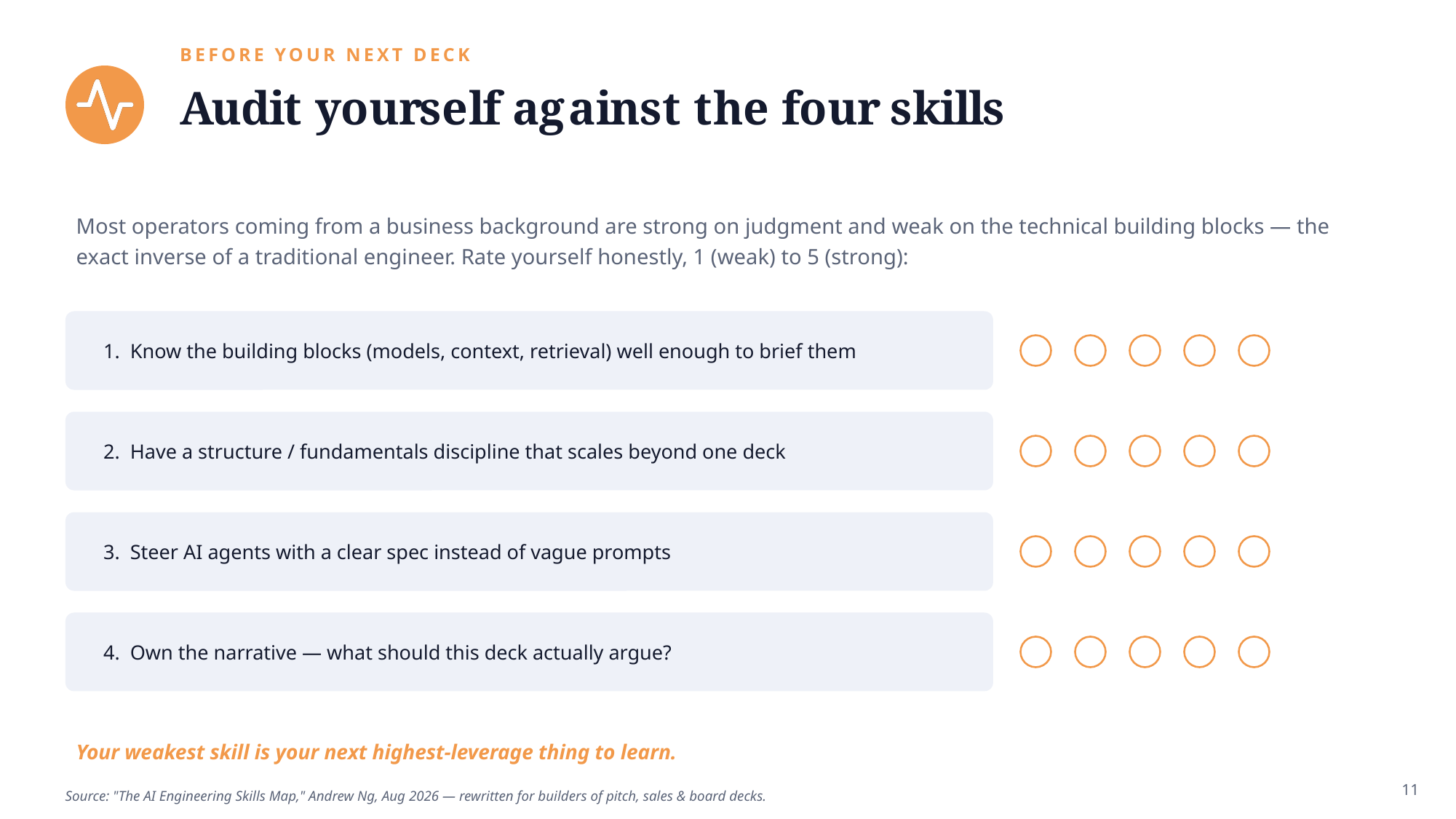
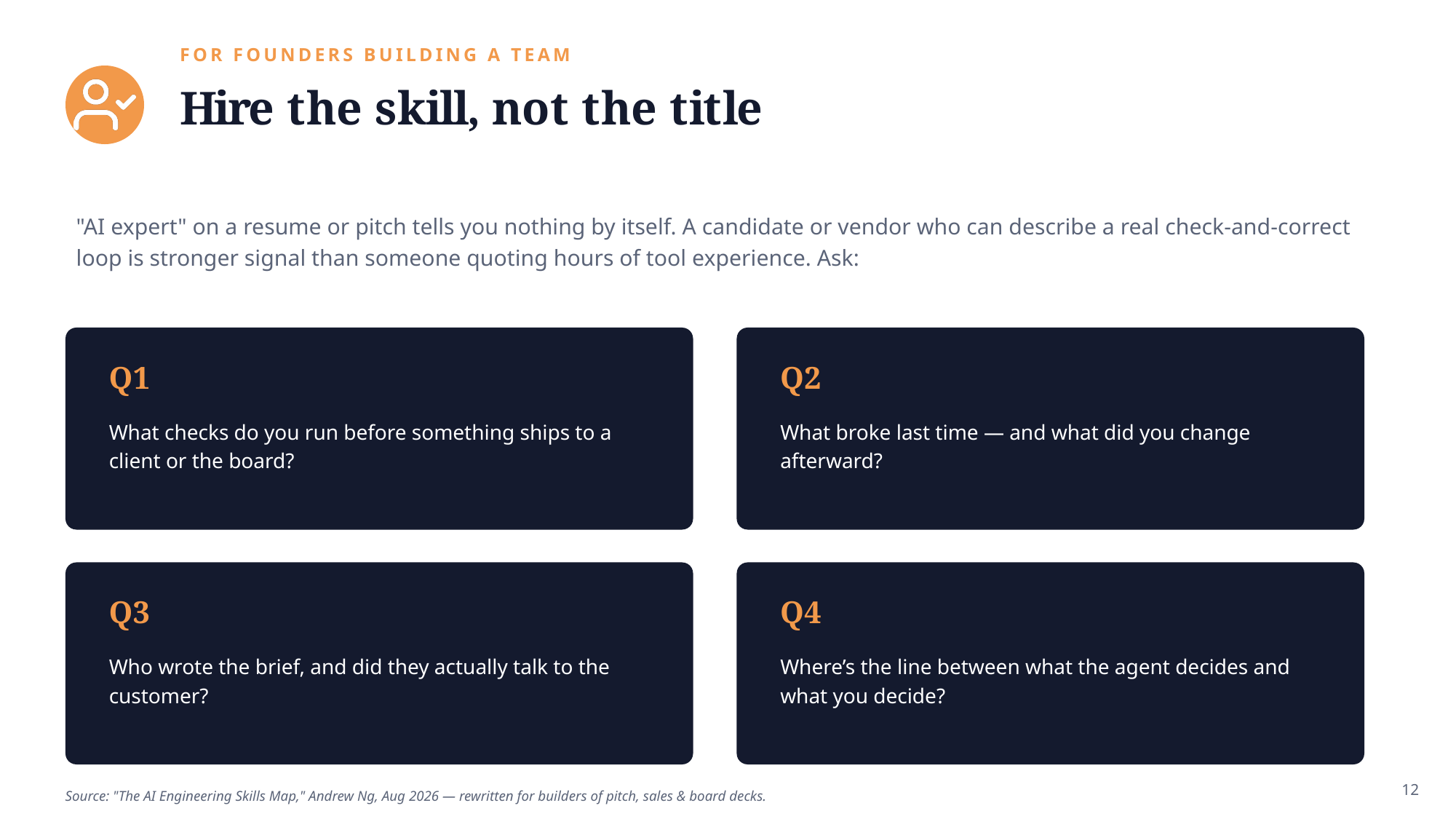
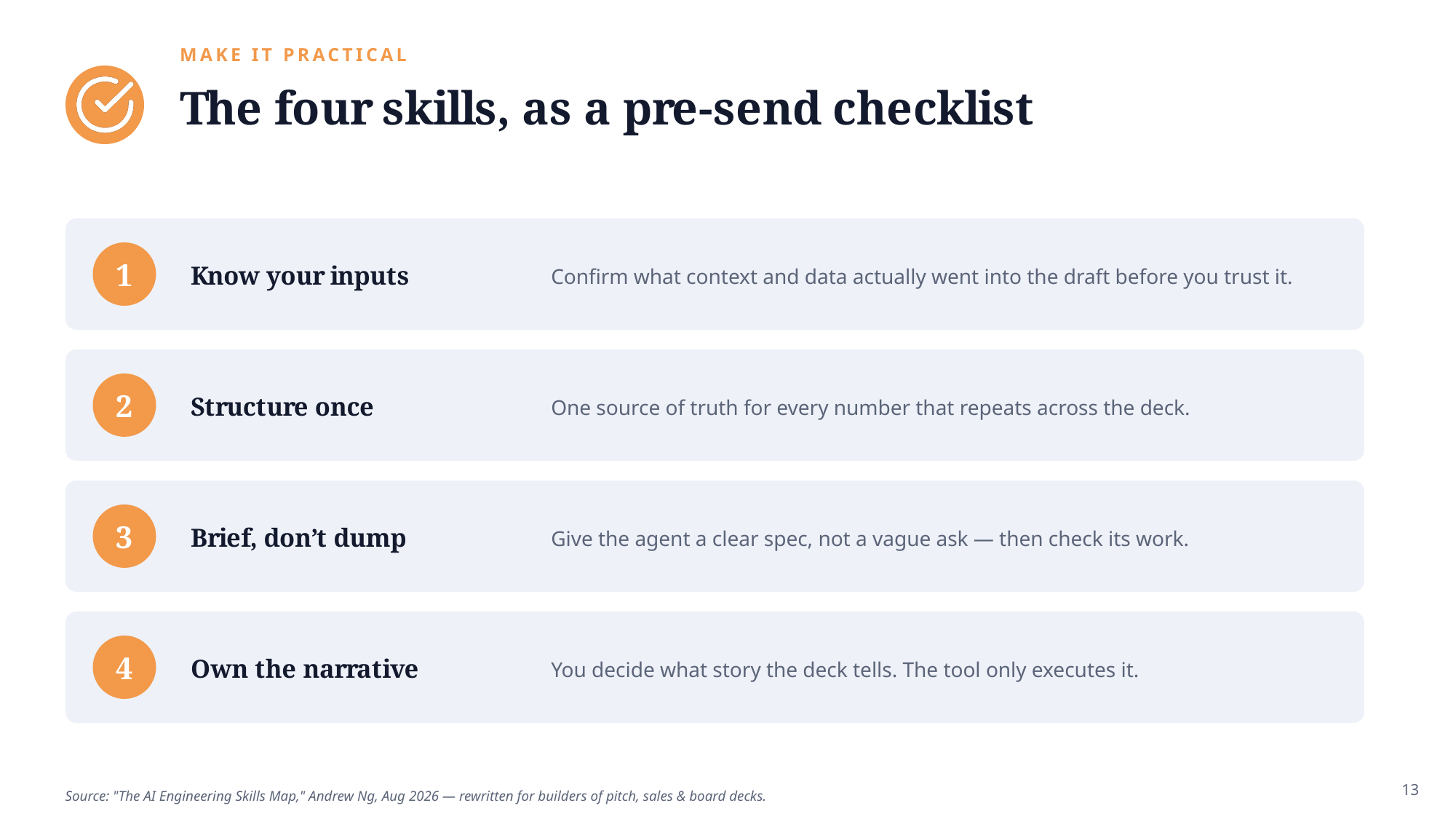
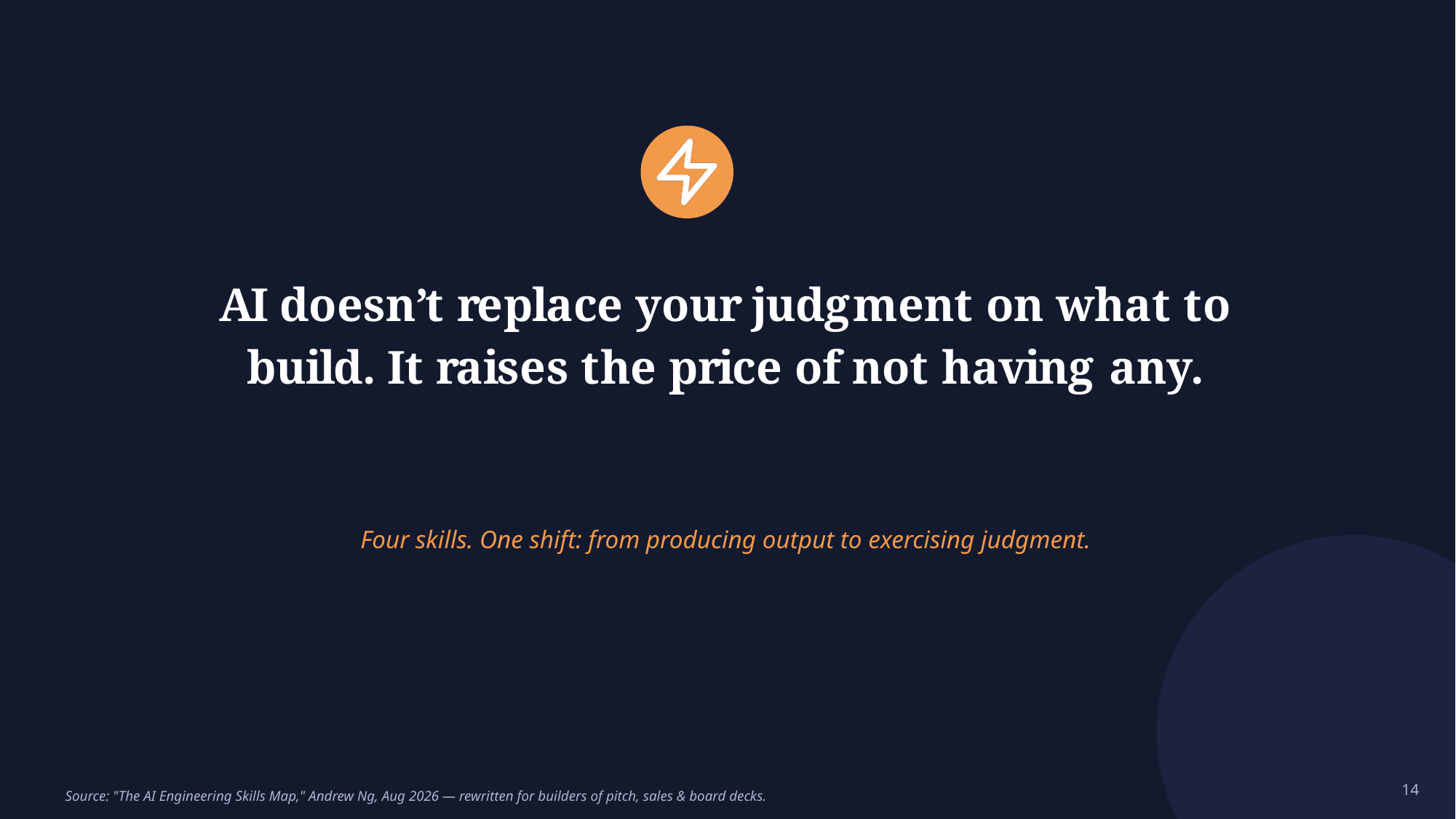
Swipe or scroll sideways to flip through the 15-slide deck →
The one sentence that should reset your roadmap
Buried in the middle of Ng’s piece is the line that ought to reframe how your entire team operates. <cite index=“11-1”>The key difference between AI applications and non-AI software is that the former’s output is less predictable. You don’t know in advance what a large language model will output, or what predictions a supervised learning algorithm will make.</cite>
Read that twice. Traditional software is deterministic — same input, same output, testable to the decimal. AI software is not. You are, in effect, shipping a probability distribution and asking users to trust it. Every skill worth having in this discipline is a direct response to that single fact. Once you internalize it, the rest of the map stops looking like a curriculum and starts looking like a survival kit.
The six things you actually have to know
Ng breaks “building and deploying AI applications” into six competencies: <cite index=“11-1”>LLM foundations, grounding models with data, building agentic systems, evaluation-driven development, operating in production, and machine learning foundations</cite>. Let me be opinionated about what each one is really for.
LLM and machine learning foundations are the price of entry. Not so you can recite transformer internals at a whiteboard, but so you stop being surprised. If you don’t understand why a model hallucinates or why a prompt that worked yesterday drifts today, you will spend your career filing bug reports against physics.
Grounding models with data is where most real products are won. A raw model knows the world in general and your business not at all. Feeding it your documents, your context, your ground truth is the difference between a demo and a system someone will actually pay for.
Building agentic systems is the frontier, and it’s the one I’d bet on hardest. Ng has been consistent that the commercial value here keeps climbing regardless of the hype cycle — he’s said plainly that <cite index=“10-3”>the field of agentic AI will keep growing and rising in value, even if the hype is hard to predict</cite>. Agents multiply both capability and failure surface, which is exactly why this belongs on a skills map and not a marketing slide.
Evaluation-driven development is the one I’d tattoo on every product manager’s forearm. When output is nondeterministic, “it looks good” is not a test. You need evals the way traditional engineering needs unit tests — systematic, repeatable, run on every change. Teams that skip this ship vibes and then wonder why quality quietly rots.
Operating in production is the unglamorous finale that separates people who build AI apps from people who tweet about them. Monitoring, cost, latency, drift, guardrails, the 3 a.m. page when the model starts confidently doing the wrong thing. This is a job, not a launch.
Why I trust this map
Plenty of “skills you need for AI” lists are one person’s Tuesday opinion dressed up as a framework. This one isn’t. <cite index=“11-1”>The map was formed by analyzing a large number of job postings, structured expert interviews, and survey responses.</cite> In other words, it’s a read on what the market is actually hiring for, not what sounds impressive on a conference stage. That’s the part that earns my respect. It describes the terrain instead of selling a shortcut across it.
The uncomfortable takeaway
Here’s the close I want to leave you with. If your AI strategy is a debate about which model to license, you are optimizing the one variable that changes every few months and requires the least skill to swap. Meanwhile the durable advantages — grounding, evaluation, agentic design, production discipline — are precisely the ones no procurement contract can hand you. They compound with practice, and they belong to the teams that build them.
Ng drew the map. The mistake would be to treat it as a reading list you skim and nod at. Treat it as a mirror. Whatever your team can’t yet do on that list is the exact shape of the gap between the AI you’re demoing and the AI you could actually ship. The model isn’t the hard part. It never was.