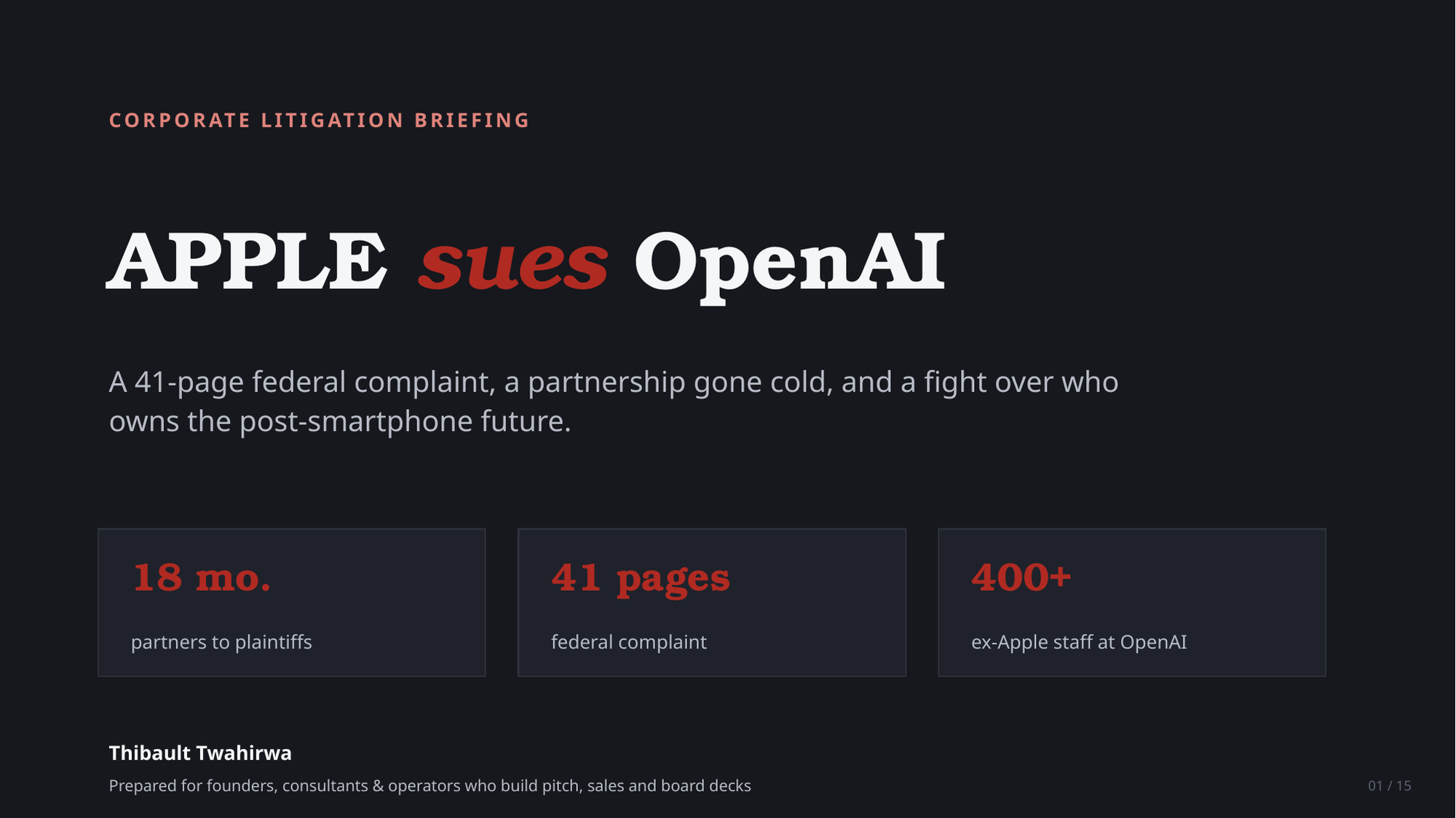
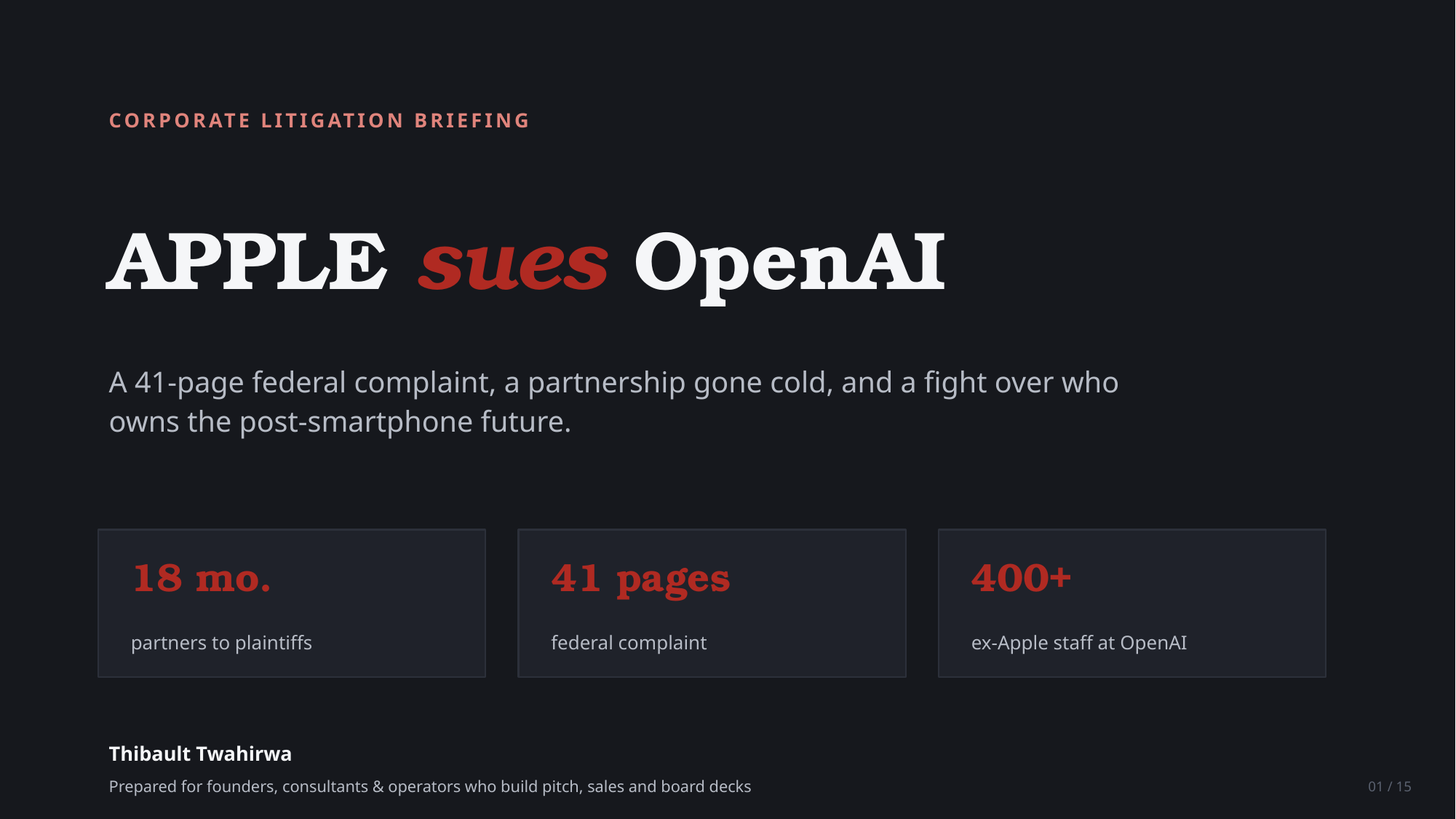
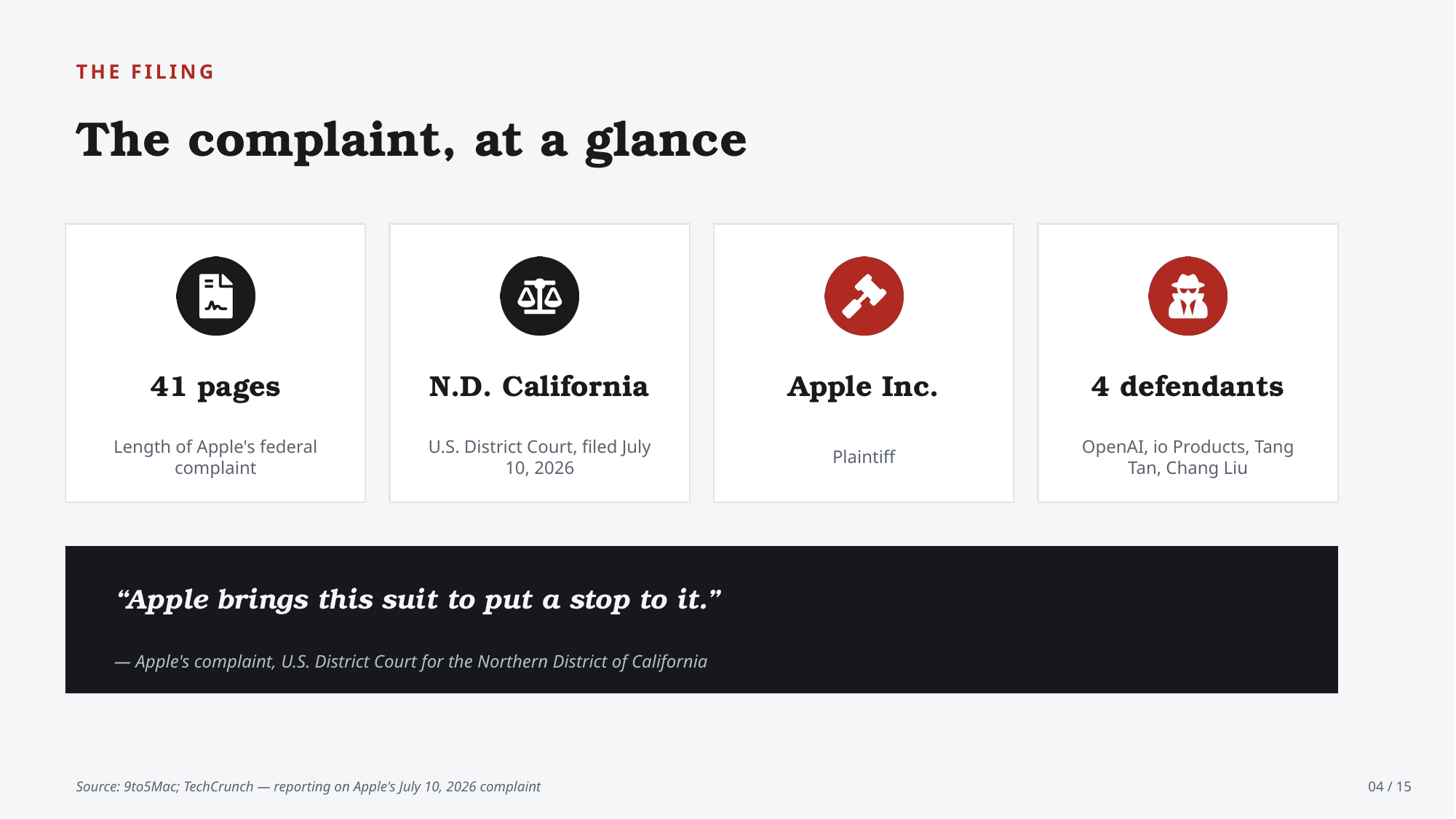
Apple filed a 41-page federal lawsuit against OpenAI on July 10, 2026, accusing the AI company of a coordinated campaign to steal trade secrets for its unreleased hardware. Less than two years after the two companies announced a partnership, they are now adversaries in federal court.
Key Takeaways
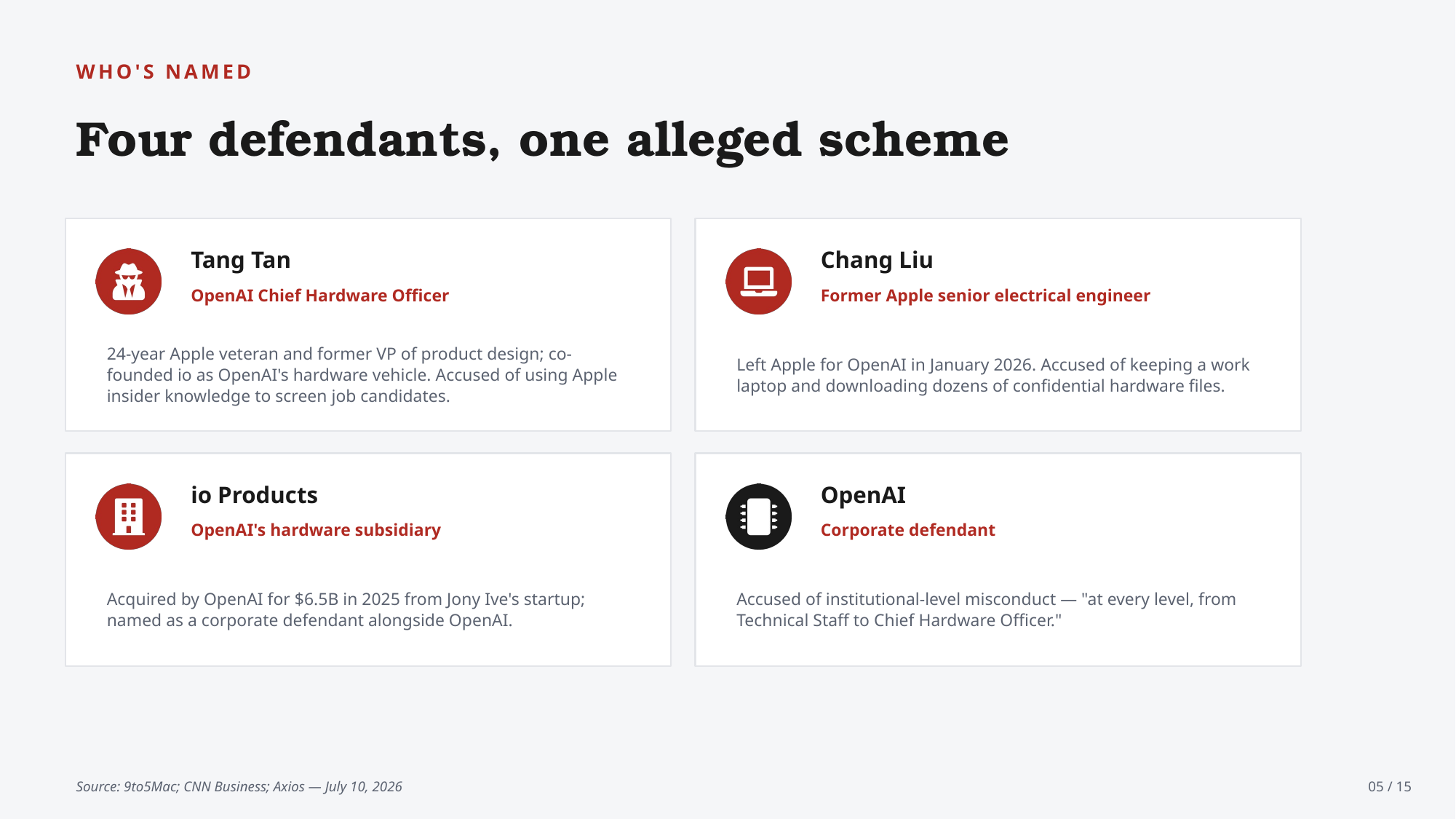
- Apple’s suit names OpenAI, its hardware unit io Products, and two ex-Apple employees, Tang Tan and Chang Liu.
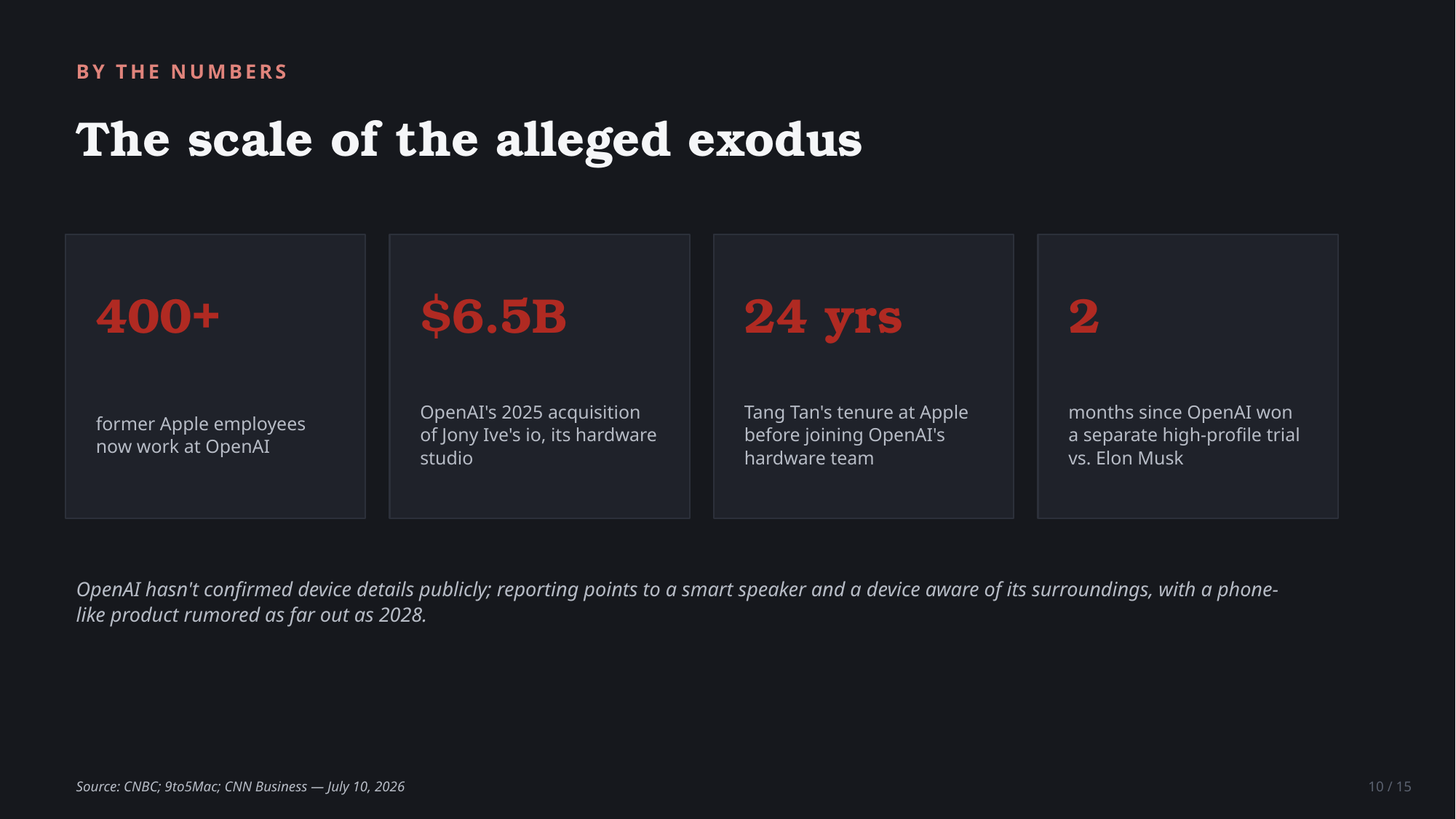
- Apple says over 400 former employees now work at OpenAI.
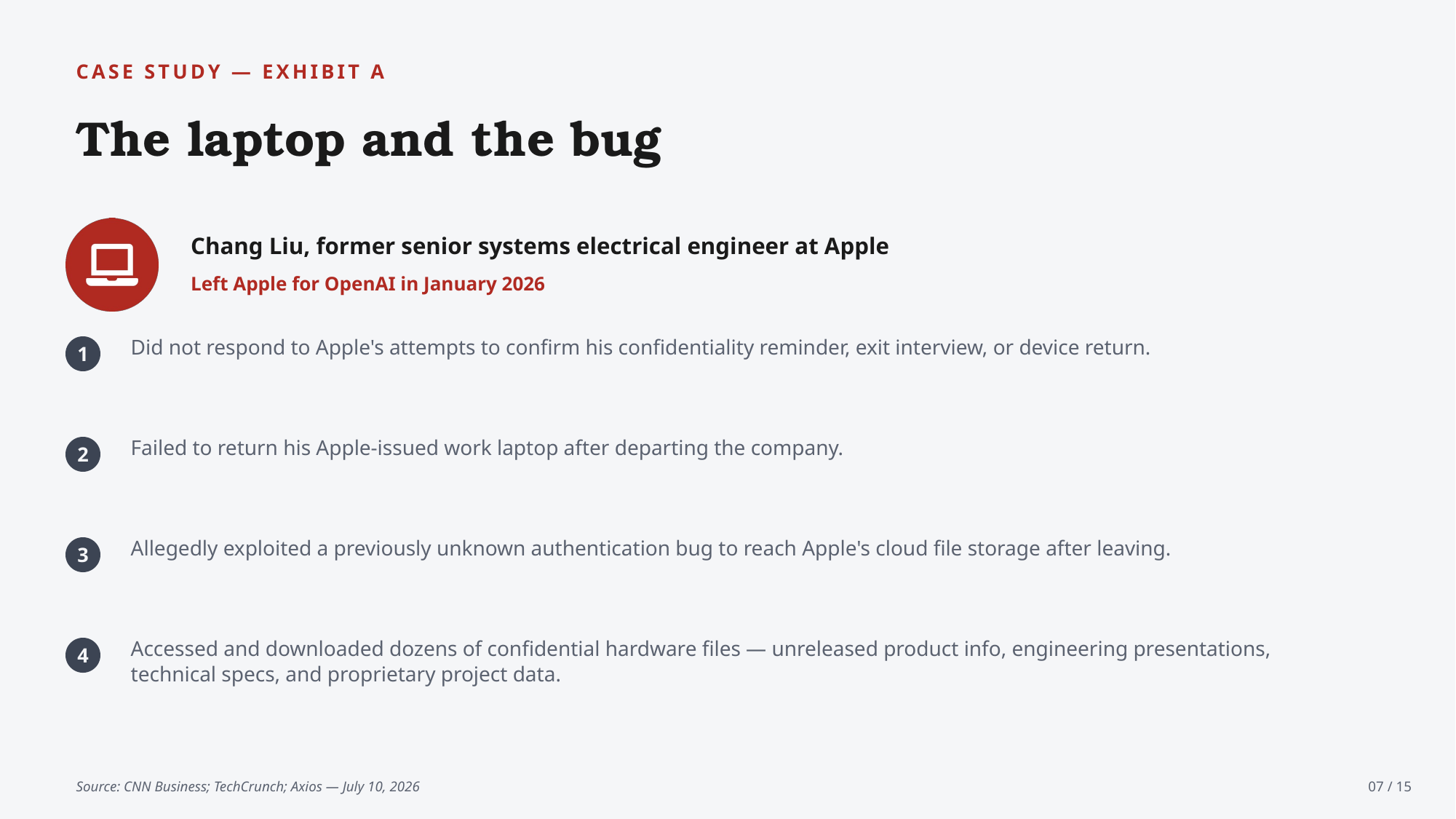
- One engineer allegedly kept an Apple laptop and downloaded confidential hardware files after leaving.
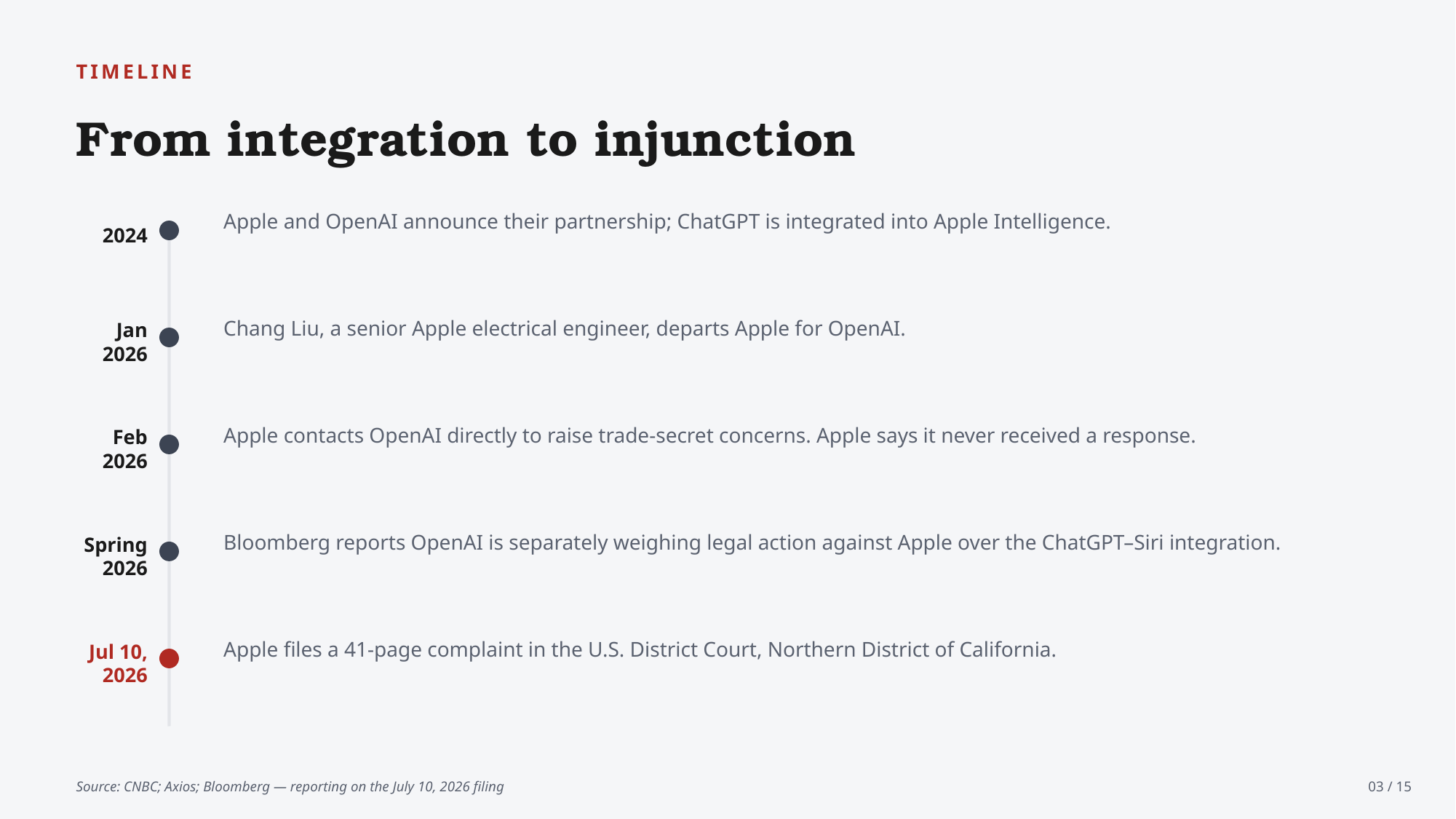
- Apple raised concerns with OpenAI in February and says it got no response.
Swipe or scroll sideways to flip through the 15-slide deck →
What is Apple actually accusing OpenAI of?
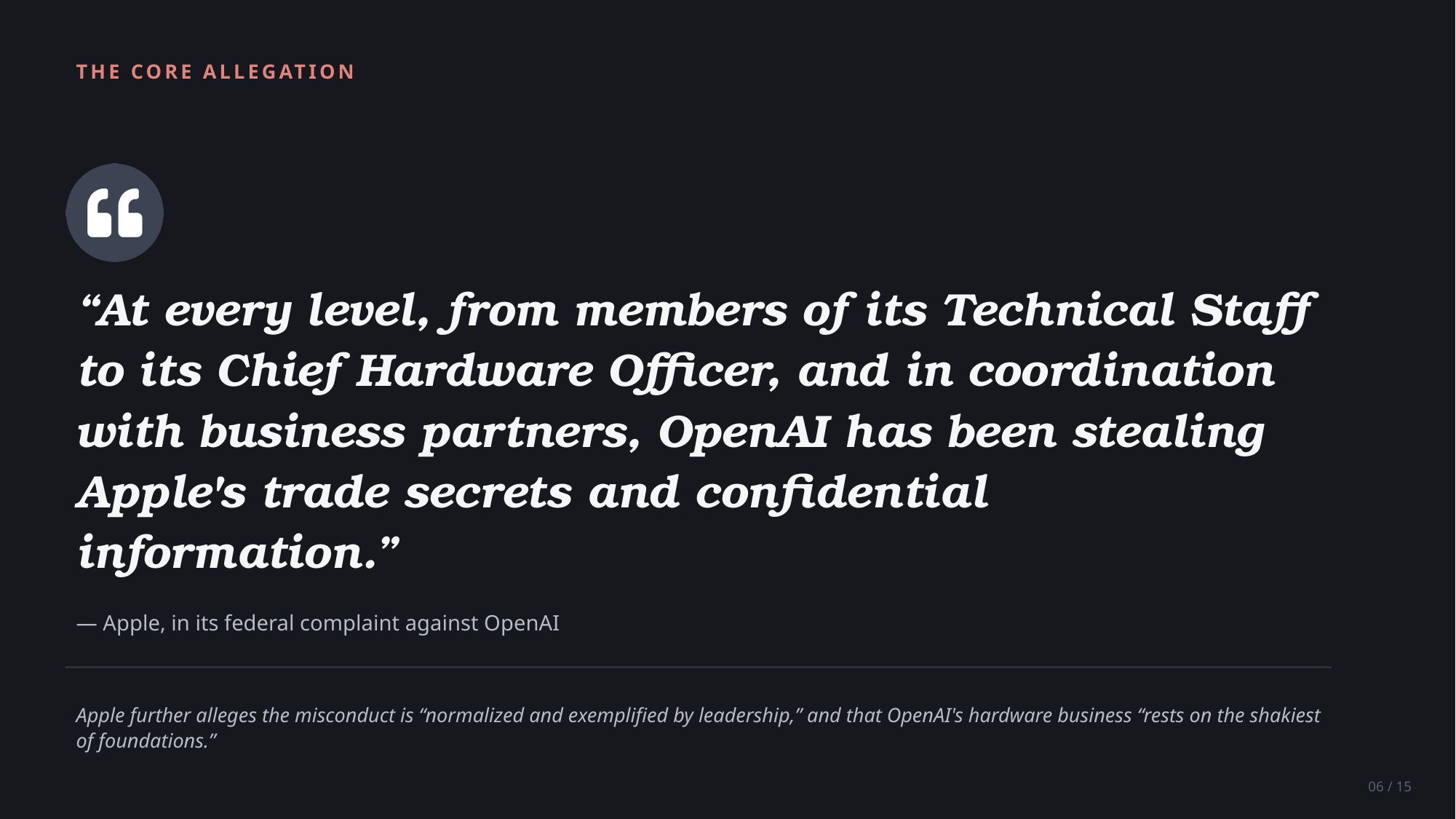
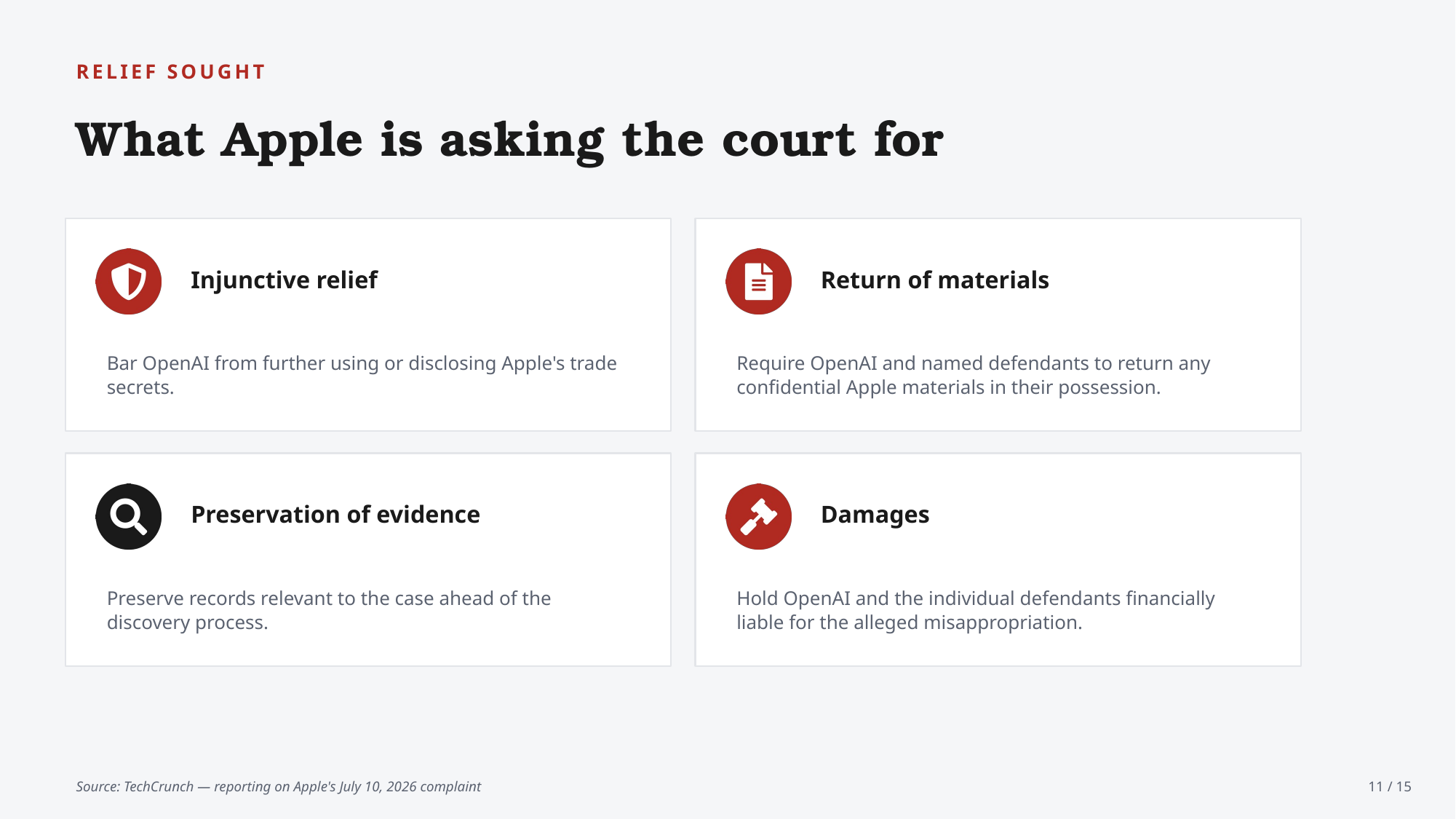
Apple’s complaint accuses OpenAI of running a systematic effort to pull confidential product information from current and former Apple employees to build its own consumer hardware. Apple says the alleged misconduct happened “at every level, from members of its Technical Staff to its Chief Hardware Officer, and in coordination with business partners.” The suit, filed in Northern California federal court, seeks an injunction and damages.
The filing describes specific behavior: employees allegedly downloading design files, interviewers eliciting engineering details from job candidates, and a manufacturing partner allegedly misled into demonstrating a proprietary process. Apple calls this a corporate pattern, arguing OpenAI’s hardware ambitions are “rotten to its core by its illegal reliance on misappropriated trade secrets.”
Who are Tang Tan and Chang Liu?
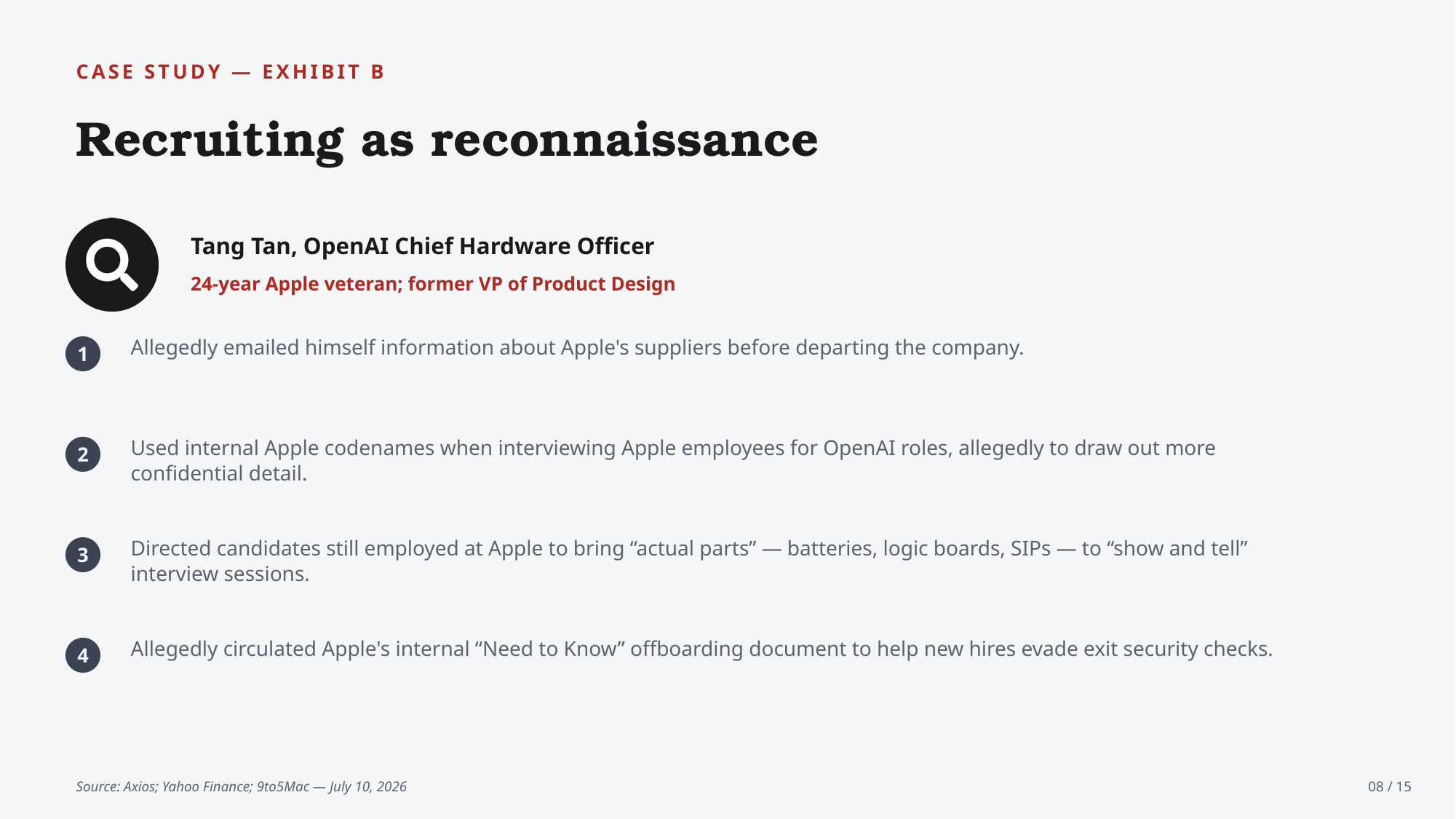
Tang Tan is OpenAI’s chief hardware officer and spent 24 years at Apple beforehand, most recently as vice president of product design for the iPhone and Apple Watch. Apple alleges he used insider knowledge of confidential projects to question job candidates and directed people still at Apple to bring hardware components to interviews for “show and tell” sessions.
Chang Liu, a former senior systems electrical engineer who spent eight years at Apple, is accused of a more literal theft. The complaint says Liu failed to return a company laptop after leaving for OpenAI in 2026, then used it to download “dozens of Apple’s confidential hardware-related files,” including technical specifications and engineering presentations.
How did the alleged theft actually work?
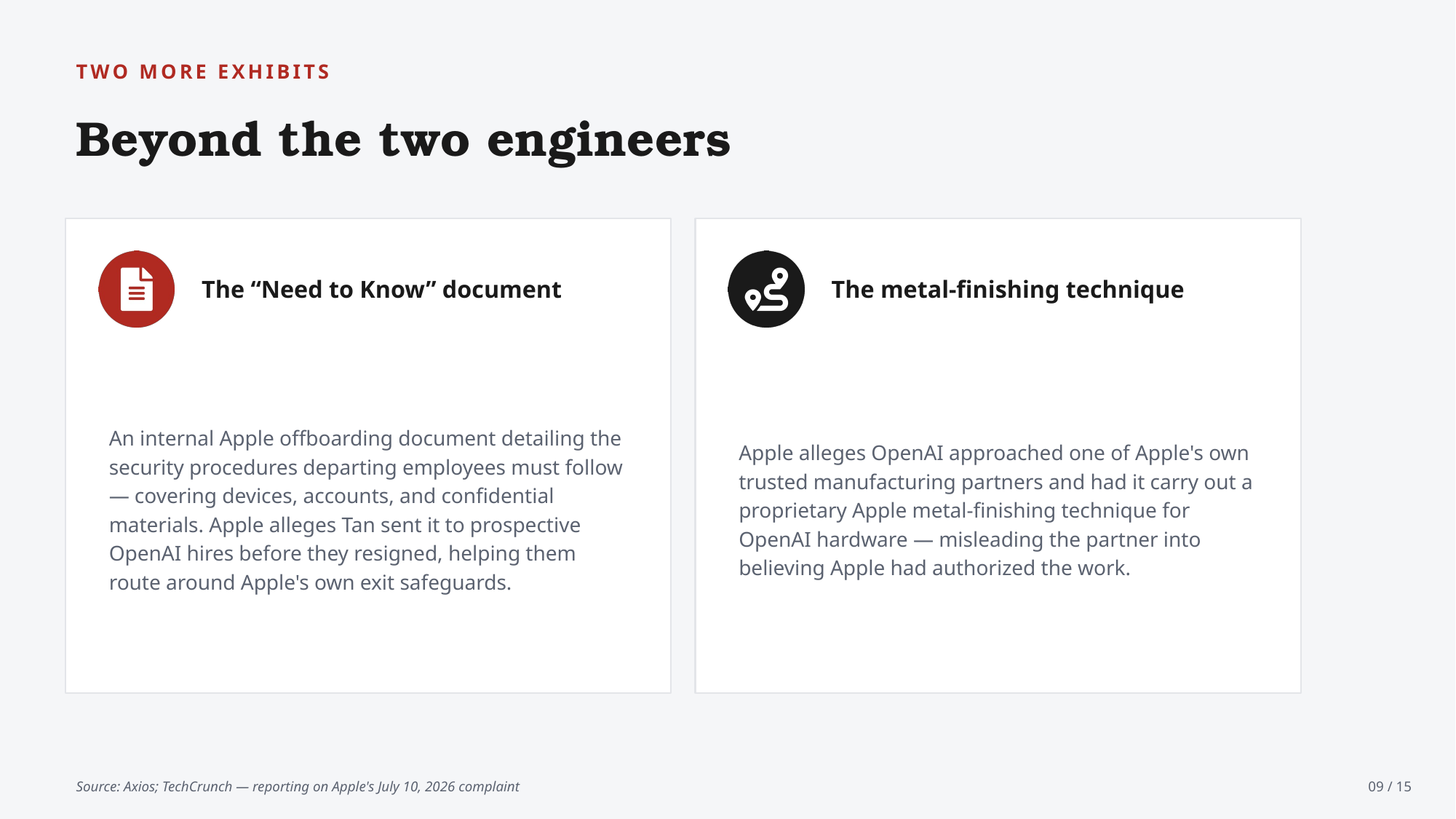
The complaint describes recruiting tactics and after-the-fact evasion meant to pull information from departing staff without triggering Apple’s security controls. Apple says OpenAI circulated an internal document called “Need to Know,” which outlines Apple’s own offboarding security steps, so new hires could dodge the “dreaded walkout,” an immediate exit Apple imposes on departing employees it treats as a security risk. Candidates were reportedly told to bring actual Apple parts to interviews and to notify OpenAI immediately if asked to sign anything during an Apple exit interview.
Apple also alleges the theft reached its supply chain: the filing describes OpenAI having a trusted Apple manufacturing partner carry out “a specific trade secret metal-finishing technique,” allegedly leading the partner to believe Apple had approved the disclosure.
Why is this happening now?
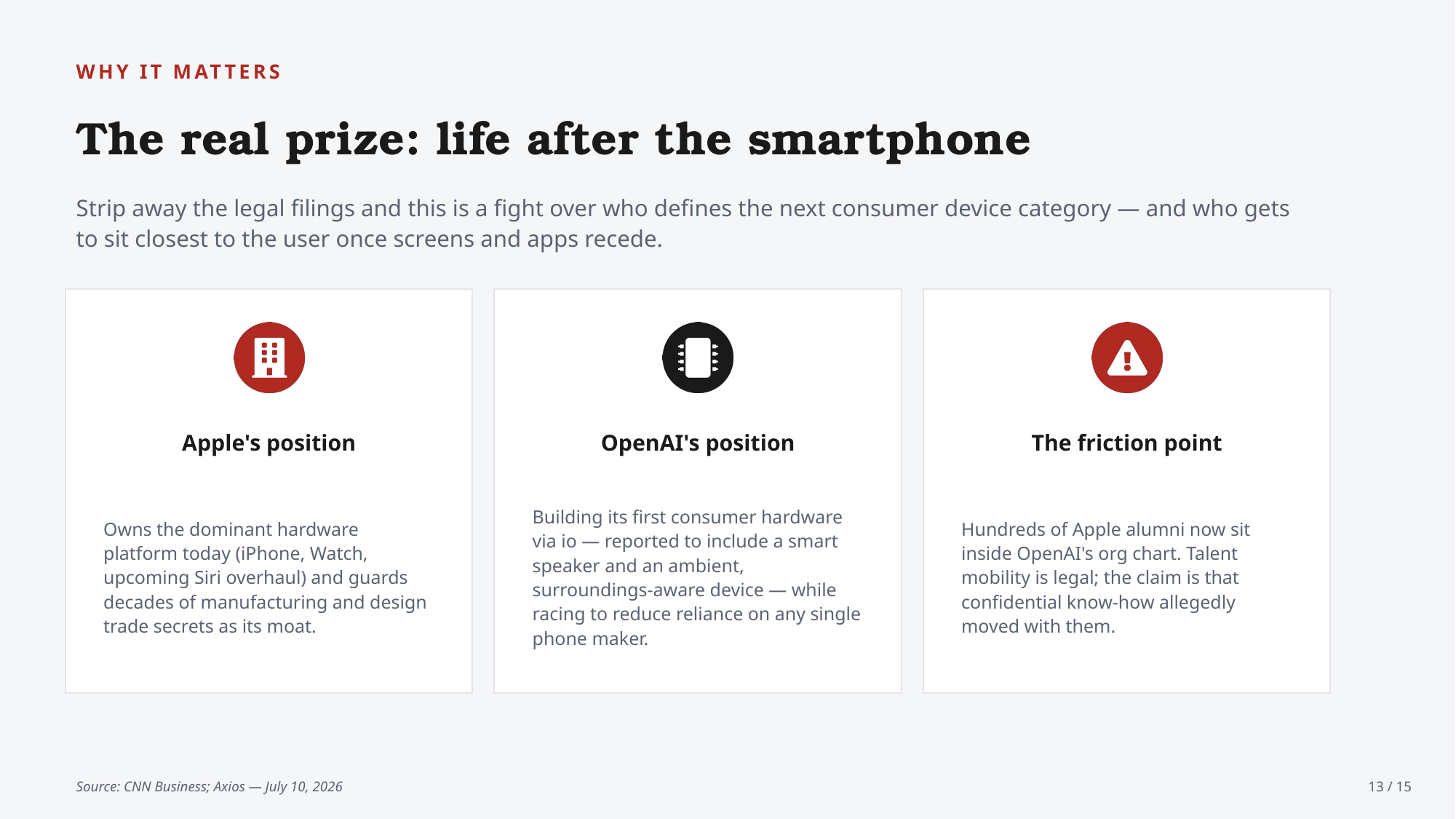
The suit lands as OpenAI prepares its first hardware product, widely expected to compete with the iPhone, which explains why its timing tracks so closely with OpenAI’s rollout plans. Analyst Ming-Chi Kuo has suggested the device could be a smartphone built around AI agents instead of traditional apps, a shift that would challenge the iPhone’s basic premise. OpenAI’s chief global affairs officer said at Davos in January that a device would arrive in the first half of 2026.
Much of that hardware effort traces back to io Products, the startup Apple’s former design chief Jony Ive co-founded and sold to OpenAI in a $6.5 billion deal. io is named as a defendant, though Ive is not. Apple calls the current allegations “the tip of the iceberg,” with discovery expected to surface more.
The slides embedded below cover this same story as a ready-to-use deck, generated by AskDeck from a short brief, if you want the timeline and key names laid out visually.
What happened to the Apple-OpenAI partnership?
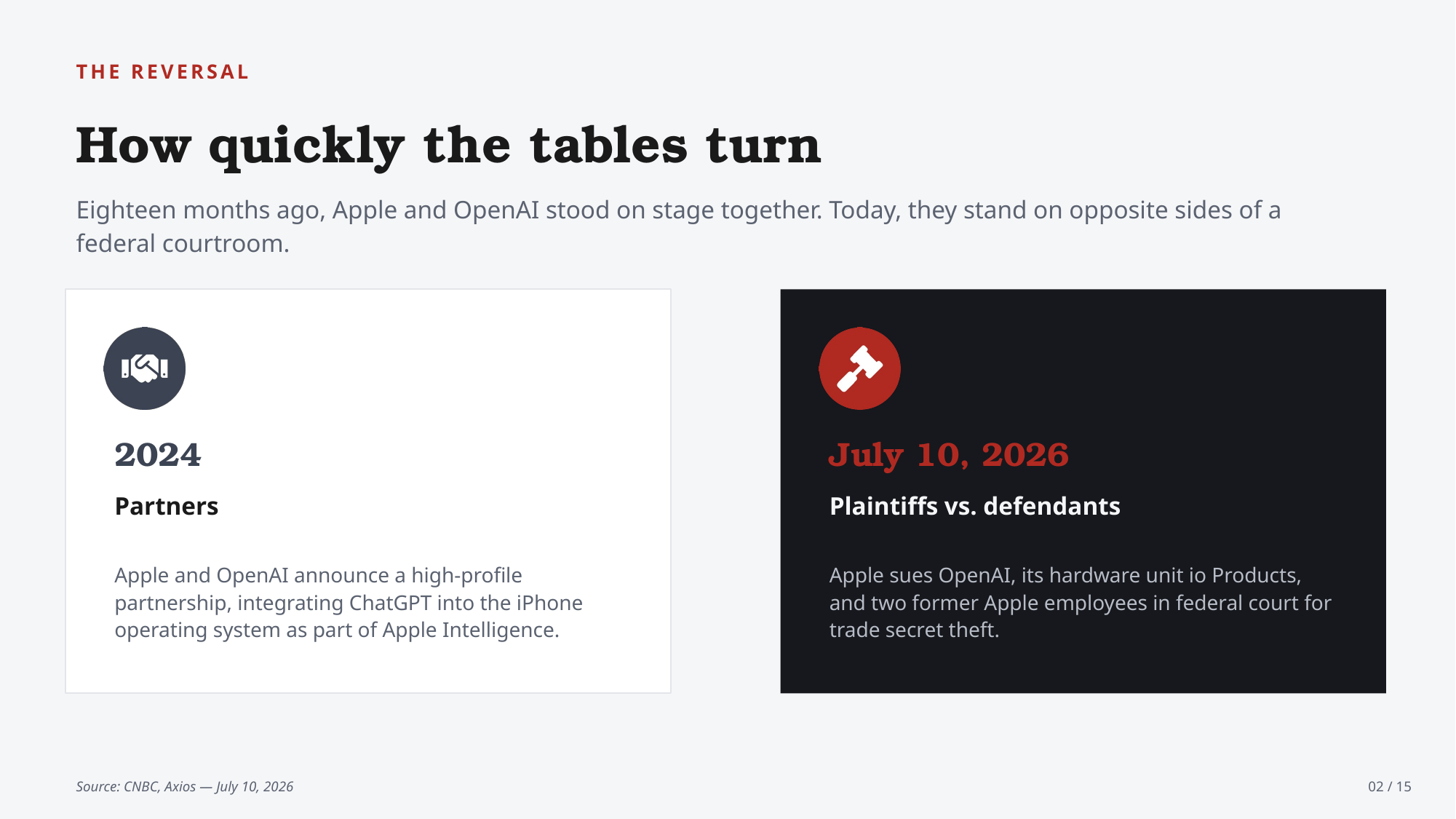
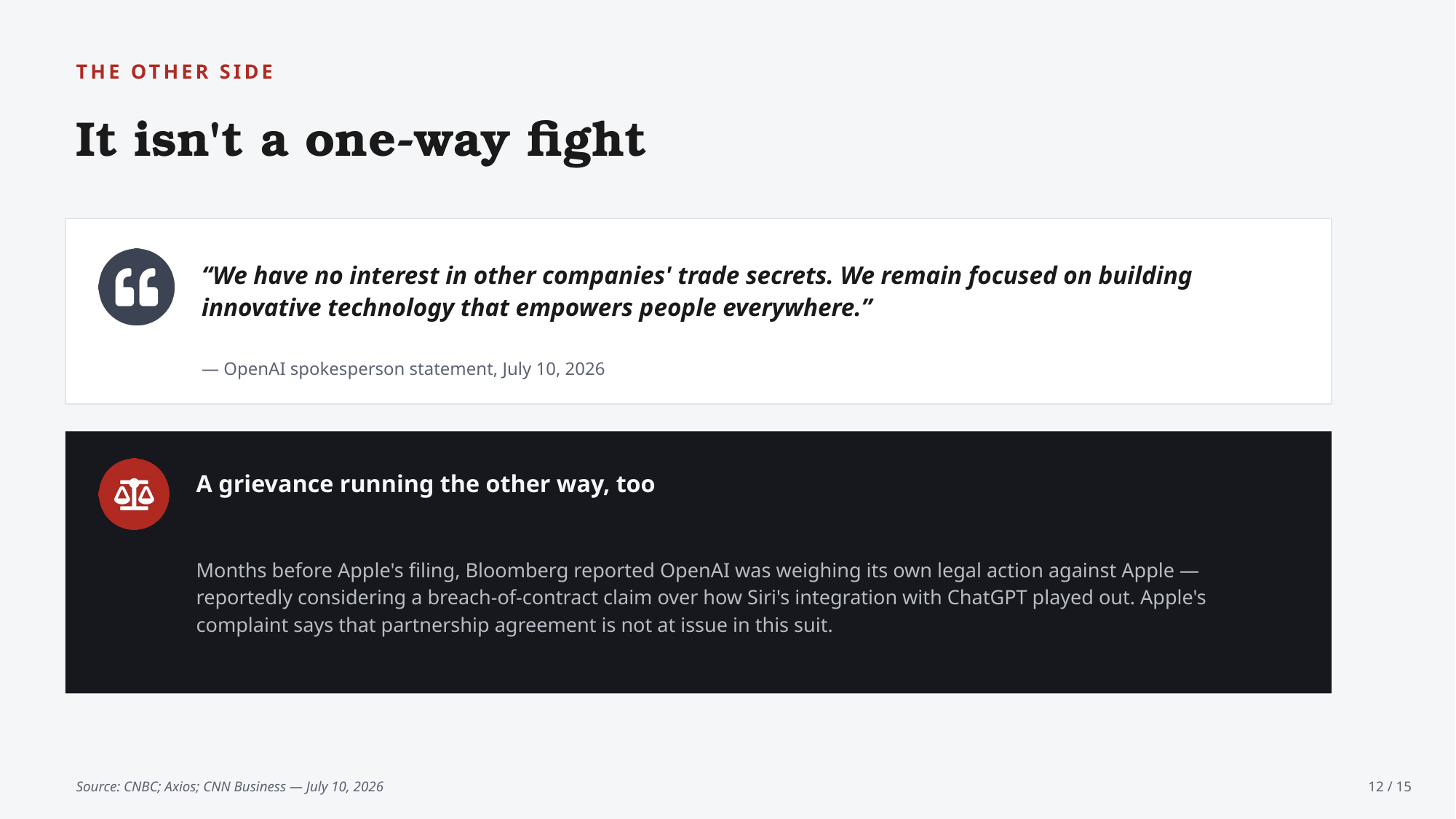
The two companies were collaborators eighteen months ago, when Apple integrated ChatGPT into Apple Intelligence in 2024 as part of modernizing Siri. That relationship has since cooled: Apple is switching to Google’s Gemini to power a revamped Siri, while OpenAI had reportedly weighed its own breach-of-contract claims over how ChatGPT was folded into Apple’s software. The suit arrives two months after OpenAI won a separate case brought by Elon Musk, and lands as OpenAI prepares for what’s expected to be a major public offering.
OpenAI has denied wrongdoing, saying it has “no interest in other companies’ trade secrets” and remains focused on building its own technology. The case now heads toward discovery, where internal communications from both companies are likely to surface.
Common questions
Did Apple and OpenAI have a partnership before this lawsuit? Yes. In 2024, Apple integrated ChatGPT into Apple Intelligence and Siri. That relationship has faded since, with Apple moving toward Google’s Gemini while OpenAI develops hardware that could compete with the iPhone.
What is OpenAI building that has Apple worried? OpenAI hasn’t confirmed details, but reports point to a consumer device, possibly a smartphone built around AI agents instead of apps, developed with help from io Products, the startup OpenAI bought from Jony Ive for $6.5 billion.
The example deck below was built with AskDeck from a short brief on this case and can be downloaded and edited if you want to reuse the timeline elsewhere.