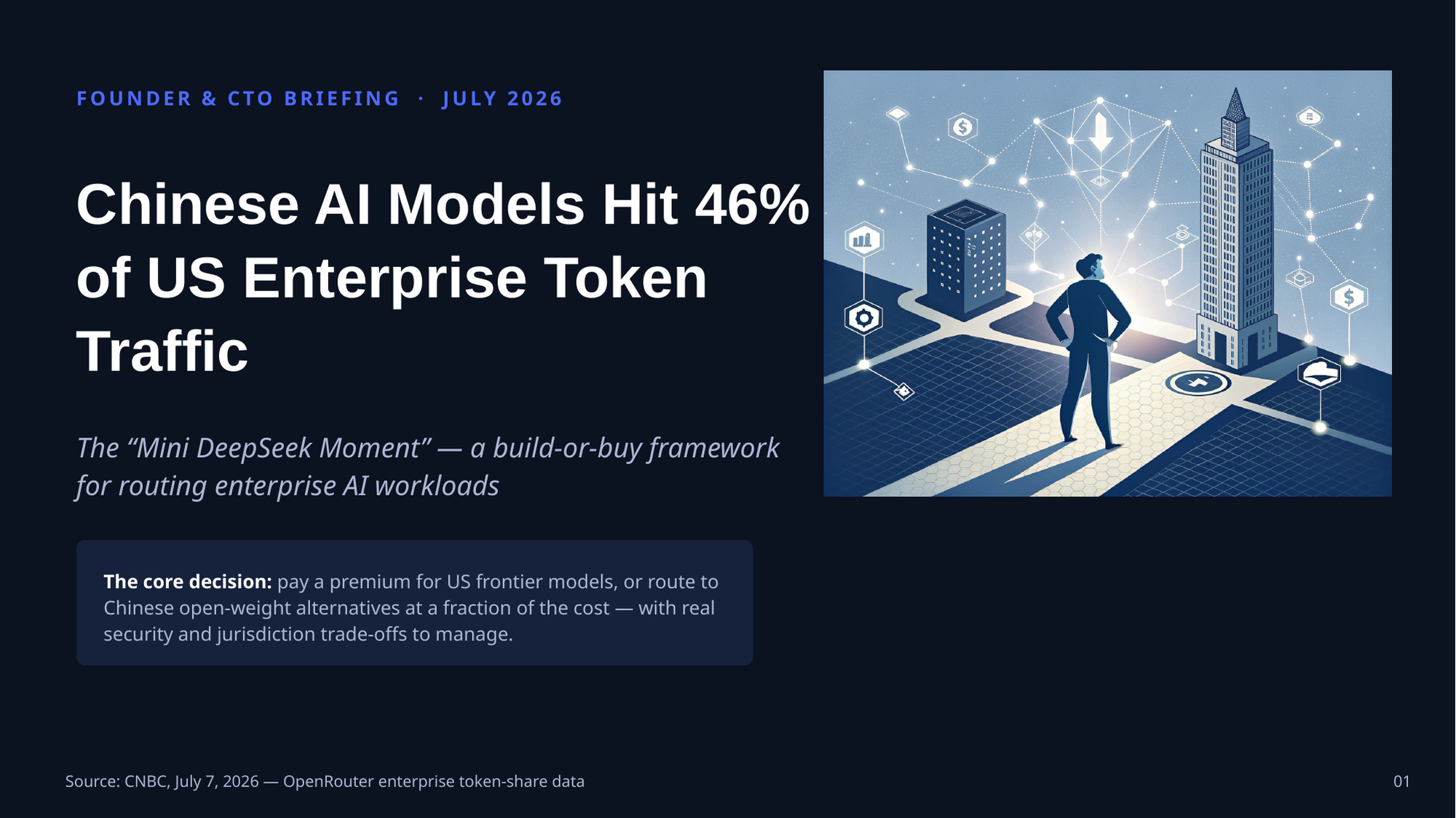
A year ago, Chinese AI models handled a sliver of the tokens flowing through US company workloads. Now they handle nearly half.
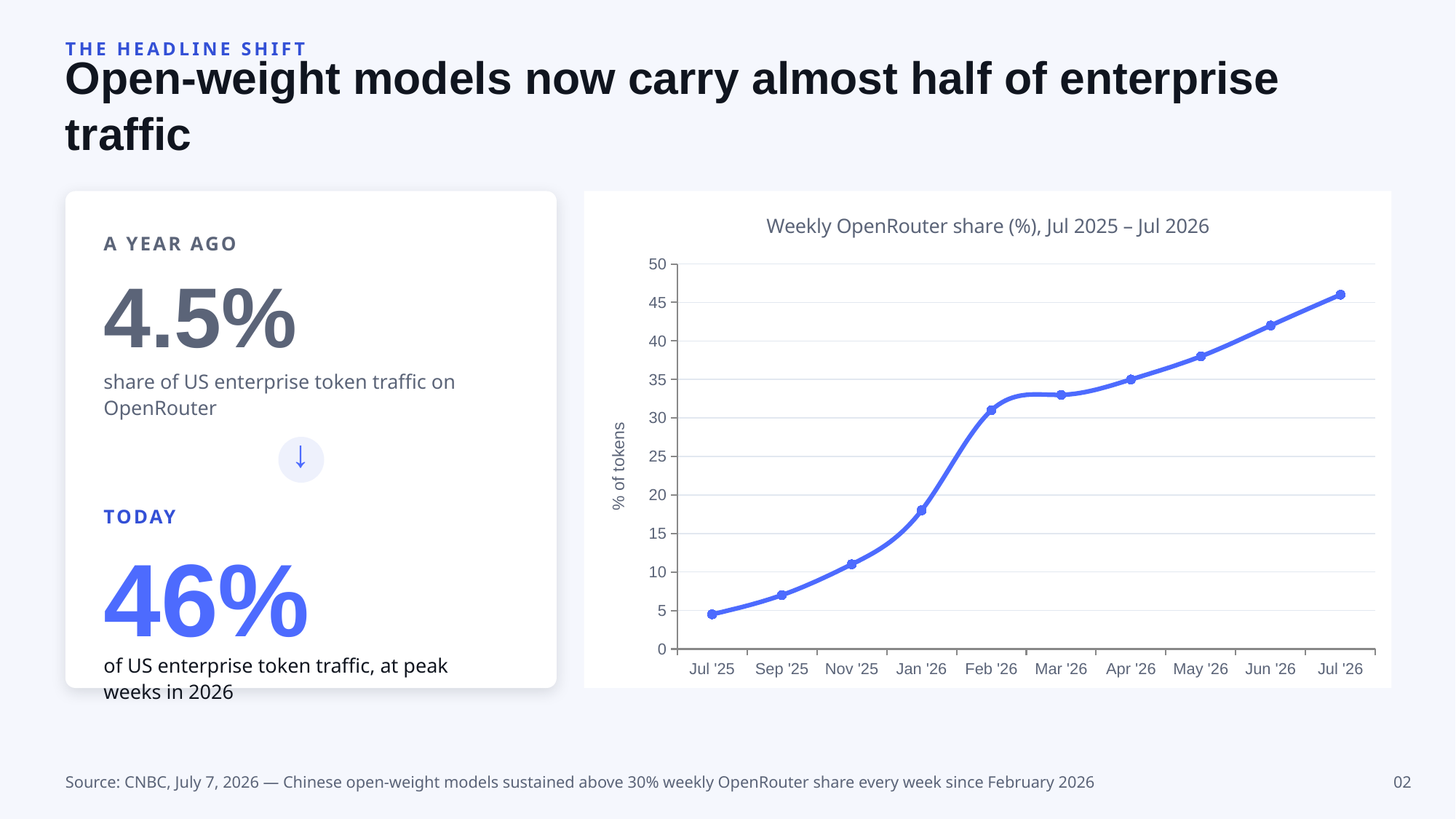
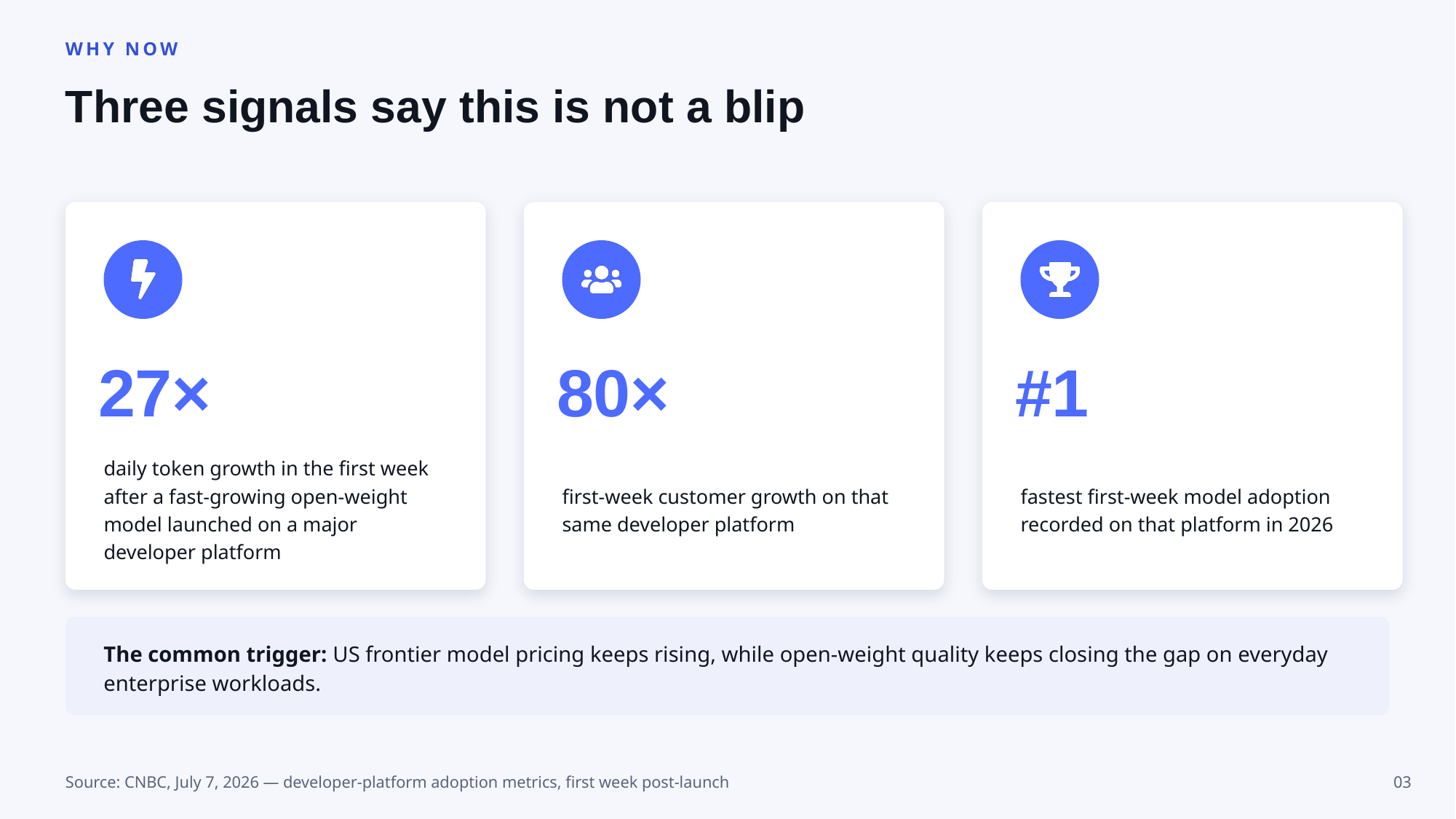
Key TakeawaysChinese-origin models’ share of US enterprise tokens on OpenRouter has stayed above 30% every week since February 8, 2026, peaking at 46%, up from an 11% yearly average and just 4.5% in early 2025.Open-weight Chinese models run 60% to 90% cheaper per token than leading Anthropic and OpenAI models.Z.ai’s GLM-5.2 grew daily token volume roughly 27x and its customer count roughly 80x in its first full week on Vercel.AI startup Lindy moved 100% of its traffic from Claude to DeepSeek, a switch it expects will save millions.
The embedded slides below walk through this same shift as a routing decision for founders and CTOs, drawn from a short brief and built with AskDeck. Back to the numbers, because they explain why so many teams are rethinking their model stack this quarter.
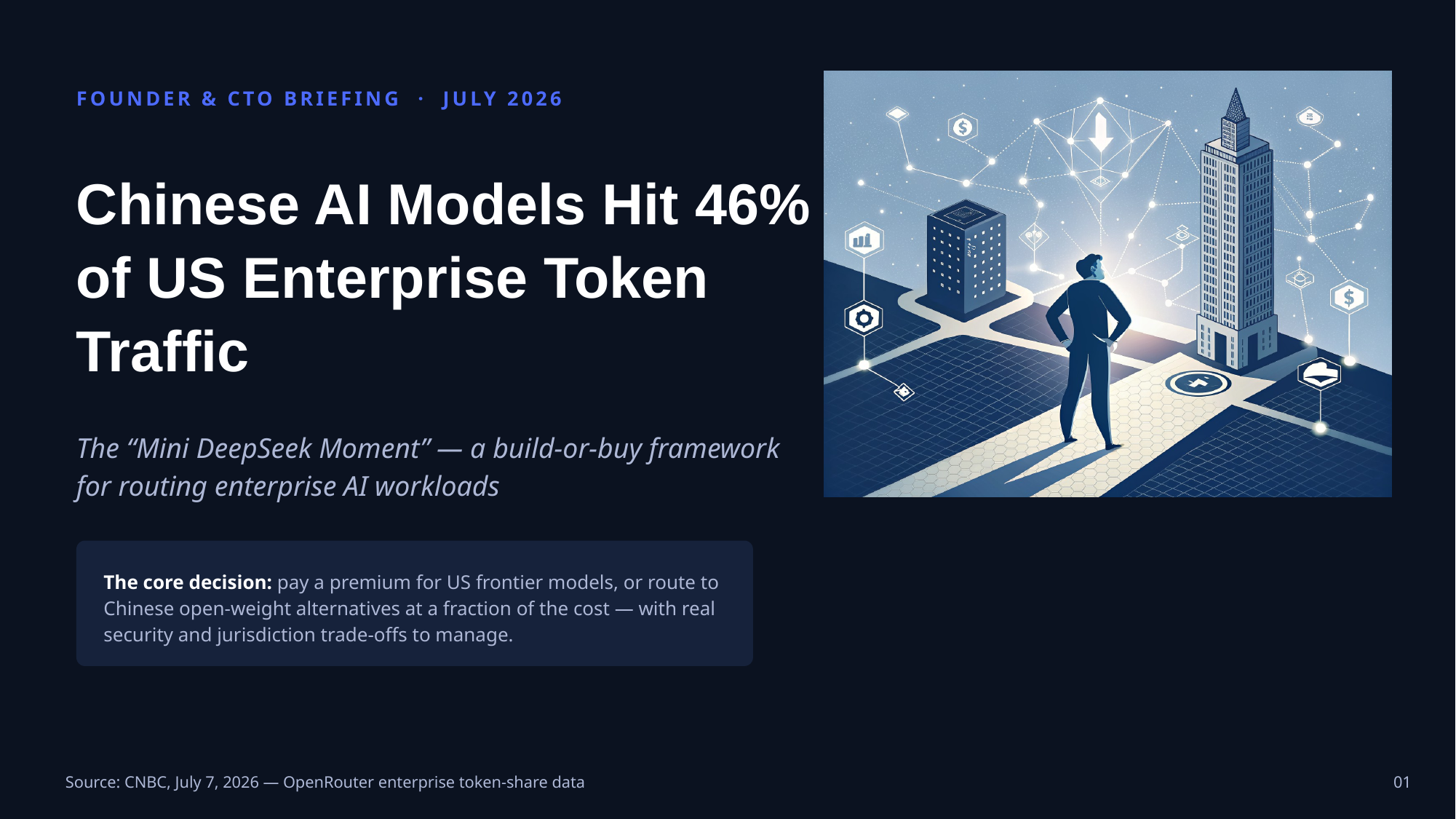
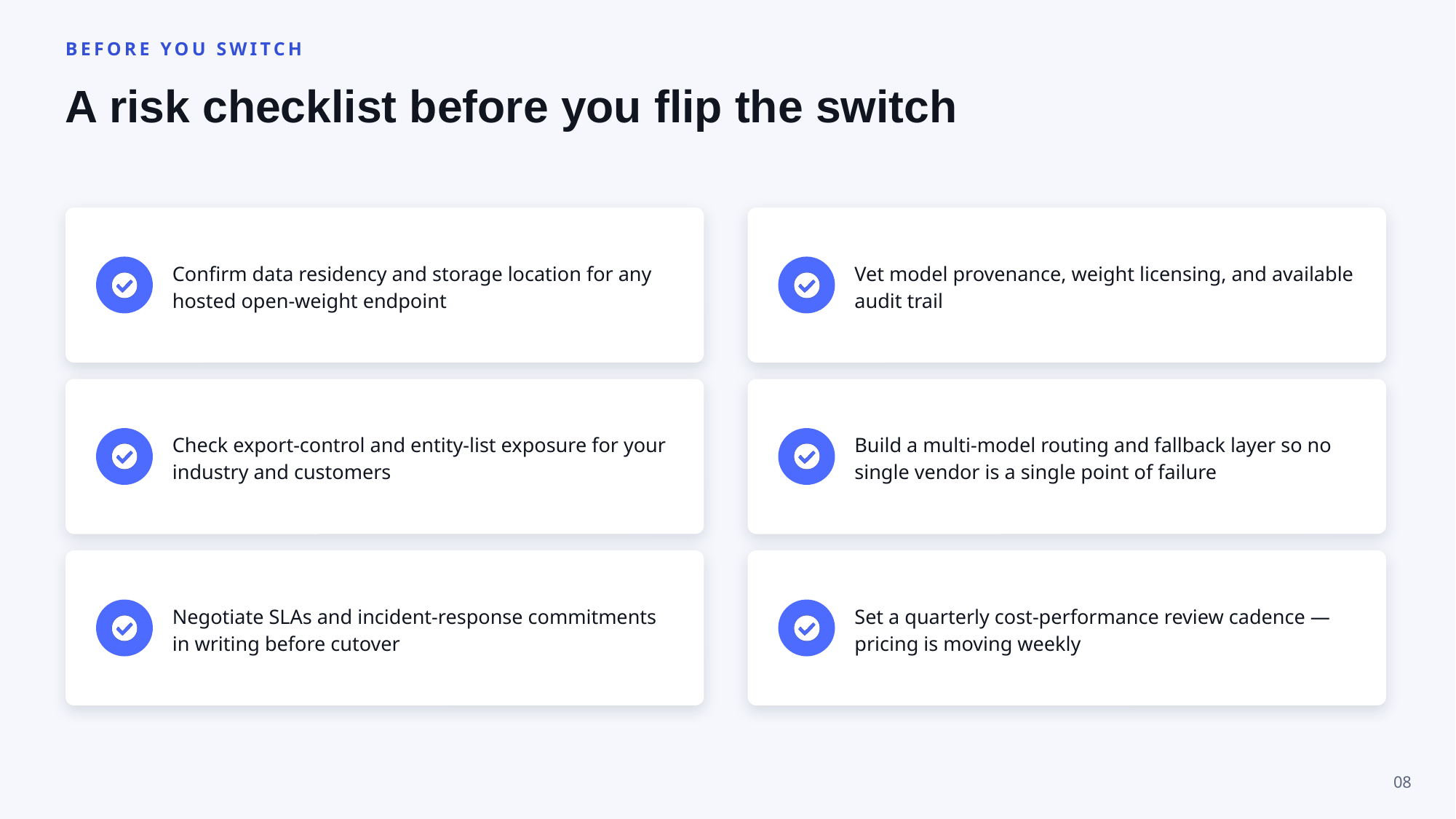
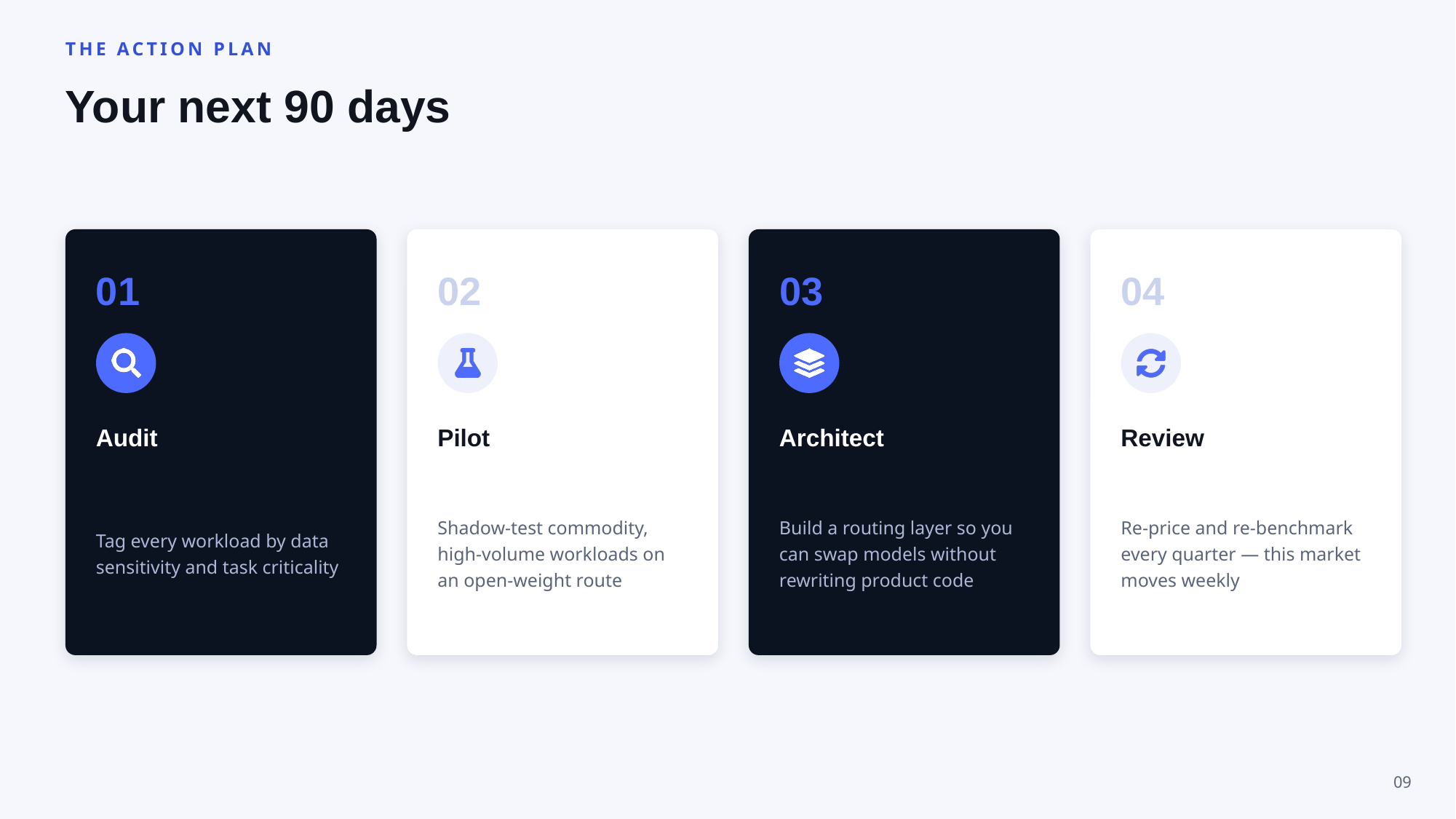
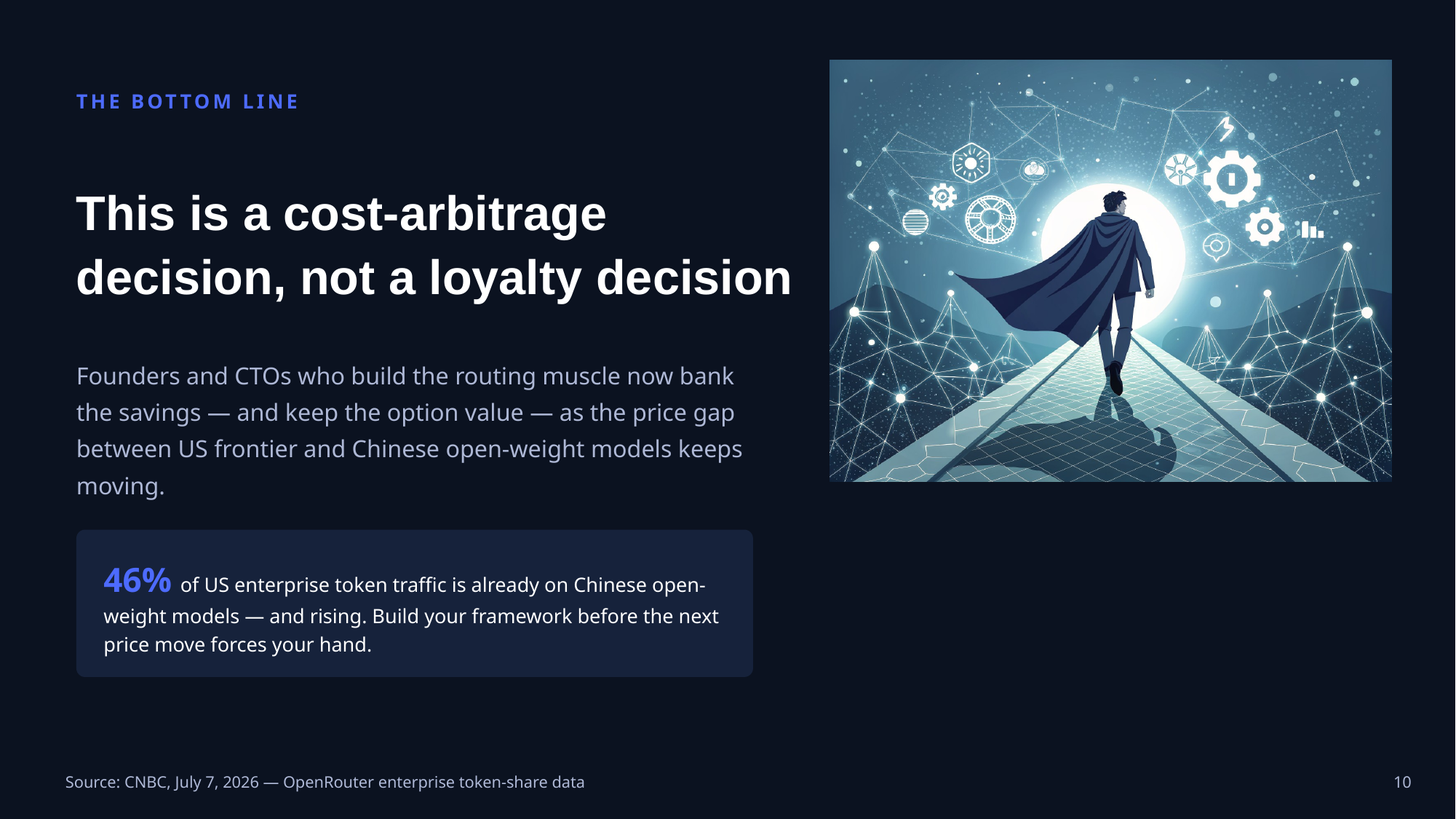
Swipe or scroll sideways to flip through the 10-slide deck →
What is actually happening on OpenRouter?
Chinese models have sat above 30% of US OpenRouter token usage every week since February 8, 2026, peaking as high as 46%, according to OpenRouter data reported by AI Weekly. The prior 12-month average was 11%, and just 4.5% in the first half of 2025. That is a sustained shift in where paying US customers send inference traffic, not a one-week spike.
OpenRouter’s own research shows the trend building for longer. In its 2025 usage study, open source models climbed from a negligible share in late 2024 to roughly a third of platform-wide token volume by year end, with Chinese-developed models like DeepSeek and Qwen driving much of that growth.
Why are companies switching now?
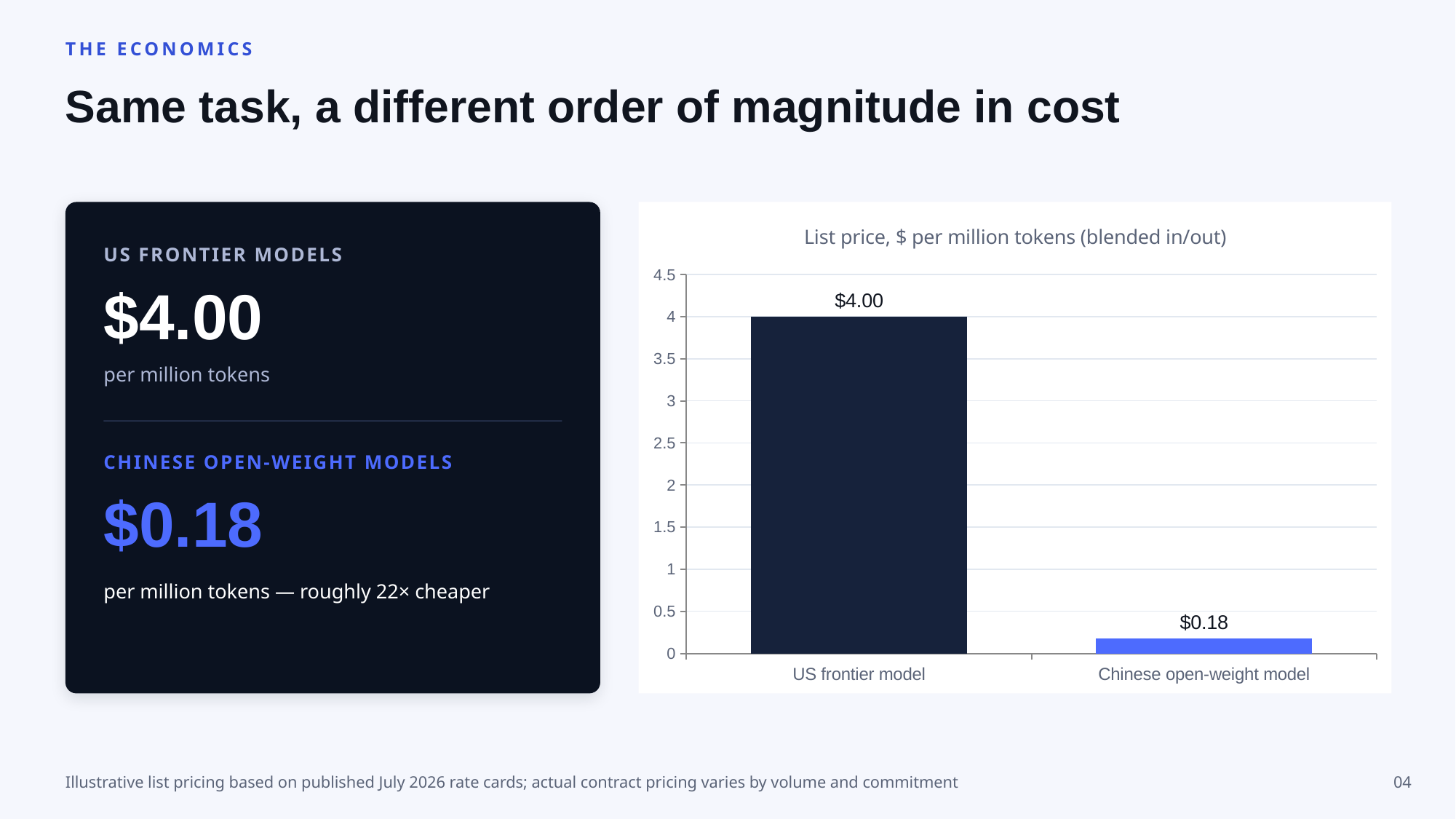
Cost is the direct trigger. Open source Chinese models can run 60% to 90% cheaper than the leading Anthropic and OpenAI models, an OpenRouter data analyst told CNBC, and the gap per workload can be stark: Anthropic’s Claude cost $4,811, OpenAI’s ChatGPT cost $3,357, and Zhipu’s GLM cost $544 for a similar batch of work.
Vercel’s head of agentic infrastructure framed it bluntly: “Price is doing the work here. When a task doesn’t need the best model, teams are beginning to route it to the cheapest one that’s good enough, and the recent wave of models coming out of China is winning that trade.” That is commoditization, not loyalty.
How fast is adoption actually moving?
Z.ai’s GLM-5.2 saw daily token volume grow 27-fold in its first week on Vercel, with customer growth around 80 times over the same stretch, the fastest ramp Vercel has tracked this year. On a widely followed agent benchmark, GLM 5.2 reportedly scored within a percentage point of Anthropic’s Opus 4.8 while operating at roughly one-fifth of the cost, the kind of near-parity result that turns a cost debate into an actual migration.
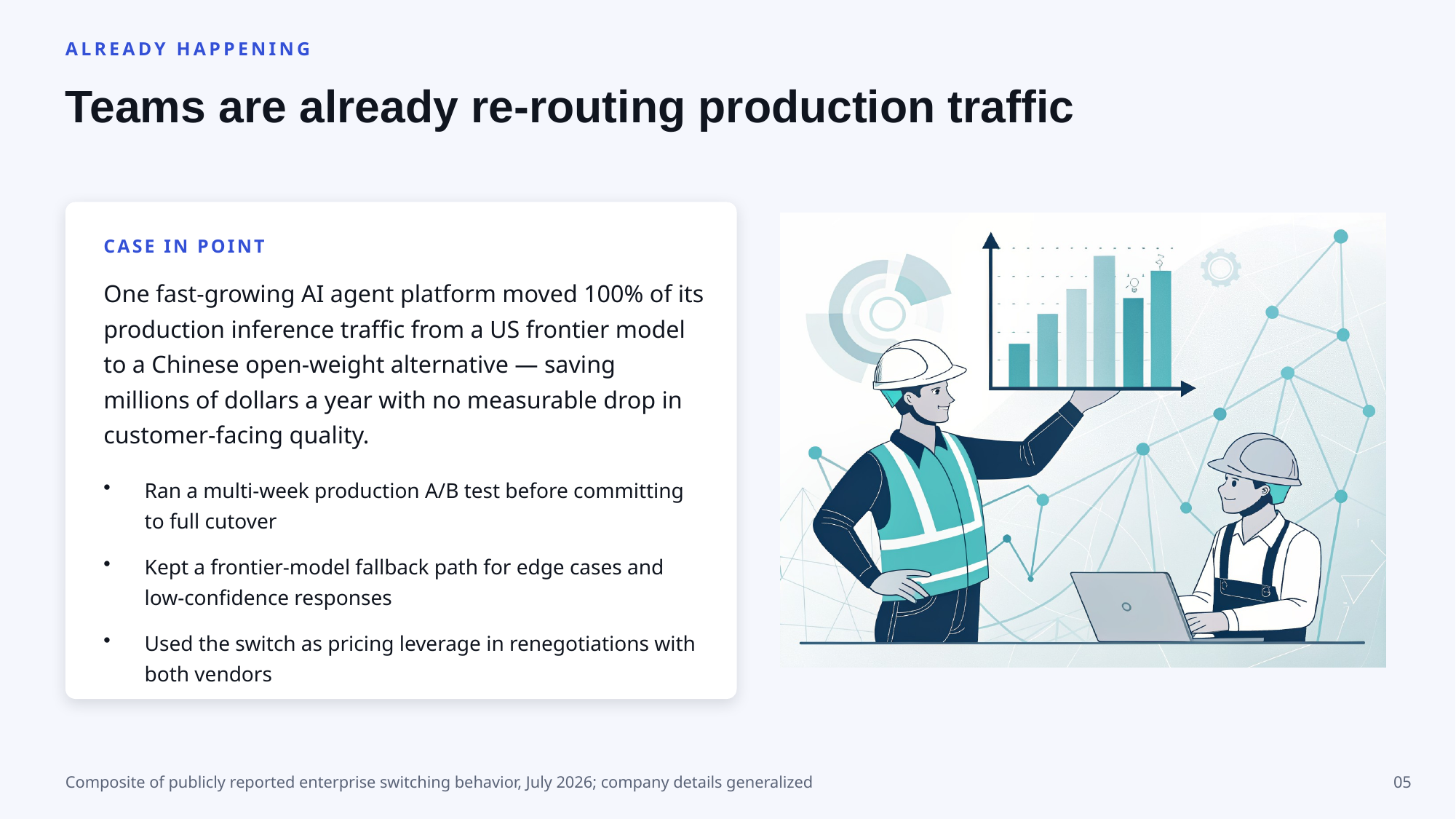
Lindy, an AI startup, moved all its production traffic from Claude to DeepSeek in June, expecting savings in the millions. Much of the new volume is coding work rather than chat: within Chinese open-source usage tracked by OpenRouter, programming and technology now make up a large, growing share of tokens. Adoption is uneven across sectors, though; regulated industries have been slower to make the jump.
What are the security and jurisdiction trade-offs?
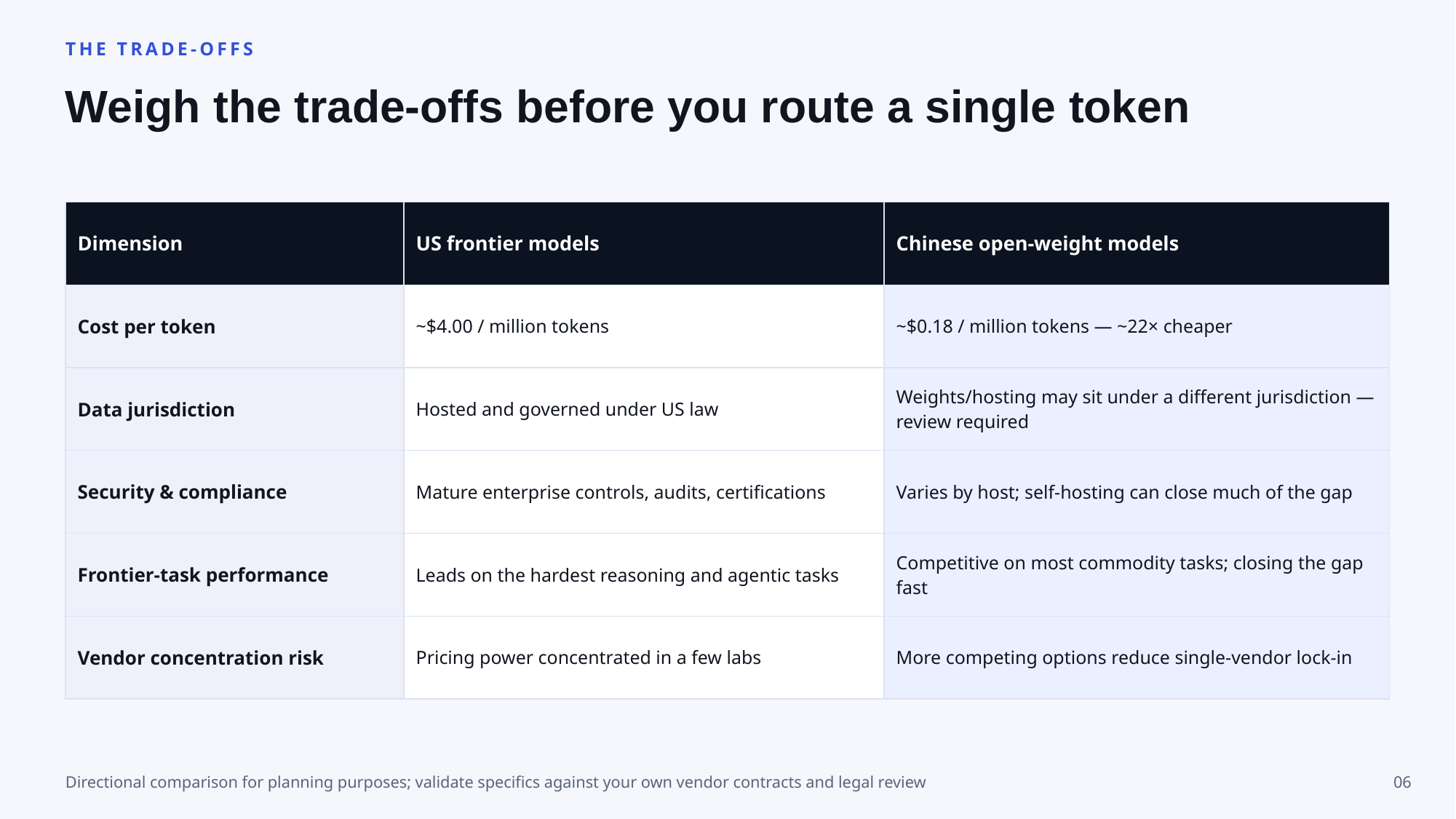
Running a Chinese-hosted model means enterprise data can leave US or EU legal protection entirely. Under China’s 2017 National Intelligence Law, companies must “support, assist, and cooperate” with Chinese state intelligence work, an exposure no contract can override. Each API call carries a full context window, so a coding assistant built on a Chinese vendor’s hosted API sends snippets of proprietary code with every request.
Regulators have already acted on it. Italy’s data protection authority banned DeepSeek within 72 hours of reviewing its practices in early 2026, and investigations opened in 13 European jurisdictions since China has no GDPR adequacy decision. The common workaround: download the same open weights and host them on infrastructure you control, such as a US or EU cloud, instead of calling the vendor’s China-based API. That keeps the cost advantage while routing data through providers already bound by familiar compliance rules.
Common questions
Is this only about DeepSeek? No. DeepSeek opened the door in January 2025, but the current surge spans Alibaba’s Qwen family, Zhipu’s GLM line, Moonshot, and MiniMax, competing across coding, agents, and general enterprise work.
Does cheaper always mean riskier? Not if the weights are self-hosted on Western infrastructure; the savings largely survive that setup. The jurisdiction risk mostly comes from sending sensitive data straight to a vendor’s China-hosted API. For regulated data, confirm specifics with a qualified legal advisor first.
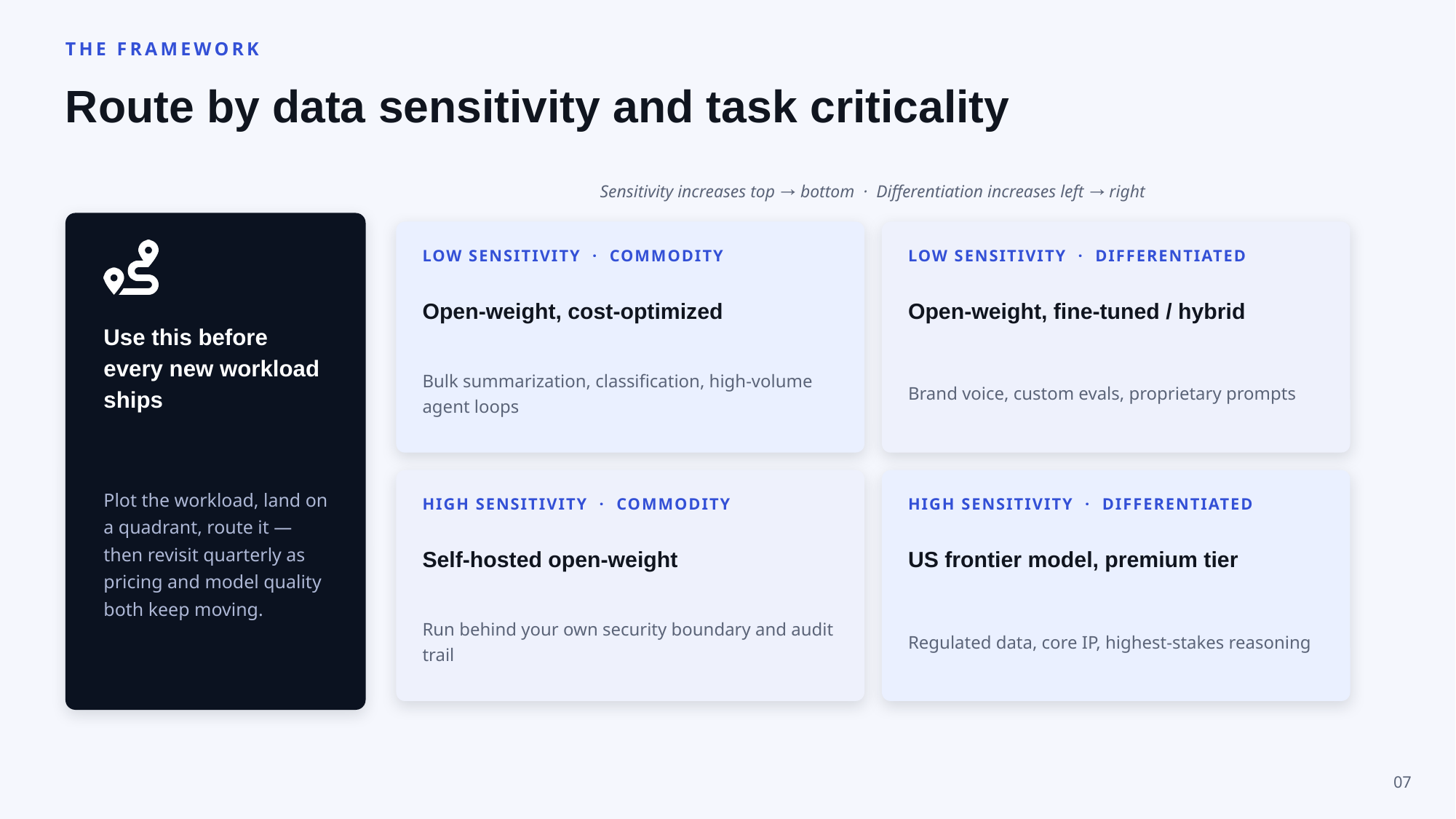
Either way, the decision now sits on every engineering leader’s desk: keep paying frontier prices for a shrinking quality edge, or route more workloads to open-weight models doing the job for a fraction of the cost. The example deck below sketches a routing framework by task type and risk level, built with AskDeck from a short brief and free to copy and edit for your own team.