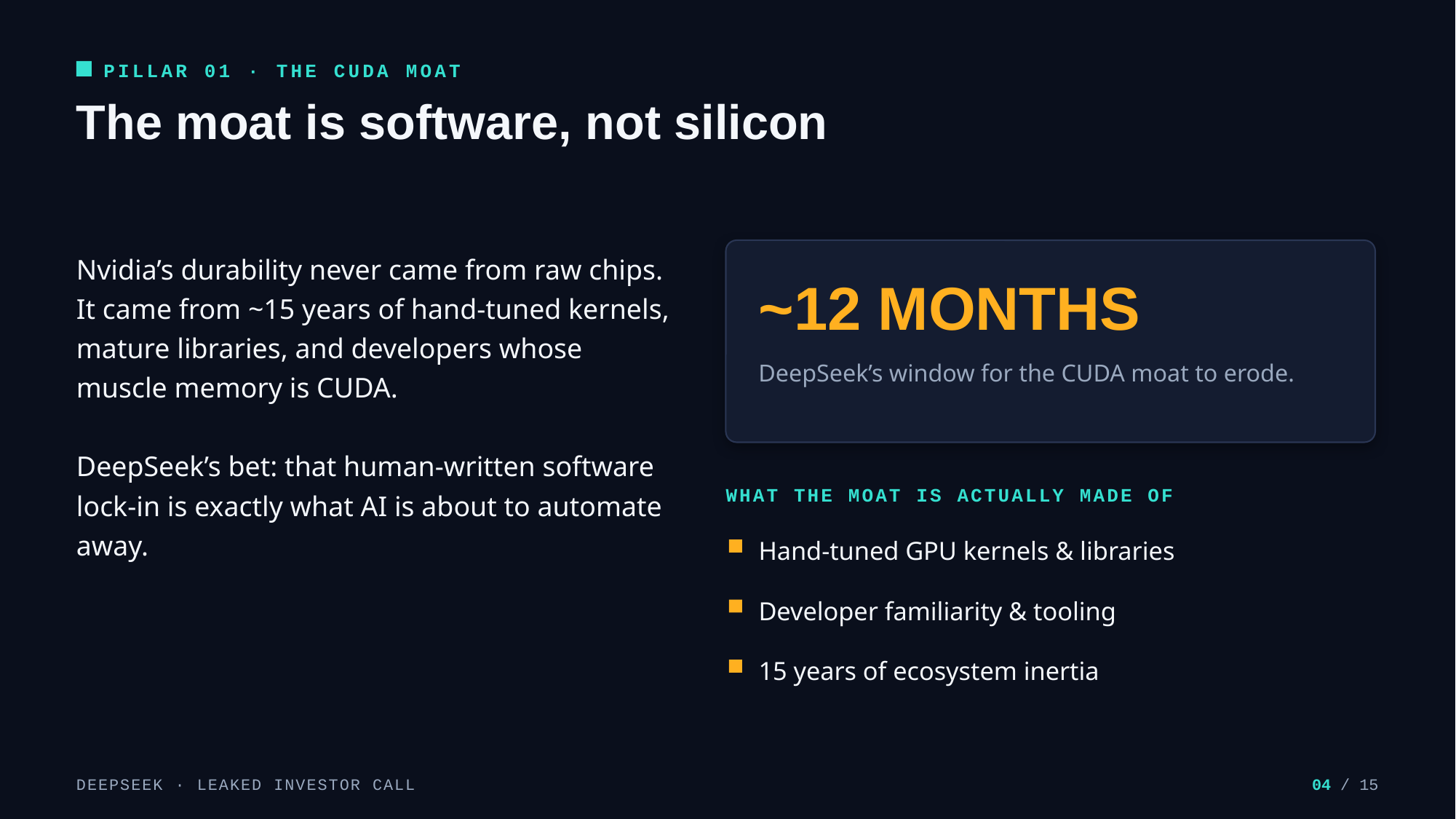
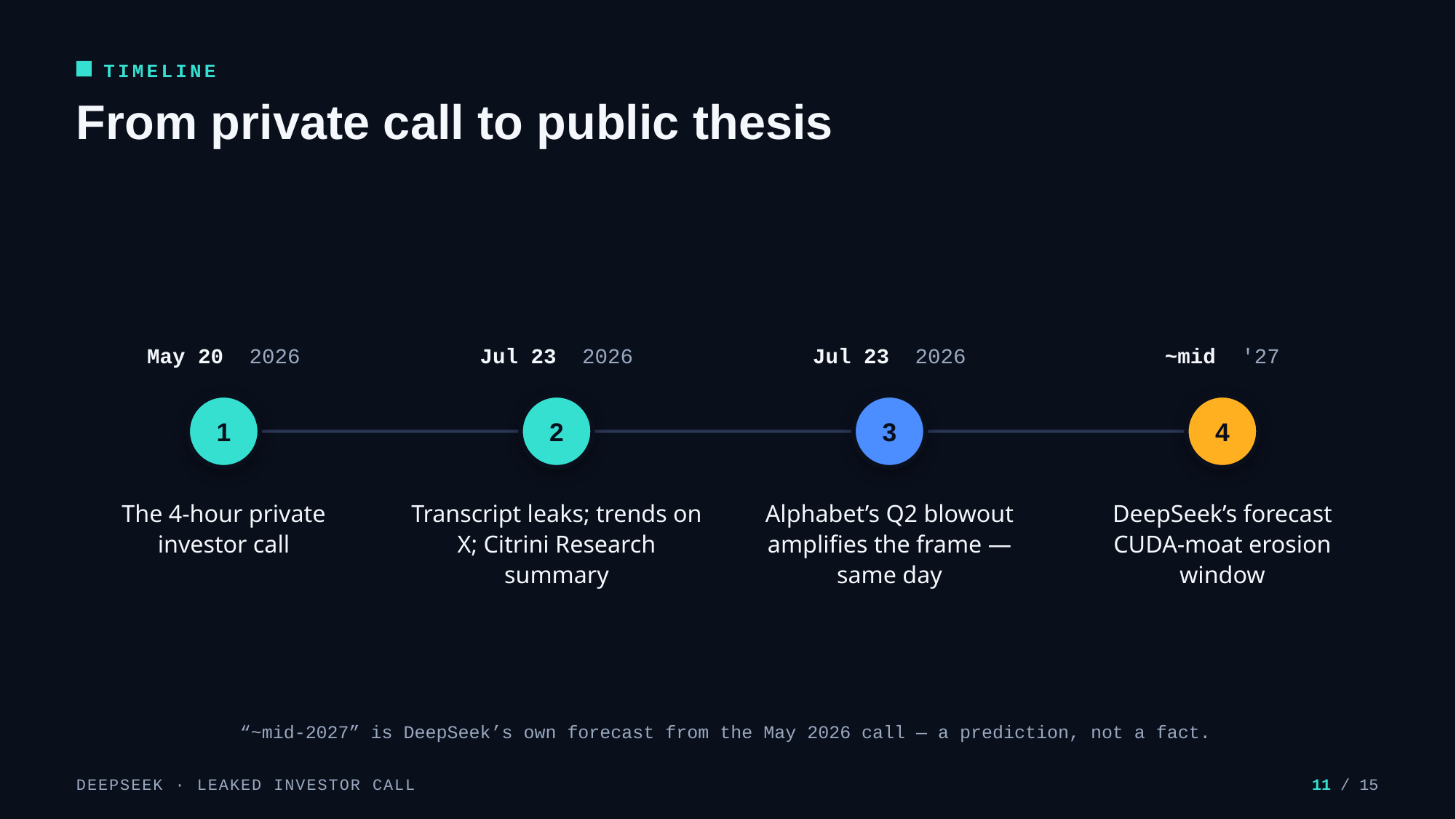
A four-hour recording of DeepSeek founder Liang Wenfeng talking to his own investors surfaced online on July 23, 2026, and it reads nothing like a corporate strategy memo. Liang argues that Nvidia’s CUDA software moat, the thing that has locked rival chipmakers out of AI training for a decade, could effectively collapse within about a year.
Key takeawaysLiang Wenfeng told investors Nvidia’s CUDA moat is eroding fast, driven by AI-written code and a compiler called TileLang.DeepSeek trained V3 on Nvidia chips but says it now runs almost independent of Nvidia’s software ecosystem.Huawei’s 950 SuperNode needs roughly four chips to match one Nvidia card and trails by about two years, per Liang.DeepSeek calls compute, not talent, its real gap with US labs: about 20,000 GPUs against far larger rival fleets.
The talk happened on May 20, was transcribed by Tencent’s technology desk, and leaked publicly two months later, spreading fast through summaries from Citrini Research and independent translators. Liang rarely talks to the press, so the transcript is the clearest public look yet at how China’s most closely watched AI lab thinks about chips, money, and the race toward smarter machines. The slides embedded below are a ready-to-use deck on this same topic, generated by AskDeck from a short brief, for anyone who’d rather see the argument mapped out than read four hours of transcript.
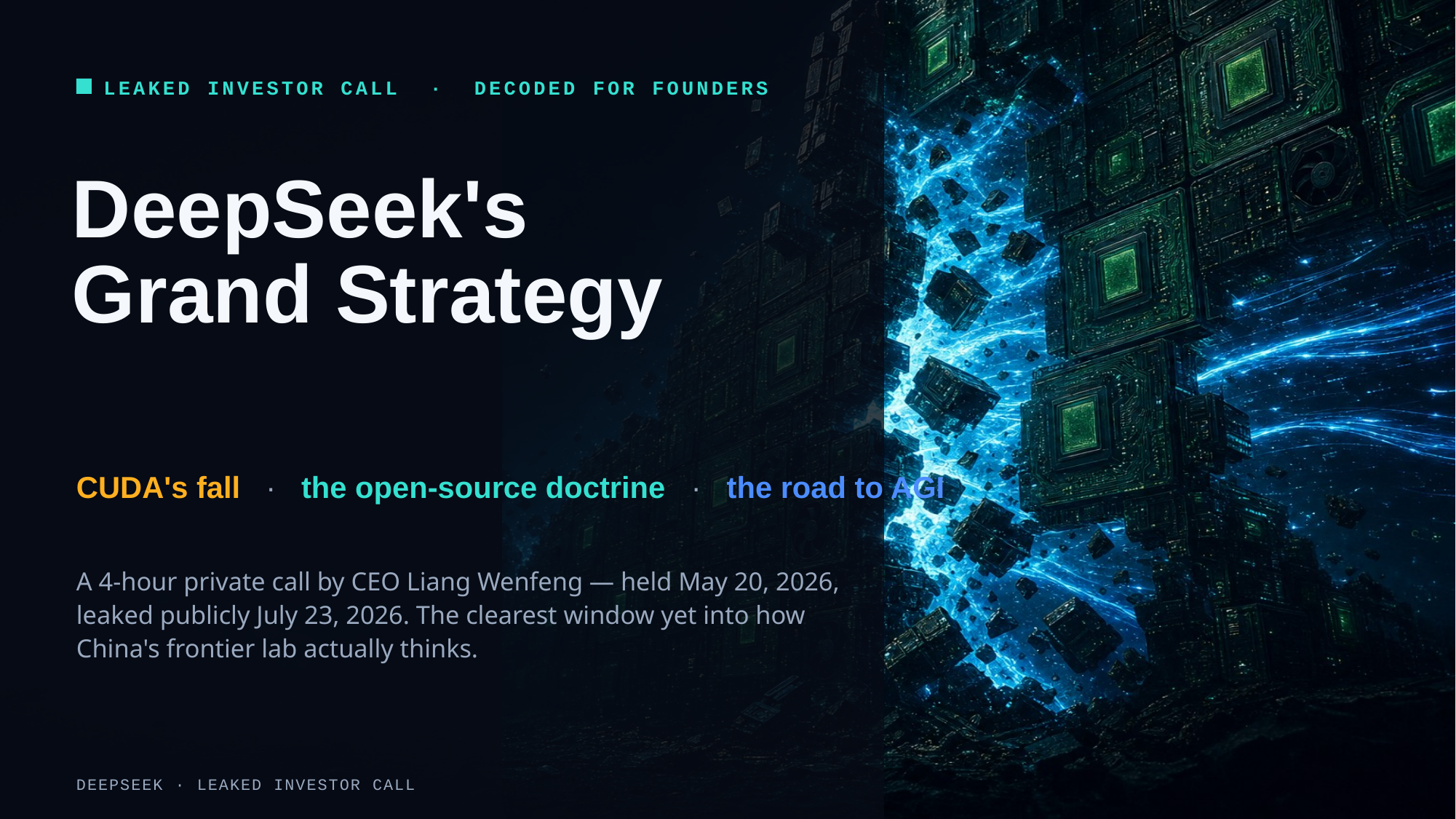
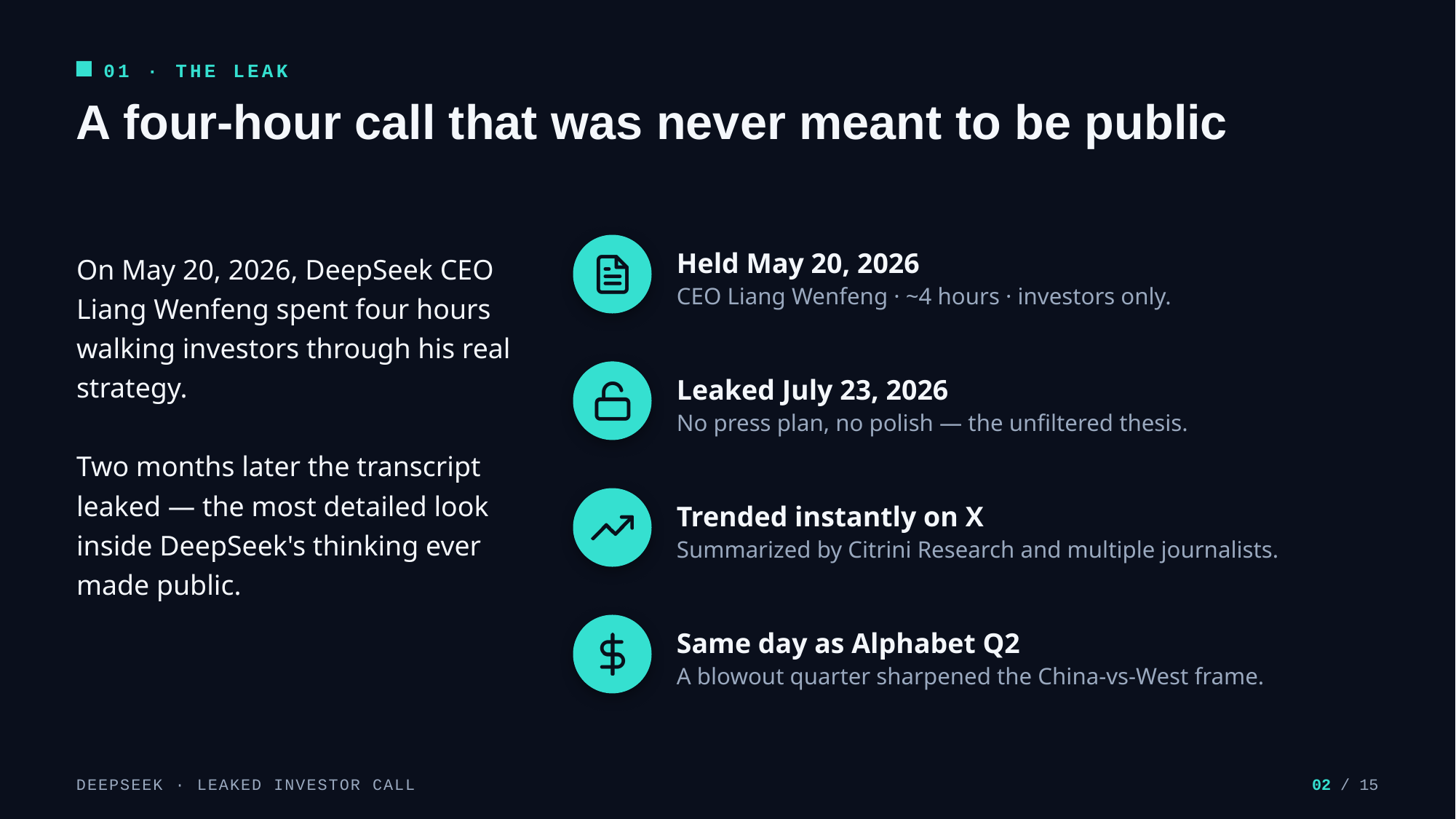
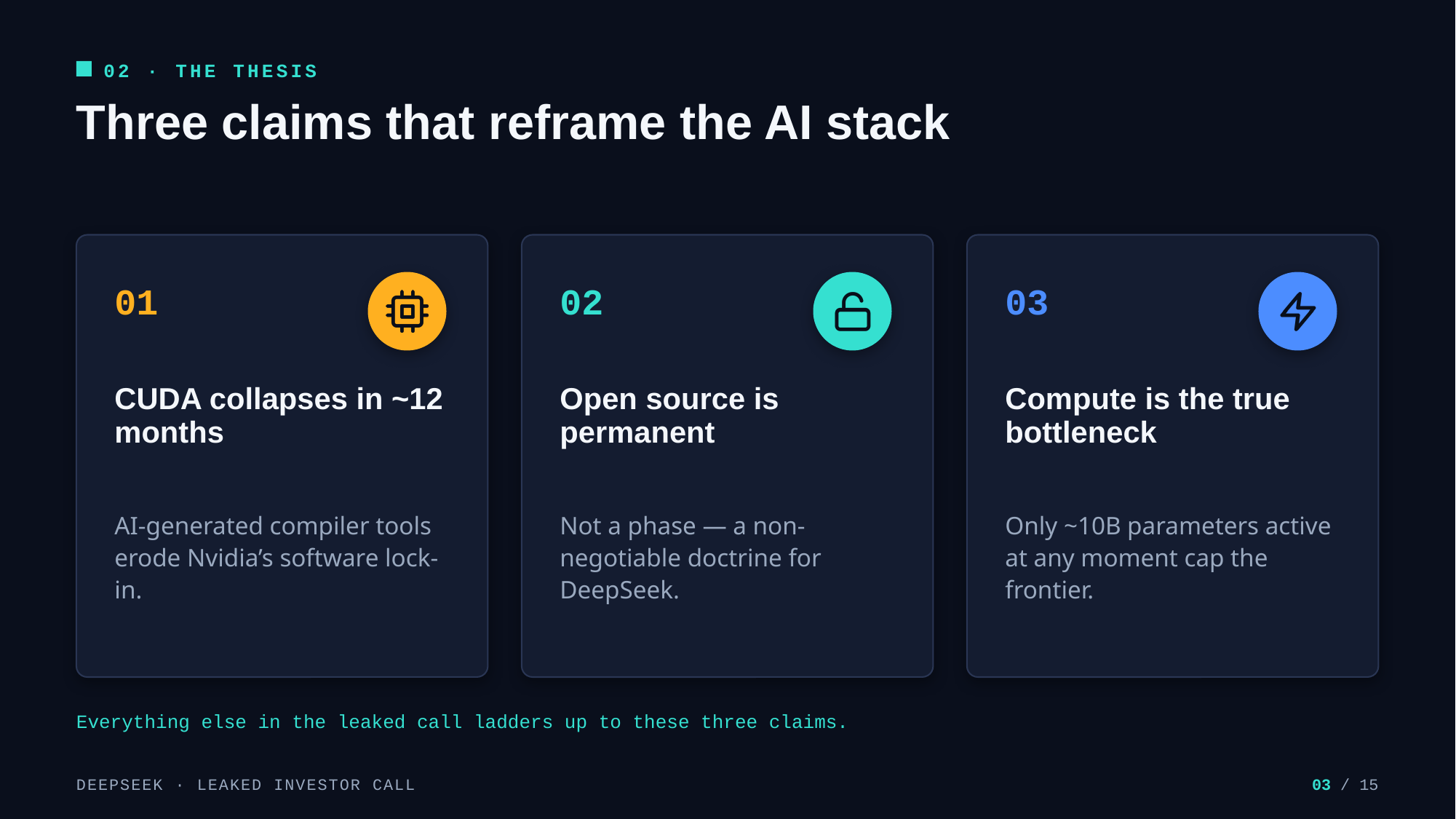
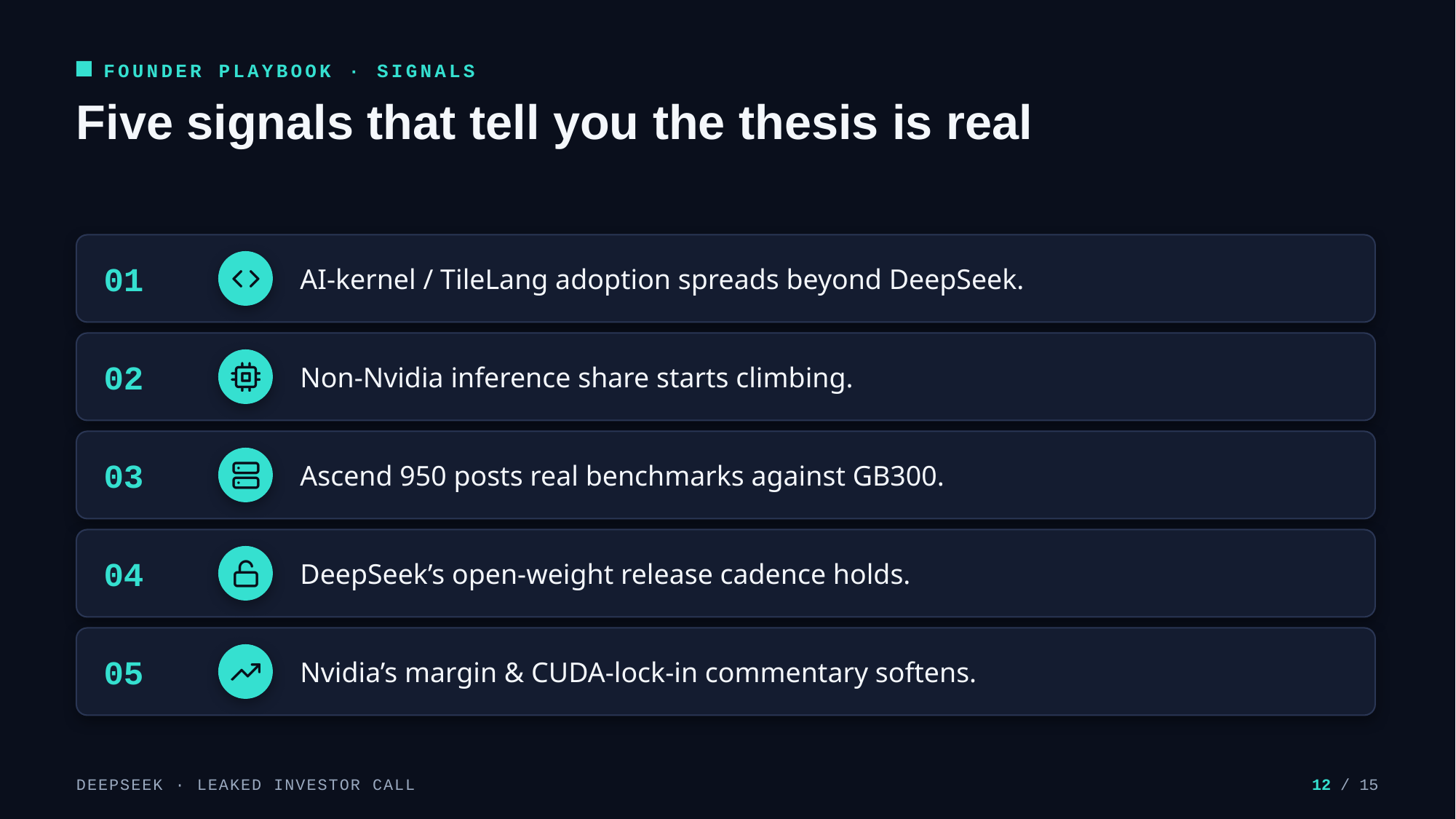
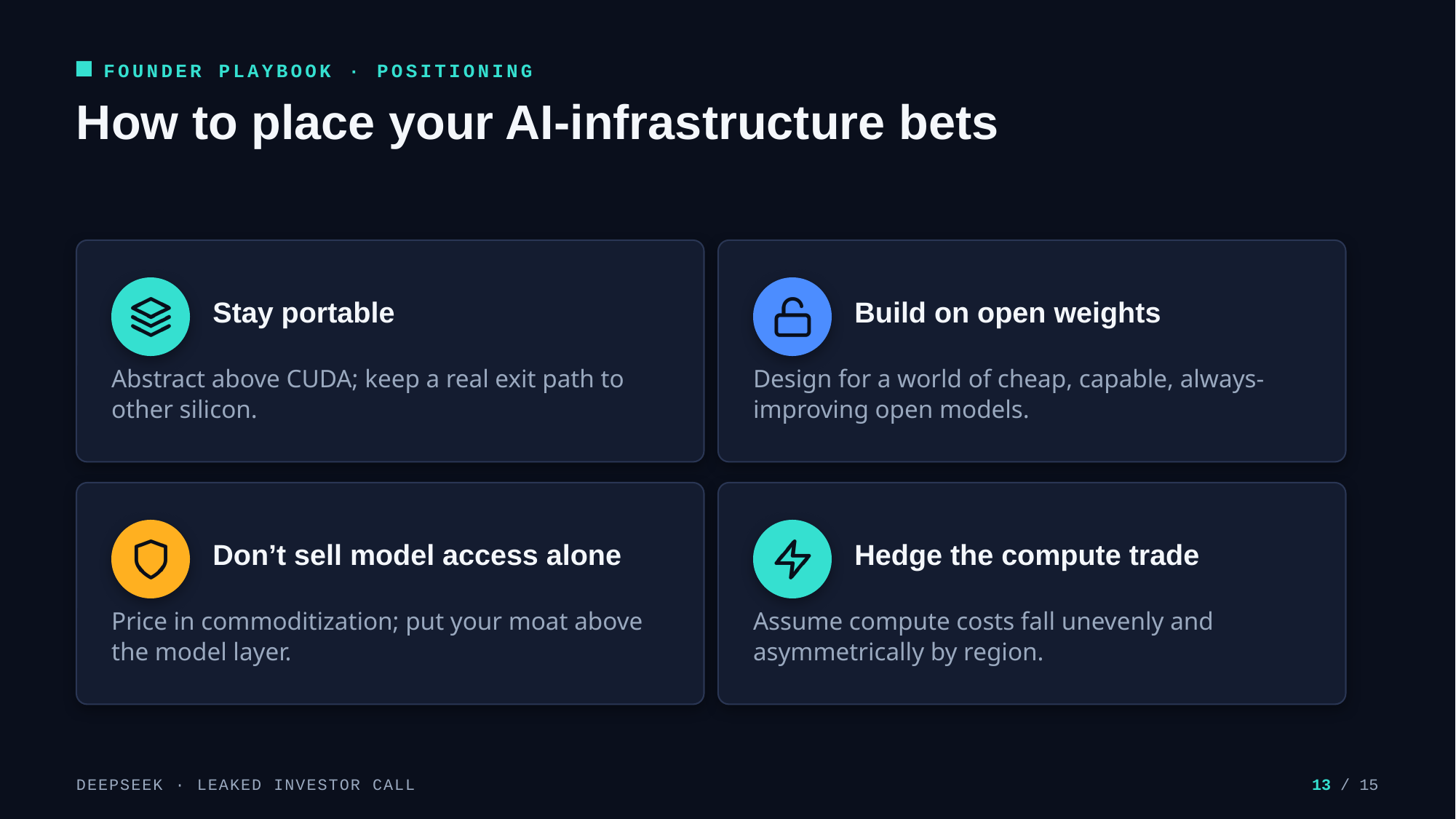
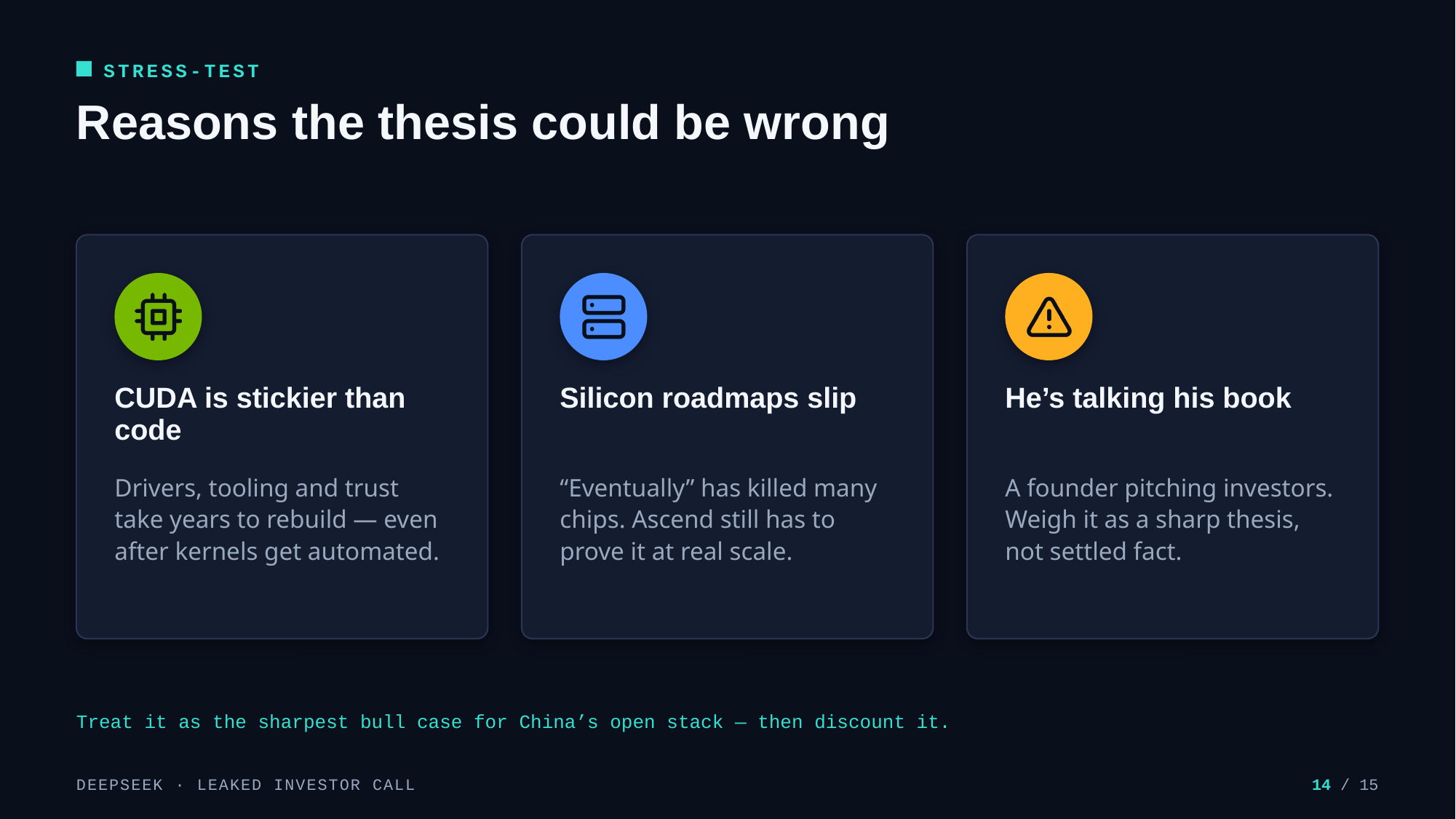
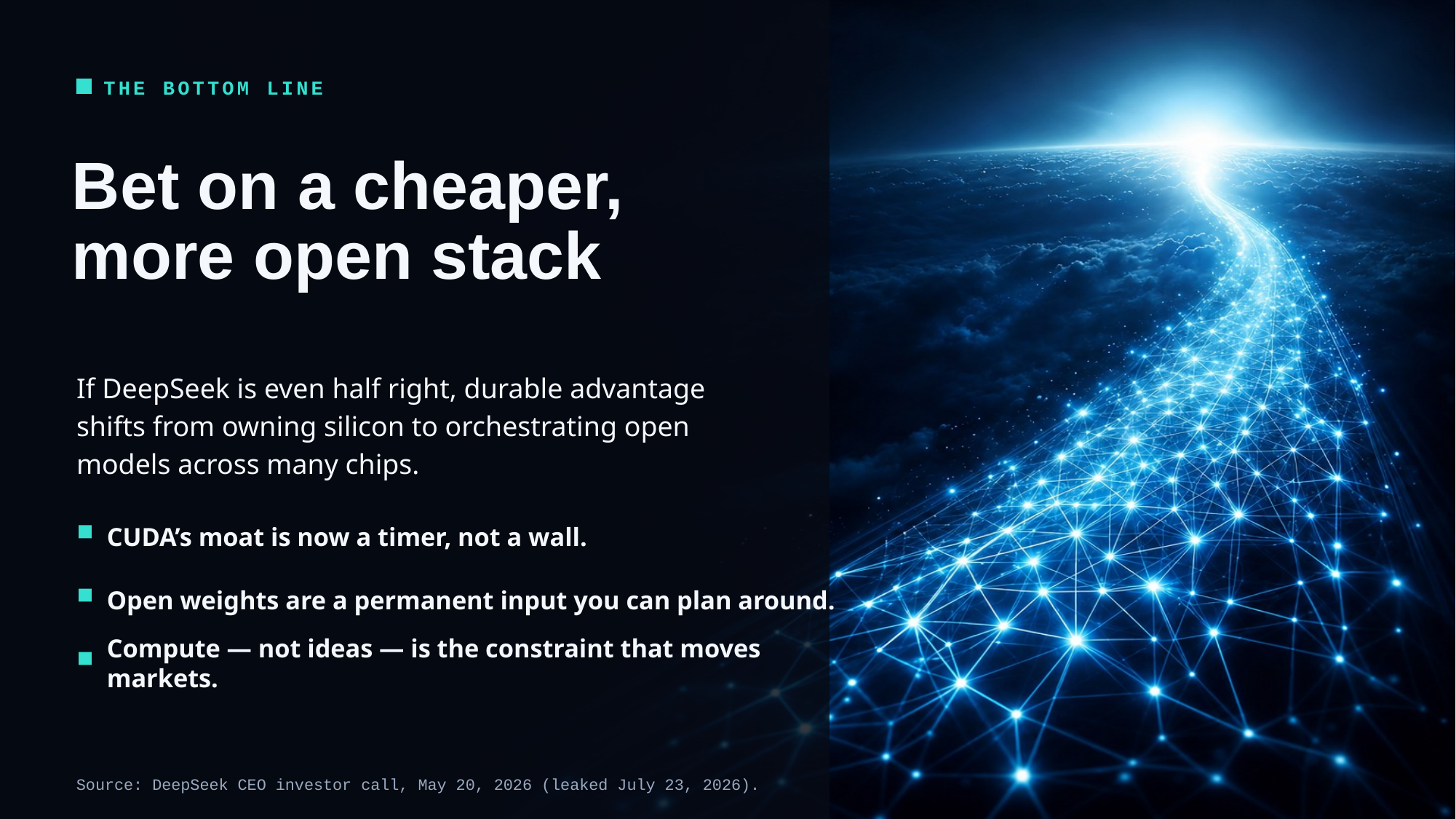
Swipe or scroll sideways to flip through the 15-slide deck →
What did Liang Wenfeng actually say about Nvidia’s CUDA moat?
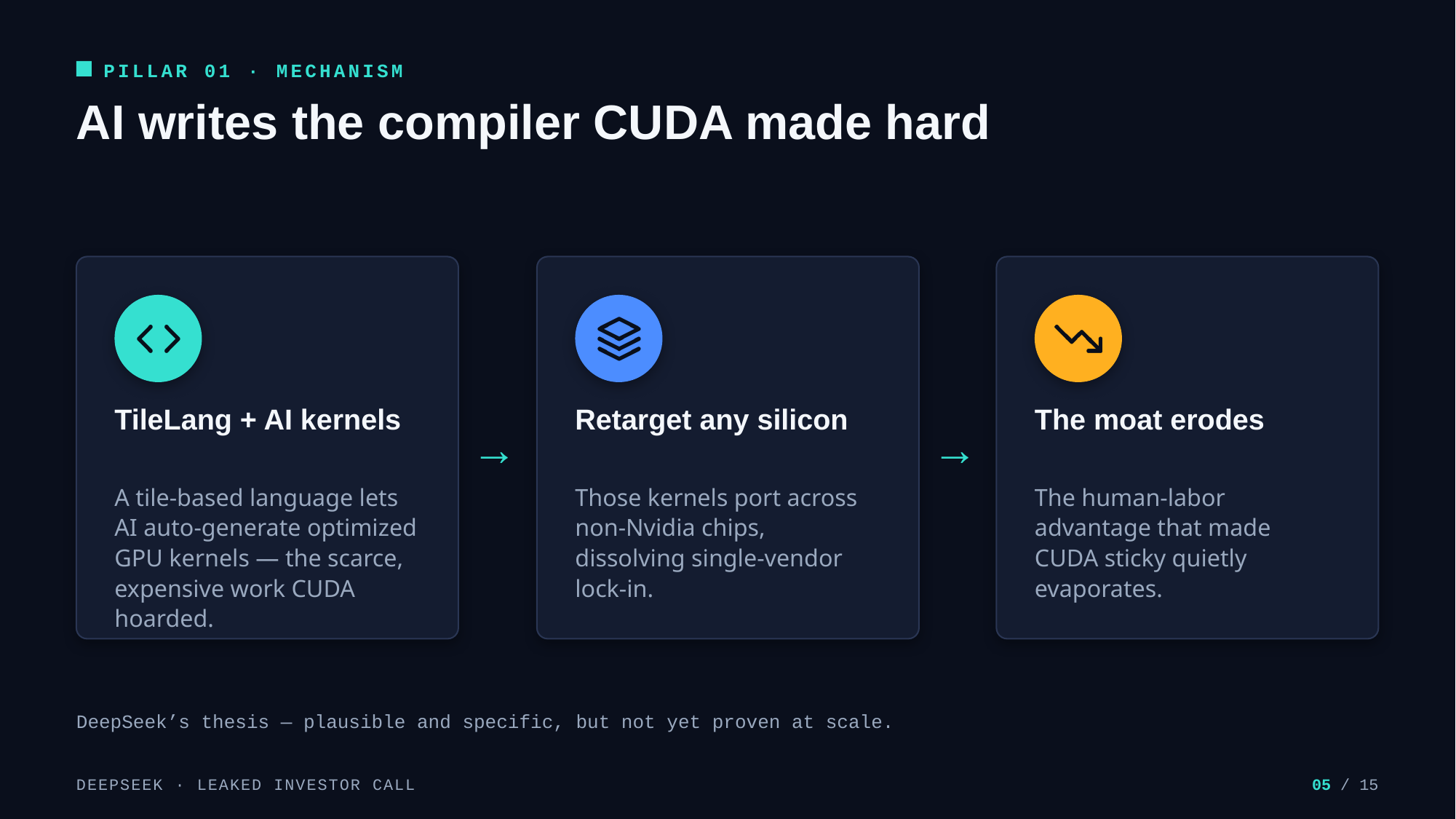
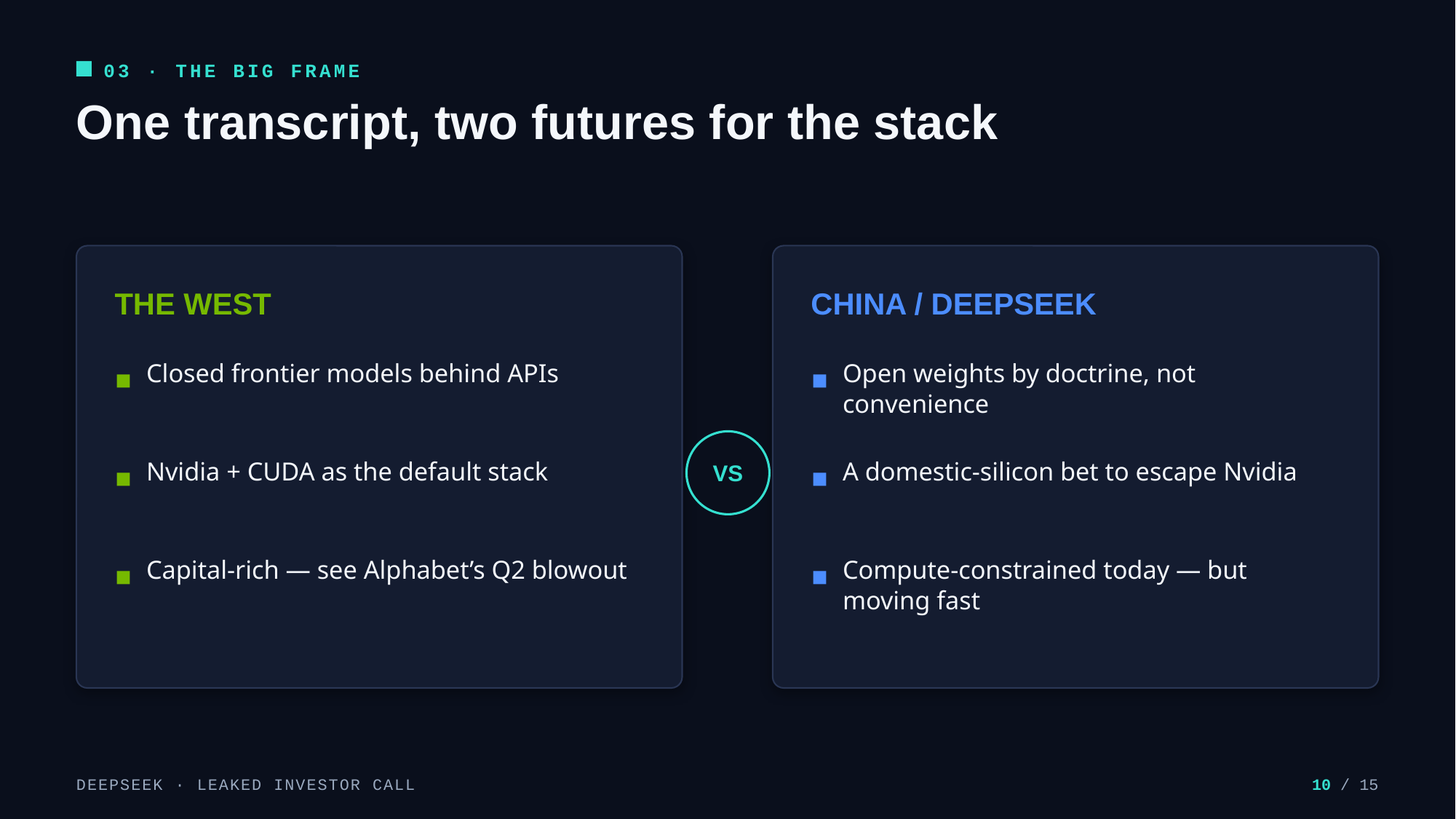
Liang’s claim is that CUDA, Nvidia’s programming layer for GPUs, is losing its lock-in for a few reasons. AI models can now write the low-level code needed to replicate an ecosystem that took Nvidia more than a decade to build, and a compiler called TileLang lets developers write CUDA-equivalent operators fast enough to route around it. CUDA also still carries baggage from its gaming-GPU origins, while dedicated AI chips, from Nvidia or Huawei, no longer need that backward compatibility, so the two markets are decoupling.
TileLang is not a DeepSeek product but an open-source operator language built at Peking University’s School of Computer Science, which DeepSeek adopted and built its training stack around. Liang says the payoff already showed up in the V3 model: it trained on Nvidia hardware but, by his account, almost entirely bypassed Nvidia’s software ecosystem by running on TileLang instead. Strip out that dependency once, he argues, and the process repeats on other chips.
How does DeepSeek’s Huawei chip partnership actually work?
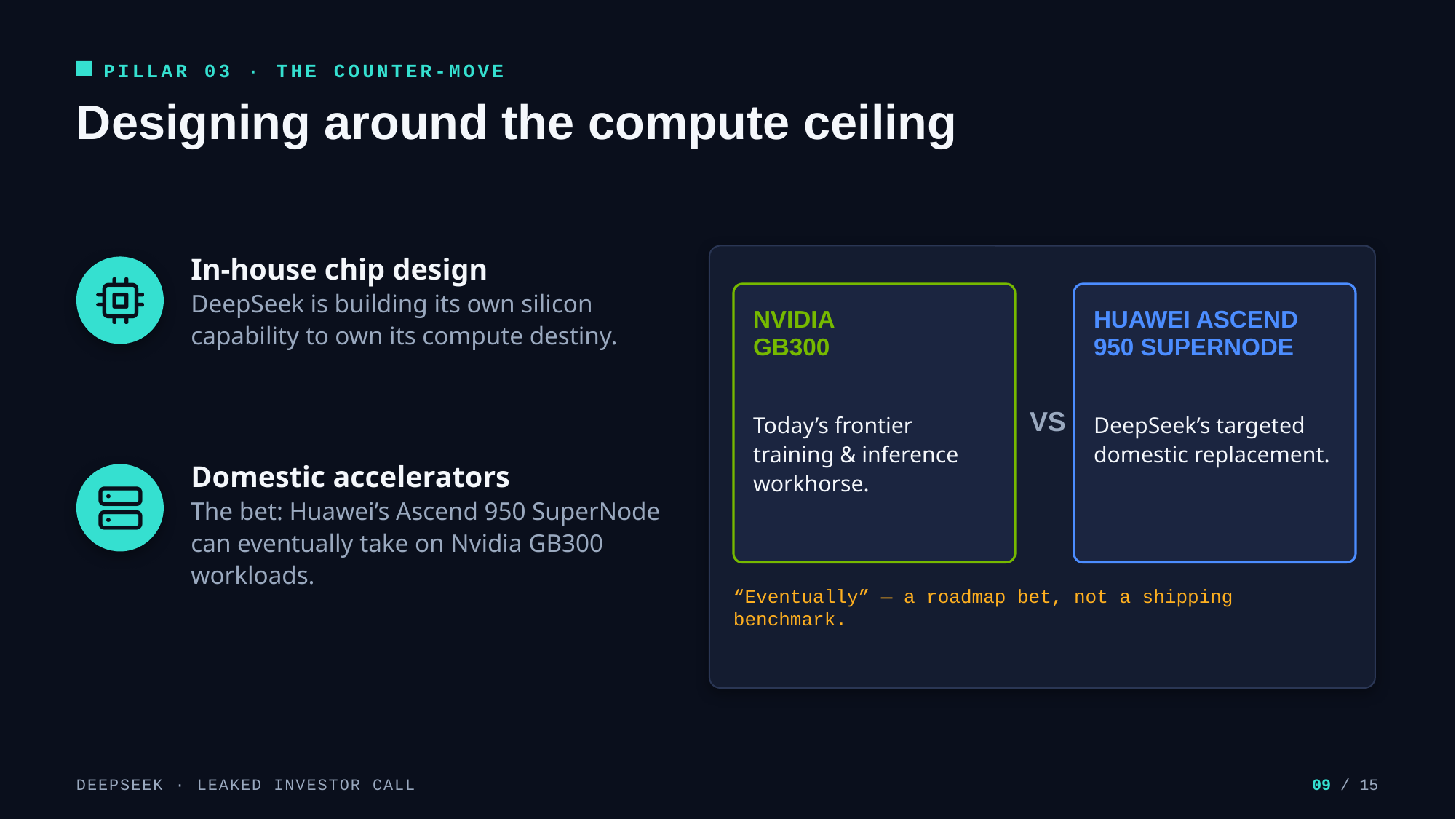
DeepSeek is not abandoning Nvidia hardware, it is hedging with Huawei while Nvidia’s most capable chips stay export-restricted in China. Liang told investors Huawei’s 950 SuperNode can substitute for Nvidia’s GB200 and GB300 on performance and price, though he qualified that: four Huawei chips are needed to match one Nvidia chip, and the underlying silicon gap is roughly two years. Outside summaries put a number on the ambition, reporting DeepSeek believes it can secure roughly 16,000 Huawei AI chips, a figure from an analyst’s summary, not a direct quote, and still unverified.
Why does DeepSeek call compute, not talent, its real constraint?
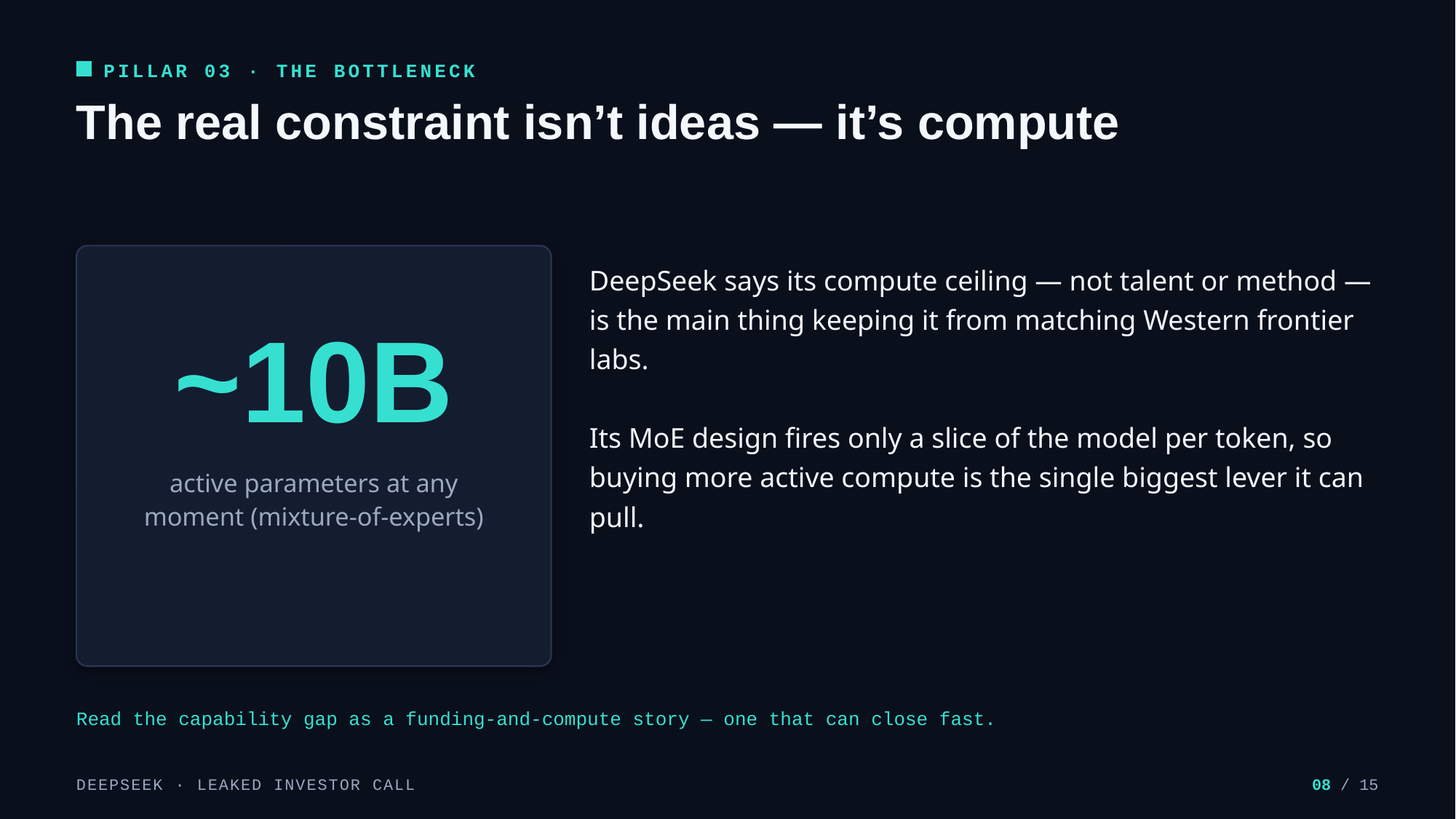
Liang’s core argument is that gaps people attribute to skill or strategy trace back to hardware access. He put DeepSeek’s fleet at roughly 20,000 “H-equivalent” compute cards, most acquired in the prior month or two, and said the US gap is mainly resources, since the talent pool is essentially the same people. The largest US models run on roughly 800 billion active parameters, he said, against tens of billions domestically, and matching a frontier model outright would take tens of thousands more accelerators than DeepSeek can currently buy.
His timeline estimate wobbles across the call, landing somewhere around two years behind while using a fraction of US compute, a range outside analysts call more conversational guess than calibrated forecast.
Why is open source non-negotiable for DeepSeek?
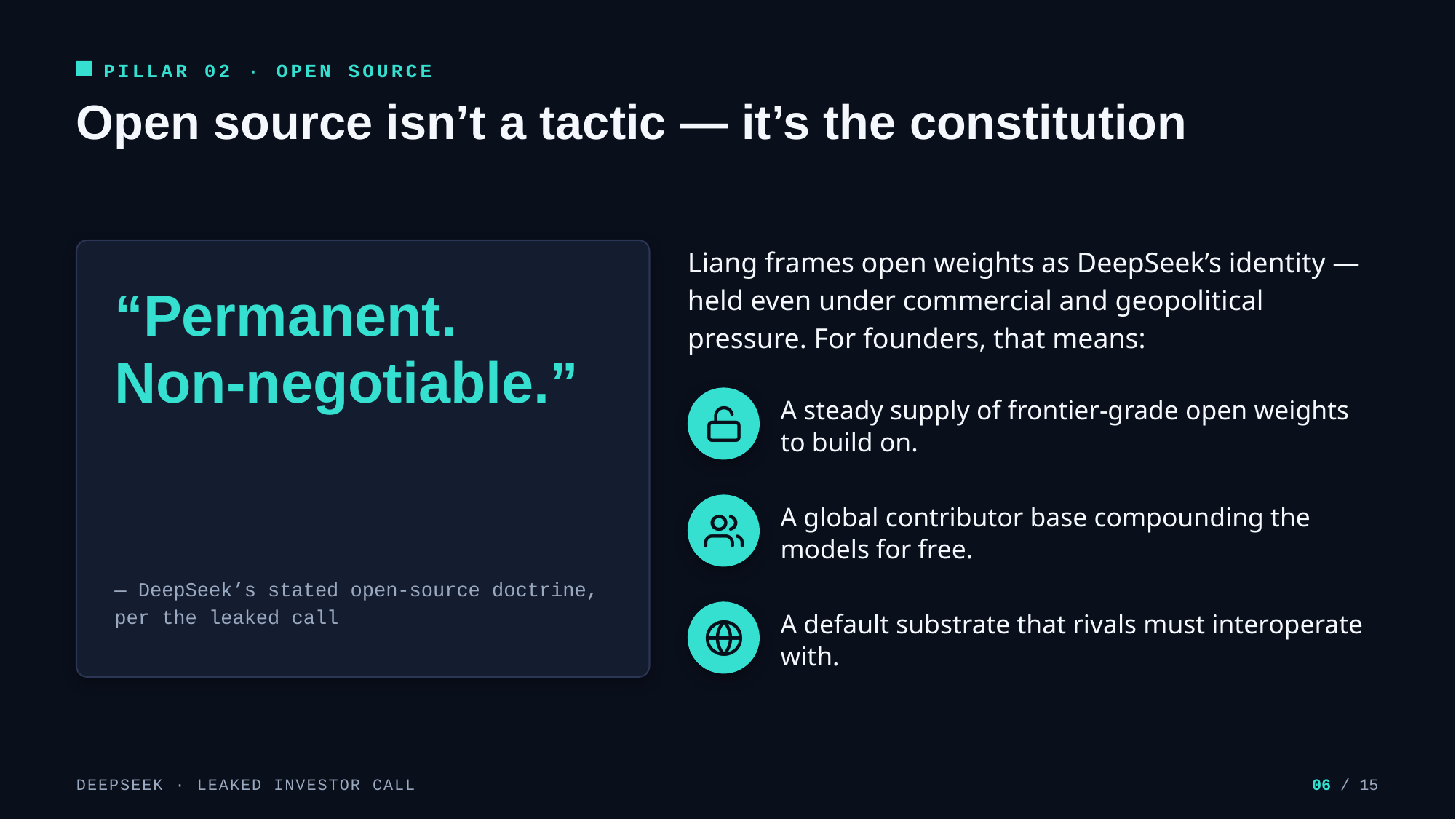
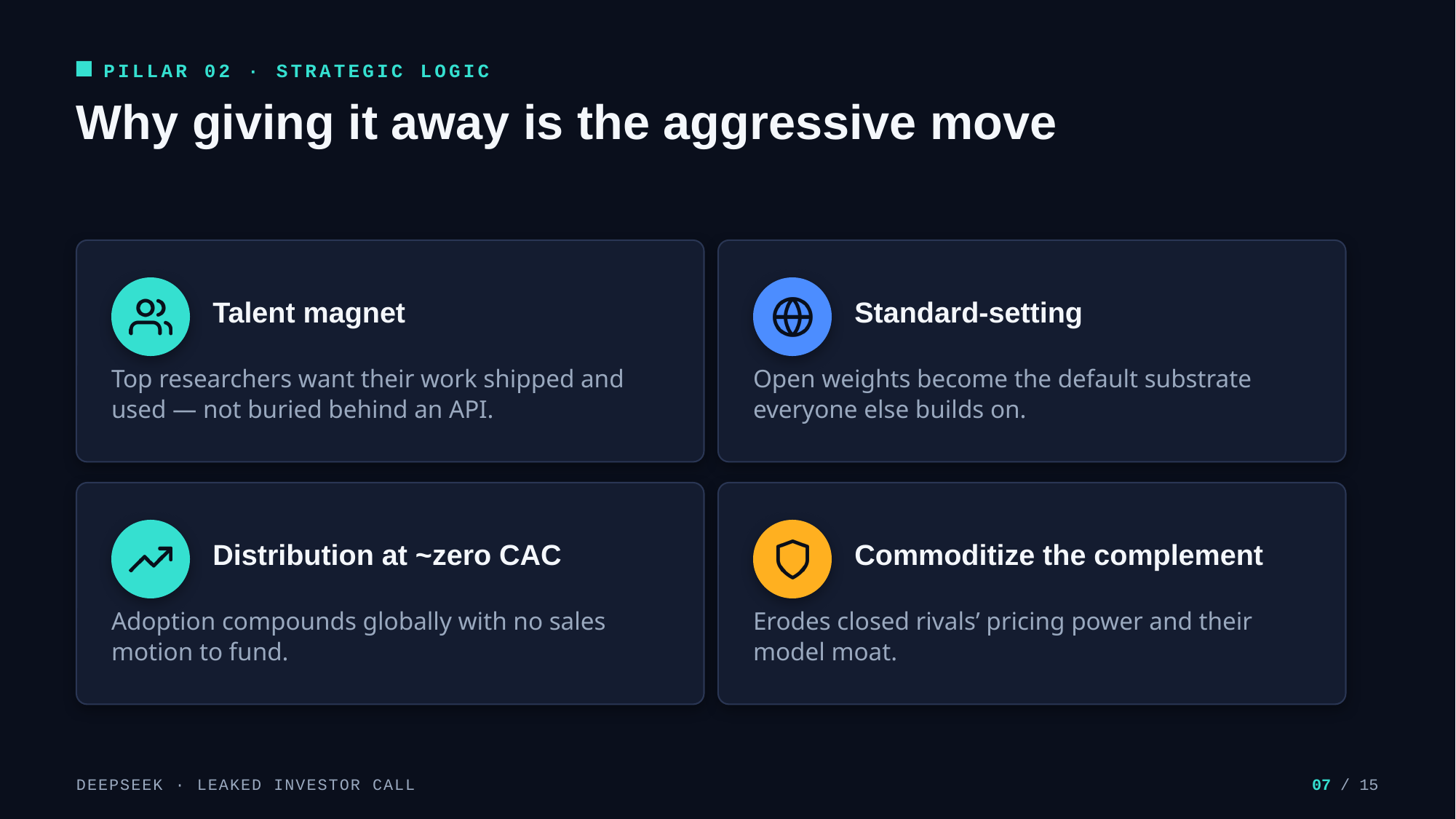
Liang frames open-weight releases as core to the company’s identity, not a tactic he could drop later. He sees no conflict between open source and revenue, since a pricing plan built around recovering hardware costs in roughly ten months lets both coexist, and partners building on open weights strengthens DeepSeek’s position rather than threatening it. He expects the crowd of companies training foundation models from scratch to thin out, converging toward a handful of serious players once thin margins push the rest into applications instead.
What is DeepSeek’s roadmap toward AGI?
The roadmap moves in stages: language models, then chains of thought, then agents, then continual learning, each depending on the one before it. Liang keeps DeepSeek clear of video generation and world-model research, calling both commercially useful but not central to raising the ceiling of intelligence, while treating multimodal support as a genuine priority.
Is the leaked transcript confirmed by DeepSeek, and does it mean Nvidia is in trouble now?
DeepSeek has not verified the recording, and the version circulating was translated and reorganized by outside readers from a Tencent Tech write-up, so individual figures carry transcription risk. Even at face value, the timeline is not immediate: Huawei’s chips trail Nvidia’s by roughly two years and need more units per workload, and Nvidia had already excluded China data-center compute sales from its latest quarterly guidance before this transcript leaked.
A short deck built from this same material, covering the CUDA argument, the Huawei bet, and DeepSeek’s AGI roadmap, is embedded below. It was made with AskDeck from a brief and you’re welcome to download and edit it for your own team.