

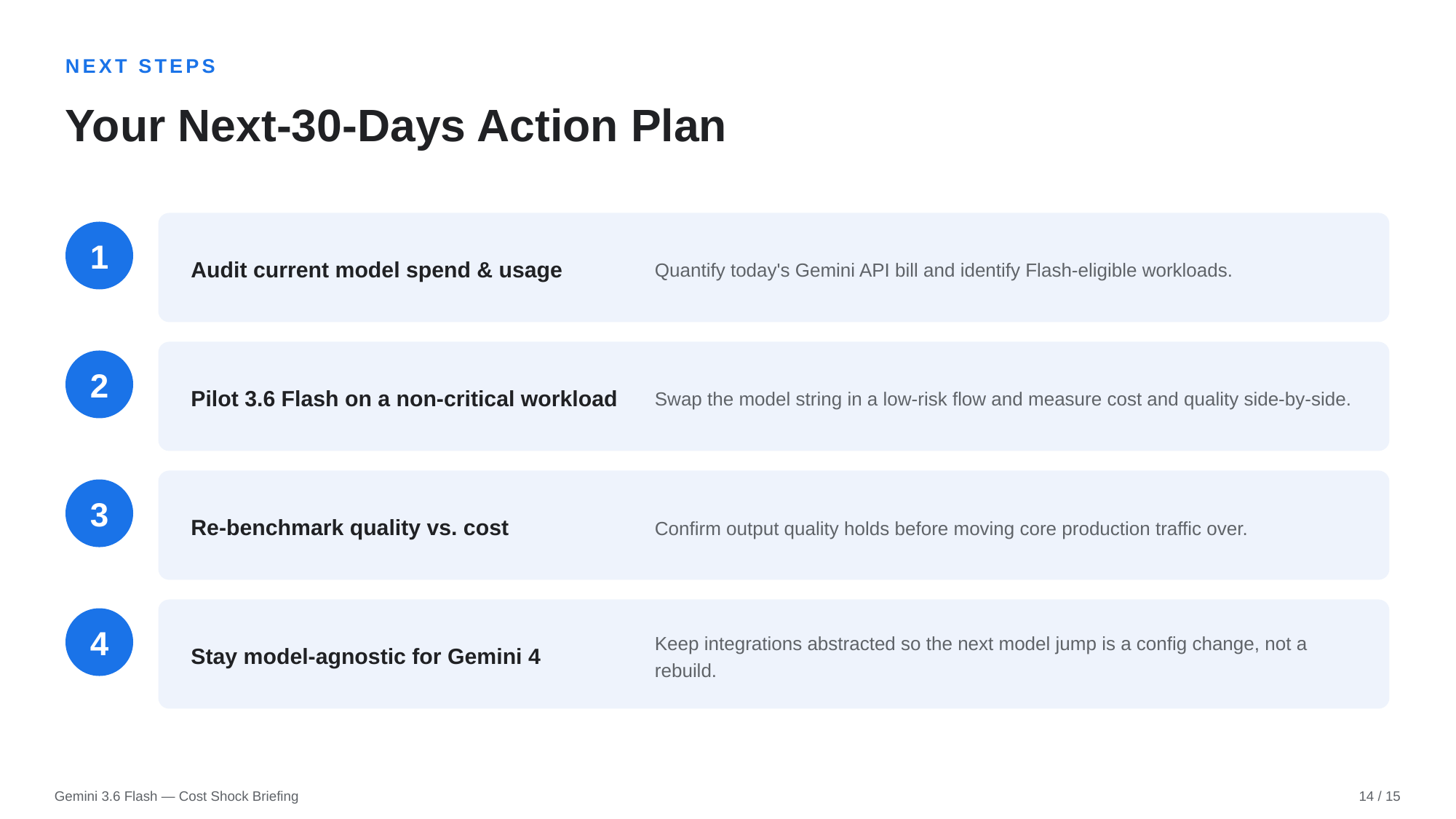
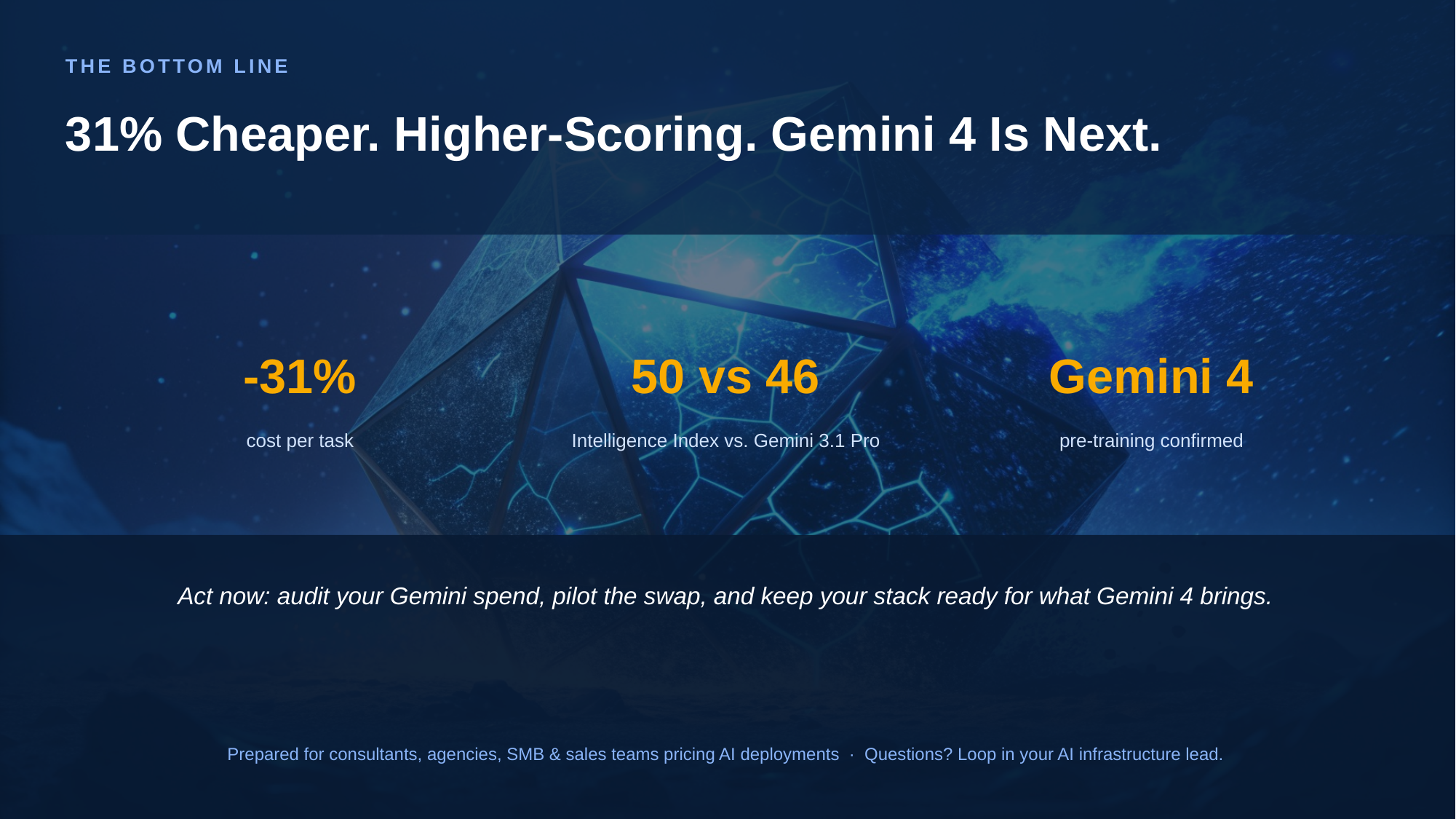
Swipe or scroll sideways to flip through the 15-slide deck →
What is Gemini 3.6 Flash?
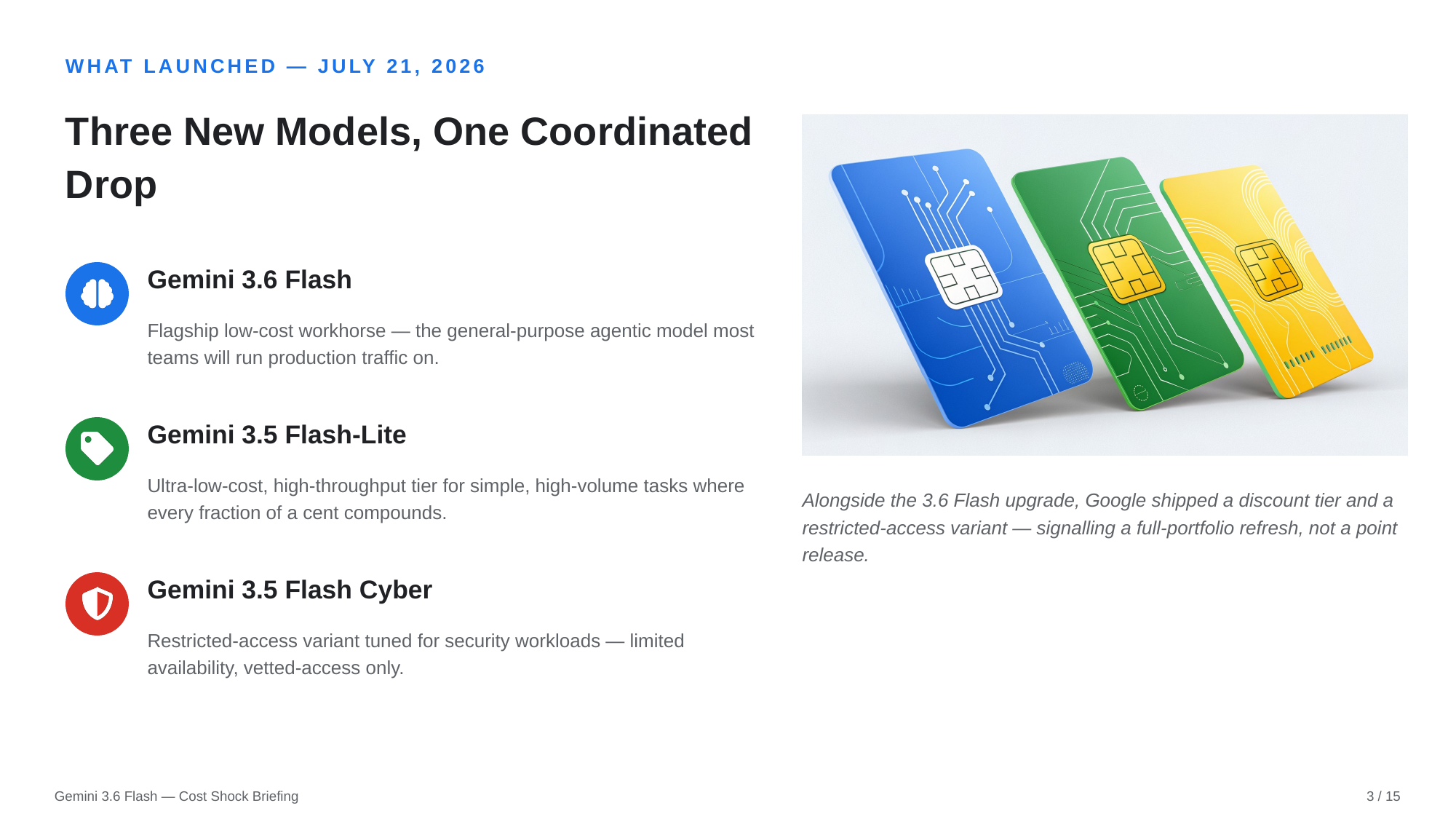
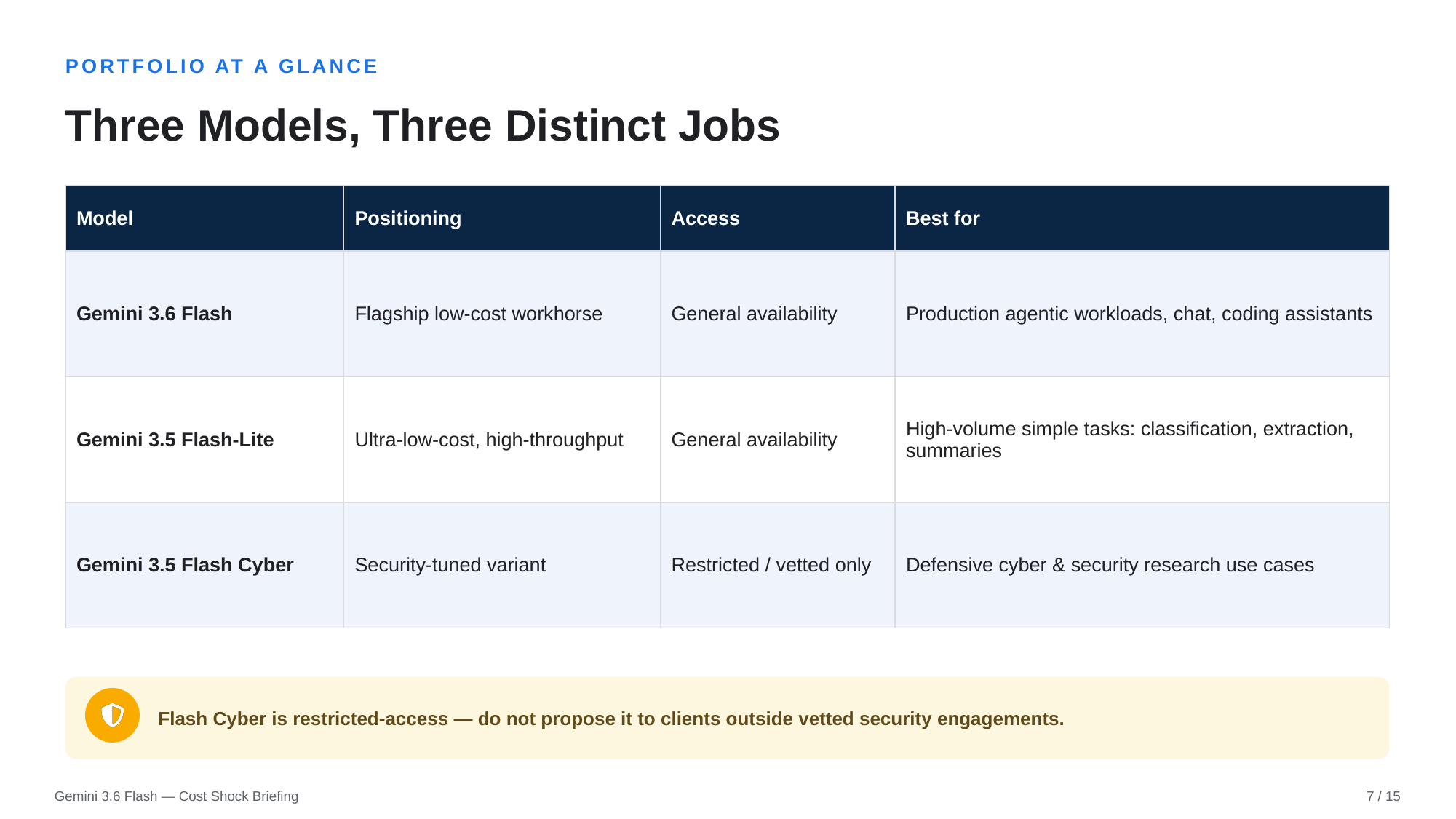
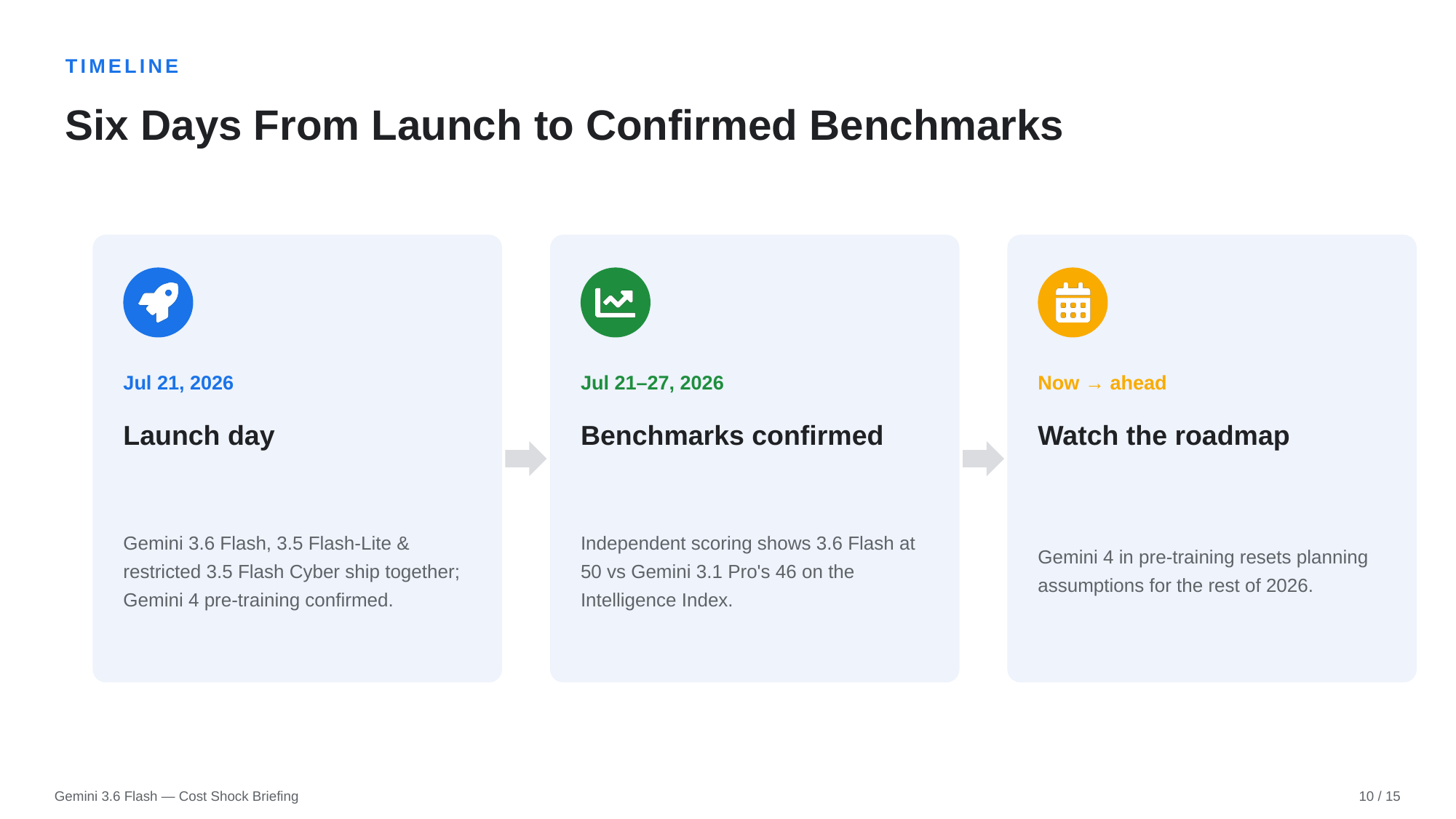
Gemini 3.6 Flash is Google’s new mid-tier AI model, released July 21, 2026 as the workhorse update to Google’s Flash line for coding, document analysis, and agent workflows. Google shipped it alongside two companion models: Gemini 3.5 Flash-Lite and a restricted Gemini 3.5 Flash Cyber.
Key Takeaways
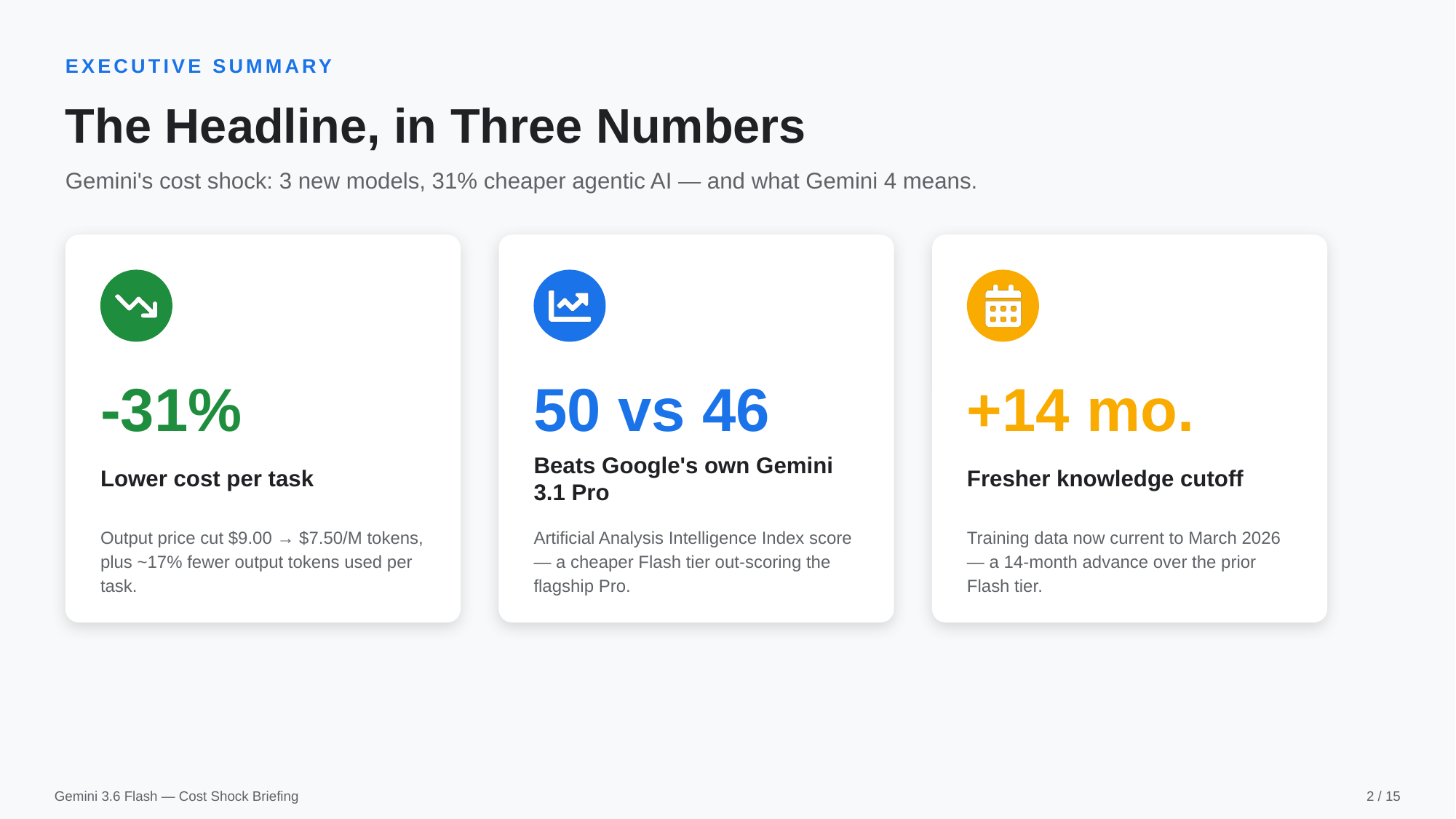
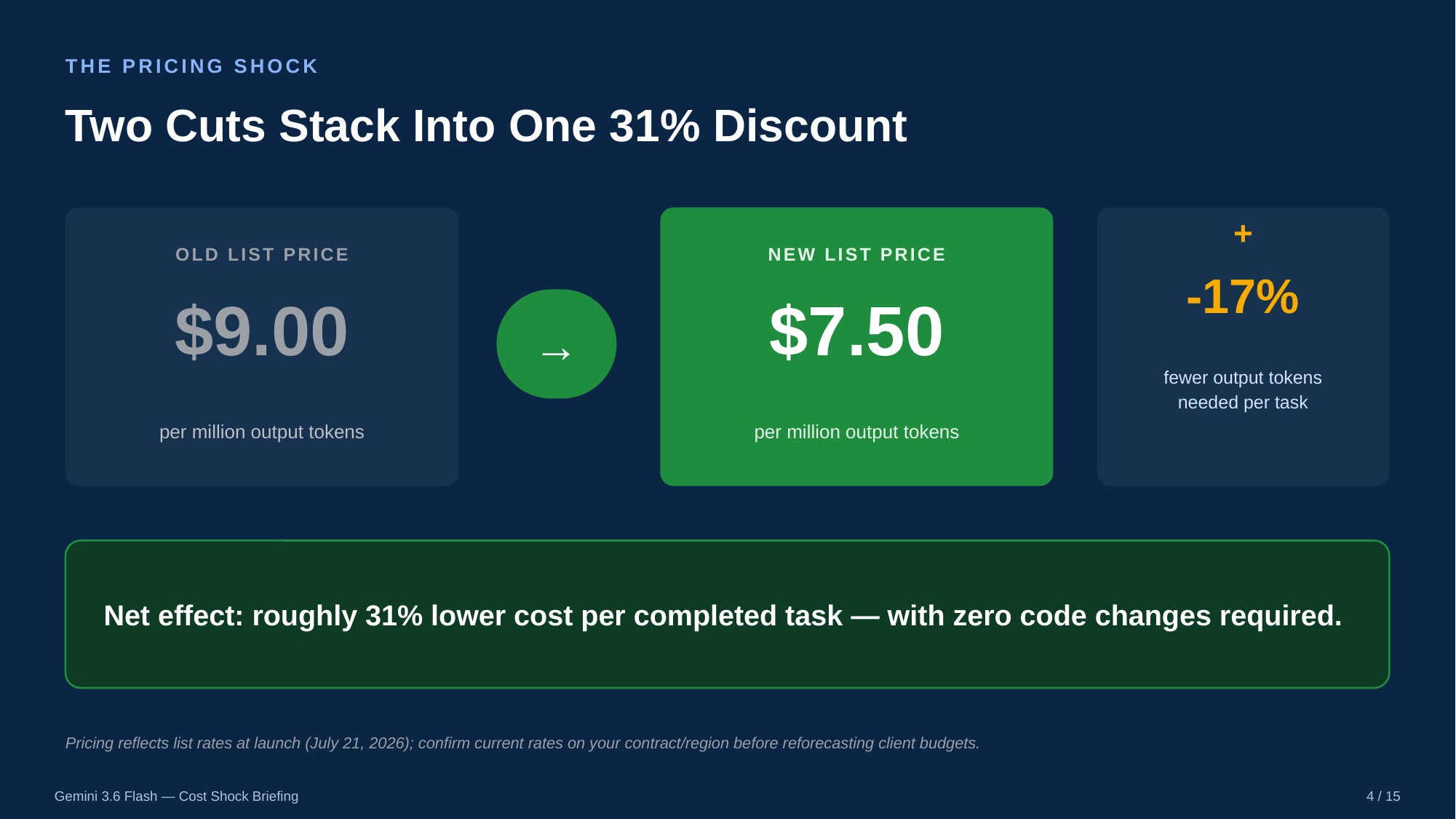
- Gemini 3.6 Flash launched July 21, 2026, cutting output pricing from $9.00 to $7.50 per million tokens versus Gemini 3.5 Flash.
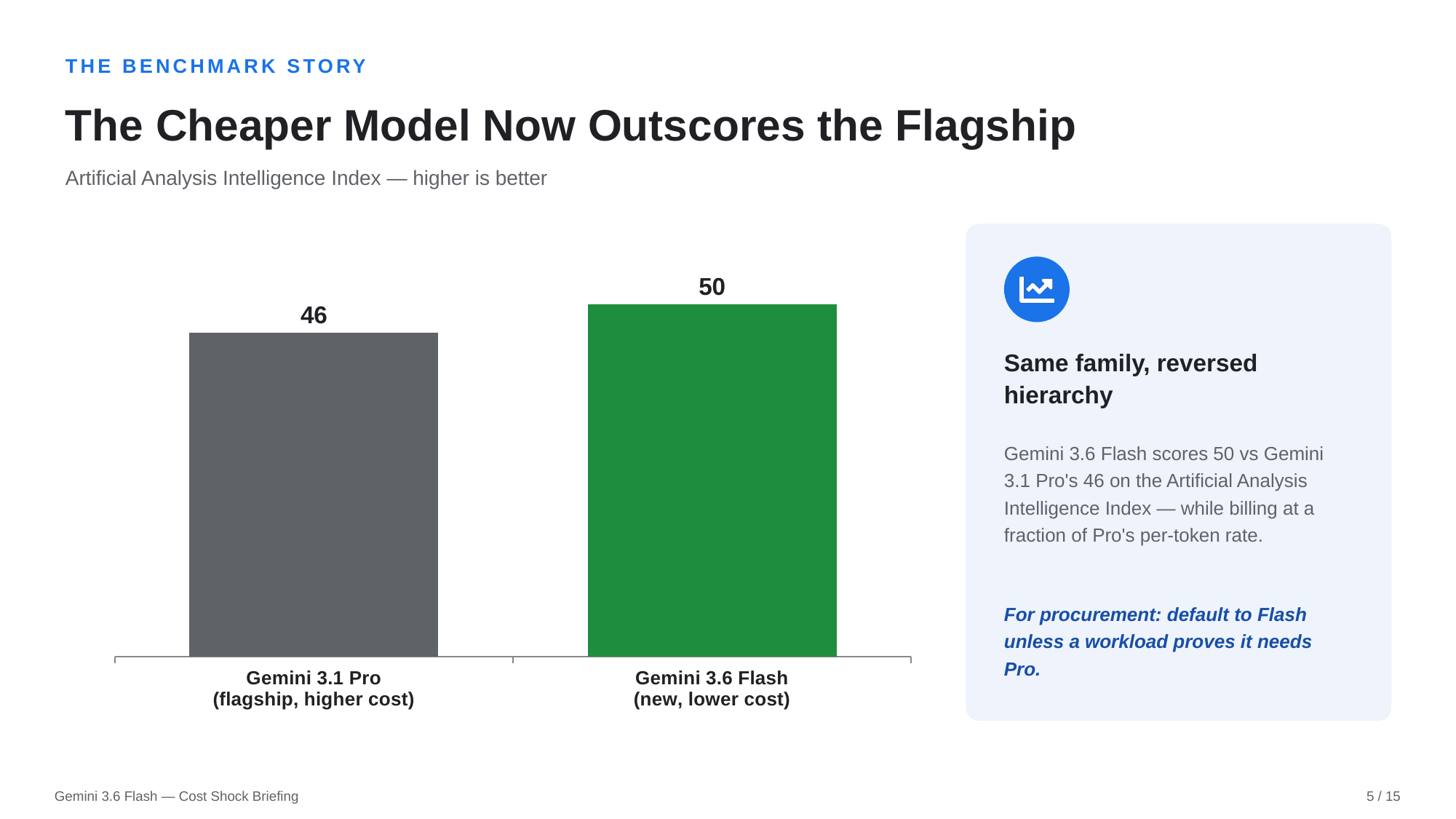
- Independent testing puts 3.6 Flash and Gemini 3.1 Pro at 50 vs. 46 on Artificial Analysis’s Intelligence Index, despite Flash costing far less.
- Average time per task fell from 2.7 minutes to roughly 1.3 minutes, about half, per Artificial Analysis.
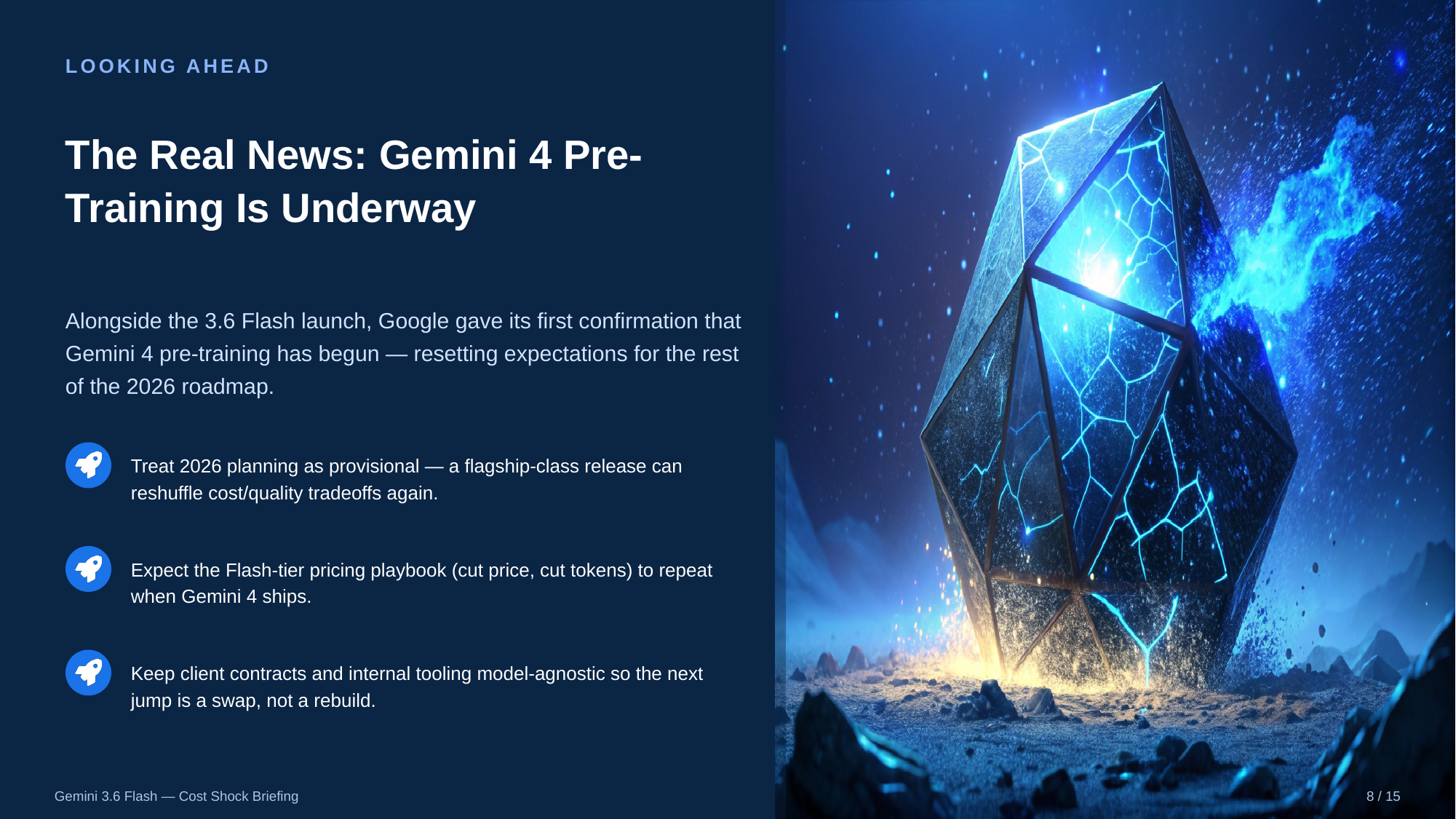
- Google confirmed pre-training has started on Gemini 4, its most ambitious training run yet.
The slides embedded below turn this launch into a nine-slide walkthrough, generated by AskDeck from a short brief. Back to the model: Google positions 3.6 Flash for teams that need efficiency at scale, not the reasoning ceiling reserved for Pro-tier models.
How much cheaper is Gemini 3.6 Flash than the model it replaces?
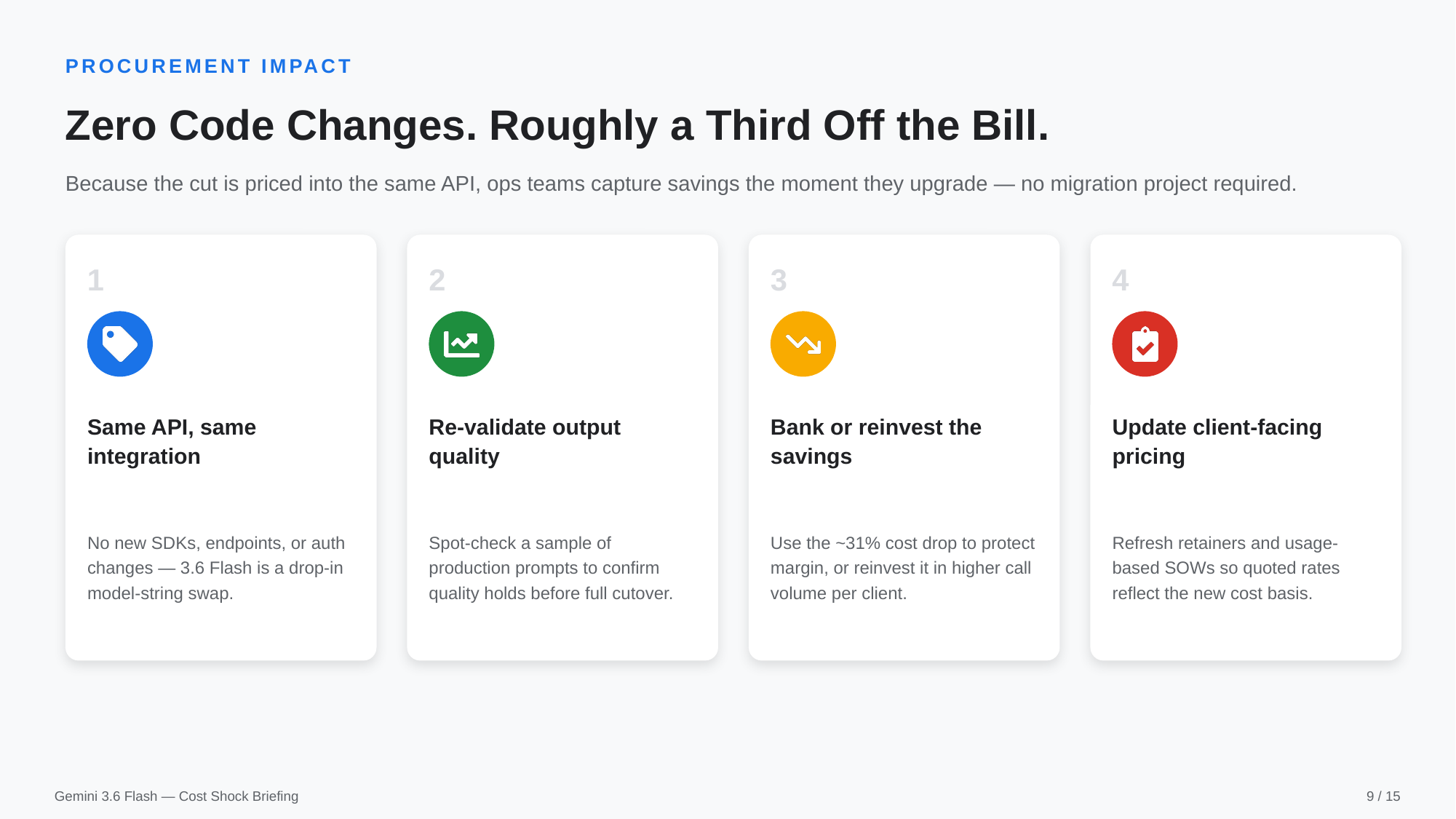
Gemini 3.6 Flash costs $1.50 per million input tokens and $7.50 per million output tokens, down from $9.00 per million output tokens on Gemini 3.5 Flash, with input pricing unchanged. <cite index=“4-2”>This enhanced efficiency is combined with a lower price than 3.5 Flash: at $1.50/1M input and $7.50/1M output tokens, 3.6 Flash reduces the overall cost per agentic task.</cite>
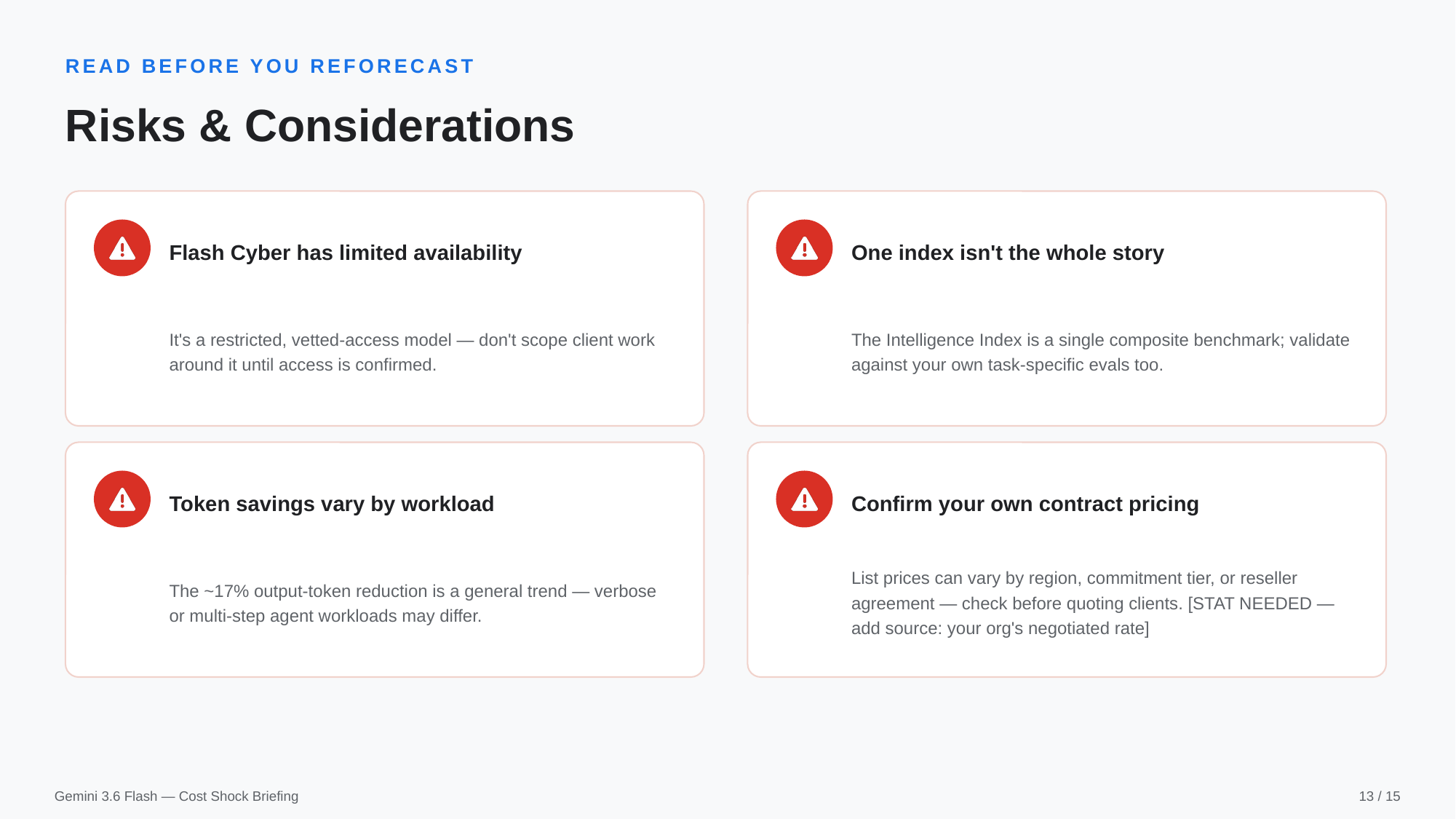
The price cut is only half the savings. <cite index=“4-2,4-3”>On the Artificial Analysis Index, 3.6 Flash consumes 17% fewer output tokens than 3.5 Flash and takes fewer reasoning steps and tool calls to finish multi-step workflows.</cite> Artificial Analysis found <cite index=“6-3”>cost per task falls roughly 18%, from $0.59 to $0.50, and average time per task drops to 1.3 minutes, over 50% below 3.5 Flash’s 2.7 minutes.</cite> Fewer tokens, a lower rate, and faster runs together are what move a monthly bill.
Does Gemini 3.6 Flash actually score higher on benchmarks?
On Google’s own task-specific evaluations, yes, with gains in coding, ML research, and computer use. On the composite score independent testers use to compare vendors, though, 3.6 Flash lands exactly where its predecessor did.
Google credits 3.6 Flash with <cite index=“4-2”>fewer unwanted code edits, as seen in DeepSWE (49% vs. 37%), and significant improvement in ML research, as seen in MLE Bench (63.9% vs. 49.7%)</cite>, plus <cite index=“4-3”>improved computer use, as seen in OSWorld-Verified (83.0% vs. 78.4%)</cite>.
Artificial Analysis, which runs its own test suite rather than citing vendor numbers, found <cite index=“6-1”>Gemini 3.6 Flash scores 50 on the Intelligence Index, matching Gemini 3.5 Flash, just below the newest rival models at 51.</cite> That parity hides movement underneath: <cite index=“6-3”>3.6 Flash improves on GDPval-AA v2 (1421, +72) while slipping slightly on Humanity’s Last Exam (38%, -3 points).</cite>
More telling is the comparison against Google’s own older flagship. On that same index, <cite index=“2-1”>Gemini 3.6 Flash scores 50, compared with Gemini 3.1 Pro Preview at 46.</cite> A mid-tier Flash model now outscores an older Pro model at roughly a third less cost per output token. Buyers no longer need the pricier tier for comparable intelligence.
What are Gemini 3.5 Flash-Lite and Gemini 3.5 Flash Cyber?
Flash-Lite is Google’s fastest, cheapest 3.5-generation model, built for high-throughput jobs like search and document processing, while Flash Cyber is a specialized security model with deliberately limited access.
Flash-Lite costs $0.30 per million input tokens and $2.50 per million output tokens. <cite index=“4-4”>As measured by Artificial Analysis, it runs at 350 output tokens per second, and with significantly better quality than 3.1 Flash-Lite, it offers a strong price-to-performance ratio for developers running high-throughput production traffic.</cite> Google says it now beats the pricier 3 Flash on evaluations including <cite index=“4-4”>SWE-Bench Pro (54.2% vs. 49.6%) and OSWorld-Verified (74.0% vs. 65.1%).</cite>
Flash Cyber takes the opposite approach. <cite index=“4-5”>It is built on top of 3.5 Flash and fine-tuned for finding and fixing cybersecurity vulnerabilities at a lower price per token than larger models,</cite> running inside Google’s CodeMender agent. A model tuned to find software flaws could also help exploit them, so Google is keeping it off the open API, limiting it to governments and vetted partners through a pilot program.
What does the Gemini 4 confirmation mean?
Google used the same announcement to confirm, for the first time, that training has begun on Gemini 4, while Gemini 3.5 Pro is already in partner testing ahead of a broader release. <cite index=“4-3”>Gemini 3.5 Pro is currently testing with partners, and Google plans to make it broadly available as soon as it’s ready. In parallel, the team is already focused on building the next generation of models, having started its most ambitious pre-training run yet for Gemini 4.</cite>
Labs rarely confirm a next-generation training run this far ahead of release. Doing so signals Google wants the market pricing in a roadmap that extends past today’s Flash and Pro tiers, even as those tiers keep getting cheaper. For teams already on 3.5 Flash, 3.6 Flash is a drop-in successor through the same Gemini API and Vertex AI channels, so switching is usually a model-name change rather than a rebuild.
The example deck paired with this post covers the same launch and the Gemini 4 teaser in slide form, built with AskDeck from a short brief and free to open and edit.