Swipe or scroll sideways to flip through the 15-slide deck →
What is Gemini 3.7 Flash?
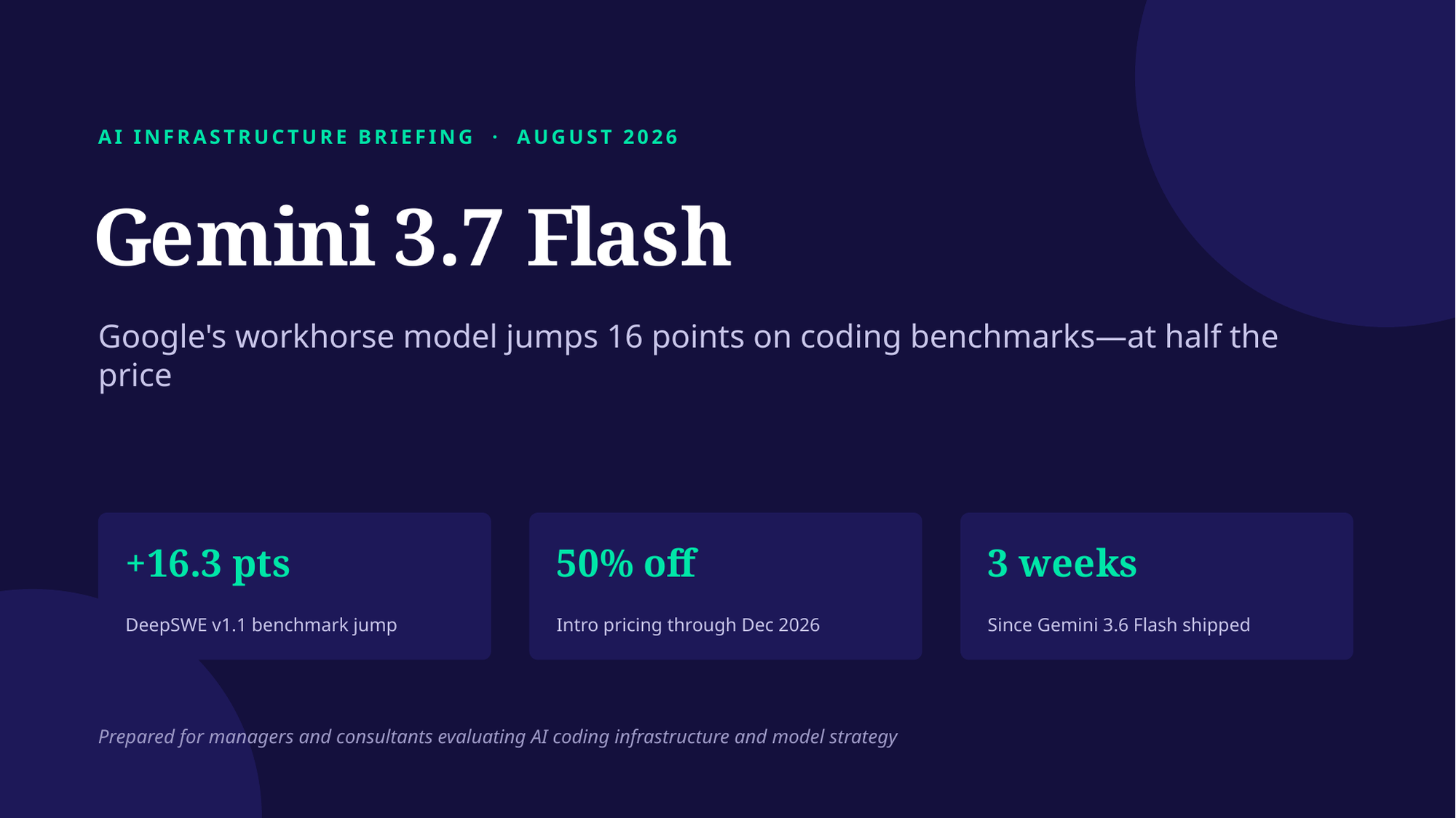
Gemini 3.7 Flash is Google’s fast, low-cost AI model tier, updated on August 13, 2026 with a focus on coding and autonomous agent tasks. Google released it just 23 days after Gemini 3.6 Flash, calling it its “most intelligent workhorse model yet for coding and agents.”
Key Takeaways
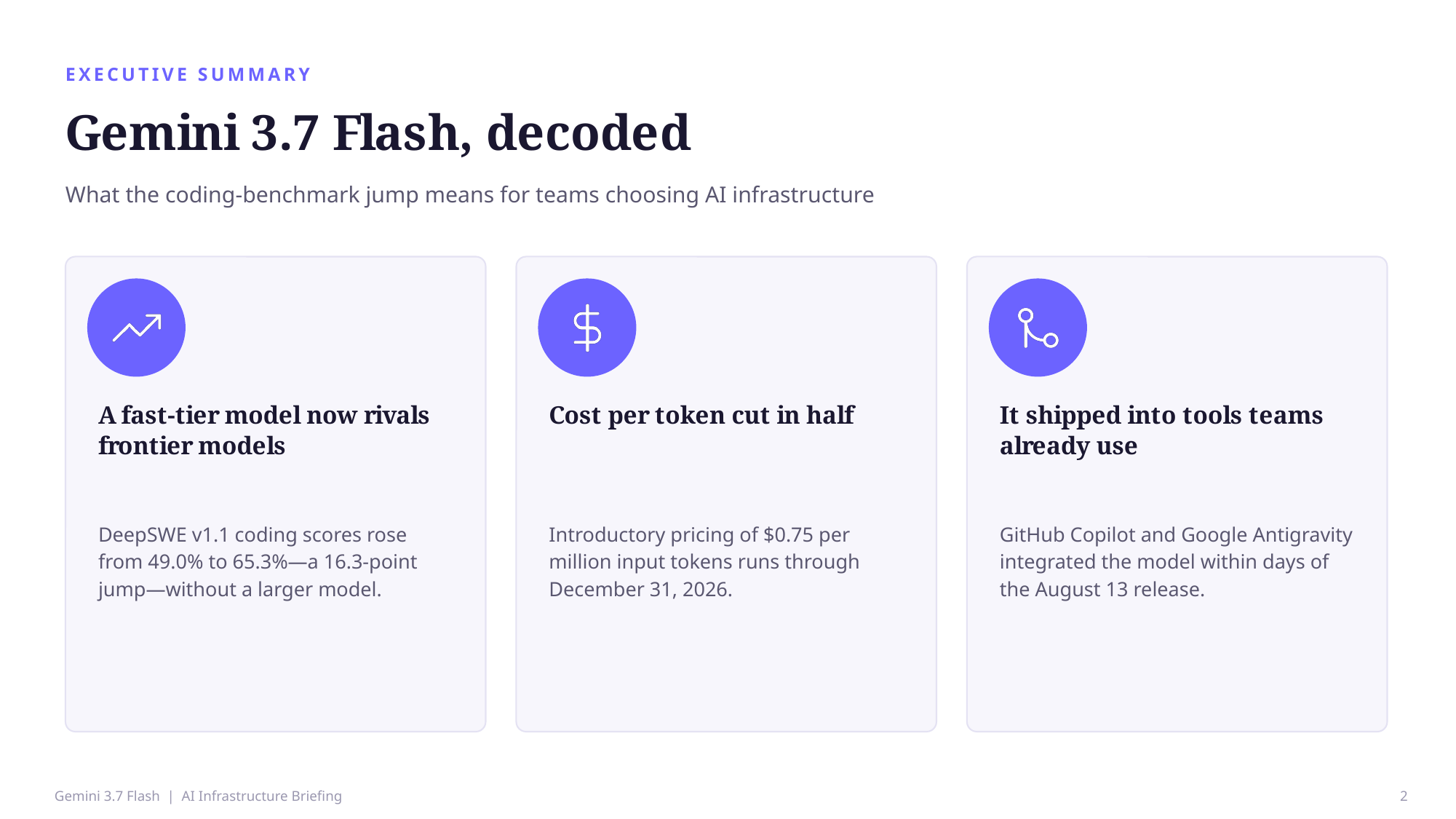
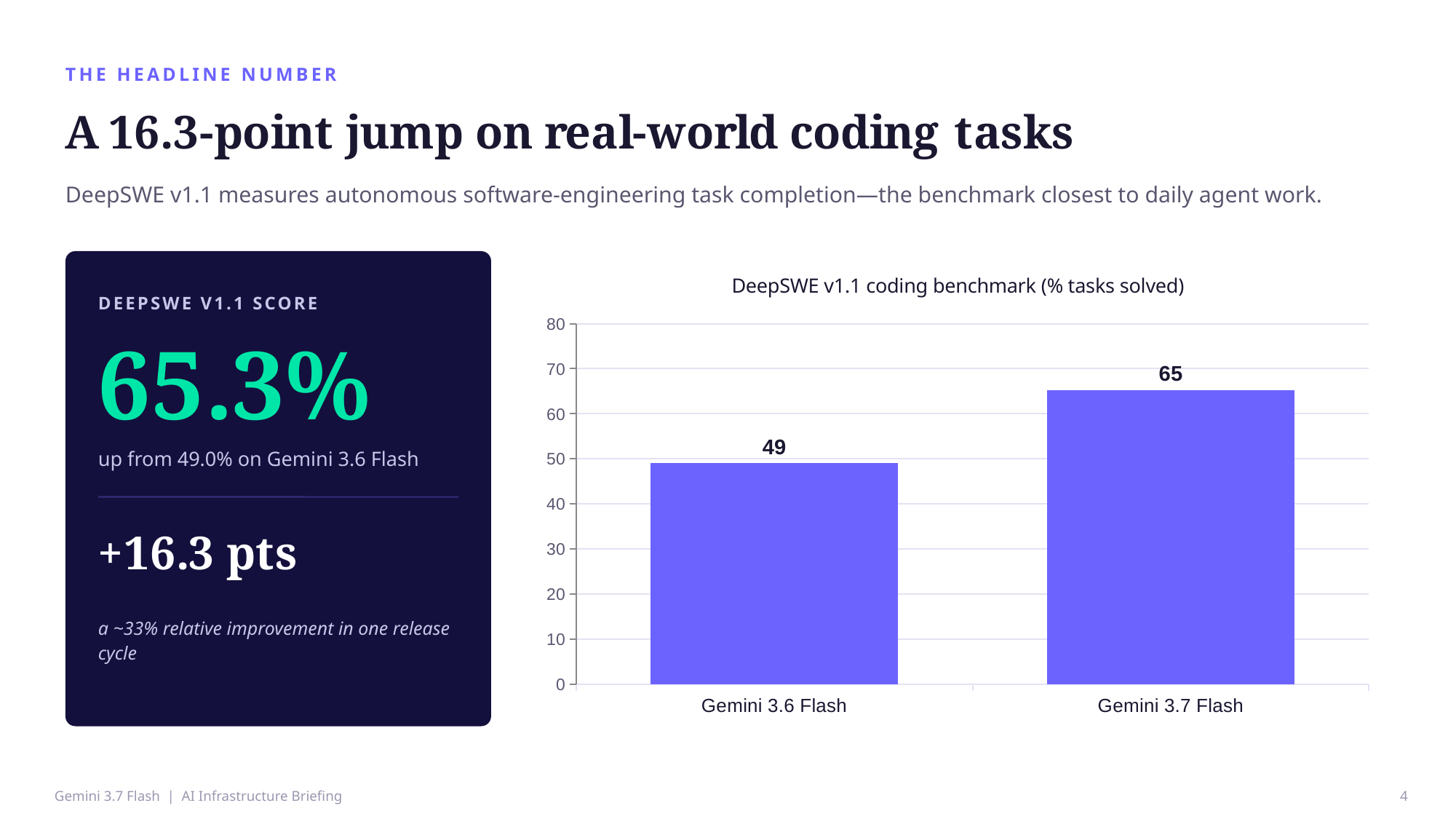
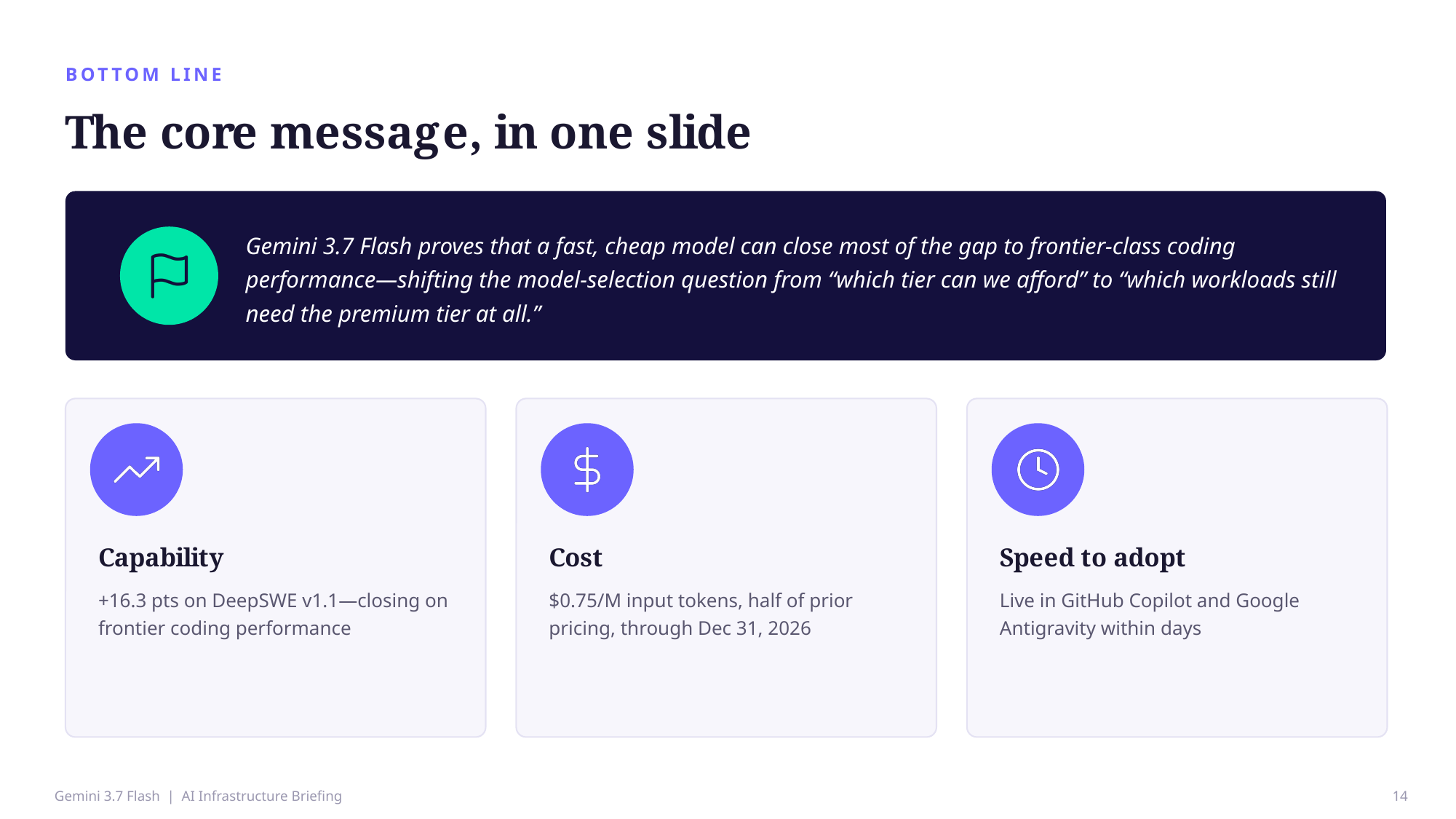
- DeepSWE v1.1 score jumped from 49.0% to 65.3%, and FrontierCode 1.1 Main rose from 34.4% to 43.6%.
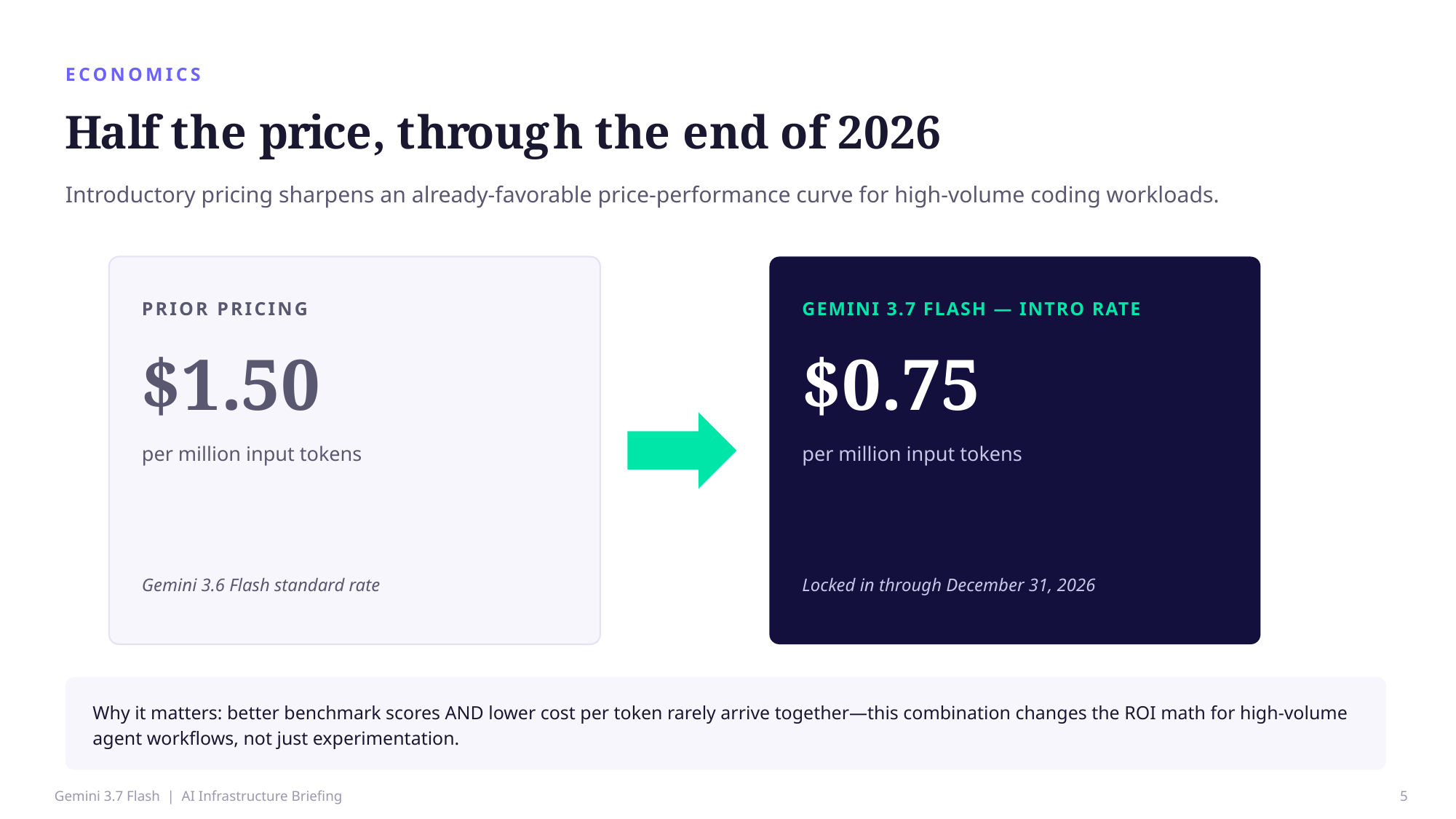
- Introductory pricing is $0.75 per million input tokens and $3.75 per million output tokens through December 31, 2026, half the prior rate.
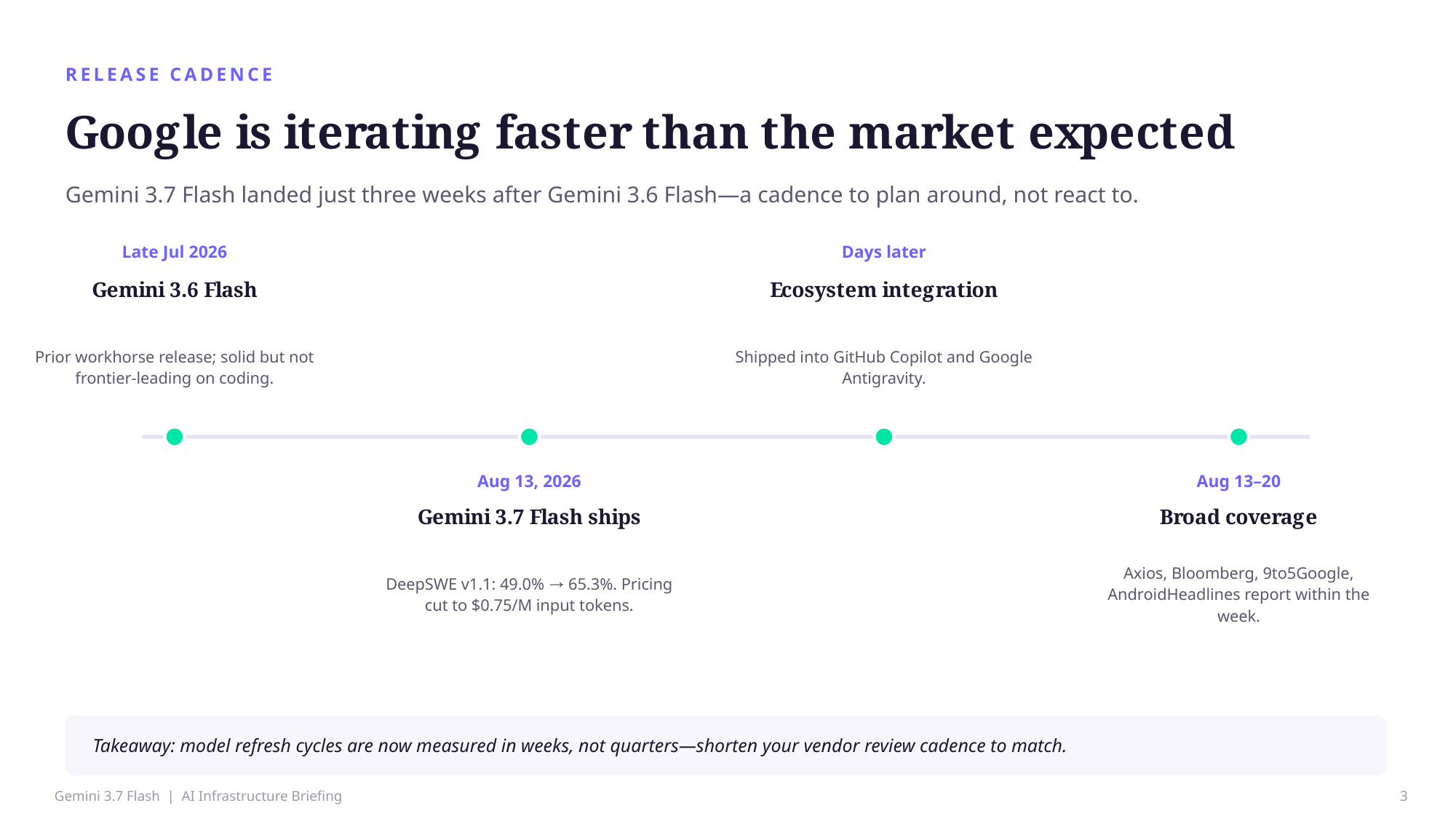
- The model shipped just 23 days after Gemini 3.6 Flash, an accelerated release cadence.
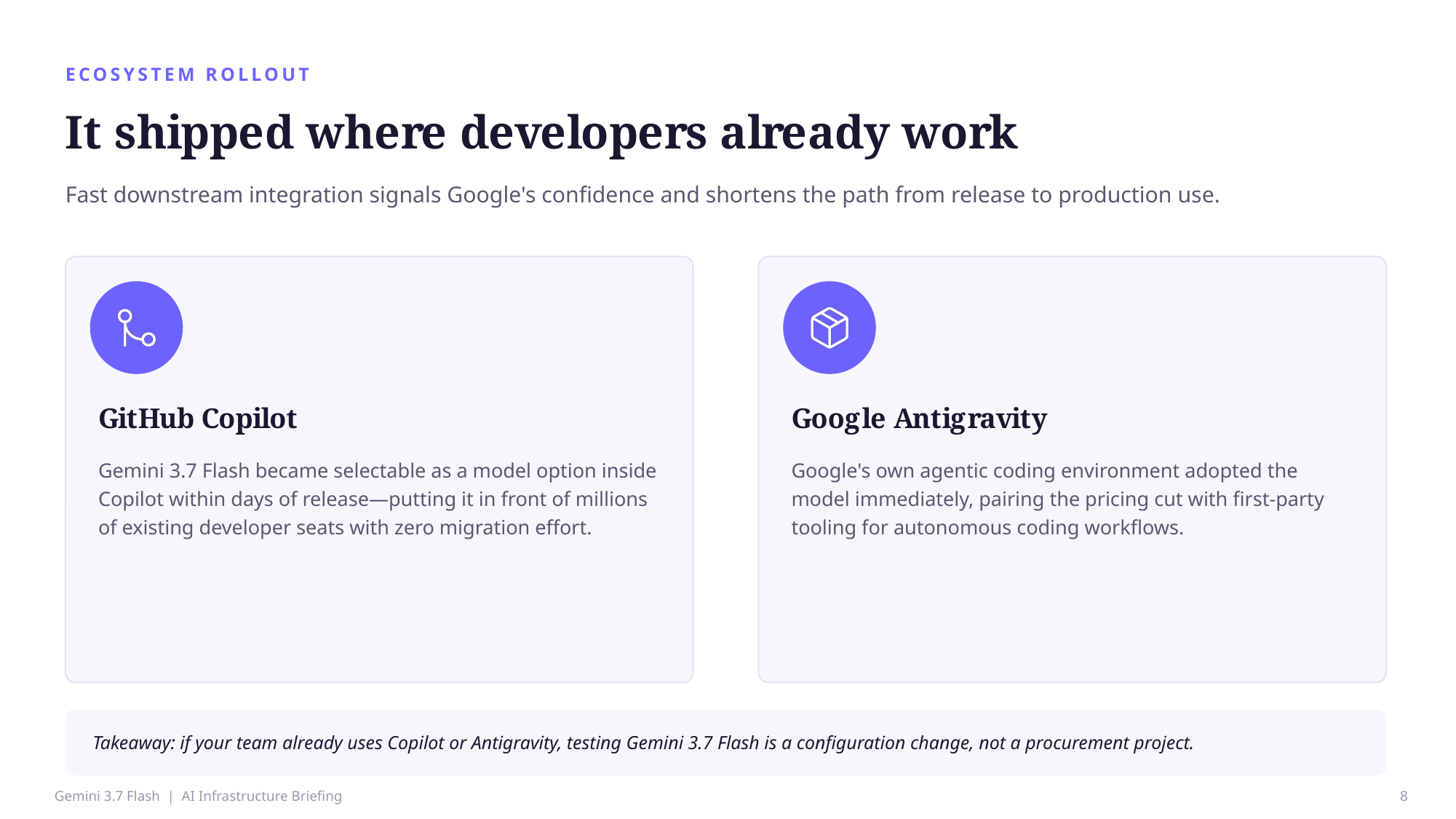
- It landed directly in GitHub Copilot, Google Antigravity, and Gemini Spark within days.
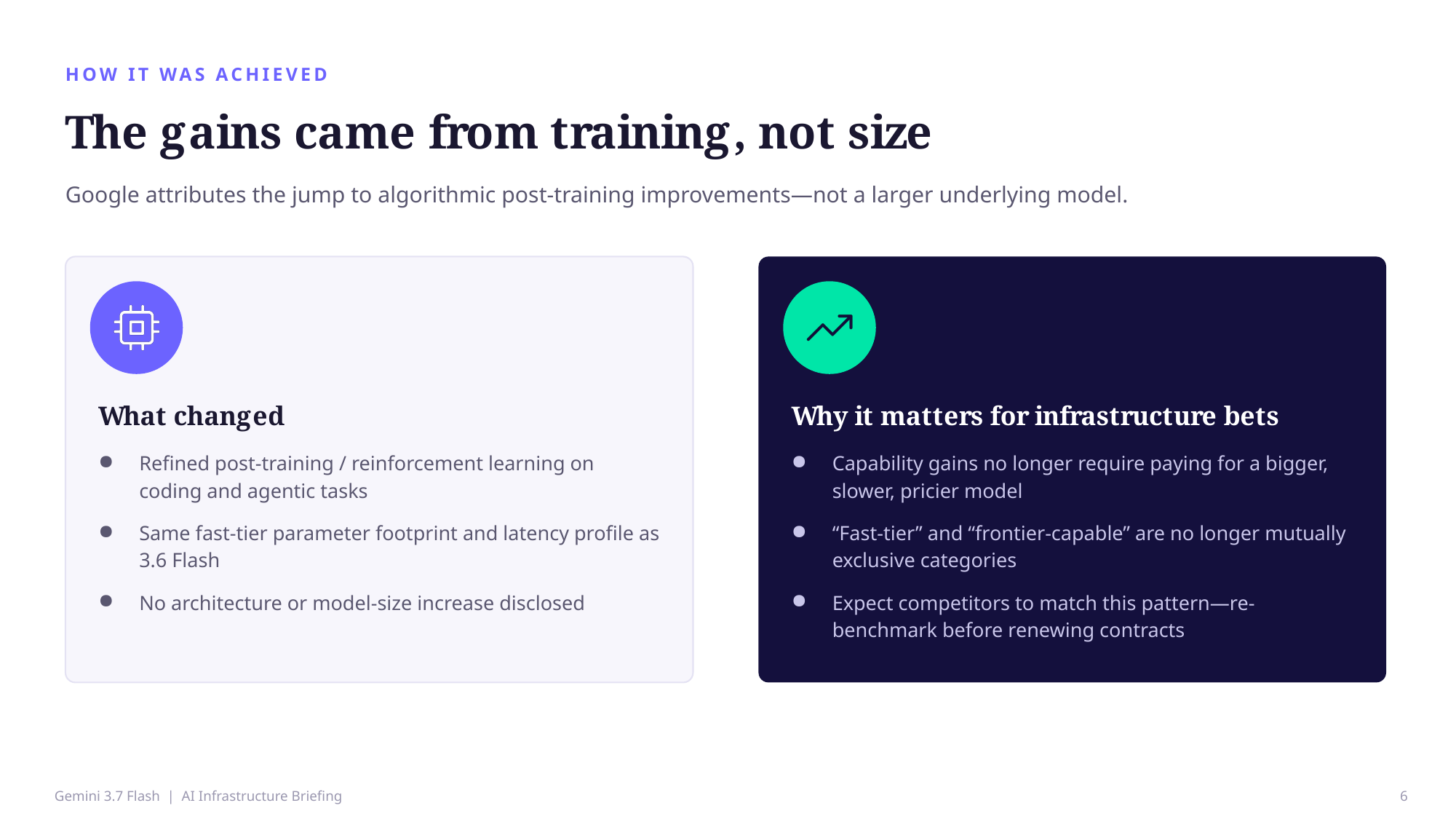
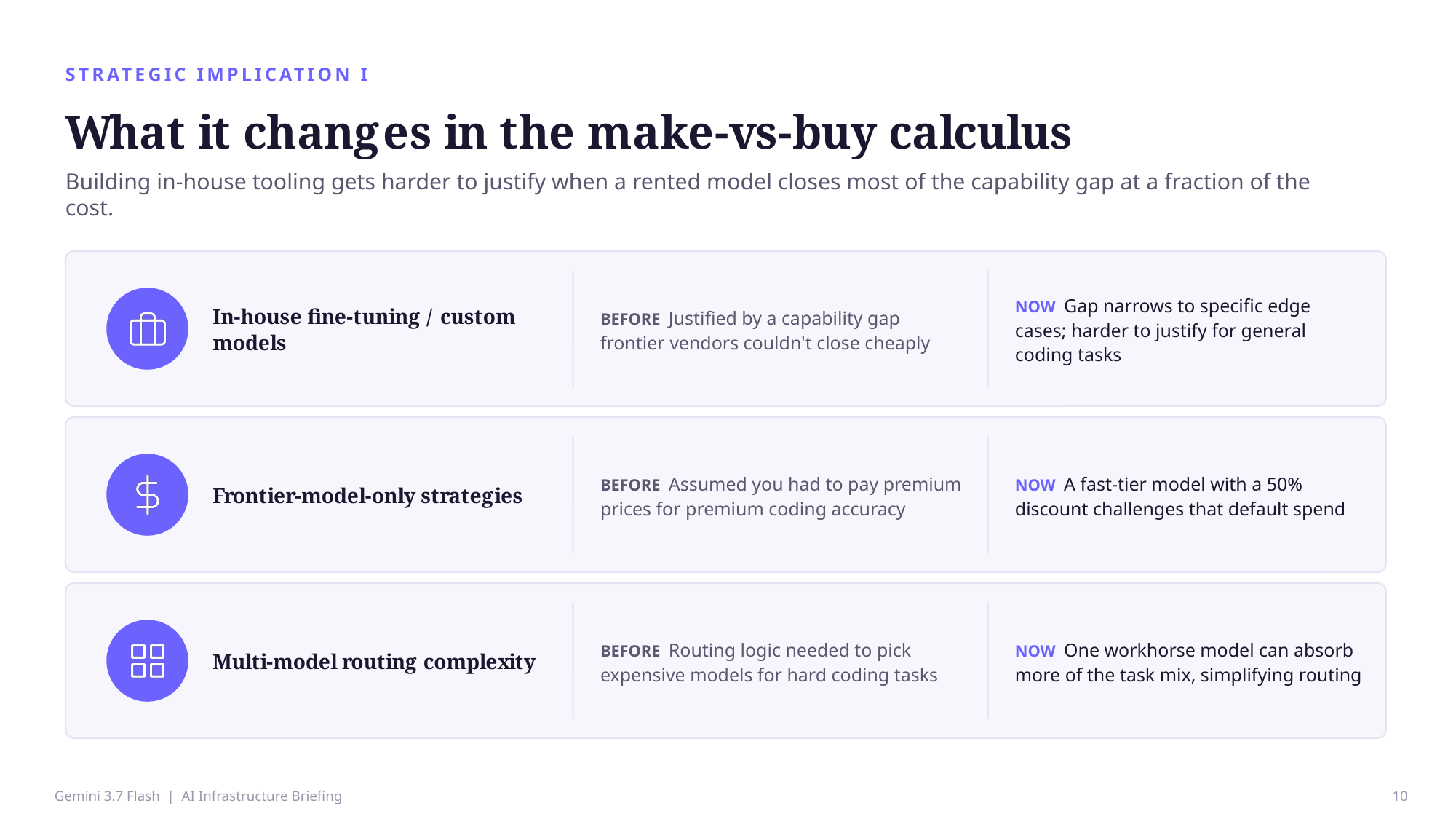
Flash sits below Google’s Pro-tier models in size but is built for volume: coding assistants, customer-facing agents, and document pipelines where cost per task matters more than peak reasoning depth. The gains didn’t come from a bigger model. Google says the improvements are “a direct result of developer feedback and algorithmic innovations” the company plans to carry into future releases, meaning post-training refinement, not added parameters.
The slides below cover these same numbers visually, a ready-made deck on this release built with AskDeck from a short brief.
Why did the coding benchmarks jump so much?
The gains cluster around multi-step engineering work rather than single-answer tasks. The DeepSWE v1.1 benchmark goes from 49.0% to 65.3%, while it’s 34.4% to 43.6% on FrontierCode 1.1 Main. DeepSWE tests long-horizon software engineering: whether a model can resolve a real issue across a codebase rather than just autocomplete a function.
Google frames the effect as fewer wasted cycles: “It better adapts to roadblocks, clarifies intent when needed, and follows instructions with greater fidelity,” Google said. “It thinks more diligently, putting in more effort into multi-step planning and tool calls.” One early customer report backs this up: the Gemini 3.7 Flash agent was 35% cheaper than 3.6 Flash, with a +8% observed prompt-cache hit rate and fewer tool errors. Its WebDev Arena Elo score also rose, from 1538 last month to 1588 now.
How much cheaper is it, and for how long?
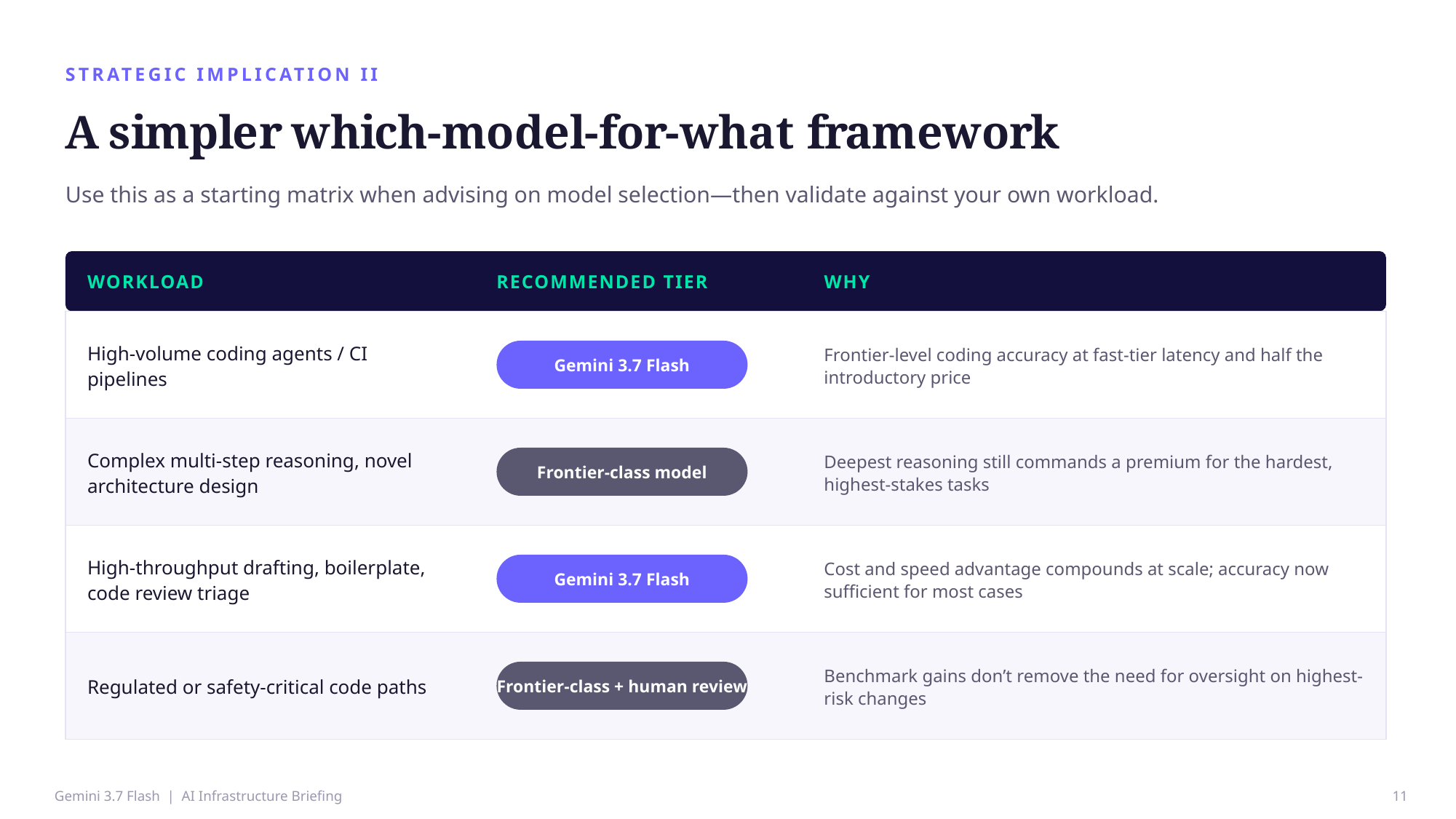
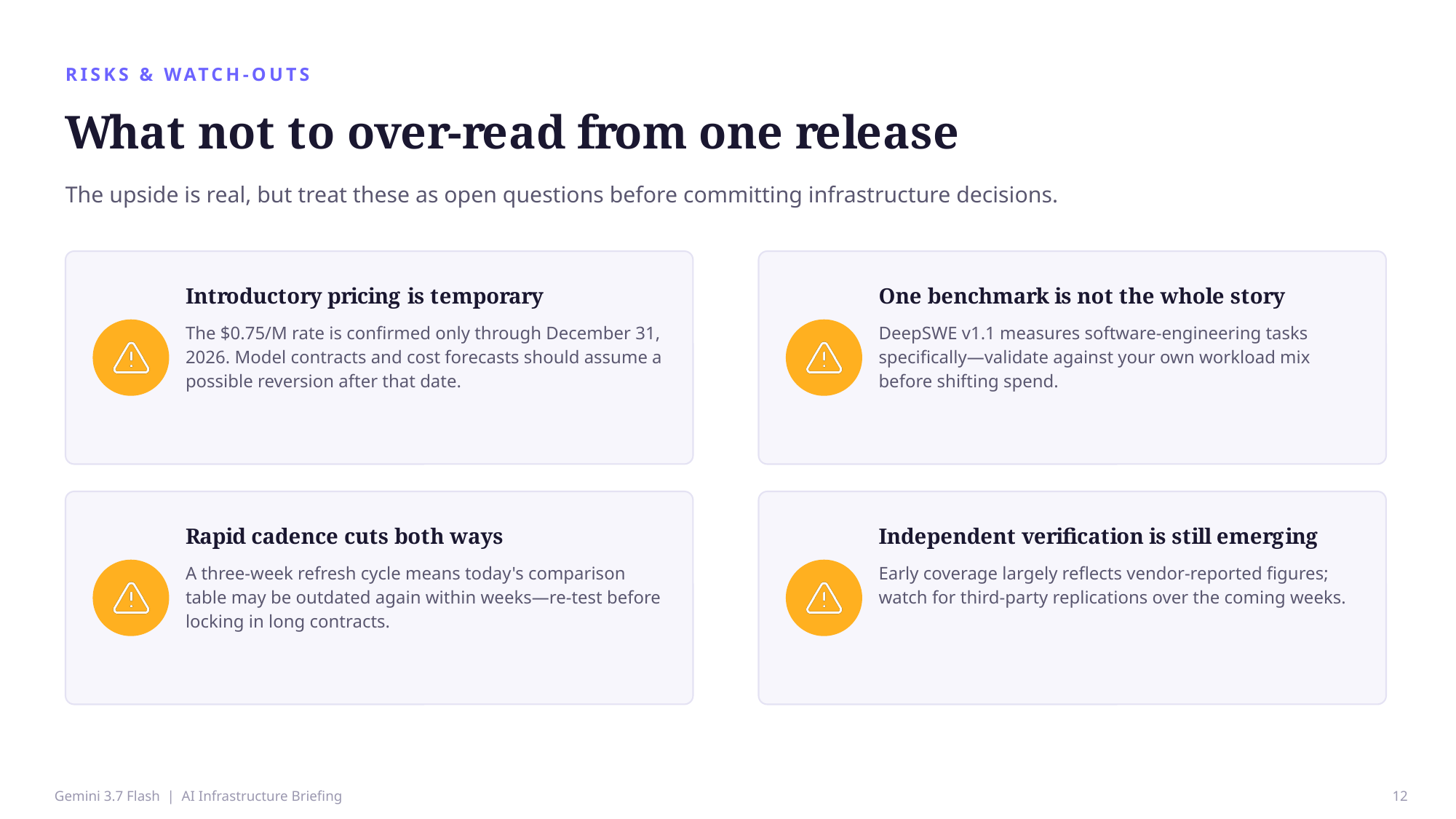
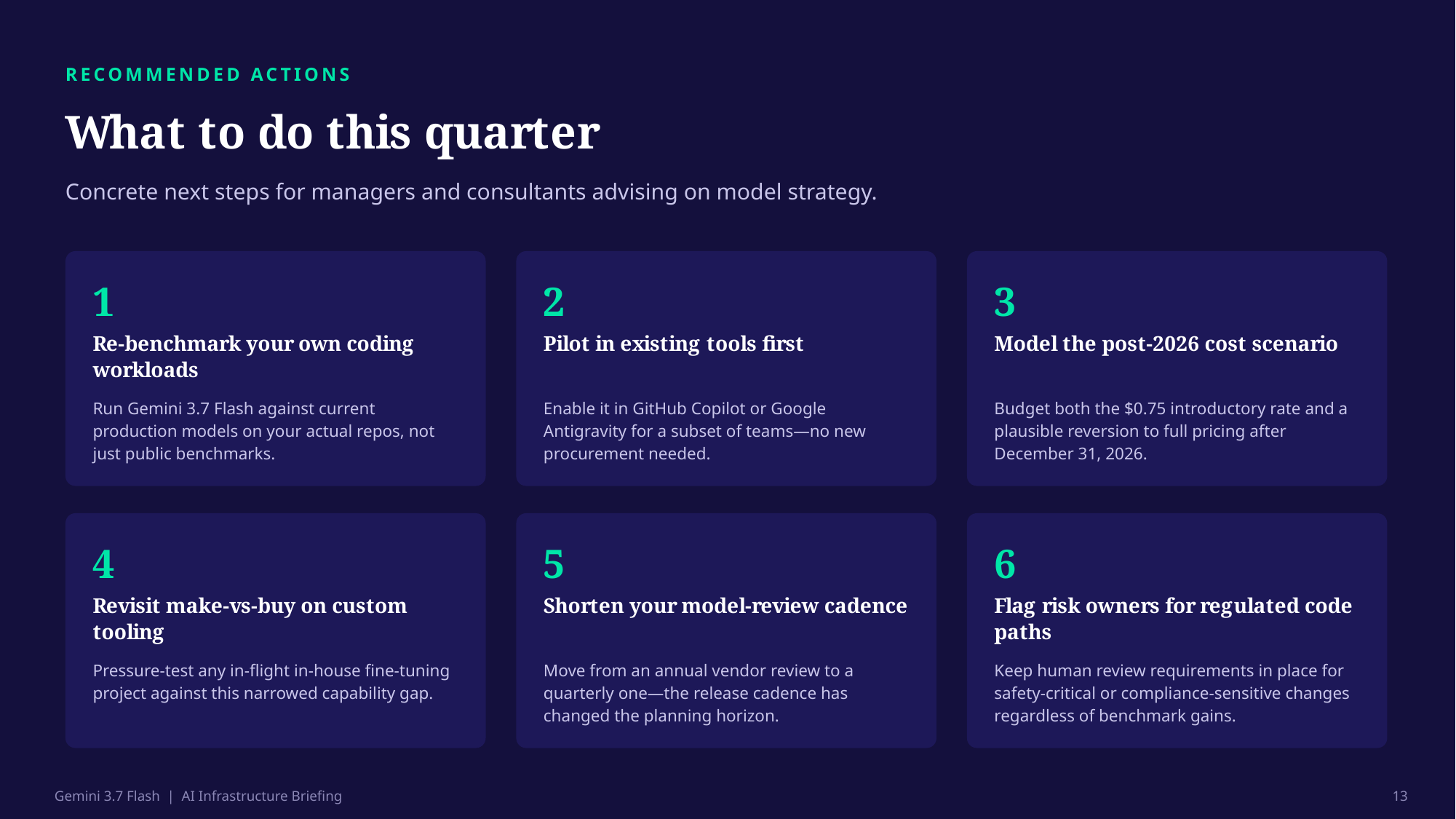
Gemini 3.7 Flash costs $0.75 per million input tokens and $3.75 per million output tokens, an introductory rate lasting only through 2026, half of the initial price for Gemini 3.6 Flash. The discount expires: the rate rises on 31 December 2026 to $1.50 per million input tokens and $7.50 per million output tokens, exactly what Gemini 3.6 Flash cost at its launch. Google also moved 3.6 Flash to the same temporary rate, so the two models cost the same today and the upgrade decision turns on capability rather than price. It’s also not the cheapest option around: OpenAI’s GPT-5.6 Luna is listed at $0.20 per million input tokens and $1.20 per million output tokens, and DeepSeek V4-Flash at $0.14 and $0.28. Flash competes on capability and integration, not sticker price.
Where can you actually use it, and what are the limits?
It’s already live across developer tools, enterprise platforms, and Google’s consumer agent, not just an API you’d wire up yourself. It’s now available in GitHub Copilot, including Visual Studio Code, Visual Studio, Copilot CLI, the cloud agent, JetBrains, Xcode, and Eclipse, though rollout to Copilot Pro, Pro+, Max, Business, and Enterprise users is gradual. Developers can also reach it via the Gemini API, AI Studio, and Antigravity, Google’s agent-first coding environment. On the consumer side, Gemini Spark, available to Google AI Pro and Ultra subscribers in over 160 countries, started using Gemini 3.7 Flash the day of launch, though the EEA, UK, Switzerland, and Nigeria are excluded regardless of subscription.
The headline numbers are Google’s own evaluations, and harder benchmarks show more modest results. At 30.4 percent the model still fails roughly seven in ten multi step automation tasks on AutomationBench, and on the harder Terminal-bench 3.0 the score drops to 14.9 percent, a reminder that a benchmark depends heavily on which test is quoted. Context limits are unchanged: a 1,048,576 token input context window and a 65,536 token output limit, both unchanged from Gemini 3.6 Flash, with a knowledge cutoff of March 2026. Safety scope expanded, too: the new model comes with improved safeguards against misuse in the domains of Chemical, Biological, Radiological, and Nuclear (CBRN) and cyber offense. For regulated workflows, treat vendor benchmarks as a starting point for your own testing, and check specifics with a qualified expert.
Why does a three-week release cycle matter?
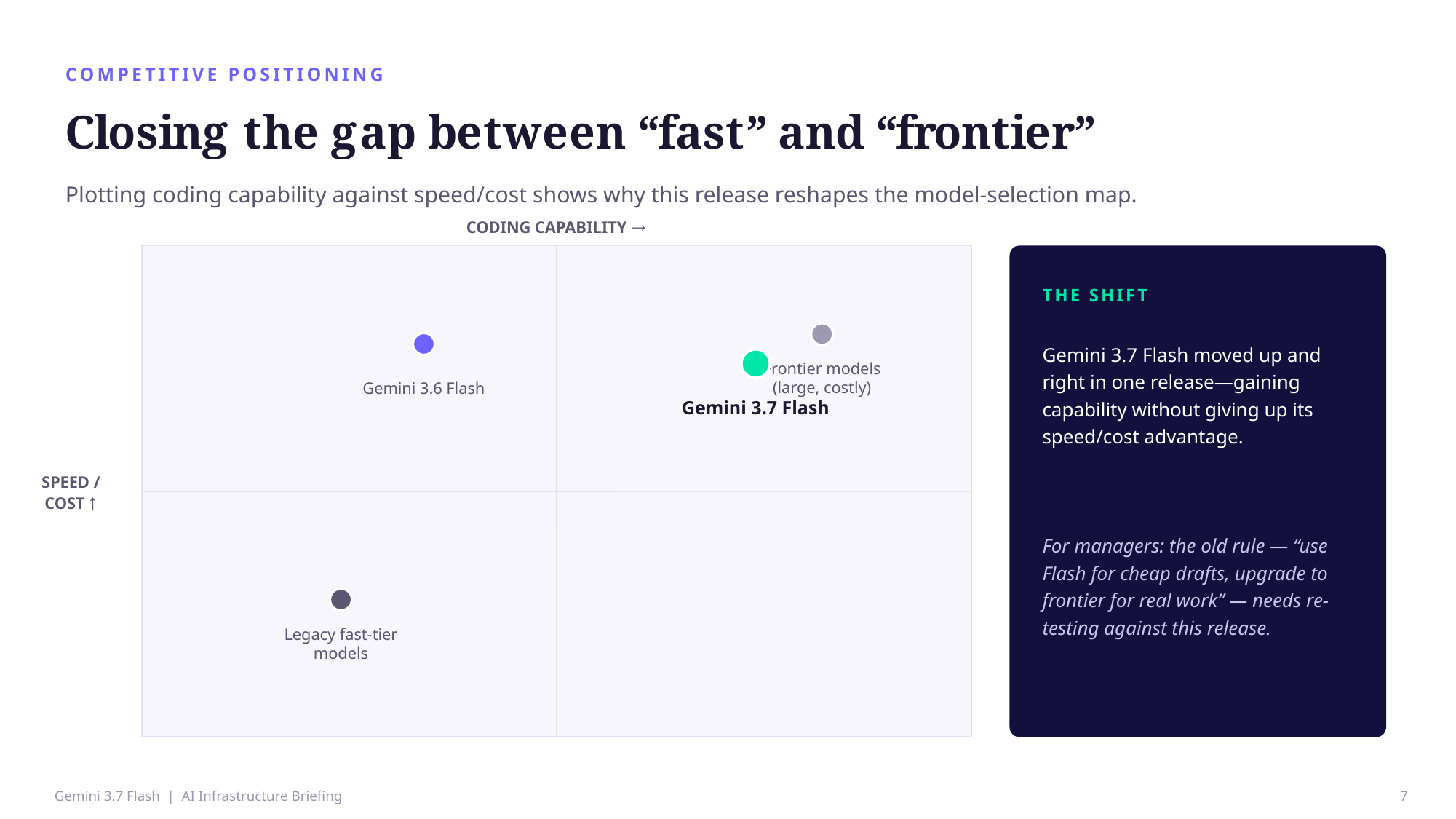
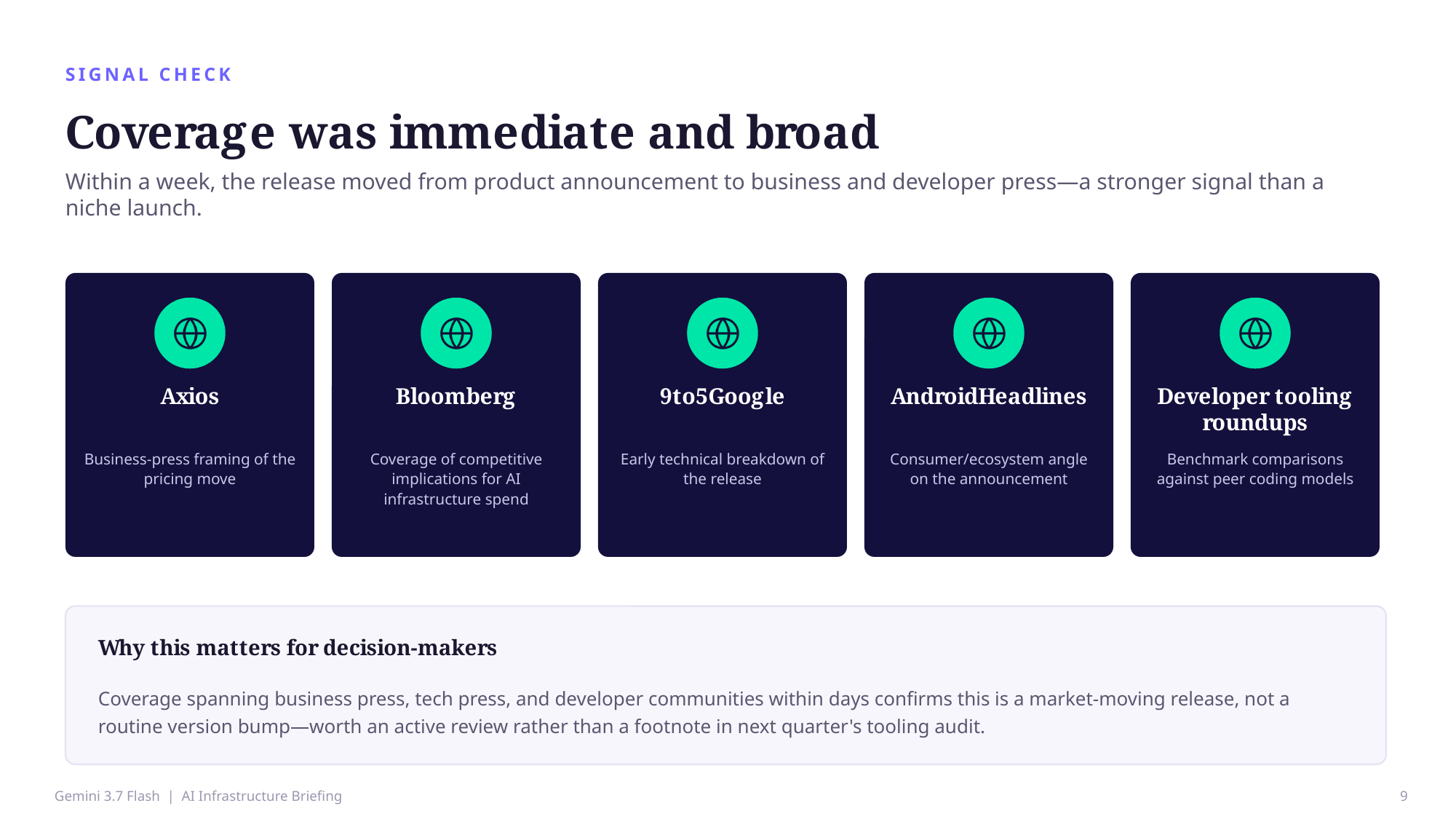
A 23-day gap between major Flash releases signals Google is treating its fast tier as an active competitive front, not a slow-moving budget option. Just three weeks after the last release, Google announced Gemini 3.7 Flash, continuing the company’s accelerated cadence. The timing reflects the wider field, too: the release comes amid a flurry of new models from U.S. competitors, including SpaceXAI’s Grok, and Chinese providers, such as DeepSeek. For anyone choosing where to route coding and agent workloads, the signal isn’t just this benchmark jump. It’s that the fast, cheap tier of AI is improving quickly enough that a model choice made three months ago may already be outdated.
If you need to explain this release to a team or client quickly, the deck below covers the same benchmark and pricing shifts in slide form, built with AskDeck from a short written brief and free to download and edit.
Sources
- Google: Introducing Gemini 3.7 Flash
- 9to5Google: Gemini 3.7 Flash launches three weeks after last model
- Axios: Google’s Gemini 3.7 Flash arrives before Gemini 3.5 Pro
- datanorth.ai: Google releases Gemini 3.7 Flash for coding and agents
- GitHub Changelog: Gemini 3.7 Flash is now available in GitHub Copilot