
Google Cloud just posted its fastest growth quarter in company history, and the number that stopped everyone was 82%. Alphabet’s Q2 2026 earnings, released July 22, show a cloud business now outrunning AWS and Azure, while capital spending climbs fast enough to worry investors anyway.
Key Takeaways
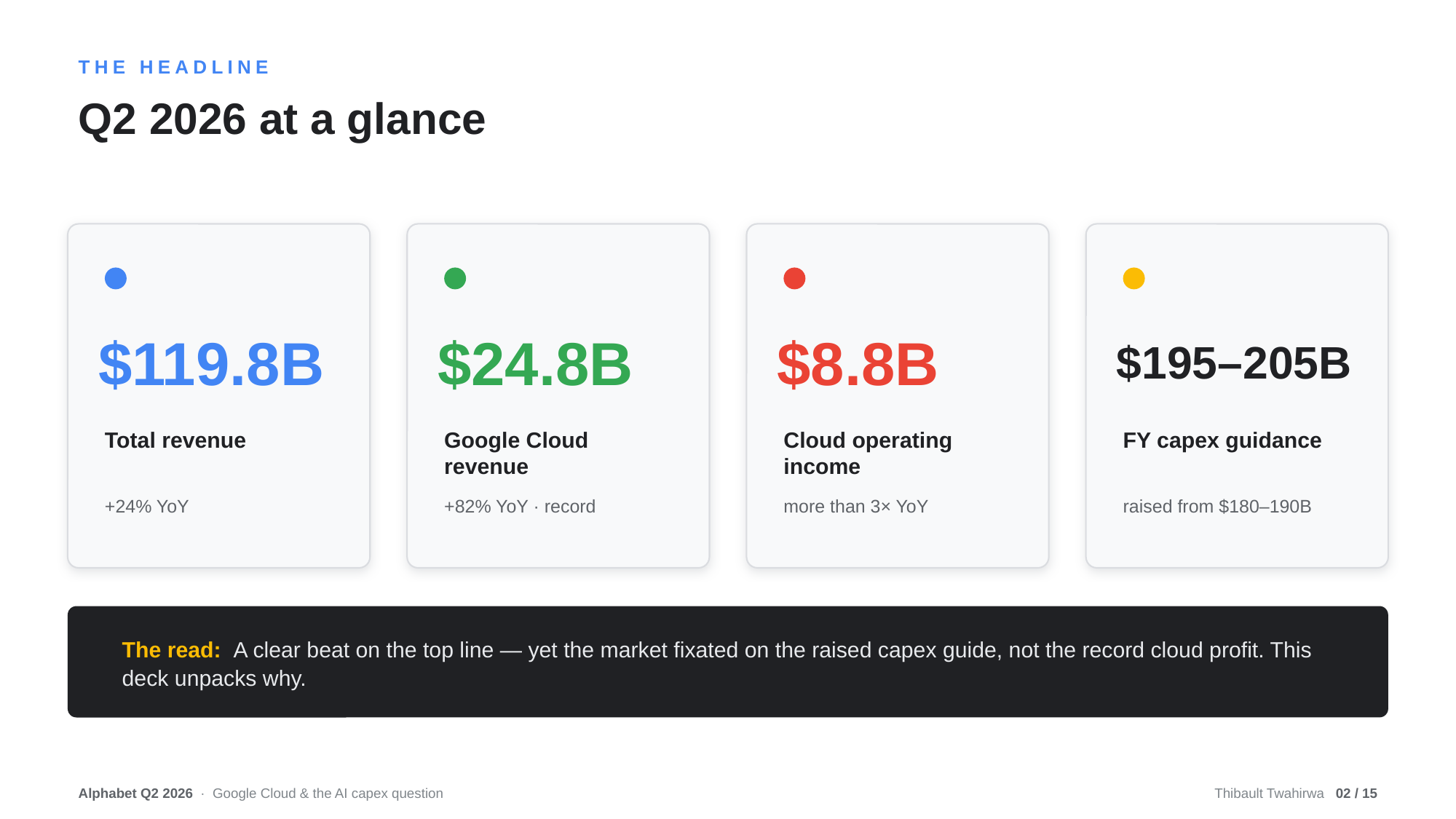
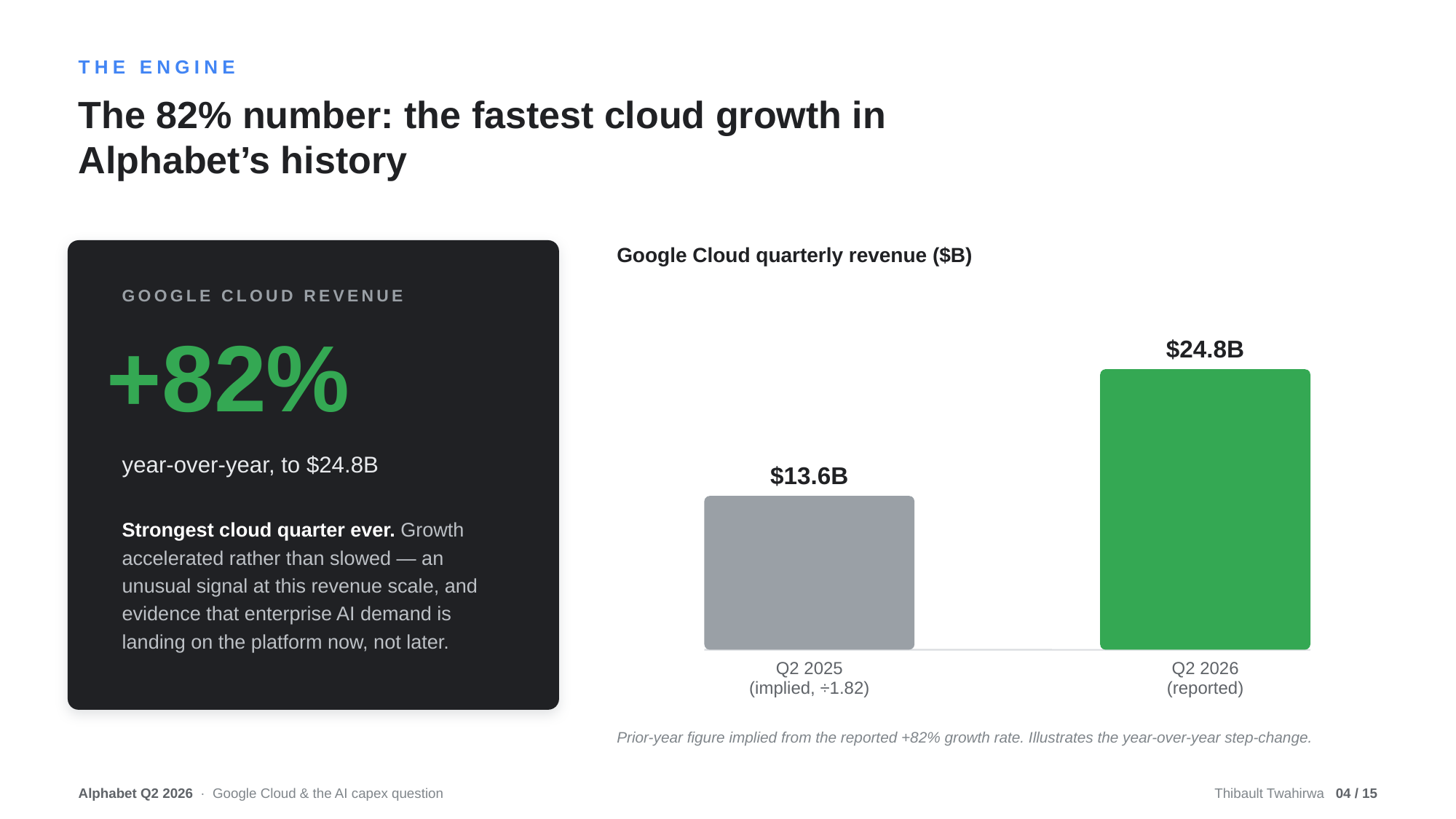
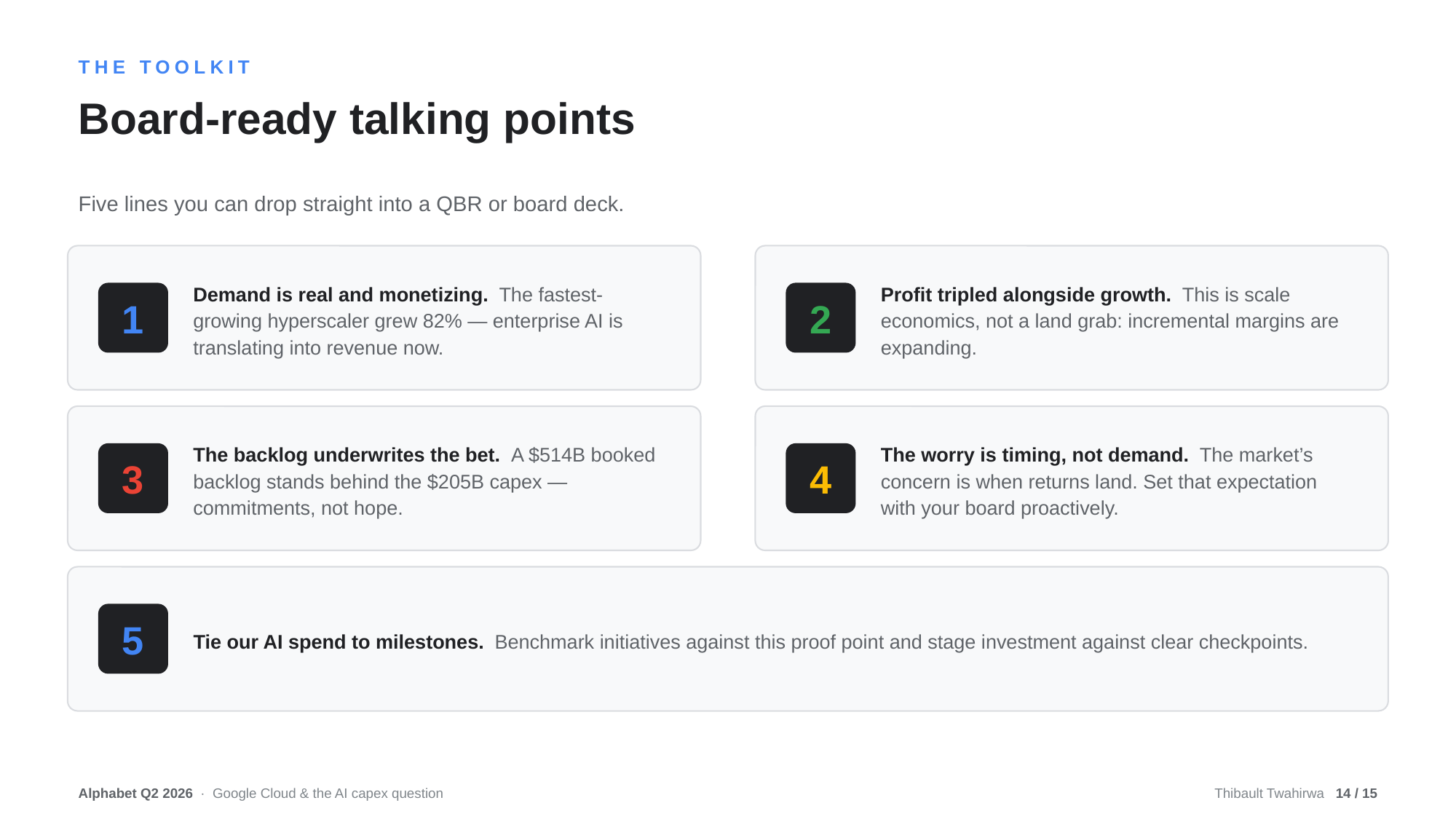
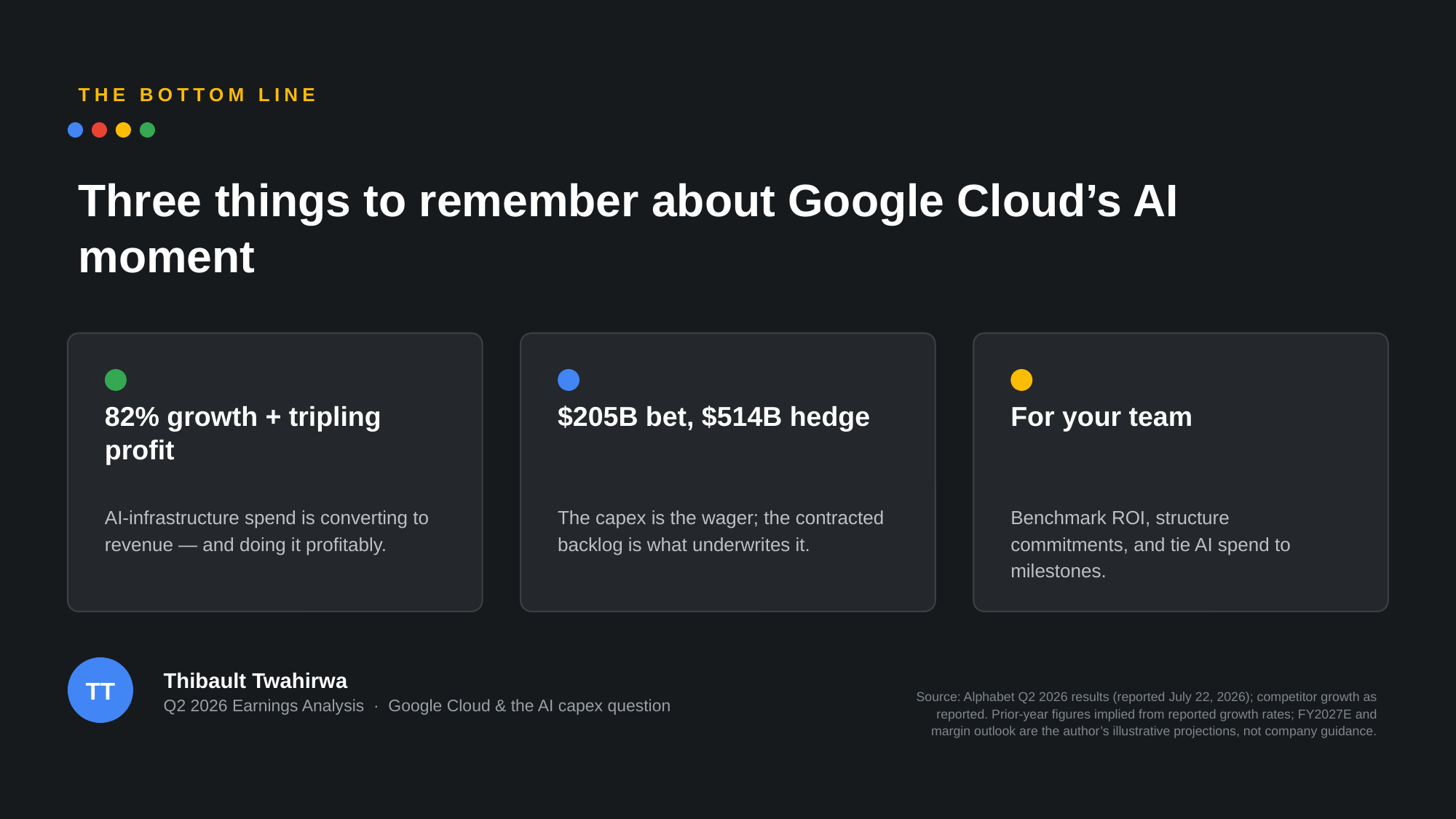
- Google Cloud revenue jumped 82% year over year to $24.8 billion, its steepest acceleration yet, up from 63% growth two quarters earlier.
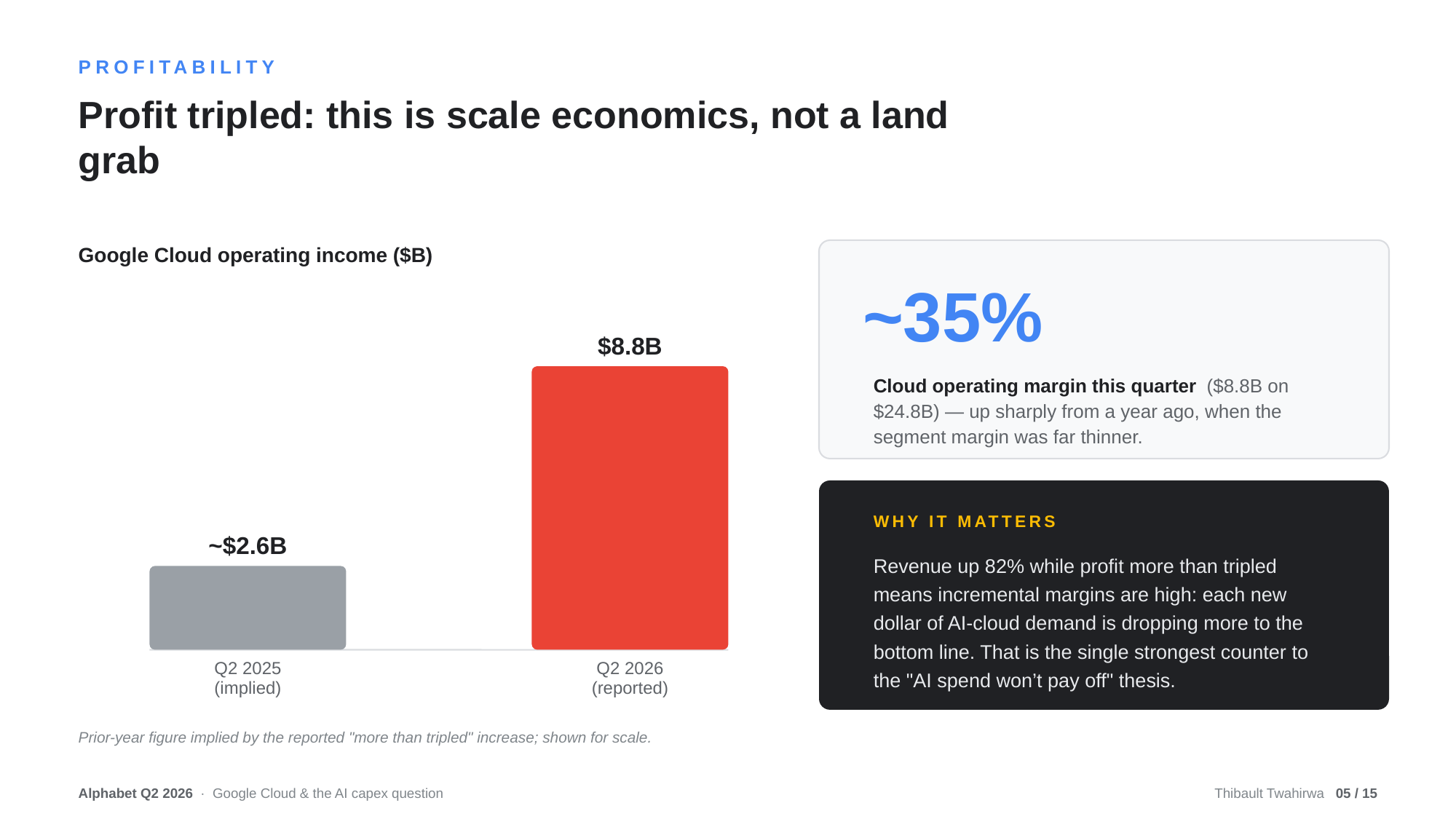
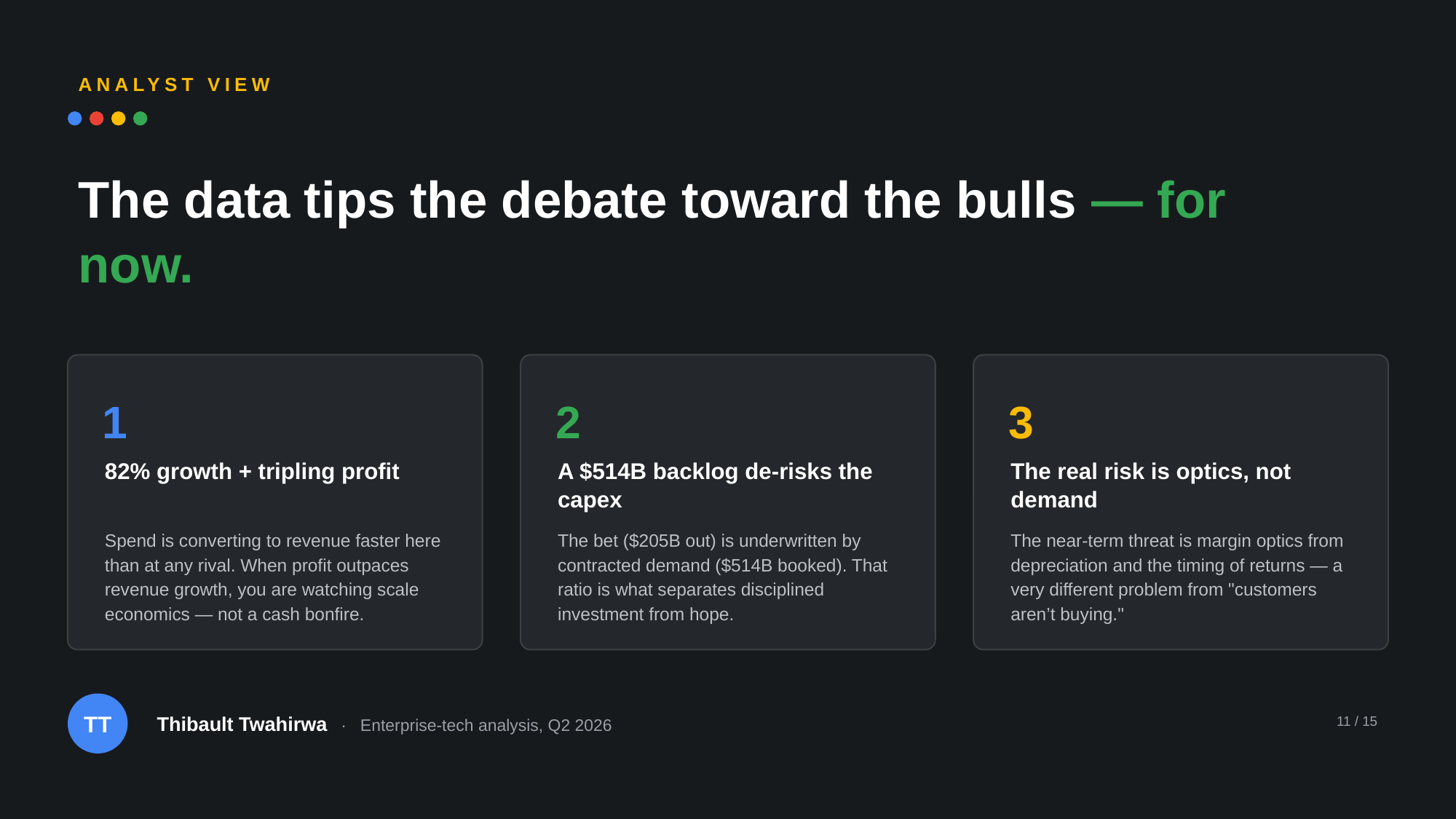
- Cloud operating income more than tripled, from $2.8 billion to $8.8 billion year over year.
- Alphabet raised 2026 capex guidance to $195-205 billion, up from $180-190 billion, after quarterly spending doubled to $44.9 billion.
- Shares still fell 3.65% after hours, as investors weighed spending against near-term returns.
The slides embedded below turn this same earnings story into a ready-made 15-slide walkthrough, built from a short brief through AskDeck. Back to the numbers.

Swipe or scroll sideways to flip through the 15-slide deck →
What drove Google Cloud’s 82% growth?
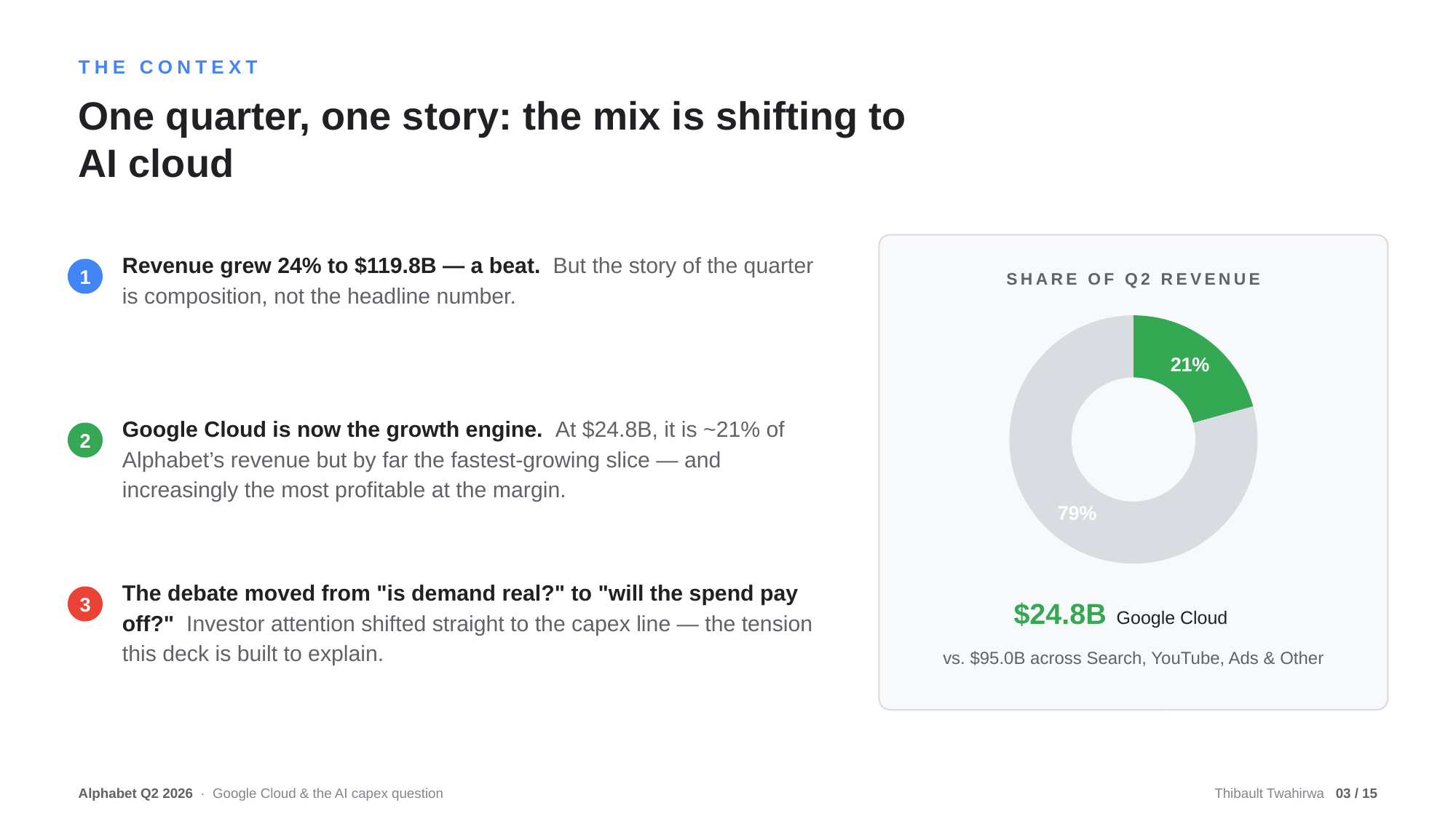
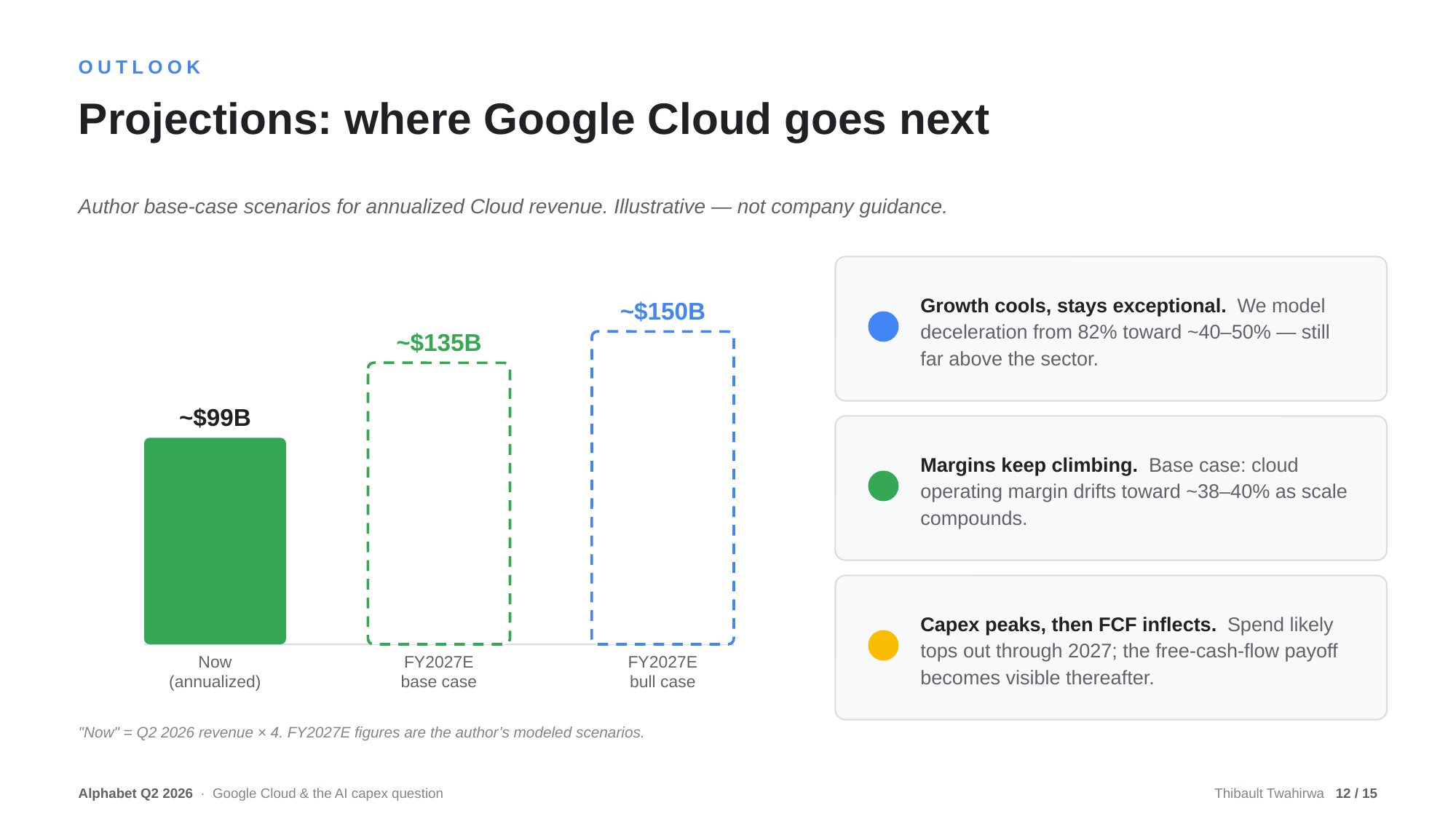
The surge came from enterprise AI adoption layered on top of steady core cloud demand, not one blockbuster deal. Per Alphabet’s official Q2 2026 filing, total revenue rose 24% to $119.8 billion, and Cloud revenue increased 82% to $24.8 billion, driven by enterprise AI solutions, AI infrastructure, and core GCP services. That is up from 63% growth just one quarter earlier, itself a record pace at the time. Cloud growth normally slows as the revenue base gets larger; Google Cloud is compounding off a bigger number every quarter instead.
How does it compare to AWS and Azure?
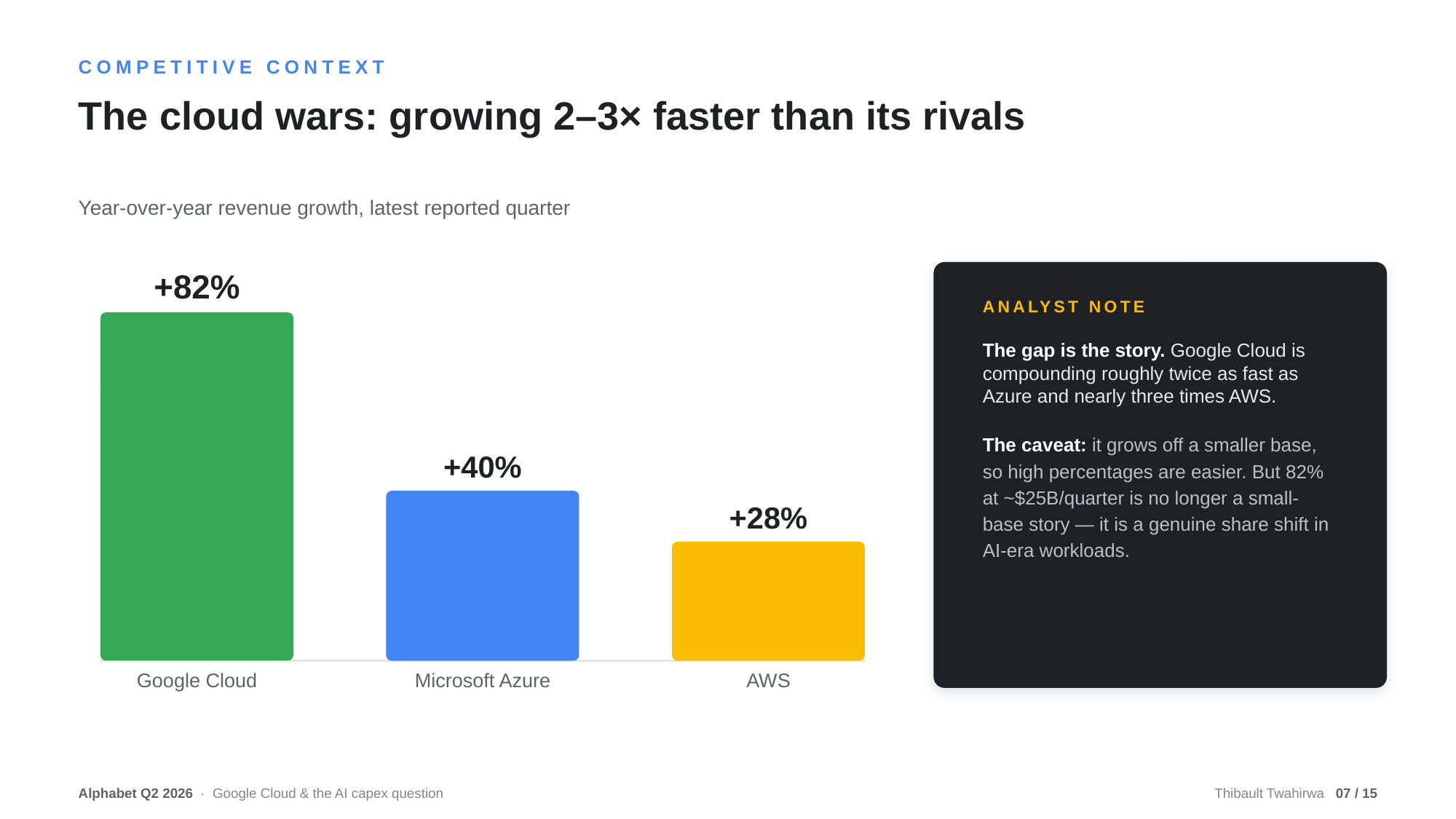
Google Cloud is now the fastest-growing of the three major hyperscalers, even though it remains the smallest by revenue. Google Cloud’s 82% growth is well ahead of Microsoft Azure’s roughly 40% and AWS’s most recent 28% segment growth. The pattern is not new: the smallest provider has grown fastest for several straight quarters. AWS is still large in absolute terms, reaching a $37.6 billion quarter, its fastest pace in 15 quarters, so scale still favors the incumbents even as Google closes the growth gap.
Why did the cloud margin jump so much?
Cloud profitability grew faster than revenue, a sign Alphabet is converting scale into cash rather than just chasing top-line growth. Cloud operating income rose from $2.8 billion to $8.8 billion year over year, according to the same filing, more than tripling while revenue roughly doubled. That gap suggests fixed infrastructure costs are spreading across a larger customer base, and that production AI workloads now carry better unit economics than early experimentation did a year or two ago.
Why is Alphabet spending so much more on infrastructure?
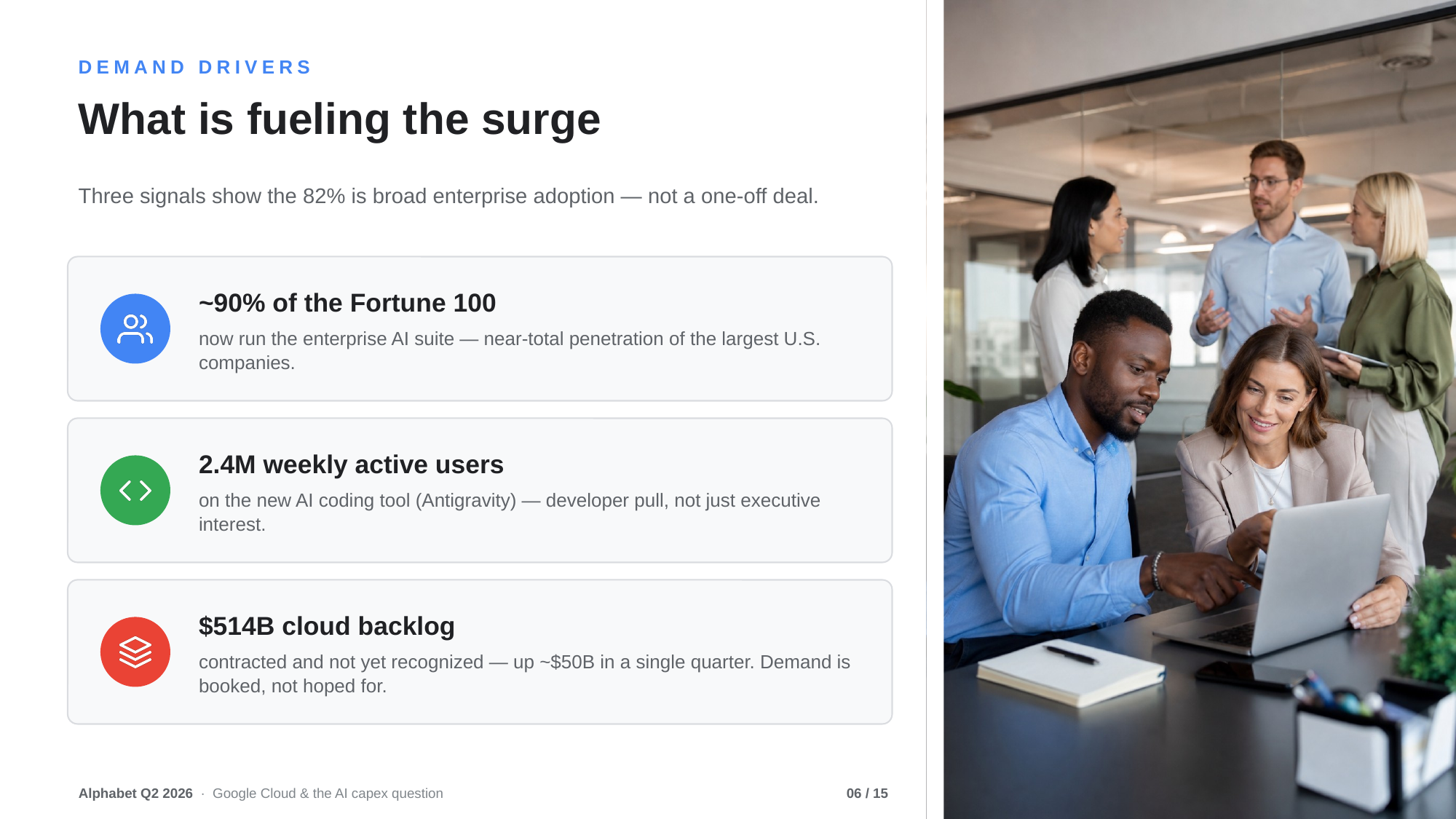
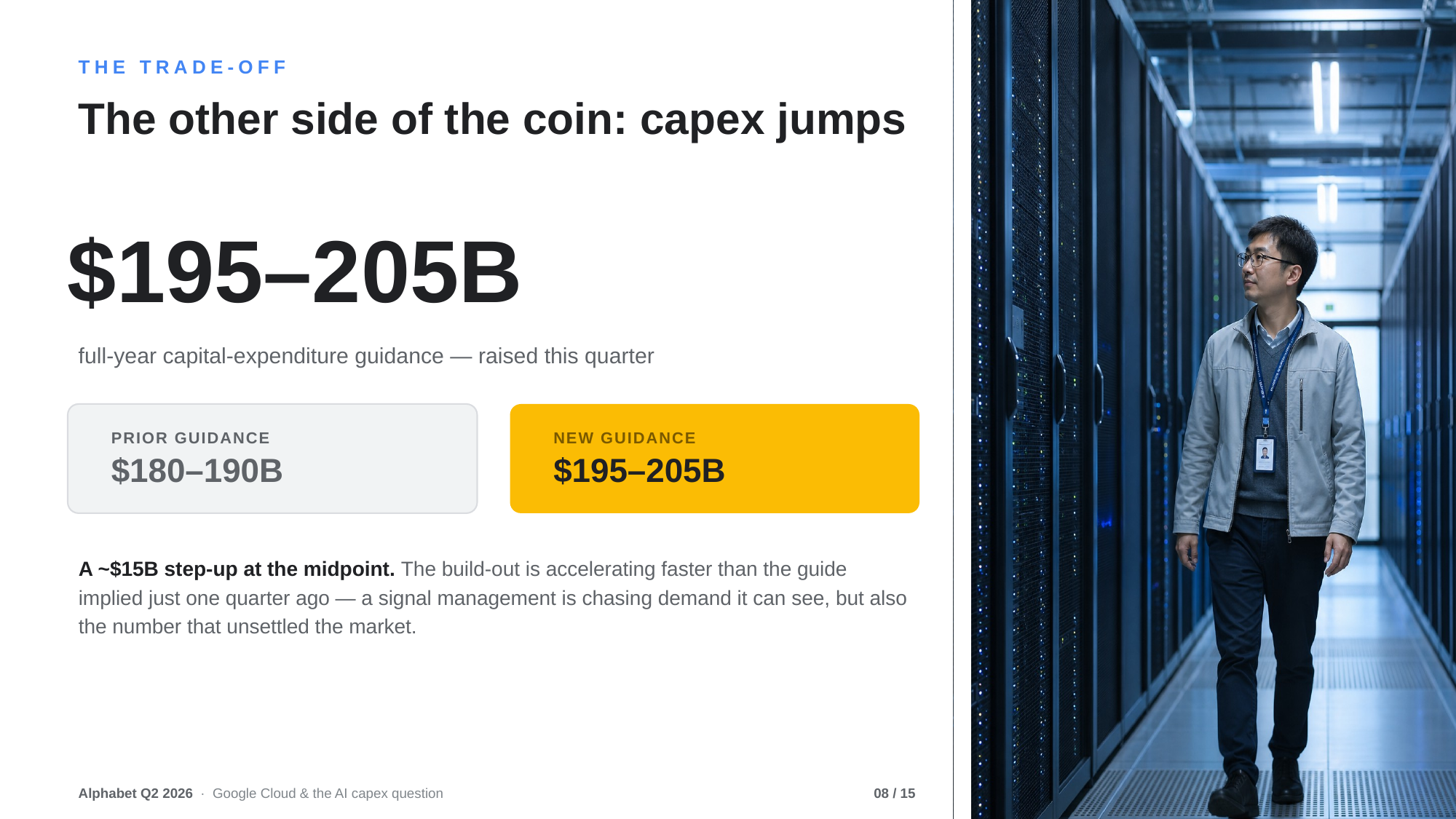
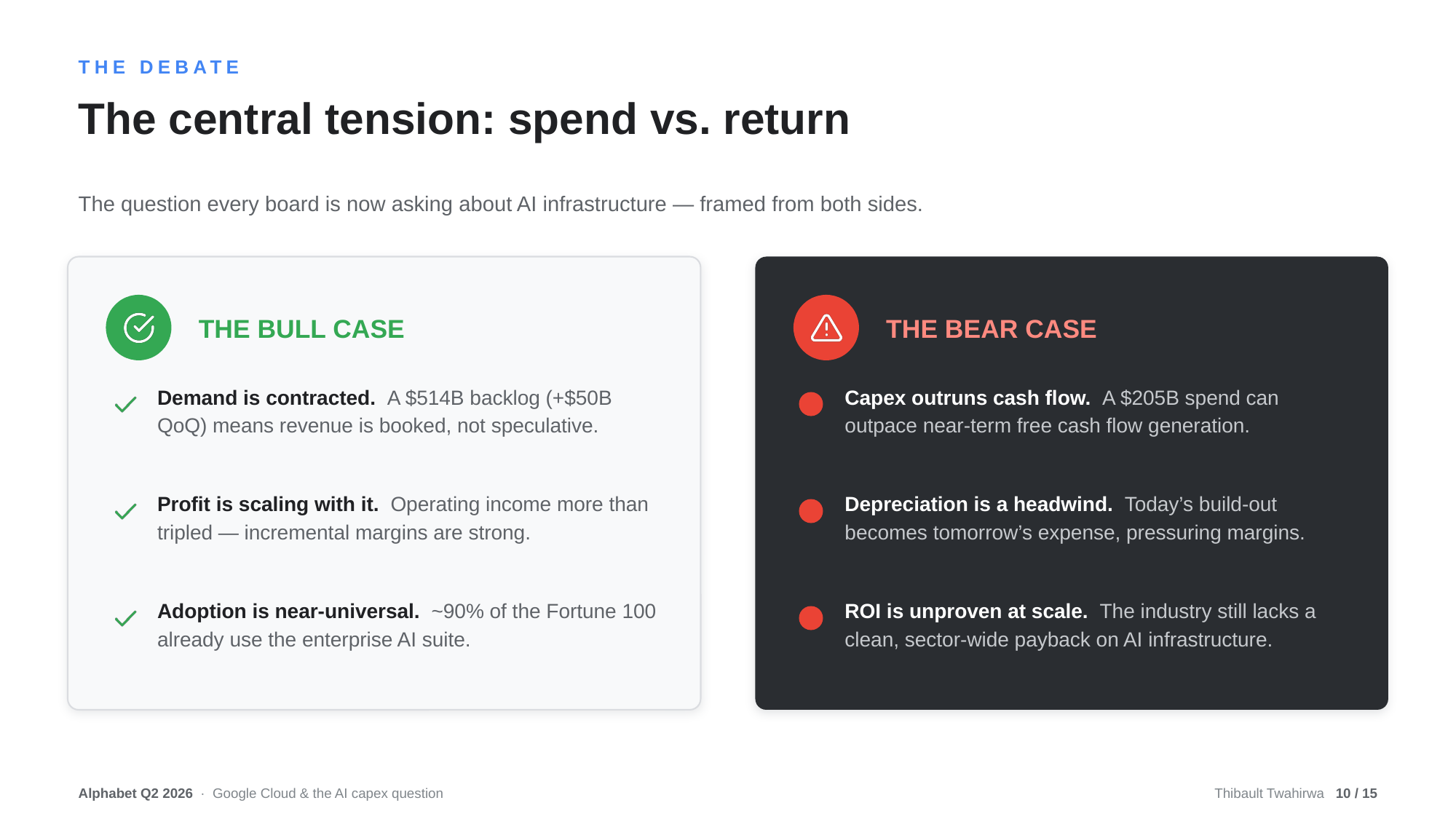
Alphabet raised guidance because it cannot build data center capacity fast enough to match demand. It now expects 2026 capex of $195-205 billion, up from $180-190 billion, after quarterly spending nearly doubled to $44.9 billion, per CNBC’s earnings coverage. Finance chief Anat Ashkenazi called the company “still in a supply-constrained environment,” a line she has repeated for multiple quarters. This is not Alphabet alone: combined 2026 capex across Amazon, Microsoft, Alphabet, and Meta is tracking toward roughly $725 billion, up 77% from about $410 billion in 2025, per MLQ.ai’s analysis. Demand also shows in the order book: Cloud’s backlog swelled by more than $50 billion sequentially to $514 billion, with roughly half expected to convert to revenue within 24 months.
Why did the stock fall after such a strong quarter?
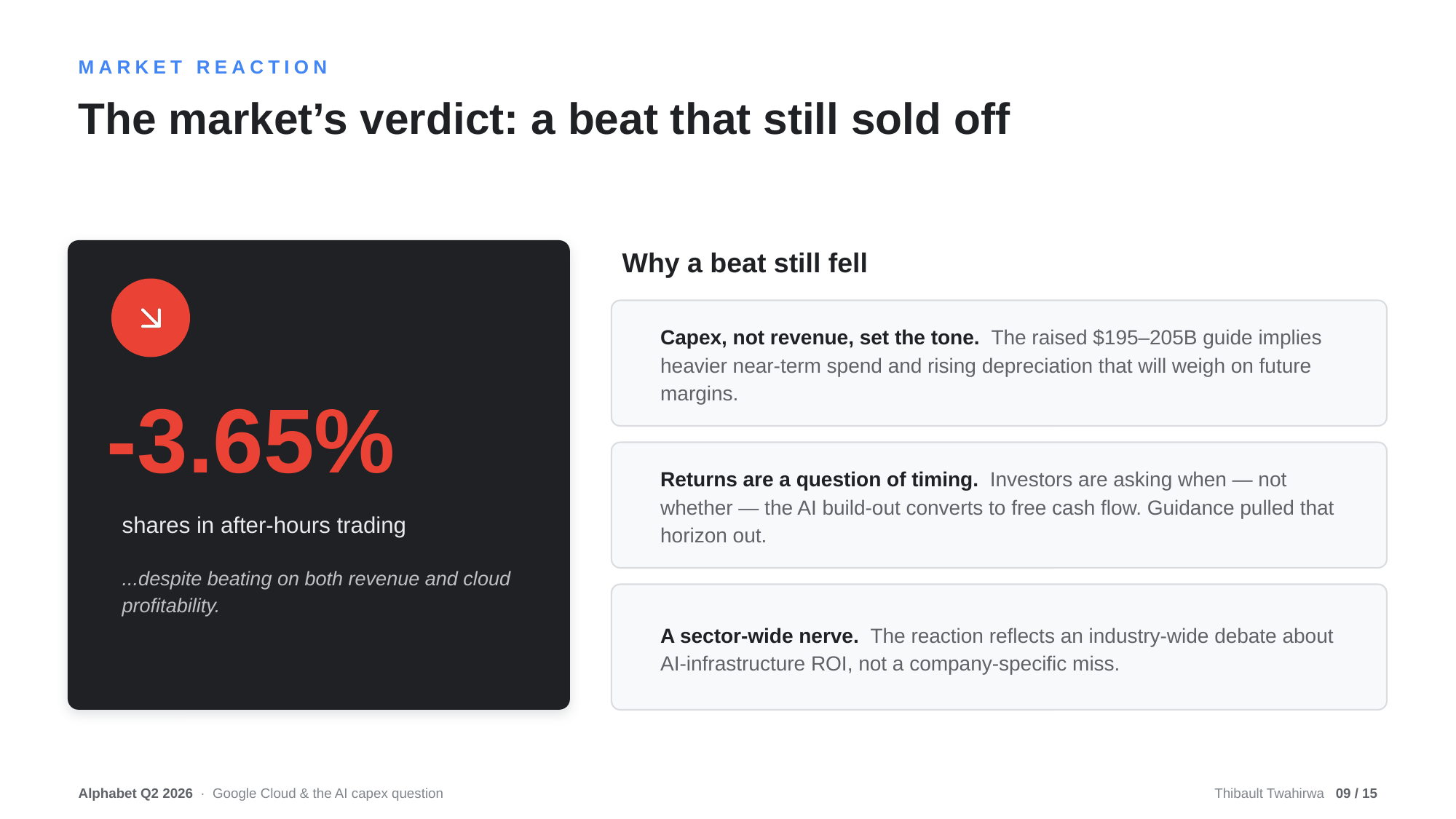
Investors punished the spending outlook, not the results. Despite beating on nearly every headline metric, shares fell 3.65% in after-hours trading to $329.43 as investors weighed aggressive AI infrastructure spending against near-term profitability, per Investing.com’s earnings recap. That reaction reflects a wider sector anxiety: infrastructure spending is outrunning visible proof of durable returns, even while producing headline growth. Anyone forecasting cloud or AI costs for their own company should expect this tension, since it shapes pricing and capacity across every major provider for years to come.
Who is actually using this AI infrastructure?
Adoption inside large enterprises looks broad, not experimental. Alphabet’s release credits enterprise AI solutions and AI infrastructure demand as the primary drivers of Cloud’s revenue and operating income gains. On the developer side, Google’s Antigravity AI coding tool has reached 2.4 million weekly active users, and nearly 90% of the Fortune 100 now use Gemini Enterprise, according to CNBC’s coverage of CEO Sundar Pichai’s earnings-call remarks. Those adoption figures matter more than the growth rate for judging whether AI tools are sticking inside real organizations, not staying in pilot mode.
Common questions about Google Cloud’s Q2 2026 results
Is Google Cloud now bigger than AWS or Azure? No. It remains the smallest of the three hyperscalers by revenue and market share. Its 82% growth outpaces both rivals, but from a smaller base, so the dollar gap is narrowing rather than closed.
Does faster growth mean AI infrastructure spending is paying off? Partly. Cloud operating income more than tripled year over year, a genuine margin signal. But free cash flow across the sector is under pressure as capex keeps rising, so the return question stays open industry-wide.
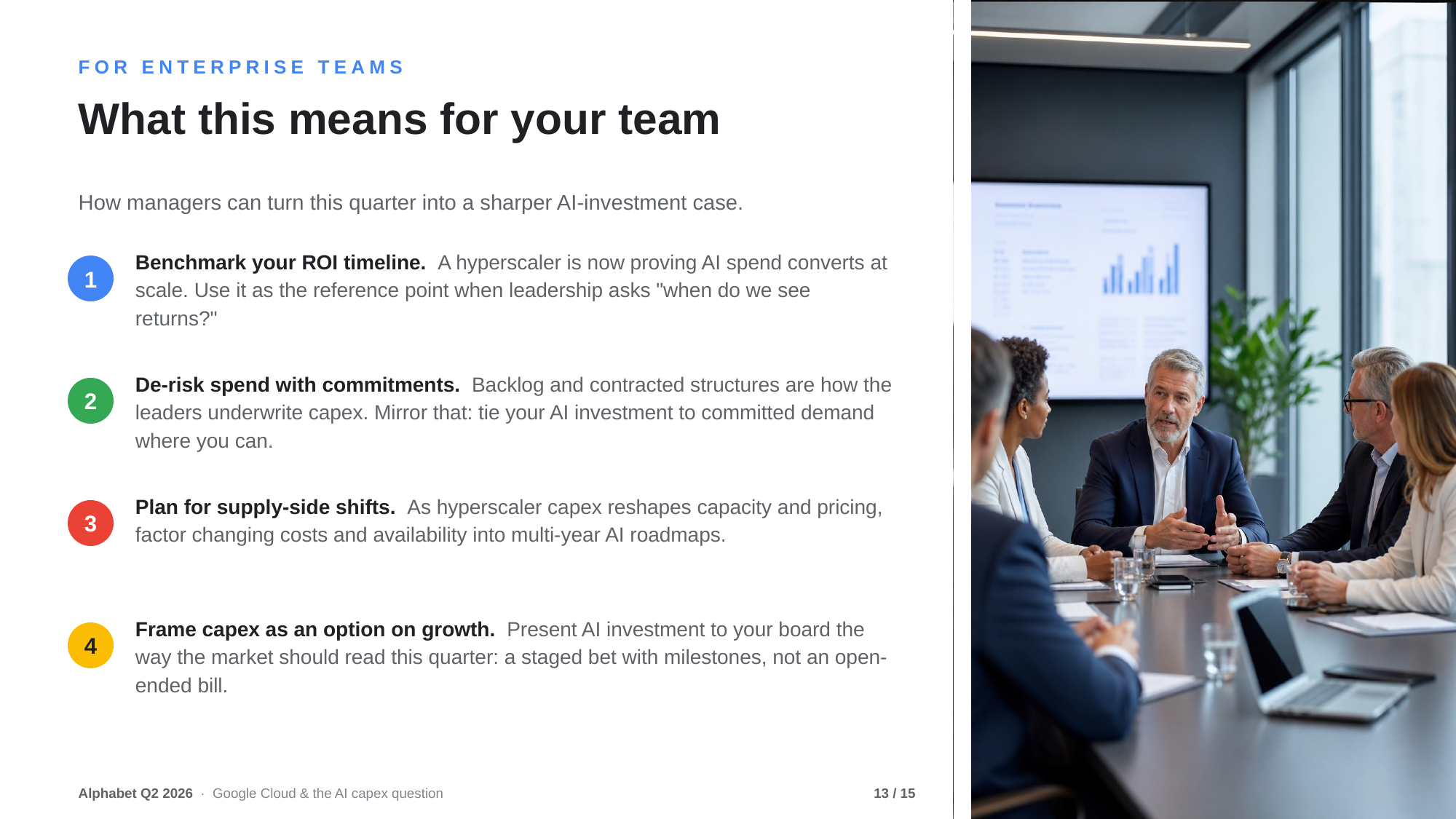
Teams building a board update or an AI investment case around this earnings cycle need the same comparative numbers analysts used this week. An example set of slides built from a short brief through AskDeck sits below this post and can be downloaded and edited from there.
Sources
- Alphabet Q2 2026 Press Release, SEC Exhibit 99.1
- CNBC: Alphabet earnings takeaways
- MLQ.ai: Alphabet raises 2026 capex guidance
- Investing.com: Alphabet Q2 2026 results
- Tech Insider: Cloud Market Share 2026