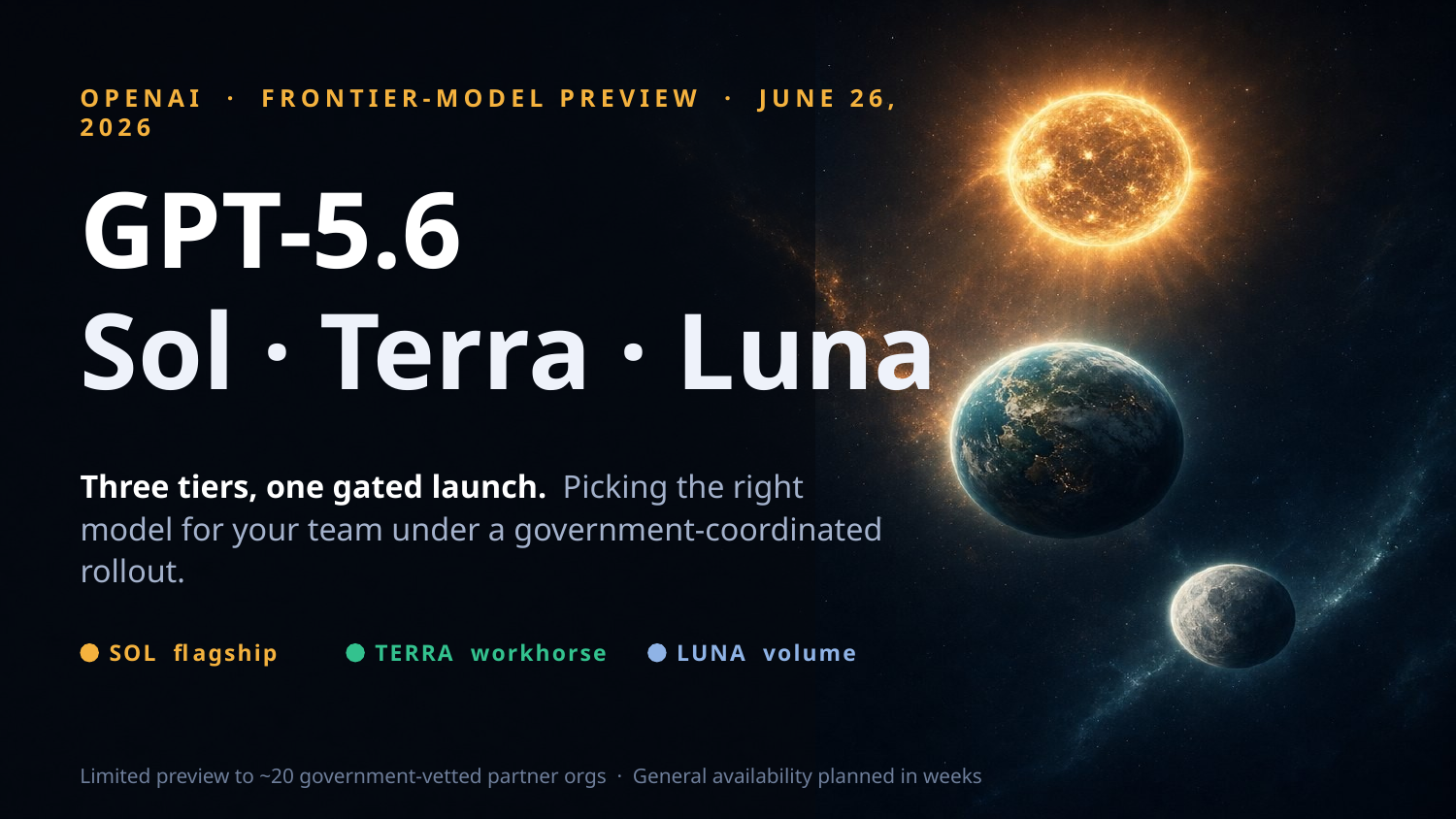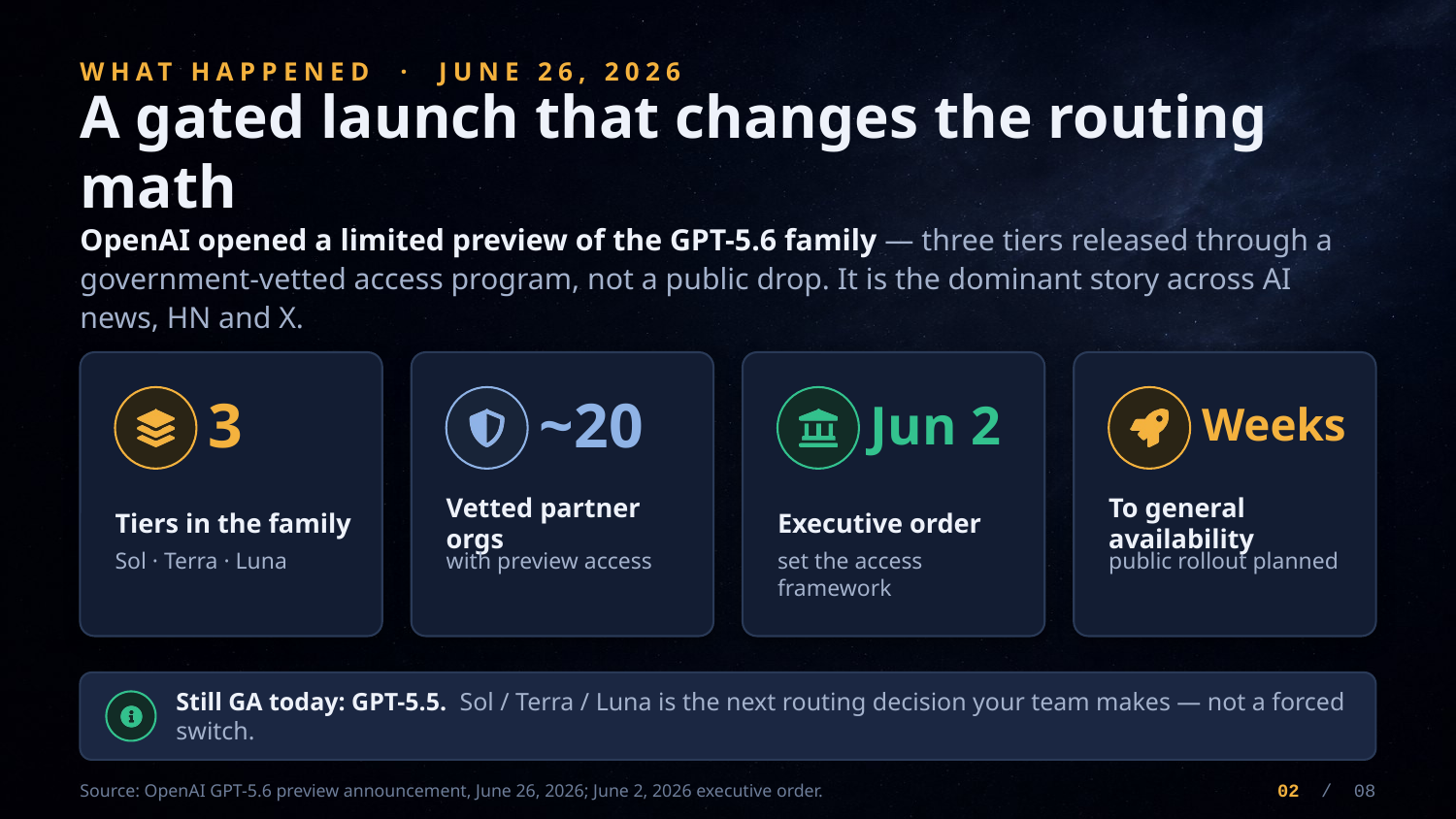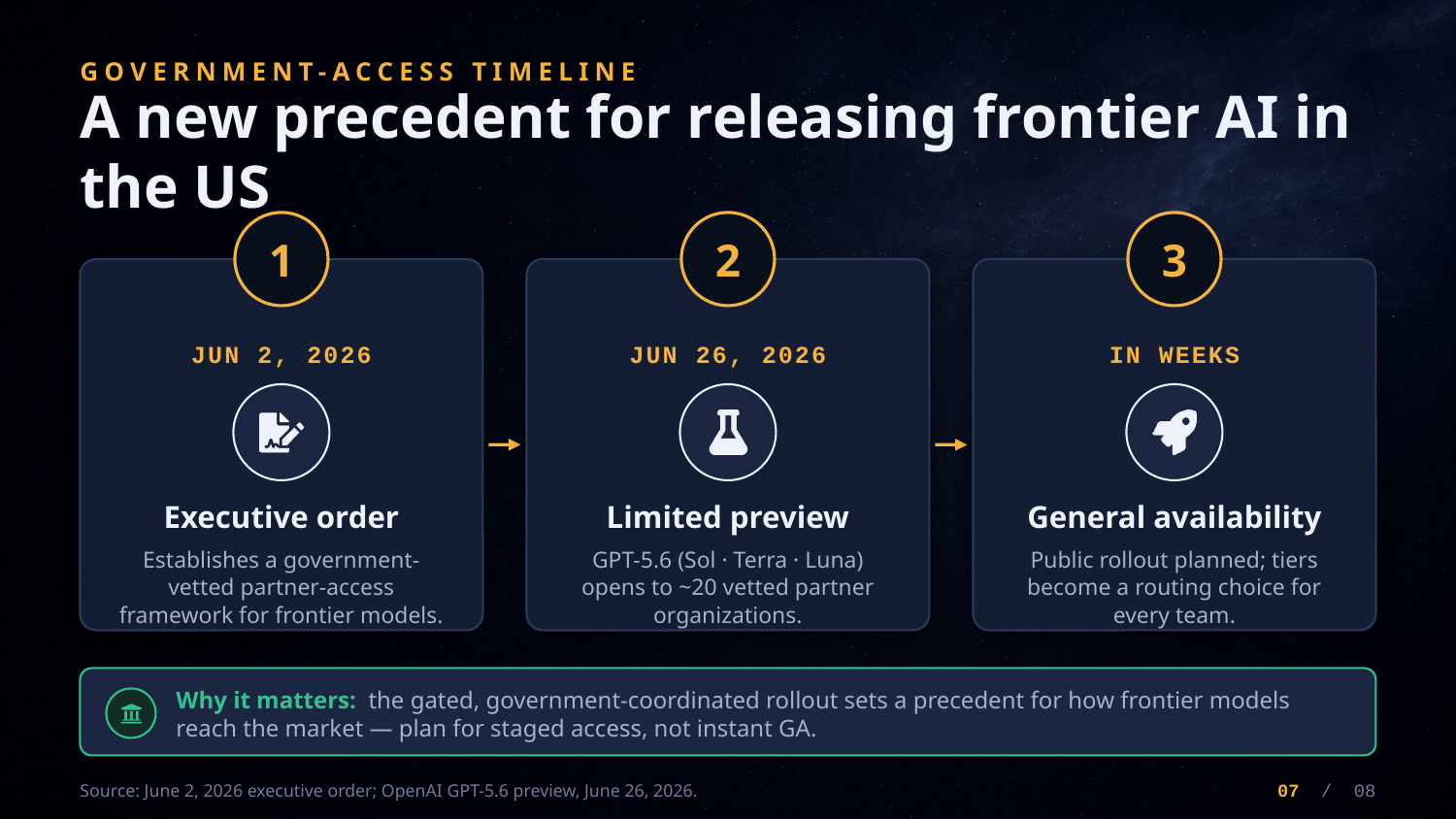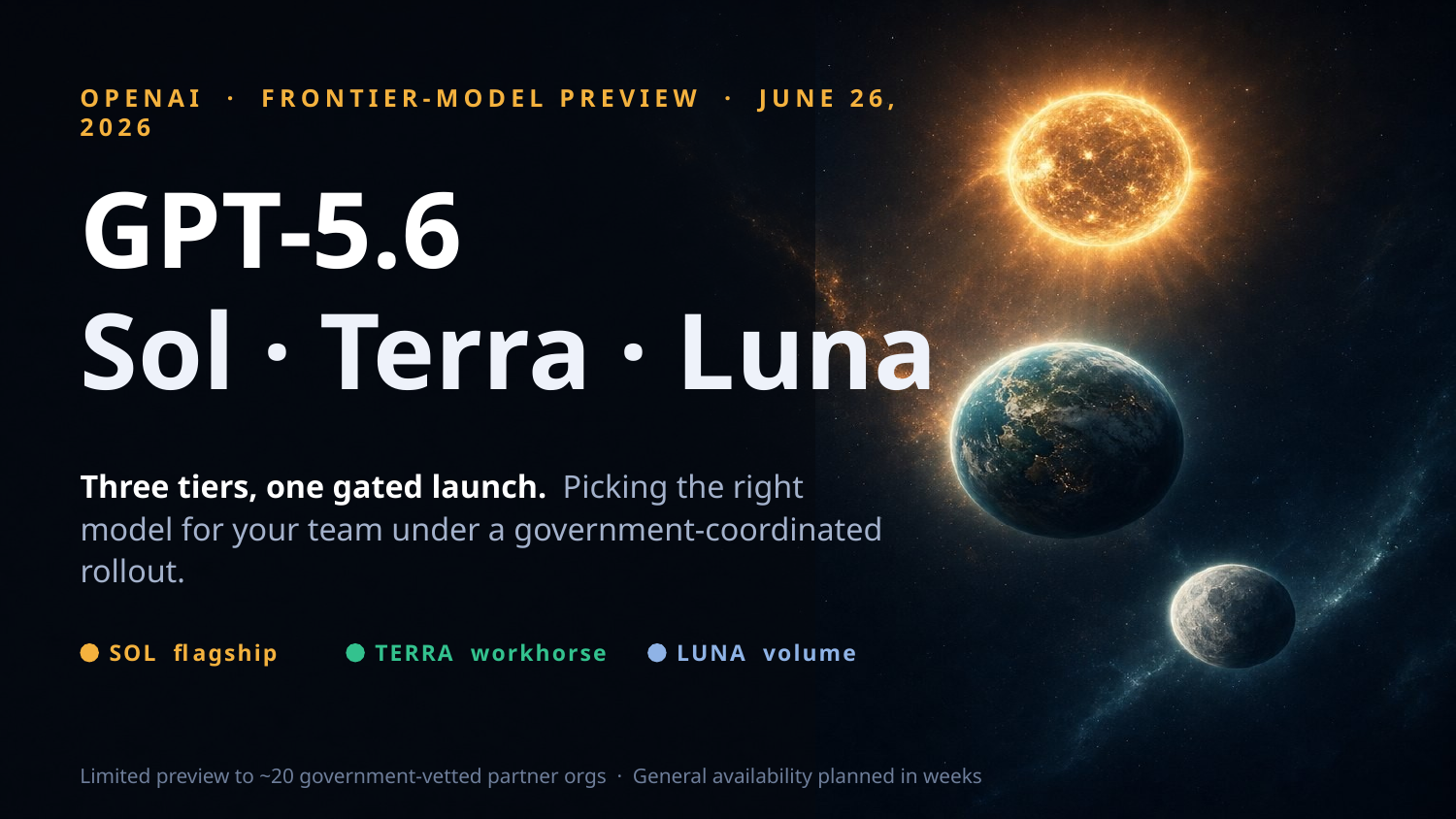
On June 26, 2026, one of the leading AI labs began a limited preview of its newest frontier model family — three tiers spanning a top-end flagship, a balanced mid-range model, and a fast, low-cost option — but it did not put them on sale to everyone. Access was restricted to roughly 20 government-vetted partner organizations under a June 2 executive order, with general availability promised “in the coming weeks.” That gated release, more than any benchmark score, is what makes this launch worth understanding: it is an early template for how the most capable AI models may reach the US market.
How a government-coordinated rollout works
The lab said it previewed the models and their capabilities to the U.S. government before launch, and at the government’s request began with a small set of trusted partners whose participation was disclosed to officials. The arrangement is tied to a cyber-focused executive order issued June 2, and the company says it is working with the administration on a “repeatable process” for future releases. Notably, the lab framed the gate as temporary and undesirable as a default, arguing it keeps the best tools from developers, enterprises, and cyber defenders. General availability across its consumer app, coding tools, and API is planned within weeks. If you operate in a regulated setting, confirm the specifics of any such order with a qualified expert before relying on them.
The eight slides embedded below turn this rollout into a ready-to-use deck on the topic, generated by AskDeck from a short brief.
The three tiers and what they cost
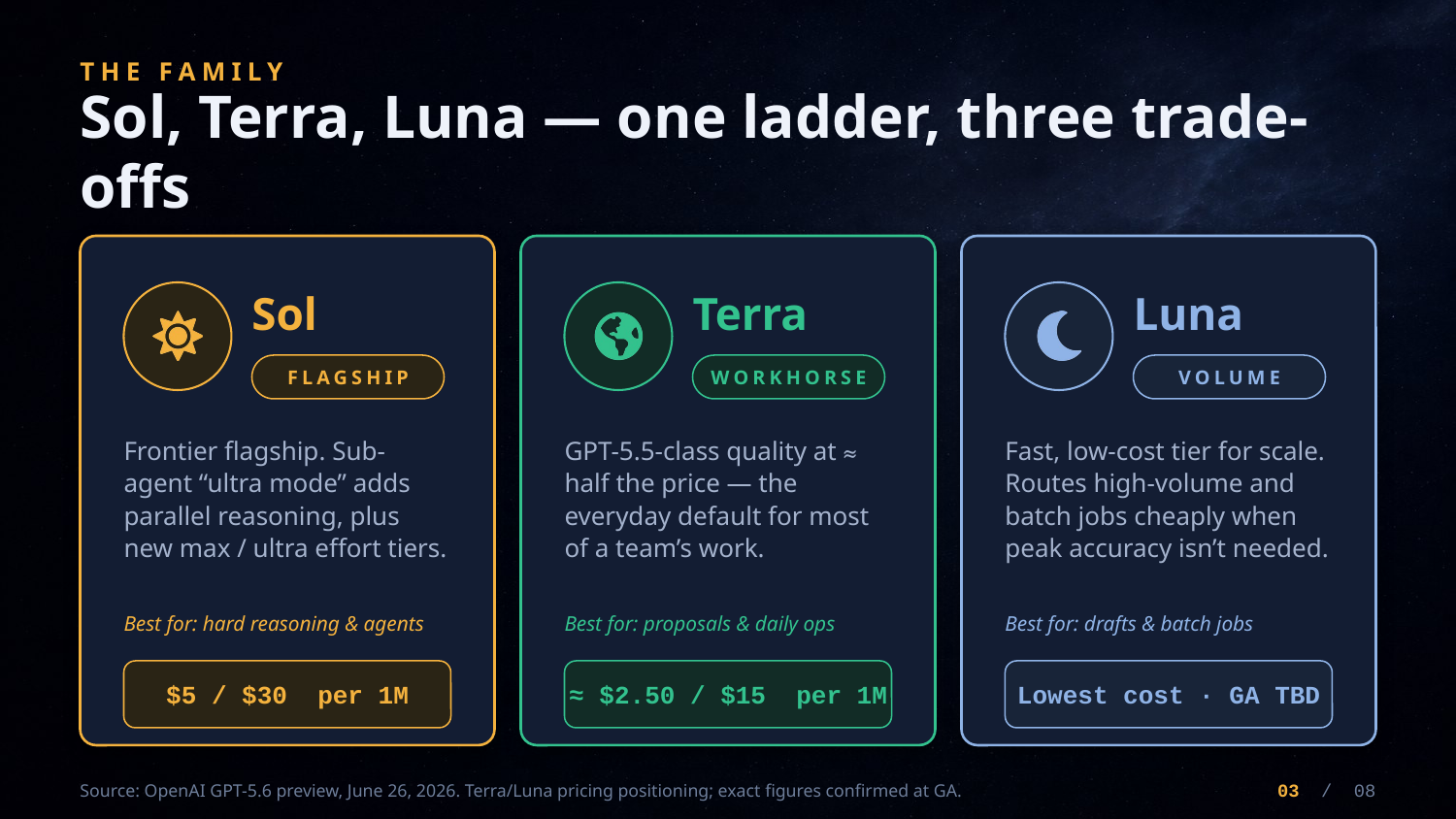
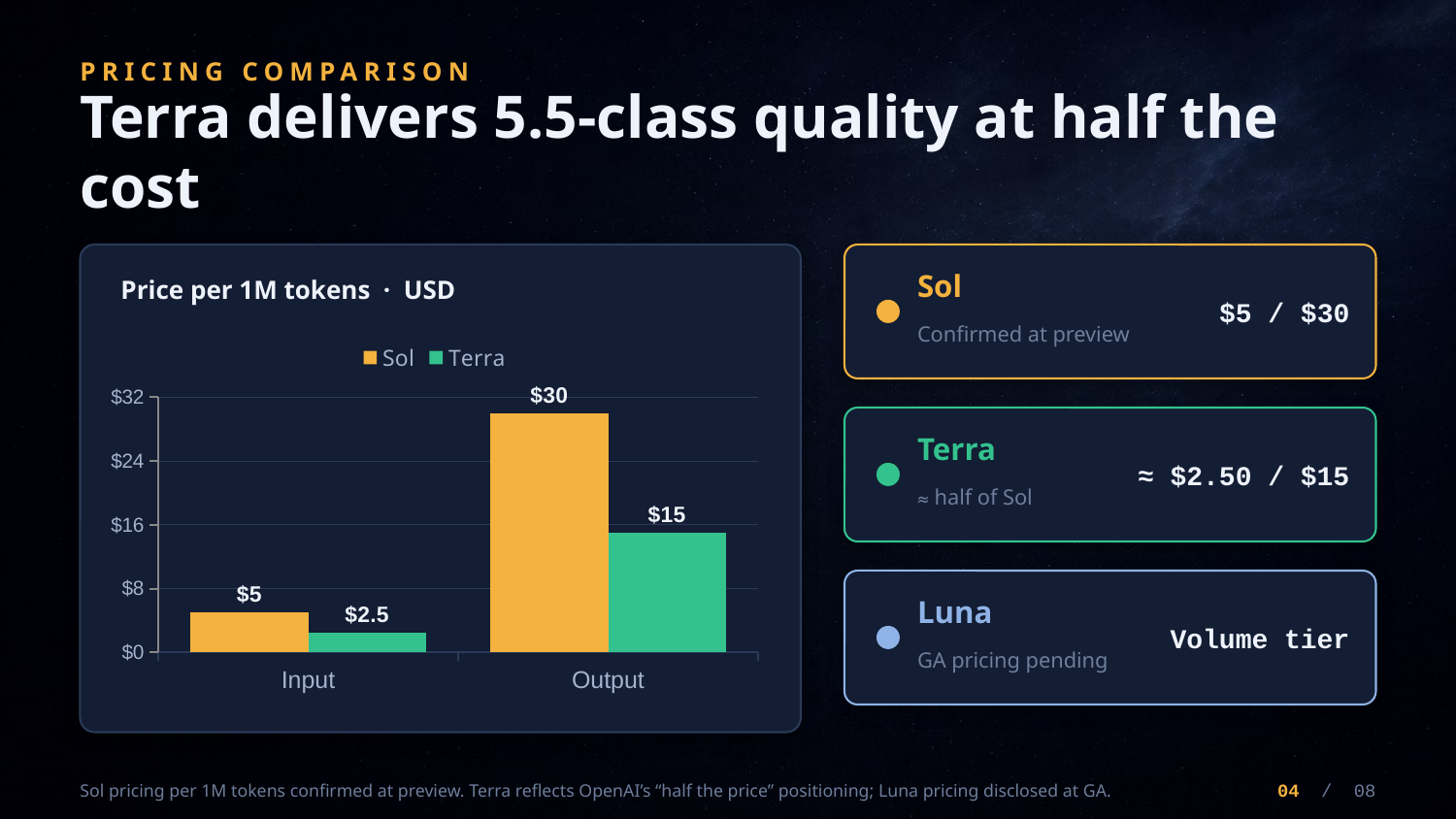
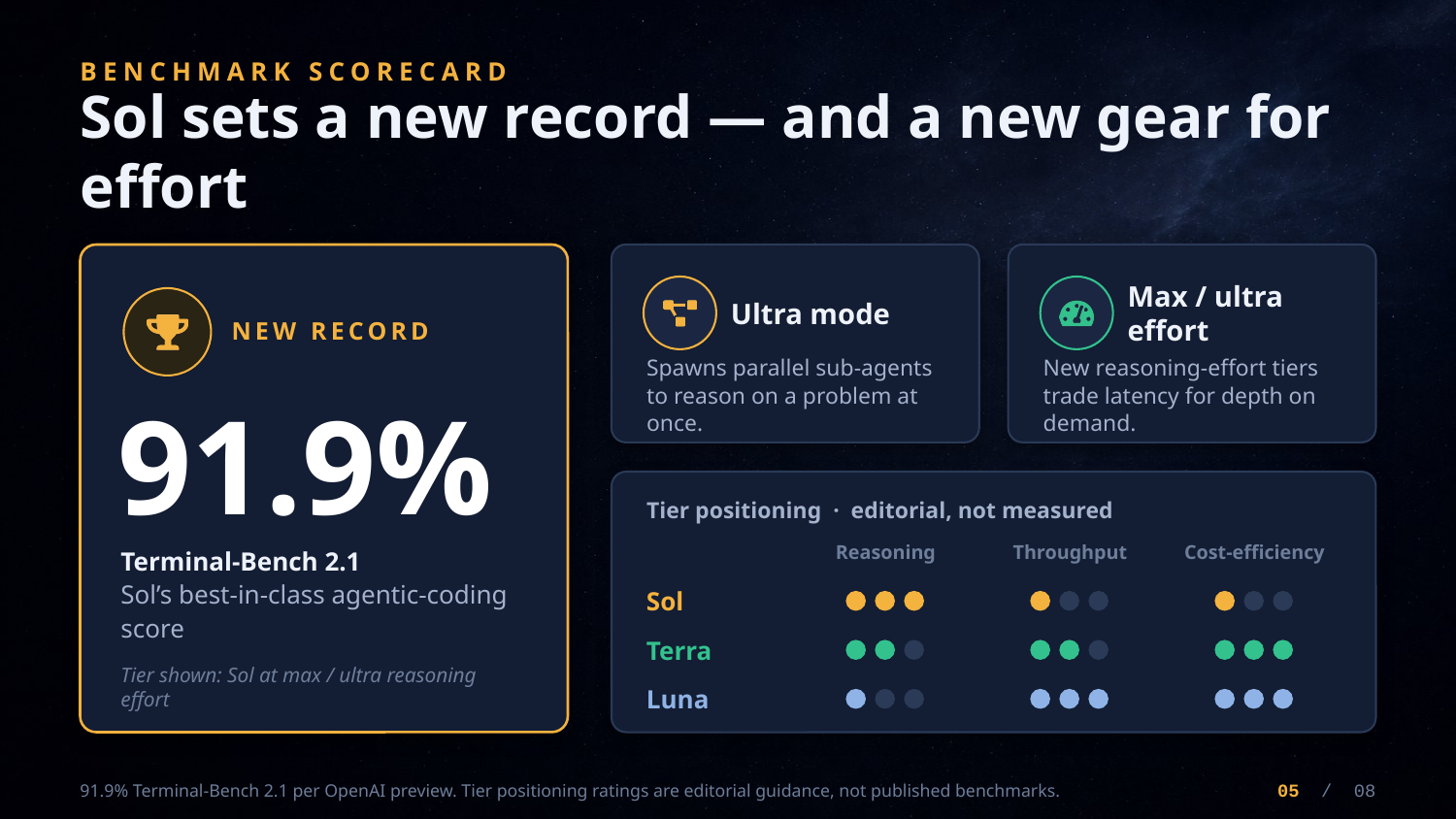
Pricing is set per one million tokens. The flagship runs $5 for input and $30 for output; the mid-range tier is exactly half that at $2.50 and $15; and the fast tier is $1 and $6. The mid tier is the immediate story for cost-conscious teams: the lab says it matches the previous generation’s quality while costing about half as much. The new naming splits two ideas — a version number marks the generation, while the tier name marks a durable capability class (flagship, balanced, fast) that can improve on its own schedule. The release also changes prompt caching: explicit cache breakpoints, a 30-minute minimum cache life, cache writes billed at 1.25x the uncached input rate, and cache reads keeping a 90% discount.
What is actually new in the models
Two features stand out. A new “max” reasoning-effort setting gives the flagship more time to work through hard problems, and an “ultra” mode spins up subagents to handle parts of a task in parallel rather than reasoning as a single thread. On Terminal-Bench 2.1, which tests multi-step command-line work, the flagship posted a reported record of 91.9%. The lab also reports gains on long-horizon genomics analysis using fewer tokens, and stronger cybersecurity performance — competitive results on exploit benchmarks at roughly a third of the output tokens of a rival model. A high-throughput option running up to 750 tokens per second is slated for July.
Why the release is phased for safety
The gate is not only political. The lab paired the launch with its most layered safeguard stack yet: protections trained into the model, real-time misuse classifiers that can pause generation for review, account-level checks across conversations, and differentiated access for the most sensitive capabilities. It says the flagship did not cross the “Cyber Critical” threshold in its preparedness testing — in browser-engine tests it found bugs and exploit building blocks but did not autonomously produce a full working exploit. To stress the safeguards, the company ran more than 700,000 GPU-hours of automated red-teaming hunting for universal jailbreaks, alongside outside human experts. During the preview, users may hit blocks or slowdowns, especially on dual-use security work.
Should your team wait, switch, or route?
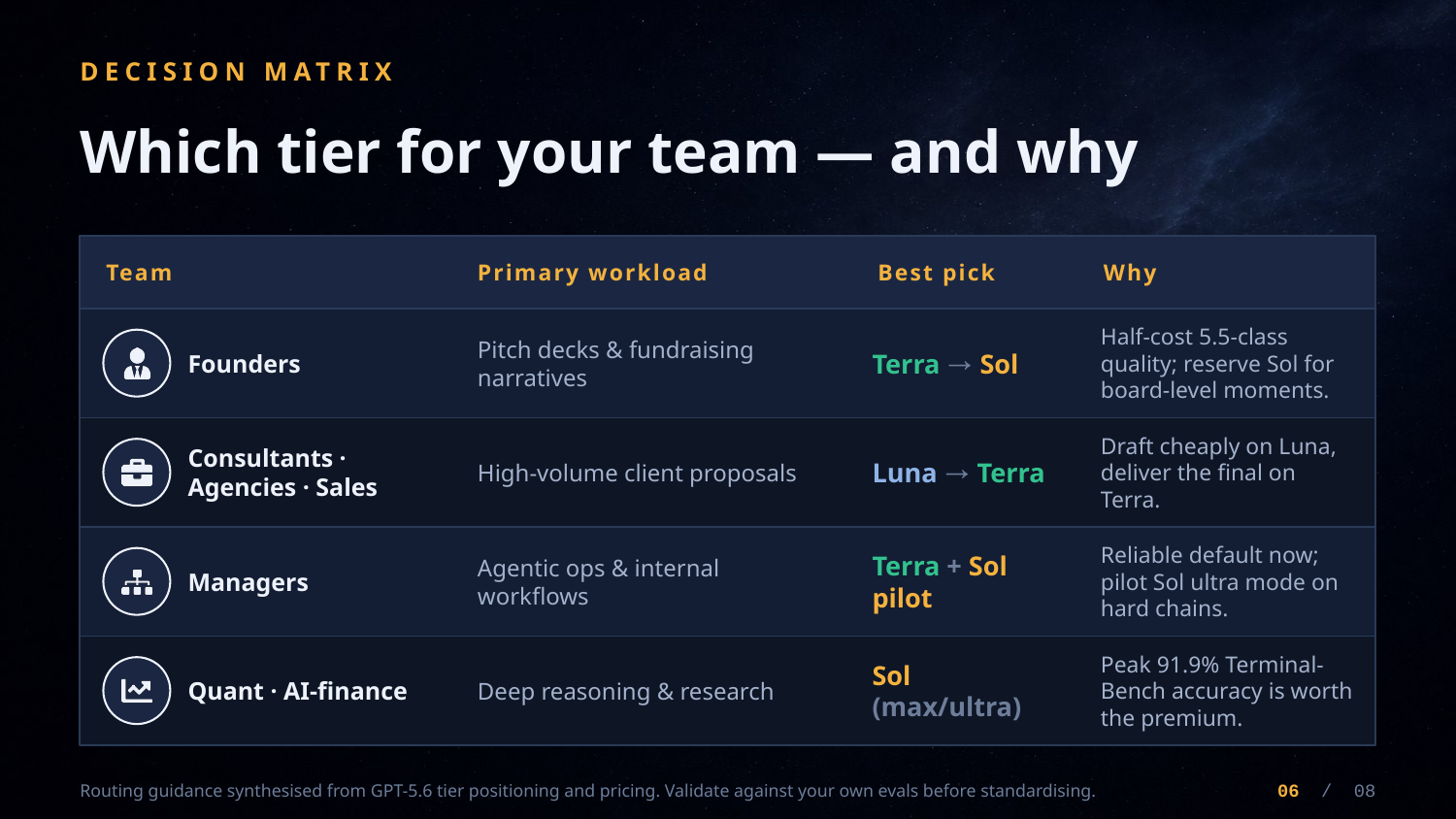
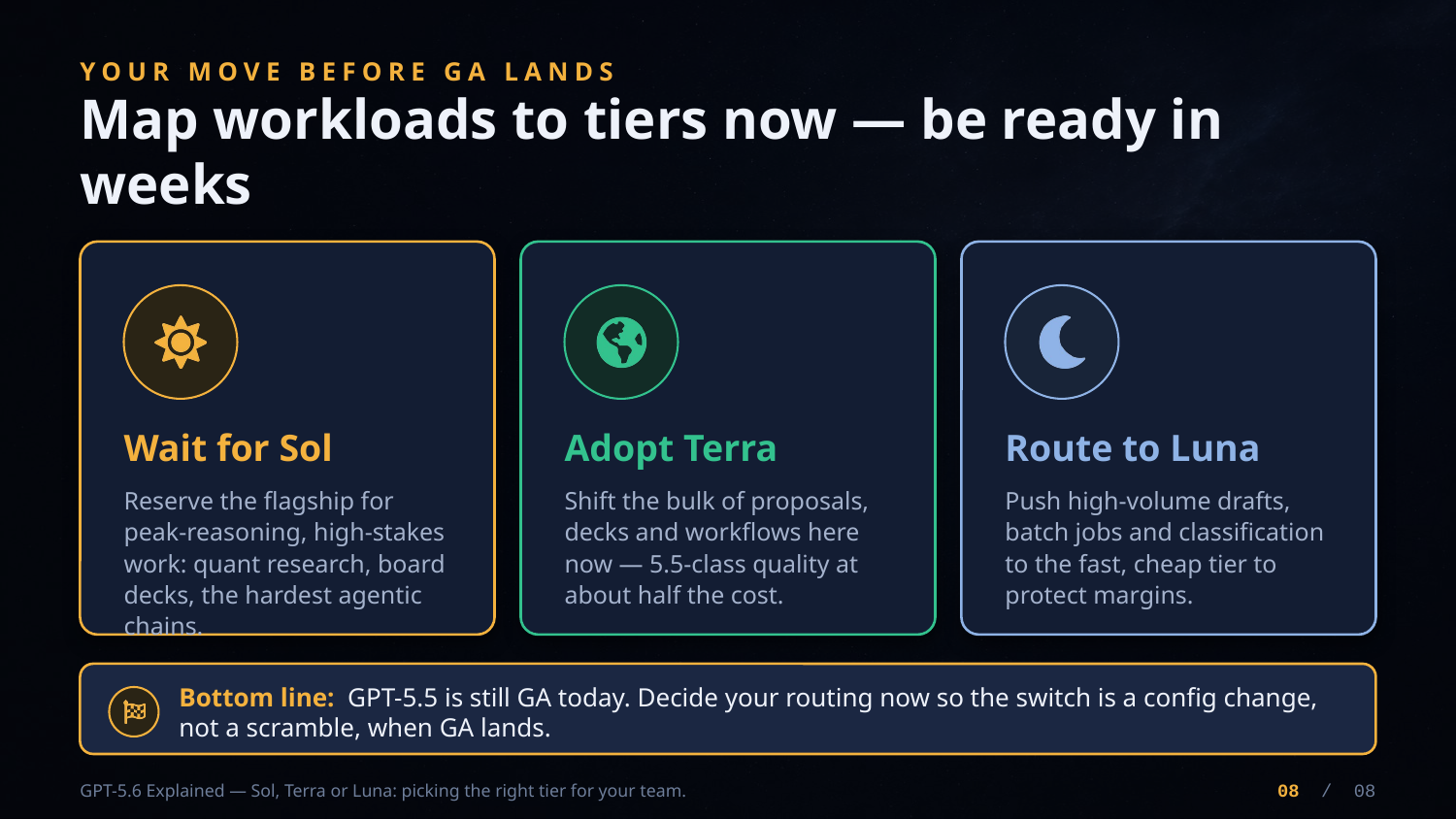
For most teams the practical near-term move is the mid tier once it is broadly available: prior-generation quality at half the price covers the bulk of drafting, proposals, and routine agentic work. Reserve the flagship for the hardest long-horizon coding and reasoning, where “max” and “ultra” earn their cost, and send high-volume, latency-sensitive jobs to the fast tier. Until general availability, the previous generation stays the widely available default, so there is no penalty for planning now and switching when the gate lifts.
When will these models be generally available?
The lab says general availability is planned “in the coming weeks” across its consumer app, coding product, and API, expanding beyond the initial vetted partners.
Why was early access limited to government-vetted partners?
At the U.S. government’s request, and tied to a June 2 cyber executive order, the lab began with roughly 20 trusted organizations whose participation was disclosed to officials, citing the family’s stronger cyber capabilities.
How much do the three tiers cost?
Per one million tokens: flagship $5 input and $30 output; mid tier $2.50 and $15; fast tier $1 and $6. The mid tier aims to match the previous generation at about half the cost.
Is the new family safe for sensitive or security work?
The lab says it did not cross its “Cyber Critical” threshold and wrapped the models in layered safeguards, though legitimate dual-use security tasks may occasionally be blocked or delayed during the preview.
The slides below were built with AskDeck from a short brief on this rollout; you can download the deck, adjust the pricing and timeline to your own situation, and reuse it. For a clear starting point on a fast-moving topic, it is worth a try.
See the deck