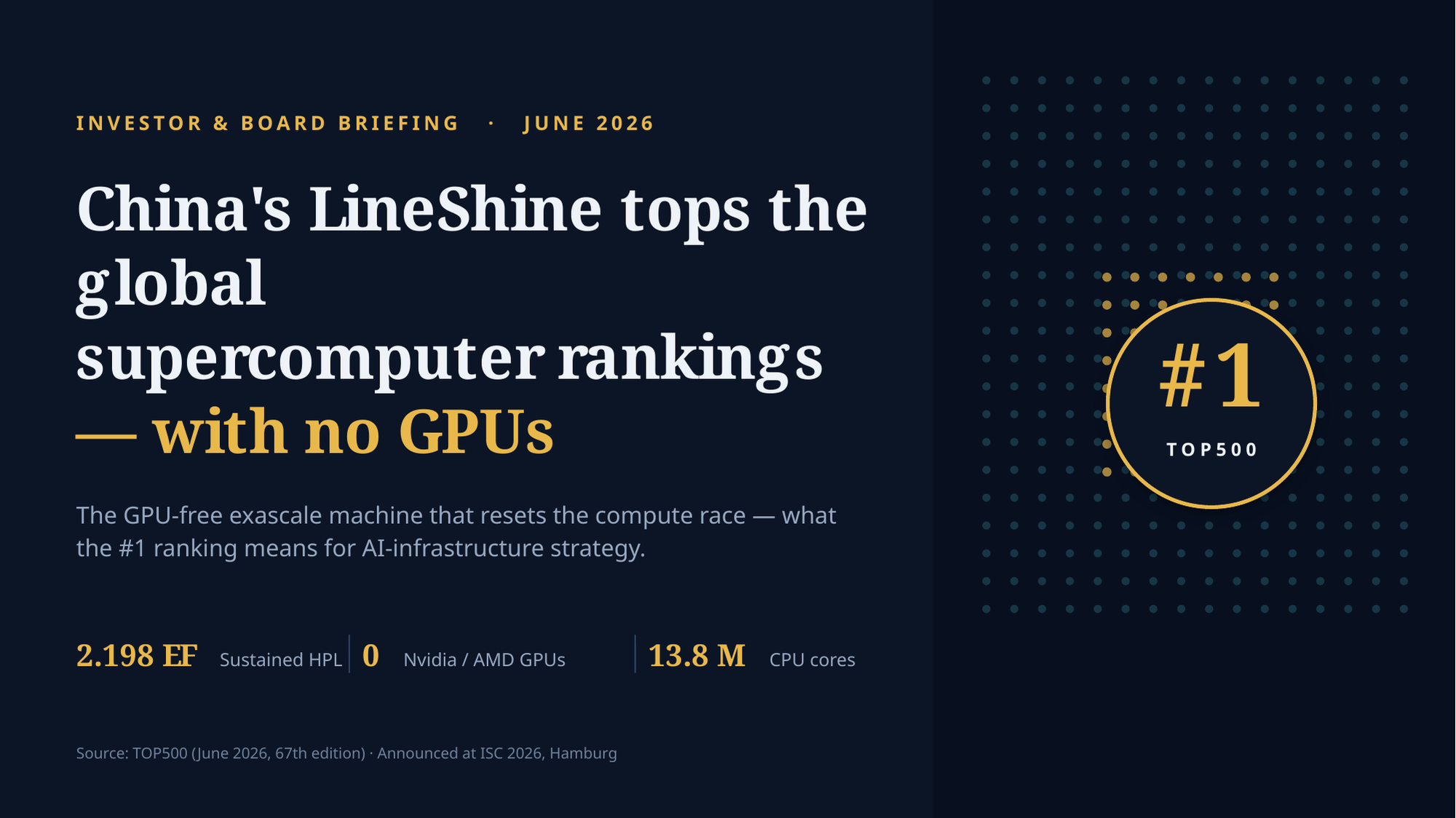
A machine in Shenzhen just crossed two exaflops of sustained performance using nothing but ordinary processors. No Nvidia. No AMD. Not even Intel.
Key TakeawaysLineShine hit 2.198 exaflops on the HPL benchmark, about 20% faster than the prior No. 1, El Capitan.It runs 13.79 million CPU cores across 304-core LX2 chips, with no GPU accelerators anywhere in the design.It’s China’s first TOP500 No. 1 finish since 2017, built under years of US chip export restrictions.On AI-style mixed-precision math, it ranks only fourth, well behind GPU-based US systems.
The slides embedded below turn this same story into a ready-made briefing, generated by AskDeck from a short brief, worth a look if you need to explain LineShine to a board quickly. Now, back to the machine itself.
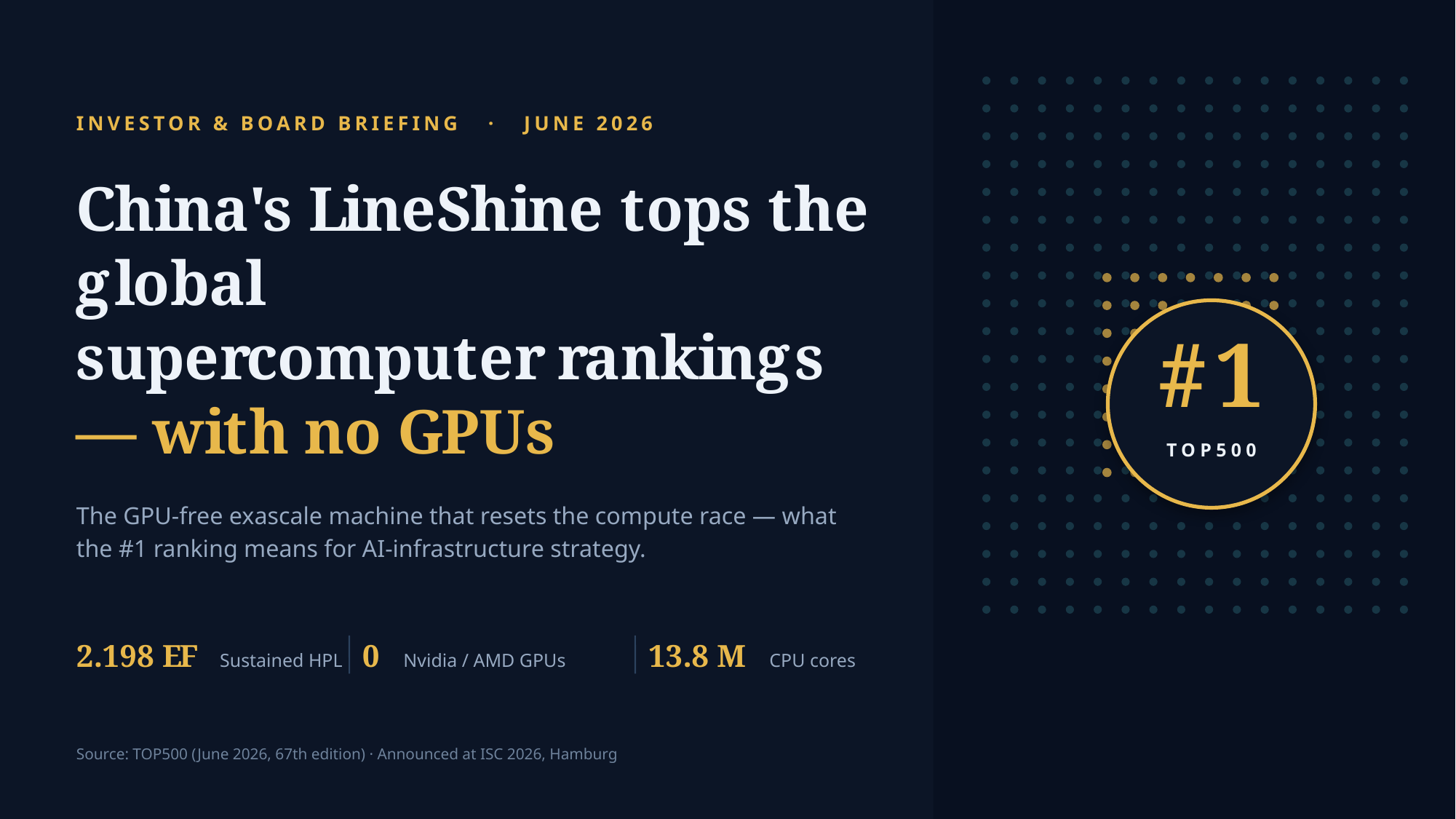
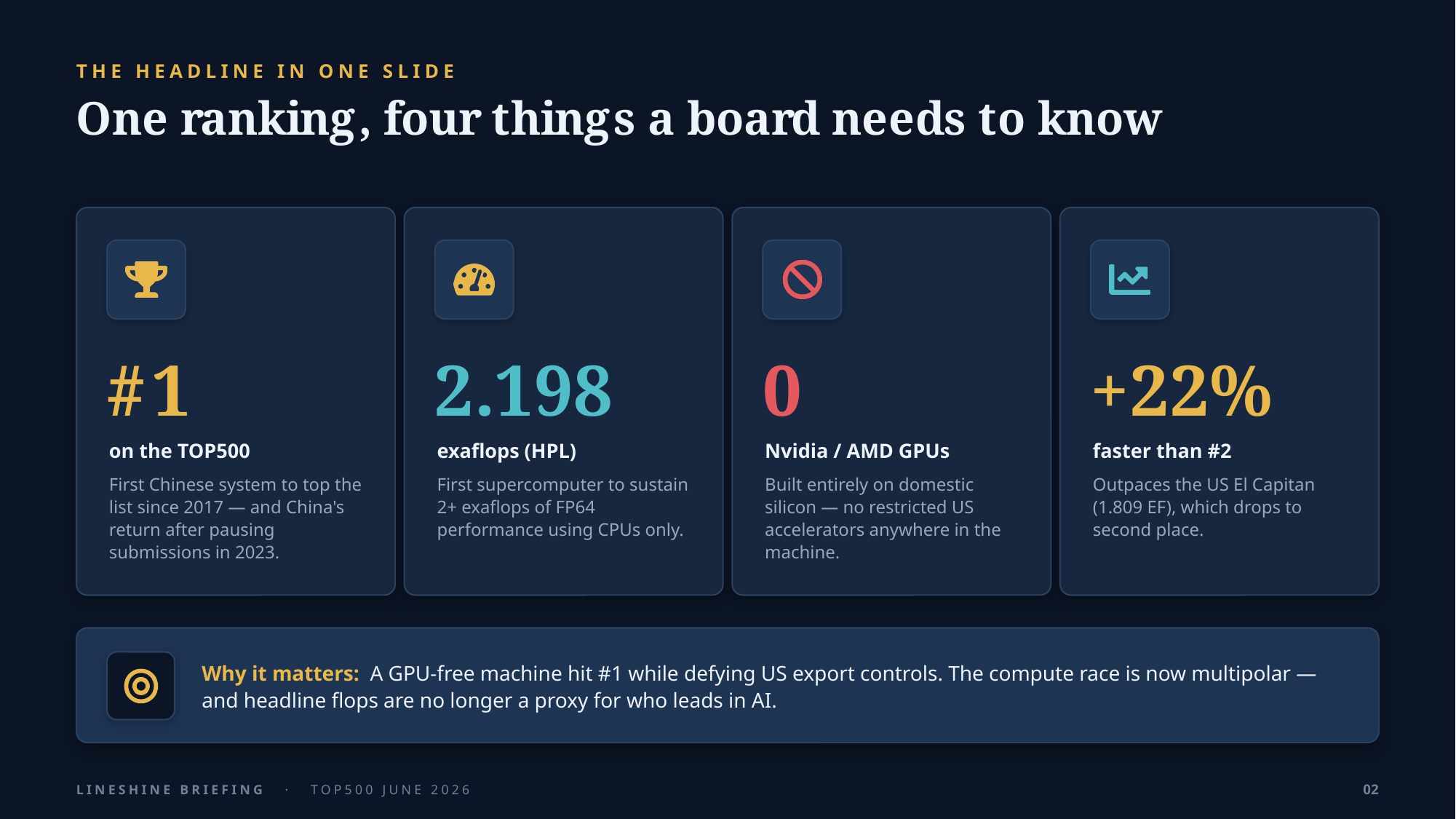
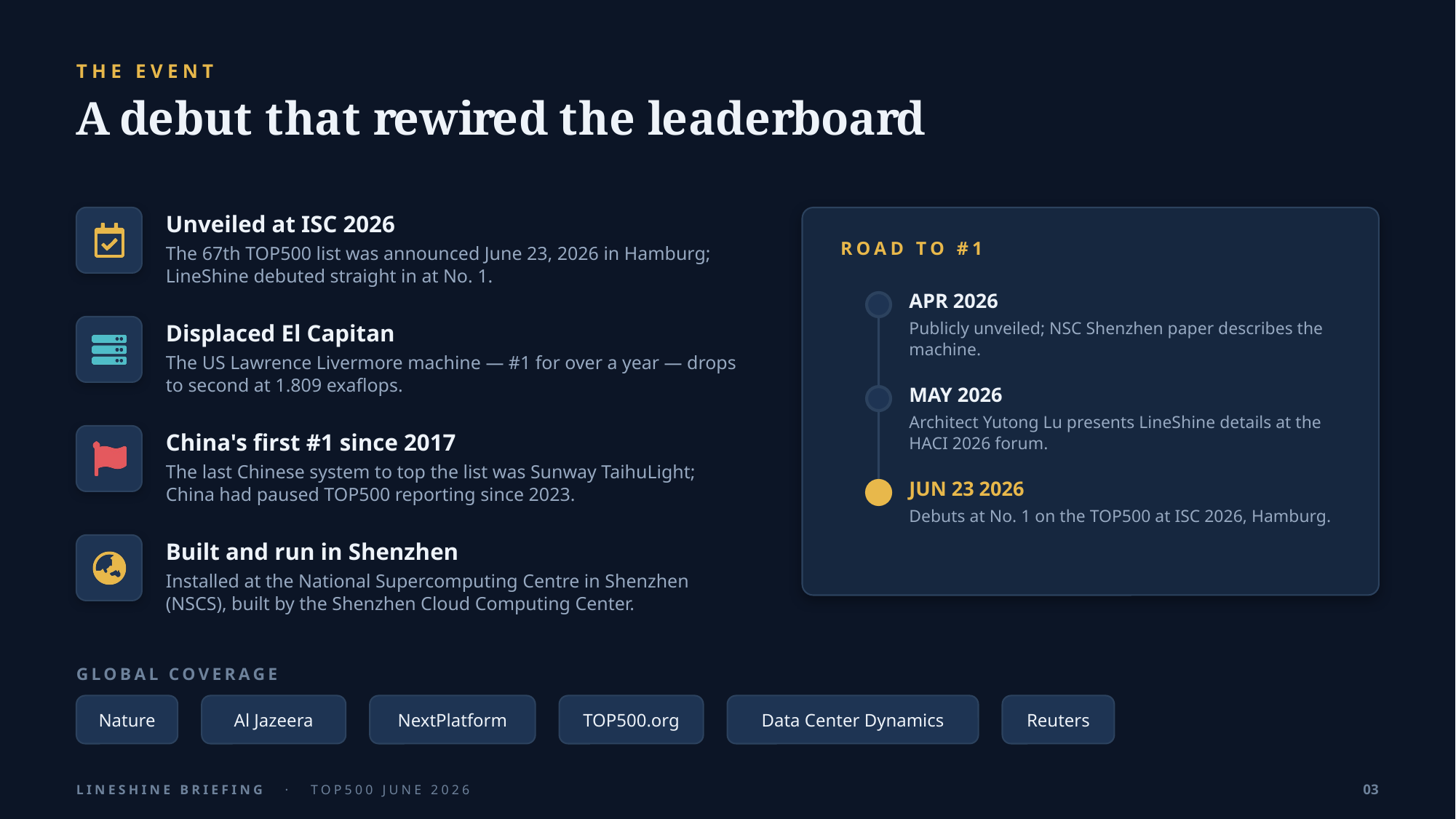
Swipe or scroll sideways to flip through the 10-slide deck →
What Is LineShine, and Why Does It Matter?
LineShine is a Chinese supercomputer at the National Supercomputing Centre in Shenzhen that debuted at No. 1, displacing El Capitan as the world’s most powerful supercomputer as measured by the High Performance Linpack (HPL) benchmark, per the official TOP500 announcement. It matters because its debut marks the first time since 2017 that a Chinese system has led the TOP500.
Landing at No. 1 on this twice-yearly ranking is a public signal of what a country’s computing stack can do without outside help.
How Did LineShine Beat GPU-Powered Machines Without GPUs?
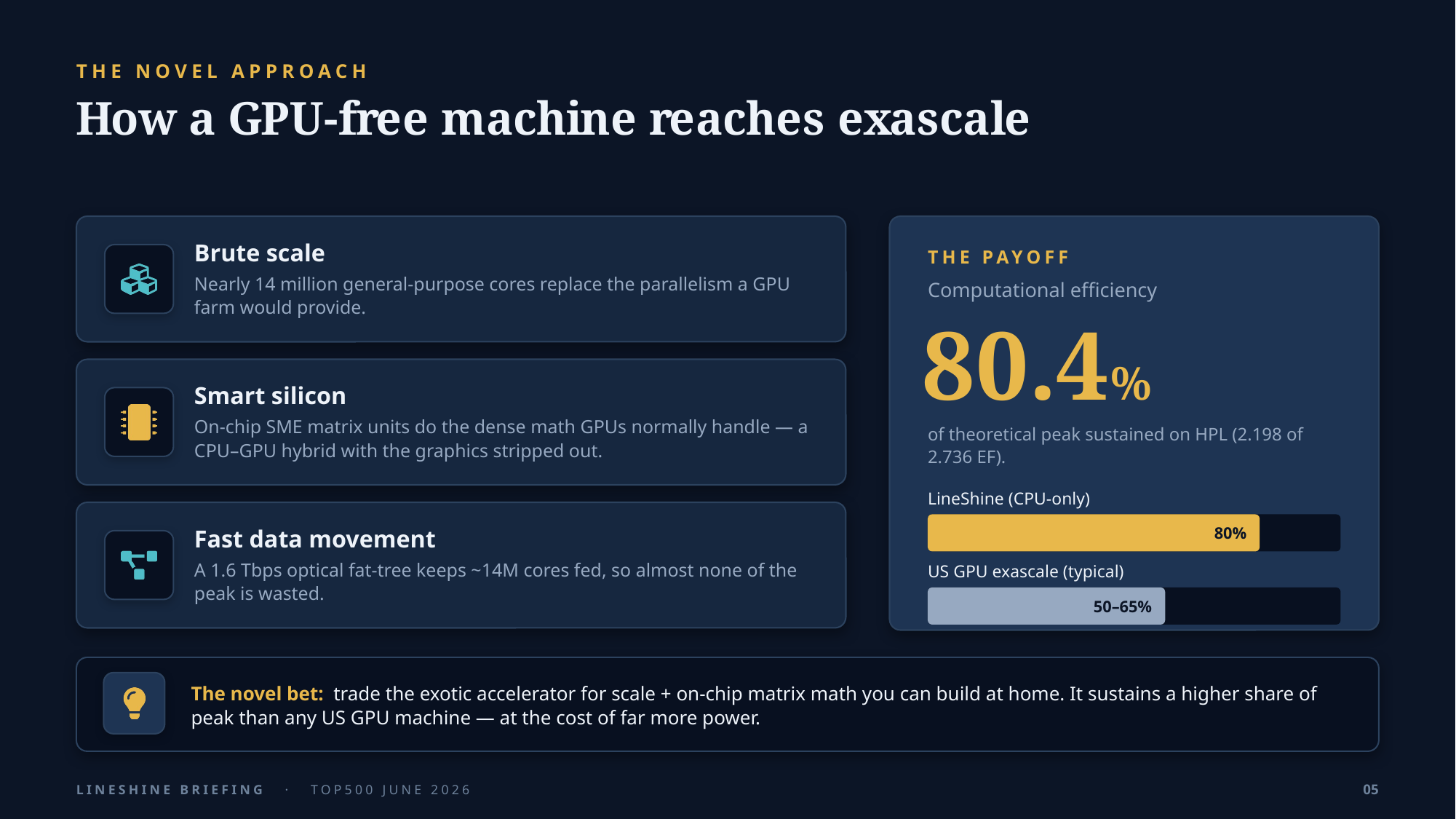
LineShine reached 2.198 Exaflop/s on HPL, about 80 percent of its 2.736 Exaflop/s theoretical peak, making it the first system on the TOP500 to exceed two exaflops of sustained double-precision performance using CPUs only. It got there through scale, not specialized silicon.
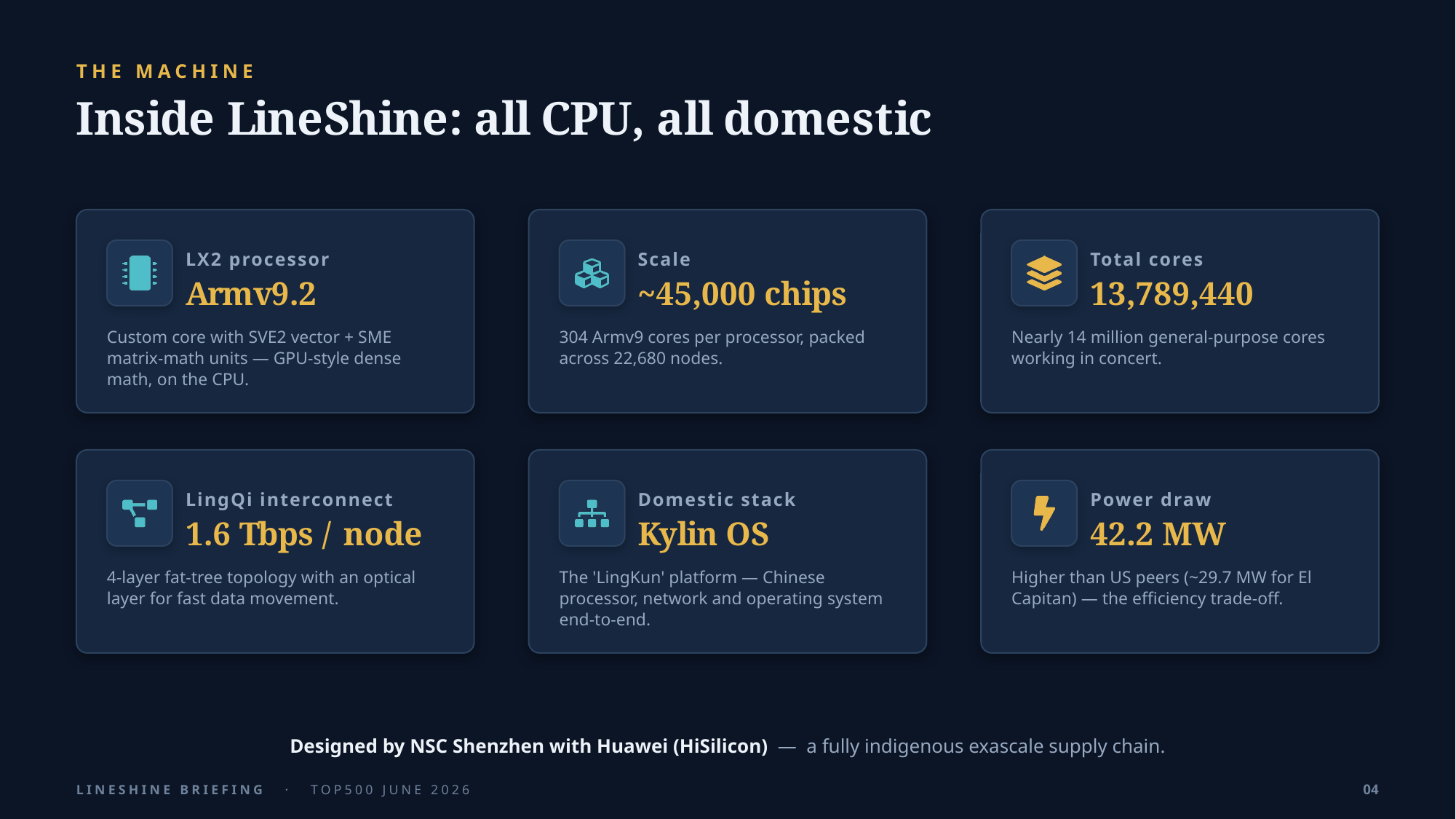
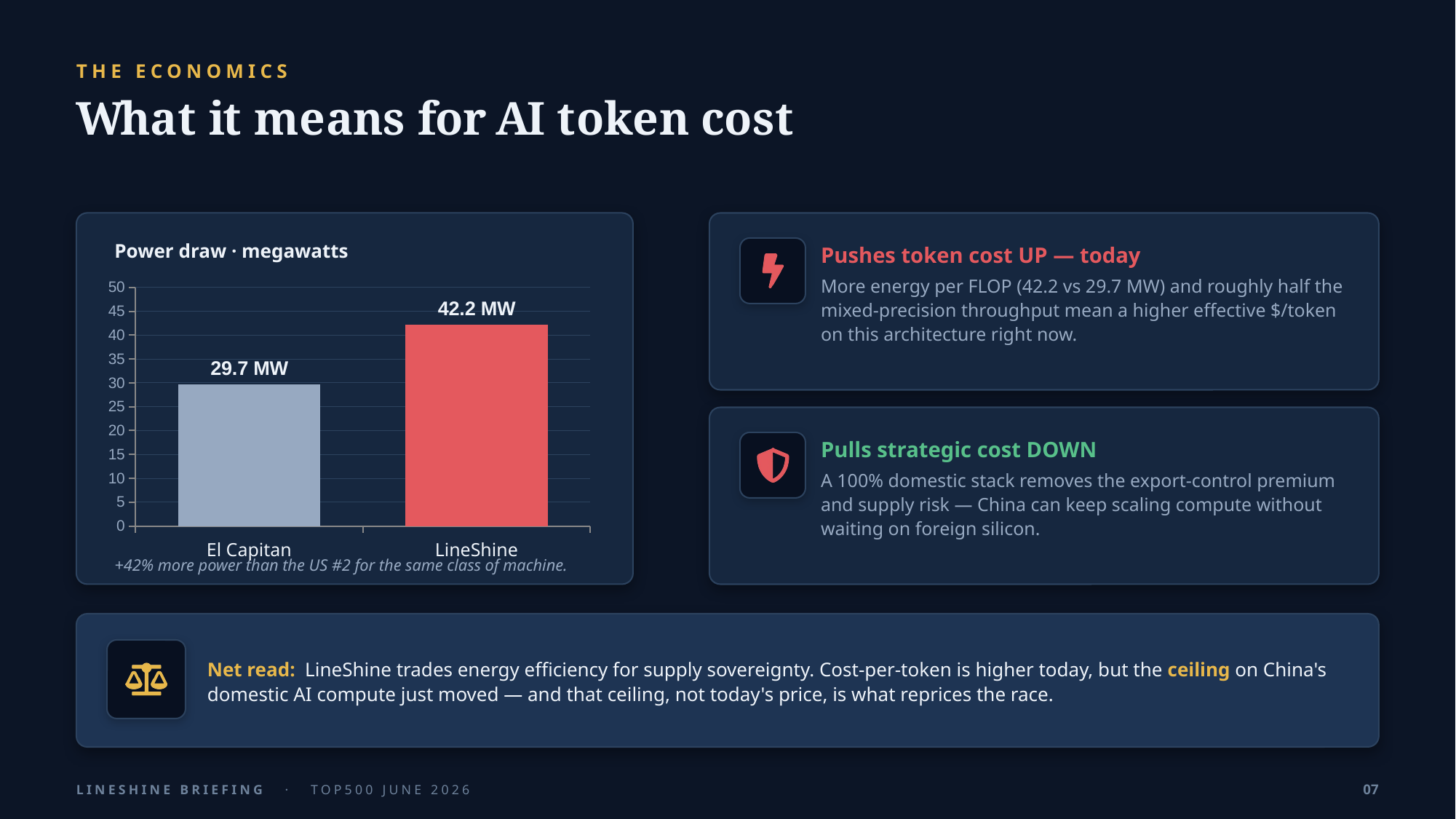
The system runs 13.79 million cores across 304-core LX2 processors running at 1.55 GHz, linked by the proprietary LingQi interconnect and running Kylin OS, and draws approximately 42.2 megawatts of power, for an efficiency of 52.07 Gigaflops/Watt, weak next to GPU rivals. Each LX2 chip carries Arm SVE and SME units that accelerate vector and matrix operations, supporting FP64, FP32, BF16, FP16, and INT8 data formats, letting a CPU stand in for some GPU-style math.
Who Actually Designed the LX2 Chip?
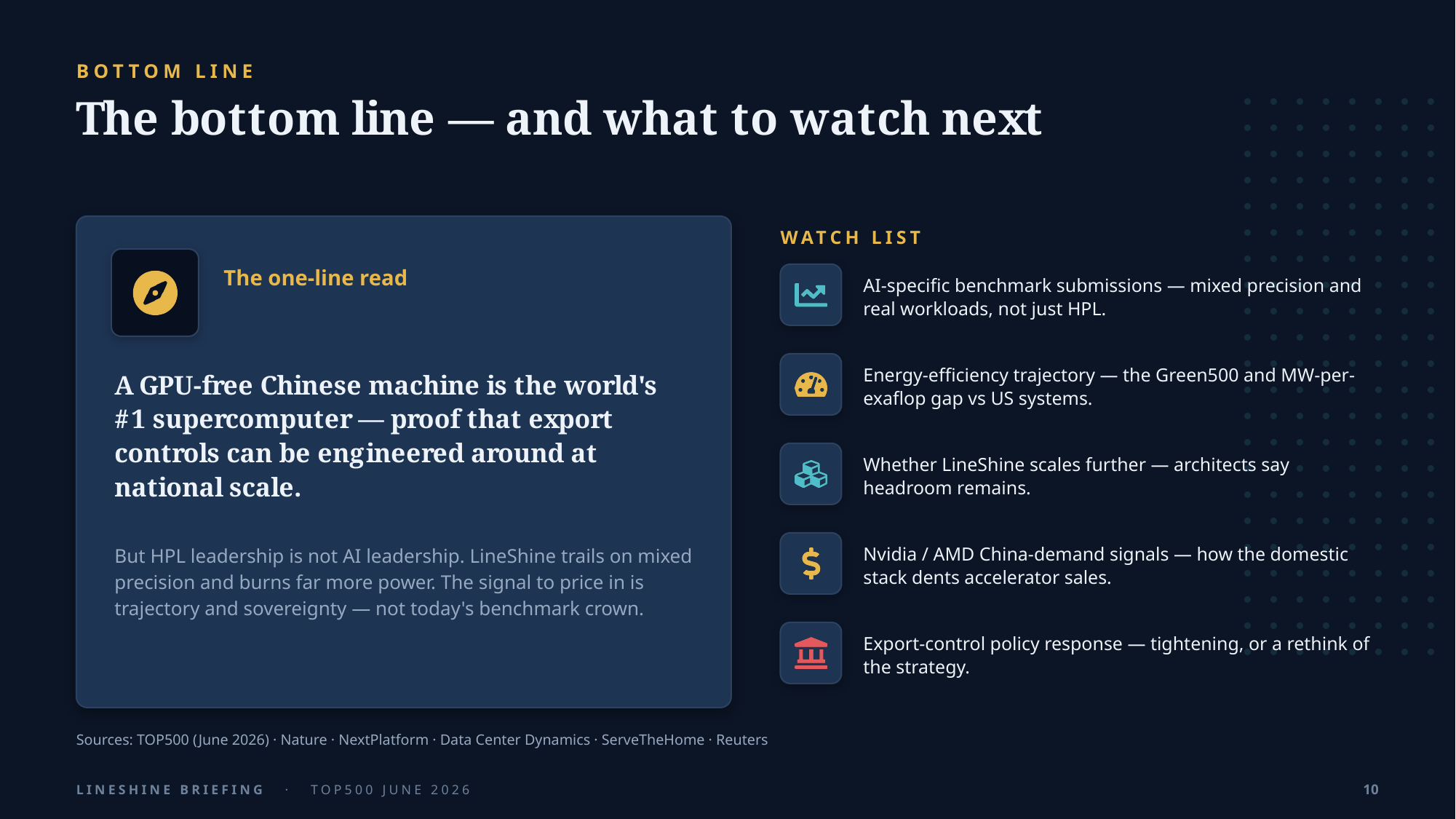
China’s official listing stays vague about the chip’s origin, but independent reporting points to Huawei. The Next Platform concluded the LX2 was designed by NSC Shenzhen in conjunction with Chinese IT giant Huawei, presumably its HiSilicon chip division, running on Huawei Kunpeng racks. Tellingly, that same reporting found LineShine has the highest power consumption of the top ten and ranks 50th on the Green500 list of most energy-efficient systems, a reminder this win was bought with electricity as much as engineering.
Does This Prove US Export Controls Have Failed?
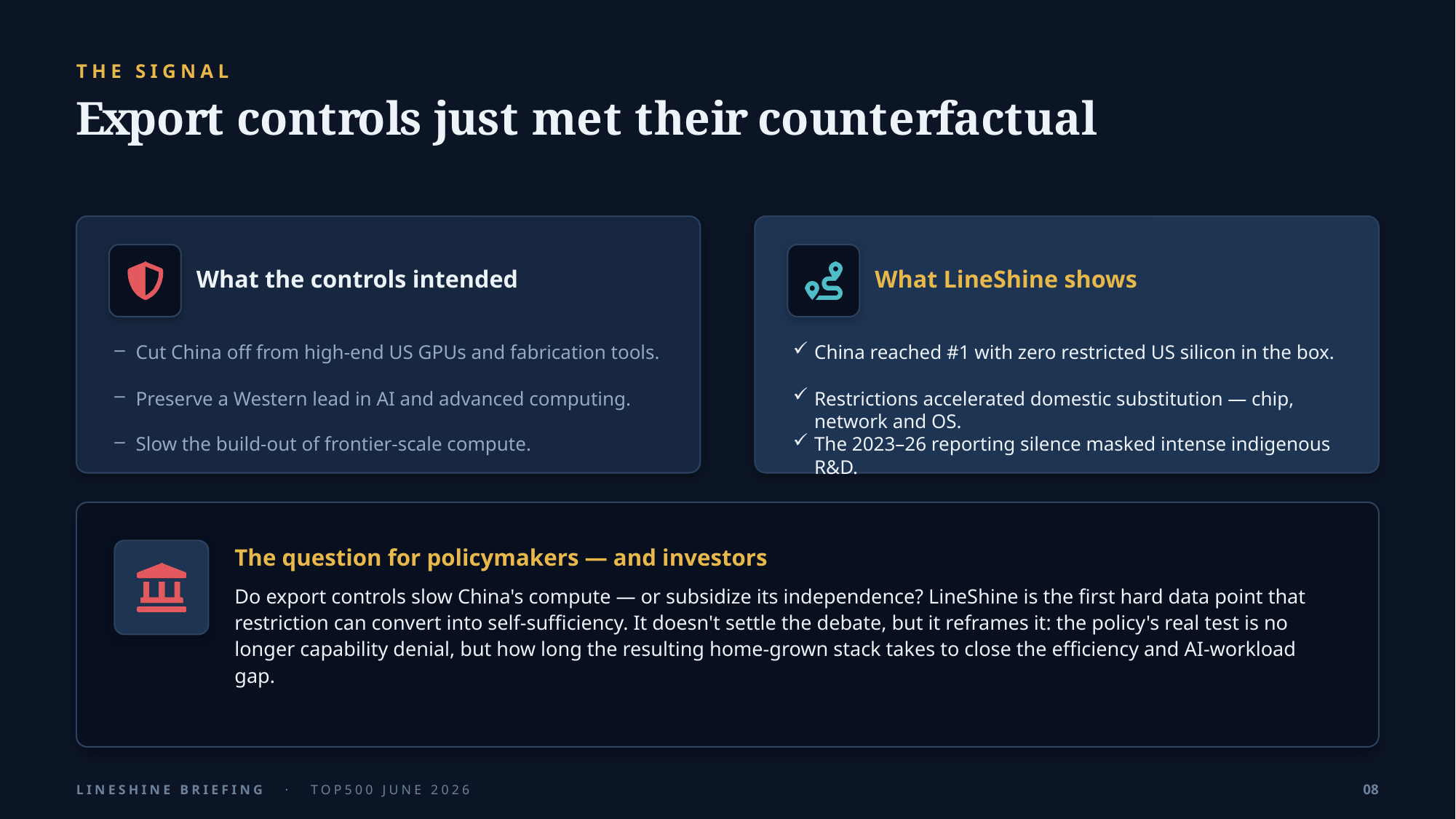
Not quite. LineShine was built entirely without Nvidia, AMD or Intel chips amid US export controls, exactly the outcome those rules were meant to prevent, yet the system still lags on the benchmark that mirrors real AI training.
TOP500 co-founder Jack Dongarra offered a measured take, telling Al Jazeera that “export controls may slow China’s access to certain advanced components, but they also provide a strong incentive to develop domestic alternatives… controls may both constrain China and accelerate its efforts to become technologically self-sufficient.” China had also skipped the ranking for years: China stopped submitting machines to the TOP500 in 2023, after the US tightened chip-export rules, making this reappearance a deliberate statement.
What Can’t LineShine Do as Well as GPU Systems?
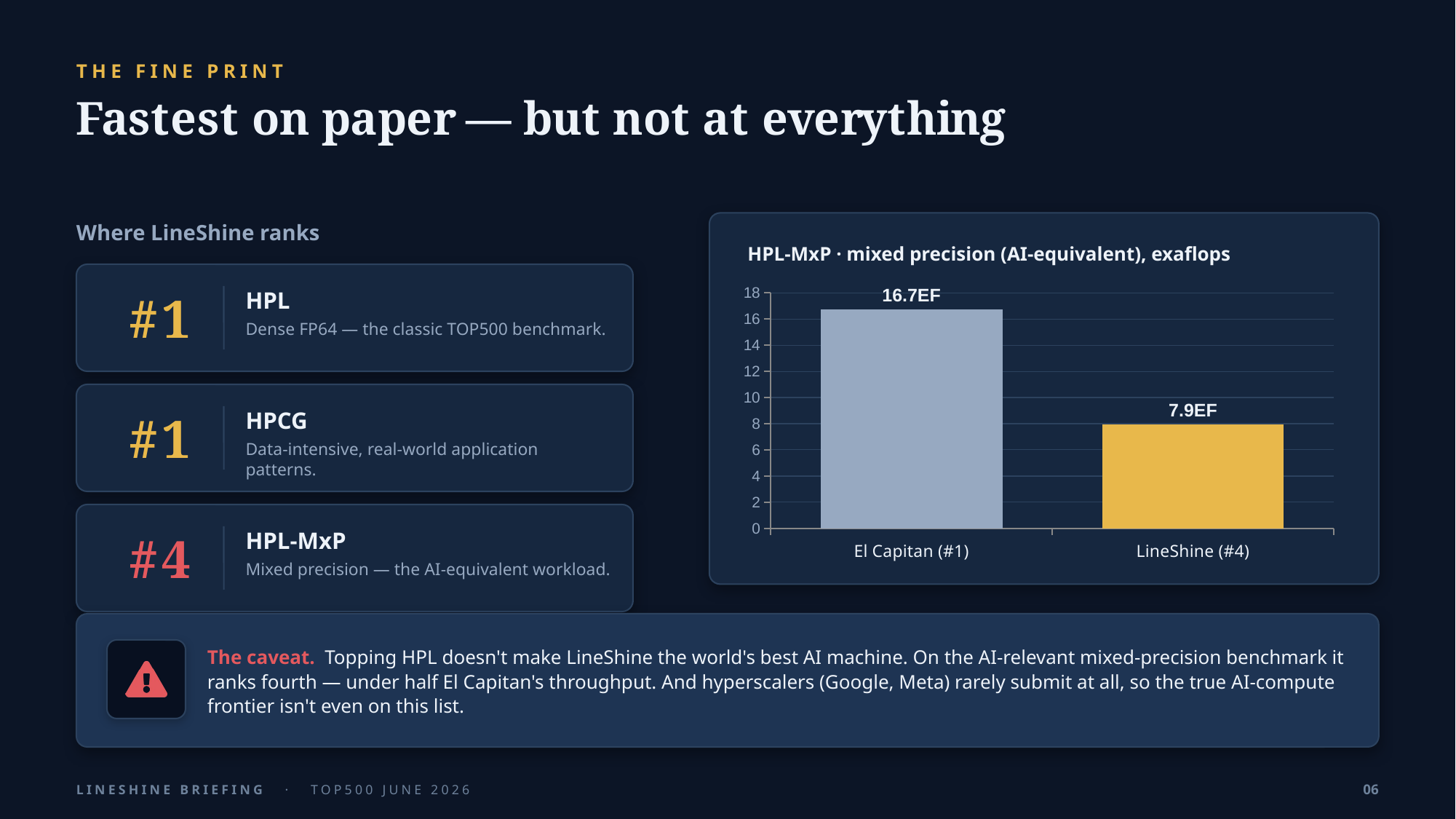
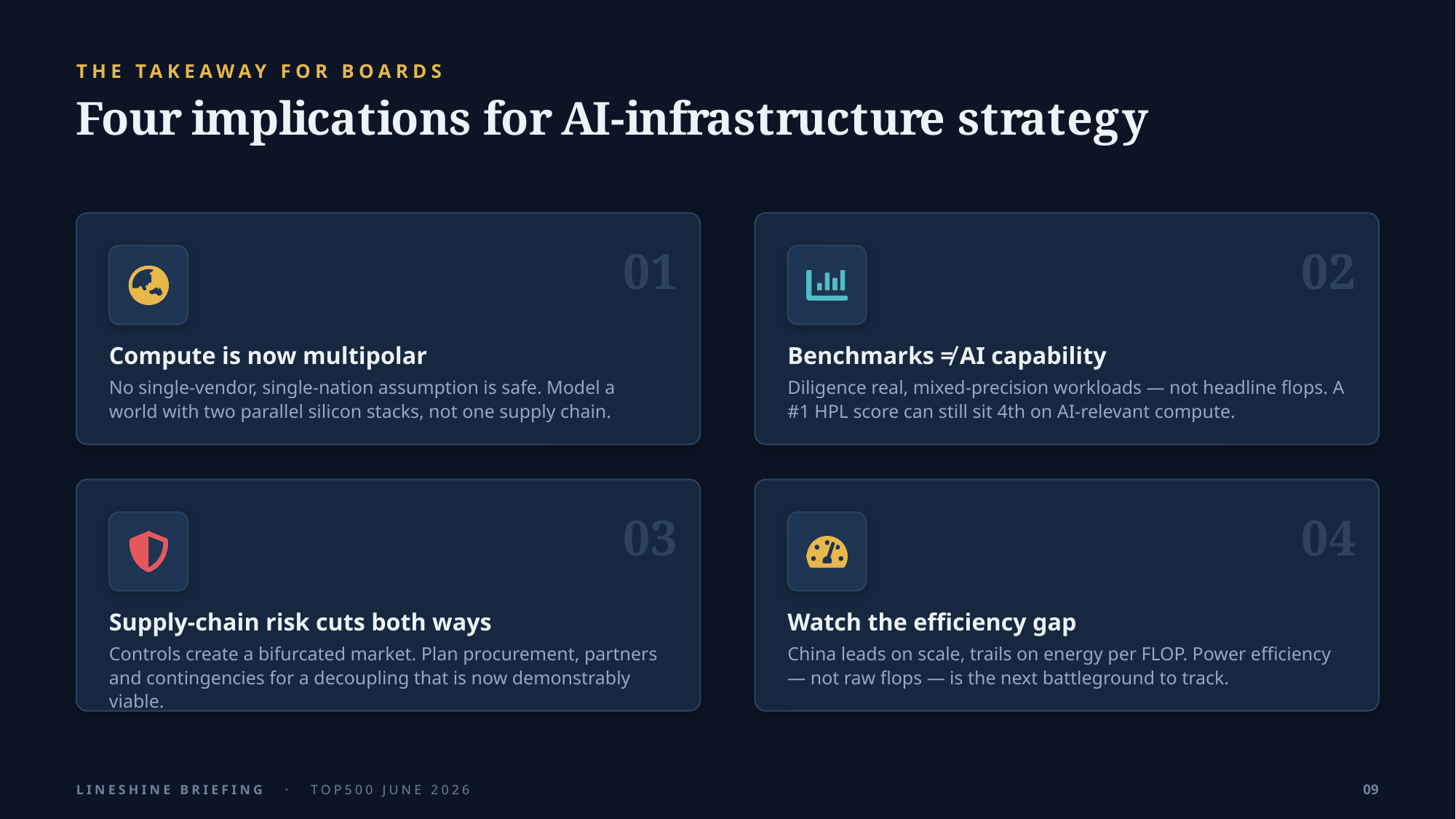
LineShine’s weak spot is modern AI training, the exact workload export controls targeted. On the mixed-precision HPL-MxP benchmark, which better approximates neural-network math, LineShine debuts in fourth at 7.92 Exaflop/s with a more modest 3.6x speedup, consistent with its CPU-only design, trailing three American GPU systems.
Outside experts caution against treating the ranking as an AI leaderboard. CNN reported one director’s assessment: the win “is not relevant if you’re asking the question, ‘who’s got the best AI capability?’ … The TOP500 is not a good measure of that.” Largely because the biggest US commercial AI clusters never enter the ranking.
Common Questions
Is LineShine the fastest computer on Earth, period? Only among publicly benchmarked systems. A study found xAI’s Colossus facility in Memphis had already likely surpassed El Capitan, and private AI clusters never enter the TOP500.
How much faster is LineShine than El Capitan? The ranking showed LineShine achieved a computing speed 20% faster than El Capitan, which had held No. 1 since late 2024.
Export-control rules shift quickly; confirm compliance specifics with a qualified trade-controls expert rather than relying on news coverage alone.
If you need to brief a team on what LineShine means for AI infrastructure strategy, the example deck below covers the same ground. It was built with AskDeck from a short brief and can be downloaded and edited for your own briefing.