Meituan, the Chinese app better known for delivering lunch than language models, just unveiled LongCat-2.0: a 1.6-trillion-parameter coding model already beating far more famous rivals on usage charts for two months before anyone knew its real name.
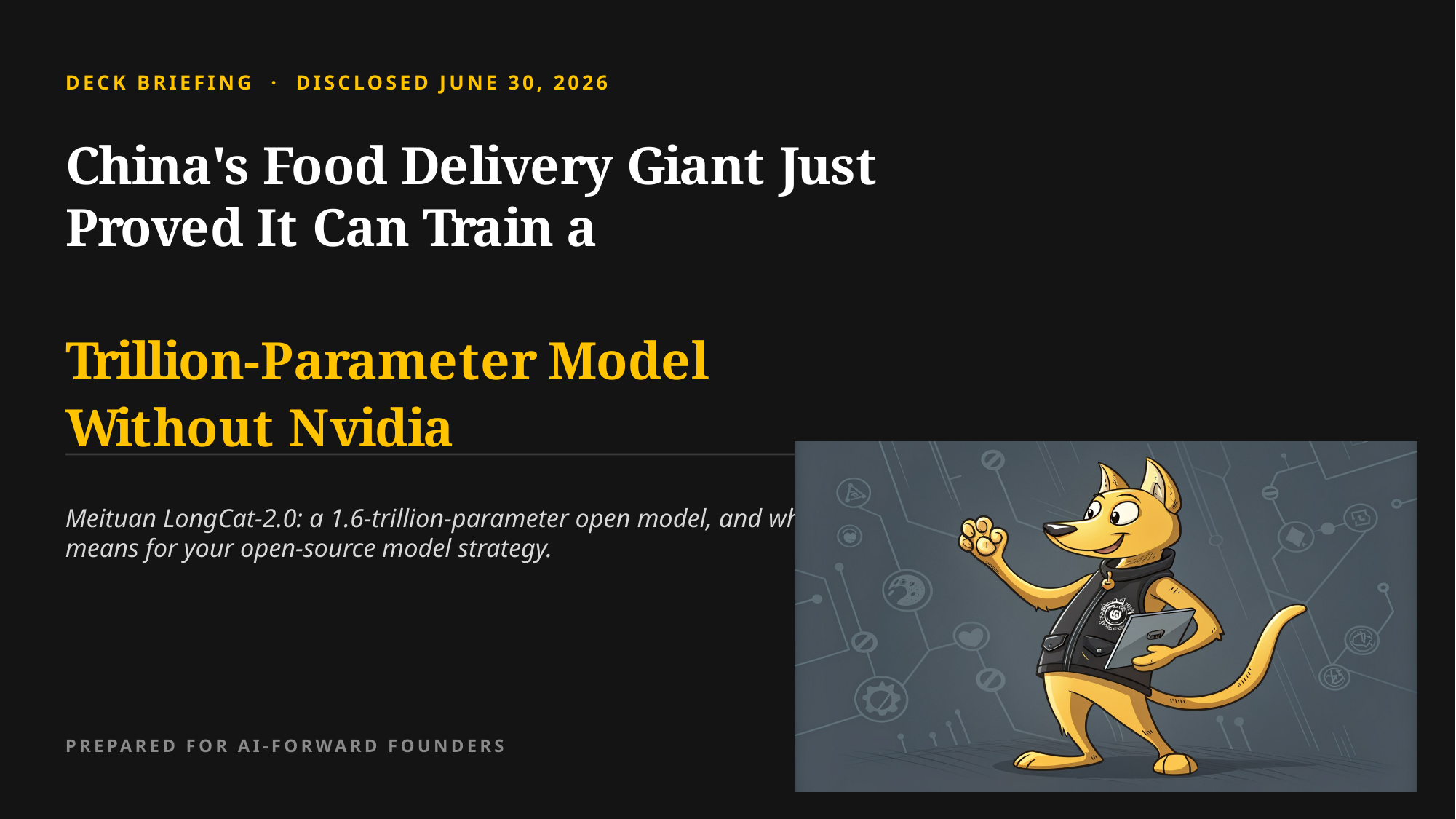
Key TakeawaysLongCat-2.0 has 1.6 trillion total parameters but activates only ~48 billion per token, keeping it cheap to run.It ran anonymously as “Owl Alpha” on OpenRouter for two months, reaching 10.1 trillion tokens of monthly usage.Meituan says pretraining ran on a cluster of 50,000+ domestic Chinese ASICs, with no Nvidia hardware involved.Promotional pricing of $0.30 per million input tokens undercuts GPT-5.5’s $5 rate by a wide margin.
The slides embedded below turn this same story into a quick visual rundown, put together by AskDeck from a short brief. Back to the model itself.
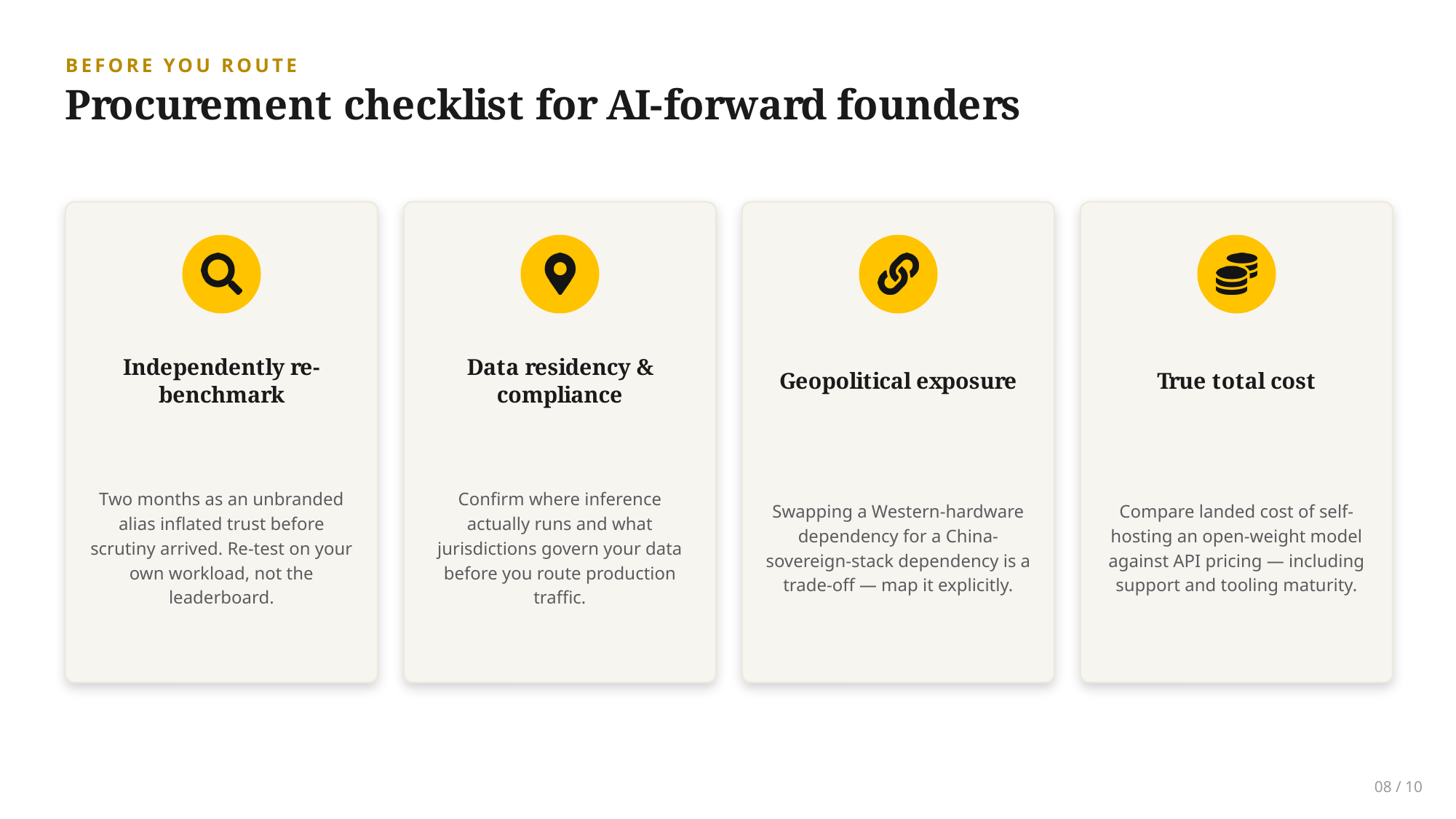
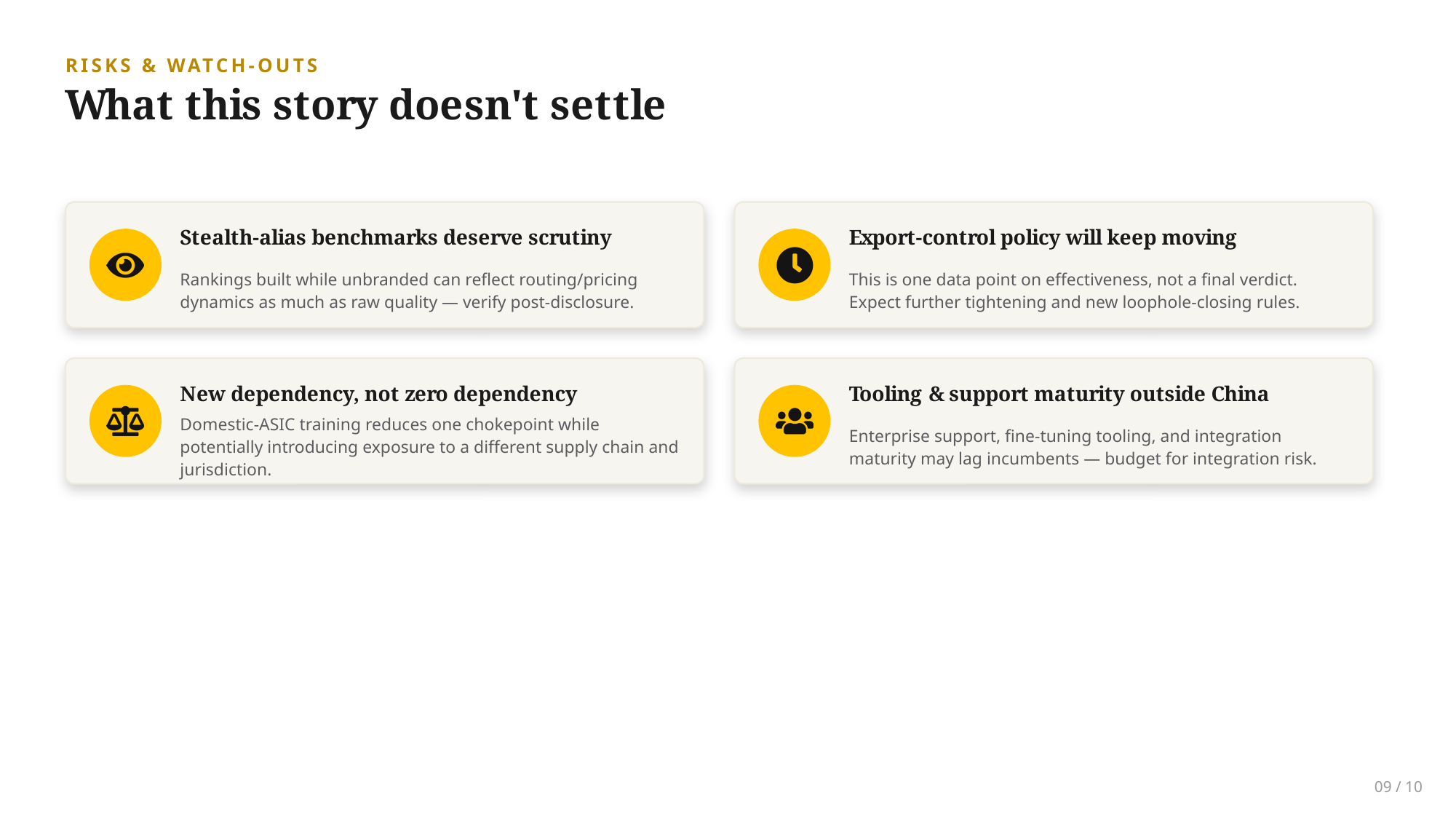
Swipe or scroll sideways to flip through the 10-slide deck →
What Is LongCat-2.0, Exactly?
LongCat-2.0 is Meituan’s open-source Mixture-of-Experts model, activating roughly 48 billion of its 1.6 trillion parameters per token, a figure that swings between 33 billion and 56 billion depending on query complexity. Only a slice of the network fires per request, which keeps a model this large affordable to serve. Meituan calls the design “Zero-Compute Experts”: routine steps route through lighter subnetworks, cutting idle overhead. A new attention mechanism, LongCat Sparse Attention, gives it a native 1-million-token context window built for long coding sessions and multi-step agent tasks.
How Did a Model Called “Owl Alpha” Win Without a Name?
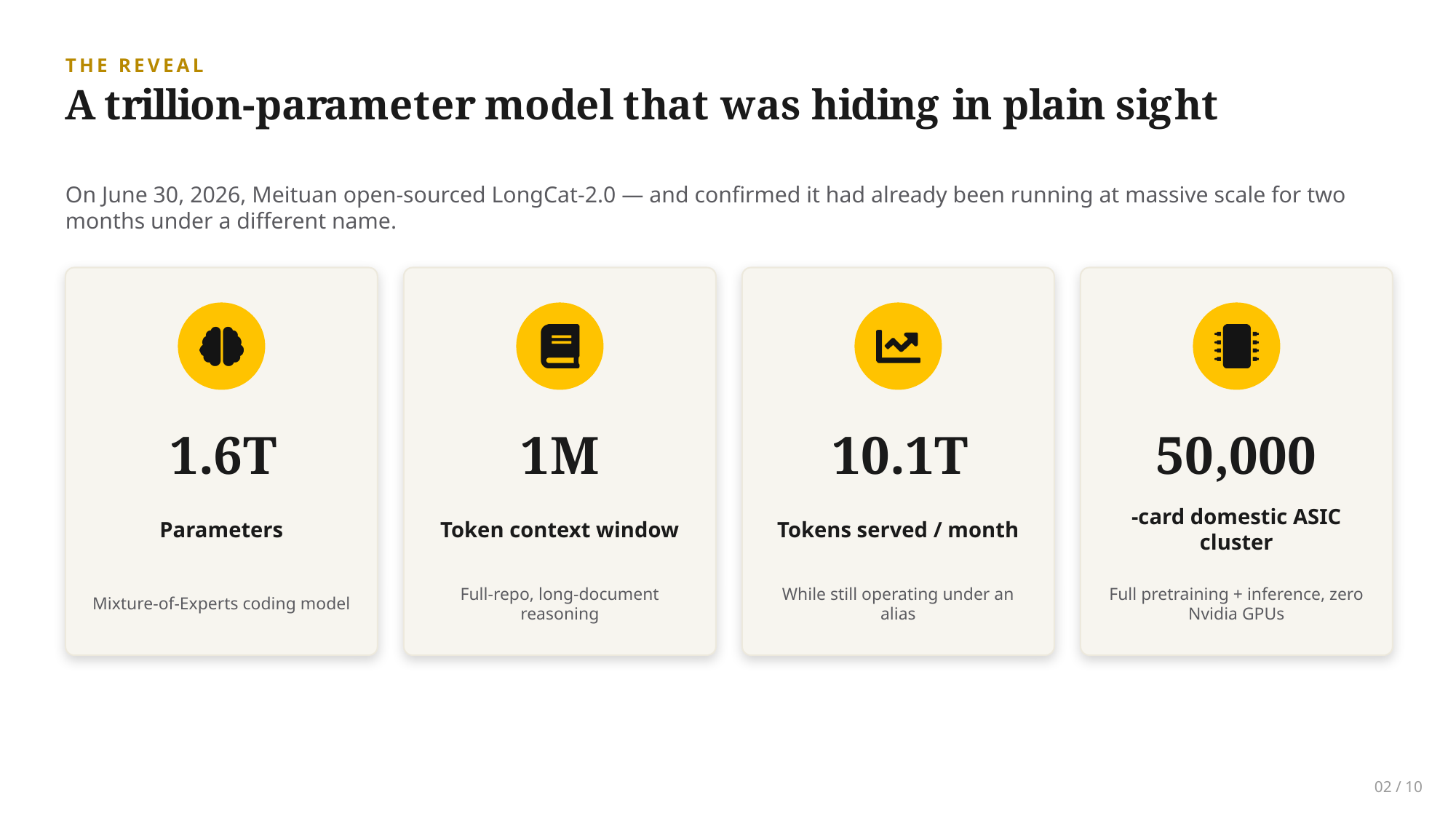
For two months, LongCat-2.0 ran anonymously on OpenRouter as “Owl Alpha,” pulling in roughly 10.1 trillion tokens of usage a month, about 559 billion a day, a 242% month-over-month jump in volume. By the time Meituan attached its brand, the model had already taken first place on Hermes Agent and ranked top three on Claude Code and OpenClaw by monthly call volume. The sequencing looks deliberate: let a model circulate under a neutral name, watch whether developers pick it for real work, then reveal the brand once the numbers speak for themselves.
Does It Actually Perform Like a Frontier Model?
On Meituan’s own benchmarks, LongCat-2.0 scored 59.5 on SWE-bench Pro, a test of how often a model resolves real GitHub issues, edging out GPT-5.5’s 58.6 and Gemini 3.1 Pro’s 54.2, though it trails Claude’s top Opus models. On FORTE, an office-agent benchmark, it scored 73.2, tying Claude Opus 4.6 but short of GPT-5.5’s 77.8. These are Meituan’s own test results, not an independent lab’s, so “competitive” is the fairer read, not “clearly ahead.”
Why Does Training on Chinese Chips Matter So Much?
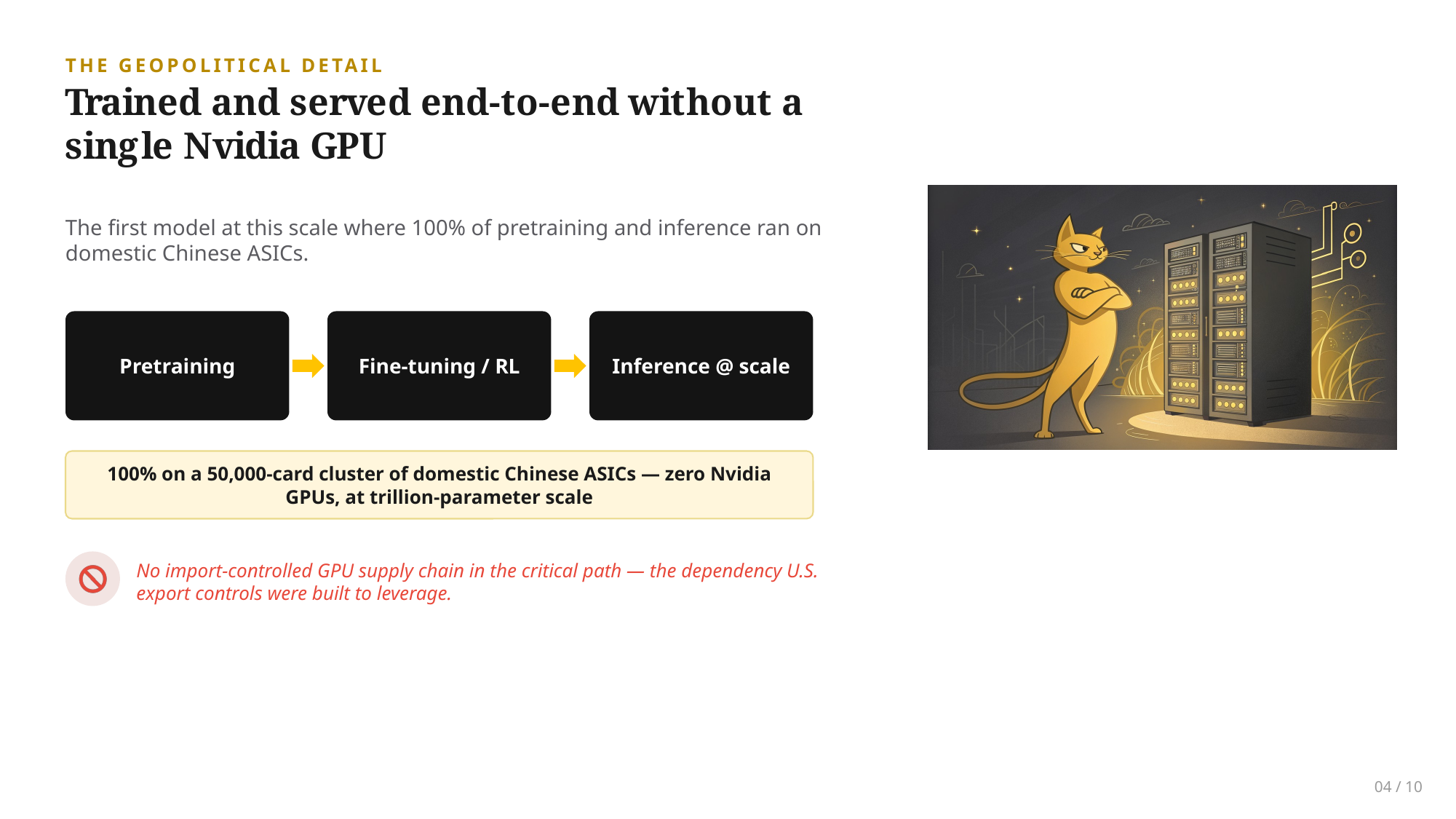
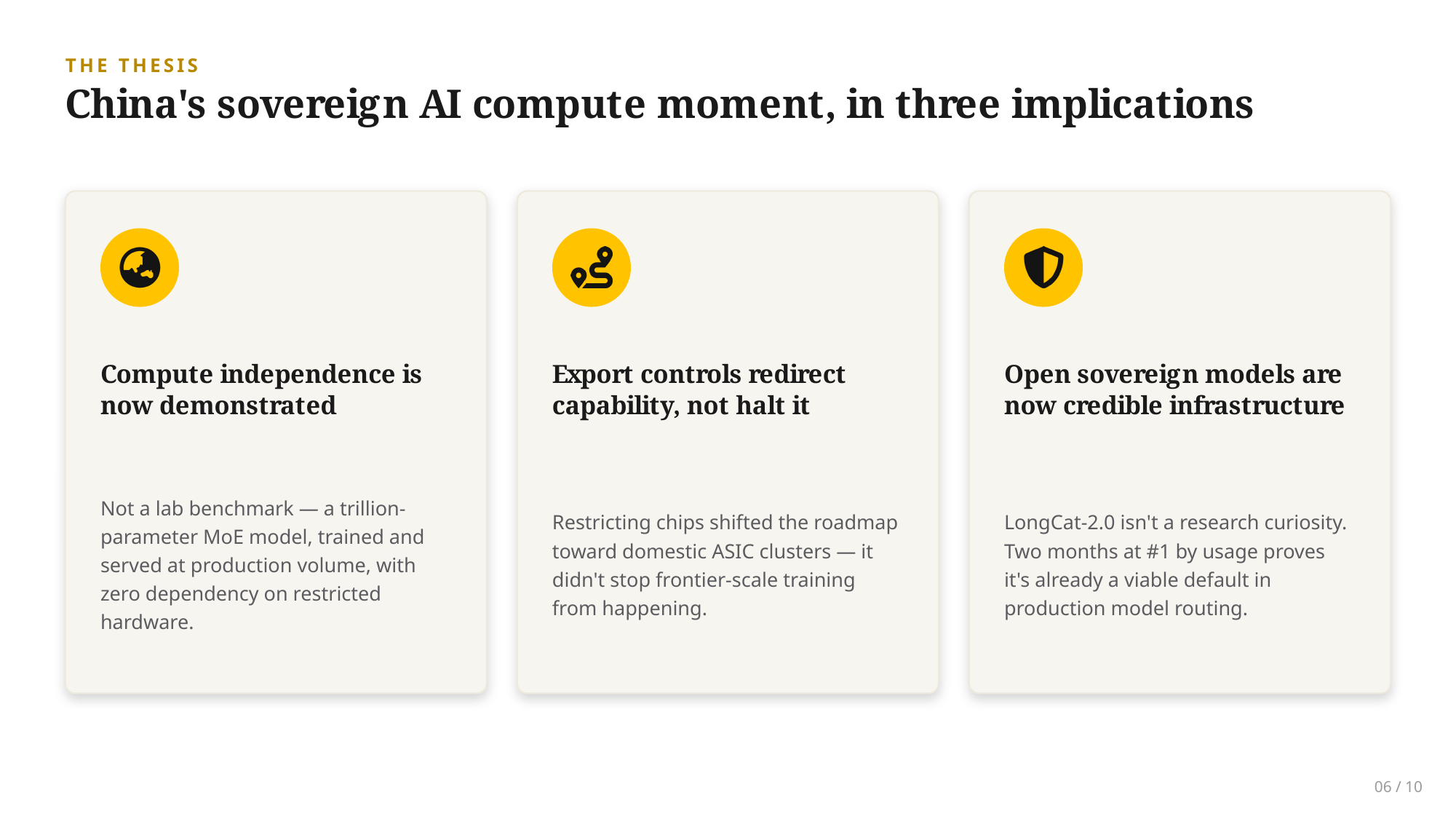
The bigger claim isn’t the benchmark scores; it’s the hardware underneath them. Meituan says the full pretraining run, spanning more than 35 trillion tokens, ran on a cluster of over 50,000 domestic accelerators, reportedly Huawei’s Atlas-950 chips coordinated by Huawei’s own chip-to-chip library rather than Nvidia’s. That separates LongCat-2.0 from earlier Chinese releases: DeepSeek’s V4-Pro, launched in April 2026, used domestic chips only for the lighter inference stage, while its heavier pretraining still relied on imported hardware. Meituan says its run finished with no rollbacks or unrecoverable loss spikes, a claim that matters since large training runs on unproven hardware often fail partway through.
What About Pricing?
Price is where LongCat-2.0 makes its clearest case. Standard API access runs $0.75 per million input tokens and $2.95 per million output, cut to a promotional $0.30 and $1.20 during launch, with repeated reads of cached context free. That undercuts GPT-5.5’s $5/$30 per million tokens and Claude Sonnet 5’s introductory $2/$10, landing close to DeepSeek V4-Pro’s standing price. Meituan also sells bulk token packs, roughly 1 billion tokens for about $60, aimed at high-volume coding agents.
Does This Prove U.S. Export Controls Have Failed?
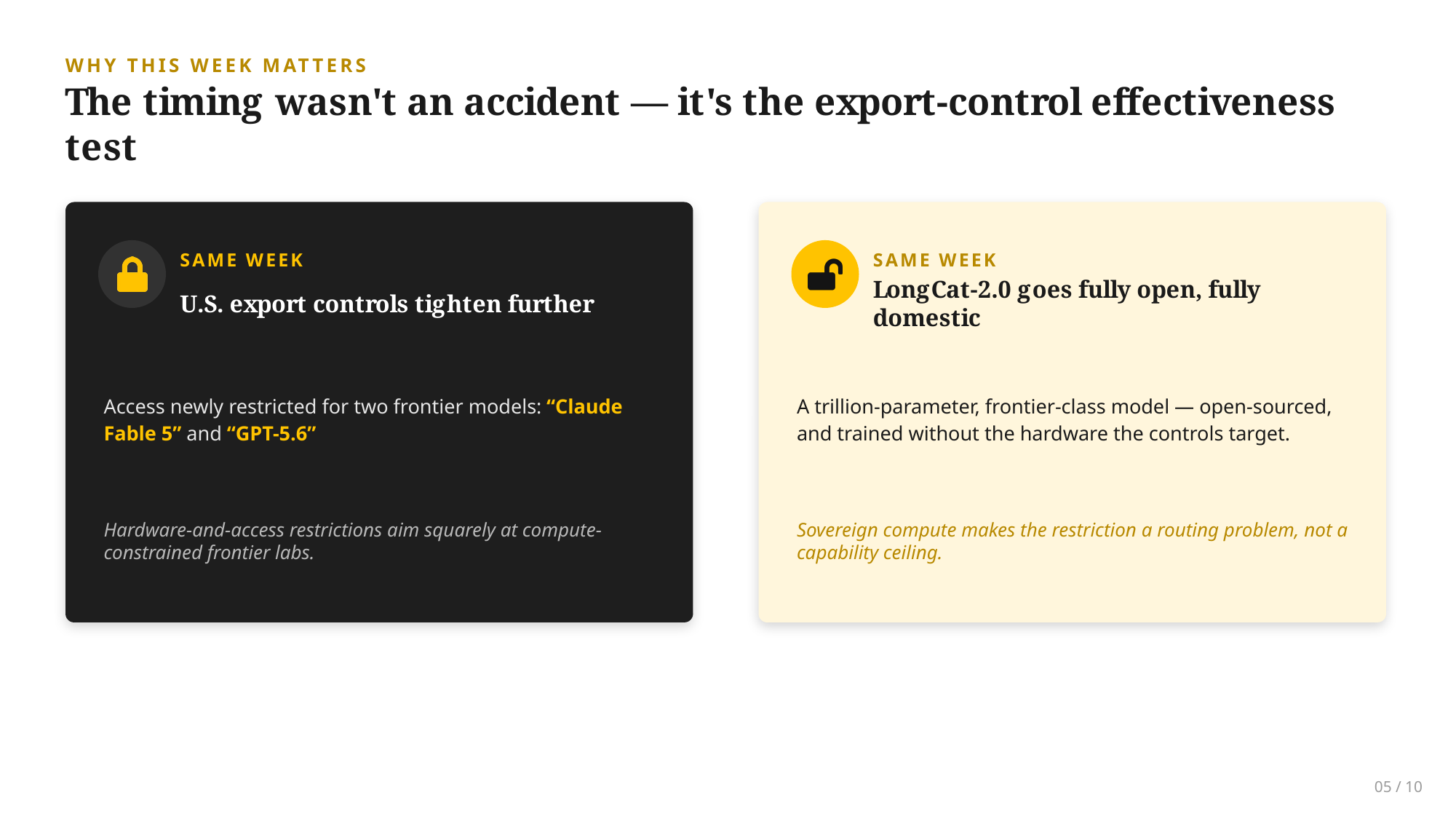
Not quite, but it complicates the case for them. The reveal landed in a month when Washington had intervened directly in model access, ordering Anthropic to suspend Claude Fable 5 and Mythos 5 for foreign users worldwide and pushing OpenAI to stagger GPT-5.6’s rollout to a small group of vetted partners rather than the public. Commerce lifted the Fable 5 and Mythos 5 restrictions the same day Meituan went public, but only after two and a half weeks in which two capable Western models sat unavailable to much of the world. Export controls were built to keep frontier training out of reach without the newest Nvidia hardware. LongCat-2.0 doesn’t undo that logic: restrictions still raise costs and complicate scaling. But it shows the core assumption, that denying top-tier chips would stop a 1.6-trillion-parameter model from being trained and served at scale, no longer holds unconditionally.
Common Questions
Can I download and run LongCat-2.0 myself? Not the full weights yet. It’s accessible now through OpenRouter and Meituan’s own LongCat platform under an MIT license, but GitHub and Hugging Face still list the open weights as “coming soon.”
Is the “trained without Nvidia” claim independently verified? No. The pretraining details, benchmarks, and stability claims all come from Meituan’s own disclosures. That doesn’t make them false, but treat the figures as vendor-reported until outside researchers test the released weights.
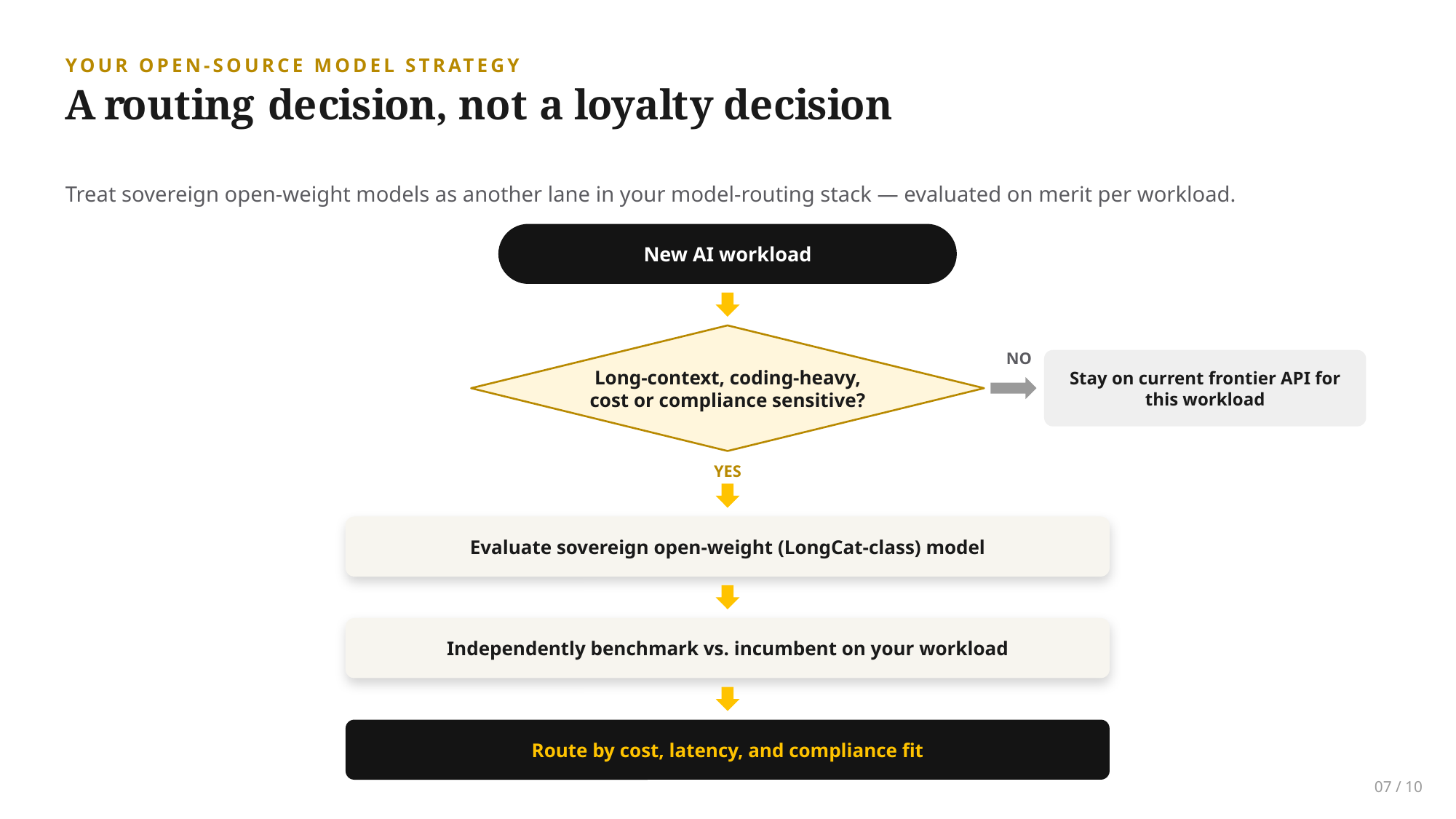
If you’re trying to explain what China’s open-source AI push means for your own model strategy, a visual rundown helps more than another wall of text. The example below covers this same LongCat-2.0 story, built with AskDeck from a brief, and it’s yours to download and edit.