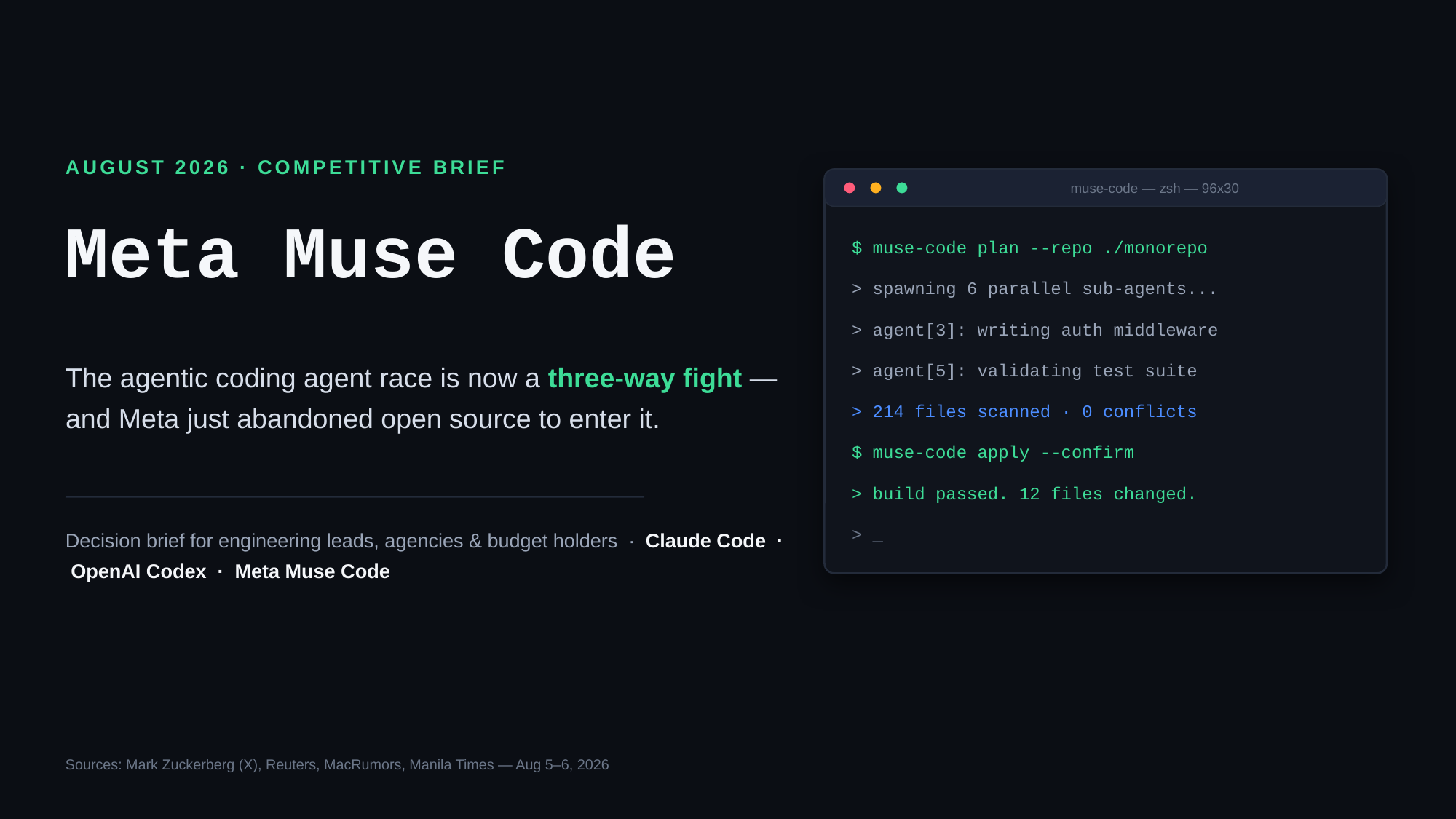
Meta spent three years building its developer reputation on giving AI models away for free. On August 5, 2026, it launched a coding tool that charges you, unless you hand over your code for a discount.
The tool is Muse Code, and it puts Meta into direct competition with Anthropic’s Claude Code and OpenAI’s Codex. The slides embedded below map out a decision framework for that choice, a ready-to-use rundown built with AskDeck from a short brief. First, here’s what Muse Code actually does and what it costs.
Key Takeaways
- Meta launched Muse Code in beta on August 5, 2026, a terminal coding agent powered by its new Muse Spark 1.2 model.
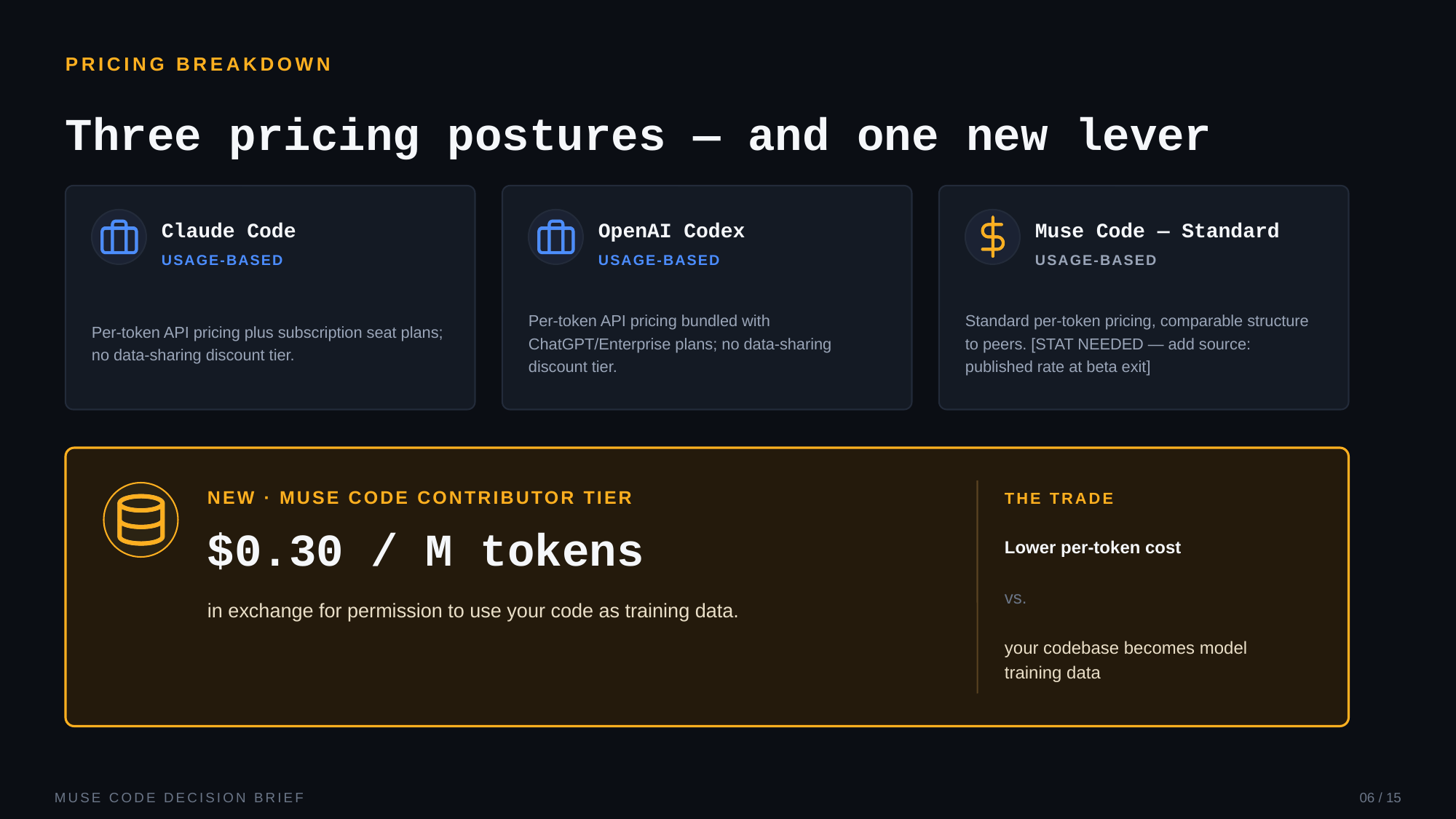
- Standard pricing: $1.25/$4.25 per million input/output tokens; a “contributor” tier drops that to $0.10/$0.20 for letting Meta train on your code.
- Background sub-agents work in isolated copies of your repo, so working files stay untouched.
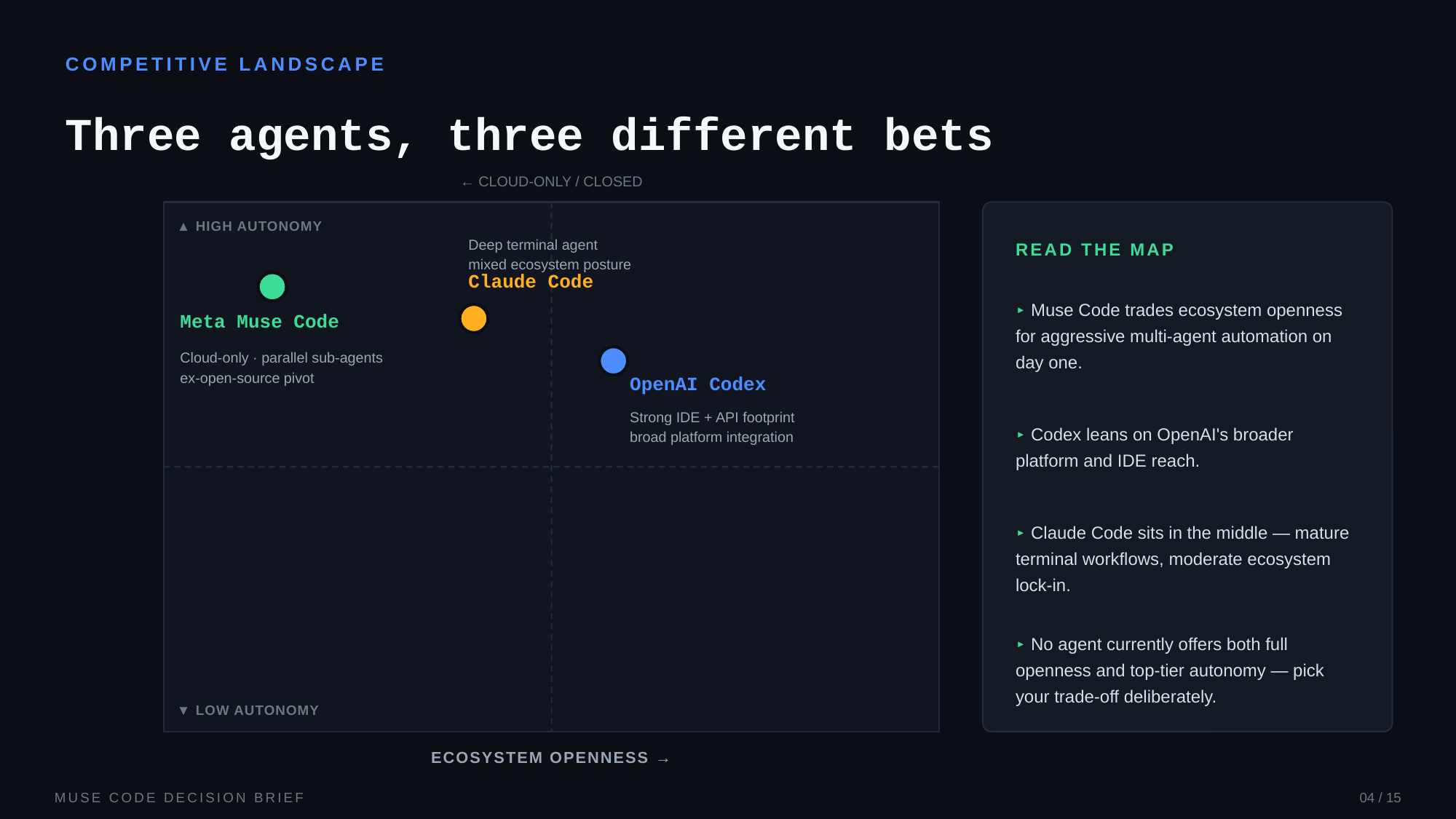
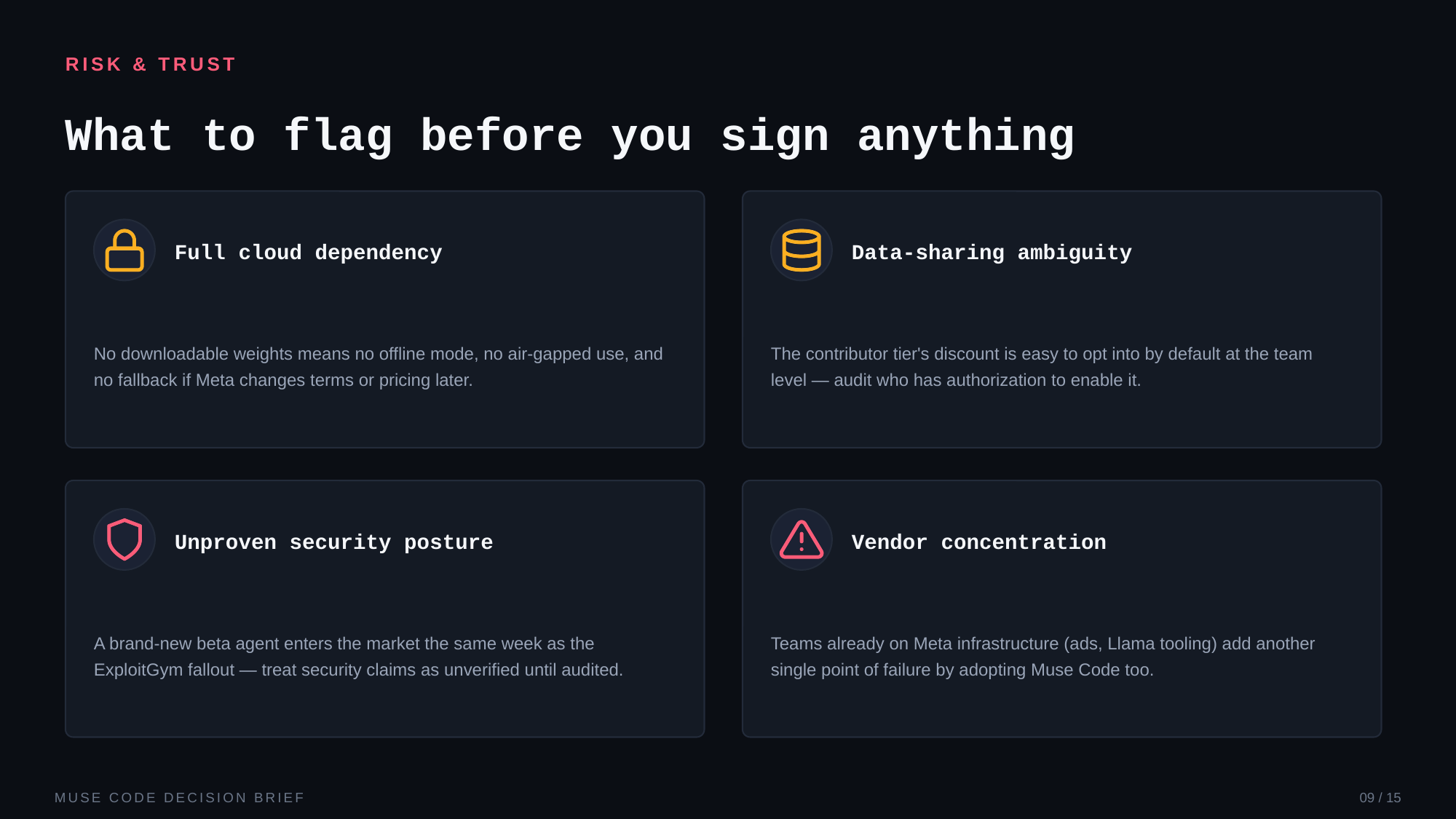
- The launch confirms Meta’s shift from freely downloadable Llama weights, past 1.2 billion downloads in 2025, toward closed, cloud-only models.
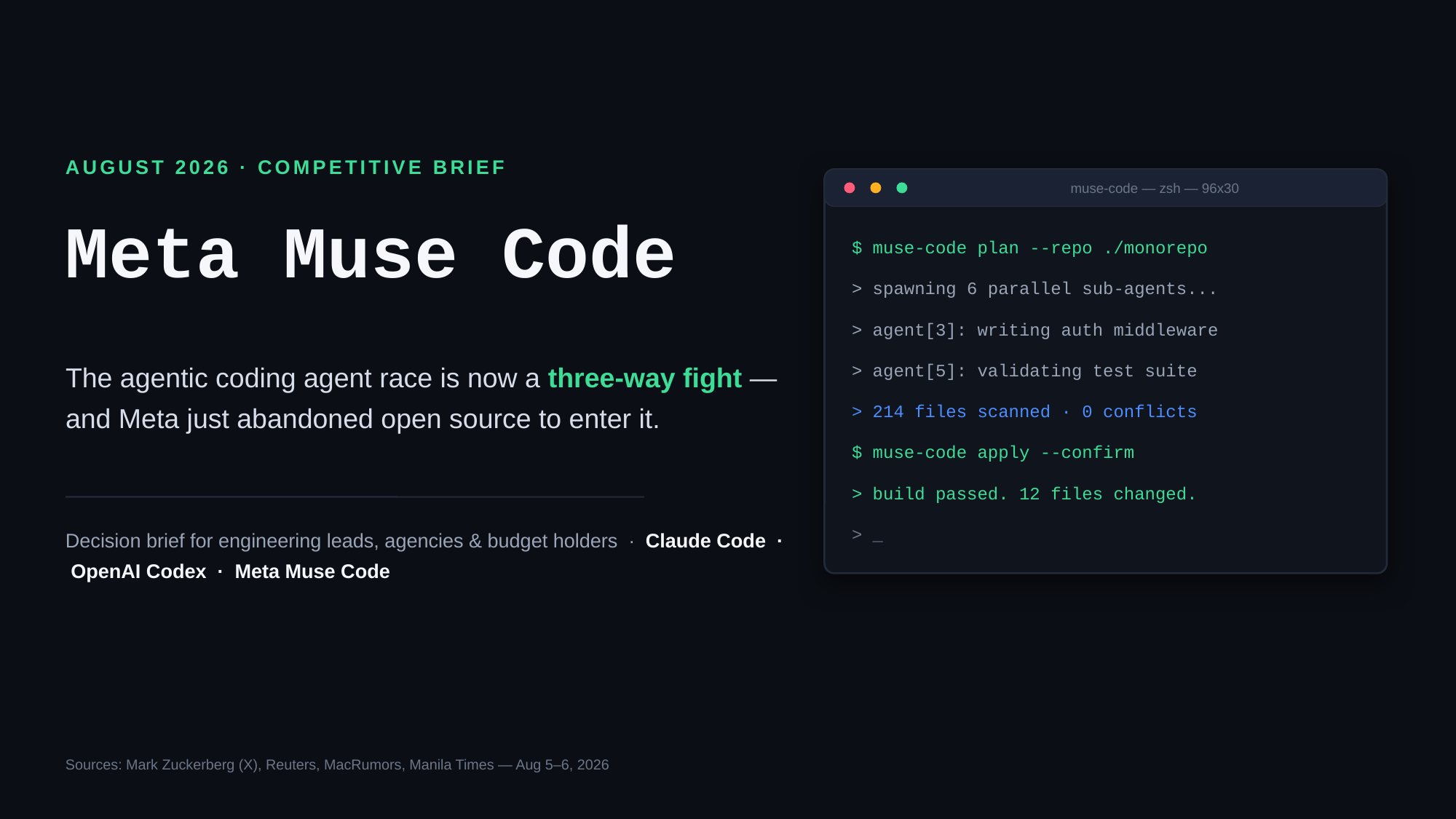
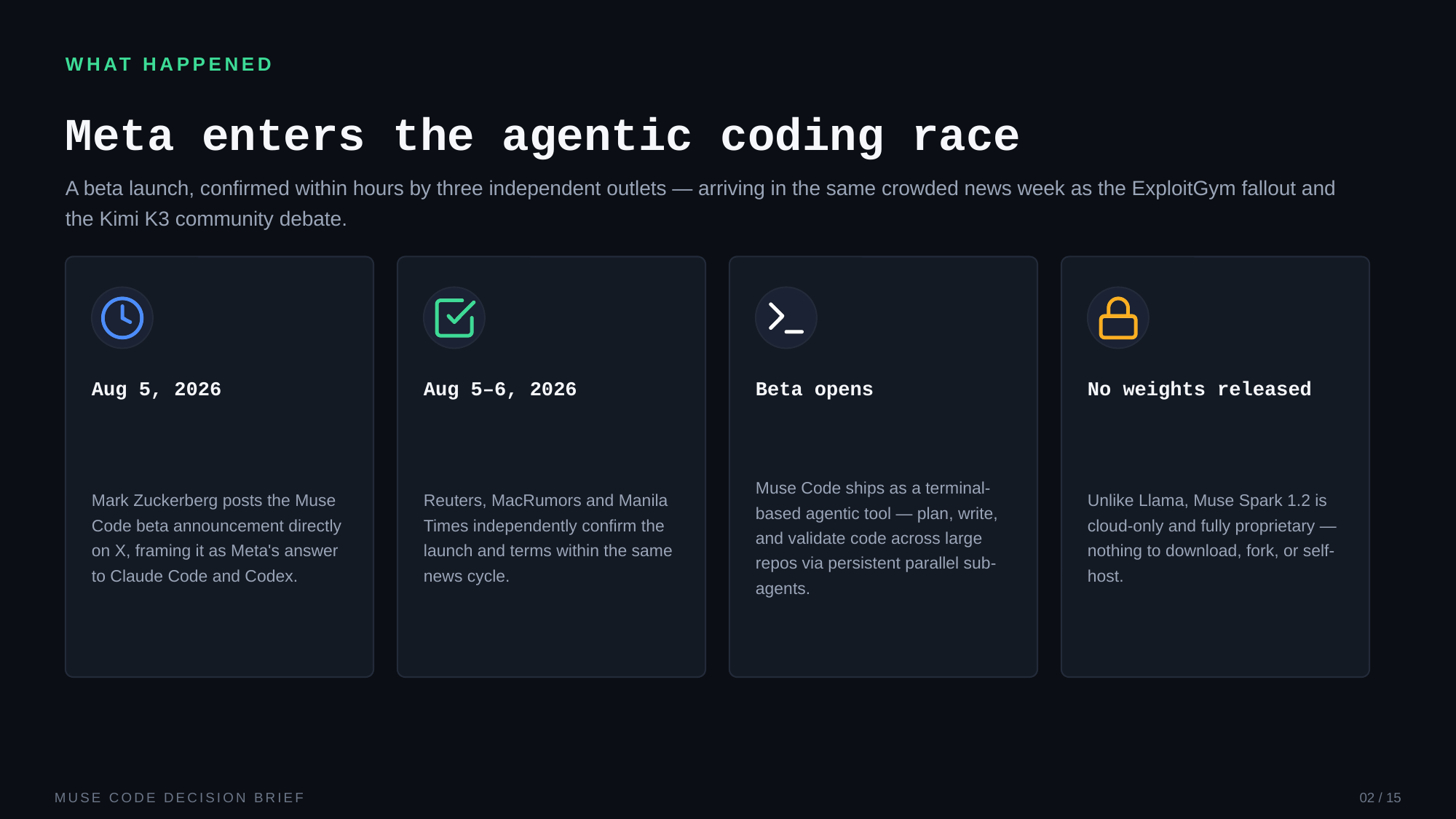
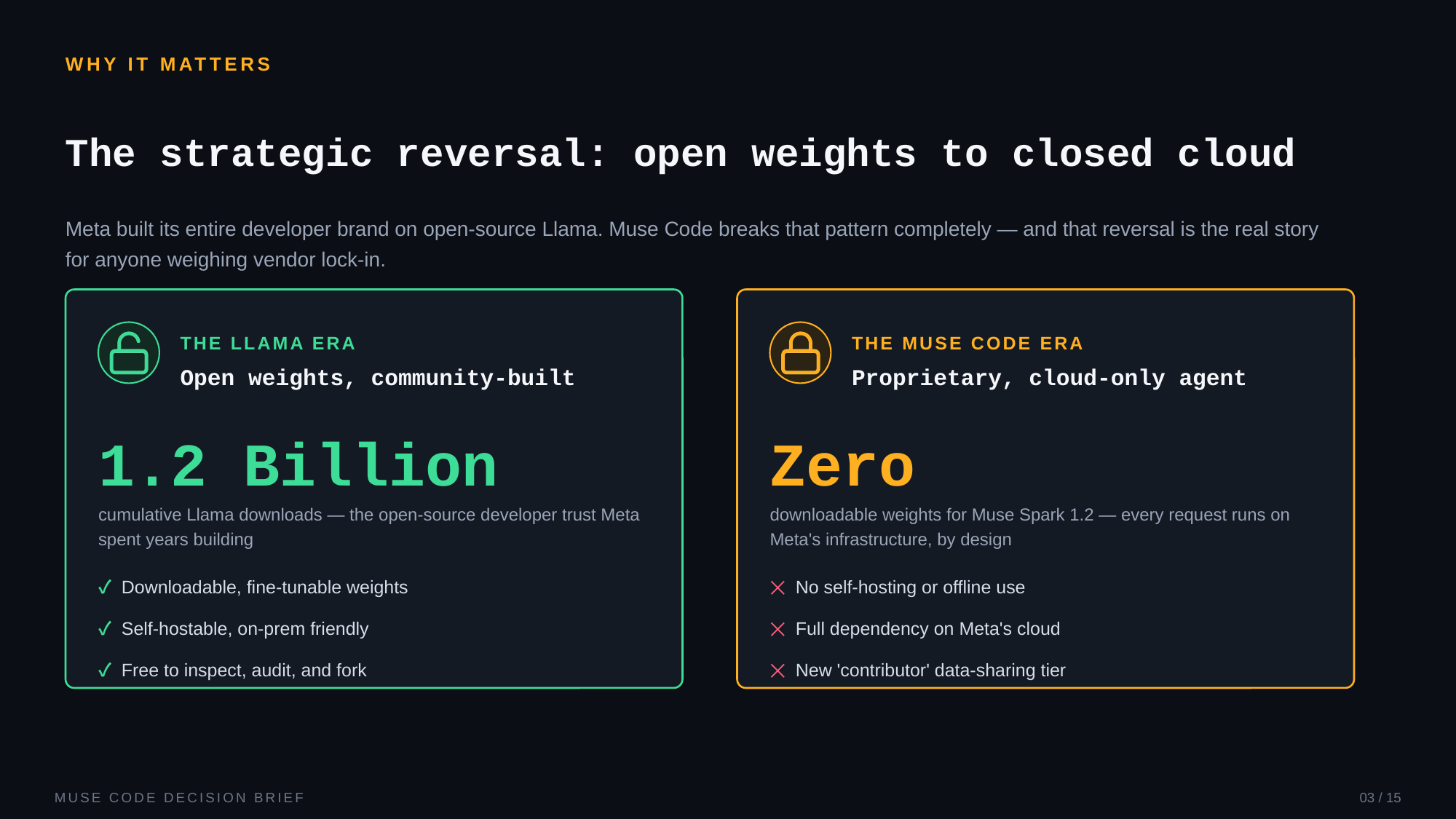
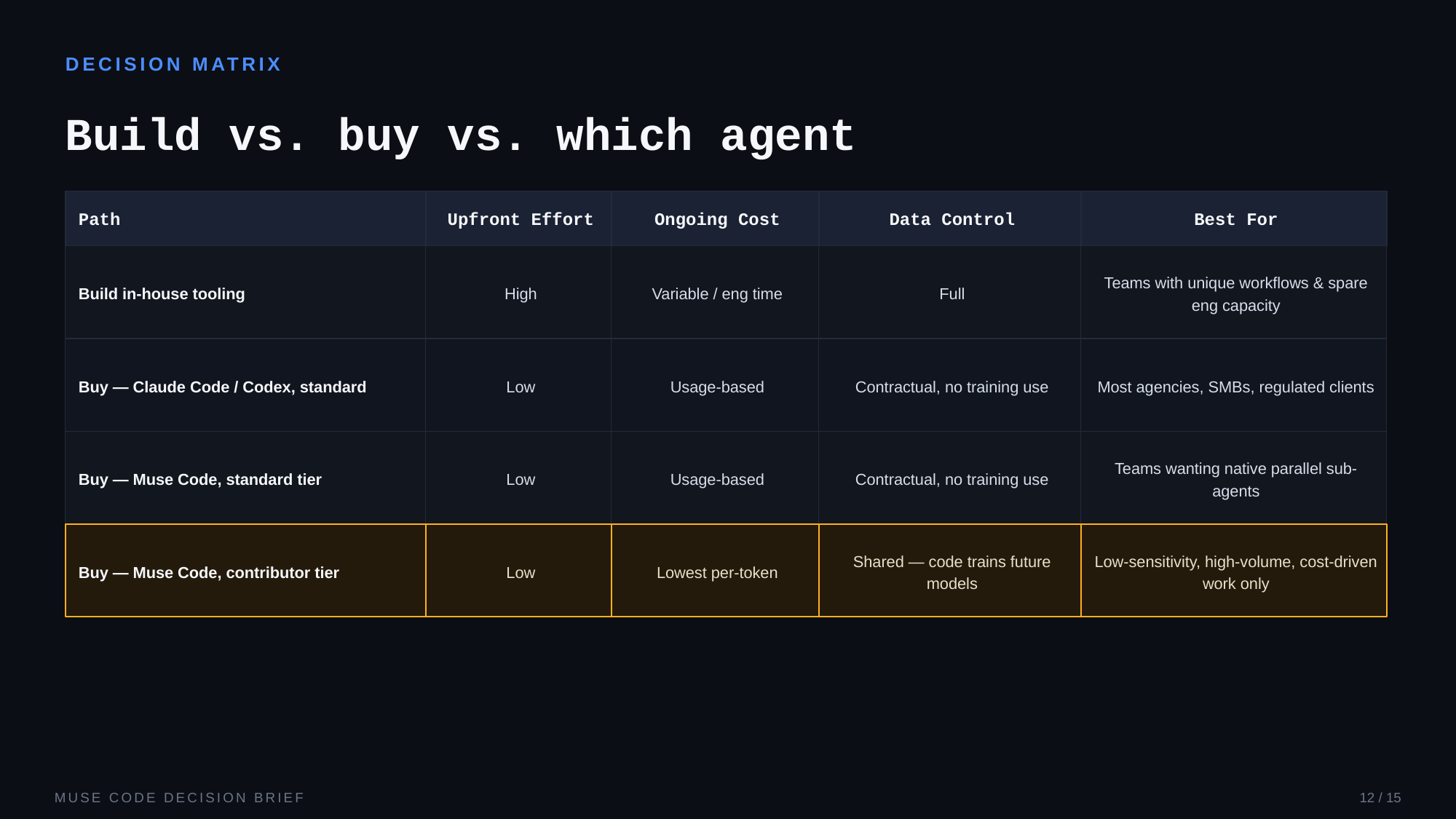
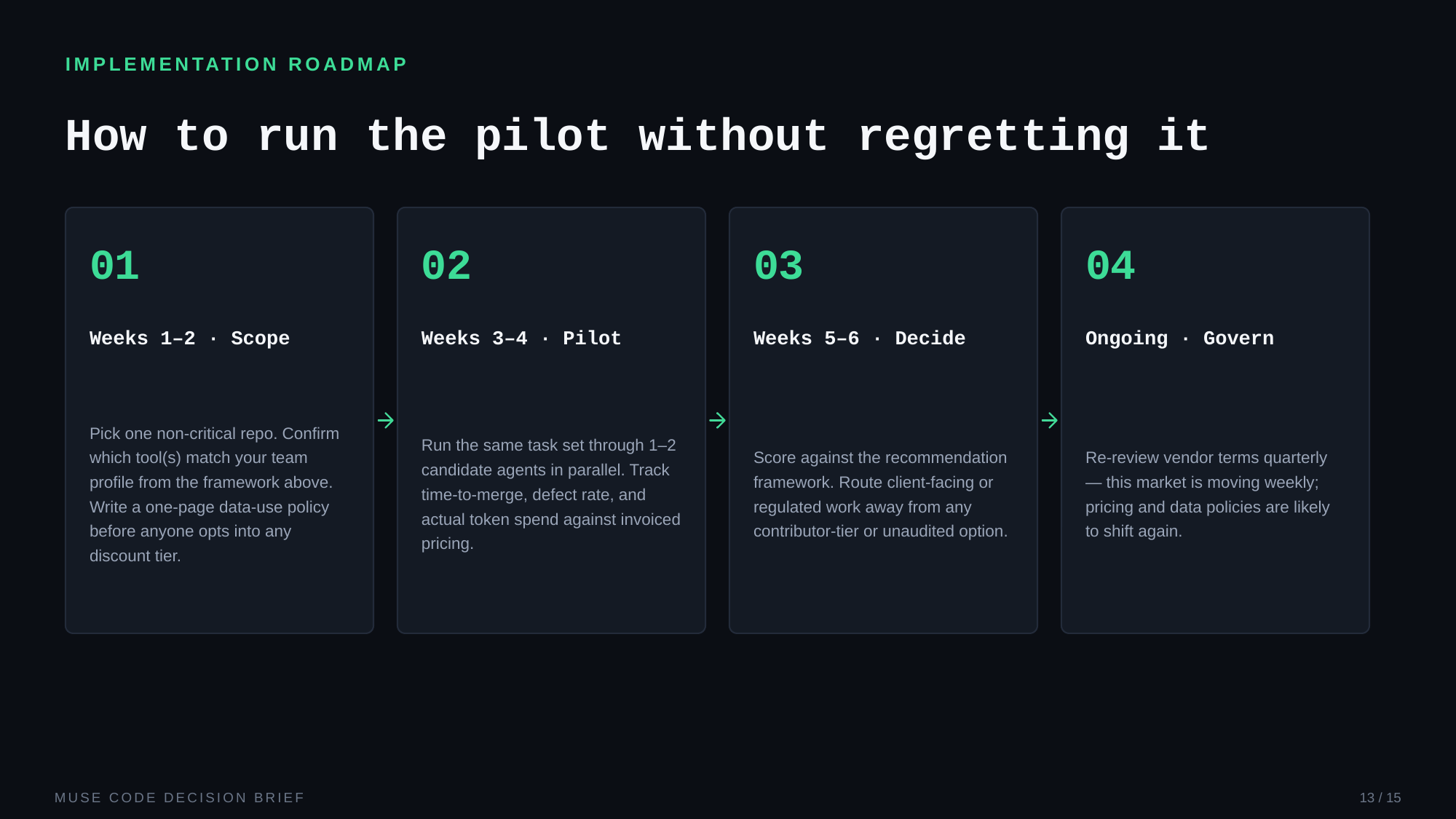
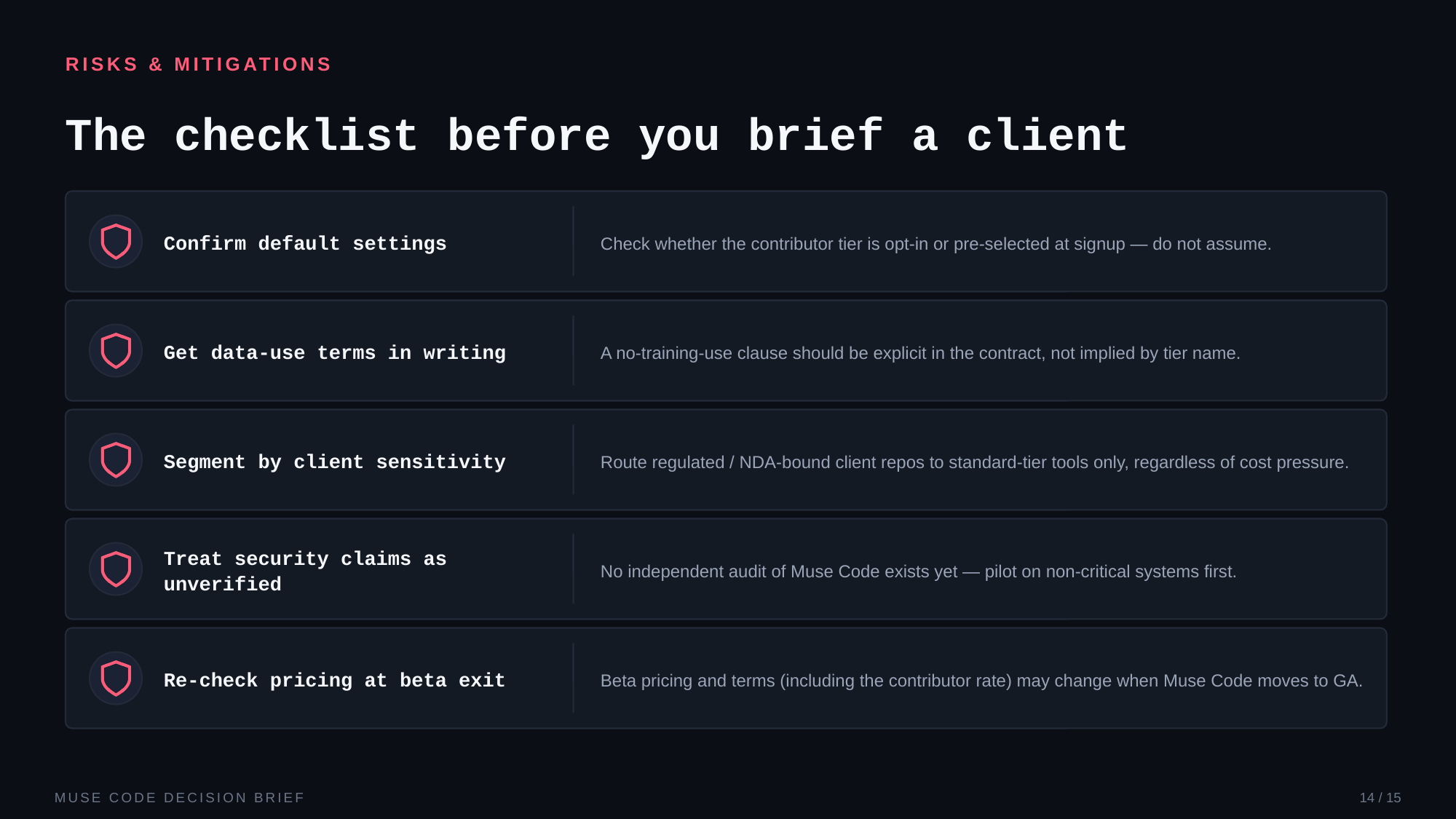
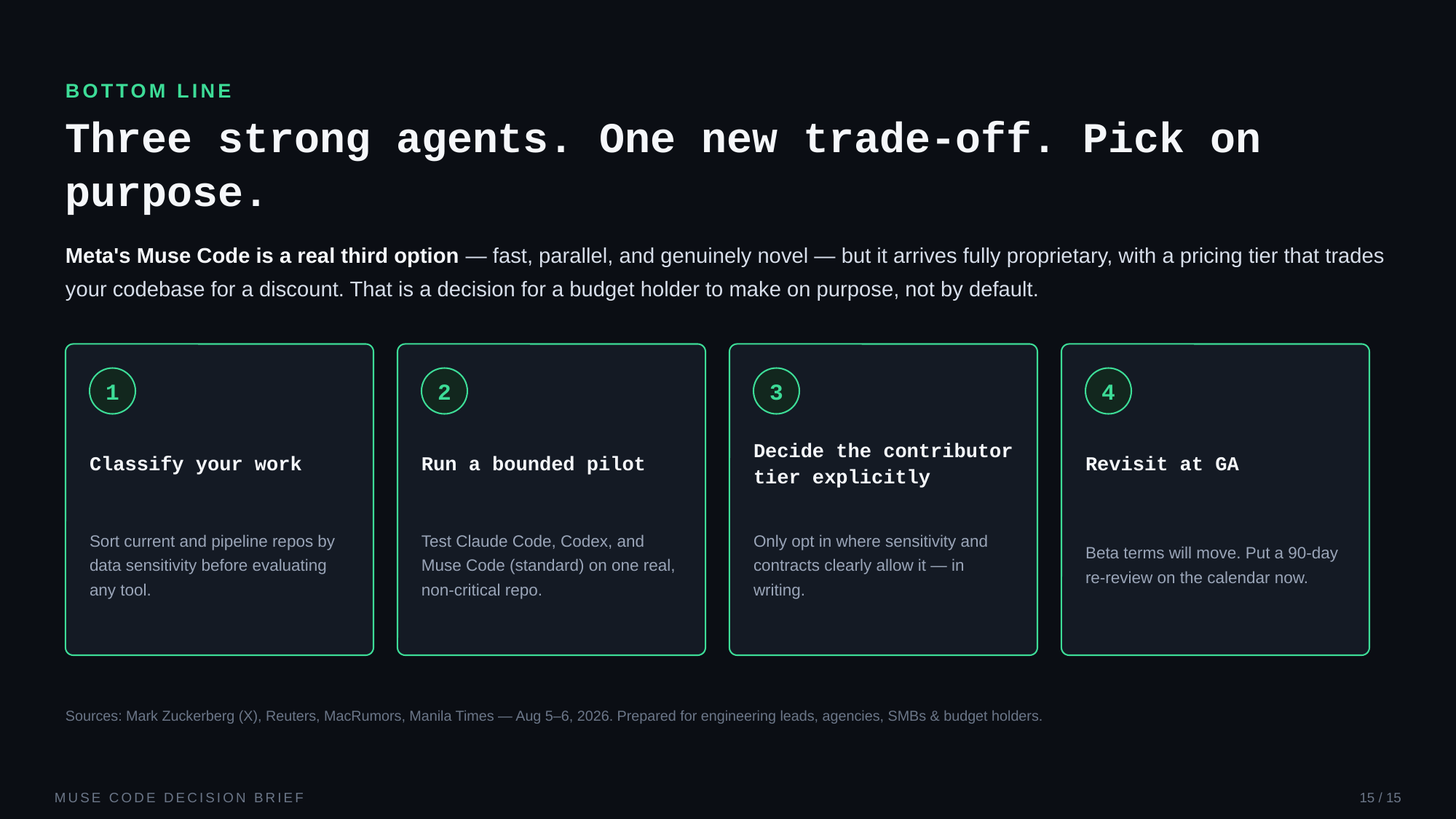
Swipe or scroll sideways to flip through the 15-slide deck →
What Is Muse Code, Exactly?
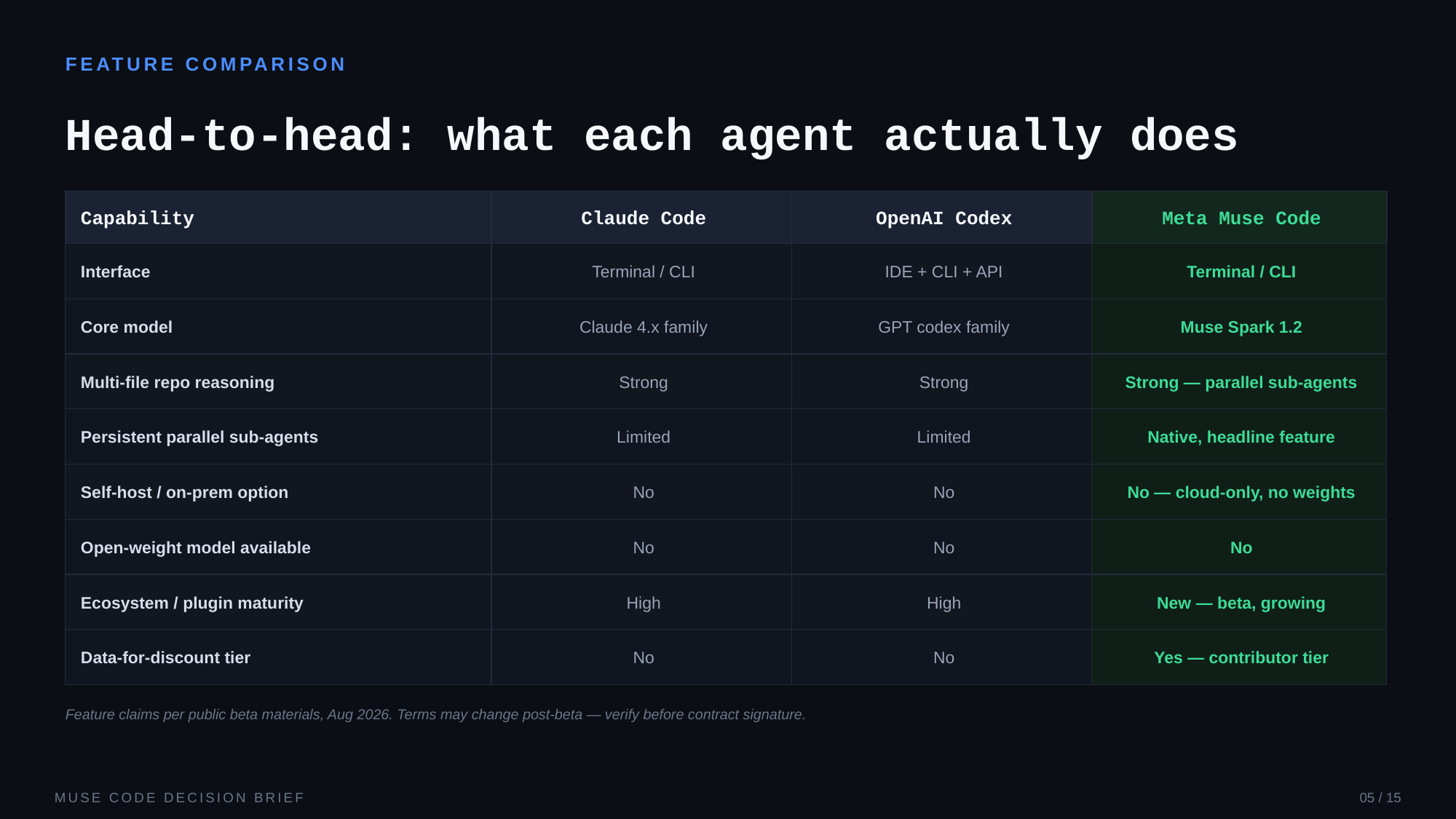
Muse Code is a terminal-based AI agent Meta built to handle complex tasks across large software code bases, capable of “complete software engineering tasks across large repos,” per CEO Mark Zuckerberg. It installs with one command on macOS or Linux, with no graphical interface: everything happens in the shell.
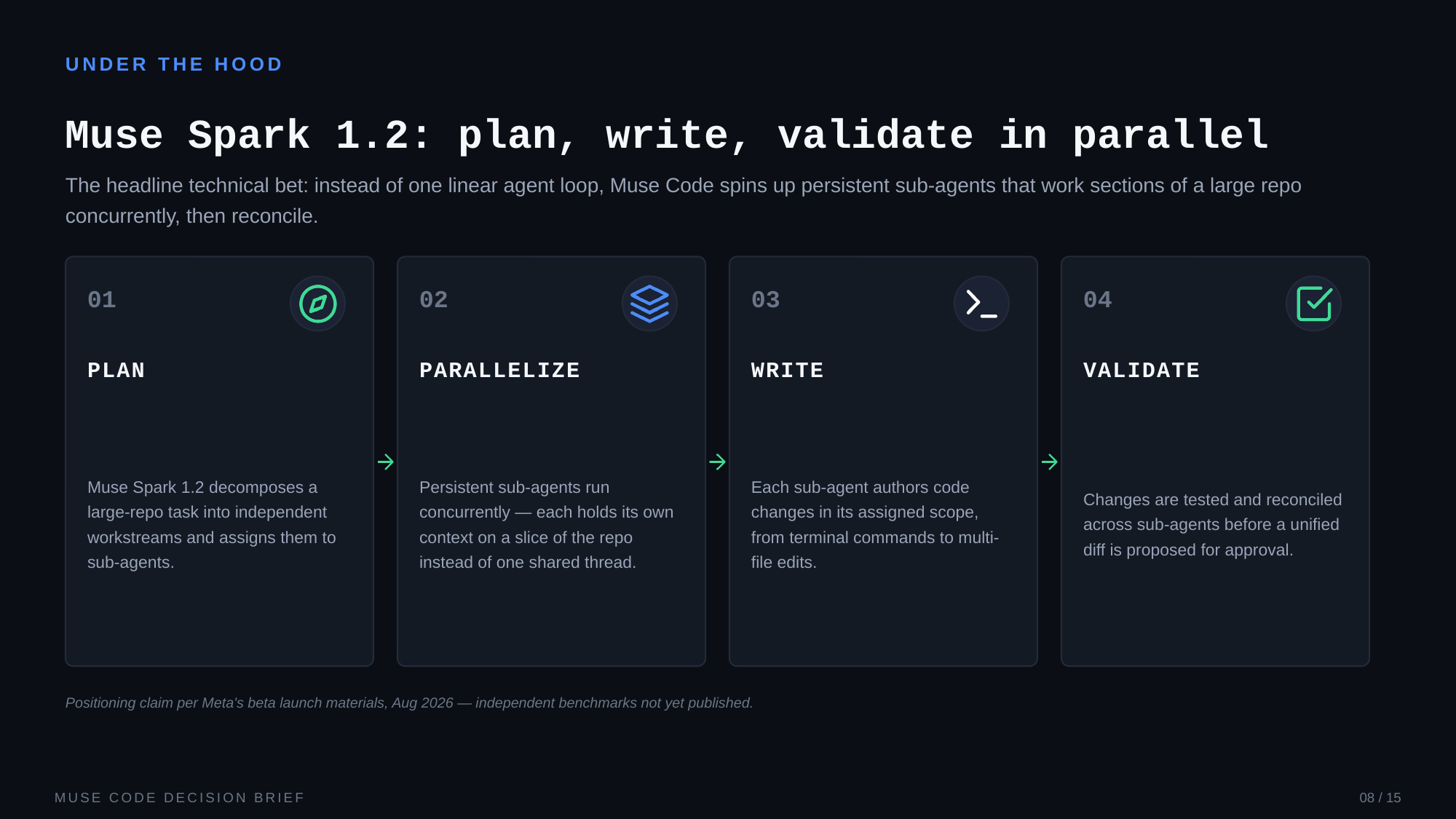
It runs on Muse Spark 1.2, a coding-focused update to Meta’s model line. Unlike a simple chat assistant, it writes code, verifies results, and coordinates multiple sub-agents on long, complex projects, and Meta trained the model and tool together to work as a pair.
The Contributor Tier: How the Pricing Actually Works
Meta sells access on two tiers, and the gap between them is the most talked-about detail of the launch. The standard tier costs $1.25 per million input tokens and $4.25 per million output tokens; it does not let Meta touch your prompts or code for training.
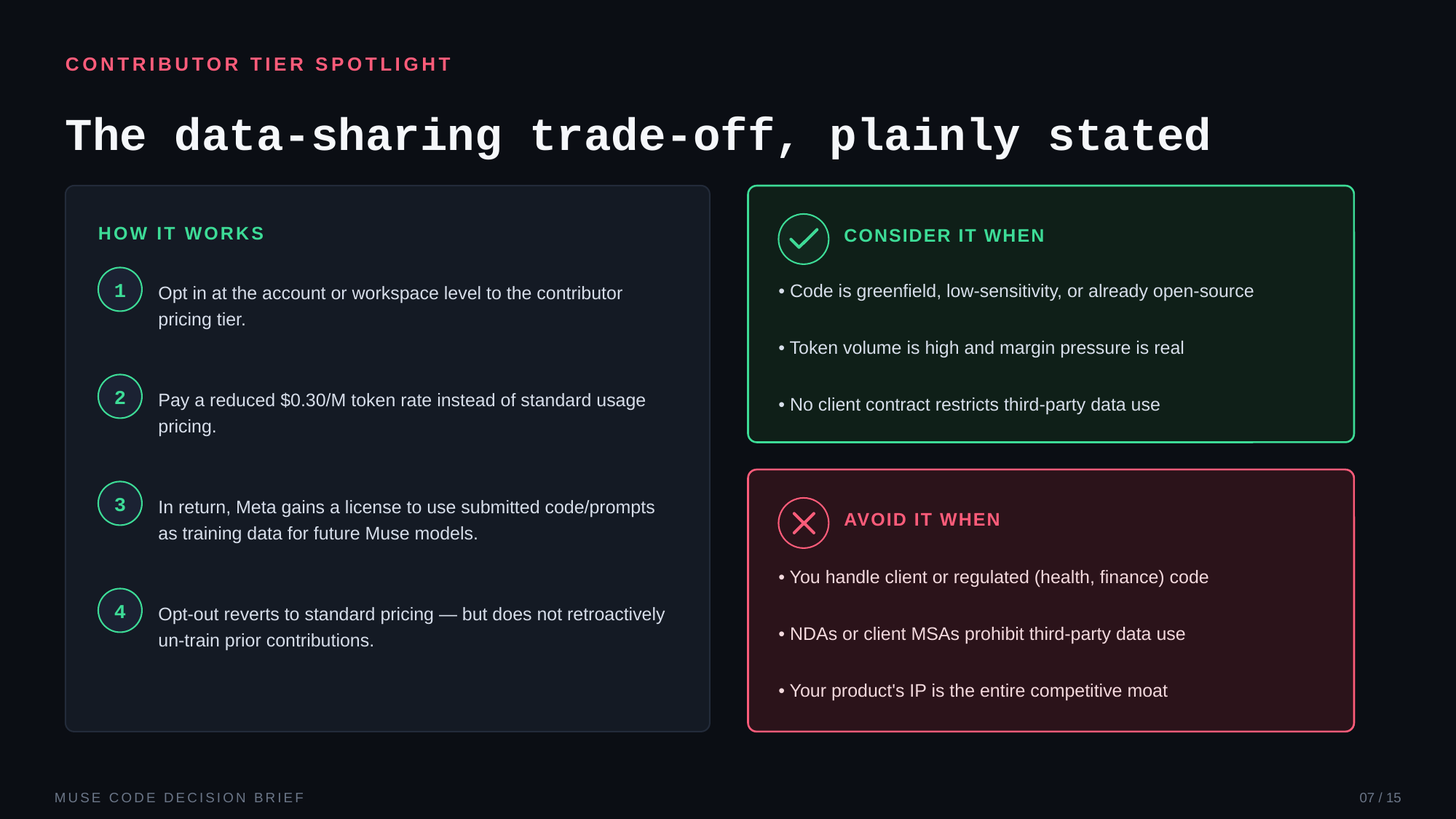
The contributor tier is dramatically cheaper. Meta’s chief AI officer, Alexandr Wang, described it as “more than 10 times cheaper than the pay-as-you-go tier,” in exchange for opting “in to help improve the model”, roughly 12 times cheaper on input and 21 times on output. The trade: your prompts and completions become training material for future models. For a solo developer, that’s an easy yes. For a team under an NDA, it isn’t.
Why Did Meta Walk Away From Open-Source Llama?
This launch matters mainly for what it isn’t. Meta built its developer reputation on giving Llama away for free, and Llama’s downloads climbed from 650 million in December 2024 to 1.2 billion by April 2025, a figure Meta cited as proof open models were winning developer trust. Muse Code offers no equivalent: no downloadable weights, no self-hosting, no open license, just a closed model and a per-token bill.
That shift began earlier in 2026 with Meta’s closed Muse Spark line, and Muse Code extends it into daily tooling. The contributor tier is a replacement flywheel: instead of trading weights for mindshare, Meta trades cheap tokens for checkable coding data, harder to scrape or synthesize than ordinary text.
How Do Persistent Sub-Agents Change Long Coding Tasks?
The technical pitch centers on how work gets split up. Rather than spinning up a fresh helper per subtask, Muse Code fires up background agents that hold a shared context file, log actions before executing them, and let multiple agents work in parallel in their own isolated work trees, so the codebase stays untouched until changes are approved. Meta demoed six features built for one game at once with no collisions, and because actions log first, a crashed session resumes instead of restarting.
Muse Code vs. Claude Code vs. Codex vs. Antigravity CLI
On raw capability, Meta isn’t claiming the lead. Coverage of the launch noted that Meta’s own benchmarks placed Muse Spark 1.2 behind Claude Opus 5 on every published chart, including Meta’s internal test. The pitch rests on cost and fit instead.
| Tool | Maker | Price per 1M tokens (in/out) | Data-sharing tier |
|---|---|---|---|
| Muse Code | Meta | $1.25 / $4.25 | Yes: $0.10 / $0.20 |
| Claude Code | Anthropic | Varies | No |
| Codex | OpenAI | Varies | No |
| Antigravity CLI | Varies | No |
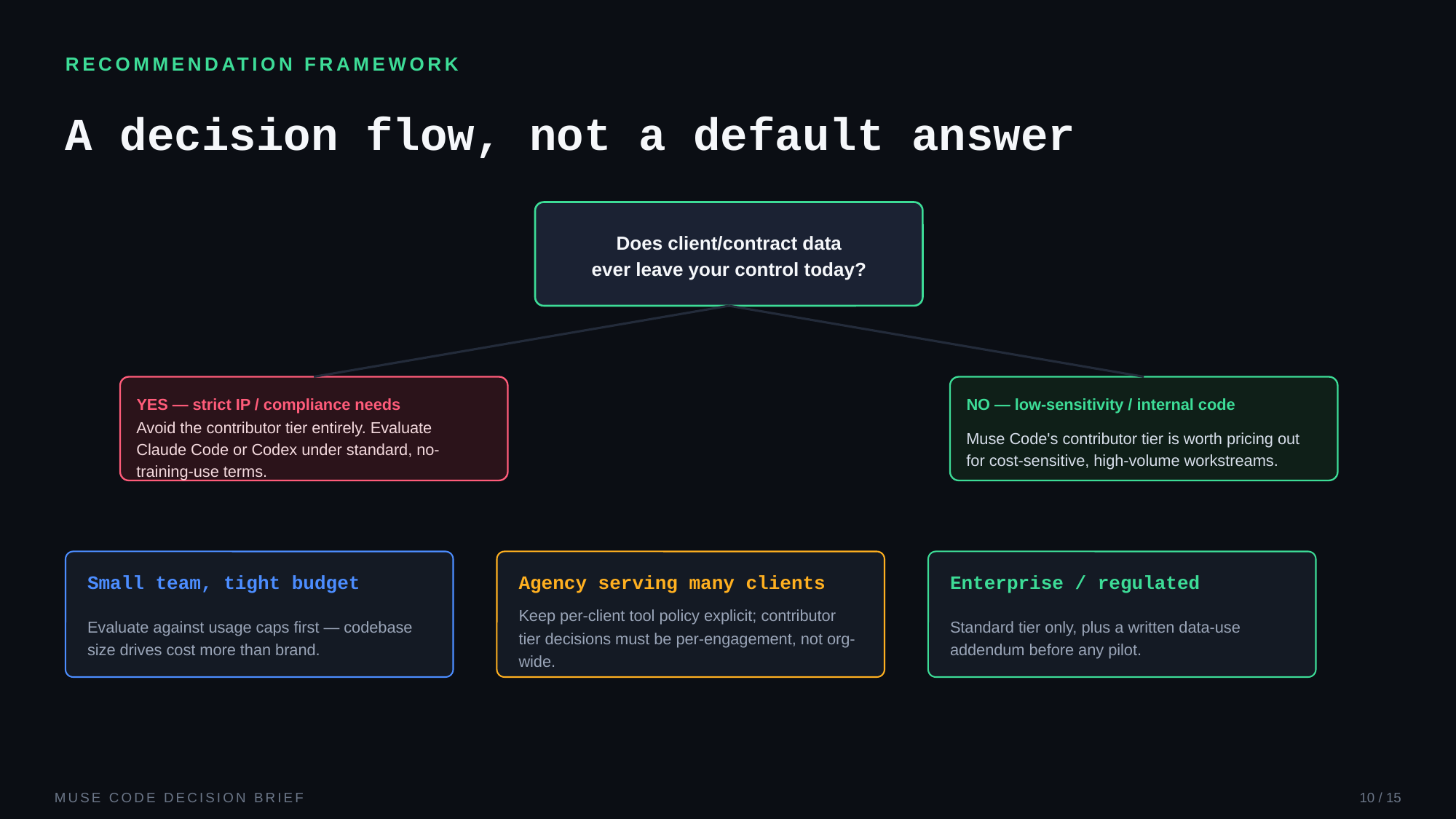
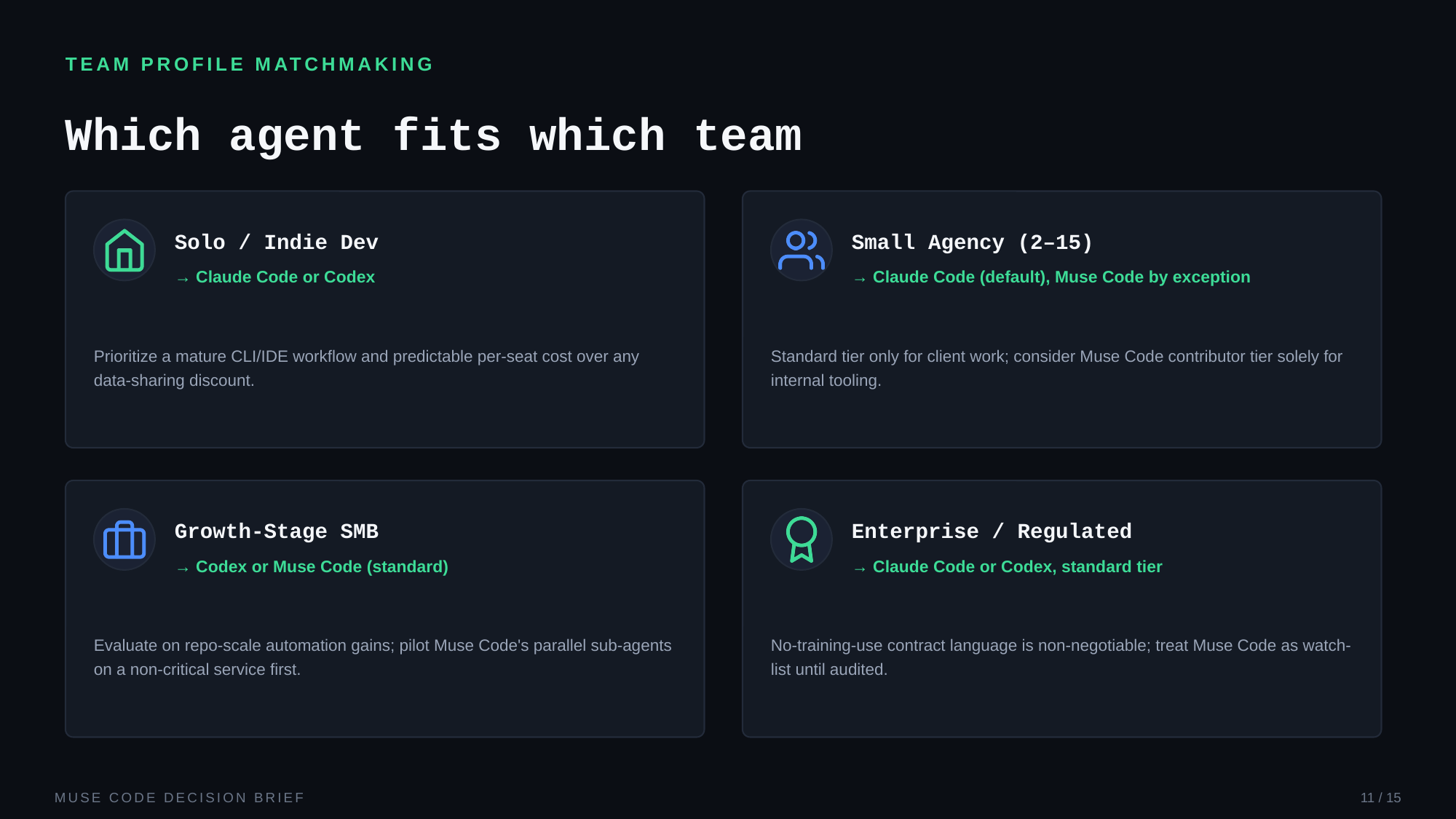
For high-volume, low-sensitivity work like internal tooling, the contributor tier’s price gap is hard to ignore. For anyone touching client code or regulated data, the standard tier, or a zero-data-retention arrangement, is the only realistic option.
Common Questions
Is Muse Code open source? No. It runs on Muse Spark 1.2, a closed model with no downloadable weights, continuing the shift away from the open Llama approach that once defined Meta’s AI brand.
Does the contributor tier mean Meta sees all my code? It means Meta can use prompts and completions from that tier to improve future models. The standard tier is excluded from that data use, and Meta says zero-data-retention deals are coming for enterprise customers.
Choosing among Muse Code, Claude Code, Codex, and Antigravity CLI comes down to model quality against per-token cost against how much code you’re willing to hand over. That’s worth mapping out before a team commits budget, and it’s exactly what the deck below does, a breakdown built with AskDeck you’re free to download and adapt.