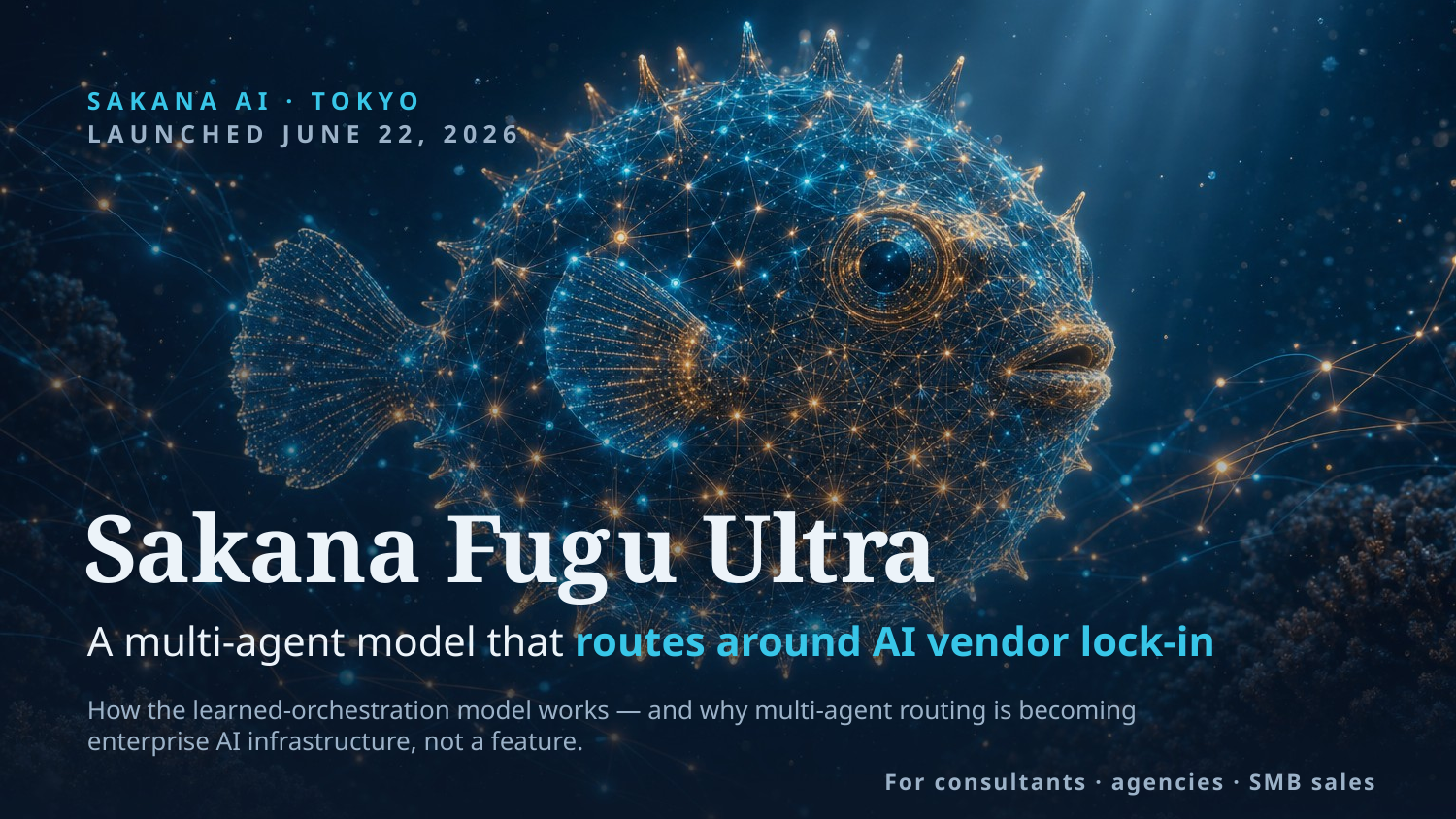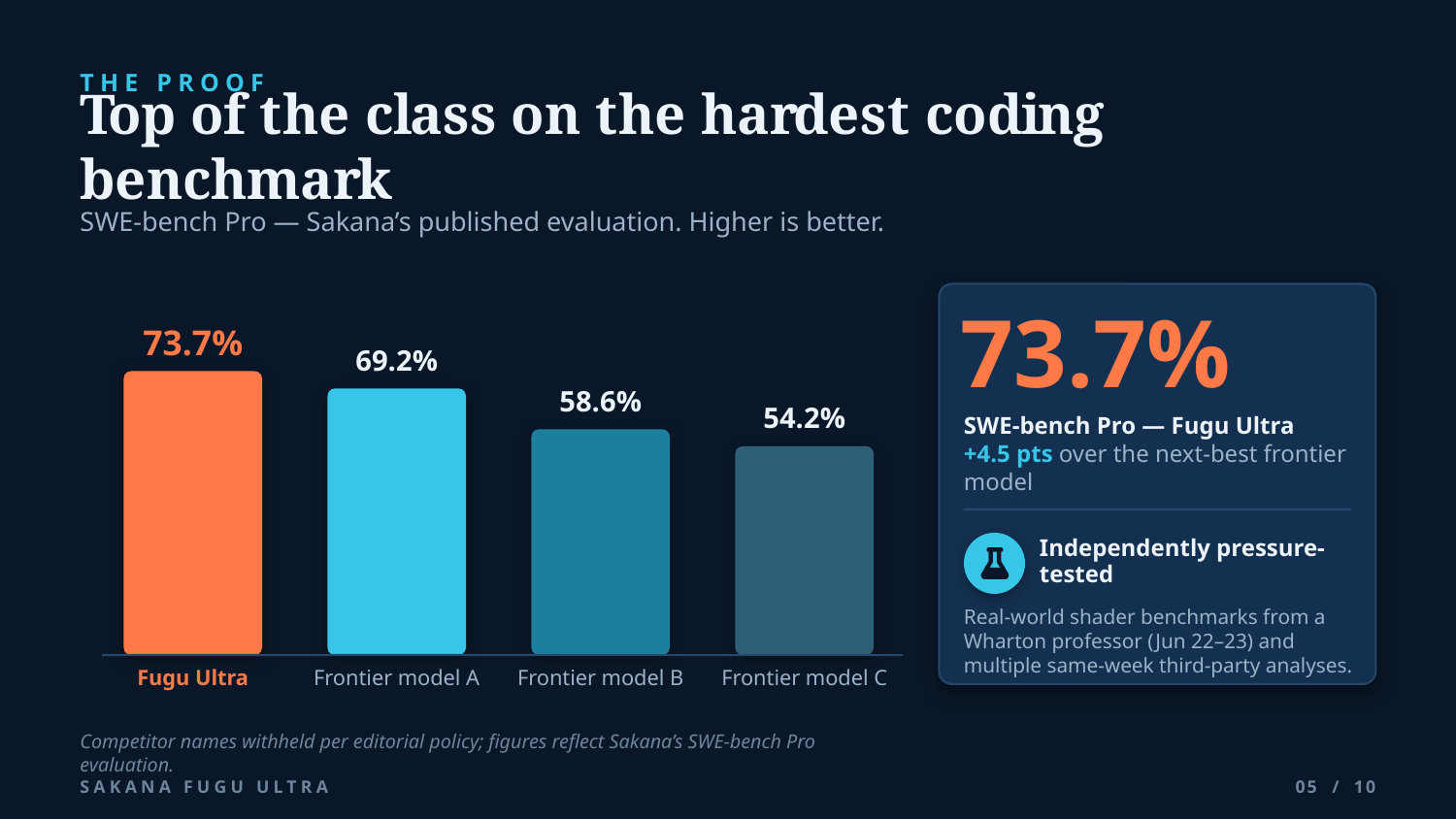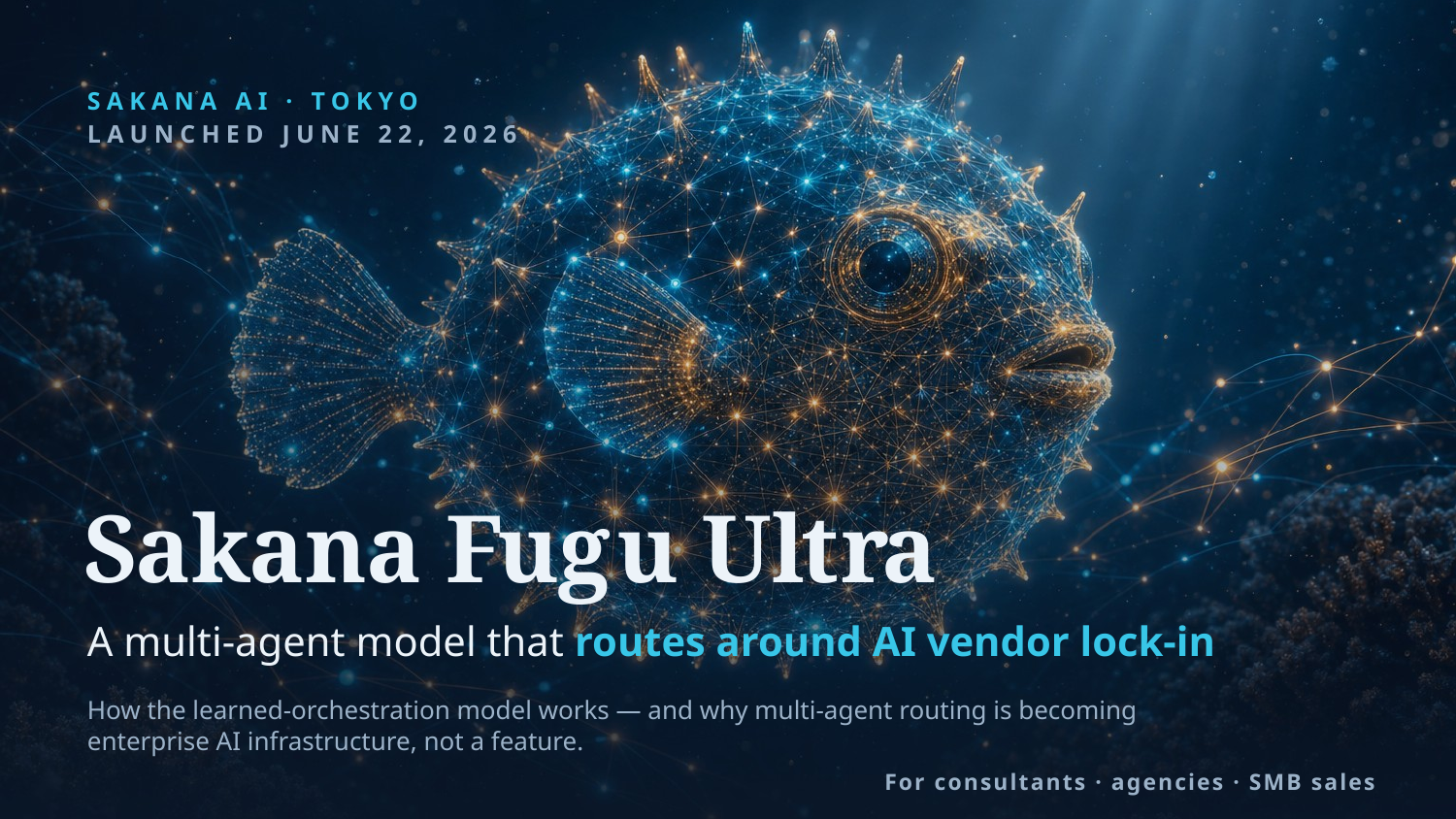
For a few years, AI progress meant one thing: make the model bigger, train it on more data, ship it. A competing idea is now being framed as the next frontier, and it changes both the economics of running AI and the risk of building your business on it. Instead of one enormous model answering everything, a learned routing layer sits above a pool of models and decides, task by task, which model (or which team of models) should do the work. On June 22, 2026, a Tokyo AI lab shipped a production version of this idea: a system that looks to your code like a single model behind one API, but internally selects, delegates to, verifies, and combines the output of several frontier models. Its quality-first variant reports 73.7% on a demanding real-world software-engineering benchmark, ahead of three leading frontier models scoring 69.2%, 58.6%, and 54.2%. The promise attached to it is blunt: if any one provider’s access disappears, the router works around it.
Why “orchestration” is edging out “bigger” as the frontier
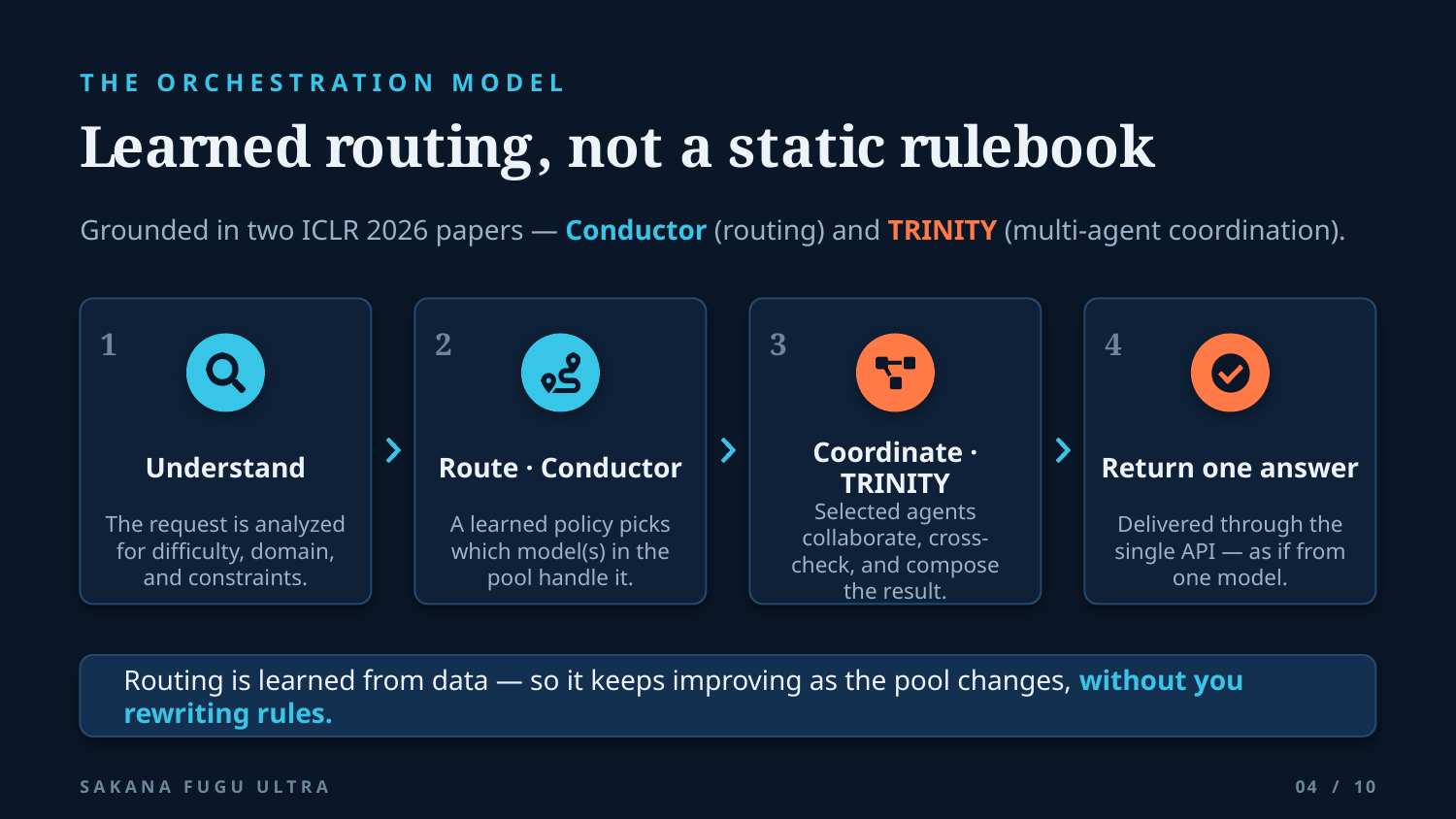
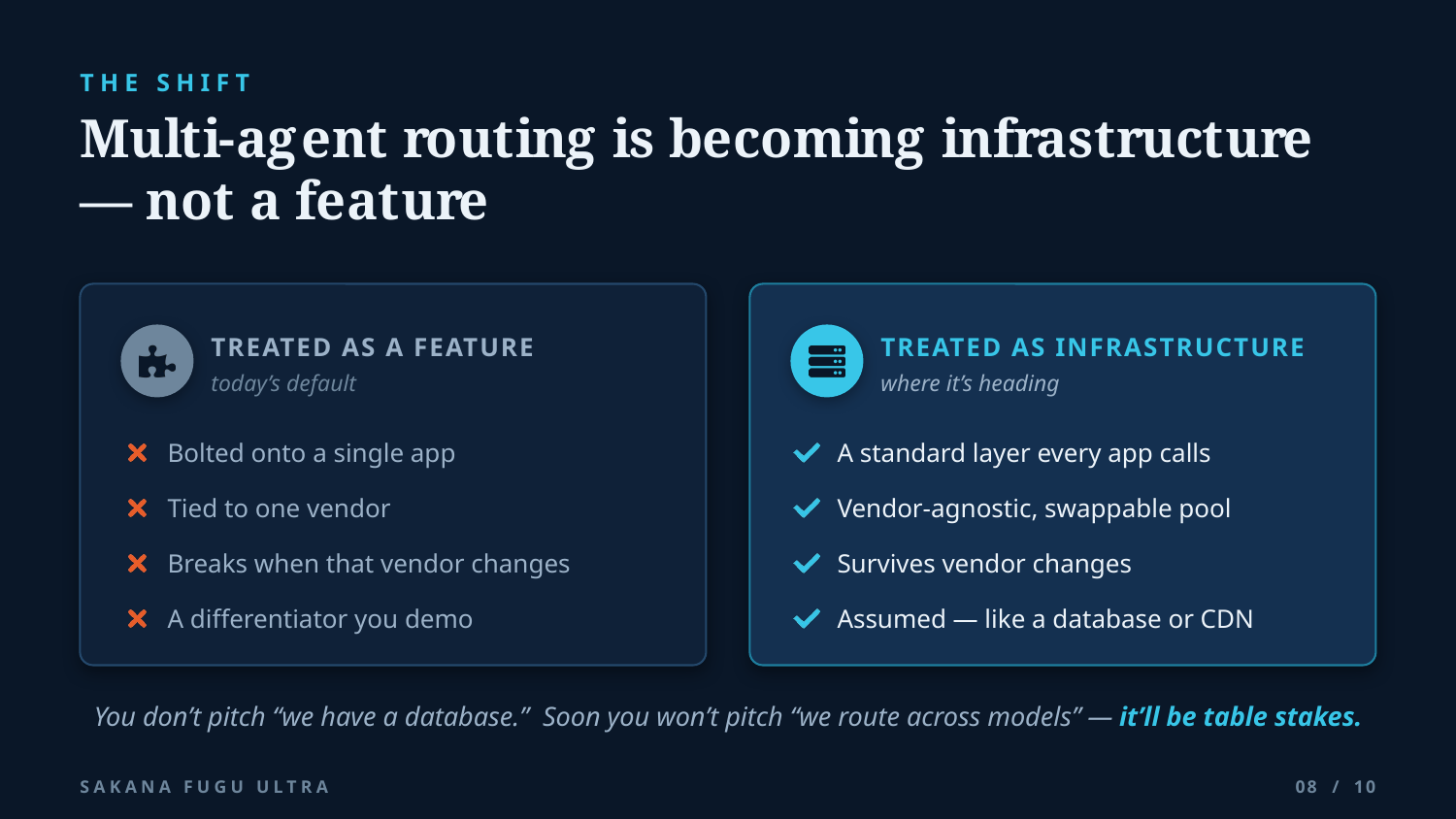
Hard, real-world tasks rarely reward a single model call. They need planning, execution, checking, and a mix of strengths: one model writes better code, another handles long-context reasoning, another is stronger at math. An orchestration model treats “which model, and when” as a skill to be learned rather than a rule tree to hand-write. The coordinator is itself a language model, trained to decide when it can answer directly, when to delegate, how the sub-models should talk to each other, and how to merge their work into one reliable answer. The design builds on two 2026 peer-reviewed papers on learned orchestration: one on evolving a coordinator, one on directing agents in plain language. The example deck embedded below walks through this same shift and was generated by AskDeck from a short brief.
What the architecture actually does
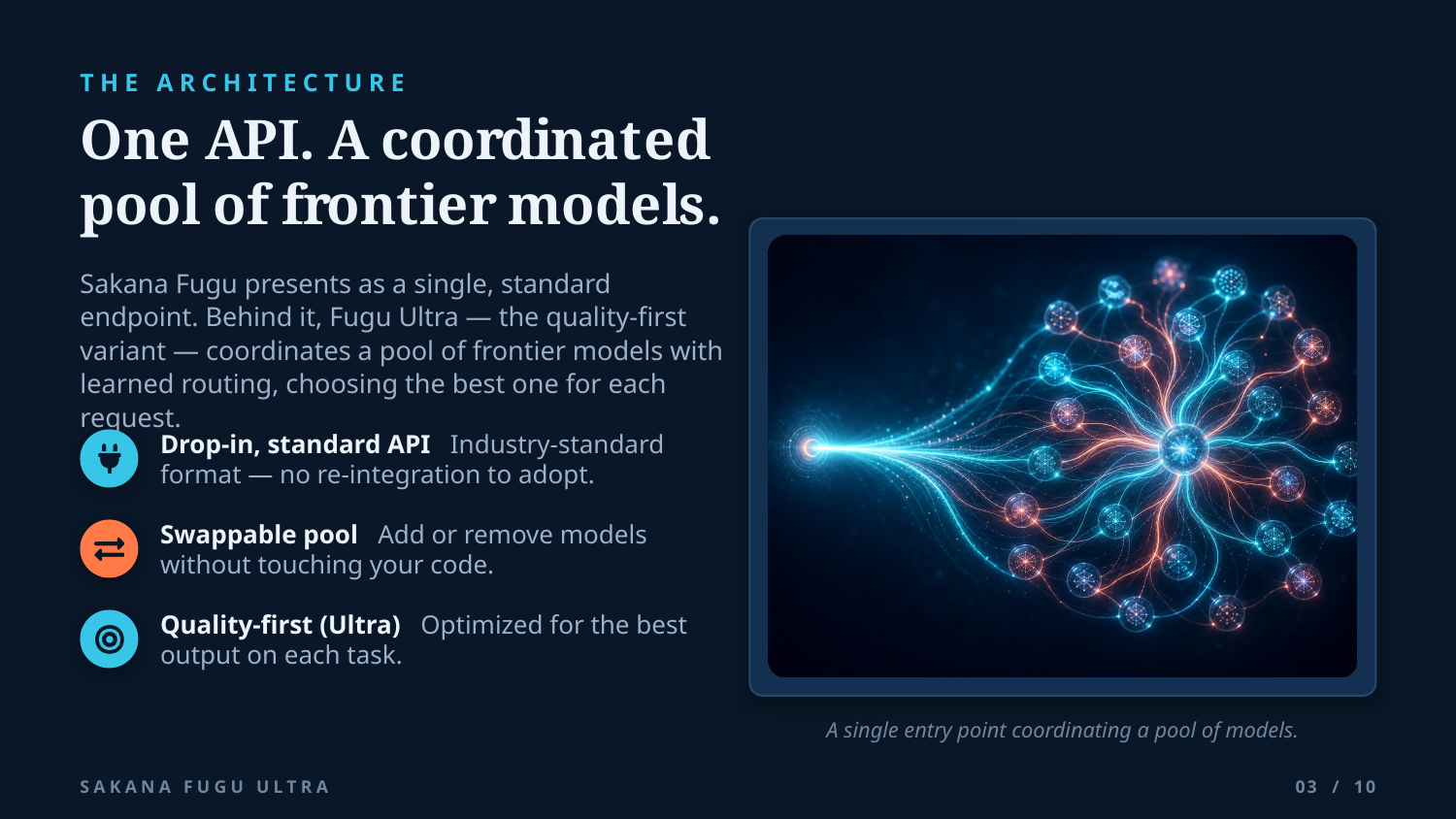
You send a request to one endpoint. For a simple prompt, the system answers directly with a fast model. For a long, multi-step problem, it assembles a team from a pool of expert models, can call copies of itself recursively, and handles model selection, delegation, verification, and synthesis internally, so none of that plumbing reaches your code. It ships in two forms: a balanced, low-latency default for everyday work, and a quality-first variant that coordinates a deeper pool when accuracy matters most. Teams with privacy or compliance limits can opt specific models out of the pool.
What it means for token costs
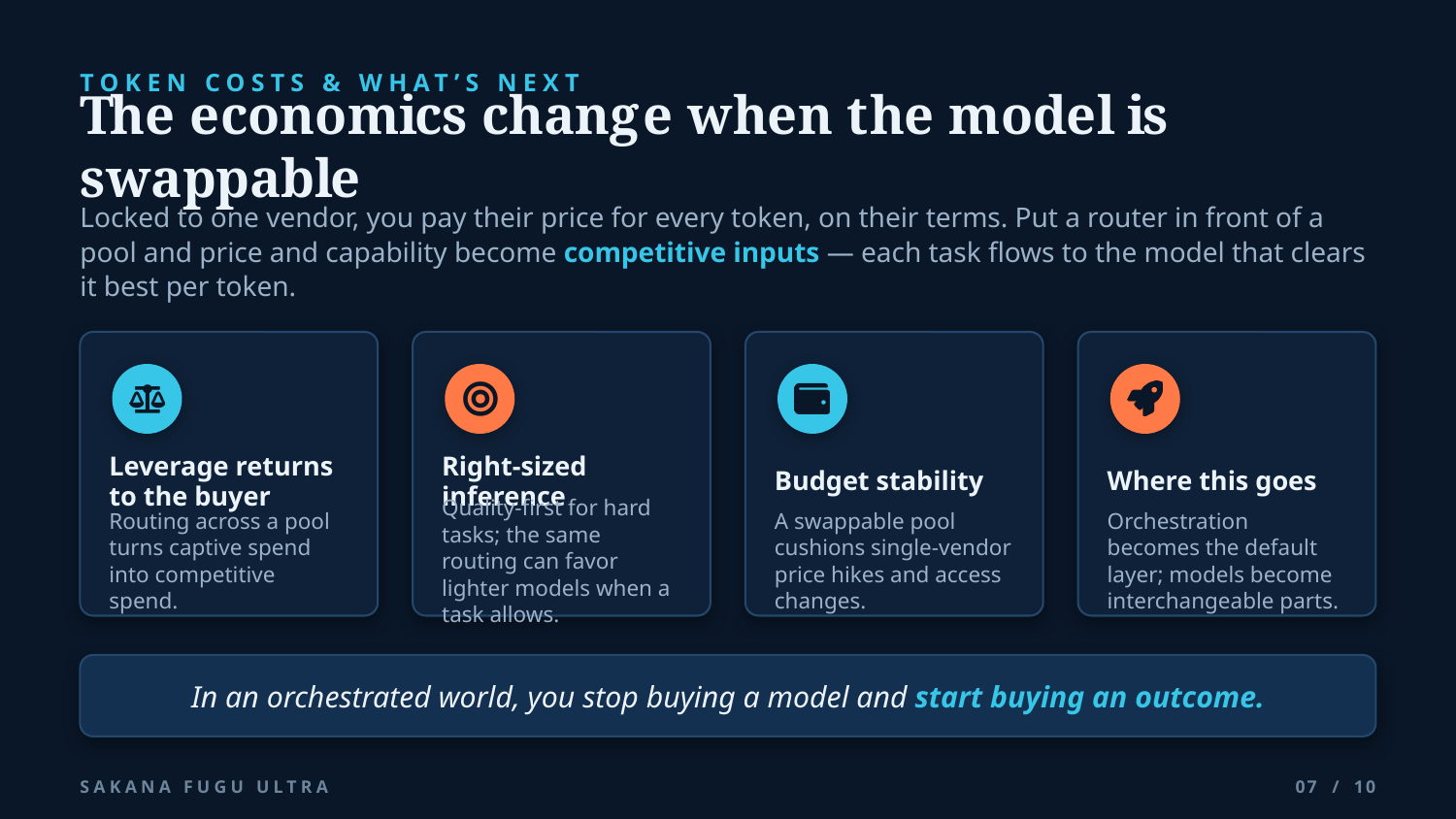
Routing rewrites the bill in both directions. Sending routine requests to cheaper models and reserving top-tier ones for the prompts that need them is the single biggest lever on AI spend; industry analyses put the savings at roughly 40% to 90%, since 60-85% of typical requests are routine enough for a budget model. Hard problems cut the other way: agentic and multi-agent runs can burn five to thirty times the tokens of a single chat turn, with complex jobs passing a million. That is the point of a quality-first mode: you buy sustained multi-step reliability, not the lowest token count. A hierarchical setup, with budget models doing the sub-work under a capable coordinator, has reached most of full-frontier accuracy at a fraction of the cost, which is why “quality-first” and “cost-first” are becoming separate modes rather than one dial.
Why vendor lock-in became a board-level question
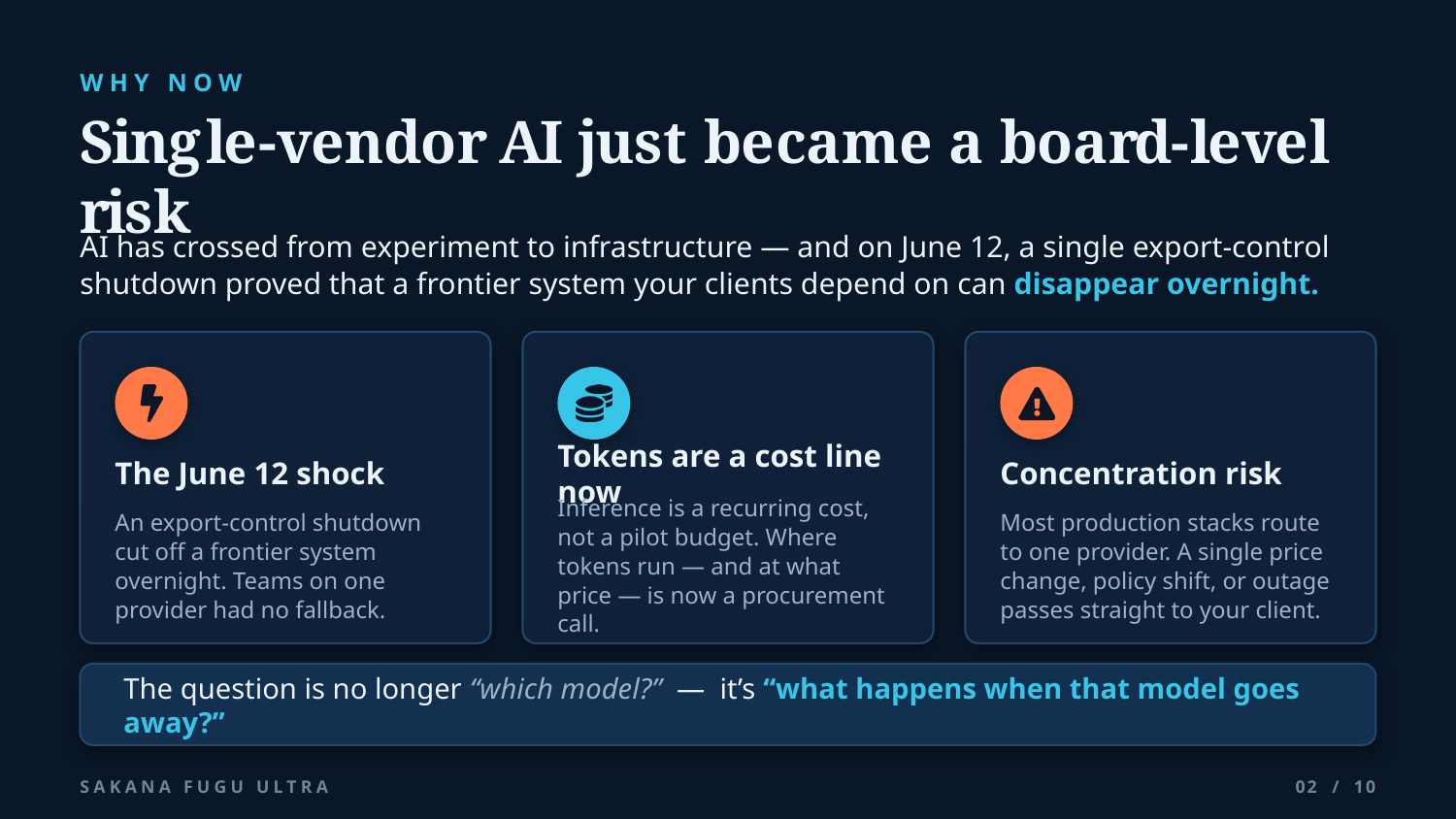
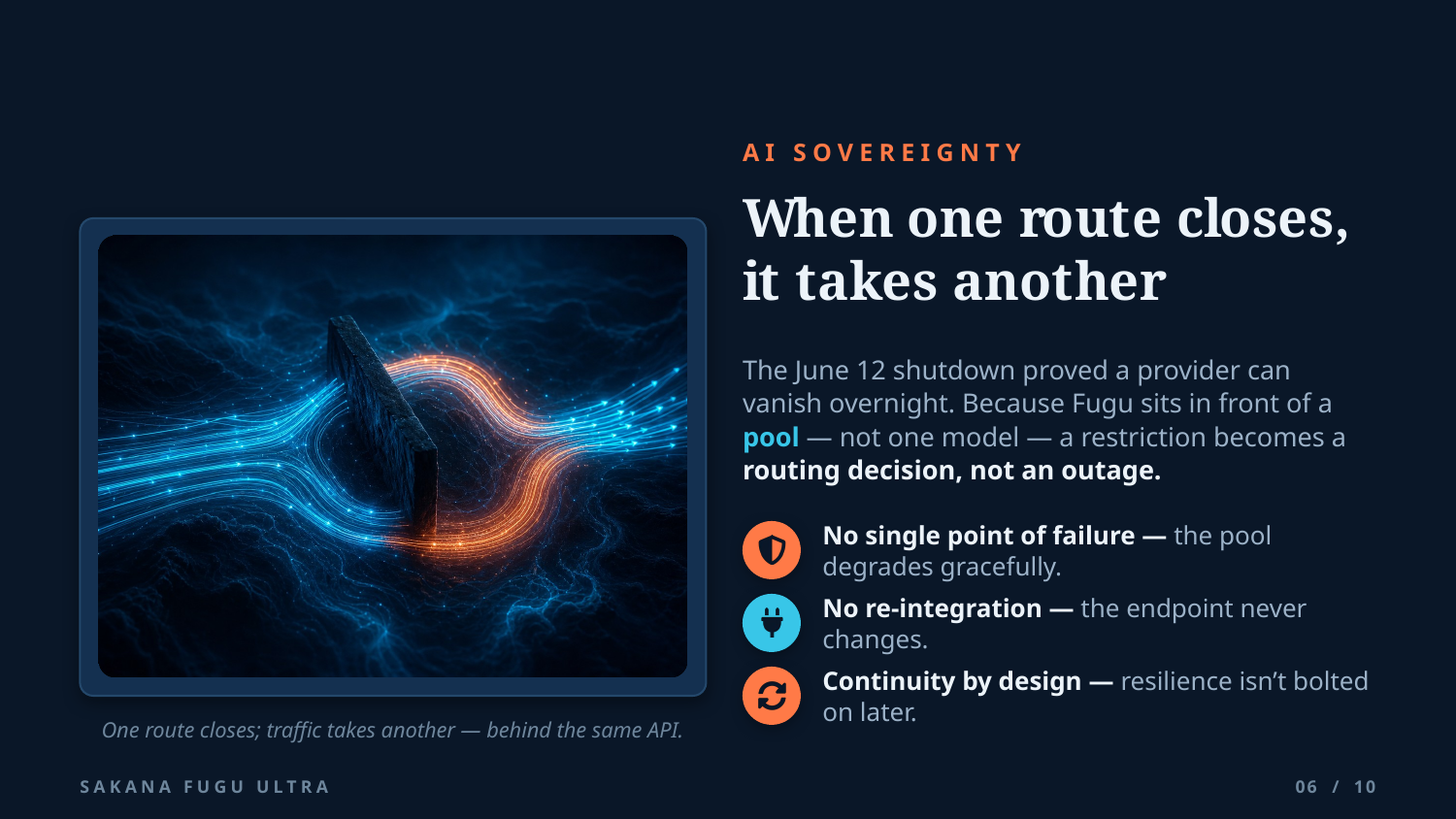
This stopped being hypothetical on June 12, 2026, when export controls abruptly cut off access to two frontier models. If your product, your support desk, or your internal tooling runs on one company’s API, a regulatory change or export restriction can take it offline overnight. With enterprise model-API spend already past $8.4 billion in 2025, concentrating critical workloads on a single provider is a real dependency, the same reasoning that pushes companies to second-source hardware. An orchestration layer with a swappable pool is one hedge: no single model is load-bearing, and a banned or throttled one can be routed around. Where export rules touch your own use, confirm the specifics with a qualified trade-compliance expert.
Is a multi-agent system less reliable than one model?
Not necessarily. In a roughly 500-user beta, the strongest results came from long, messy workflows (automated research, paper reproduction, security assessments, code review, and patent searches) where the system read, implemented, tested, compared evidence, and revised across many steps. Users reported it surfaced more bugs than a single model and held a stable persona over long sessions.
How is this different from wiring up several models myself?
The routing is learned by a model rather than encoded as static if-then rules, and the whole pool is exposed as one endpoint. You skip building and maintaining your own orchestration, retries, and failover, and you get automatic fallback when a provider degrades or a model becomes unavailable.
What does “AI sovereignty” mean here?
It is the ability to keep operating regardless of any single vendor’s or country’s access rules, by owning the routing layer and keeping the underlying model pool interchangeable.
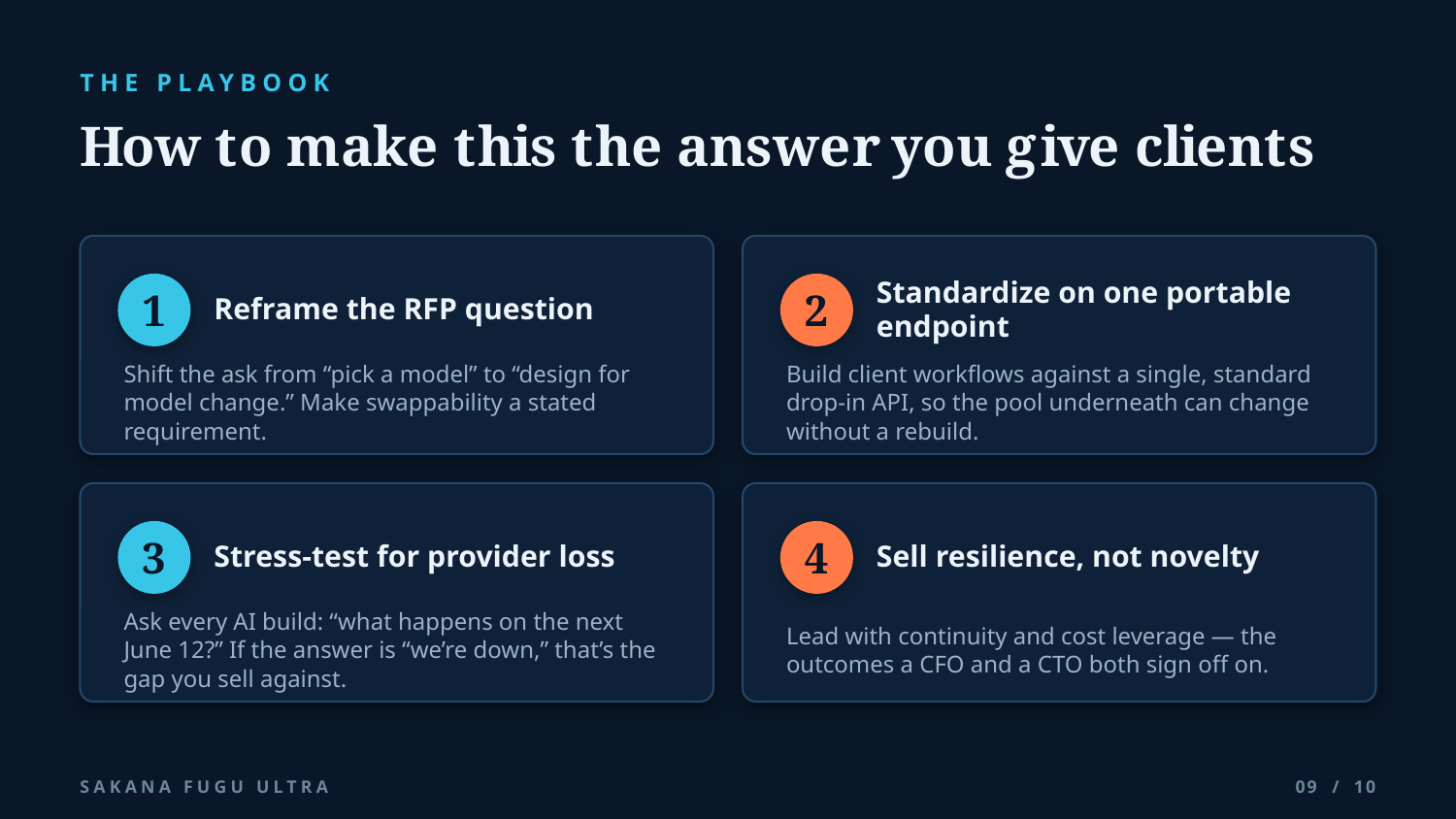
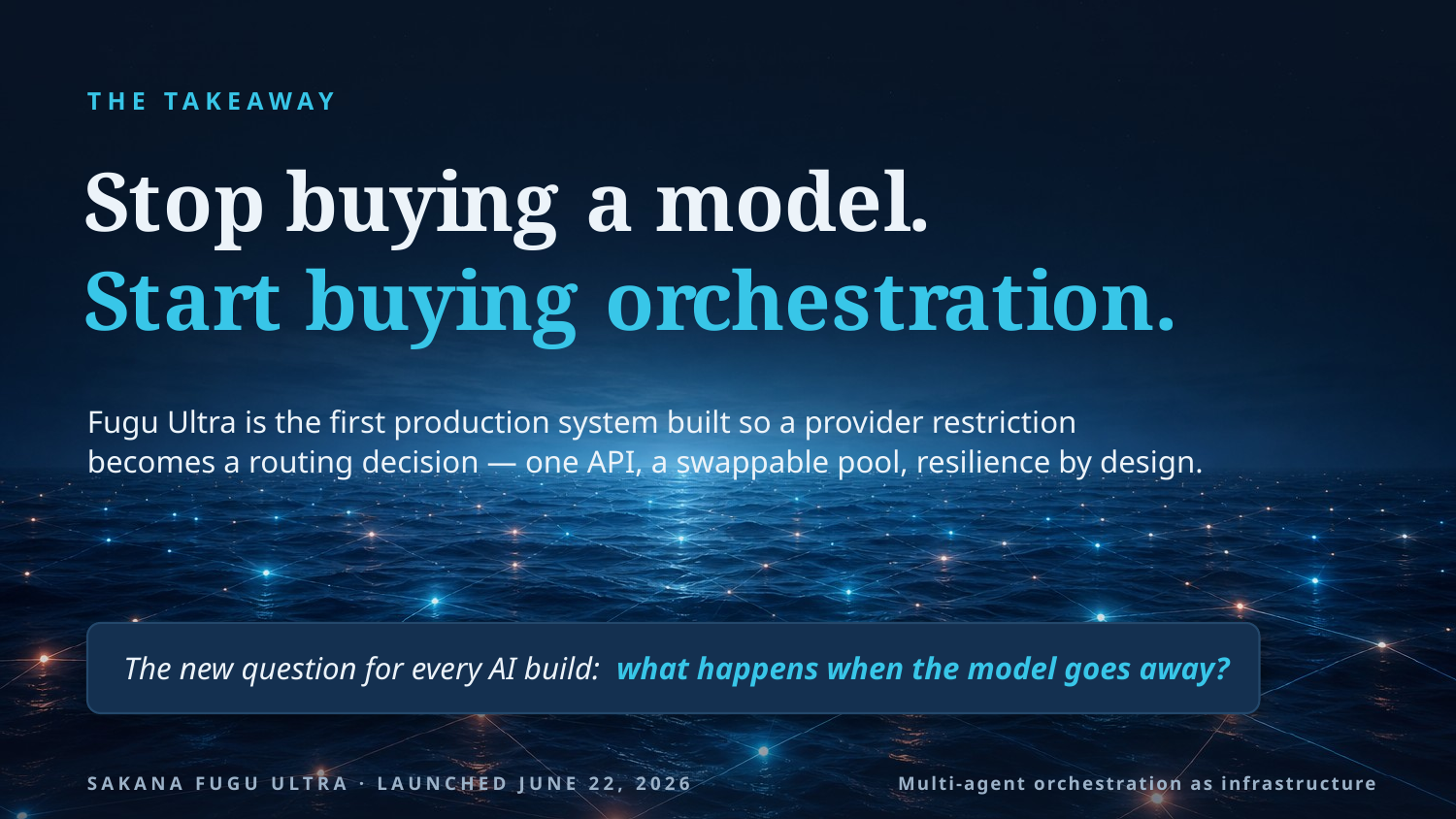
The example deck below was built with AskDeck from a brief on this topic, and it is yours to download and edit into your team’s own version. If you want a clear starting point on model orchestration, it is a fast way to begin.
See the deck