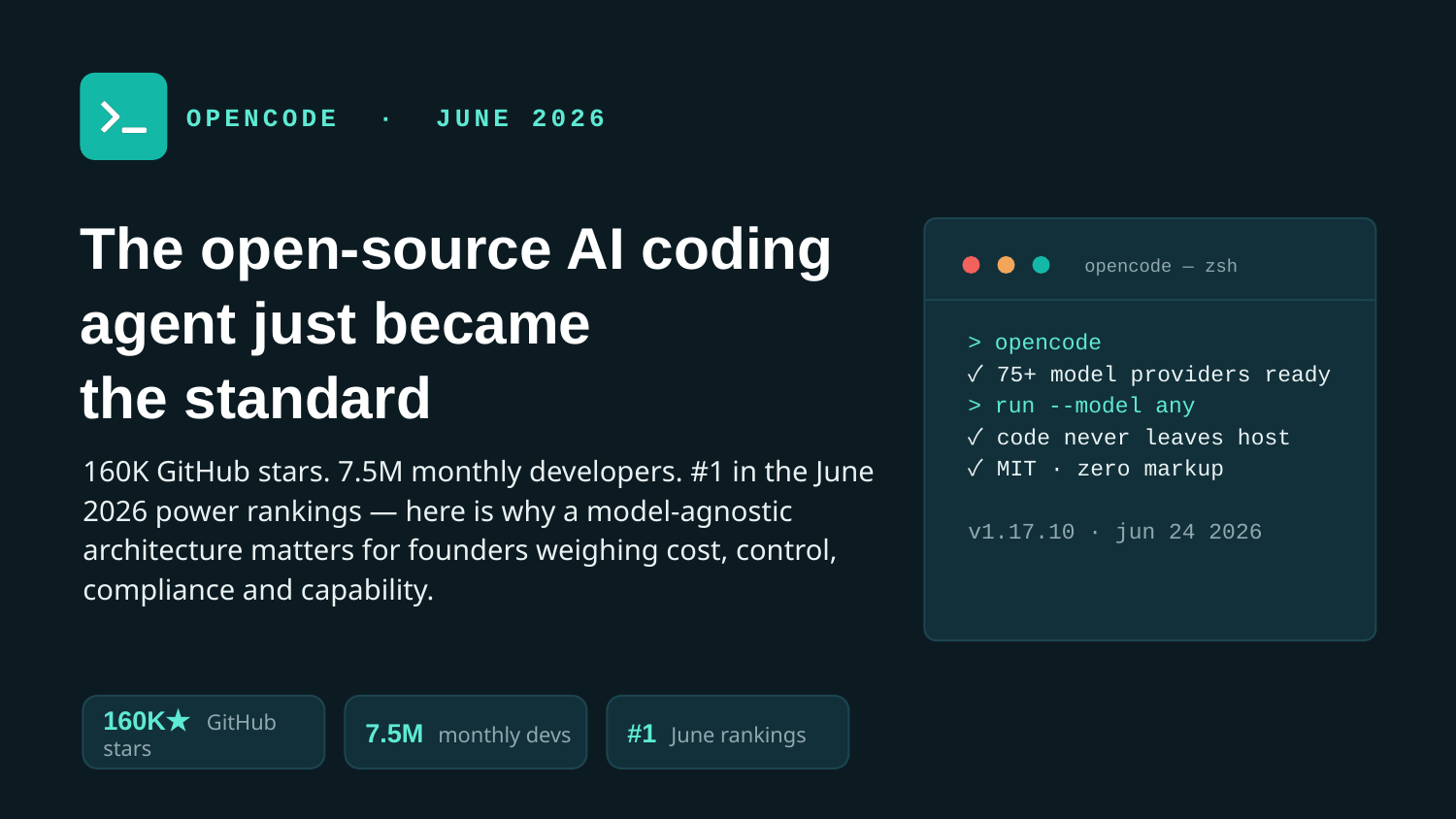
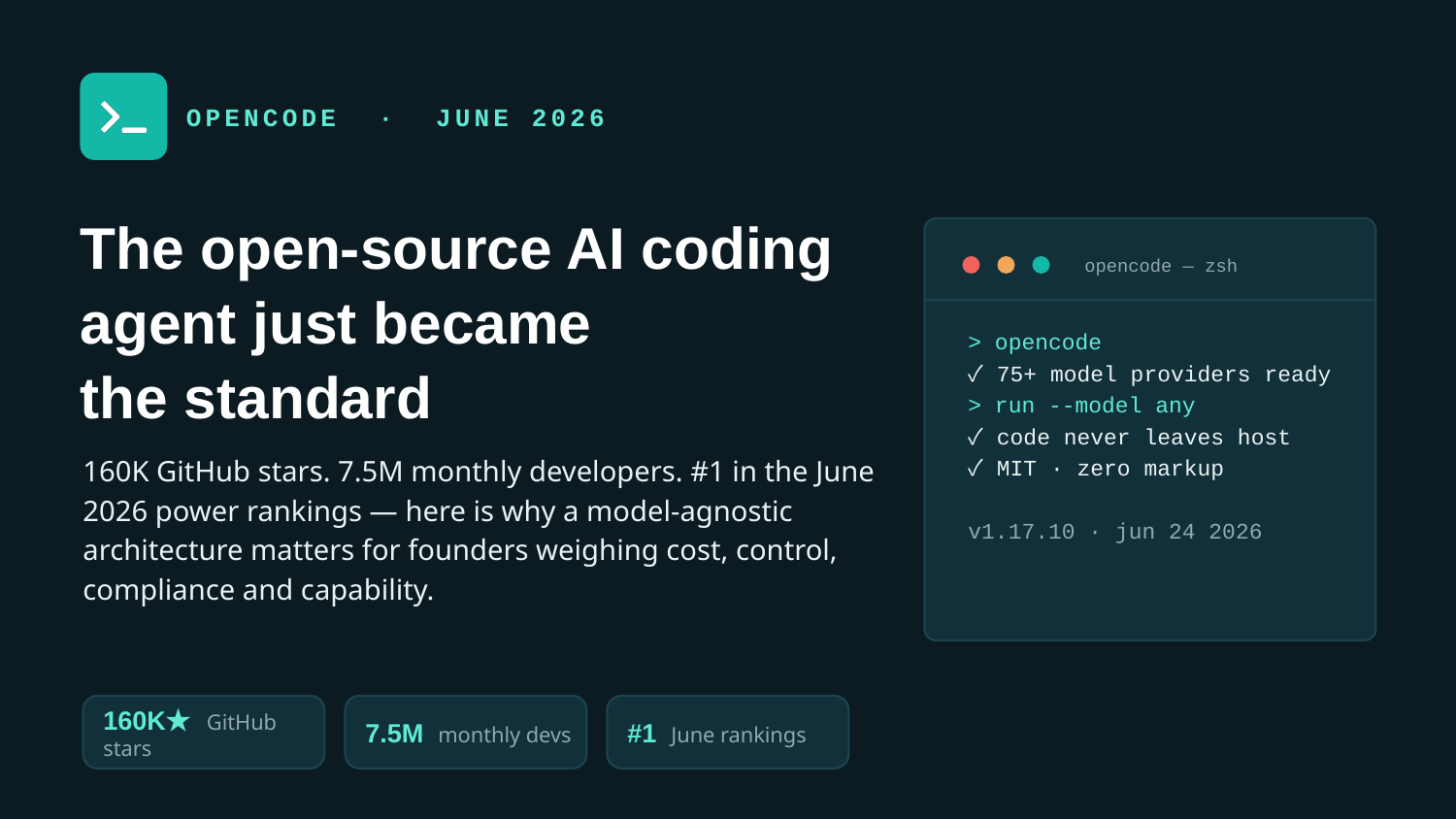
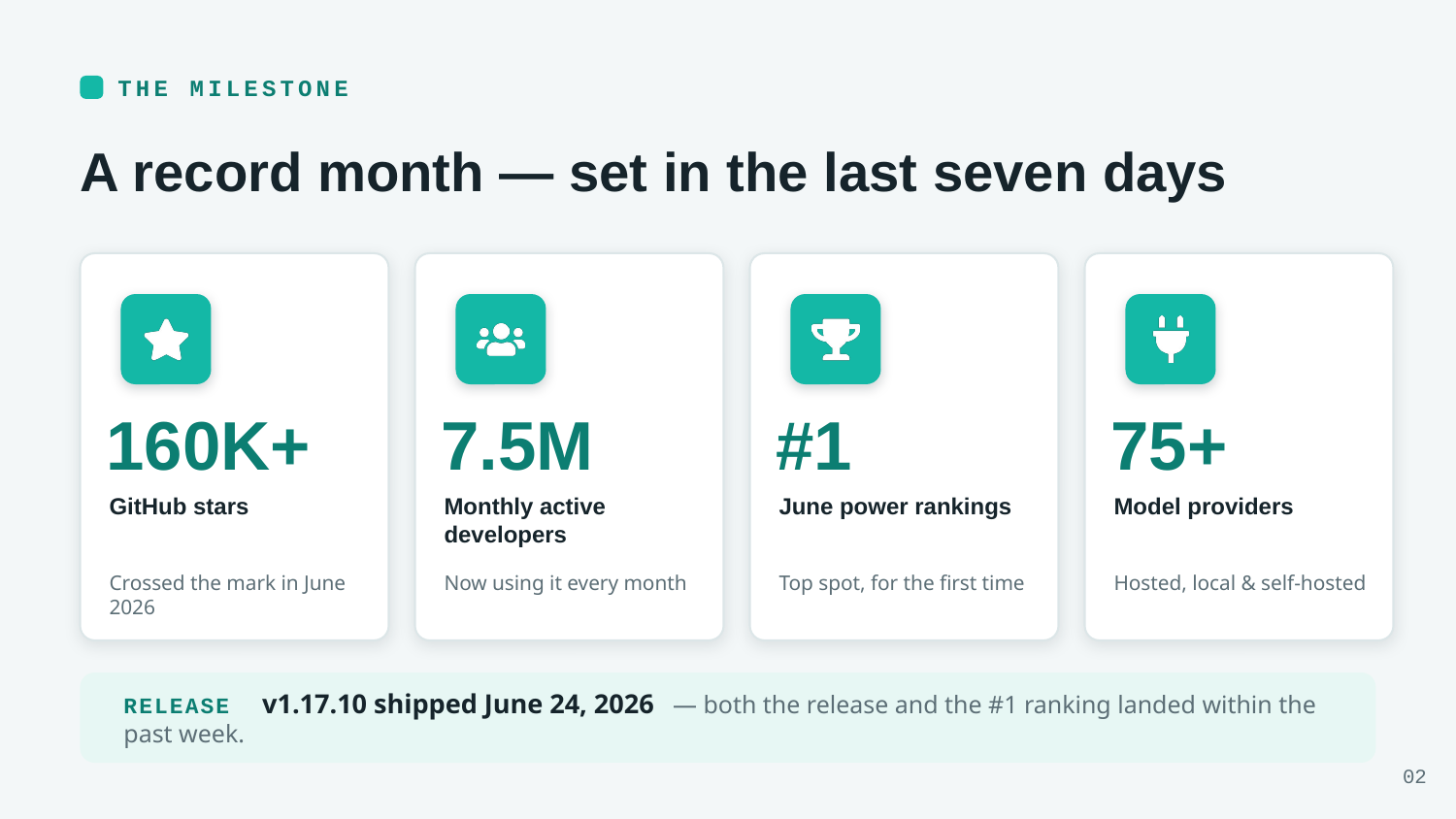
A new kind of developer tool sits at the center of how software gets written in 2026: the open-source, model-agnostic AI coding agent. Instead of living inside one editor tied to one company’s model, it runs in your terminal, connects to whatever language model you pick — hosted in the cloud or running locally on your own hardware — and reads your codebase, edits files, and runs commands directly. The most popular of these projects has passed 180,000 stars on its public code repository, reports millions of monthly active developers, and ships new releases almost daily, with contributions from nearly a thousand people under a permissive open-source license.
The deck embedded below covers this same ground — it was generated by AskDeck from a short brief.
What “model-agnostic” actually means
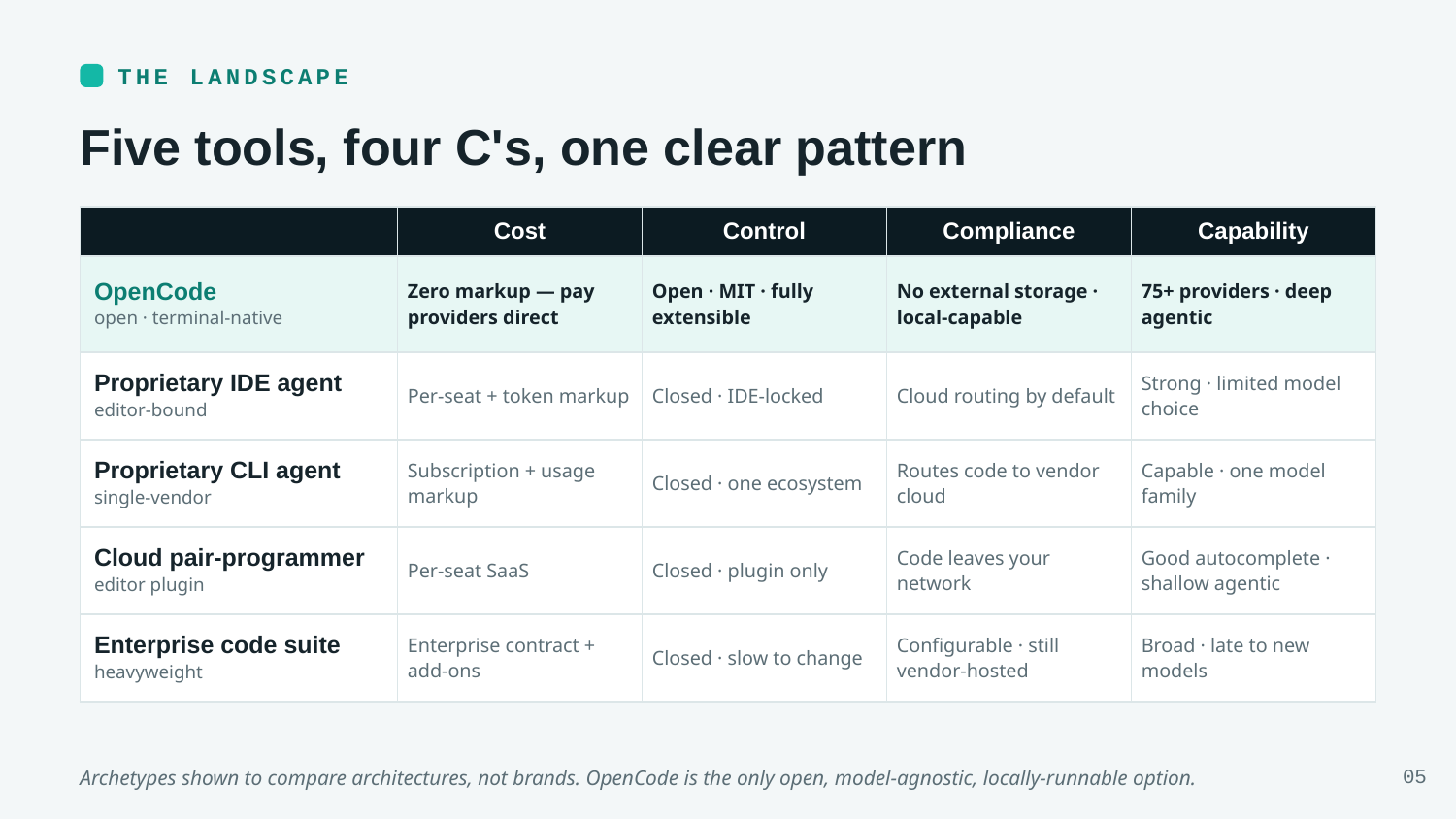
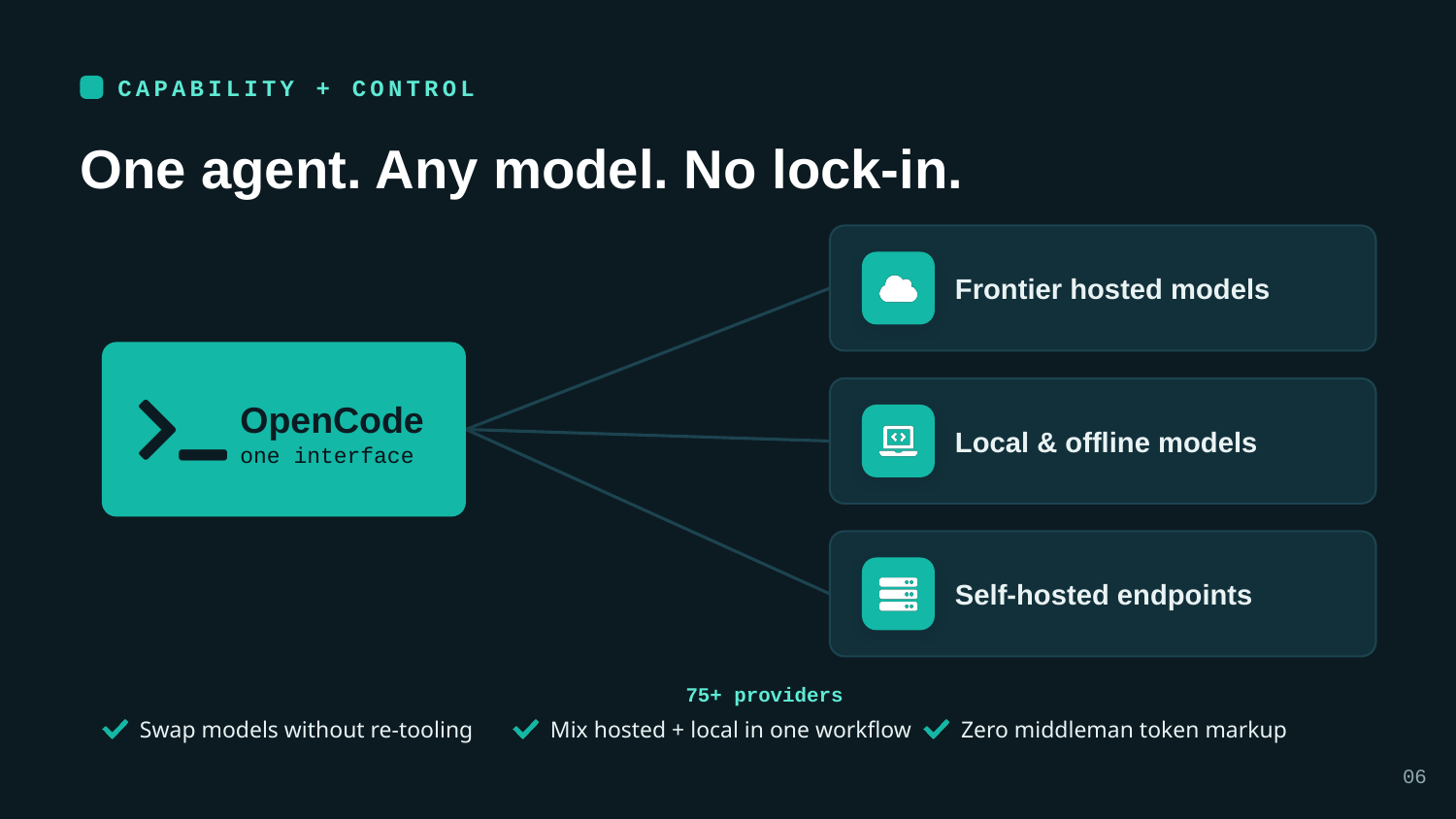
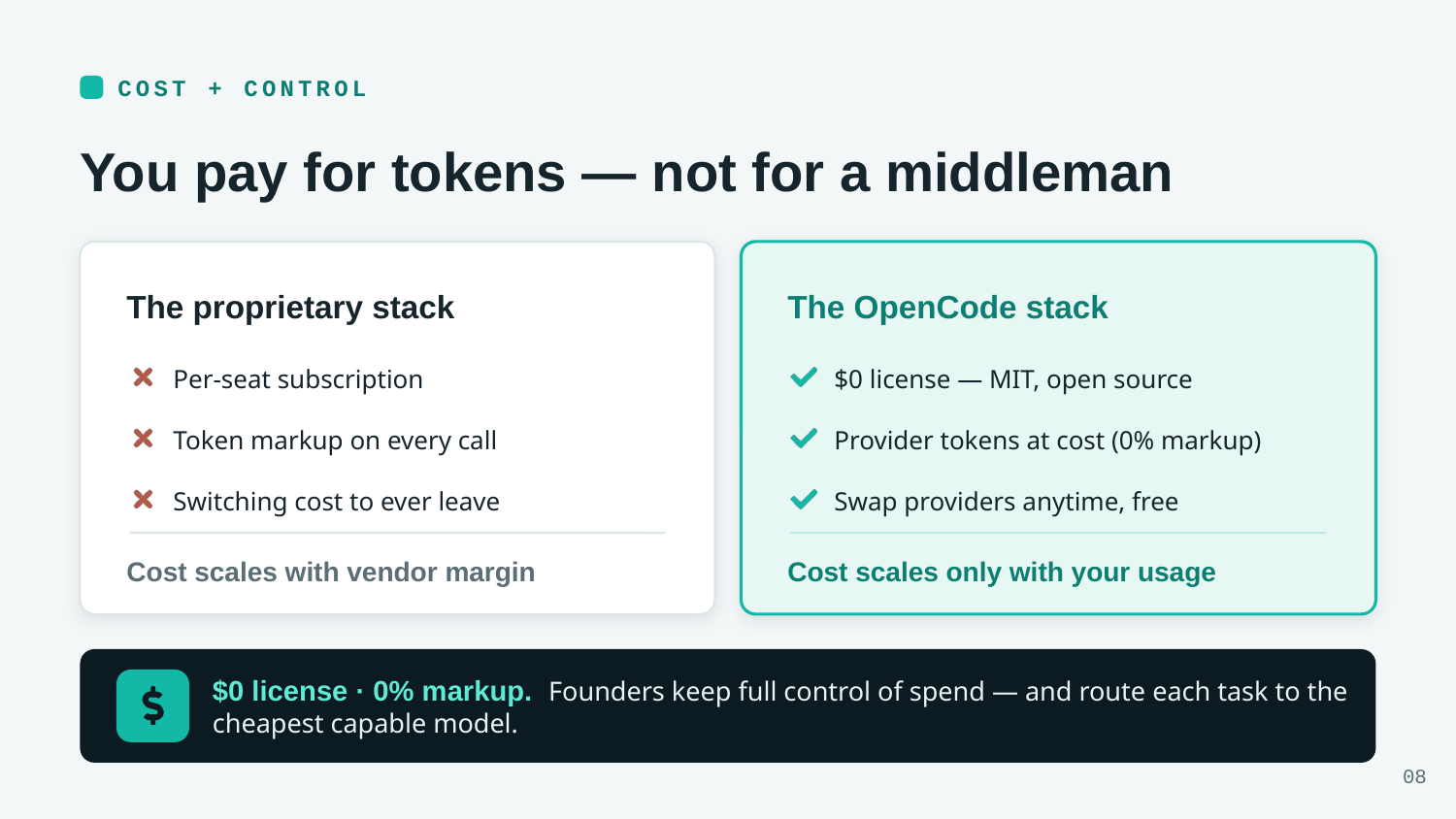
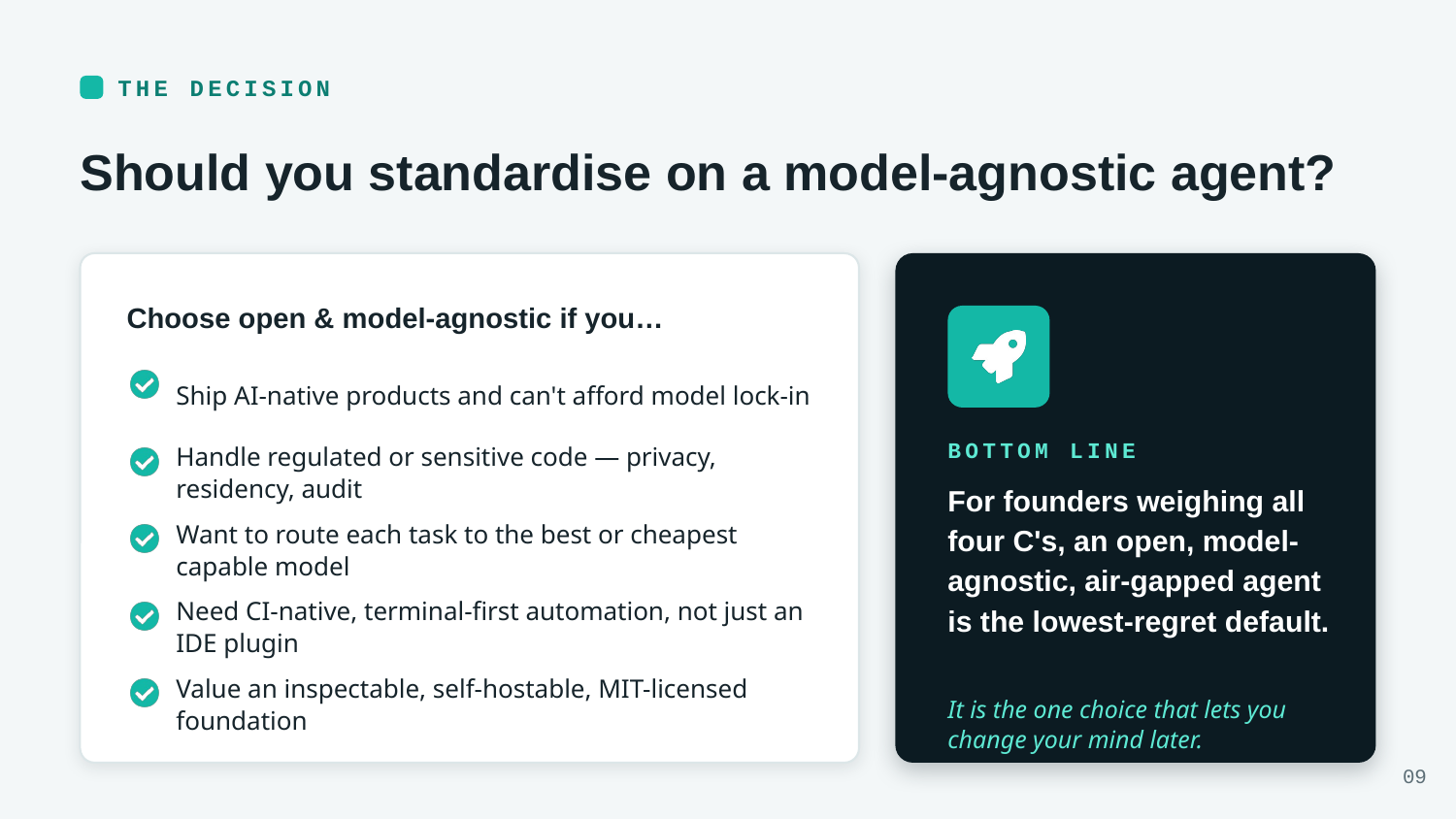
Most proprietary coding assistants bind you to one model family or one subscription. A model-agnostic agent treats the model as a swappable part. The leading open-source agent connects to more than 75 model providers, including local models that never reach an outside server, and lets you switch per task — a fast, cheap model to explore a codebase, a stronger one to write the fix. Because you supply your own provider keys, you pay those providers directly at their usage rates, with no per-seat markup added on top.
How the language-server feedback loop works
The feature that sets these agents apart is harder to see than model choice. After the agent edits a file, it doesn’t wait for you to run a compiler and paste the errors back. It reads diagnostics from a language server — the same background analyzer that powers the red underlines in a modern editor — and sees type mismatches, undefined variables, and missing imports the moment they appear.
Concretely: change a function’s signature so it takes a number instead of a string, and a text-only agent has no idea that fifteen call sites now pass the wrong type. An agent wired to language-server diagnostics sees all fifteen errors at once and fixes them before it reports back, closing the edit-run-error-fix cycle without you running the type checker. Researchers studying this approach describe compiler and language-server output as a dense, machine-checked signal that keeps an agent anchored to real program facts instead of hallucinating APIs or drifting to the wrong symbol. It isn’t free: language servers use memory, can fall out of sync, and slow some workflows, so many teams instead have the agent run lint and type-check commands directly and feed that output back.
Why control, cost, and compliance drive adoption
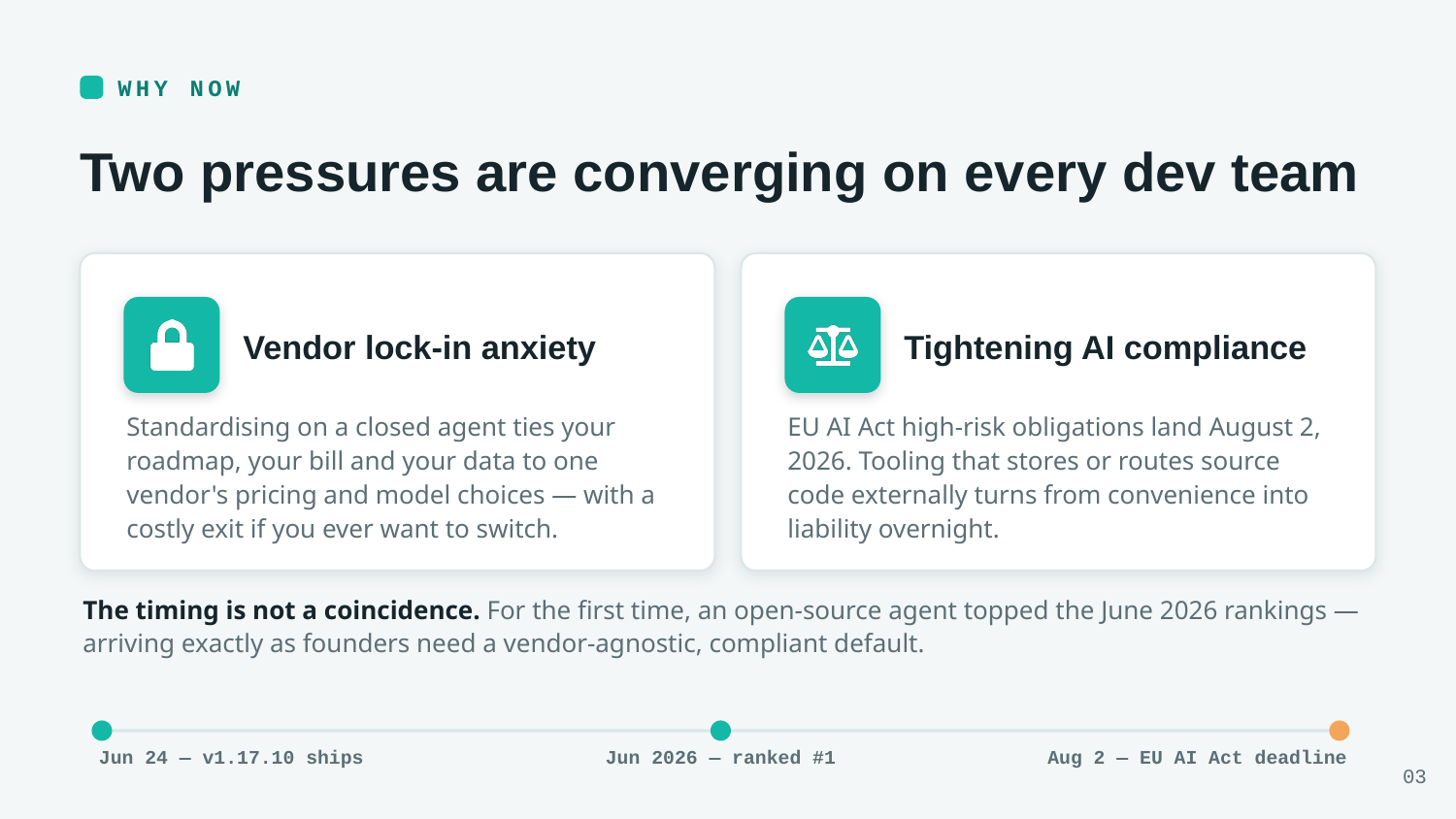
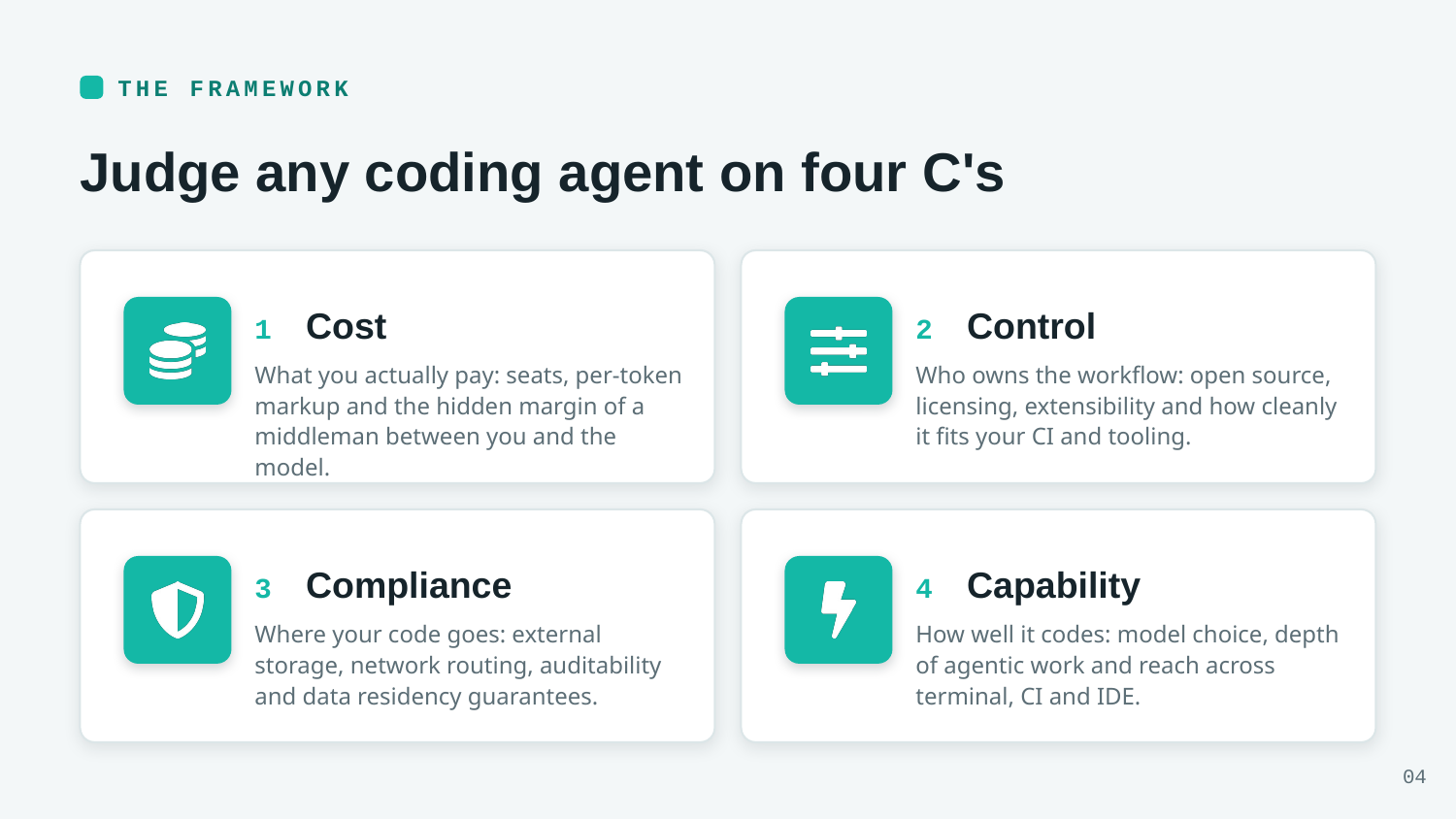
Three pressures explain why teams are standardizing on agents they can own outright:
- Portability: an open, model-agnostic tool can’t strand you if a vendor raises prices, changes terms, or retires a model you depend on.
- Cost: paying providers directly and routing routine work to cheaper models usually costs less than a fixed per-seat license.
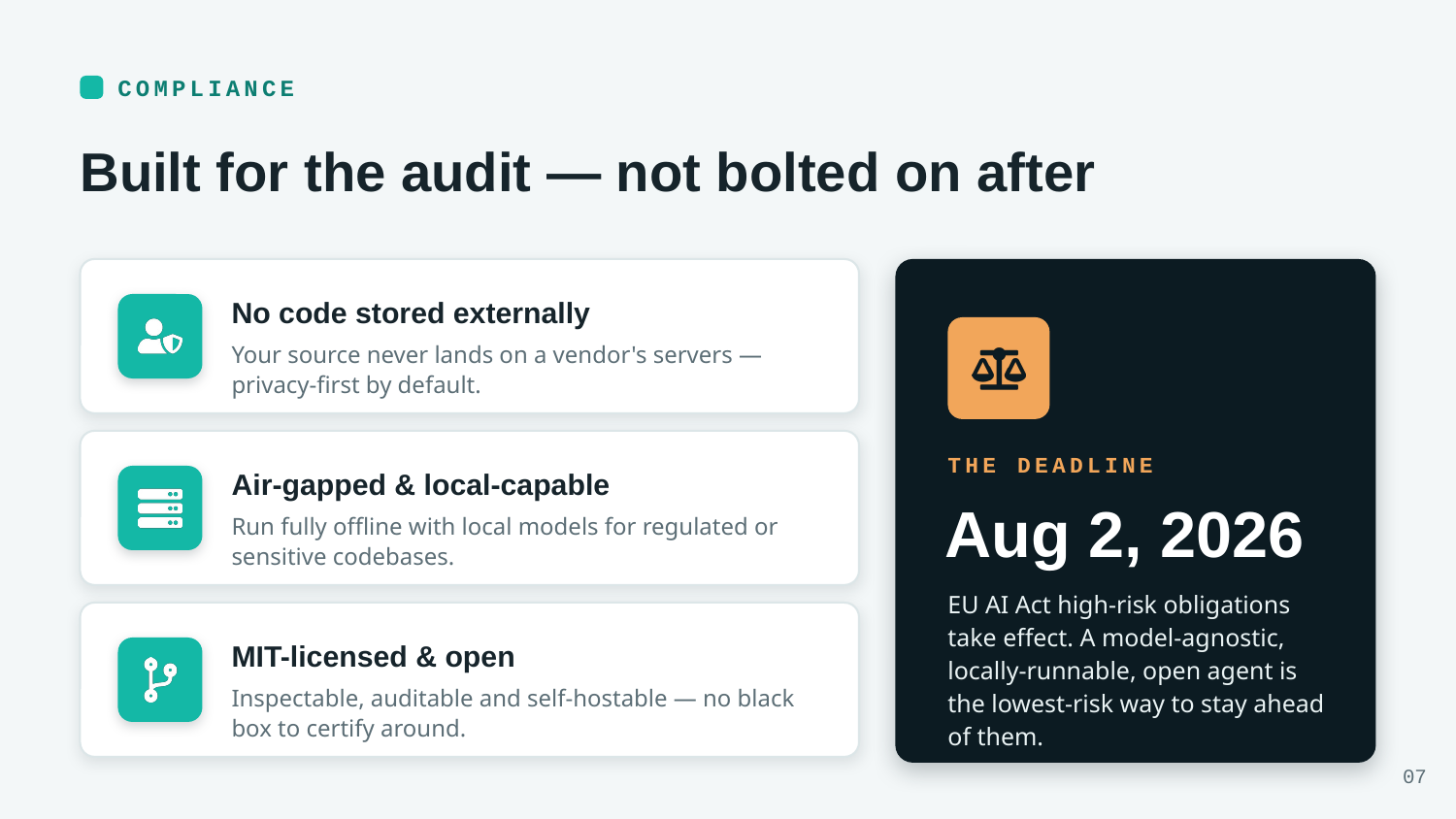
- Data control: because the agent is open source and can run against local models, code can stay on your machines, with nothing sent to an outside service by default.
What changes for regulated teams in 2026
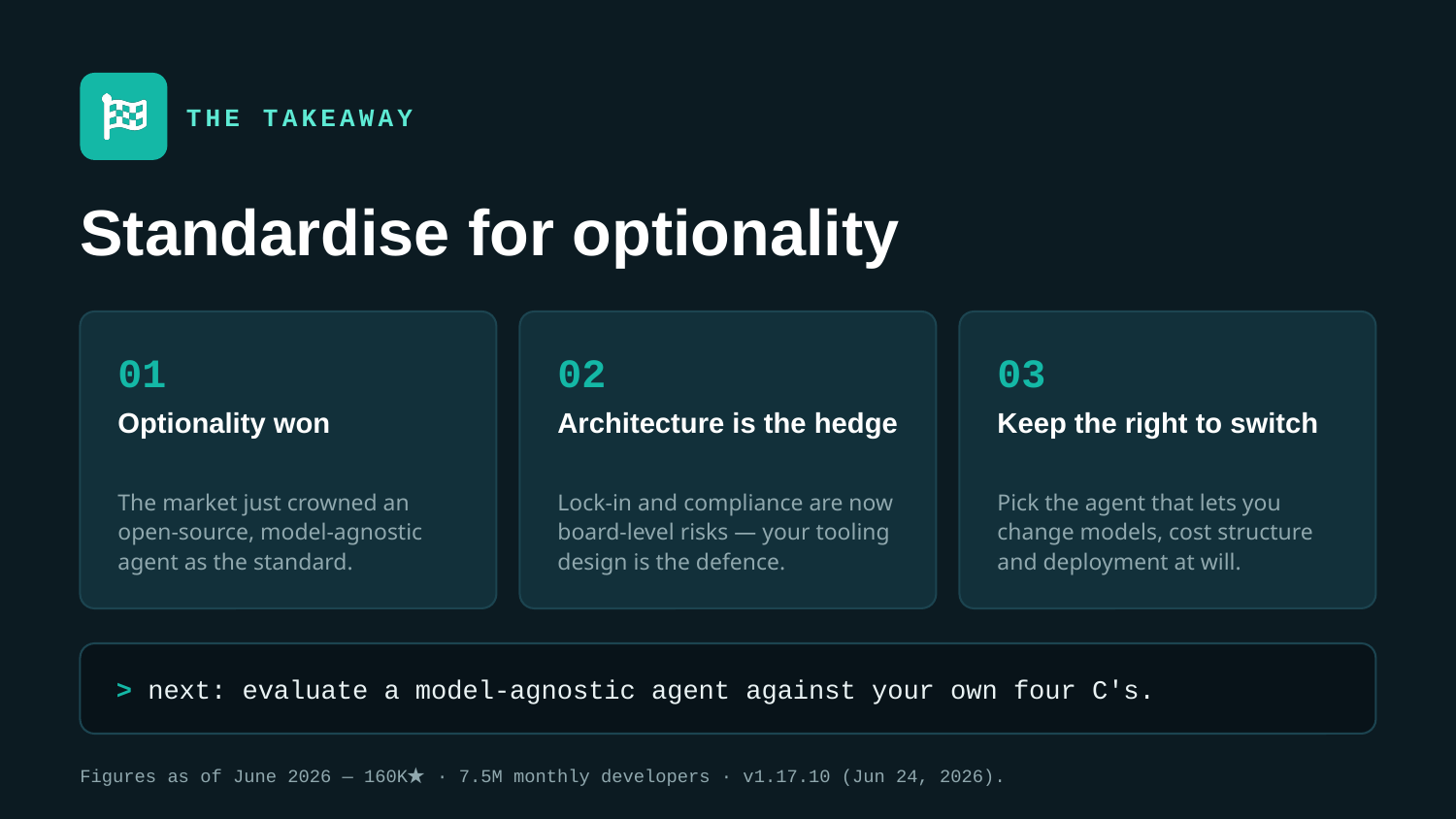
That last point matters more as AI rules tighten. The EU AI Act (Regulation 2024/1689) entered into force on August 1, 2024 and phases in over three years. Its most demanding wave — obligations for high-risk systems under Annex III, alongside the Article 50 transparency rules — is set to apply from August 2, 2026, carrying duties around documentation, logging, human oversight, and data governance, with fines that can reach tens of millions of euros. A proposed Digital Omnibus would push the high-risk deadlines to December 2027 and August 2028, but it takes legal effect only once formally adopted and published, expected before August 2026 — so August 2, 2026 remains the operative date until then. For teams in regulated sectors, an agent you can self-host, audit, and point at local models is easier to fit into these duties than a closed service. Confirm how any of this applies to your case with a qualified legal expert.
Do these agents require a paid subscription?
No. The open-source ones need no subscription or account. You bring your own provider keys and pay the model provider directly based on usage, or run a local model for no per-token cost at all.
Can a coding agent run completely offline?
Yes, if you point it at a model running on your own hardware. Your code and prompts then stay local, which is what makes these agents workable in air-gapped or tightly regulated environments.
How is this different from editor autocomplete?
Autocomplete suggests the next few lines inside your editor. An agent plans a change, edits across multiple files, runs commands, and checks its own work against compiler diagnostics before handing control back.
The example deck below was built with AskDeck from a short brief, so you can download it, edit any slide, and adapt it for your own team. If you need to explain a moving technical topic quickly, it’s an easy place to start.