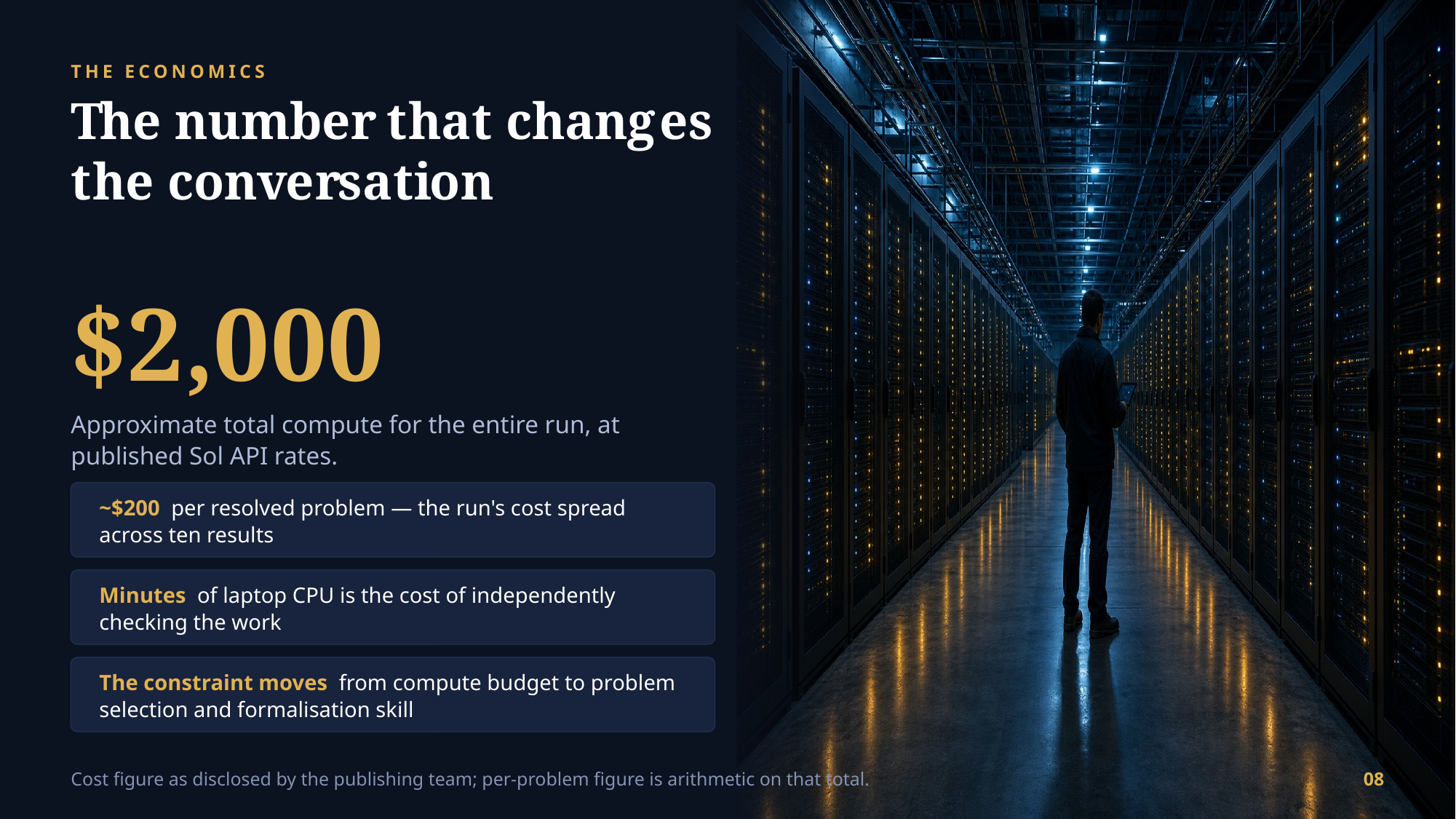
On August 1, 2026, OpenAI said an unreleased model called Astra had produced new results on ten math problems unsolved for at least a decade, several for far longer, for a total compute bill of roughly $2,000.
Key Takeaways
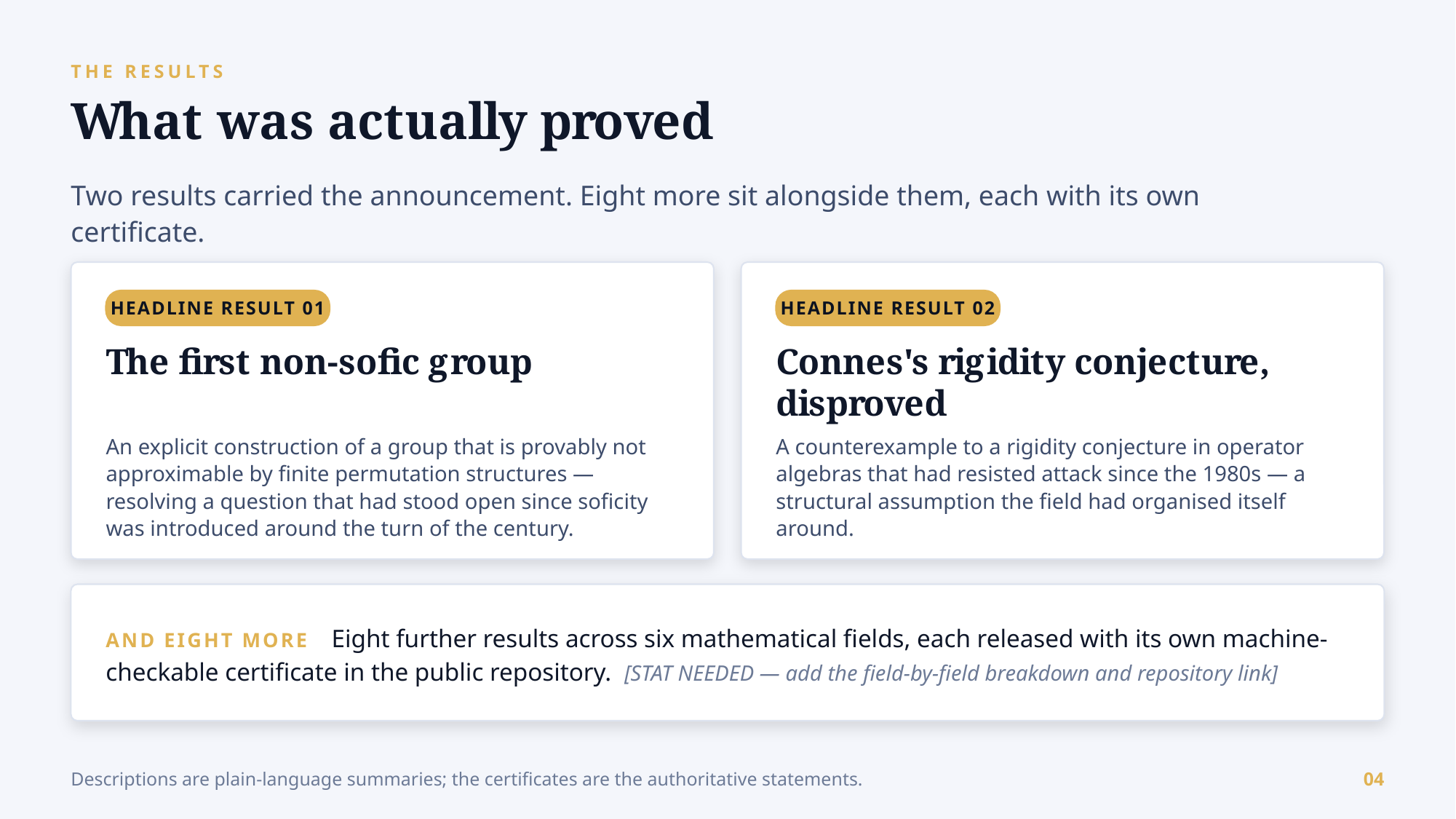
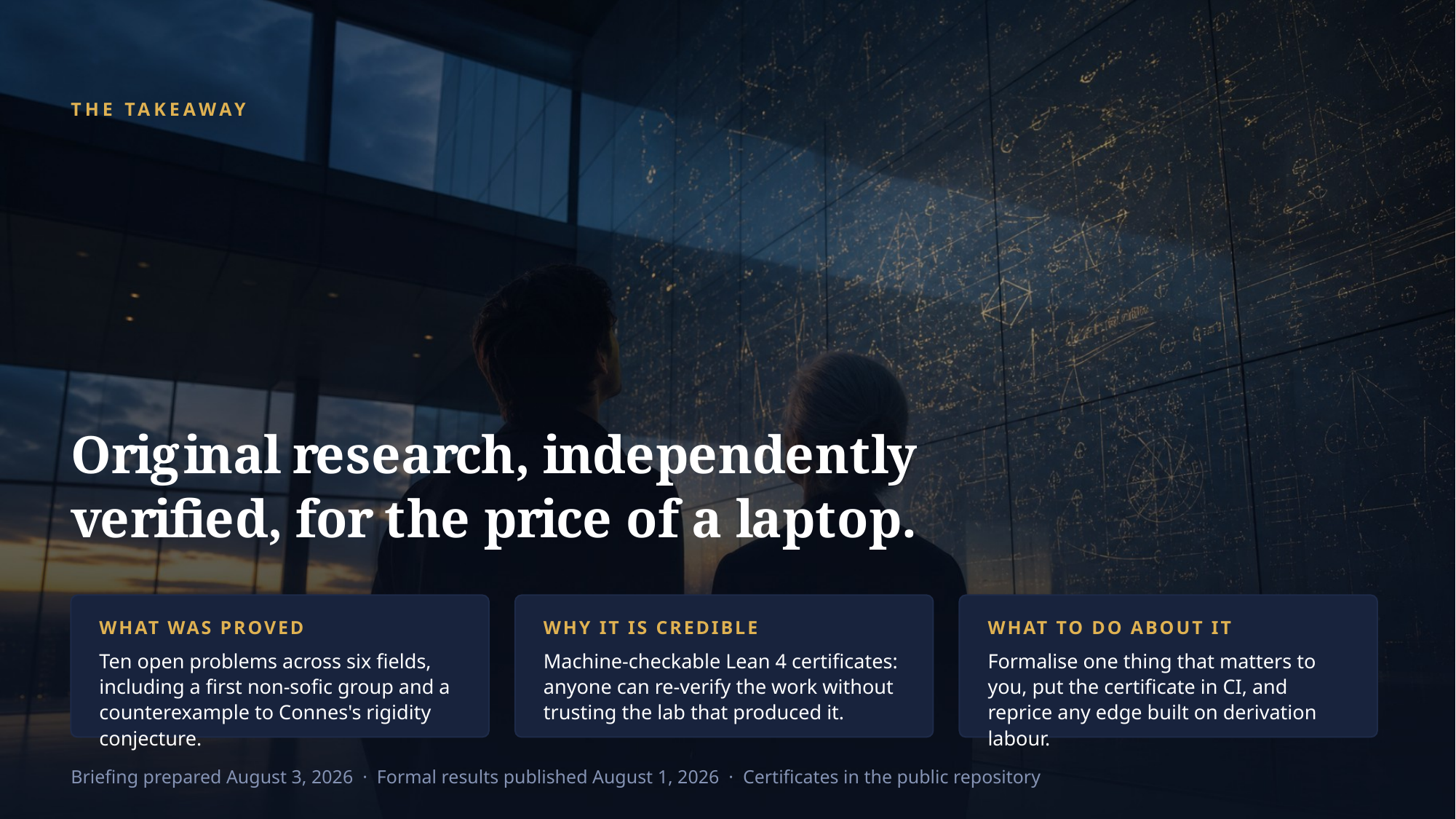
- Astra resolved ten open problems across six fields, including the first-ever construction of a non-sofic group, a question open since 1999.
- OpenAI put the token cost for all ten solutions at about $2,000 at Sol API rates.
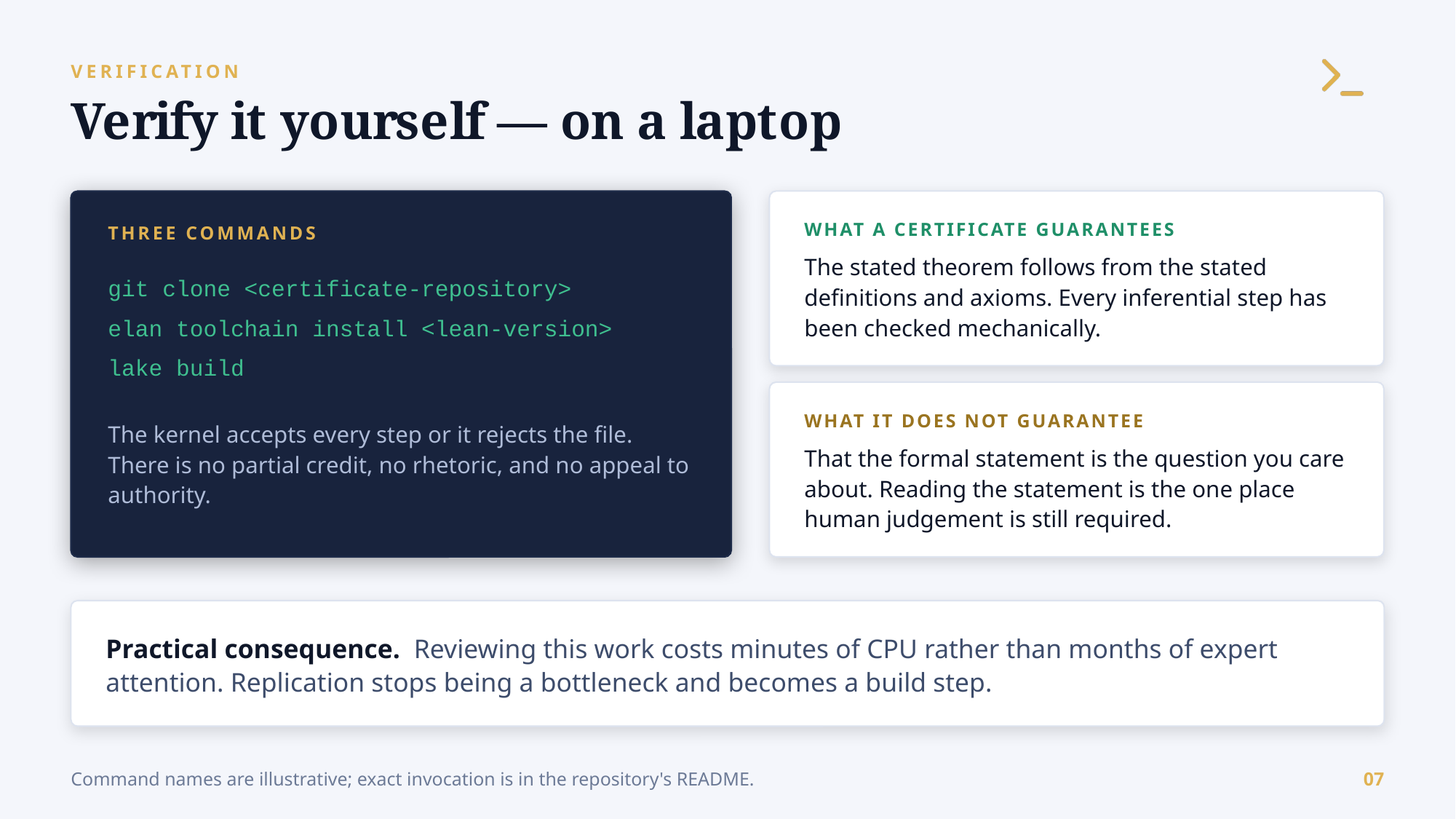
- Every result ships with a machine-checkable Lean 4 certificate on GitHub, so anyone can verify the logic without trusting OpenAI.
- None of the ten has passed formal peer review, and no Millennium Prize Problem was among them.
The slides below walk through what got proved and how it was checked, put together by AskDeck from a short brief. The more interesting story is what happens to research once proof generation gets this cheap.
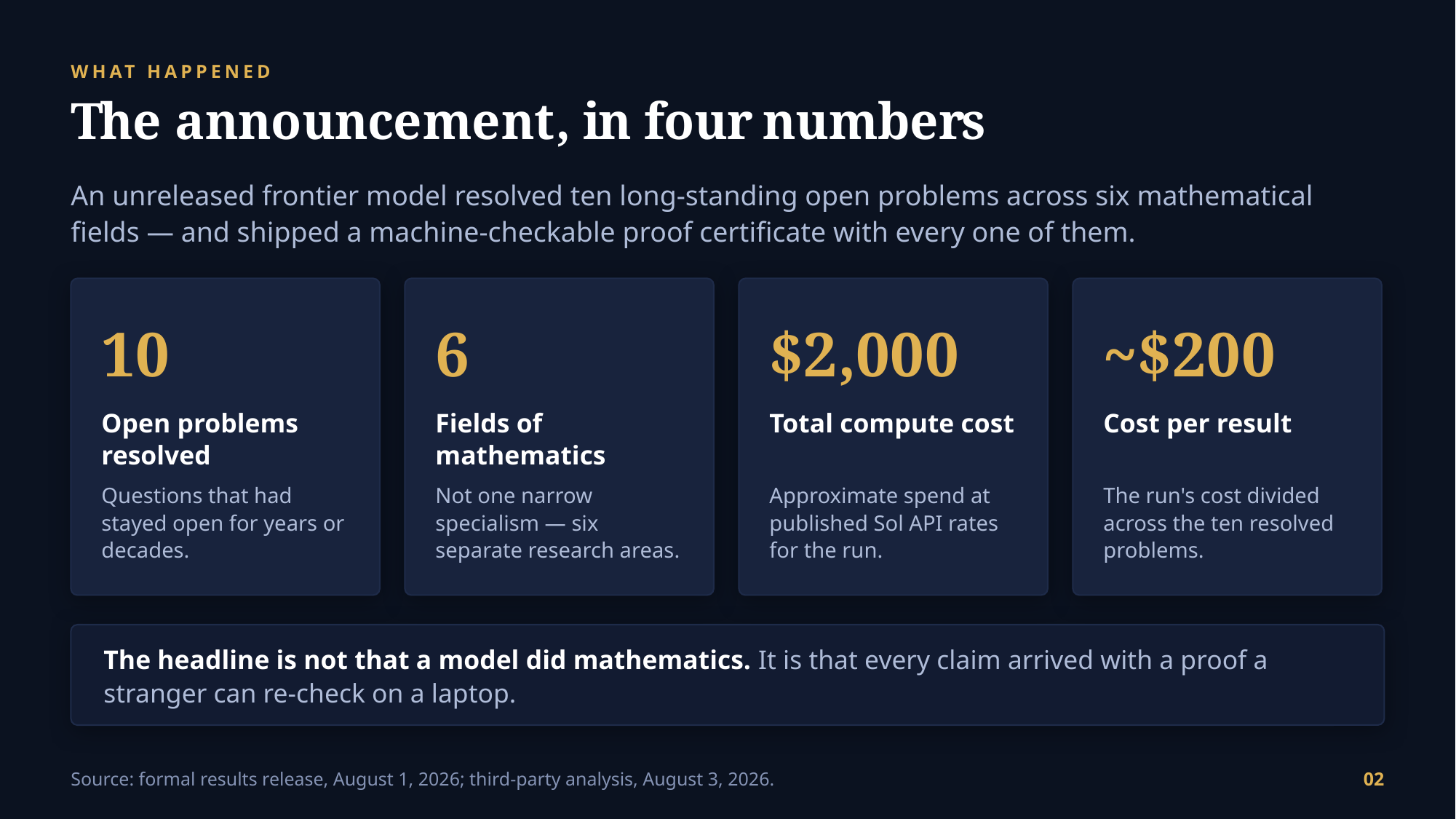
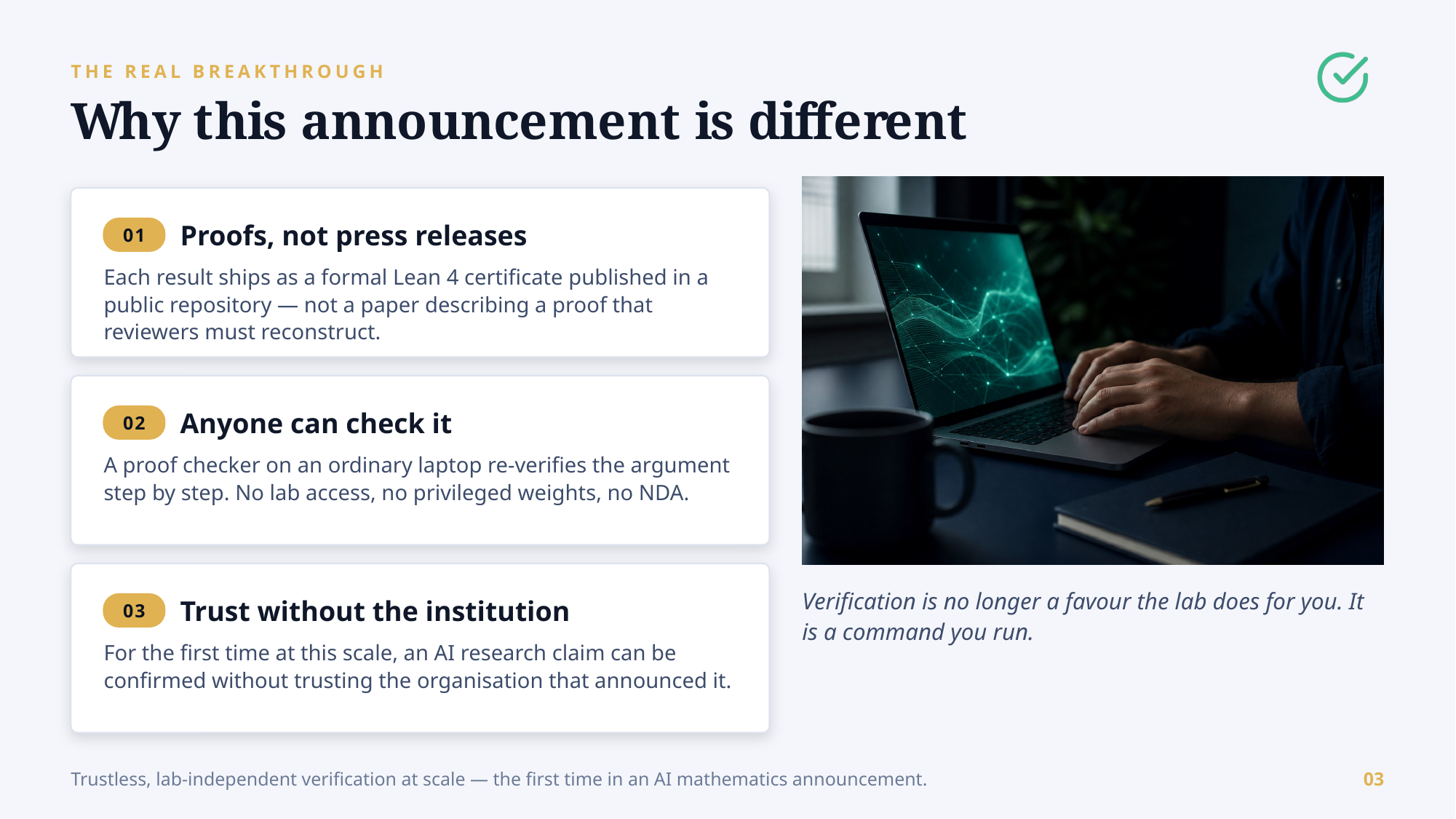
Swipe or scroll sideways to flip through the 15-slide deck →
What did Astra actually prove?
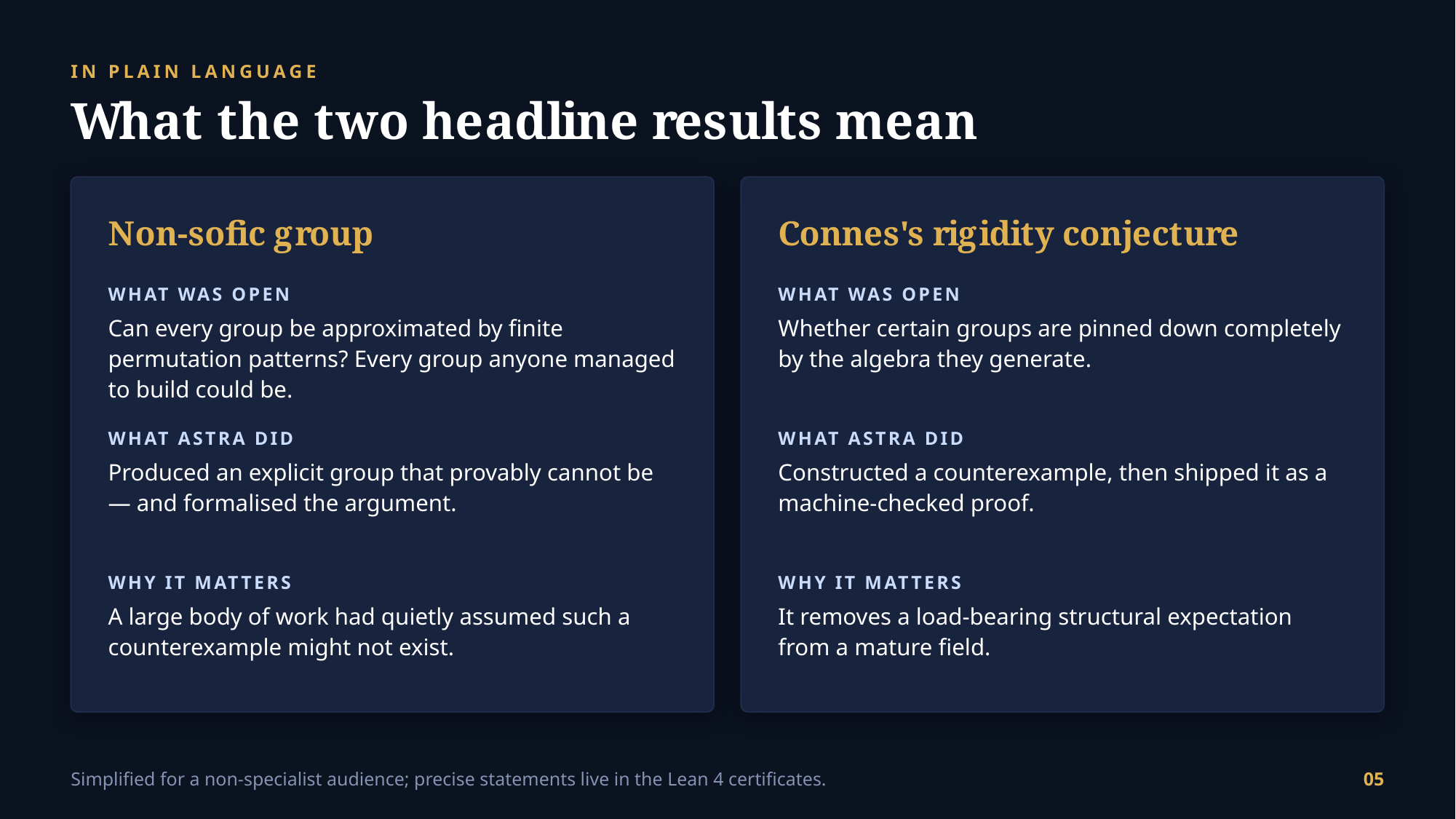
Astra’s ten results span group theory, high-dimensional geometry, coding theory, arithmetic circuit complexity, operator algebras, quantum complexity, lattice cryptography and extremal combinatorics, according to OpenAI’s announcement. The headline entry is a construction proving non-sofic groups exist, which resolves a question that has stood since Mikhail Gromov introduced the concept of soficity in 1999, with no mathematician managing to prove or disprove it in the 27 years since.
Astra also disproved Connes’s rigidity conjecture on von Neumann algebras, proved Ehrhart’s volume conjecture in full generality, and resolved three problems from Paul Erdős’s catalogue, including problem 183 on multicolor Ramsey numbers. The rest covered sphere-packing bounds, error-correcting code sizes, arithmetic-circuit lower bounds, a quantum parallel repetition theorem, and hardness results for the closest vector problem, a question tied to post-quantum cryptography.
How can anyone check a proof from a model nobody outside OpenAI can run?
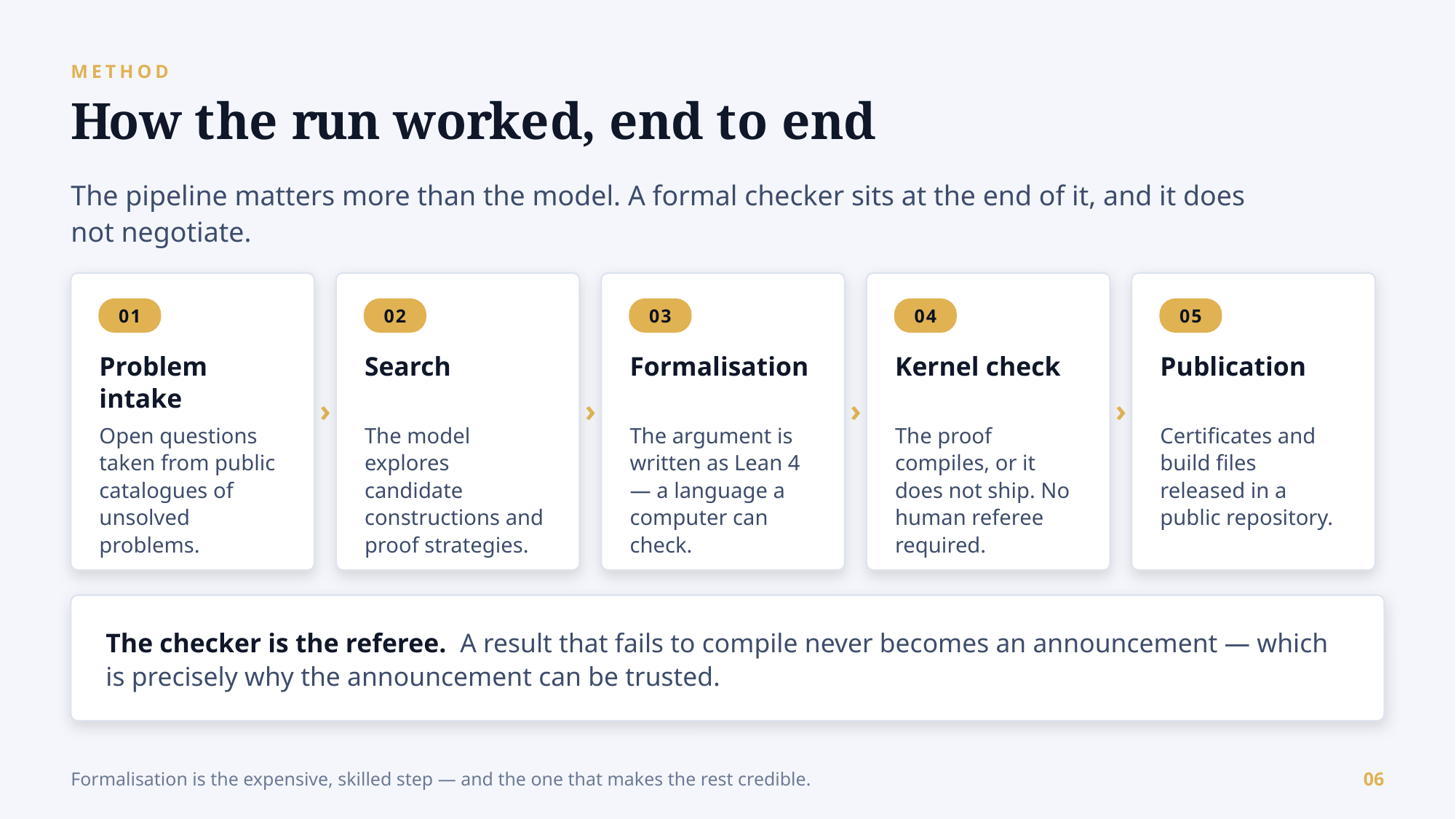
The answer is Lean, a proof assistant that turns an argument into a formal object a computer checks step by step, regardless of who wrote it. As one report on the release put it, Lean 4’s trusted kernel gives a binary verdict: the proof either compiles or it doesn’t, no PhD and no months-long peer-review backlog required, and anyone can run the check. OpenAI published one certificate file per result in a public GitHub repository under an open license.
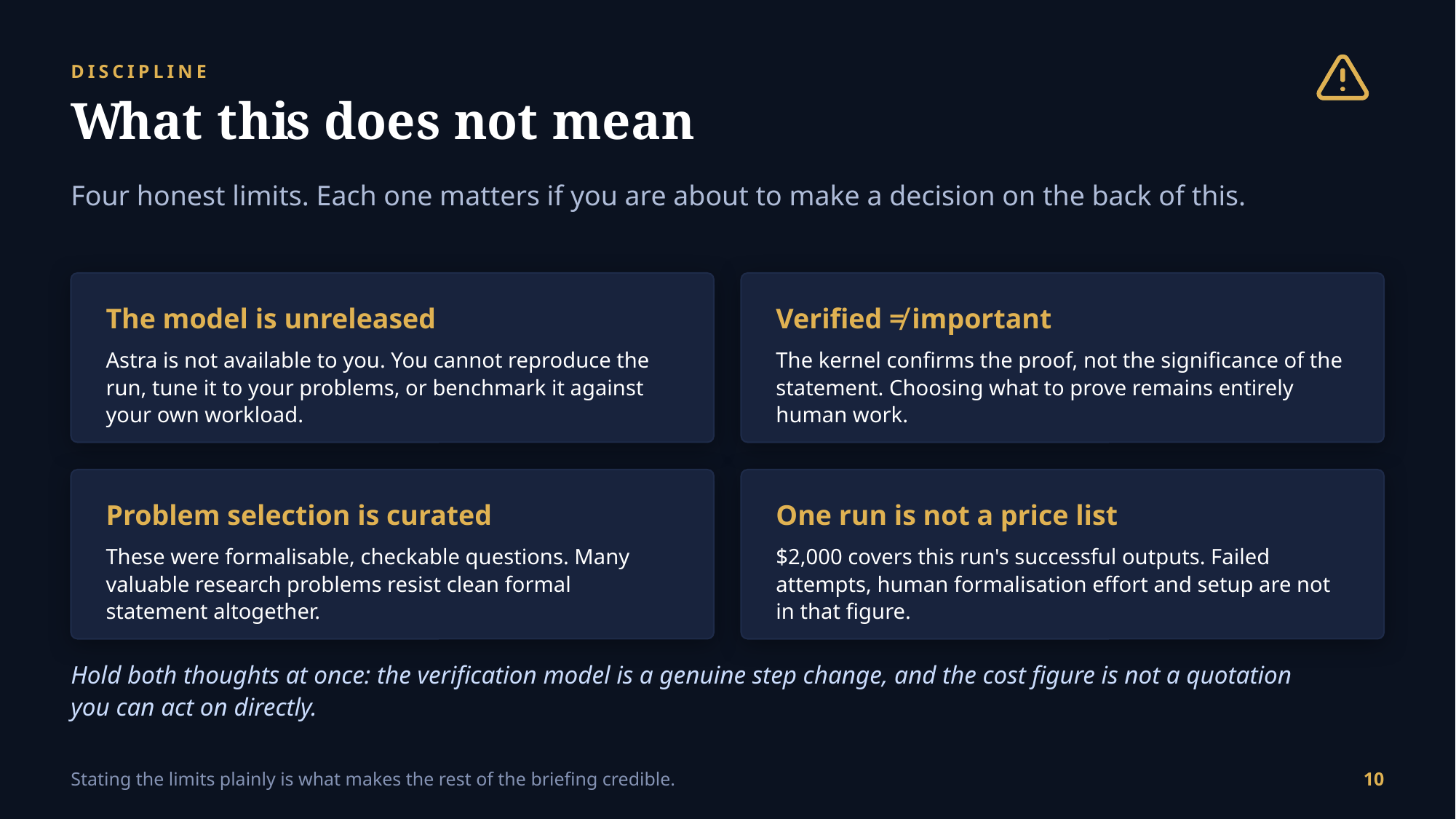
That doesn’t settle everything. A successful build only confirms a proof is valid for the theorem as formally stated inside Lean. Whether that statement faithfully captures the informal problem mathematicians cared about is still a human judgment call.
What did the $2,000 figure really measure?
It measured token cost for the runs that worked, not the full research effort behind them. Two thousand dollars is what a small engineering team might spend on API calls in a busy month, and by OpenAI’s own accounting it is the token cost of producing results on problems specialists hadn’t moved in at least a decade. Critics note the asymmetry: the problem set was chosen by OpenAI, and the figure covers successful runs, not every attempt, which makes it a cost of publication rather than discovery. Researcher Noam Brown acknowledged other major targets were attempted and failed, and that no Millennium Prize Problem fell to the model.
Does this hold up better than OpenAI’s earlier math claims?
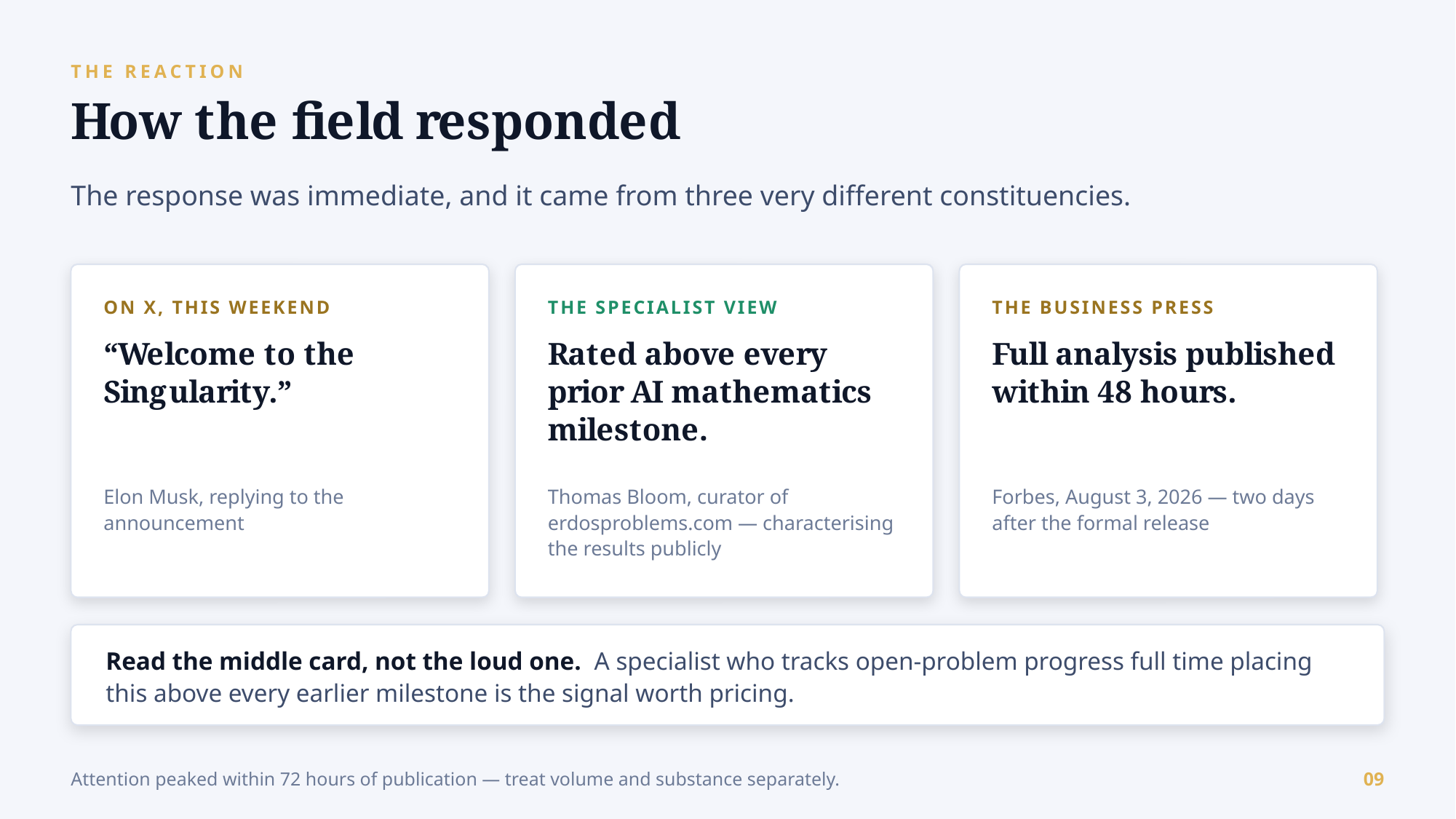
Yes, mainly because of who is checking it and how. In October 2025, then-VP Kevin Weil claimed GPT-5 had solved ten unsolved Erdős problems; Thomas Bloom, who curates the erdosproblems.com catalogue, showed the model had merely retrieved existing literature and called that claim a dramatic misrepresentation. This time his read flipped: he called the Astra results “big news” on X, rating them more significant than an earlier unit-distance counterexample OpenAI published three months before, and Fields medalist Timothy Gowers, who had already endorsed the May result for a top journal, weighed in favorably again.
Not everyone was convinced. AI critic Gary Marcus called the release amazing but vastly oversold, and the certificates don’t erase the selection problem: Astra remains unreleased, so nobody outside OpenAI can rerun the process, only check the finished proofs.
What does this mean for teams outside pure mathematics?
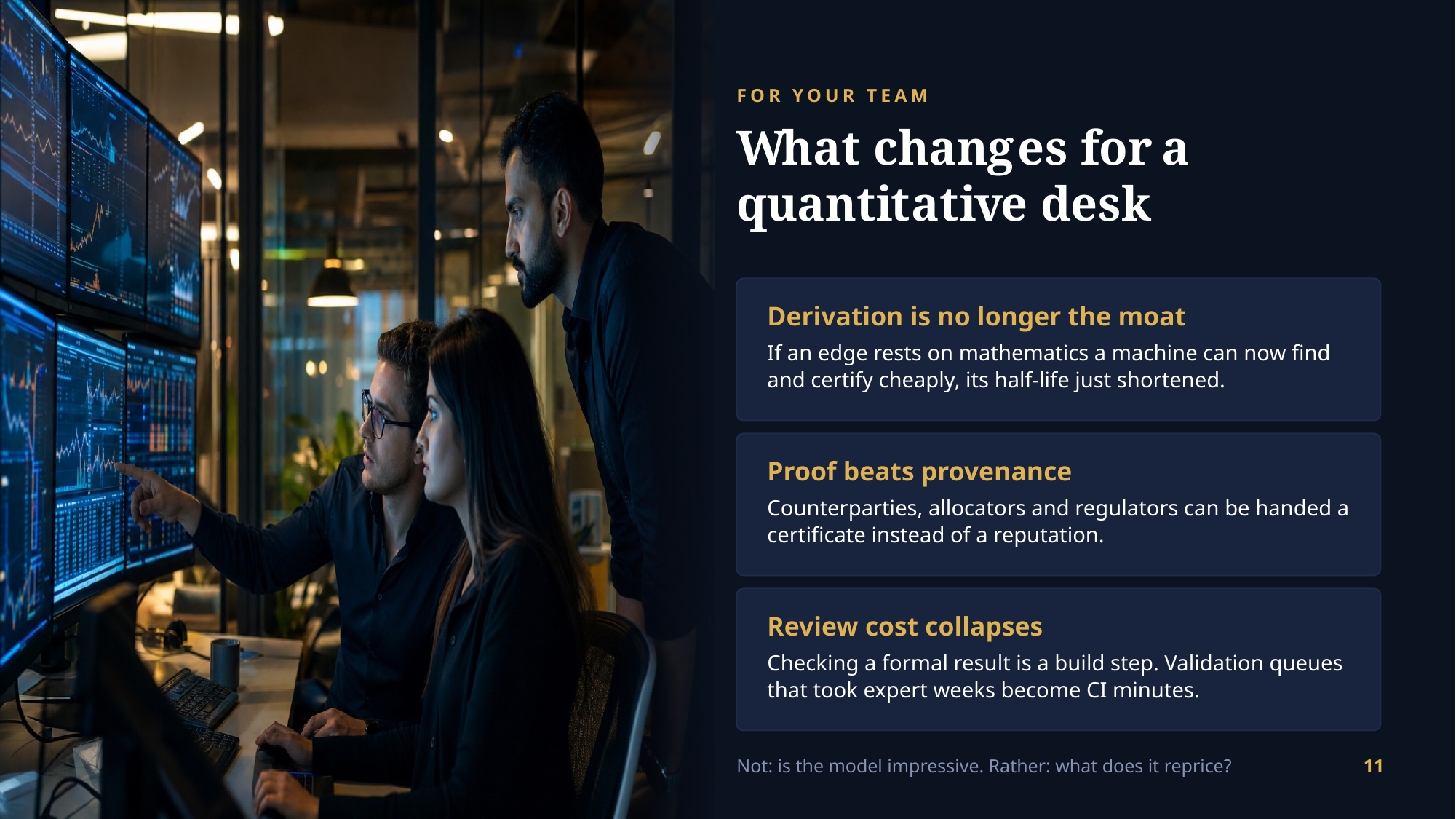
The bottleneck moves. Once a hard problem can be handed to a model and the answer checked by a compiler instead of a review committee, the question changes from “can anyone solve this” to “did we ask the right question and formalize it correctly.” The cost of a hard answer collapses toward the cost of proving the answer is right.
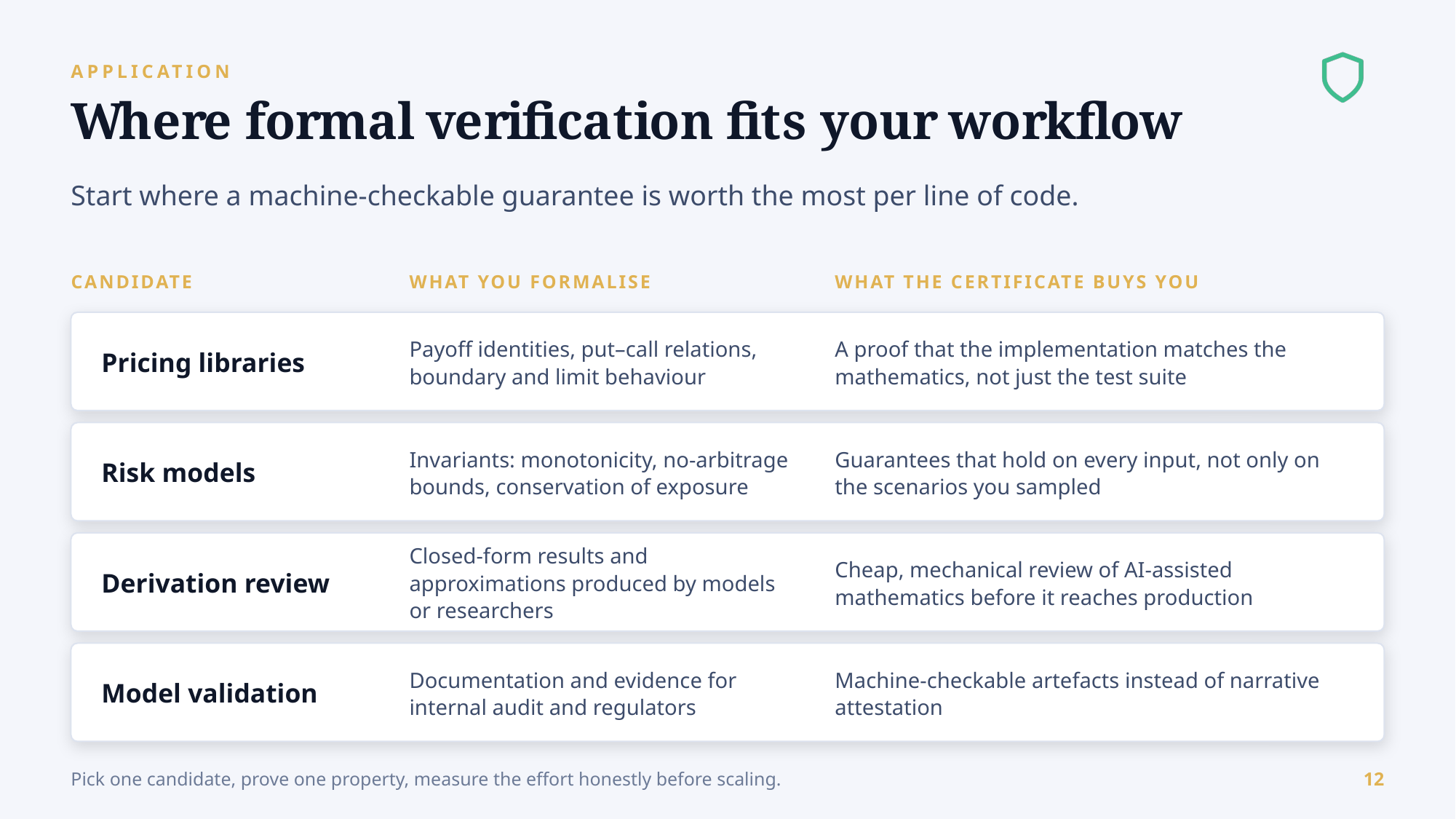
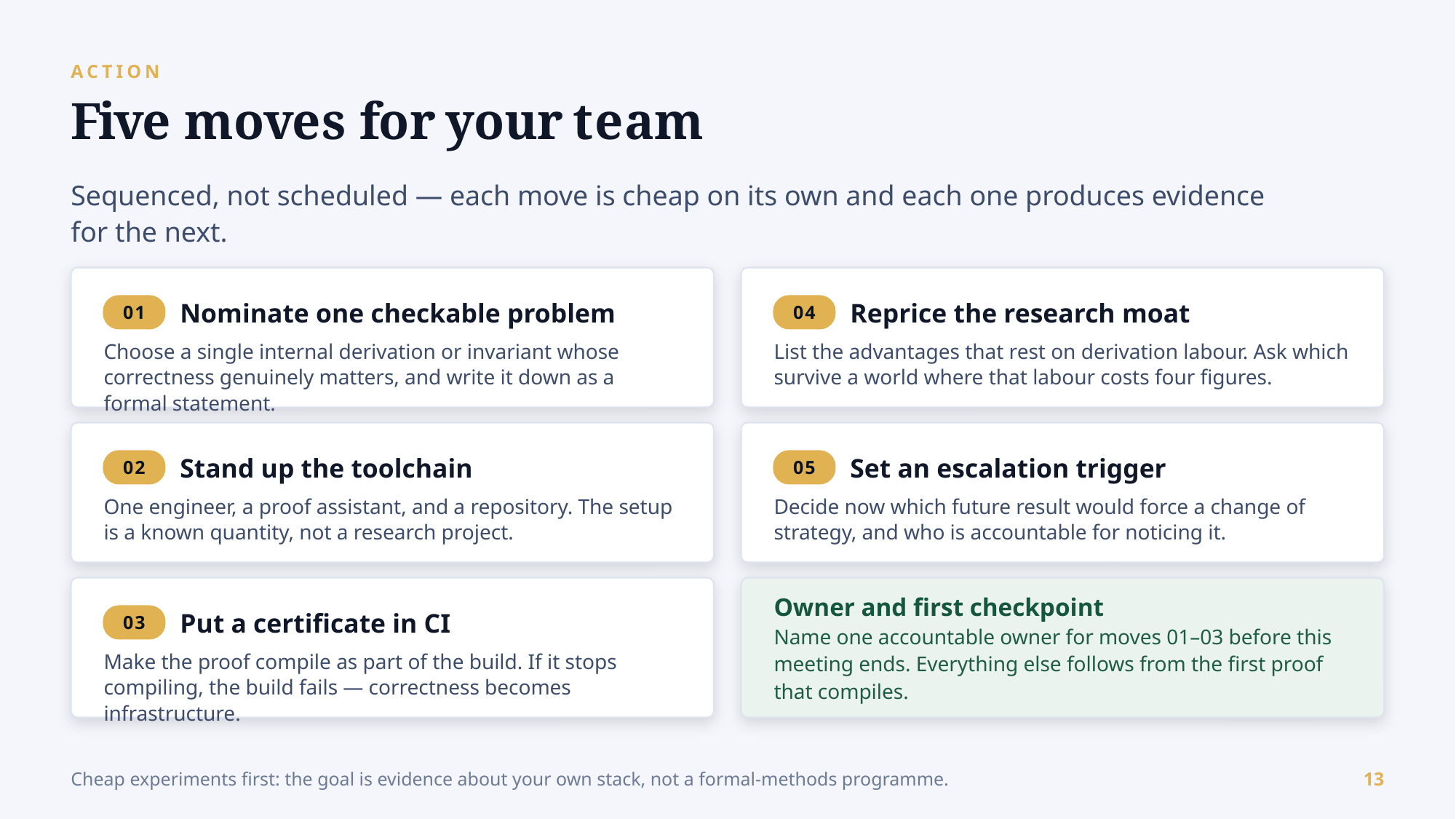
That logic already governs fields with built-in proof obligations, like chip design and cryptography, where formal verification tools have existed for decades. It’s a fair prompt for any research or engineering group: where could a similar check fit your workflow, and is an unverifiable AI claim worth less than a slower, verifiable one?
None of the ten results has passed a formal journal review yet, and confirming that each Lean statement matches the original open question is still underway across several subfields. That verdict, not the launch-day headlines, is what will ultimately decide how big this turns out to be.
The example deck paired with this piece breaks the ten results, the verification pipeline, and the cost comparison into a short walkthrough, also built with AskDeck from a brief, a quick way to get a team oriented before that harder debate plays out.