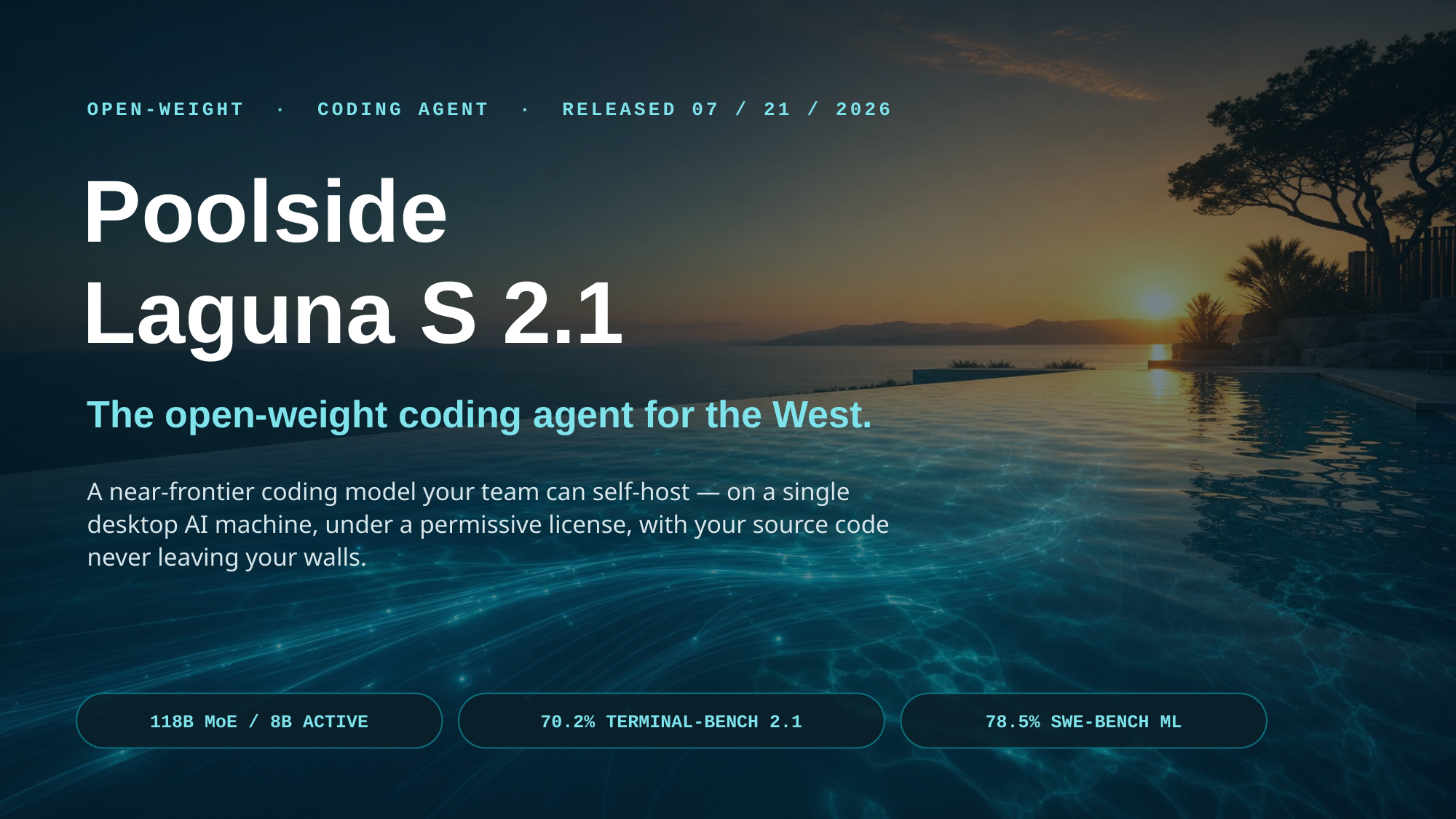
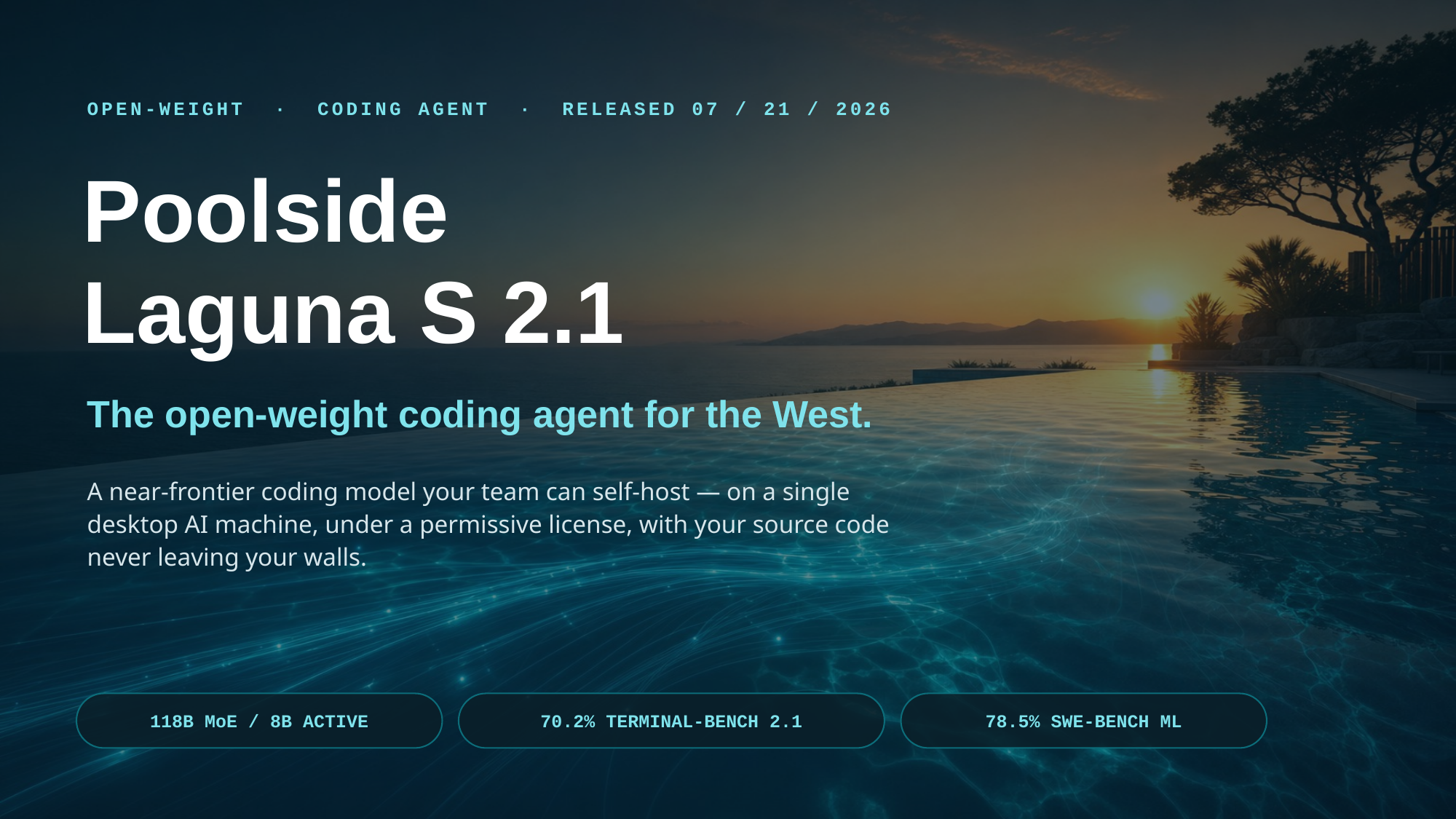
Poolside’s newest coding model has 118 billion parameters but switches on only 8 billion of them per task, and it fits on a single desktop AI box. That ratio, not the raw parameter count, is why developers are paying attention to Laguna S 2.1.
Key takeaways
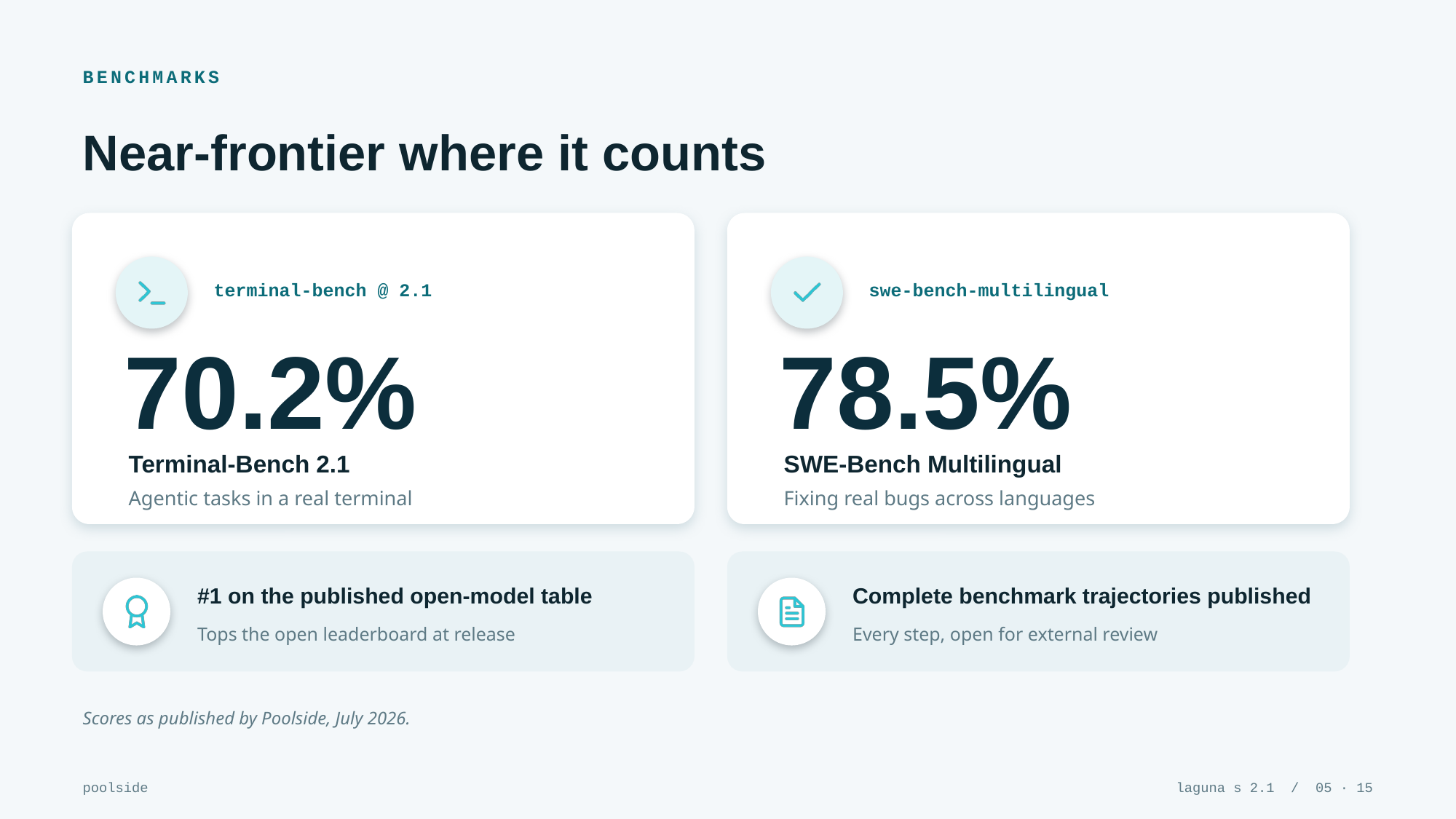
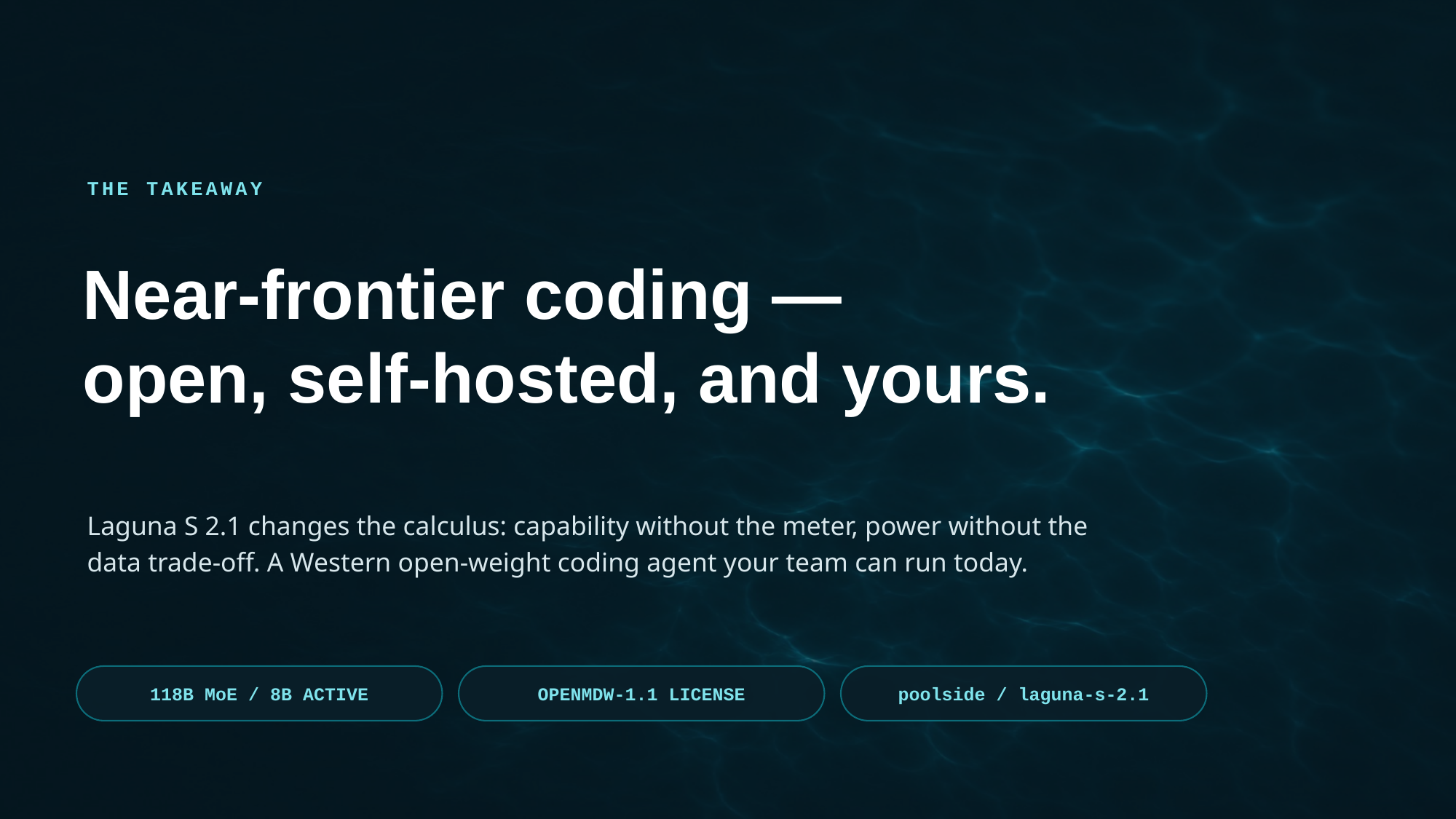
- Laguna S 2.1 is a 118B-parameter model that activates just 8B parameters per token, scoring 70.2% on Terminal-Bench 2.1 and 78.5% on SWE-Bench Multilingual.
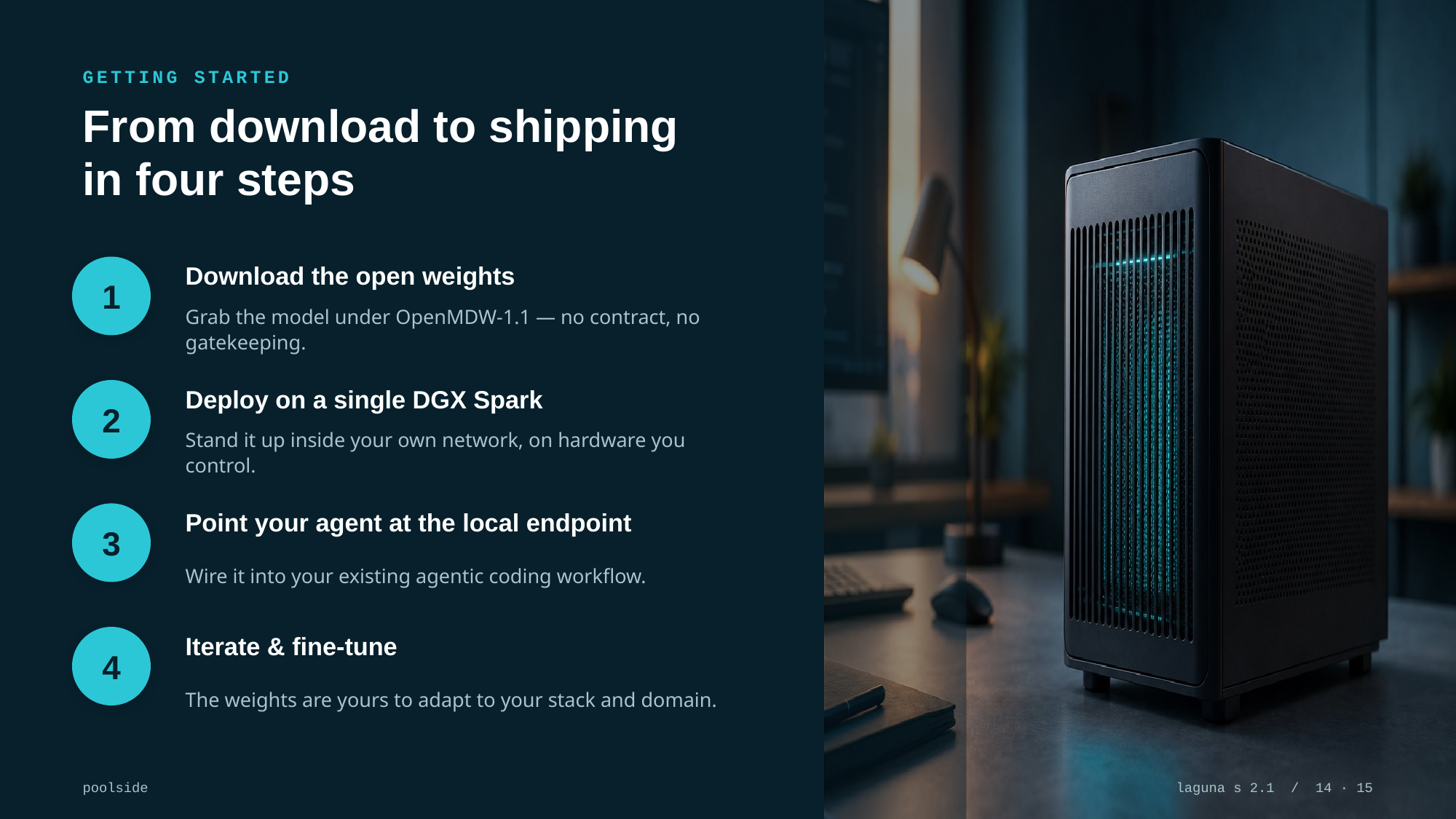
- It runs on a single NVIDIA DGX Spark and ships under the permissive, Linux Foundation-backed OpenMDW-1.1 license.
- Training ran in under nine weeks on 4,096 H200 GPUs, and Poolside published full evaluation trajectories for outside review.
- It leads other openly disclosed coding models on several benchmarks but still trails closed frontier systems by a real margin.
Swipe or scroll sideways to flip through the 15-slide deck →
What is Laguna S 2.1?
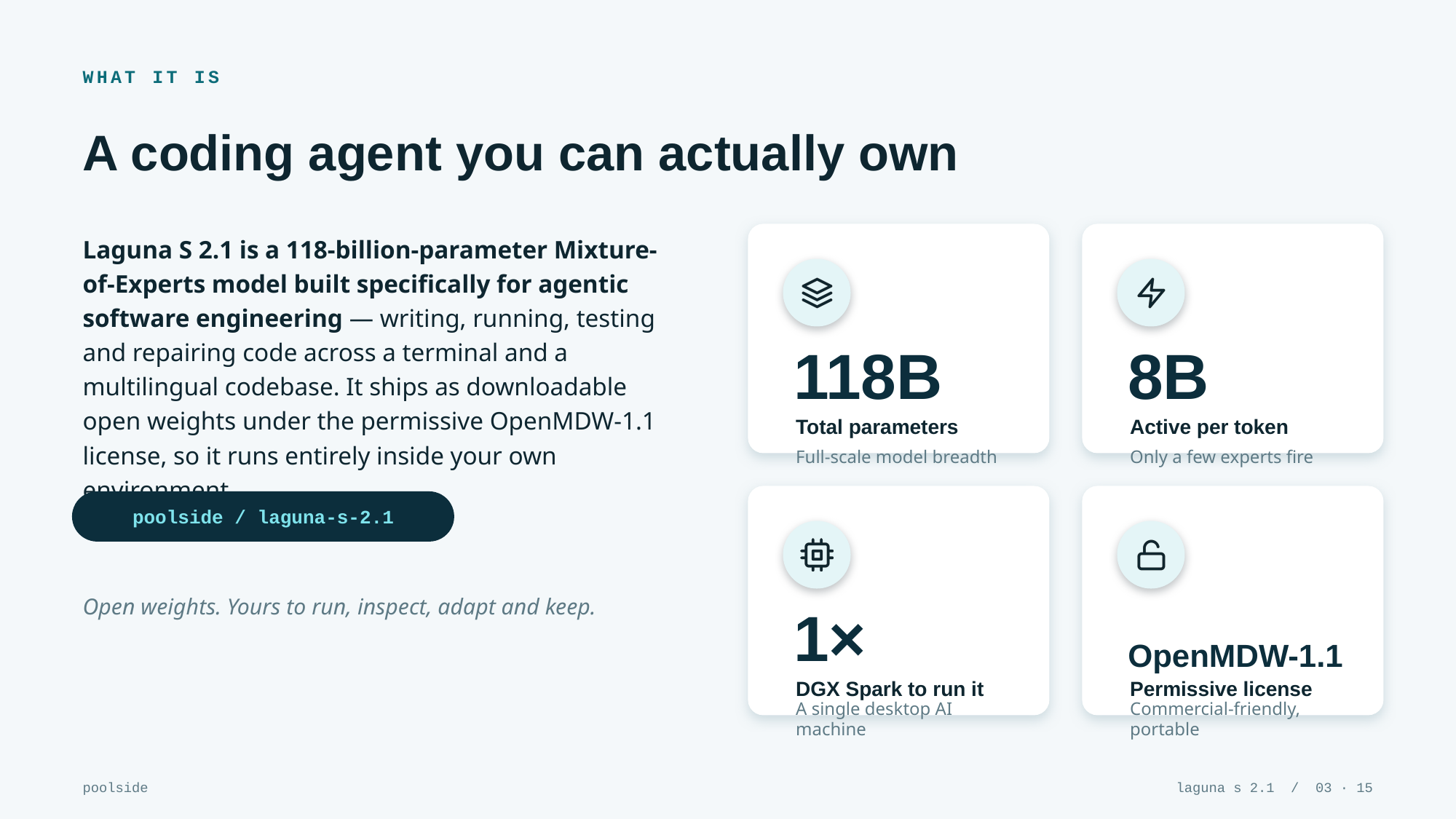
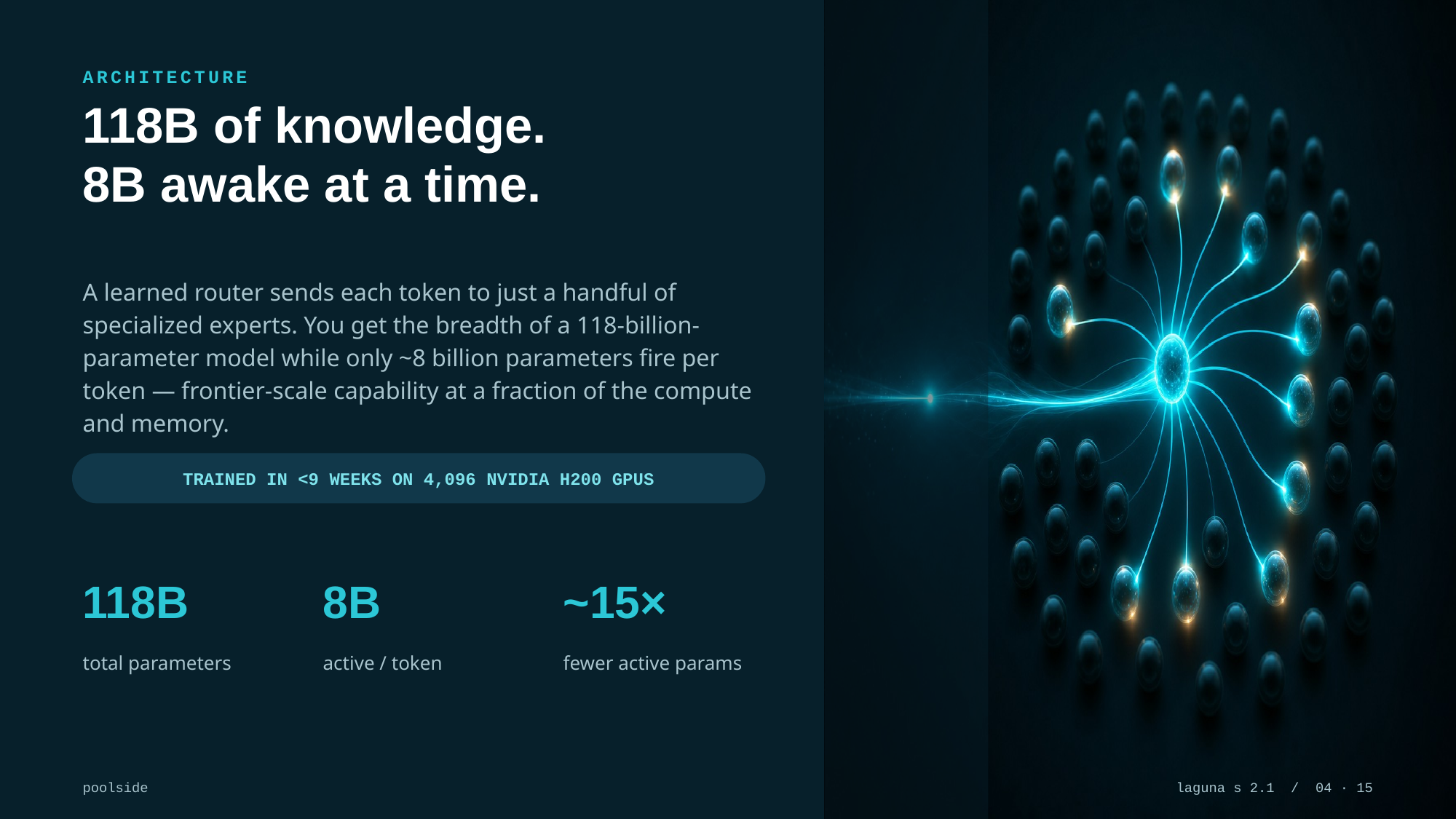
Laguna S 2.1 is a Mixture-of-Experts coding model that Poolside released on July 21, 2026, built for agentic, long-horizon coding rather than one-shot code completion. According to Poolside’s release notes, it has 118 billion total parameters and activates 8 billion per token, sitting between the smaller Laguna XS 2.1 and the dense Laguna M.1 in the lineup. Roughly 6.8 percent of the network switches on for any token, keeping inference cost close to an 8B dense model while retaining more stored knowledge. It also carries a 1-million-token context window and two settings, thinking off and max thinking, for trading speed against reasoning depth.
Why does activating only 8 billion parameters matter?
It matters because inference cost and hardware footprint track the active parameter count, not the total model size, which is what lets a 118B model run on hardware built for a desk instead of a data center. The sparse design routes each token through 256 experts plus one shared expert, so cost scales with the 8 billion active parameters rather than the full 118 billion sitting in memory, as VentureBeat reported. Memory sizing still uses the full count, since every expert stays loaded: 4-bit weights need about 59GB, fitting a single DGX Spark’s 128GB of unified memory; FP8 needs roughly 118GB, still within one Spark or H200; full BF16 needs about 236GB, calling for two linked Sparks or a multi-GPU server, per MarkTechPost.
How does it perform against other coding models?
On the metrics Poolside publishes, Laguna S 2.1 leads other open models whose parameter counts are disclosed, while trailing closed frontier systems. With thinking enabled, it scores 70.2 percent on Terminal-Bench 2.1, placing first among open, disclosed-size models on the company’s own leaderboard, and 78.5 percent on SWE-Bench Multilingual, topping that table outright, per MarkTechPost. The gap versus larger open rivals is starkest on a third benchmark, DeepSWE v1.1, where it scores 40.4 percent against a rival model roughly six times its active size that manages only 9.0 percent.
Reasoning does most of that work: without thinking enabled, the Terminal-Bench score drops to 60.4 percent and DeepSWE falls to 16.5 percent, a pattern The Decoder documented. That accuracy costs tokens: thinking-mode DeepSWE runs use roughly 249,000 completion tokens versus about 99,000 without it. The ceiling still sits well above Laguna S 2.1, with closed models scoring in the high 80s on Terminal-Bench 2.1. Poolside cautions that its comparison tables mix vendor self-reported numbers, leaderboard results, and third-party figures gathered under different harnesses, so the gaps should read as directional, VentureBeat noted.
What does the trajectory publication actually show?
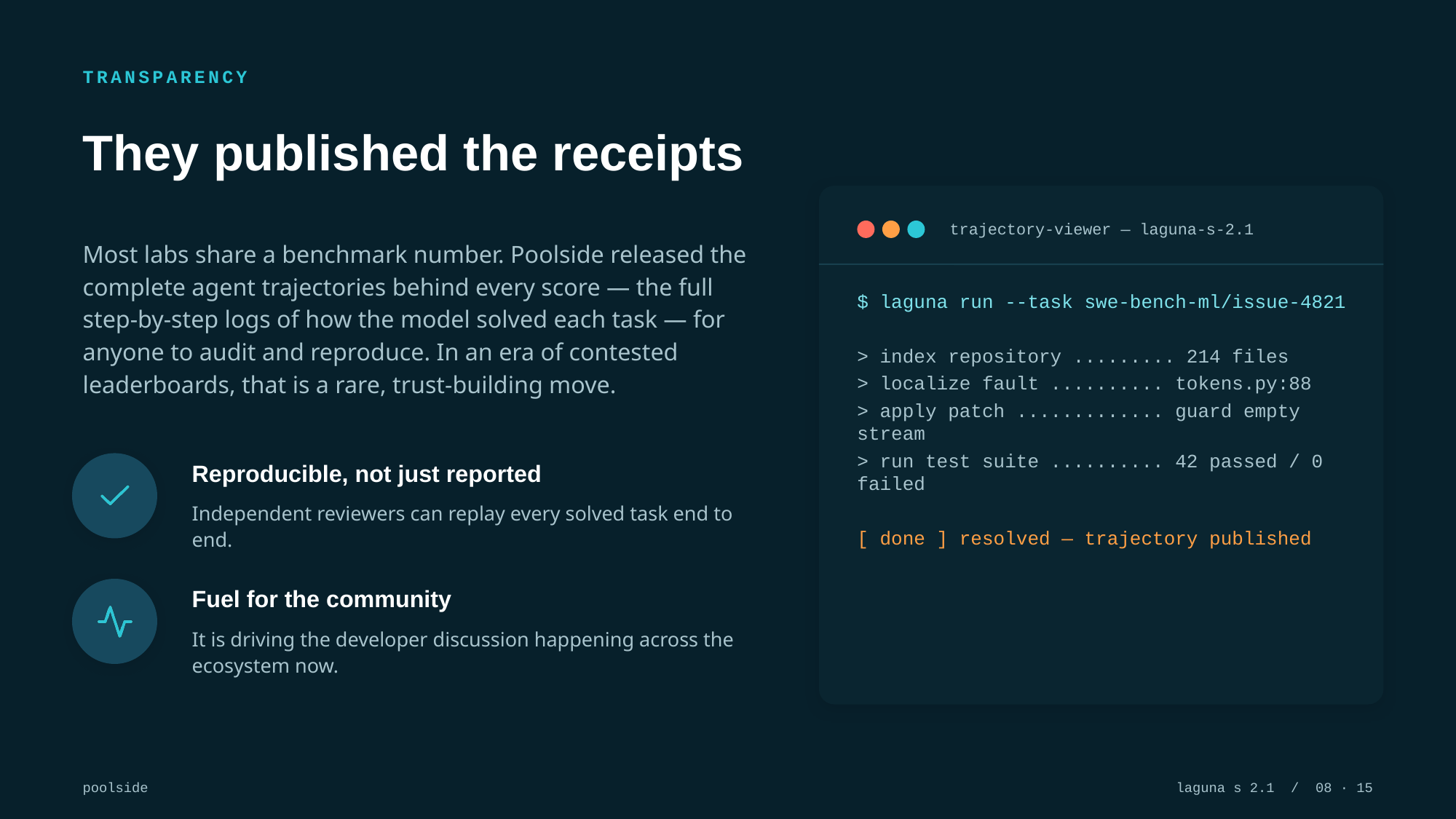
Rather than release scores alone, Poolside published its full evaluation run logs at a dedicated site so outside researchers can check the work, and it highlighted unedited examples of the model working unsupervised. In one, it built a working HTML/CSS browser engine from an empty folder across 181 steps and a 50-minute session with no human intervention. In another, it re-derived a decades-old open combinatorics problem offline in Perl over 68 minutes after finding no Python available, an independent result rather than a memorized answer, per MarkTechPost.
Why is this framed as a “Western” open model?
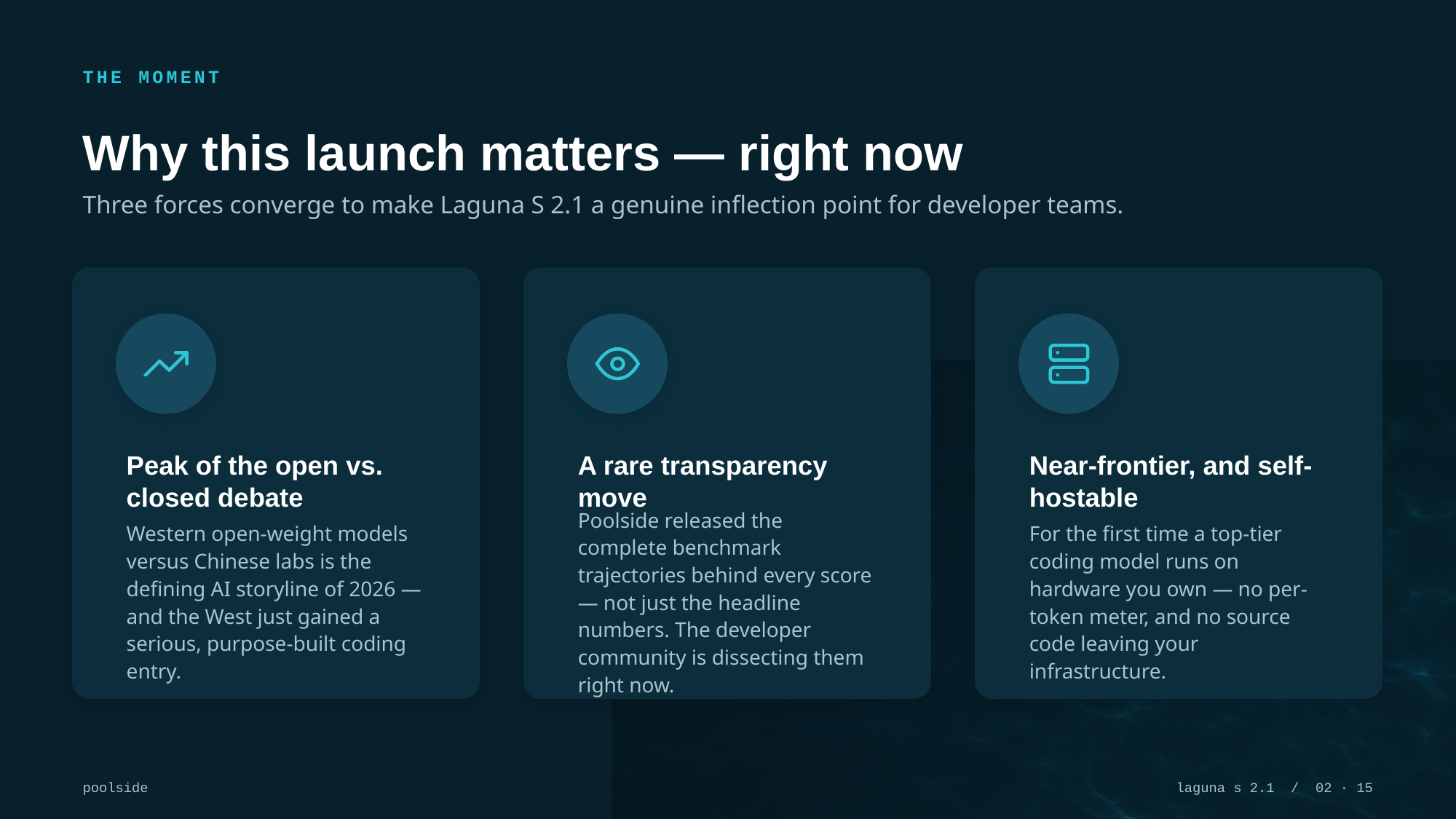
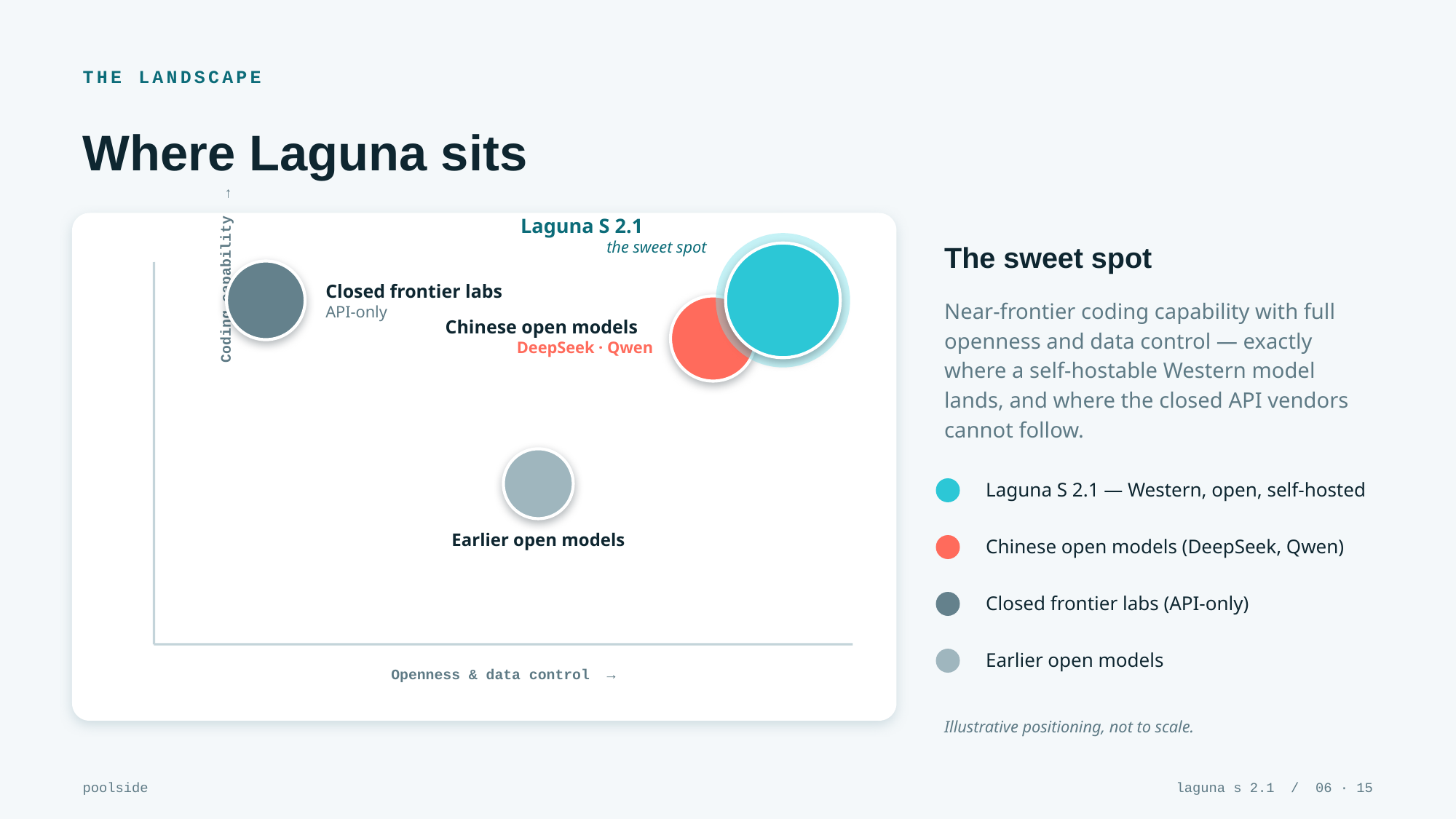
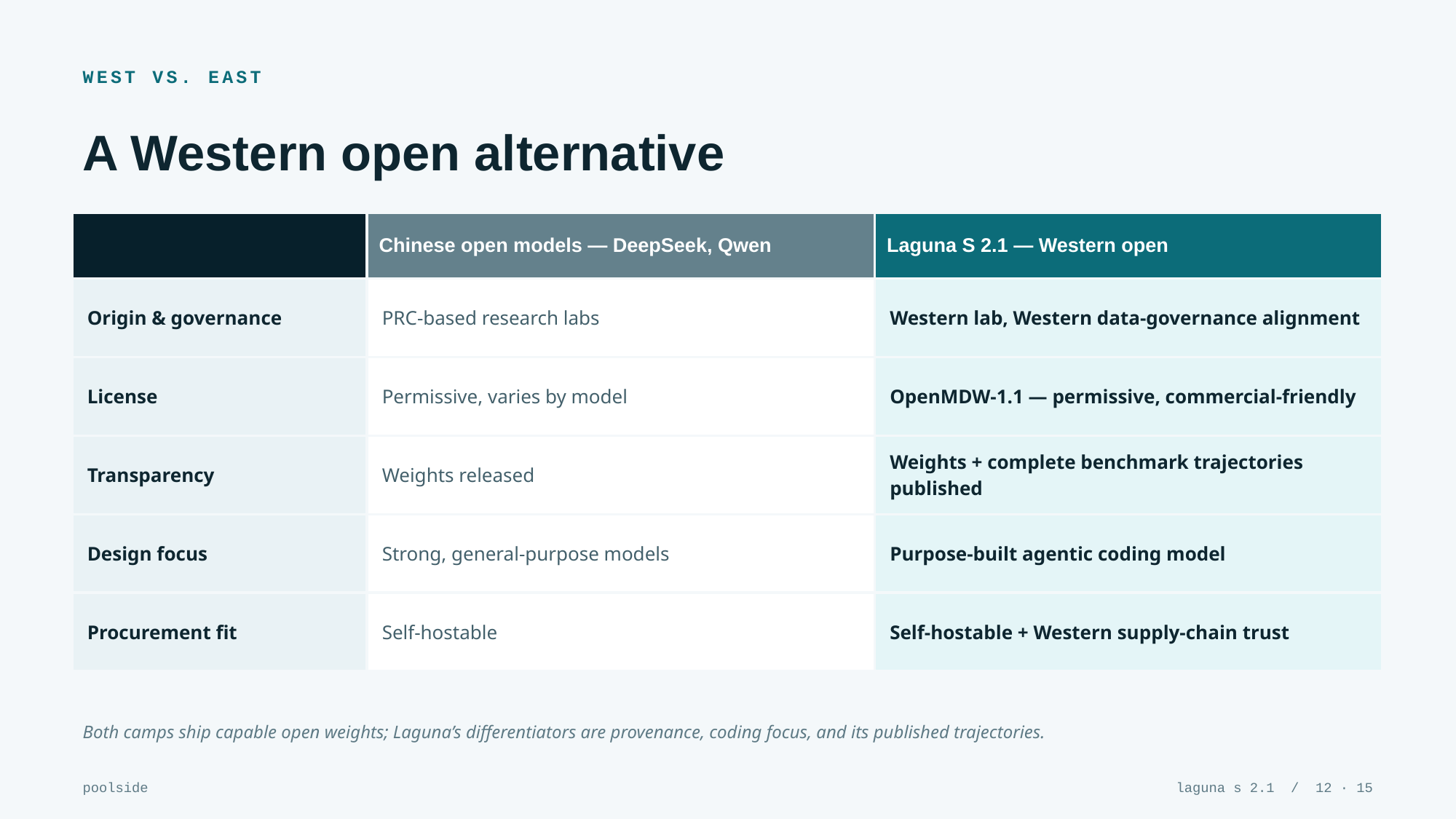
For nearly a year, almost every capable open-weight coding model came from a Chinese lab, and Poolside positions Laguna S 2.1 as the first Western entry at this size in 11 months, since a comparable open release last August. As adoption of open-weight systems has grown, the leading options have overwhelmingly come from Chinese developers, a point Poolside’s own comparison tables acknowledge, VentureBeat reported. The slides embedded below turn this same release into a short walkthrough generated by AskDeck from a brief.
Who benefits from self-hosting it?
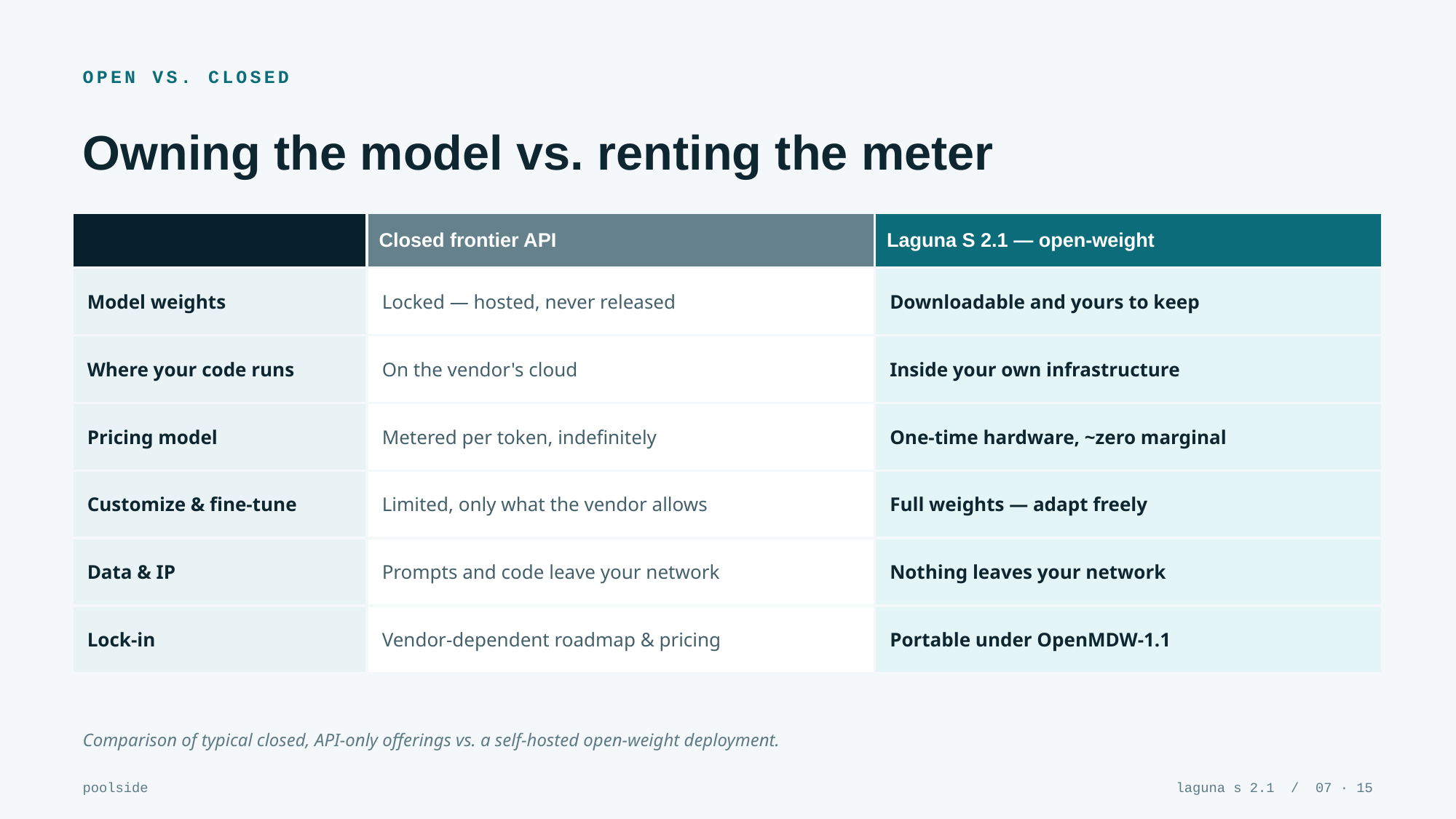
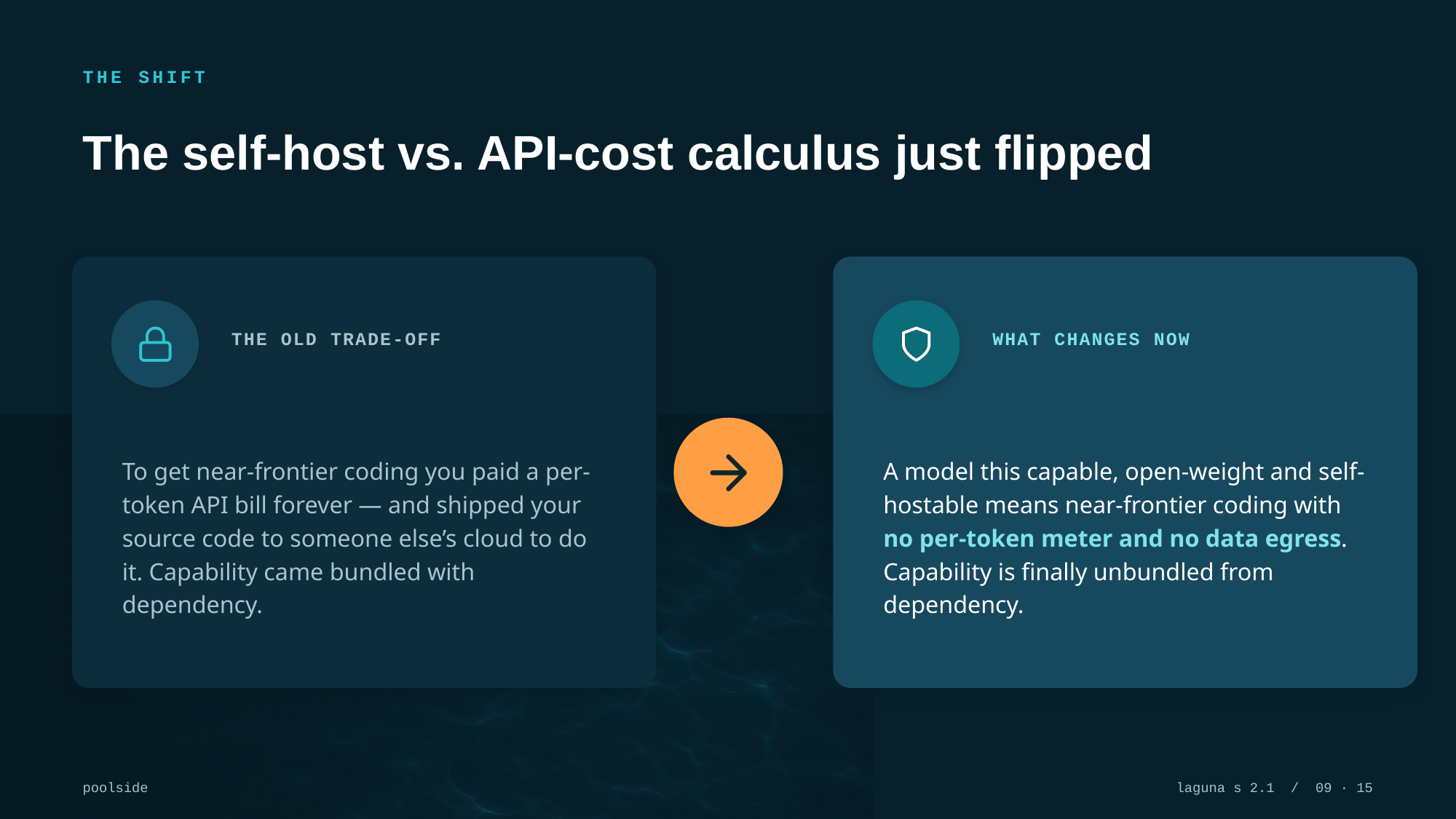
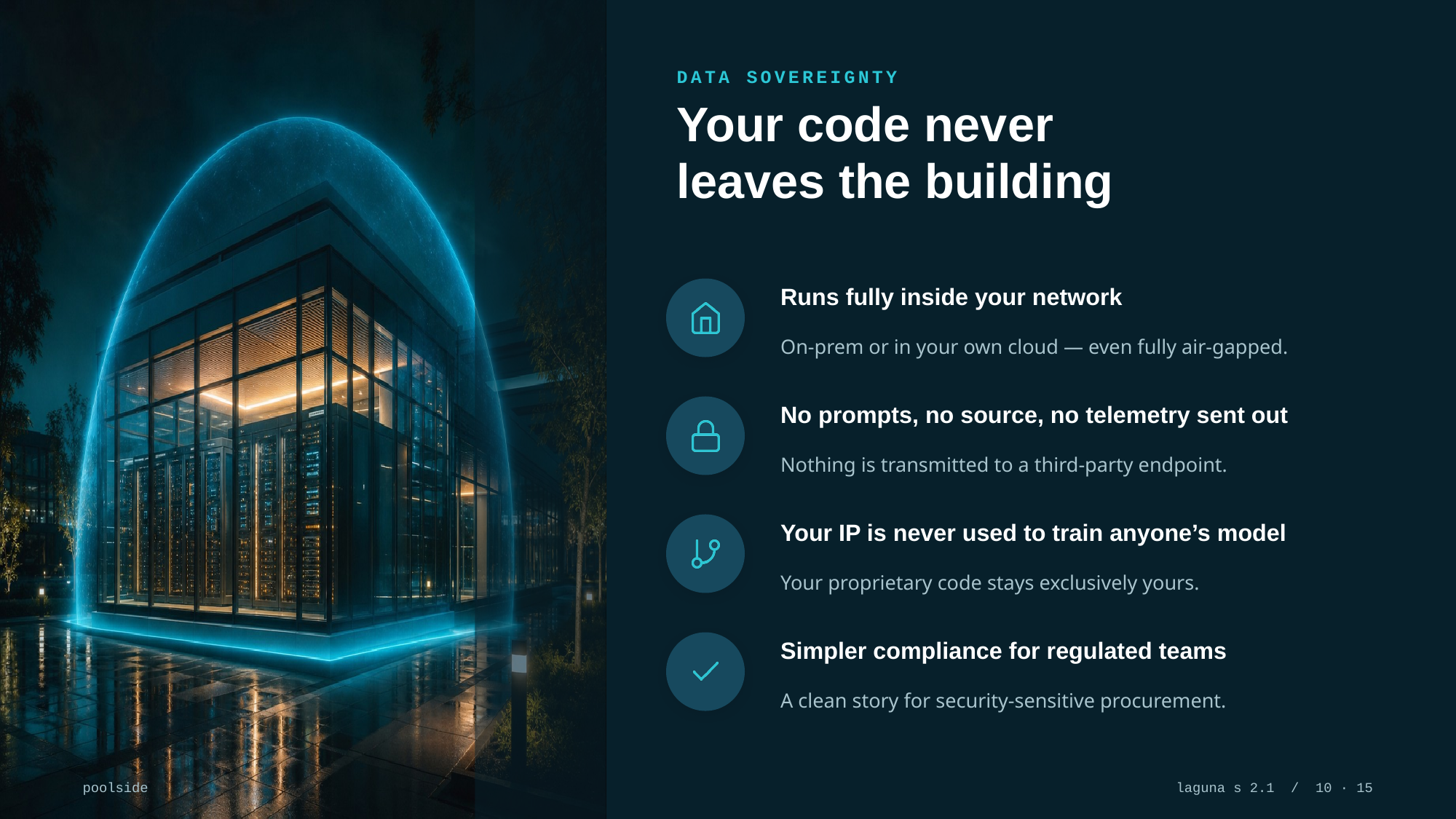
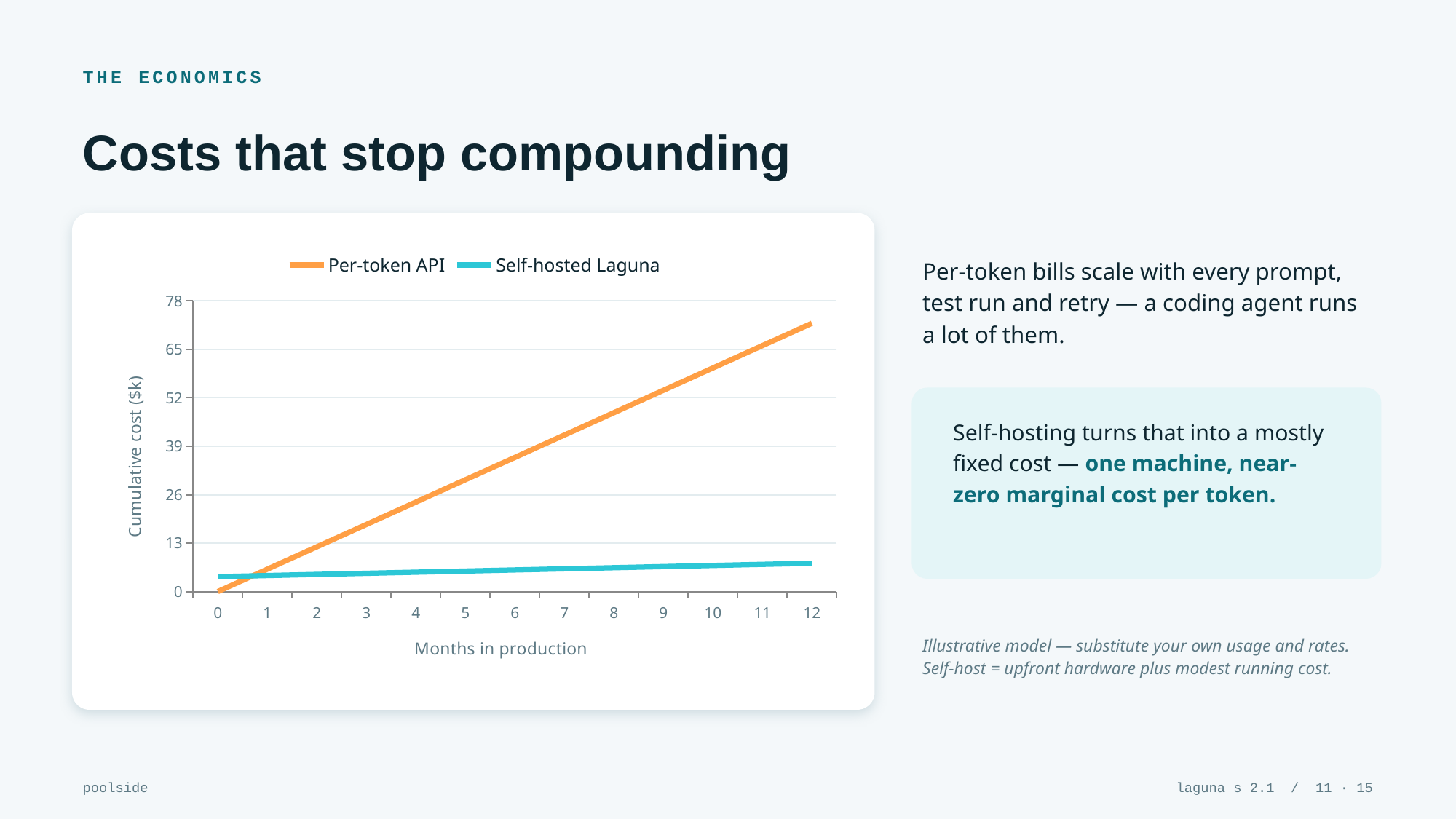
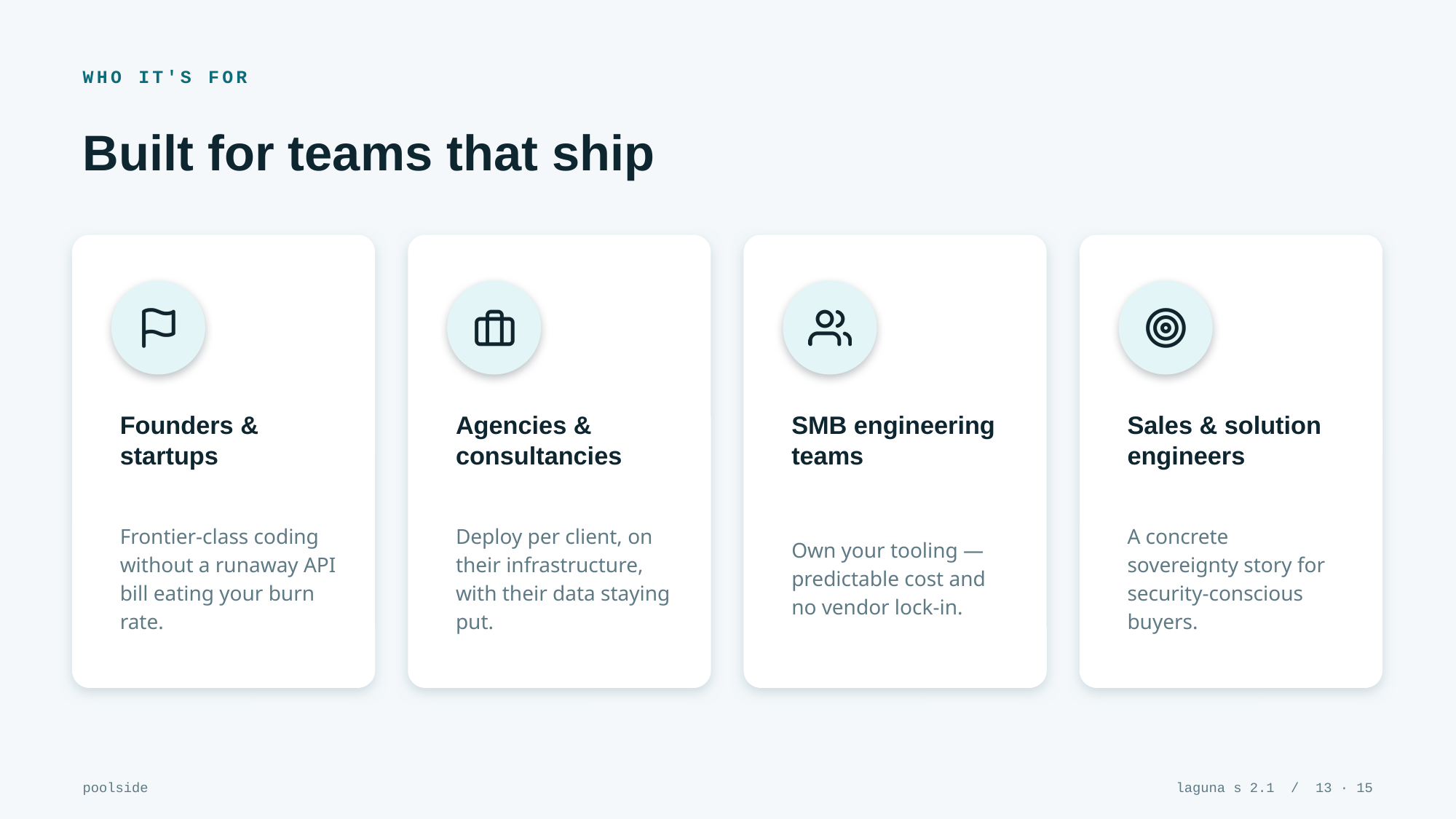
Teams running high-volume coding agents, and organizations barred from sending proprietary code to an outside API, get the clearest benefit, since self-hosting shifts spend from per-token fees to owned hardware. Running the model locally moves agentic work off metered APIs and onto infrastructure teams control, keeping sensitive code in-house, a point the company’s own announcement makes for its government and defense customer base. Teams that skip self-hosting can reach it through hosted providers instead, at a fraction of typical frontier pricing. The weights ship under OpenMDW-1.1, a Linux Foundation-backed permissive license allowing commercial use, modification, and redistribution without the restrictions some “open” releases attach.
If you need to brief a team on what Laguna S 2.1 is and why it matters before anyone reads the technical report, the deck below covers the same ground, built with AskDeck from a short brief. Download it and edit it for your own briefing.