
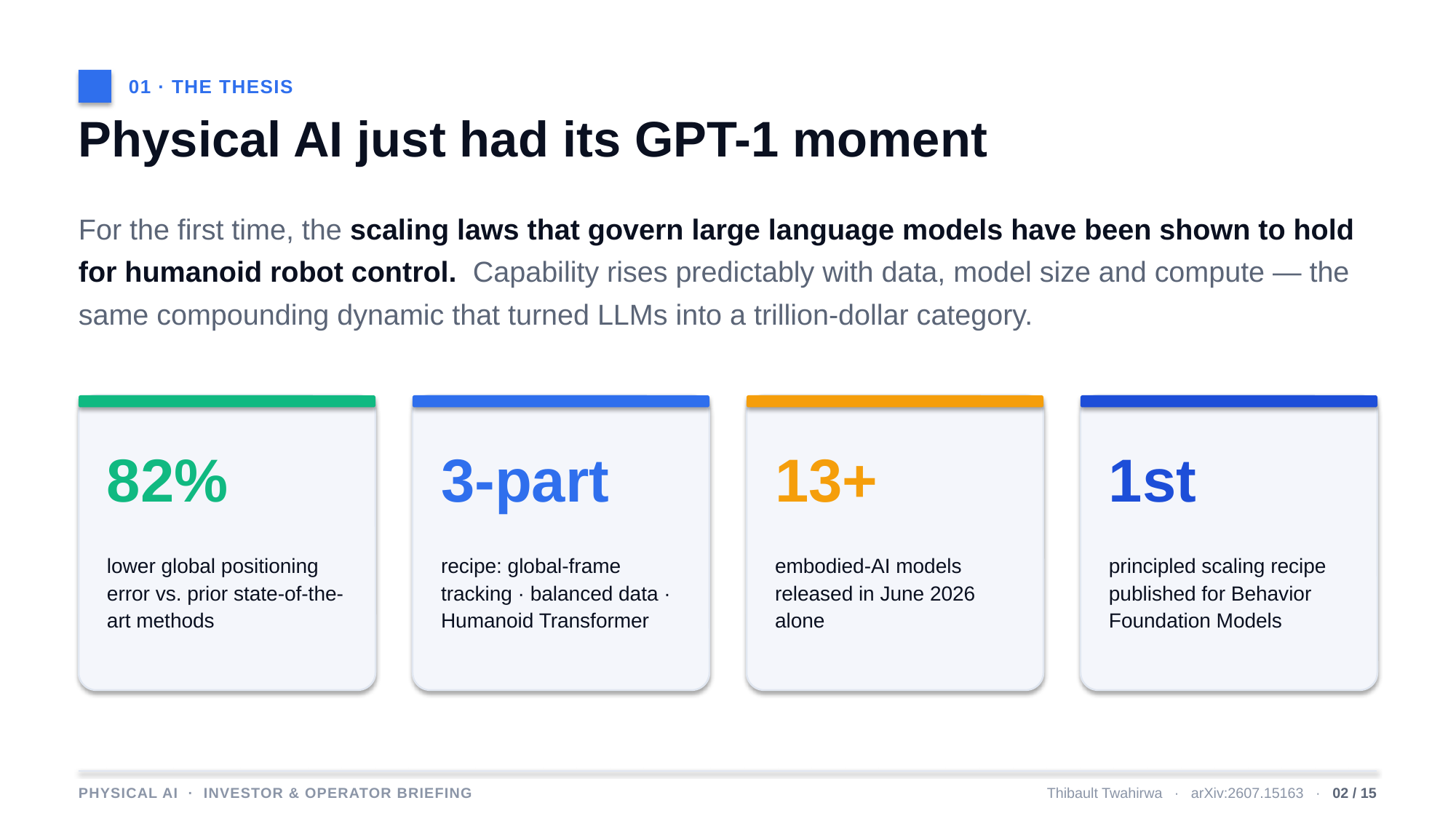
A humanoid robot’s biggest weakness has rarely been walking. It’s knowing where it is. Ask one to cross a room and set a cup down, and small errors compound step by step until the hand misses the table by inches. A paper posted July 16 by a Shanghai AI Laboratory-led team cuts that positioning error by 82 percent, using a recipe that looks like the one that made large language models predictable.
Key takeaways
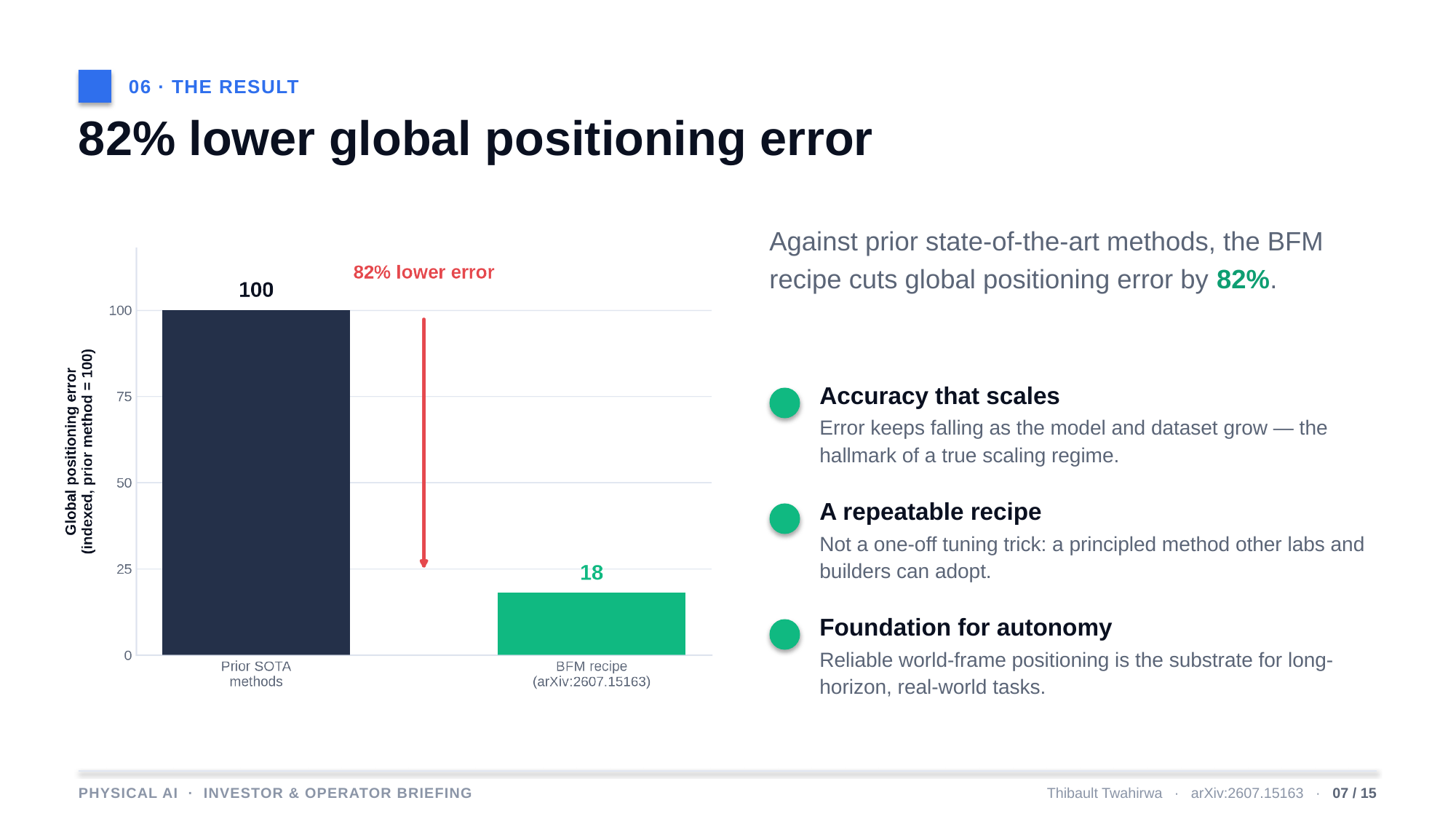
- A new scaling recipe for humanoid control cuts global positioning error by 82 percent versus prior controllers.
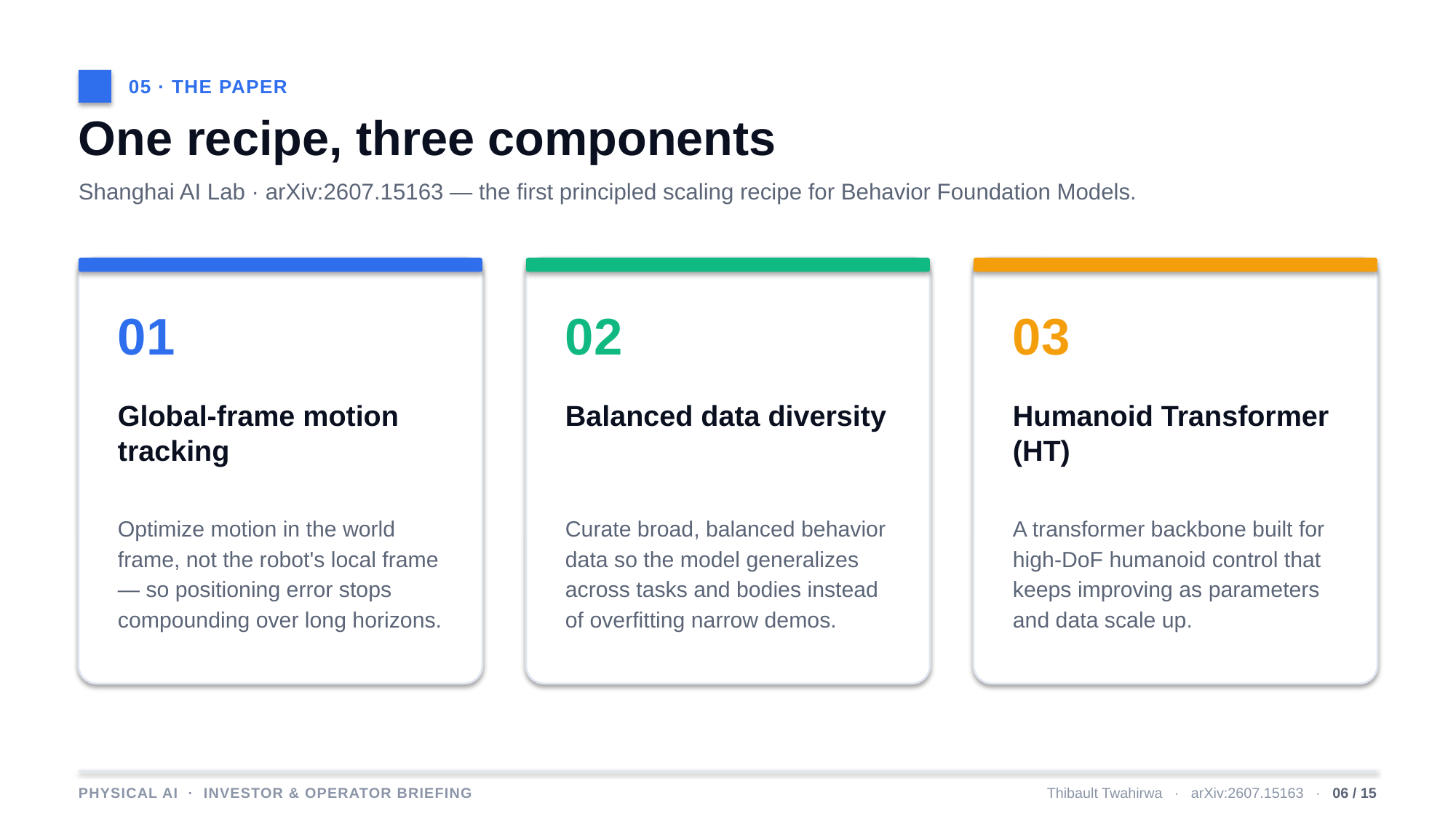
- The gain comes from three coordinated changes: global-frame motion tracking, balanced data diversity, and a new “Humanoid Transformer” architecture.
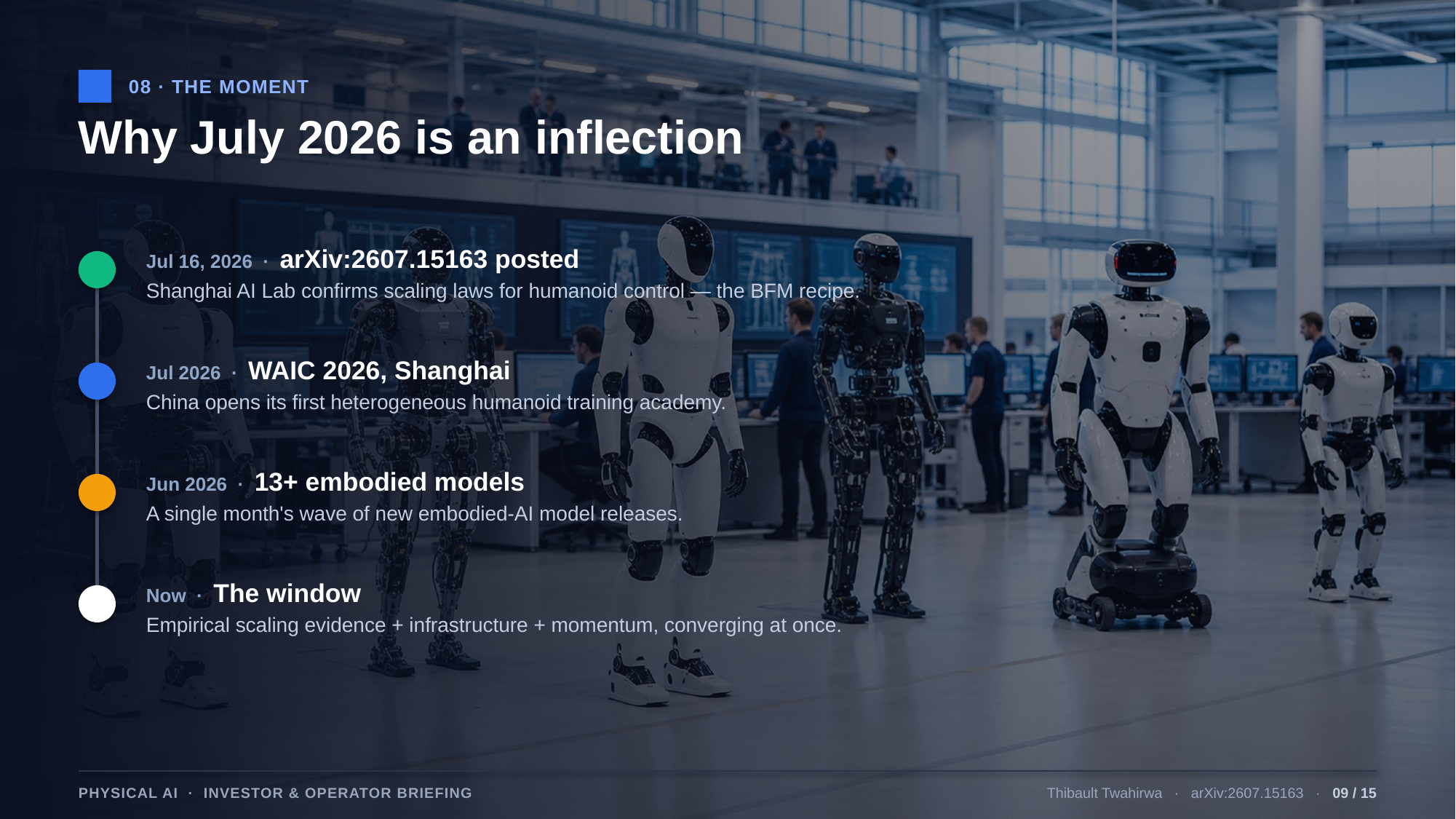
- The paper appeared two days before WAIC 2026 opened in Shanghai, where more than 1,100 companies are showcasing embodied AI systems.

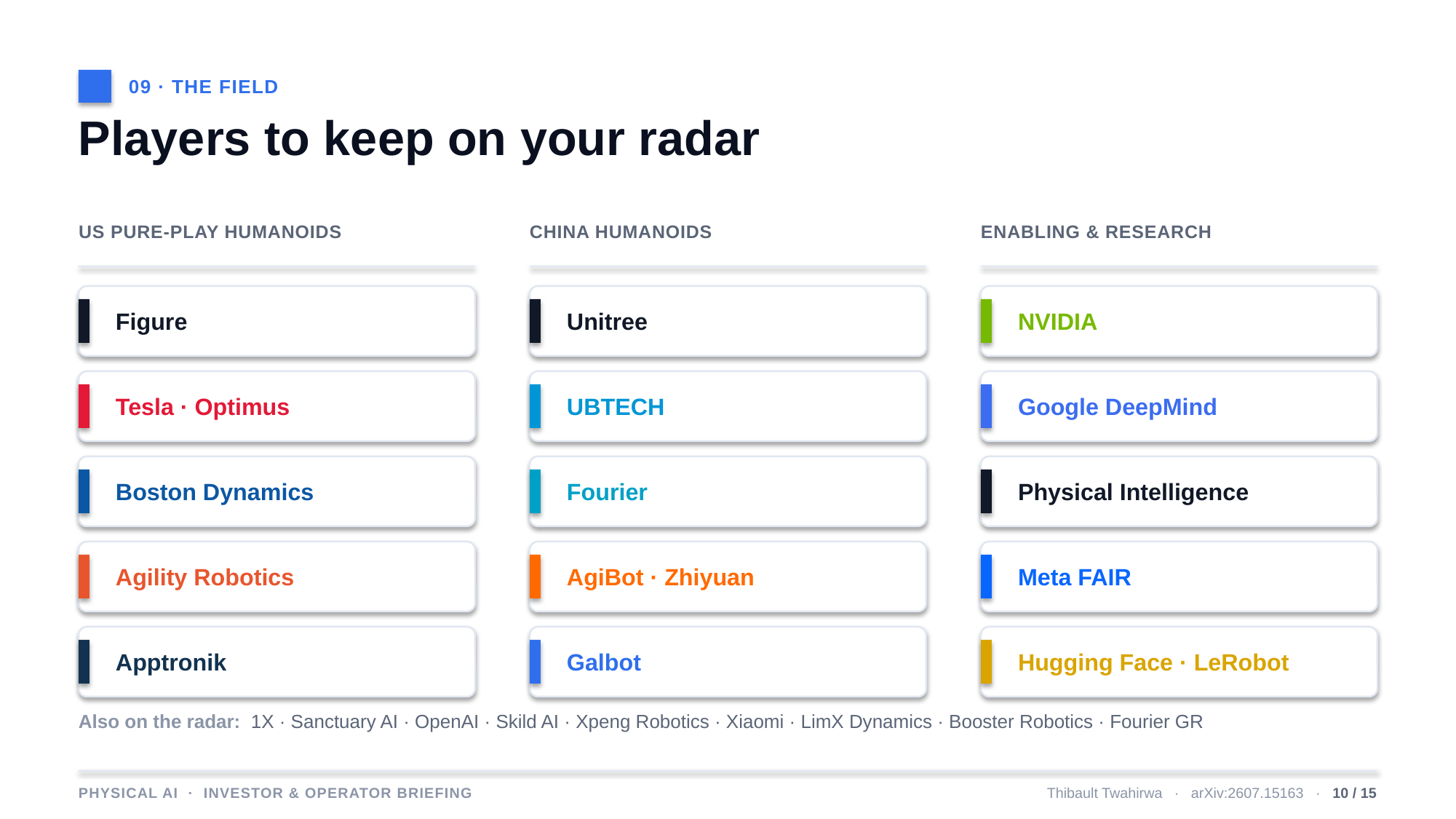
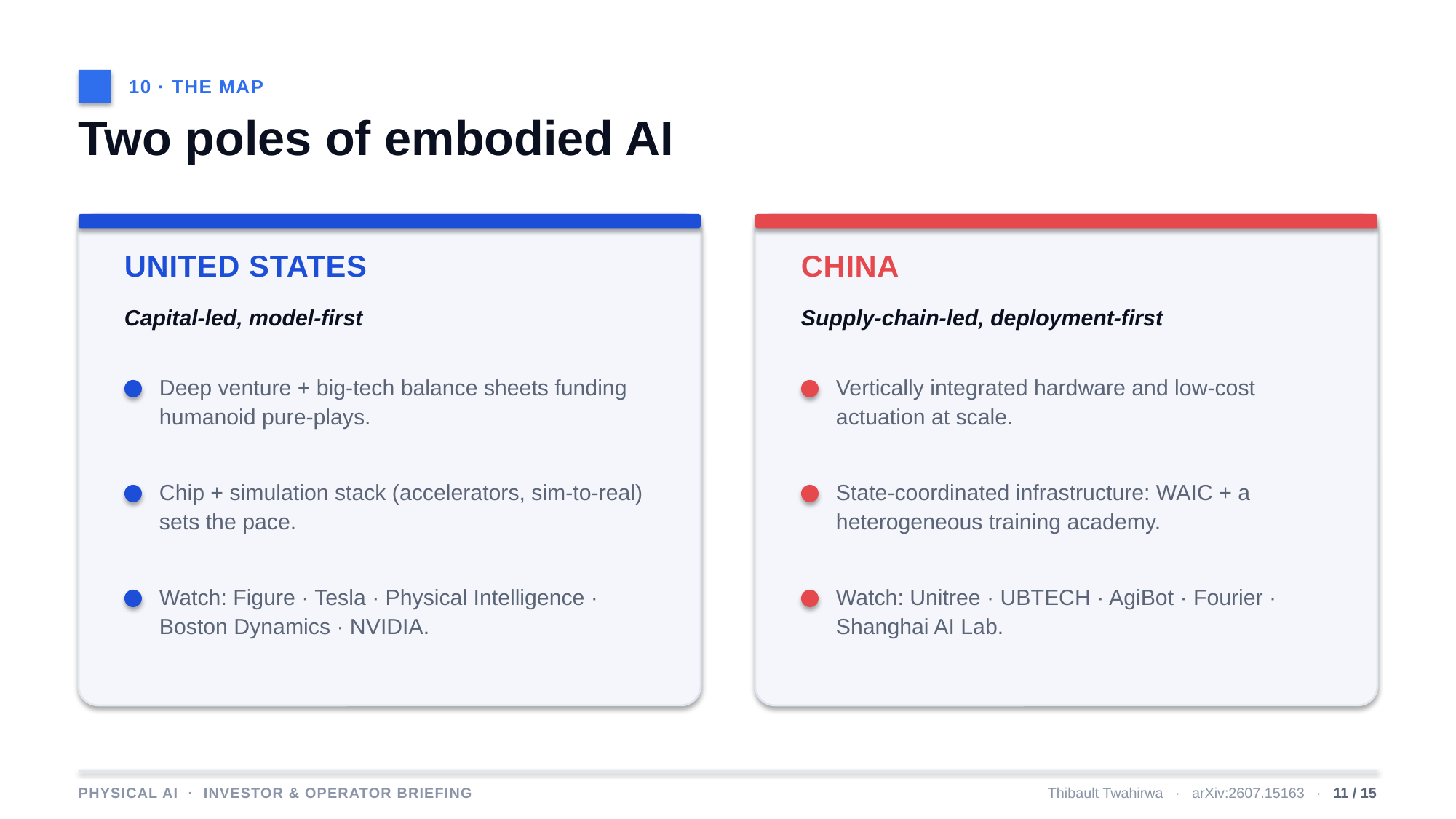
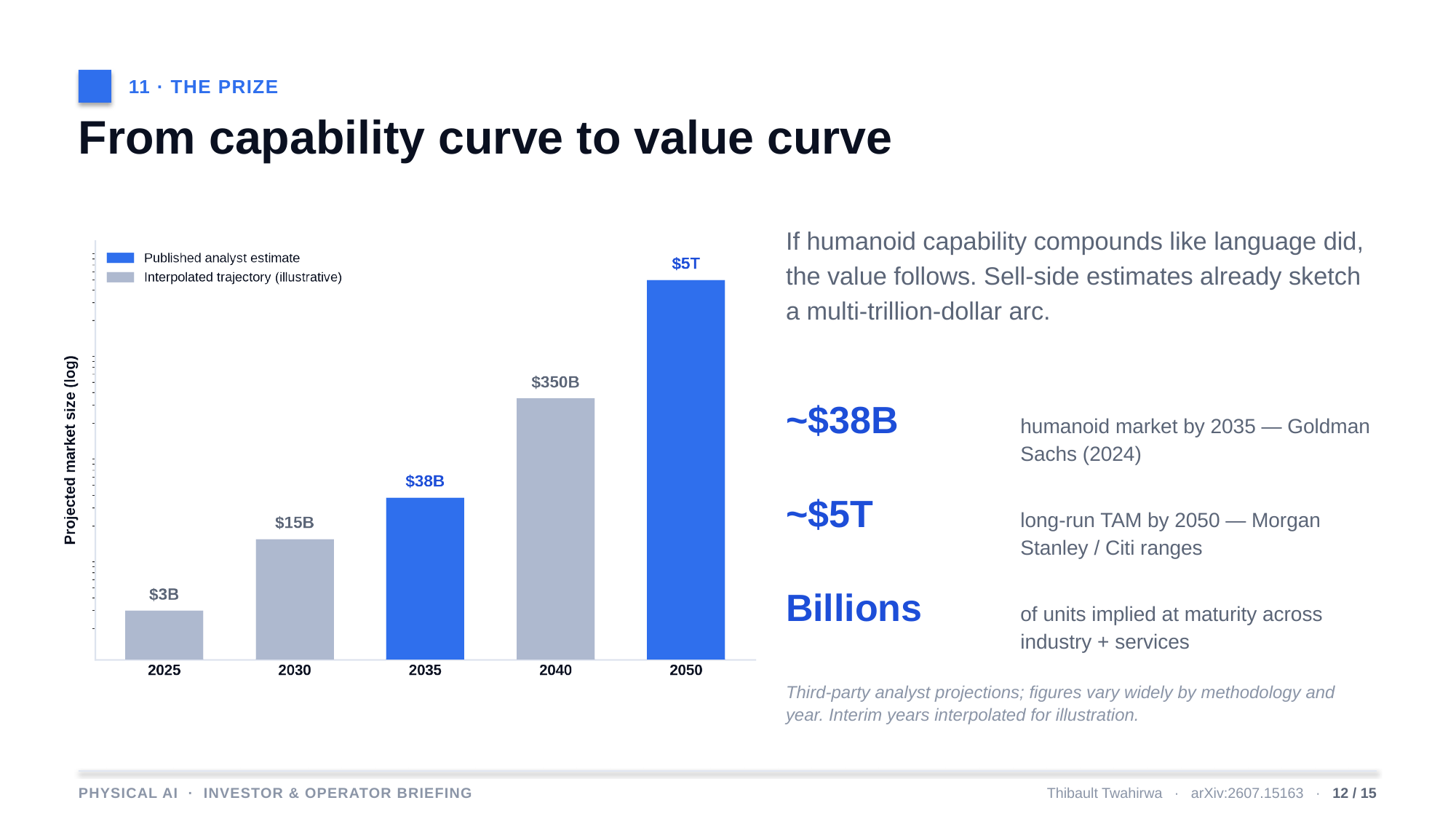
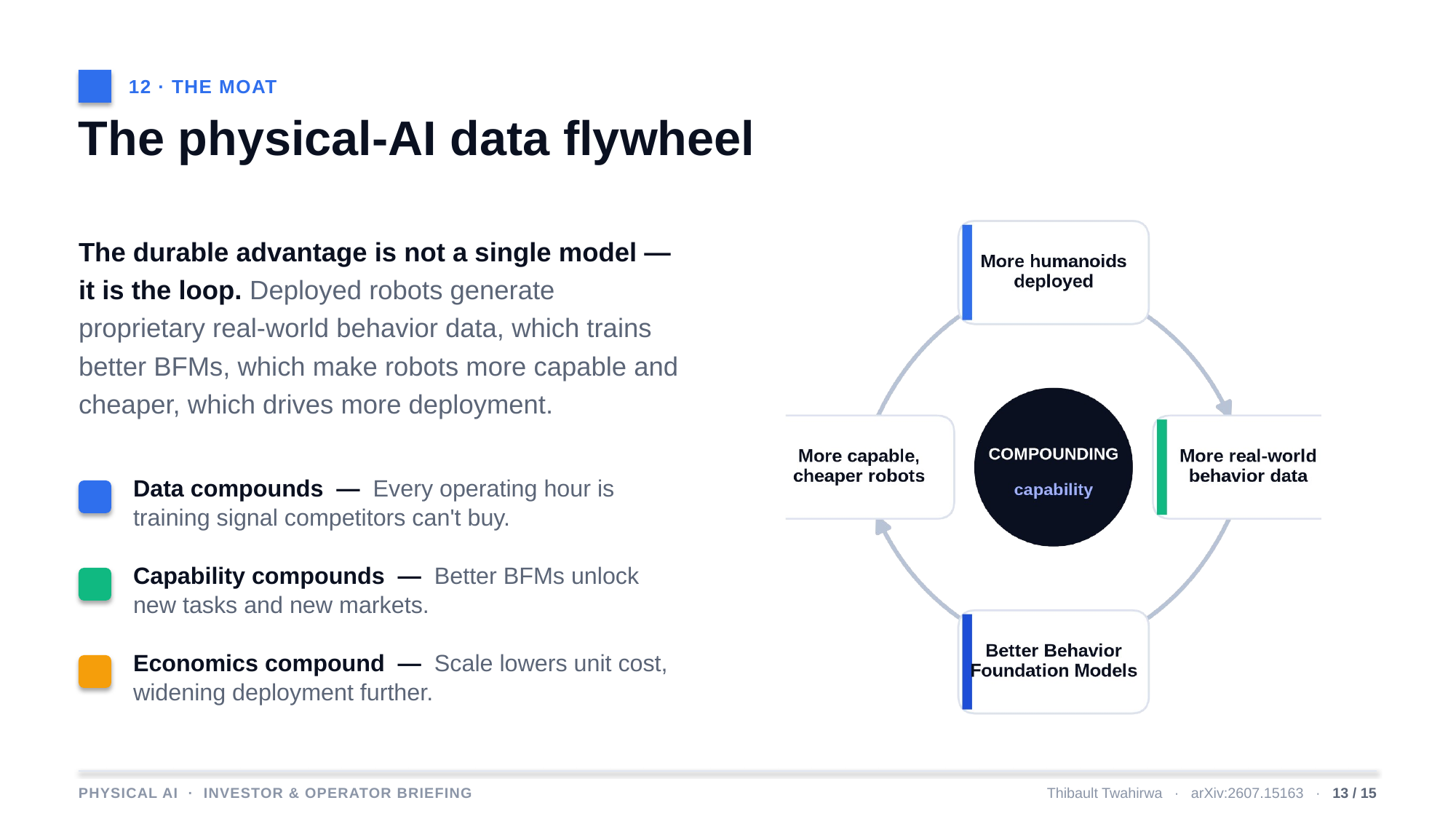
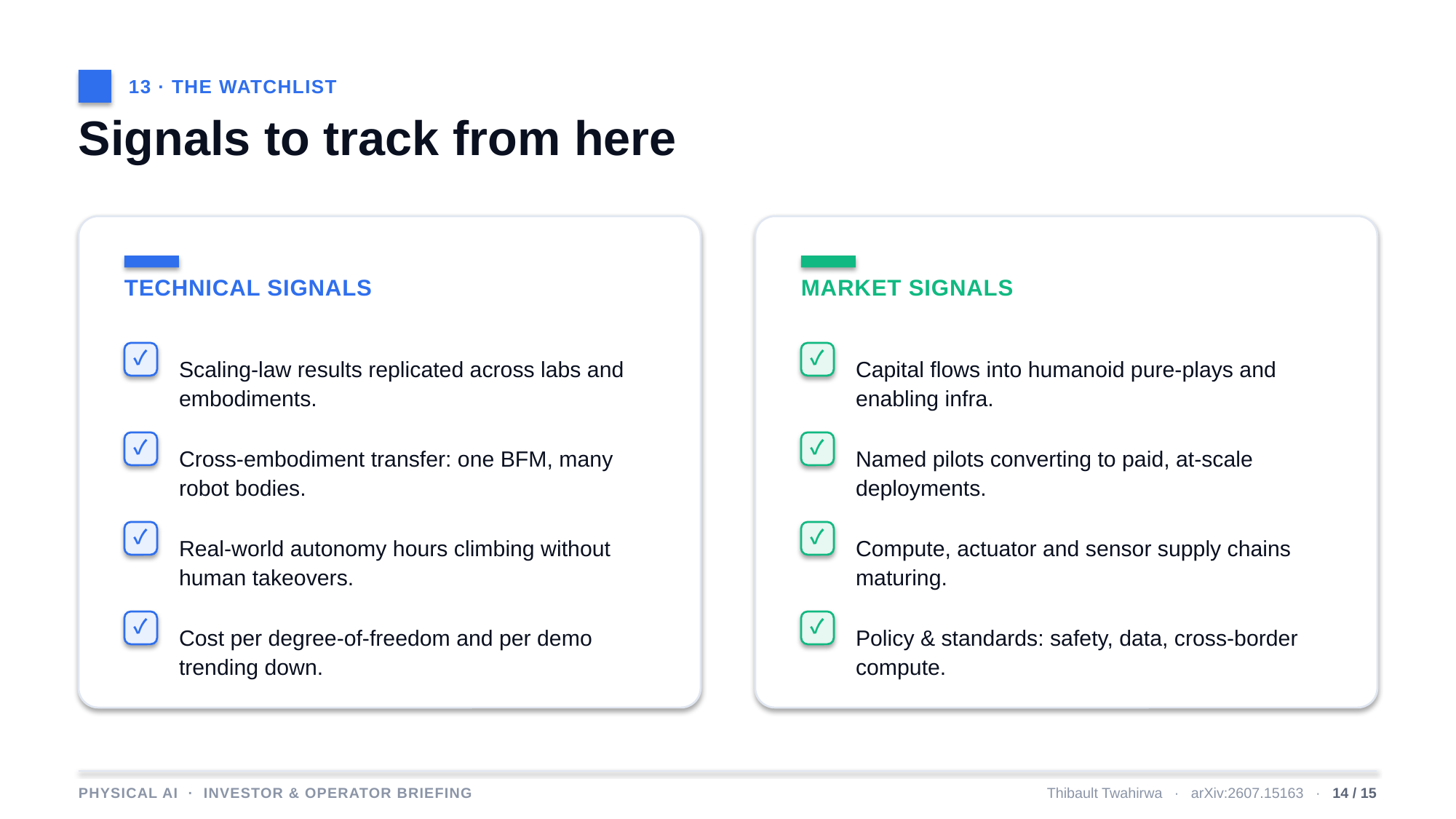
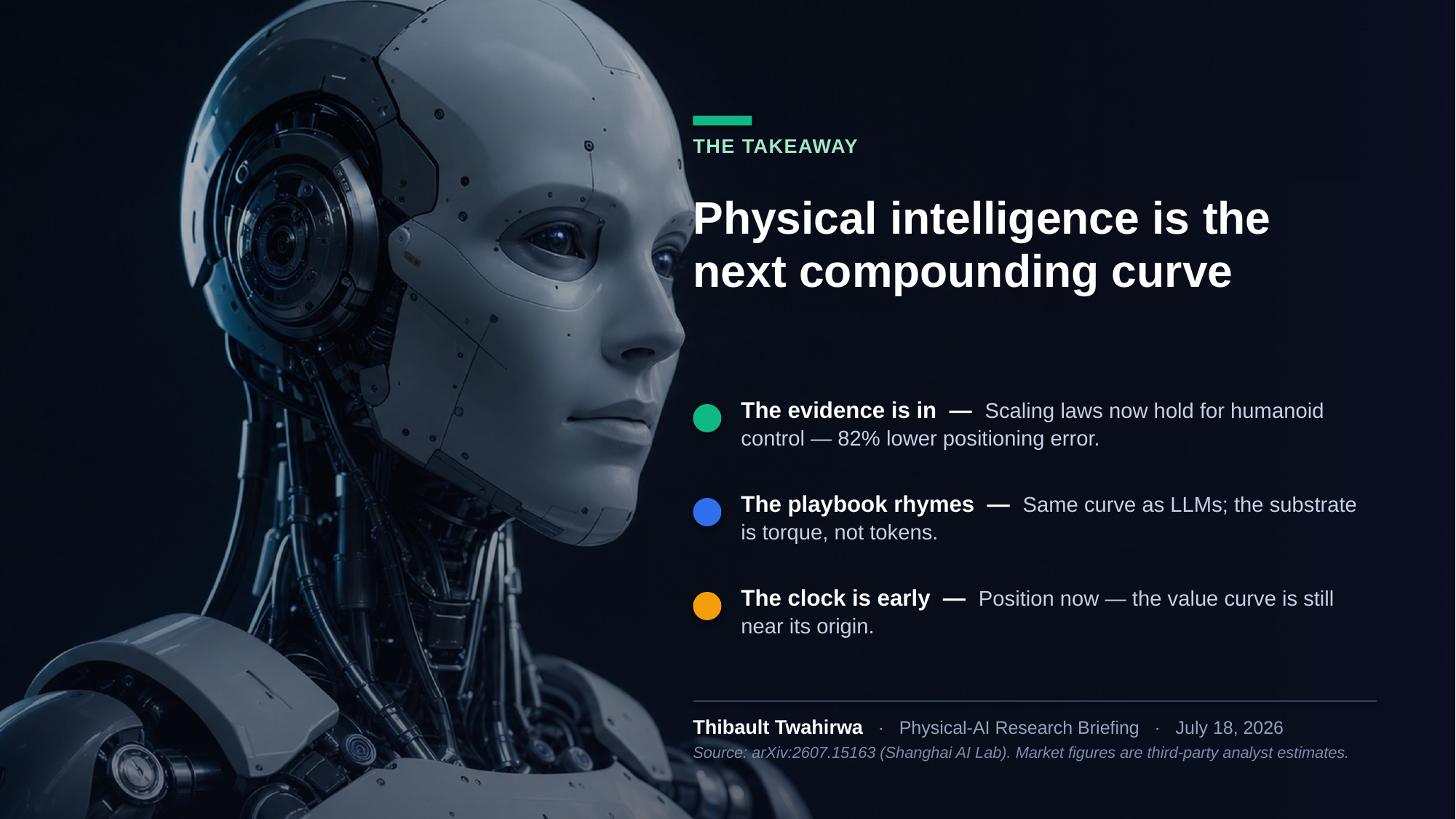
Swipe or scroll sideways to flip through the 15-slide deck →
What is a Behavior Foundation Model?
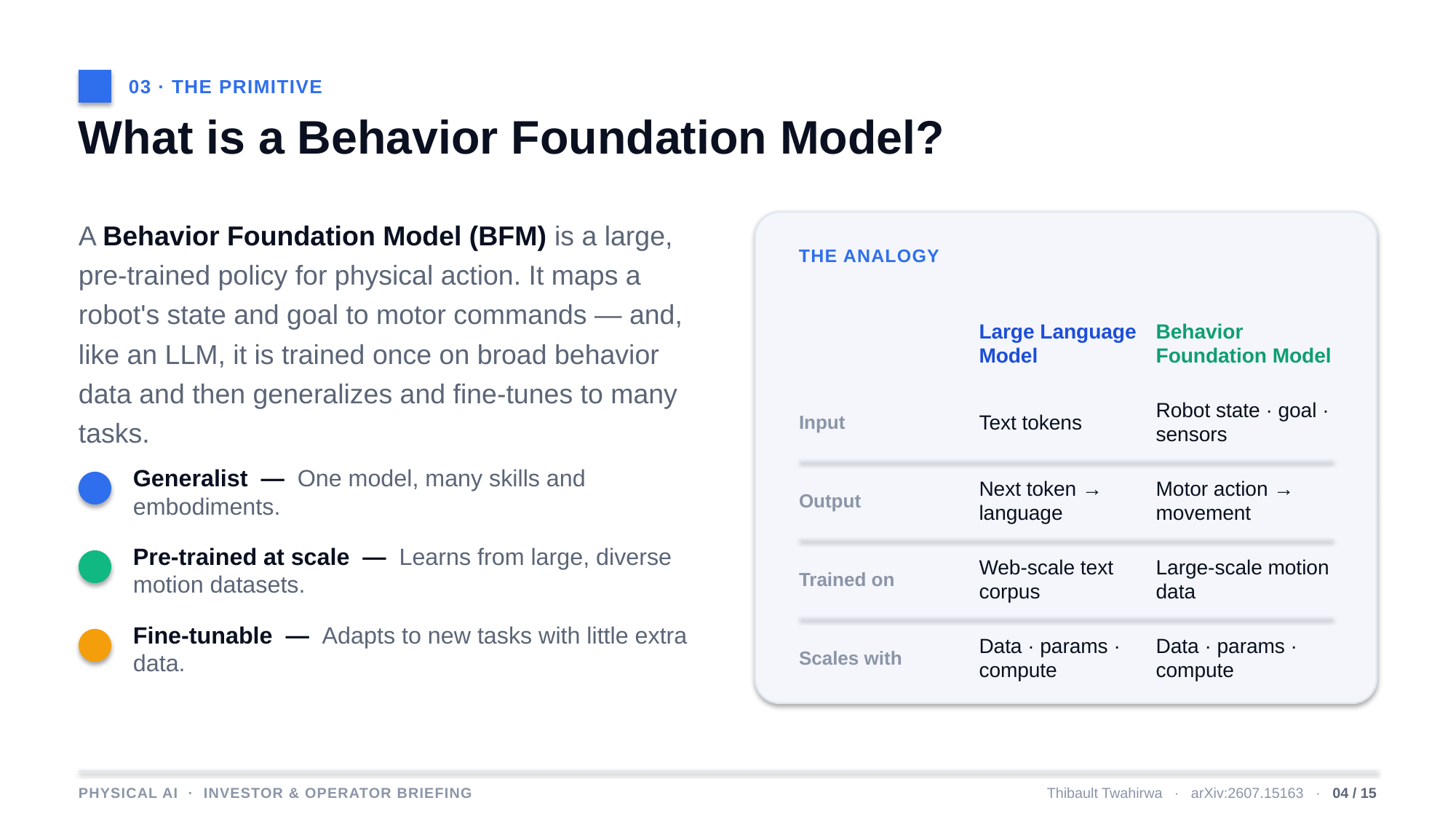
A Behavior Foundation Model, or BFM, is a single controller trained on large-scale motion data to produce many humanoid behaviors instead of one narrow skill. The same Shanghai AI Laboratory team introduced the idea in a September 2025 paper, arguing that most whole-body control systems are built skill by skill with hand-engineered rewards and generalize poorly outside them.
A BFM instead pretrains on broad behavioral data, so one model can walk, reach, squat, and recover balance without being rebuilt for each motion, the robotics analogue of a language model trained once on broad text and then prompted for different jobs. The slides embedded below sketch this shift, put together with AskDeck from a short brief, but the substance sits in the research itself.
What did the new scaling recipe actually change?
The July paper is not a bigger model or a new robot body. It coordinates three things researchers had mostly tuned separately: a learning paradigm reformulating control as reproducing whole-body behavior in the global frame, a deliberate balance between on-policy data volume and reference motion diversity, and an architecture called Humanoid Transformer that lets structured behavioral patterns emerge on their own.
Tested in simulation and on real hardware, the combination cut Mean Per-Keypoint Position Error, a measure of how far a robot’s joints drift from the intended pose, by over 10 percent in local mode and 82 percent in global mode versus prior controllers. That gap is the real finding: the error was rarely in the joints, it was in the robot losing track of where it stood over a long sequence of moves.
Why does global-frame tracking matter so much?
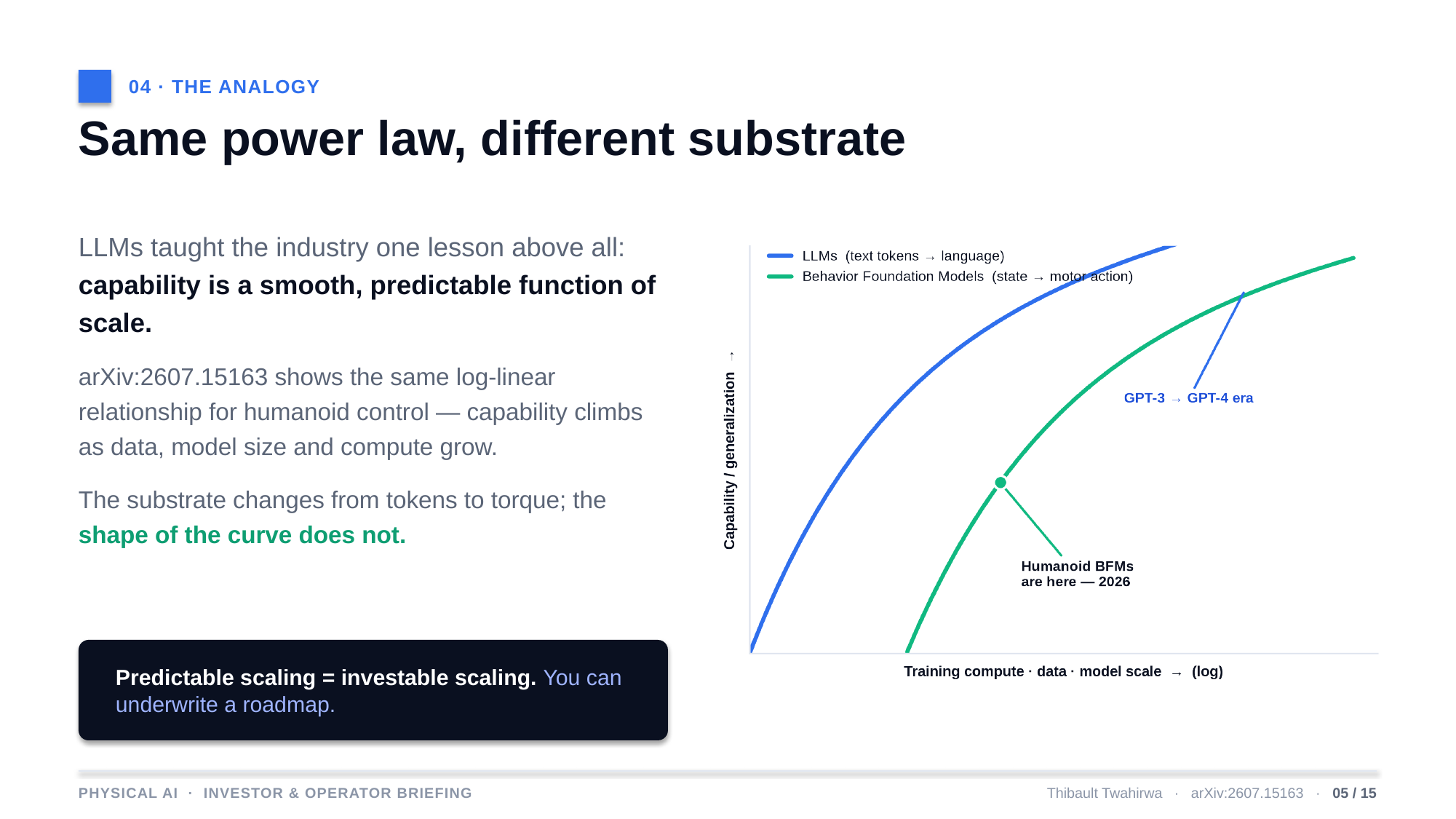
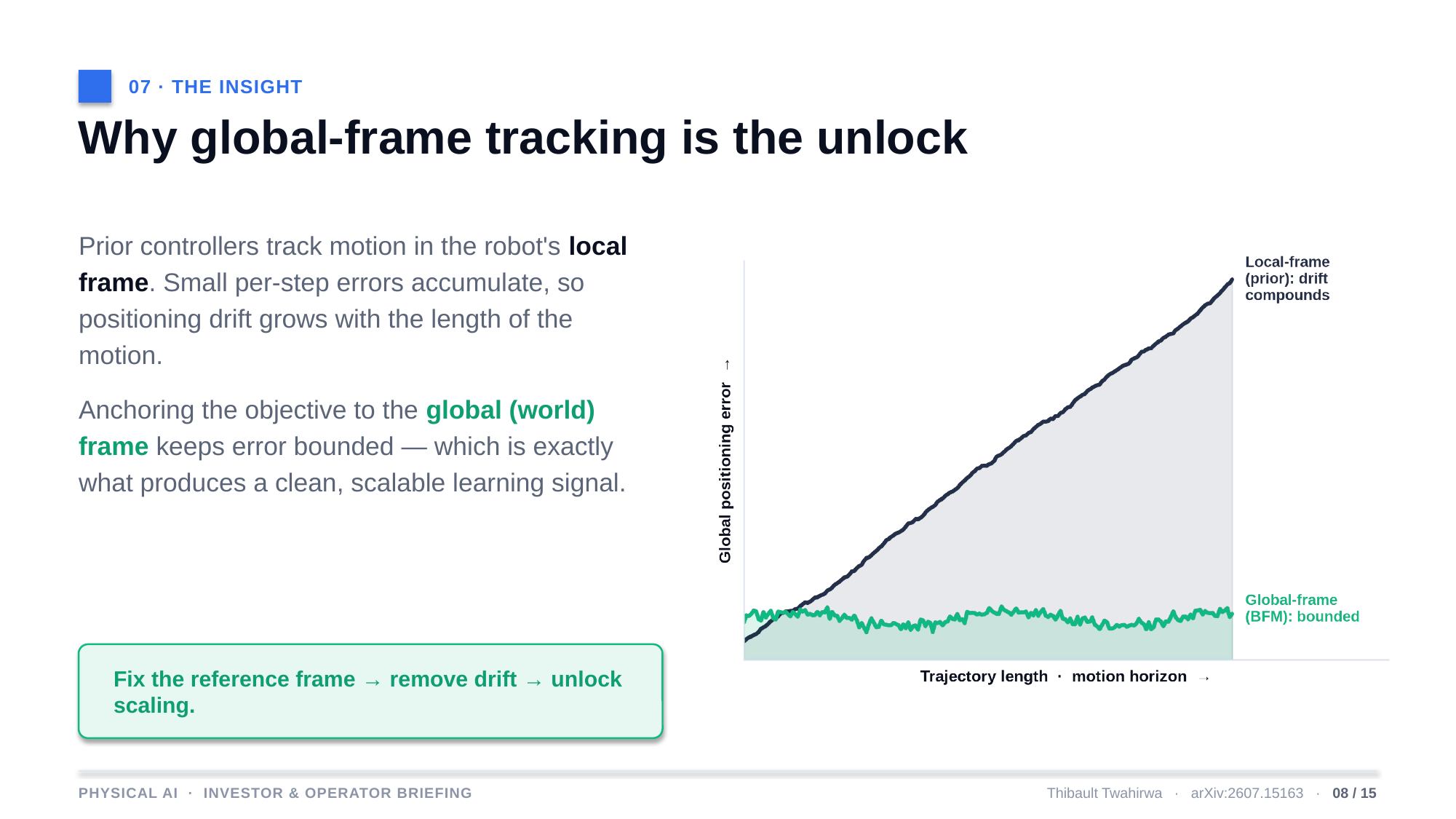
Most controllers track motion relative to the robot’s own body, which works for a single step but drifts badly across a full task like crossing a room. Reformulating the problem in a global, room-fixed frame forces the model to hold a persistent sense of position throughout, and that single change accounts for most of the 82 percent drop. It is the kind of choice that only pays off once training data and model size scale together, the same pattern large language model research documented earlier this decade.
Why is this surfacing right now?
The paper landed two days before the 2026 World Artificial Intelligence Conference opened in Shanghai on July 17. More than 1,100 companies are showing over 3,000 exhibits at WAIC 2026, including over 300 global product debuts, with embodied intelligence a headline theme.
The data side of the equation is being built in the same city. China’s first heterogeneous humanoid training center opened this month on a 5,000-square-meter site in Shanghai’s Zhangjiang district, enrolling over 100 robot models from a dozen-plus companies and expected to generate roughly 50,000 data points a day, the kind of large, varied behavioral data the scaling recipe requires. Nationally, humanoid production reported by the Global Times already topped 40,000 units in the first half of 2026, on pace to exceed 100,000 for the year, up from about 20,000 the year before.
What does this change for people watching the field?
The significant part is not 82 percent by itself. It is that humanoid control now has a documented, coordinated relationship between data, architecture, and error rate, the kind that let language model developers forecast capability gains from scale instead of finding them by trial and error. Jiang Lei of Shanghai’s National and Local Co-Built Humanoid Robotics Innovation Center told the Global Times that China already leads in manufacturing, datasets, and training environments, while the US still leads in foundation models and compute. A principled scaling recipe narrows that gap.
None of this makes humanoid deployment solved. Reliability, safety certification, and cost still separate a benchmark result from a robot working unsupervised. But a repeatable recipe turning more data into lower error is the same ingredient that turned language models into a product roadmap.
Common questions
Is a Behavior Foundation Model the same as a vision-language-action model? No. Most humanoid companies build vision-language-action systems mapping camera input and instructions directly to motor commands. A BFM pretrains a general behavioral prior from motion data first, closer to how a language model is pretrained before fine-tuning.
Who produced the research? An eighteen-author team led by Shanghai AI Laboratory researchers, including Jiangmiao Pang, who heads the lab’s Embodied AI Center, with collaborators from several Chinese universities.
The example deck below, a fast visual walkthrough of this recipe, was generated by AskDeck from a short brief on this research. It is free to download and edit.