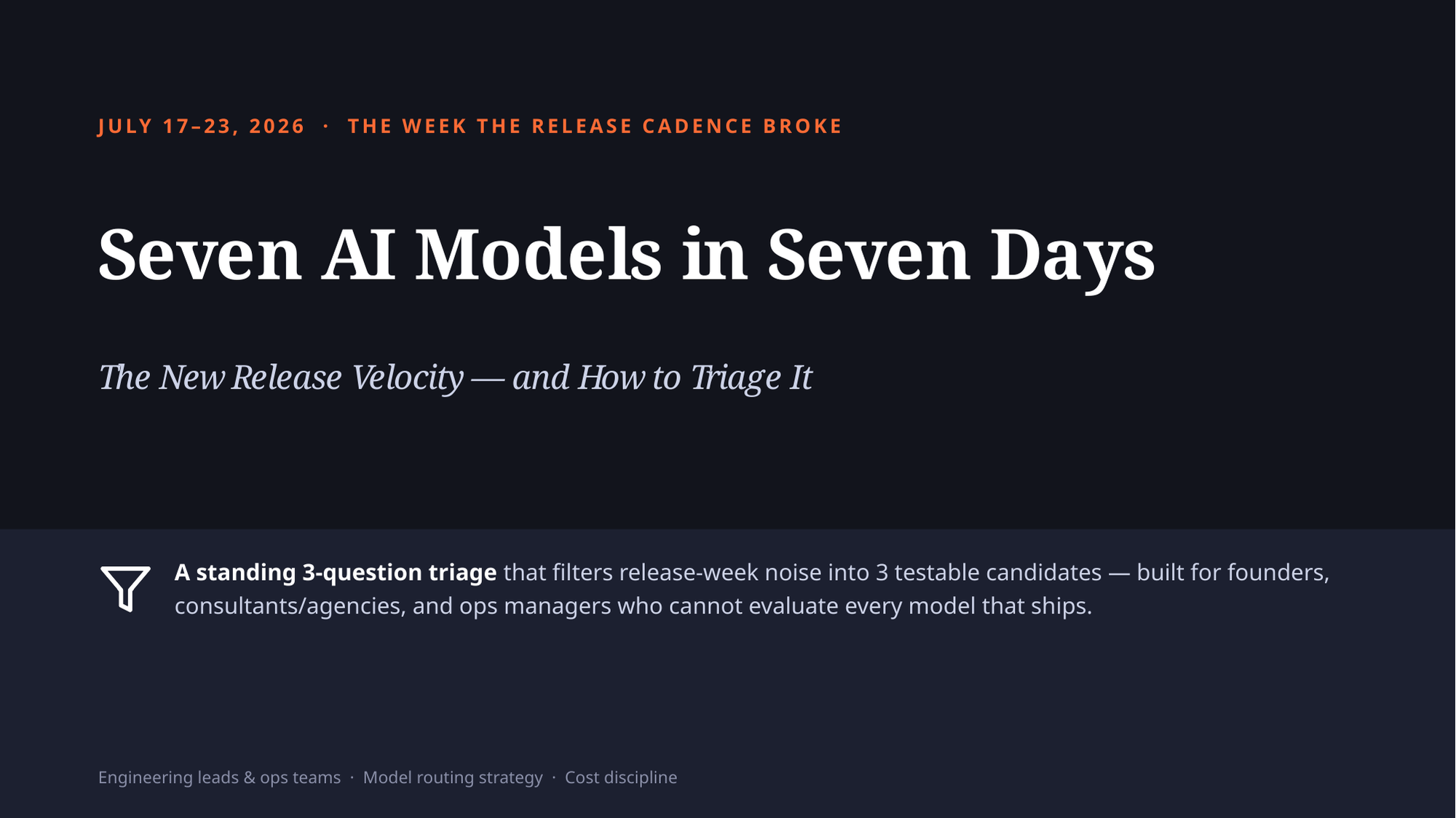
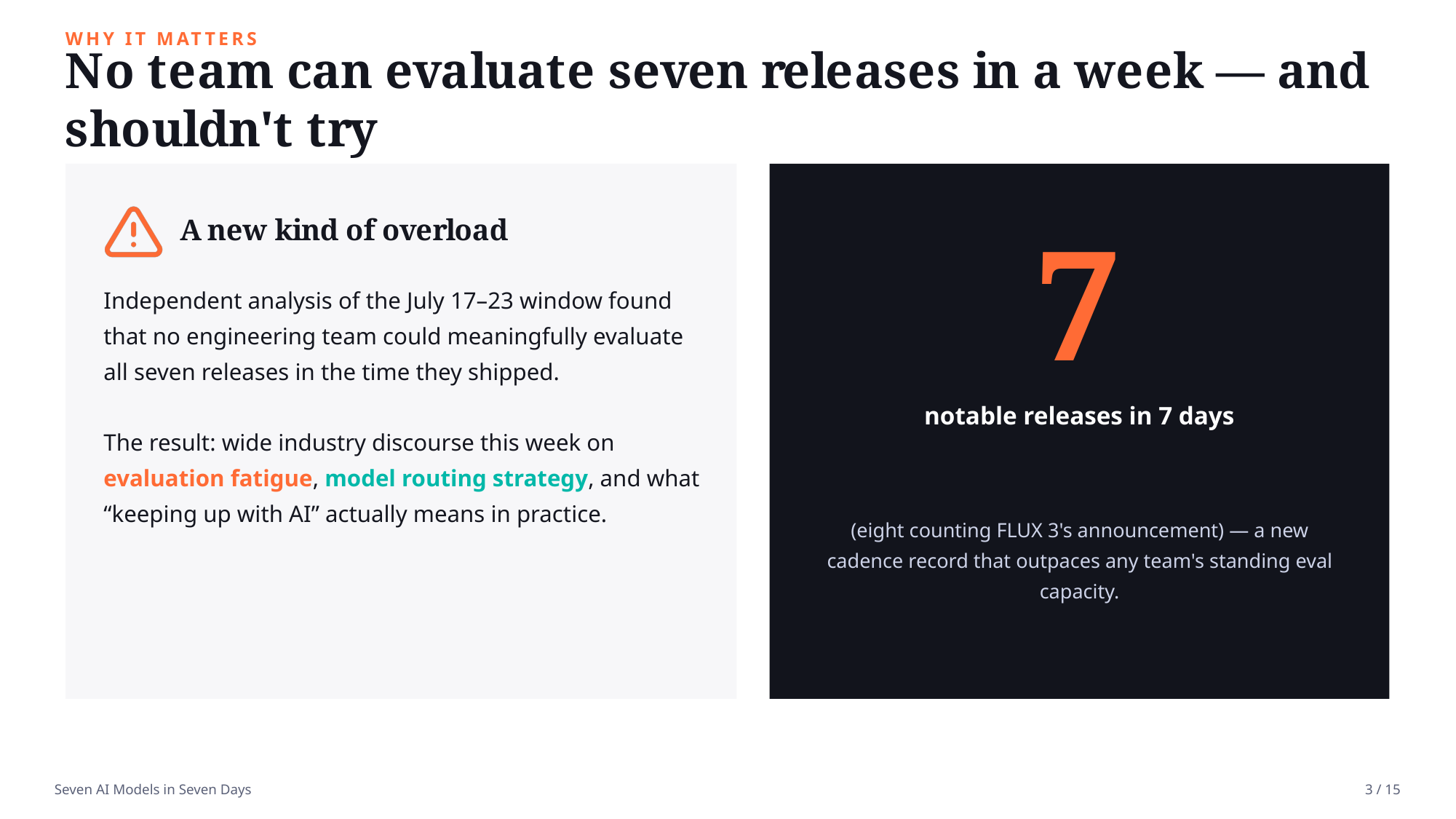
Seven notable AI models shipped from five developers in a single seven-day span this July, an average of one release a day. No engineering team can run a real evaluation on that schedule, and the pace shows no sign of slowing.
Key takeaways
- Seven AI models shipped from five developers in one week, an average of one release a day (Digital Applied, 2026).
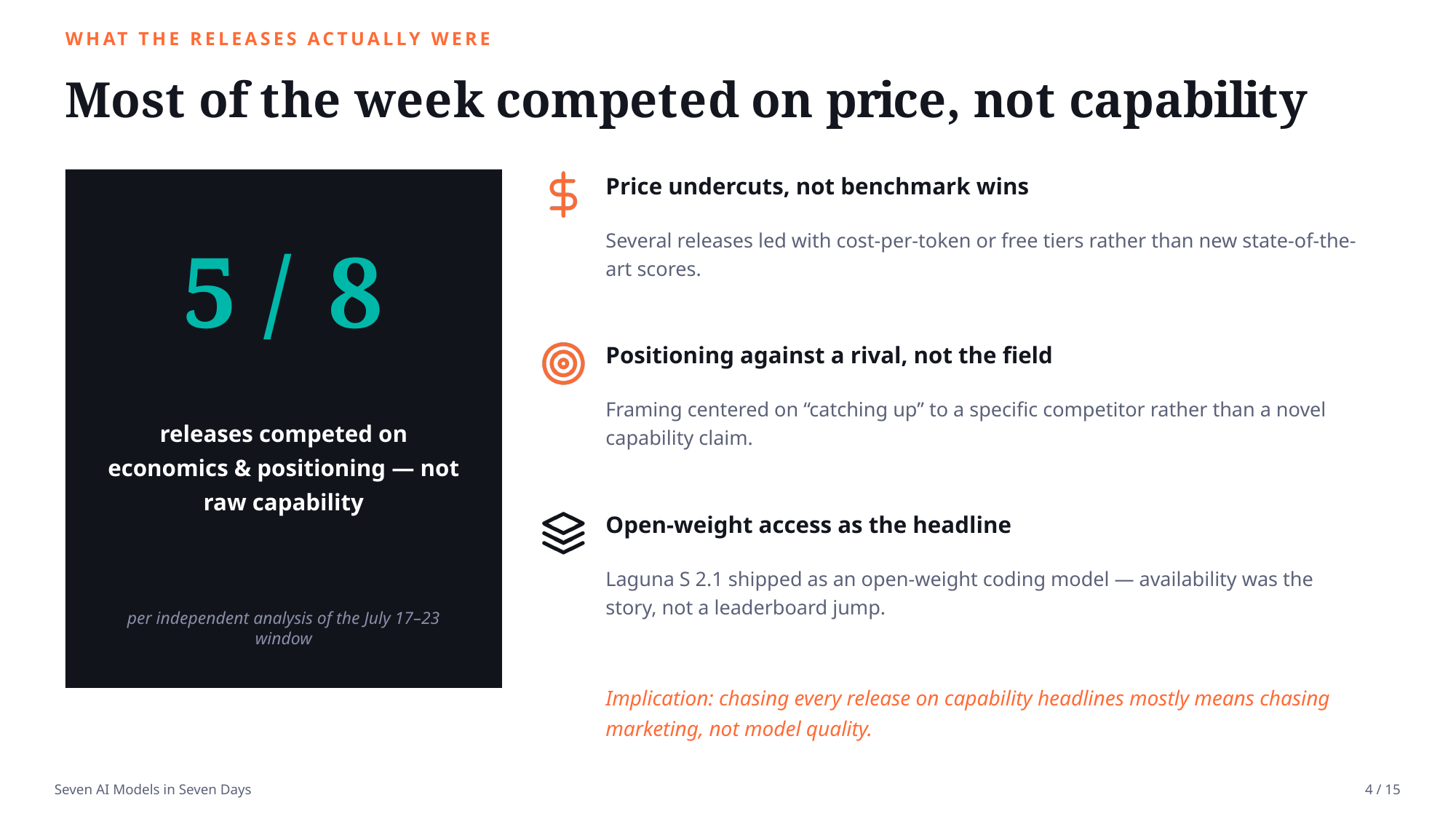
- Five of the seven competed mainly on price or positioning, not raw capability.
- Three launches had zero independent verification at ship time, just vendor claims.
- Over 70% of organizations now run three or more models in production (Datadog, 2026).
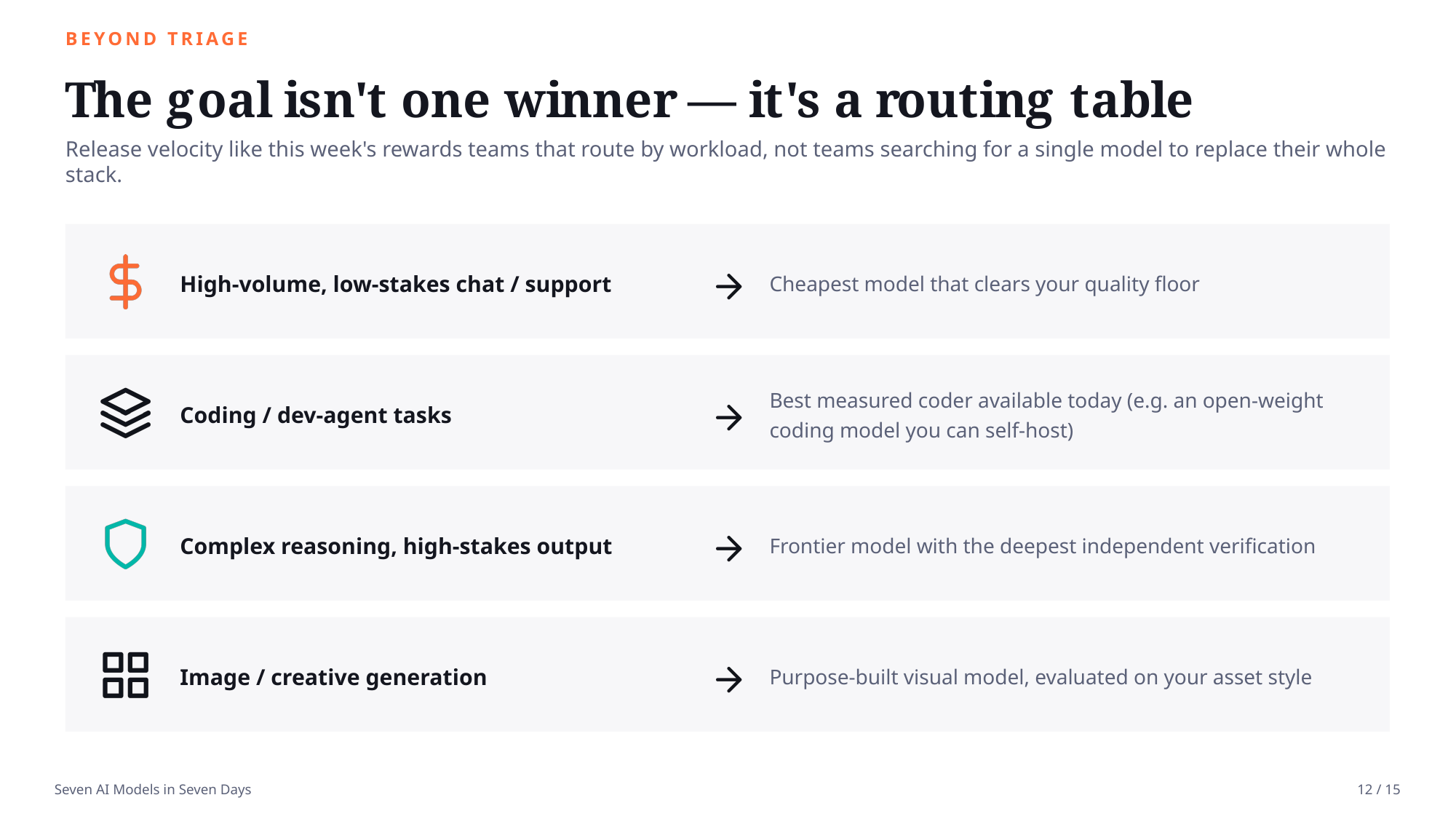
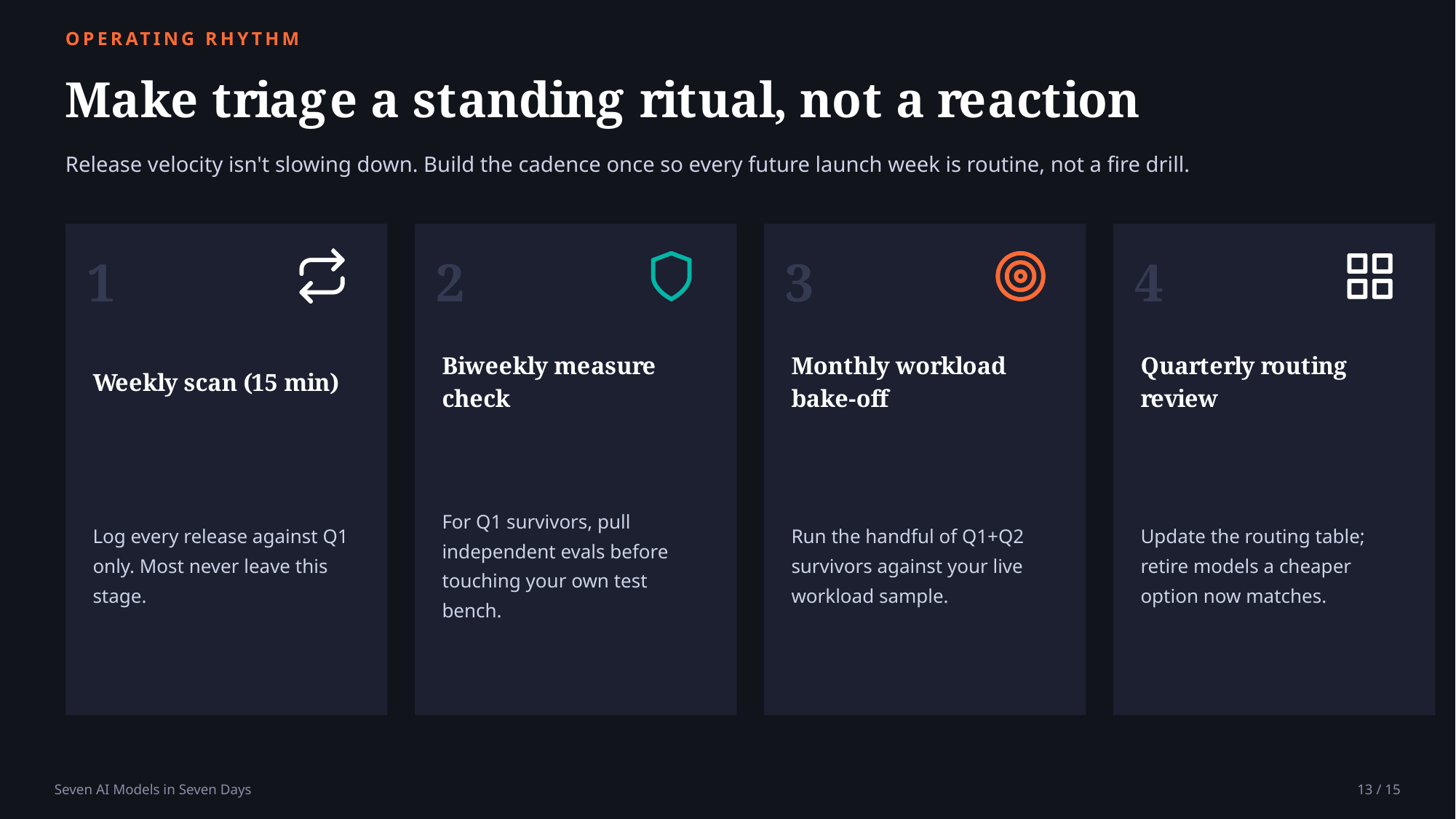
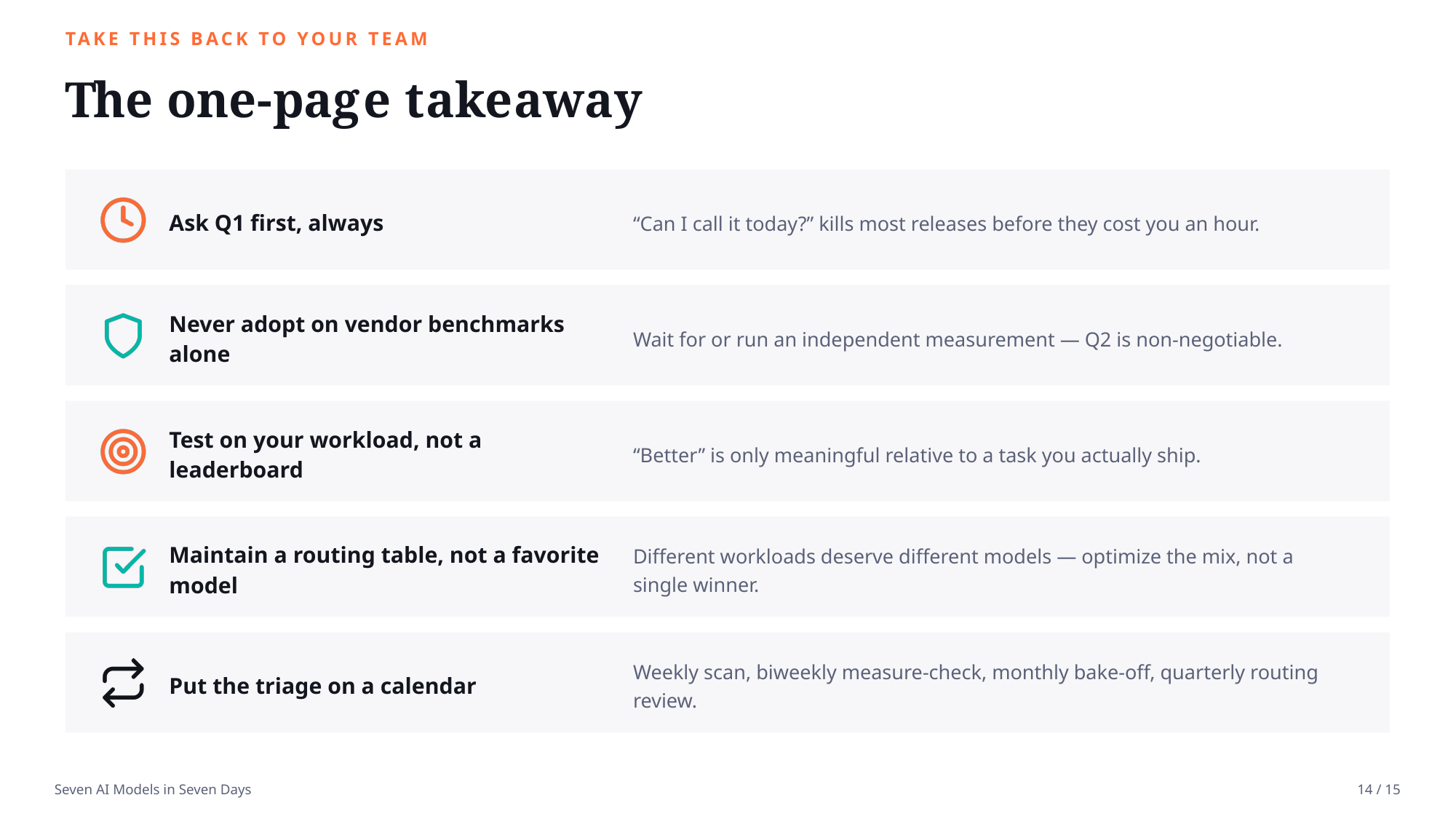
The slides embedded below, generated by AskDeck from a short brief, walk through a ready-to-use version of the triage framework this piece describes. Back to the substance: what happened last week, and what it means for anyone deciding where to spend evaluation time.
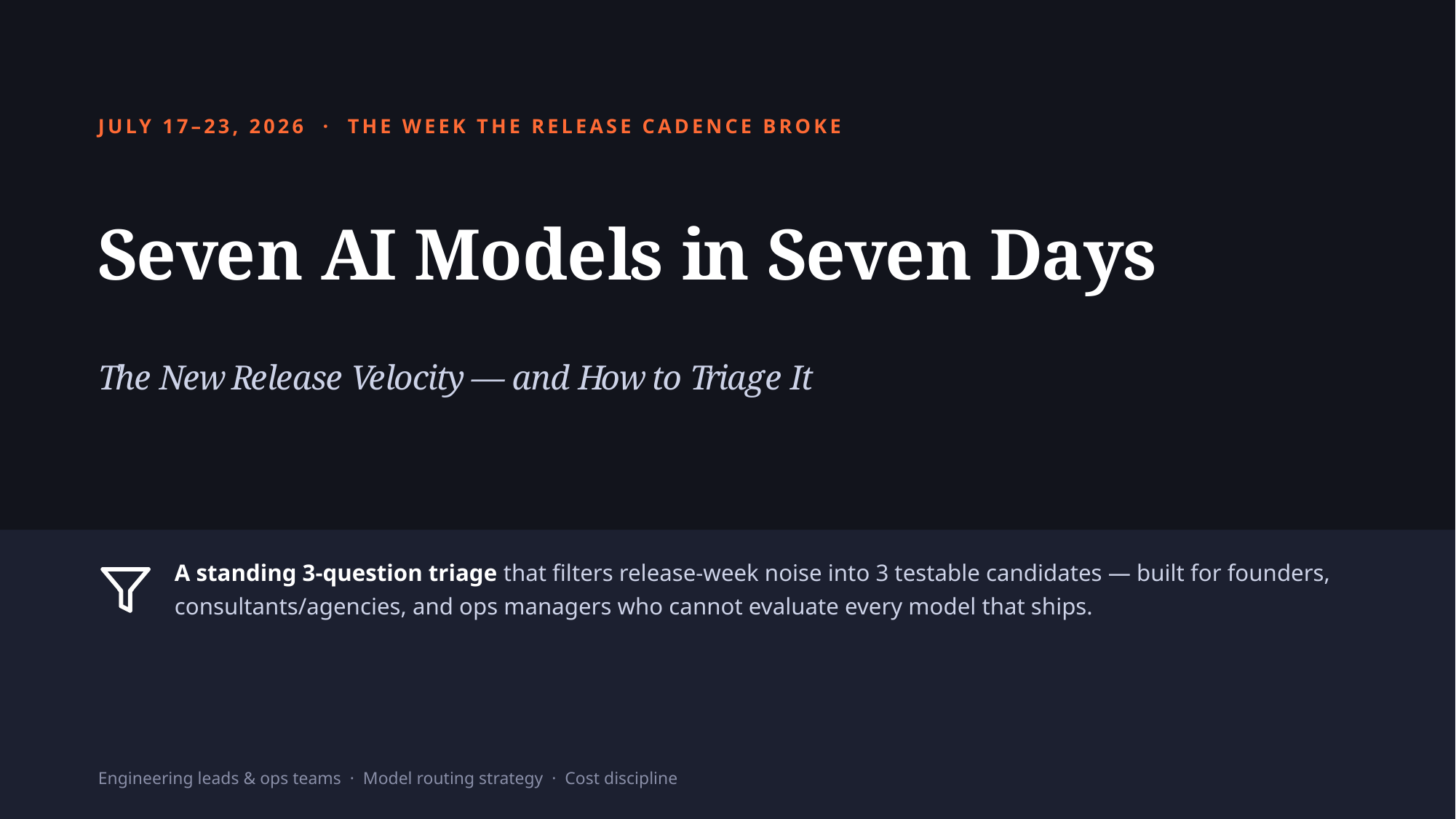
Swipe or scroll sideways to flip through the 15-slide deck →
How many AI models actually shipped in one week?
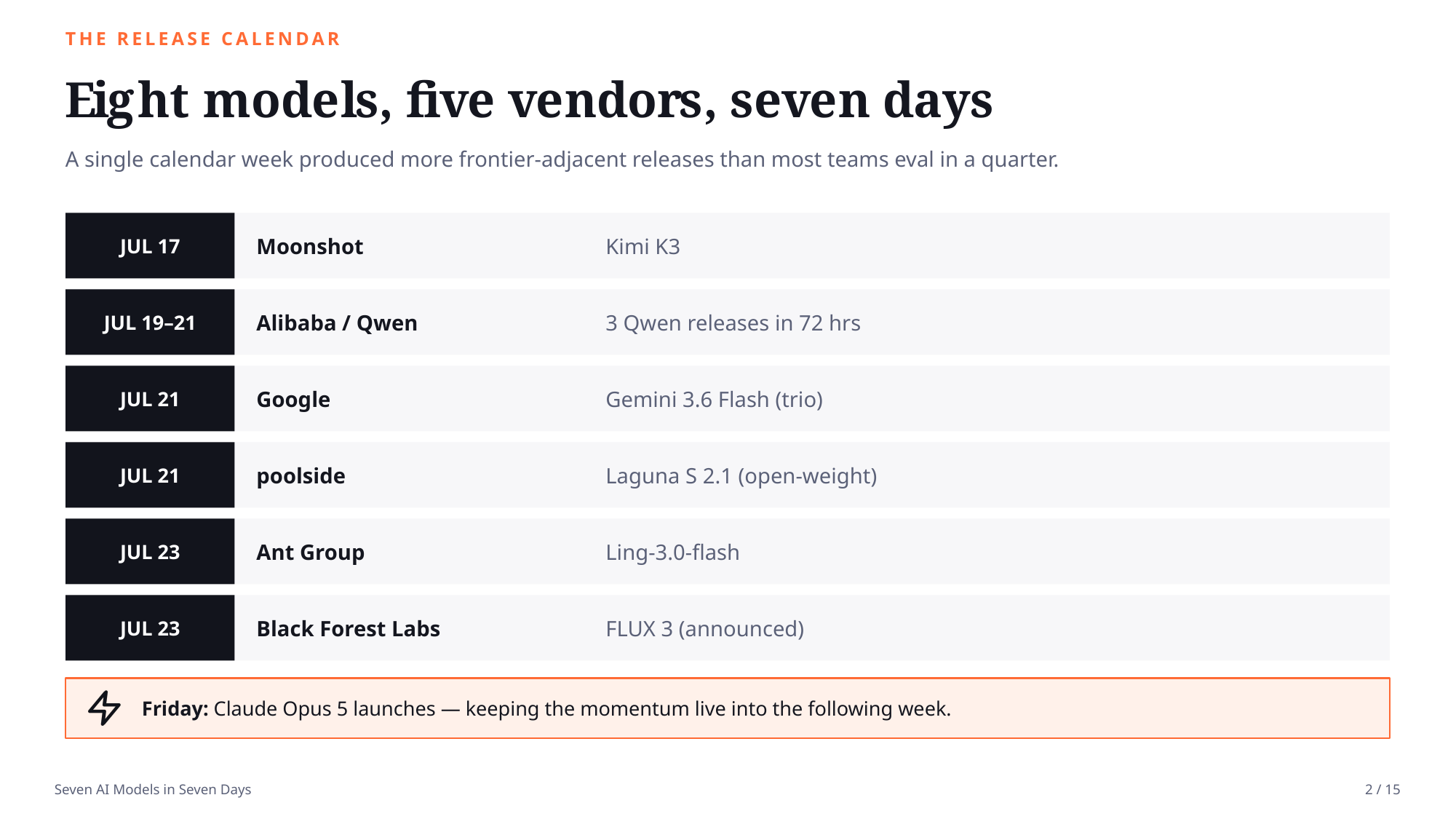
Seven models launched from five separate developers across seven consecutive days, plus an eighth announced on the final day without a public release. One independent tally counted a new flagship, three specialized releases from a single developer inside a 72-hour window, a three-model bundle from another company, an open-weight coding model, and an efficiency-focused model, capped off by a multimodal announcement. Nearly every outlet covered one release in isolation; almost nobody added up the week as a whole.
A single new model is a normal Tuesday. Seven in seven days, from developers who mostly already had a major release behind them, marks a shift in cadence, not a coincidence of launch dates.
Why are so many models launching at once instead of fewer, bigger breakthroughs?
Most of last week’s releases competed on unit economics and positioning rather than raw capability, a different game than the “frontier leap” story each launch post tells. Five of the seven were efficiency, pricing, or positioning plays: one flagship matched its predecessor’s score on a composite reasoning benchmark while cutting output price and roughly halving measured time per task, a voice model launched at a fraction of incumbent pricing, and an efficiency-focused model claimed to match a much larger internal model on a fraction of the parameters.
Only two releases attempted a genuine new-capability claim, and both carried a caveat: one developer’s own post conceded a gap against rival models, and the other shipped its claim with nothing measurable behind it. Just one of the five developers was a first-time entrant; the rest were established labs shipping faster, not new competitors flooding in.
How much of what gets announced is independently verified?
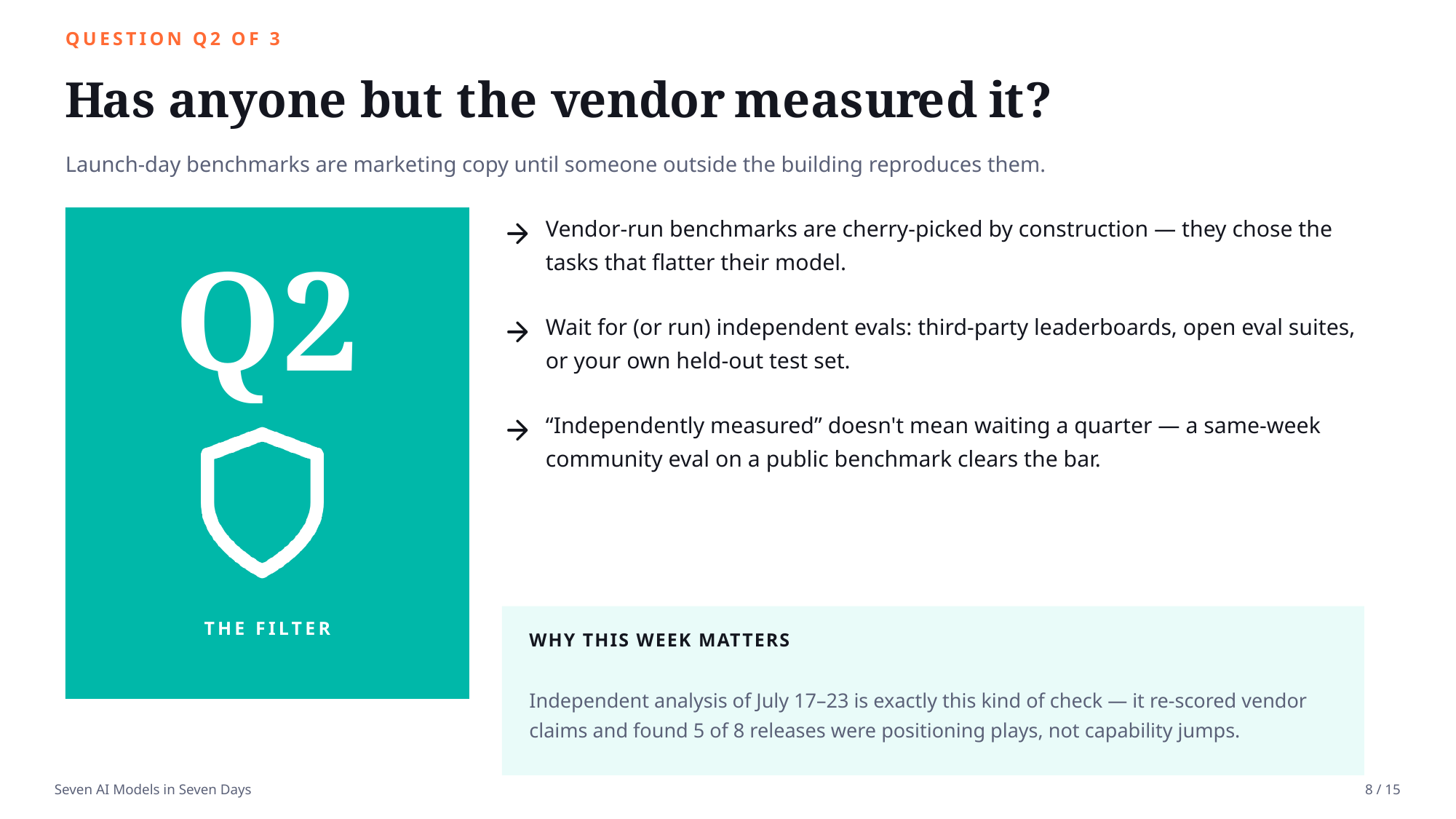
Three of the week’s launch moments shipped with no independent verification at all, only vendor numbers. One capability ranking claim traced back to a single unreproduced social media post, with no benchmark table or model card behind it. Two other releases shipped with no published benchmarks, weights, or technical documentation.
Others treated verification as a selling point instead: one coding model’s developer published its full trial data, and a voice model landed at the top of an independent ranking within days. The gap between “vendor says” and “independently confirmed” is widening.
Why can’t “which model is best” be answered with a single number?
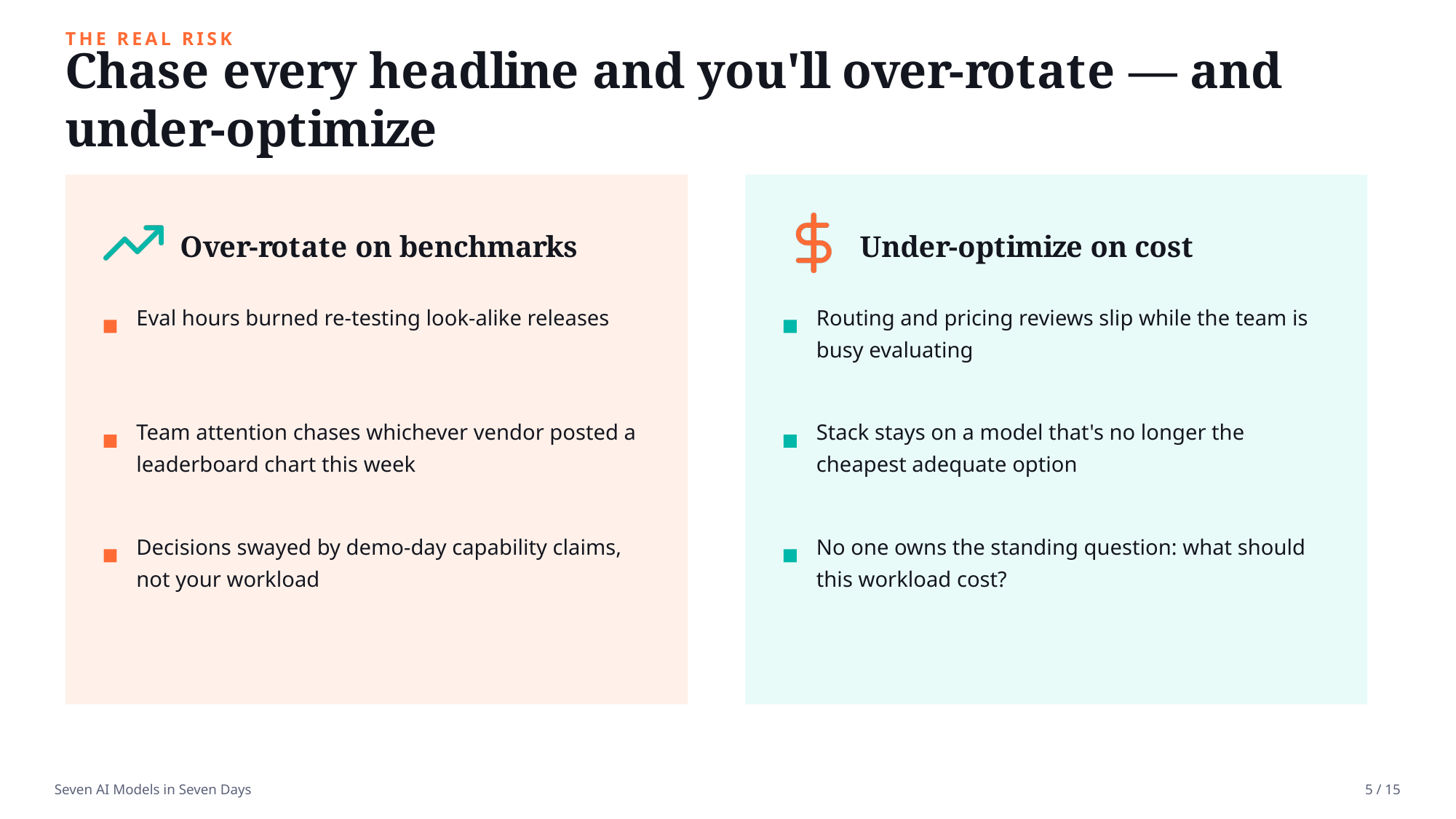
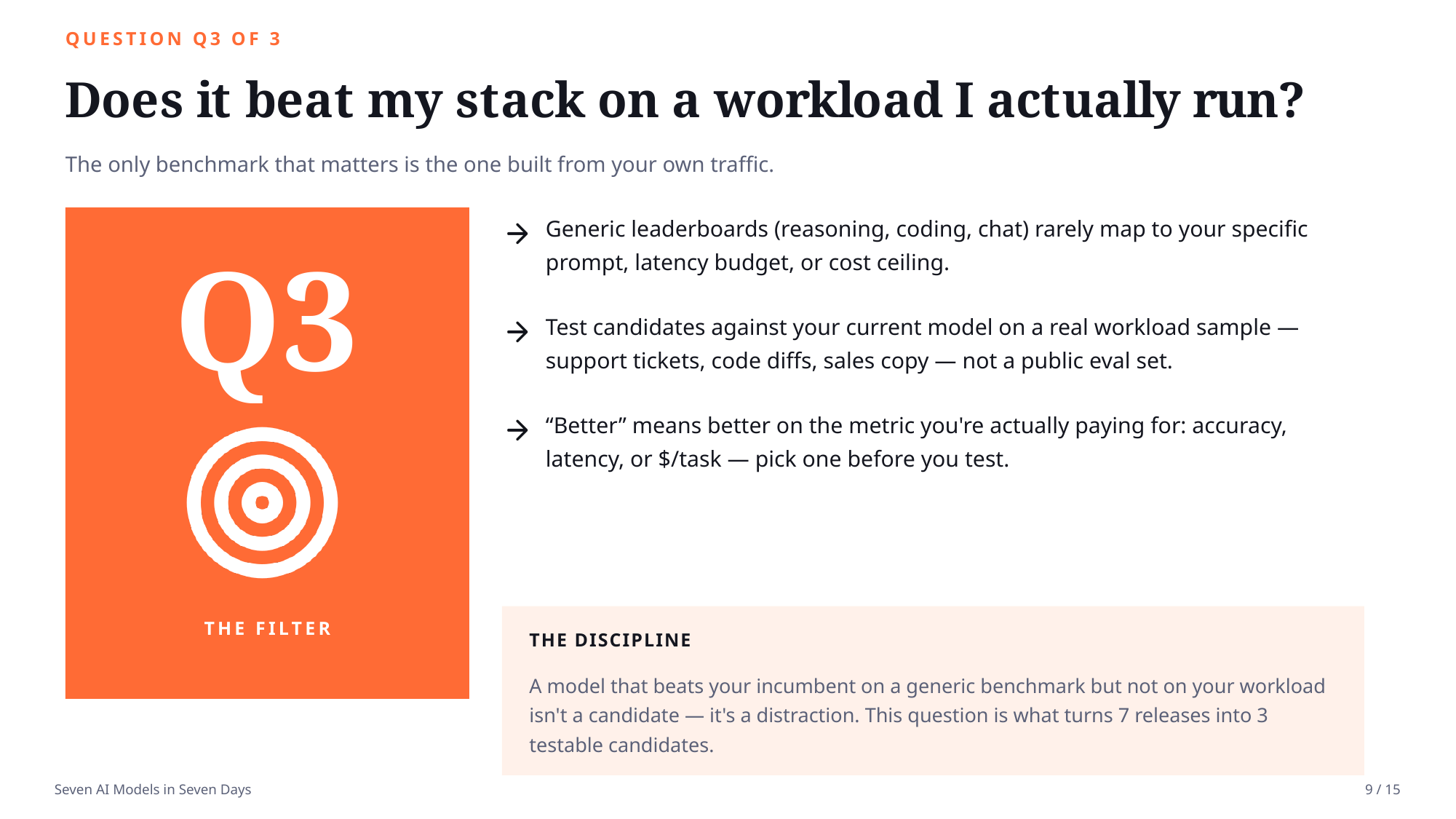
Speed, cost, and capability are separate axes, and last week proved it in one test. A composite intelligence index spanning coding, agentic tasks, and reasoning showed one flagship scoring identical to its prior version, even as its measured cost and time per task both improved substantially, under a methodology weighting token usage and completion time, not sticker price (Artificial Analysis, 2026). A separate coding test pitted two models against one bug fix: one finished 3.4 times faster, the other 2.3 times cheaper despite using 1.7 times more tokens. Faster, cheaper, and fewer tokens went to different models on the same task.
That split is also why teams keep adding models instead of settling on one, as the earlier adoption figures above show: no single model wins every workload’s cost and quality profile.
What’s a workable way to triage new releases without falling behind?
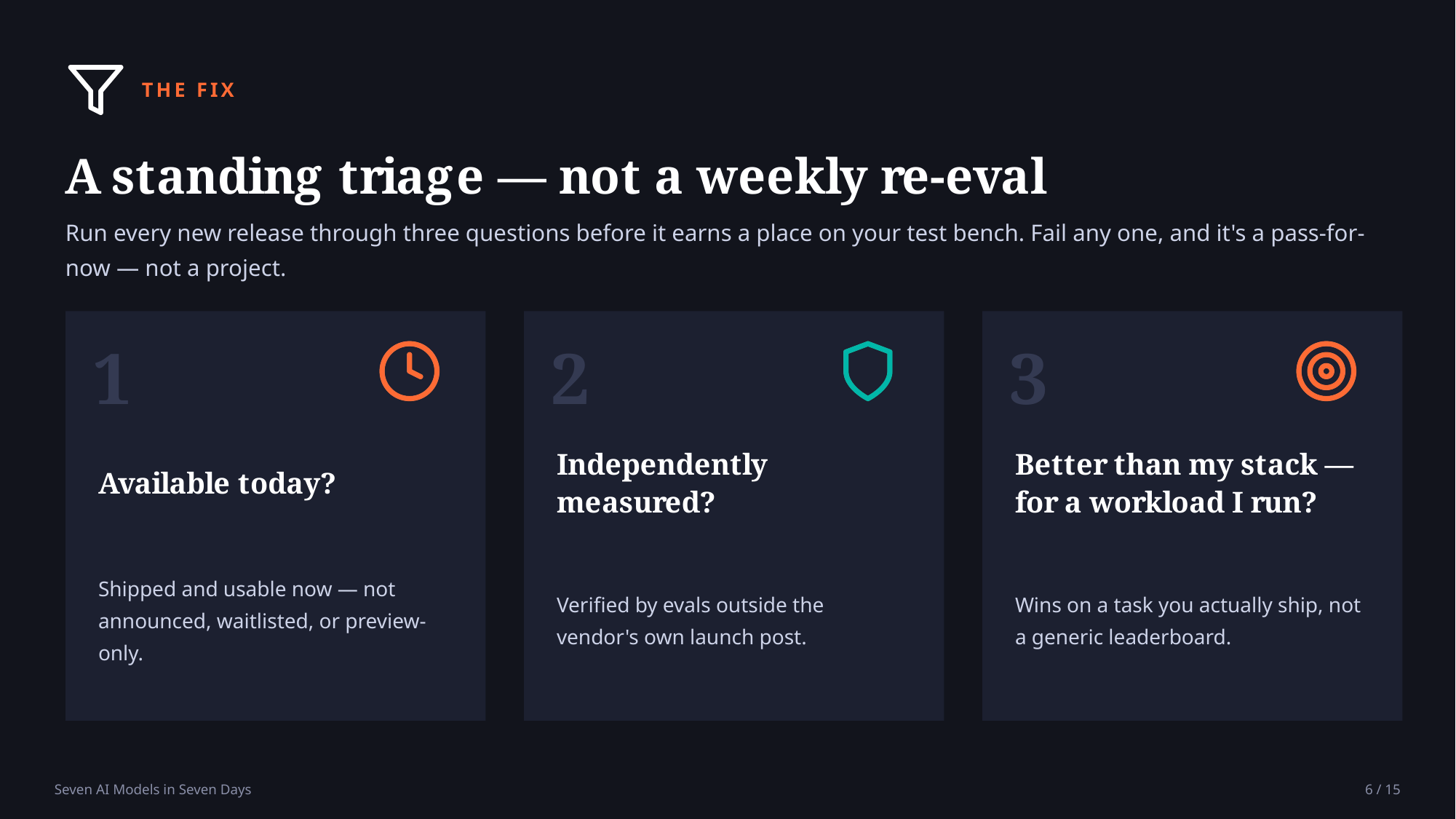
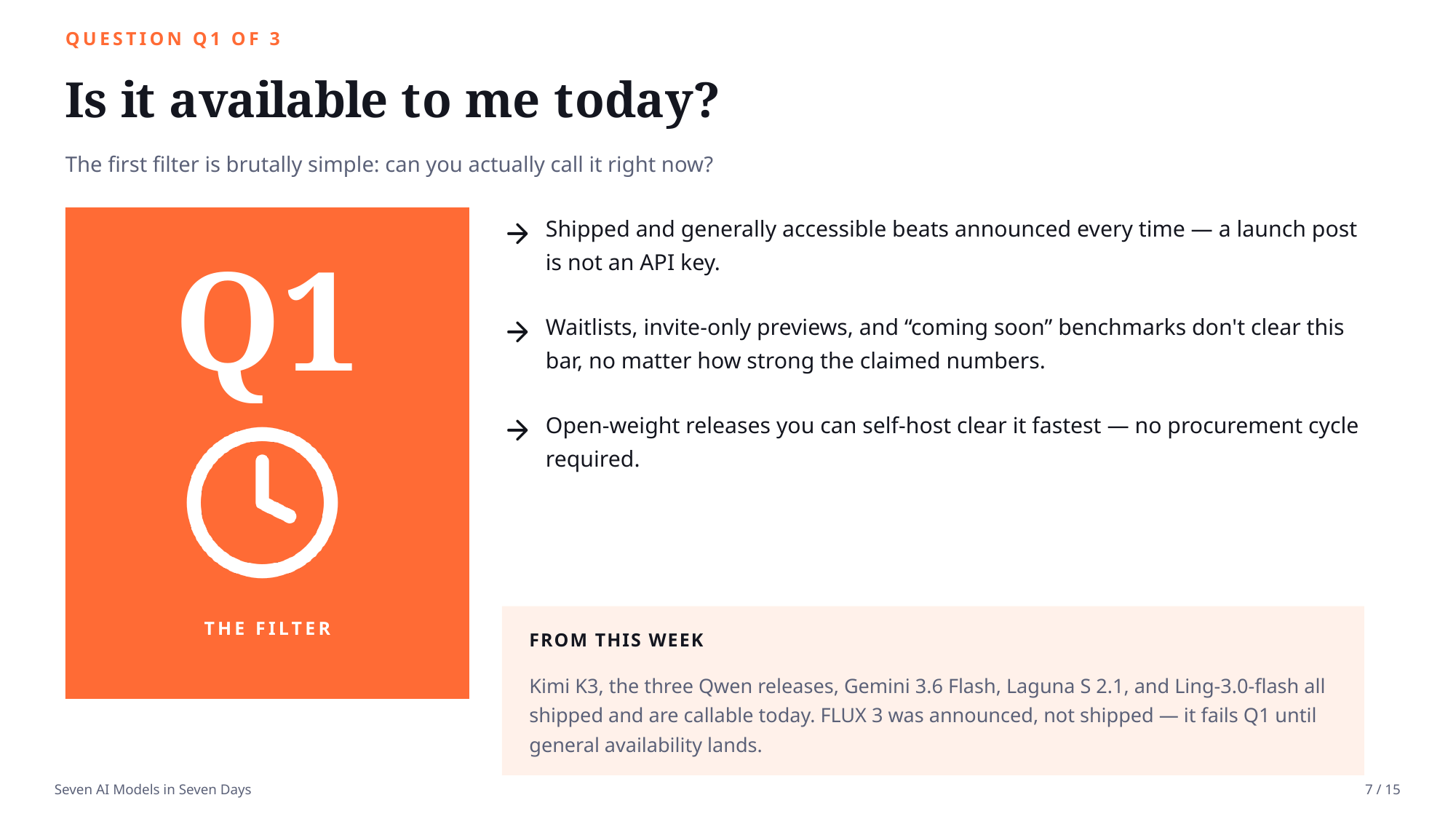
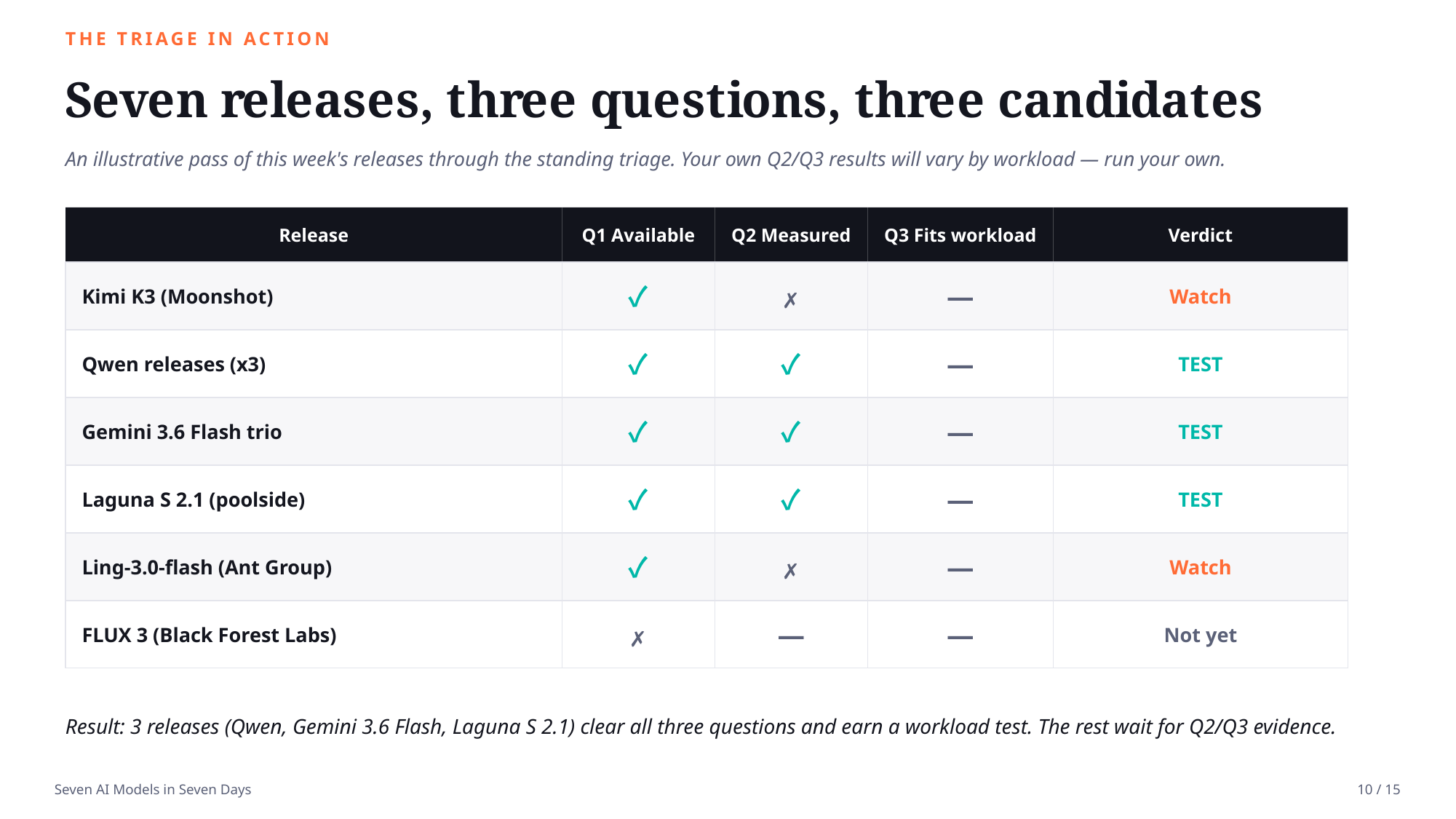
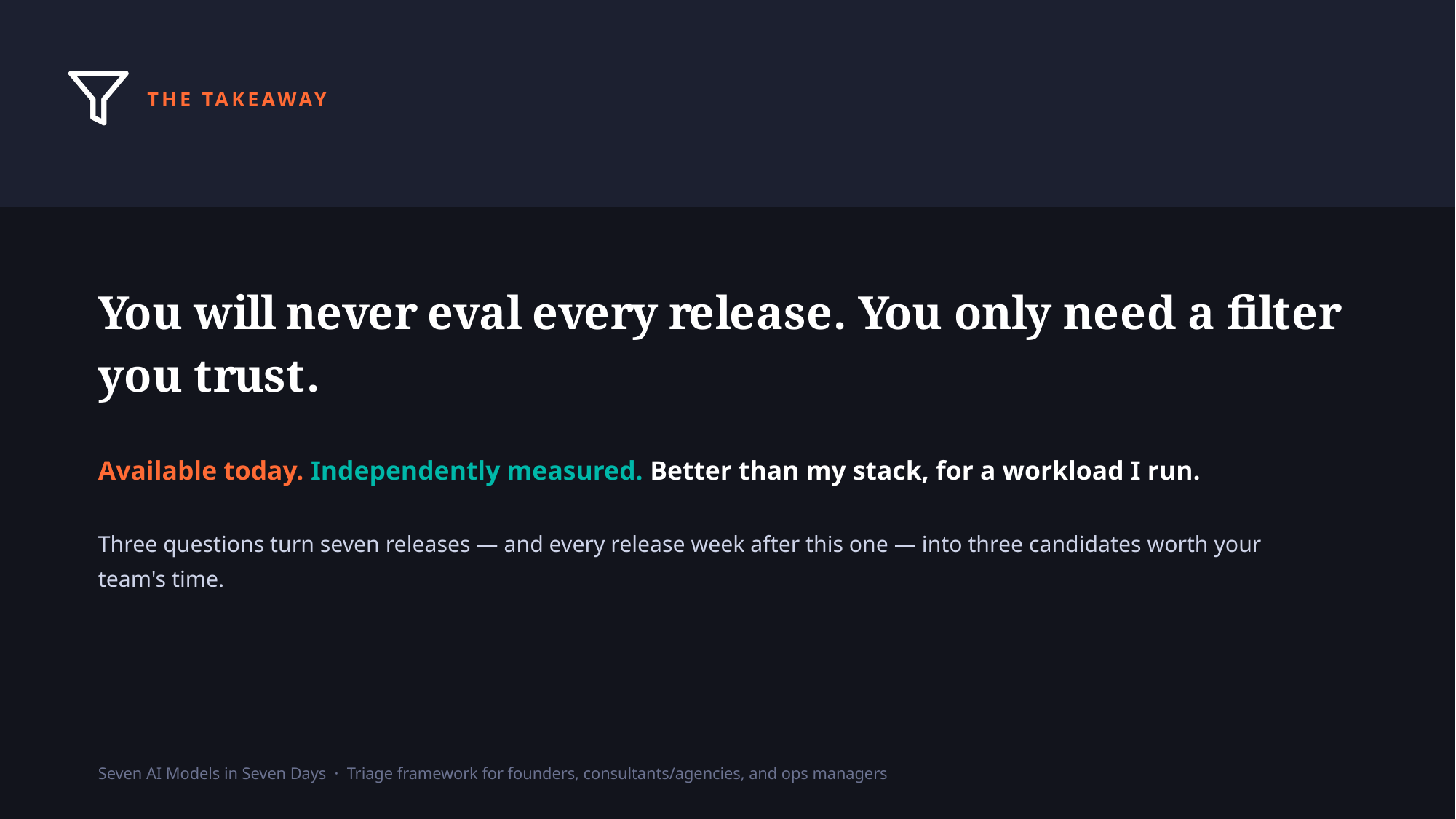
A repeatable weekly filter beats reading every launch post. Run each release through three questions: can you use it today, on general availability or downloadable weights rather than a waitlist; has anyone independent measured it, through a real benchmark rather than a vendor’s own numbers; and does it beat your current stack on cost or capability for a workload you actually run. Two or three yeses earn a scoped evaluation this cycle. One yes means calendaring a revisit date. Zero means skipping without guilt.
Applied to last week, that filter cleared most releases off the list within minutes, leaving only a few worth a real evaluation slot. The habit is durable, too: developers were already announcing next steps, including promised open weights and a confirmed pre-training run for a future flagship, before the week even finished shipping.
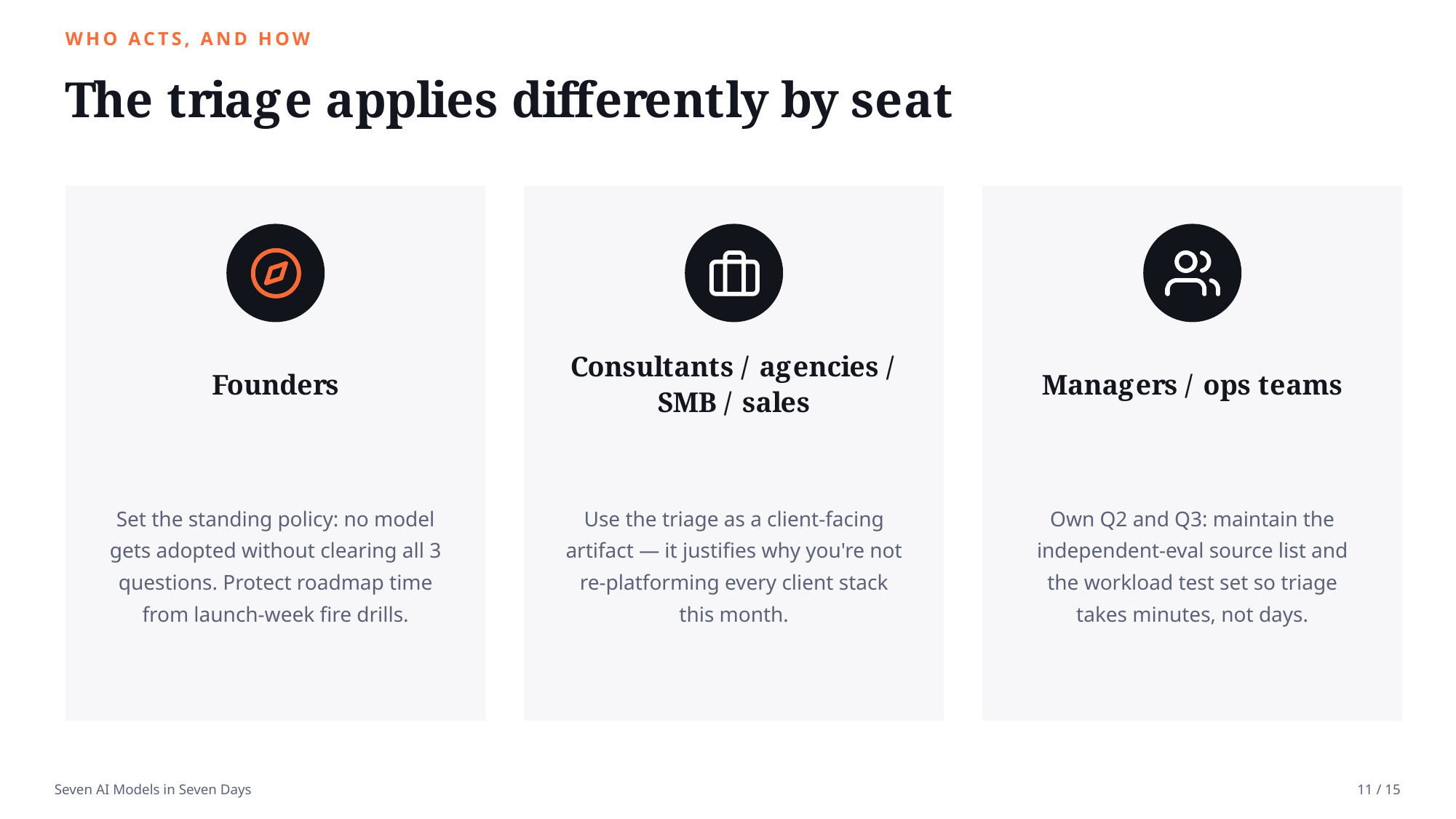
If this kind of weekly triage sounds useful to formalize, the example deck below turns the same three-question framework into a short, editable slide set, built with AskDeck from a brief. It’s free to download and adapt for a team’s own release-review cadence.