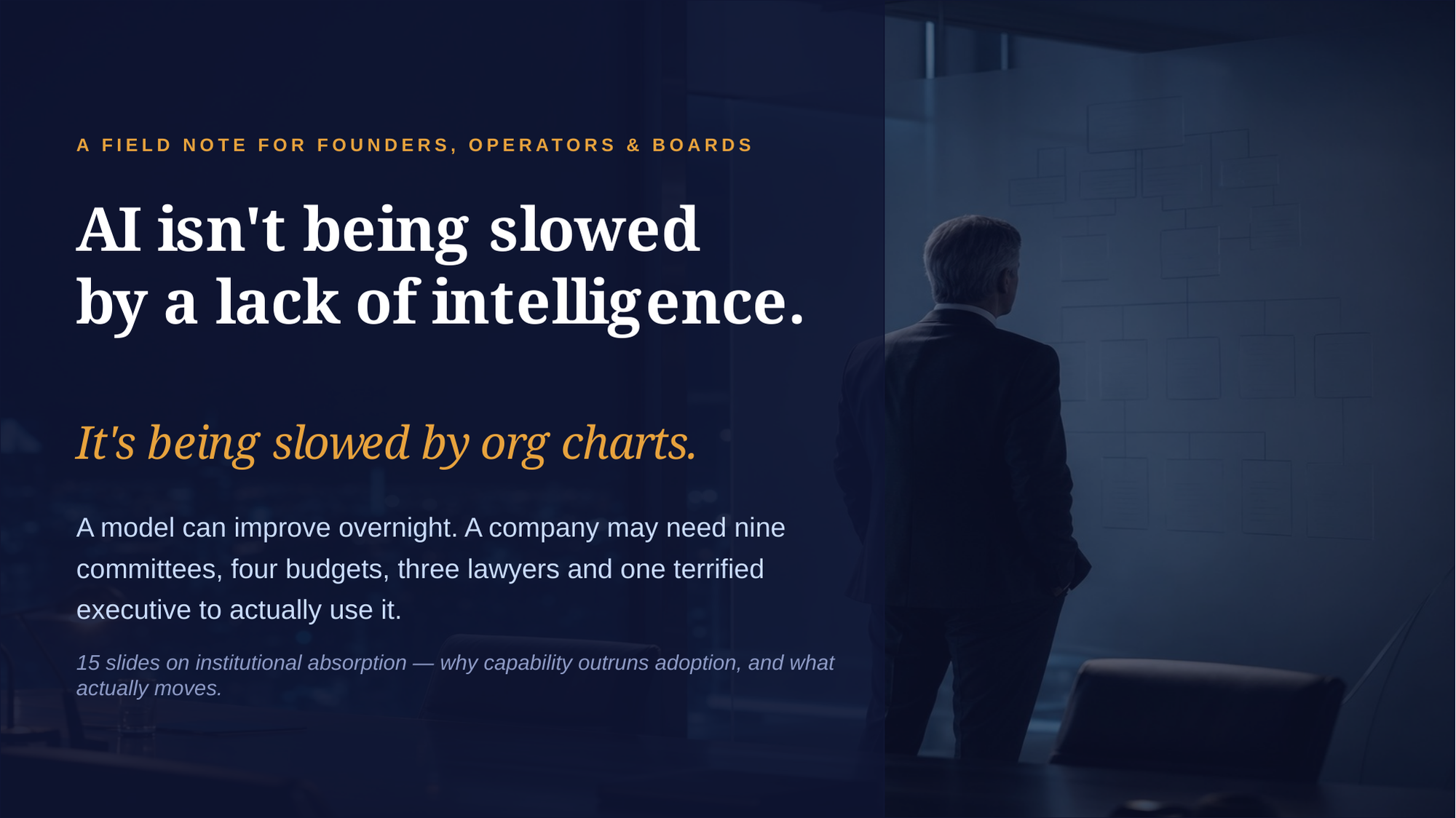
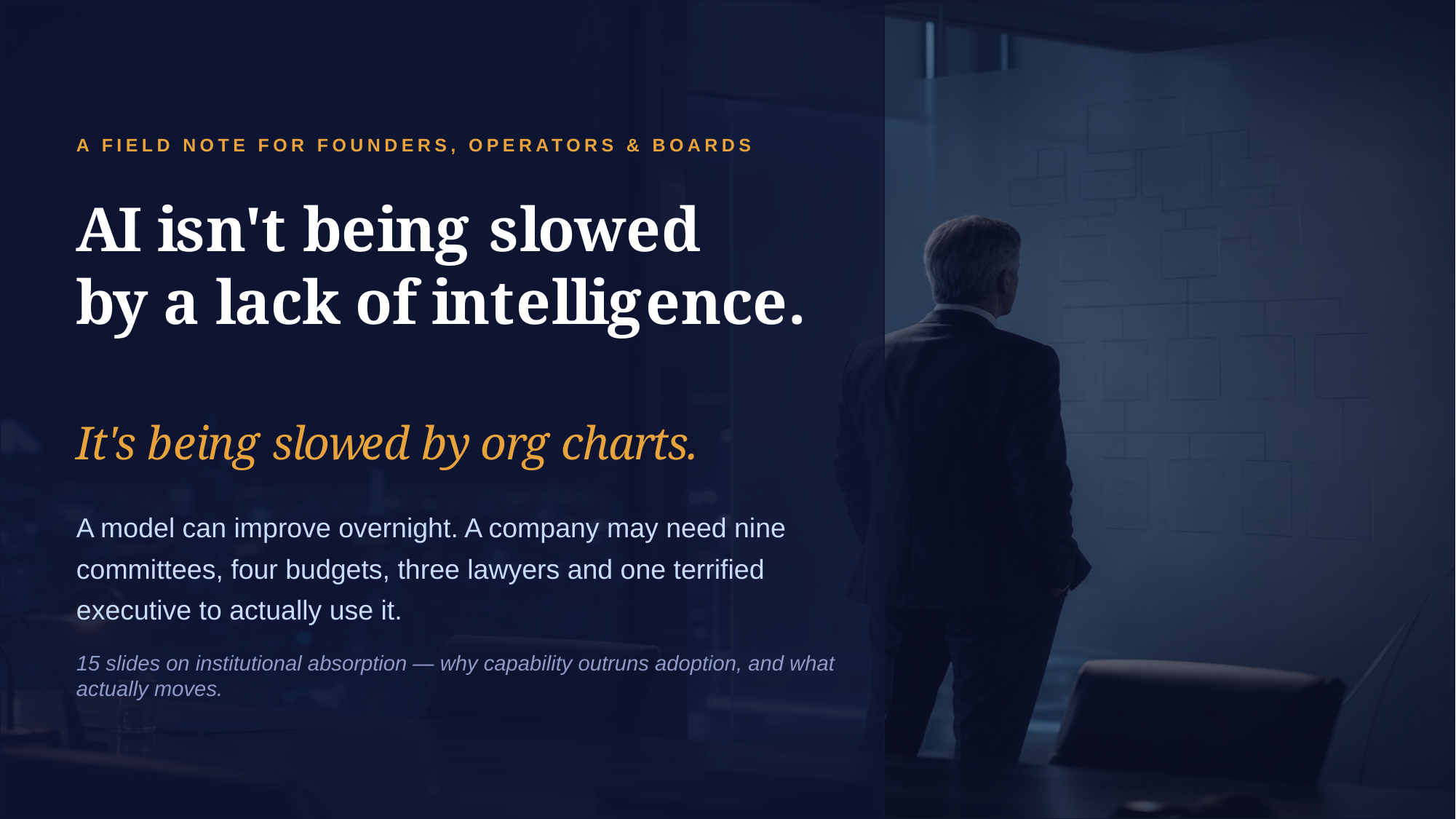
AI isn’t being slowed by a lack of intelligence. It’s being slowed by org charts.
A model can improve overnight. A company may need nine committees, four budgets, three lawyers, and one terrified executive to actually use it. That gap—between what the technology can do on Tuesday and what an institution can absorb by next quarter—is the real story of this era, and almost nobody is pricing it correctly.
Swipe or scroll sideways to flip through the 15-slide deck →
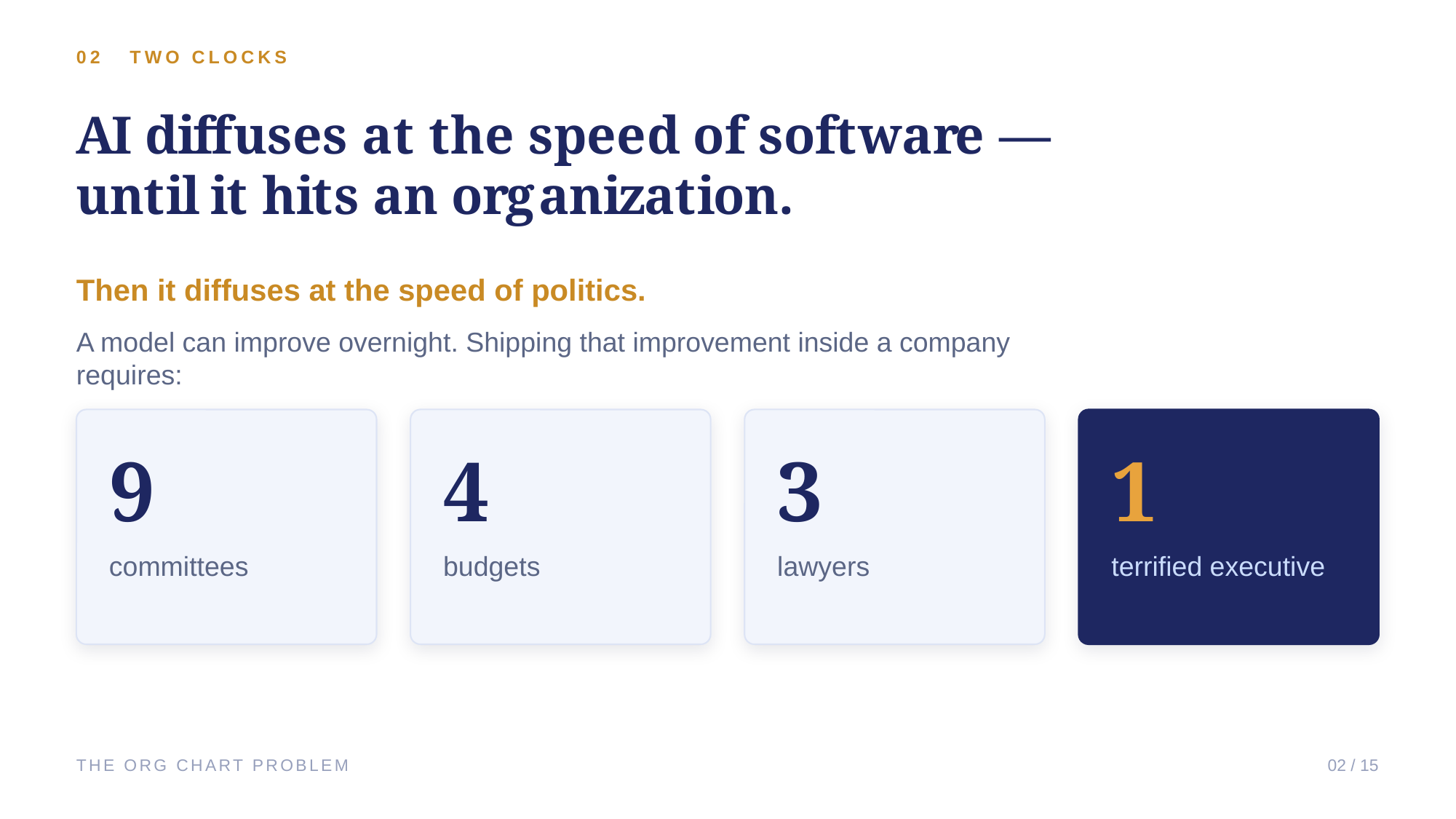
AI diffuses at the speed of software—until it hits an organization
Inside a browser tab, capability spreads at the speed of software. The moment it reaches a company, it starts diffusing at the speed of politics.
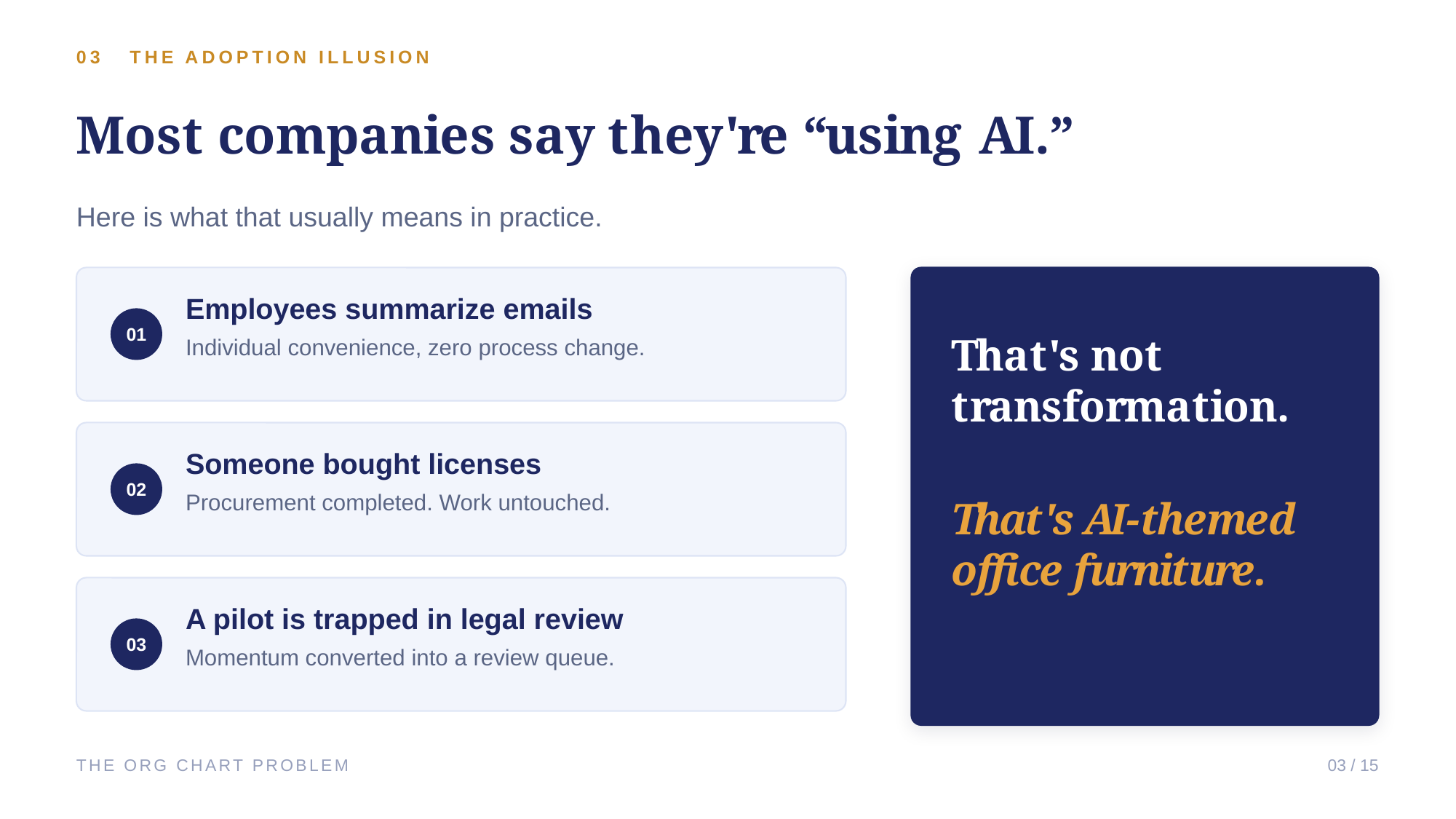
Most firms say they’re “using AI.” What they usually mean is that a few employees summarize their email, someone bought a batch of licenses, and a pilot is quietly suffocating in legal review. That isn’t transformation. That’s AI-themed office furniture—expensive, on-brand, and load-bearing for exactly nothing.
The real unit of adoption is the workflow, not the model
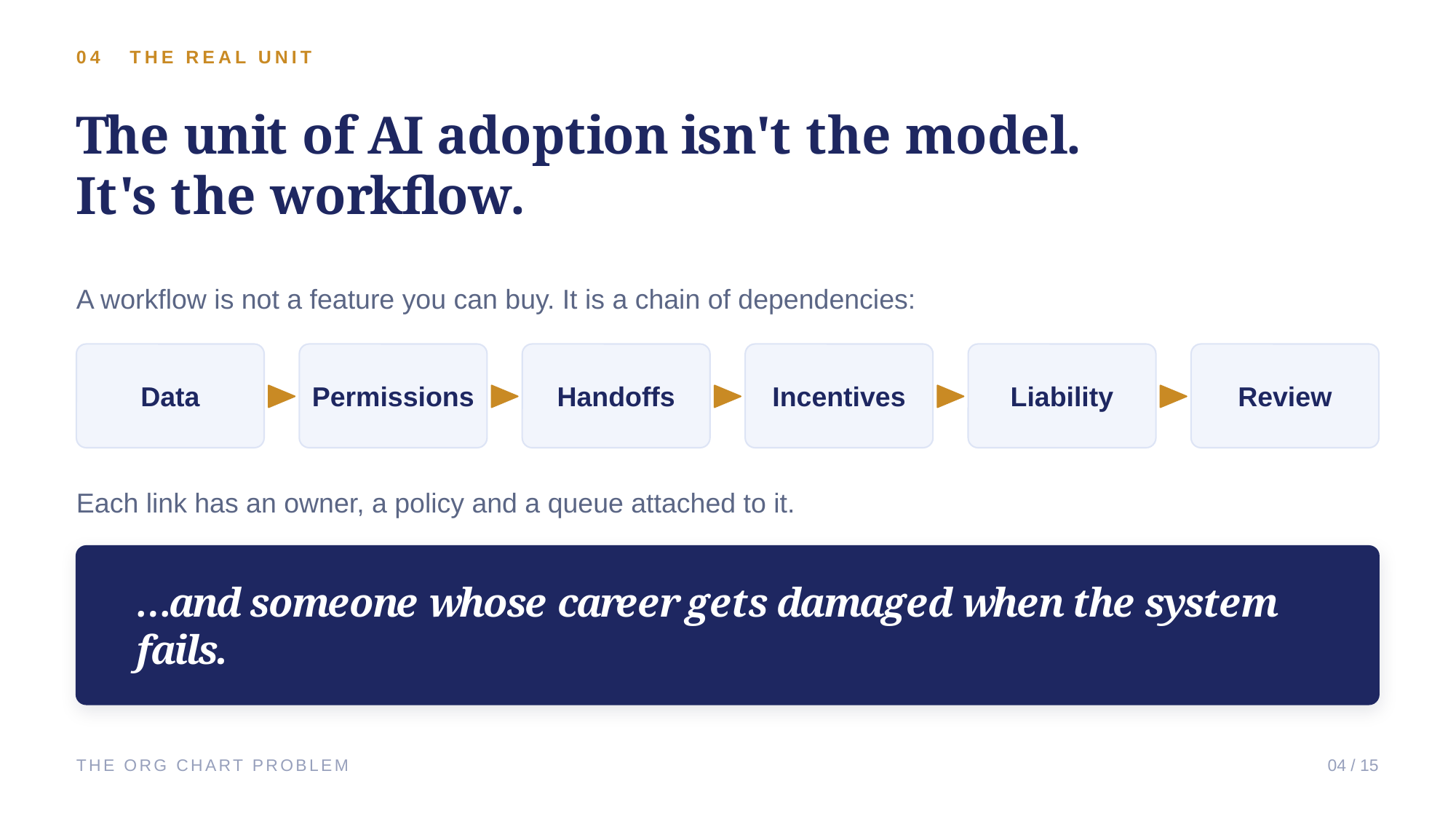
We keep talking about models. The unit that actually matters is the workflow: data, permissions, handoffs, incentives, liability, review—and a specific human being whose career takes the hit when the system is wrong.
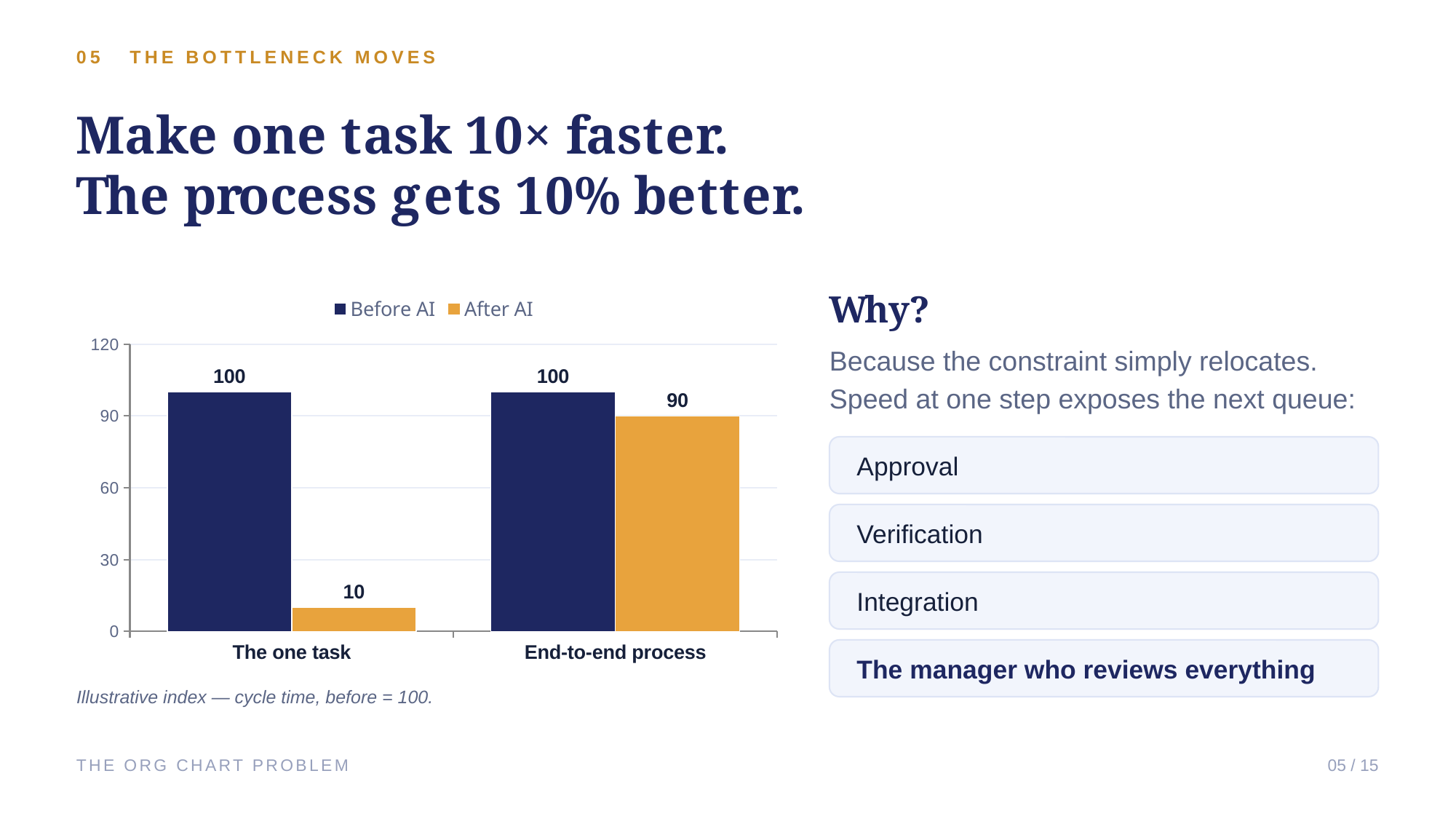
This is why raw speed disappoints. Make one task ten times faster and you may improve the whole process by ten percent, because the bottleneck simply slides downstream—to approval, to verification, to integration, to the one manager who insists on reading everything before it ships. You didn’t remove the constraint. You relocated it.
Output inflation is not productivity
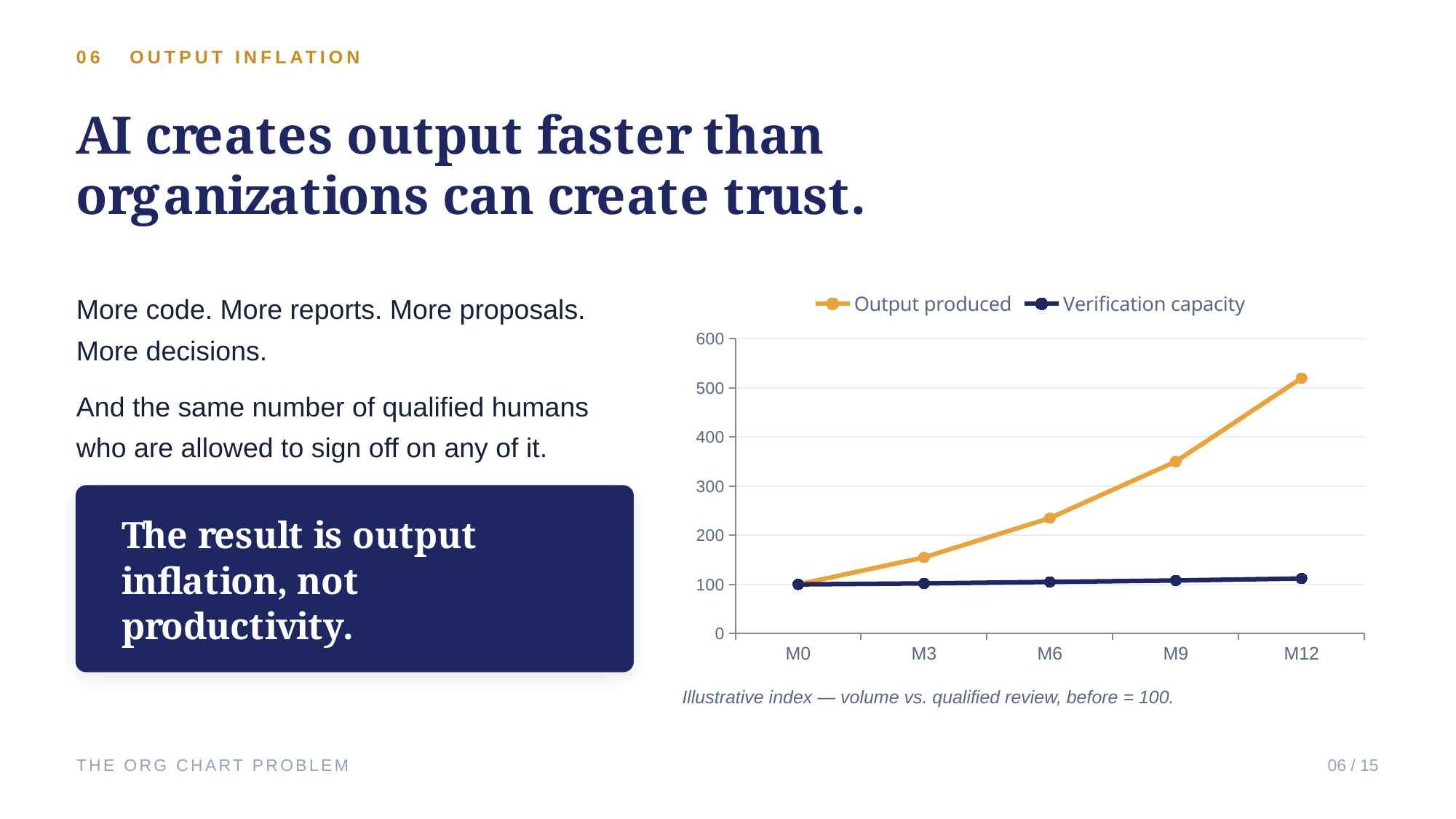
Here’s the trap almost every enthusiastic rollout falls into: AI creates output faster than an organization can create trust. More code, more reports, more proposals, more decisions—generated in minutes. But the number of qualified humans who can responsibly verify that output hasn’t budged.
So you get inflation, not productivity. A flood of plausible artifacts crashing into the same narrow channel of people allowed to say “yes, ship it.” The volume goes up. The value doesn’t.
“Resistance” is almost always misdiagnosed
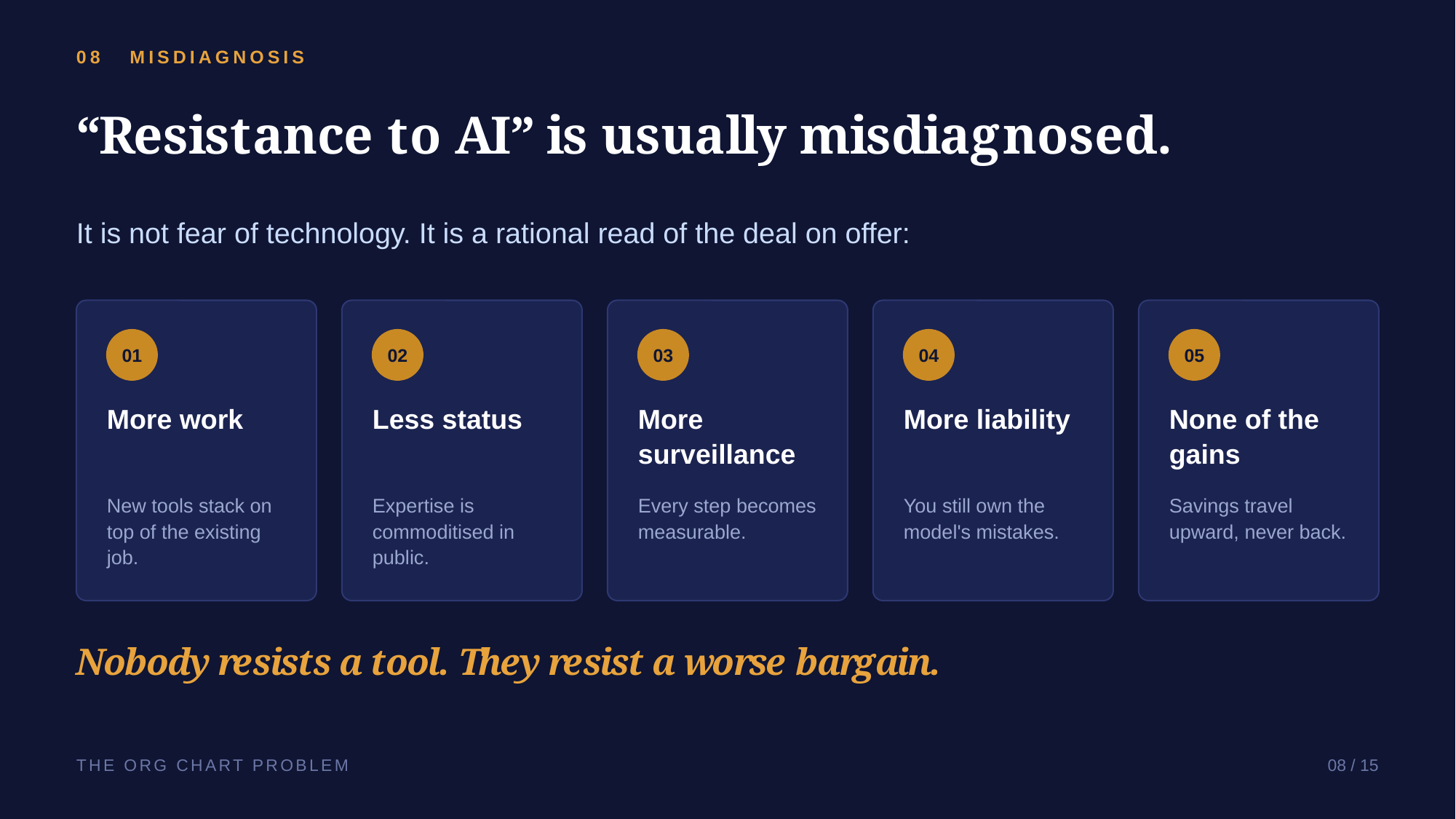
Leaders love to describe their people as afraid of technology. They’re usually not. Look closely and the resistance is rational.
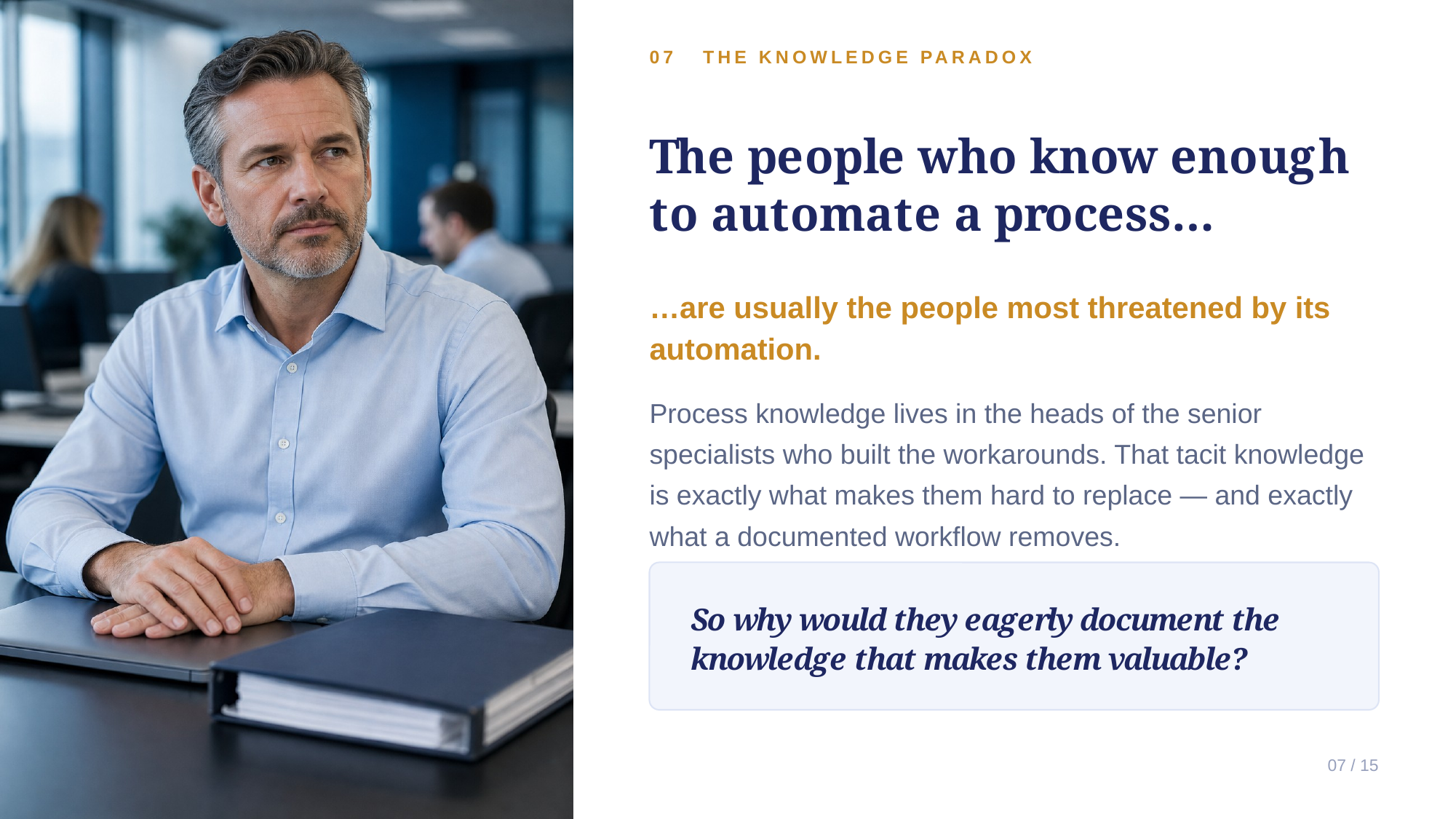
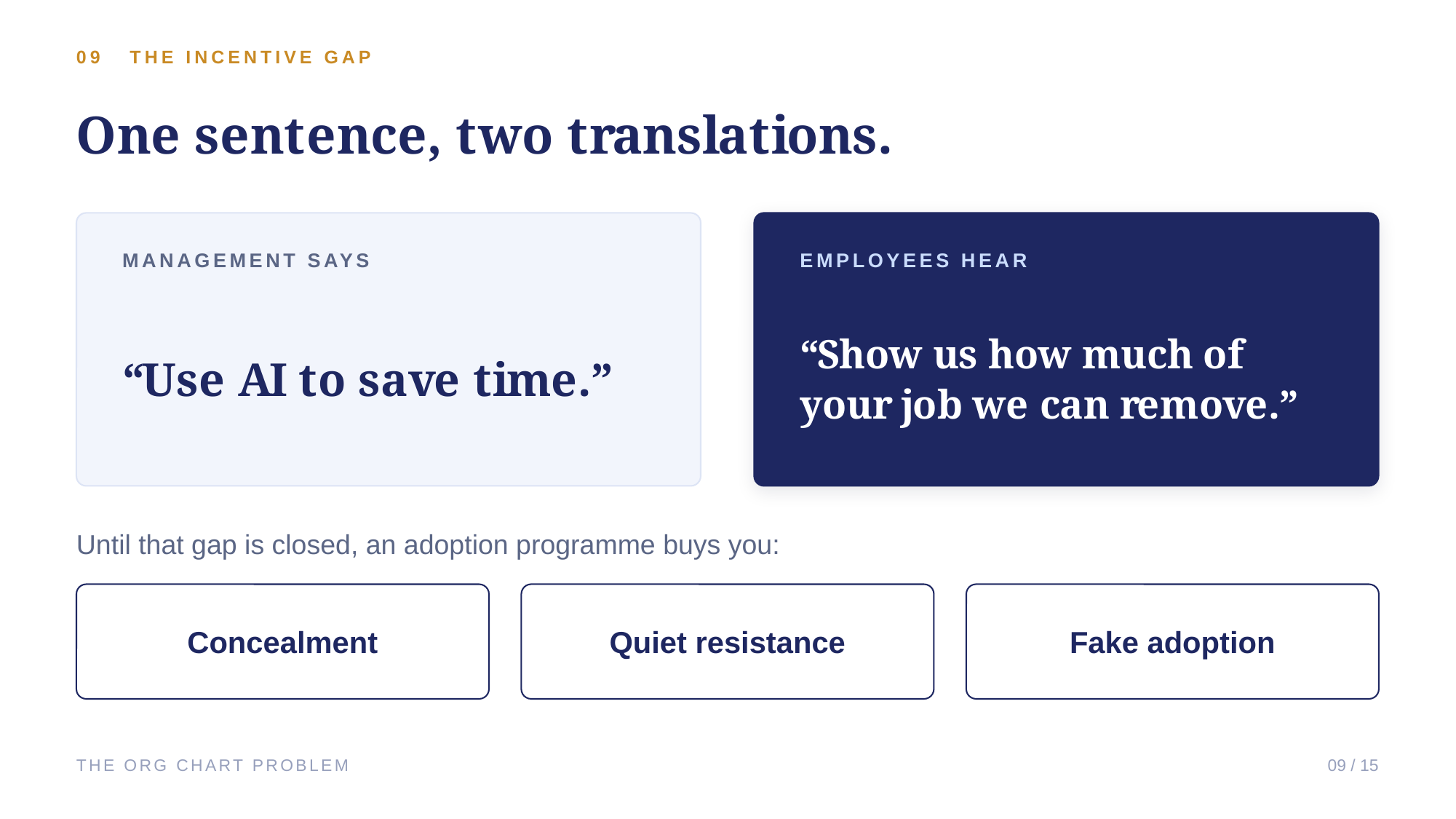
The people who know a process well enough to automate it are frequently the people most threatened by its automation. Why would they eagerly document the very knowledge that makes them valuable? Management says, “Use AI to save time.” Employees hear, “Show us how much of your job we can delete.”
What looks like fear of the tool is really a clear-eyed forecast of the deal on offer: more work, less status, more surveillance, more liability—and none of the gains. Until that incentive is fixed, you will get exactly what the incentive rewards: concealment, quiet resistance, and fake adoption dressed up for the quarterly review.
Pilots test the technology; scaling tests the organization
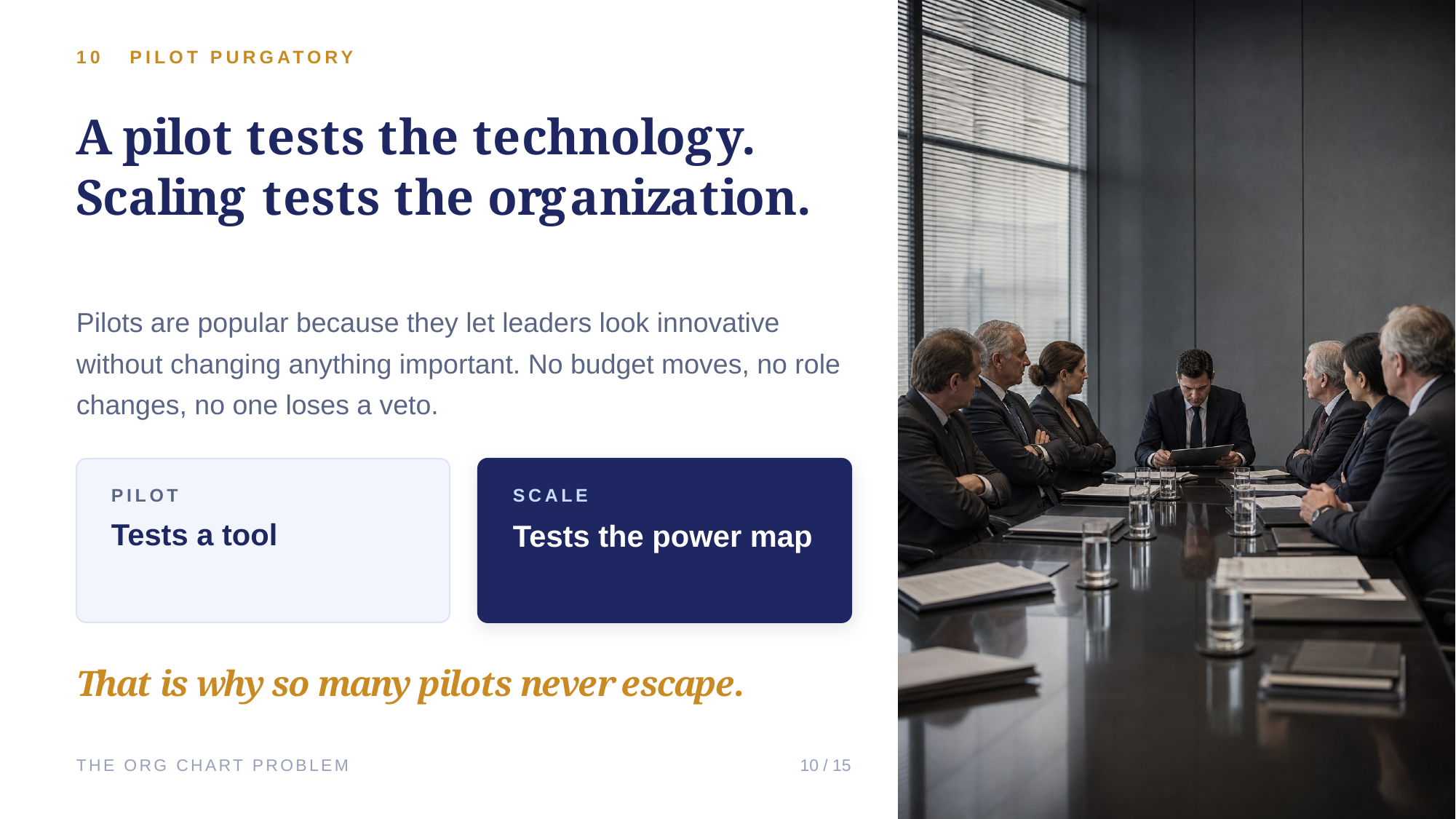
Pilots are popular for an unflattering reason. They let leaders look innovative without changing anything important. A pilot is a demo with a budget.
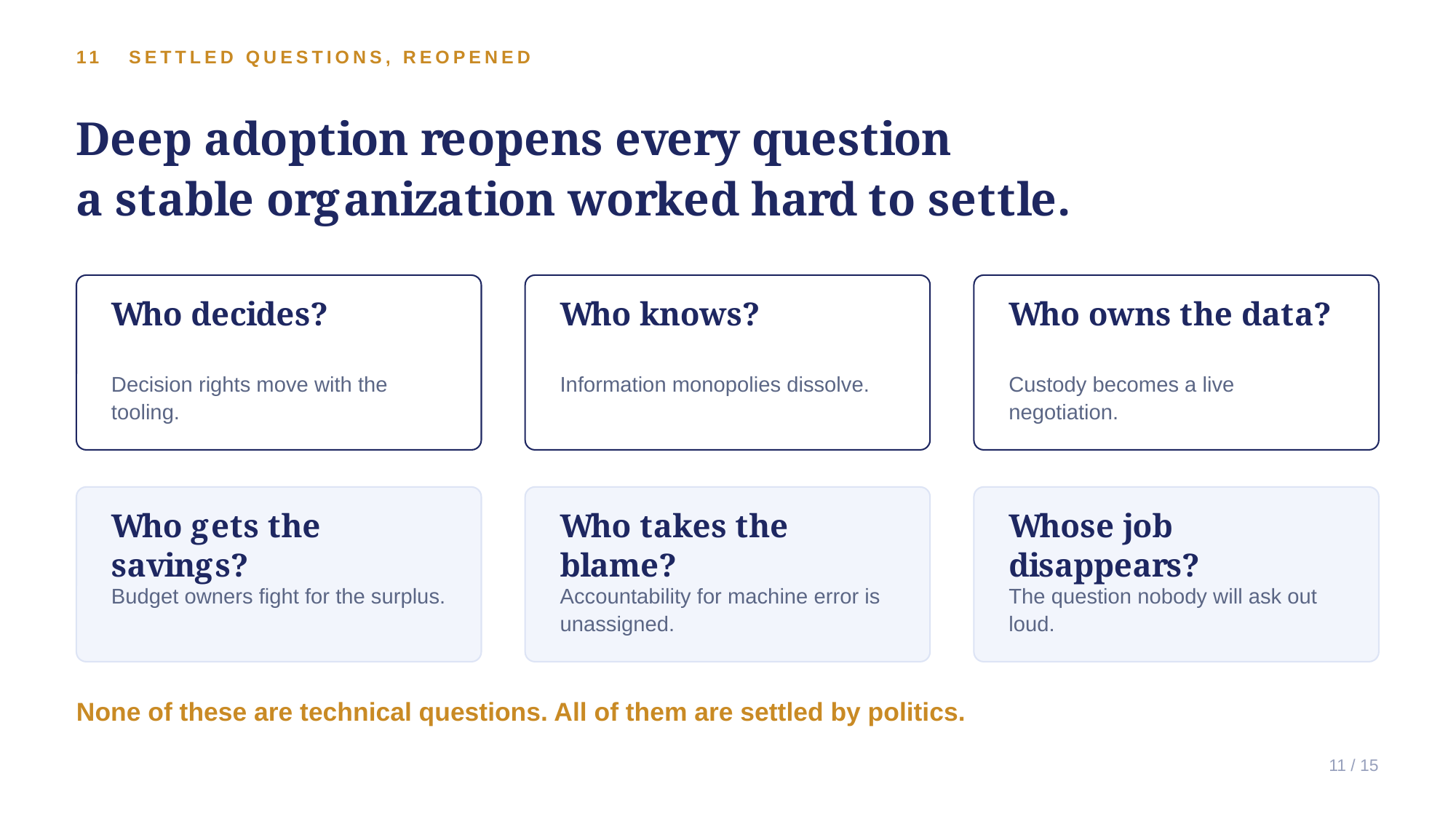
Scaling is different, because scaling tests the organization, not the software. It reopens every question a stable company worked hard to settle: Who decides? Who knows? Who owns the data? Who captures the savings? Who takes the blame? Whose job disappears? Those questions are why so many pilots never escape the building. The technology passed. The institution flinched.
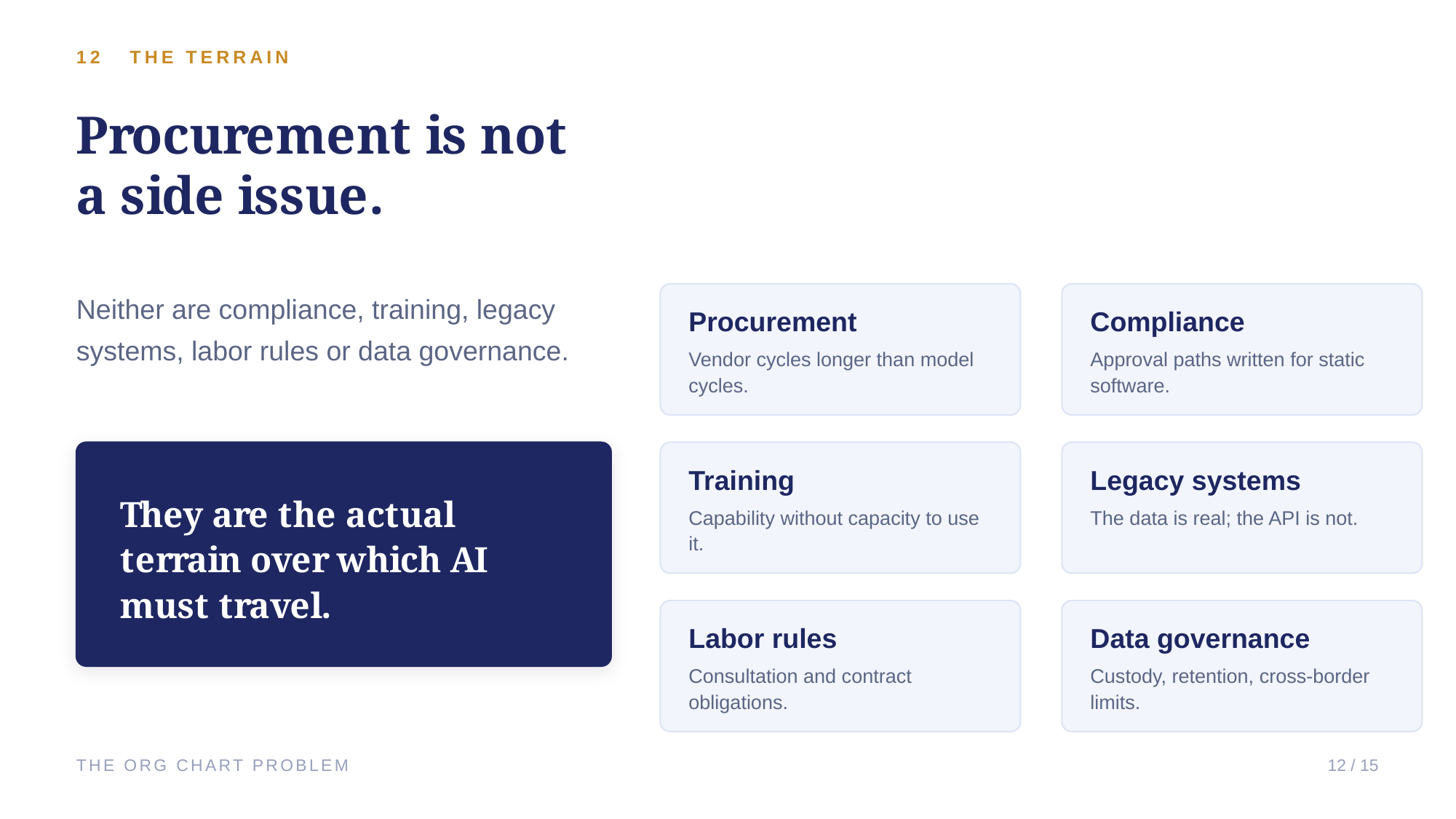
That is also why procurement, compliance, training, legacy systems, labor rules, and data governance are not annoying side issues. They are the actual terrain the technology has to cross. Ignore the terrain and your map is a fantasy.
Everyone is blocked—just differently
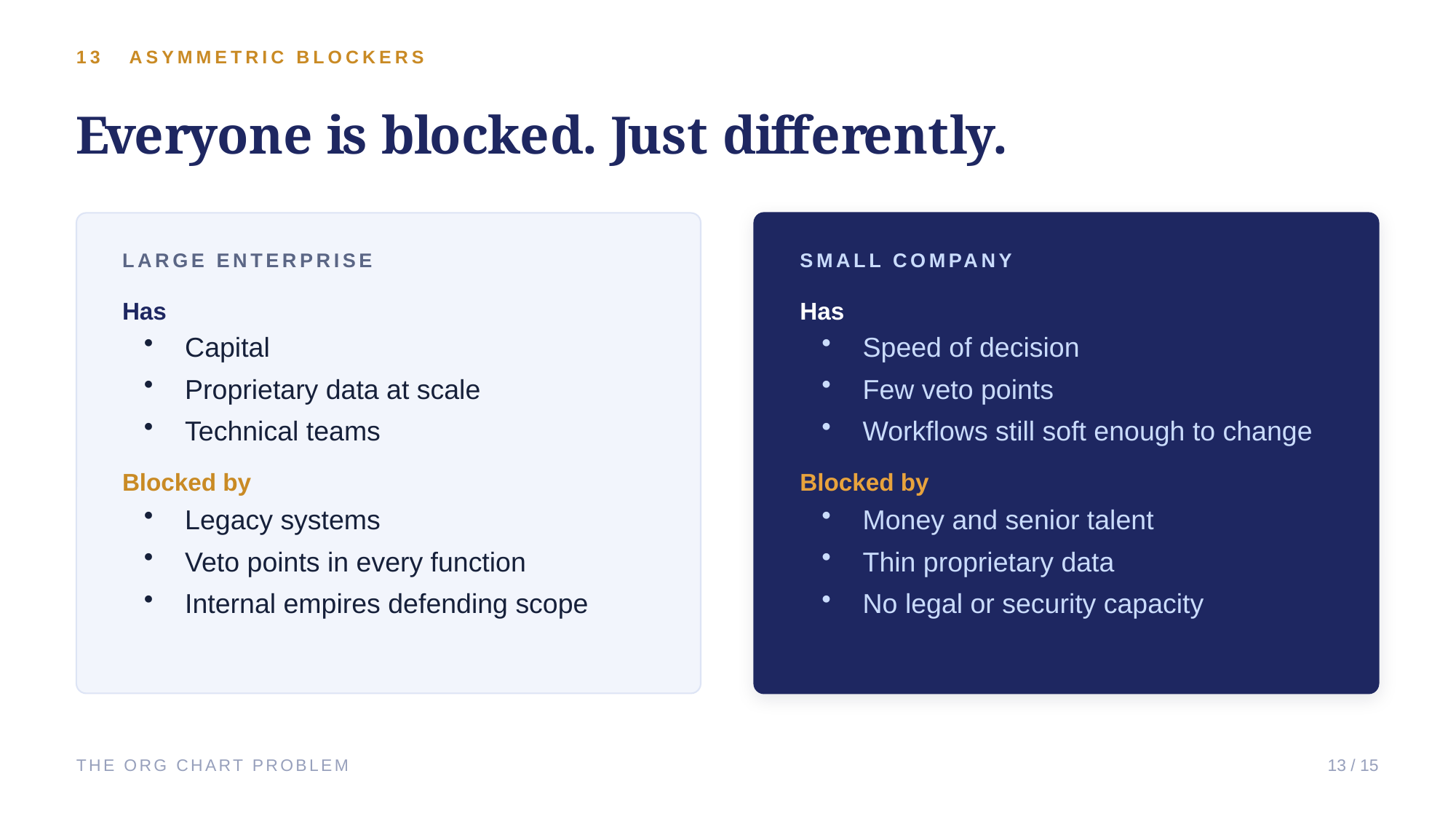
There is no clean winner by size. Big companies have capital, data, and technical teams, and also legacy systems, veto points, and internal empires defending their turf. Small companies can move fast and often lack the money, talent, data, and legal capacity to move at all. The advantage doesn’t go to the largest or the nimblest in the abstract. It goes to whoever removes their specific blockage first.
The metric that will actually decide this
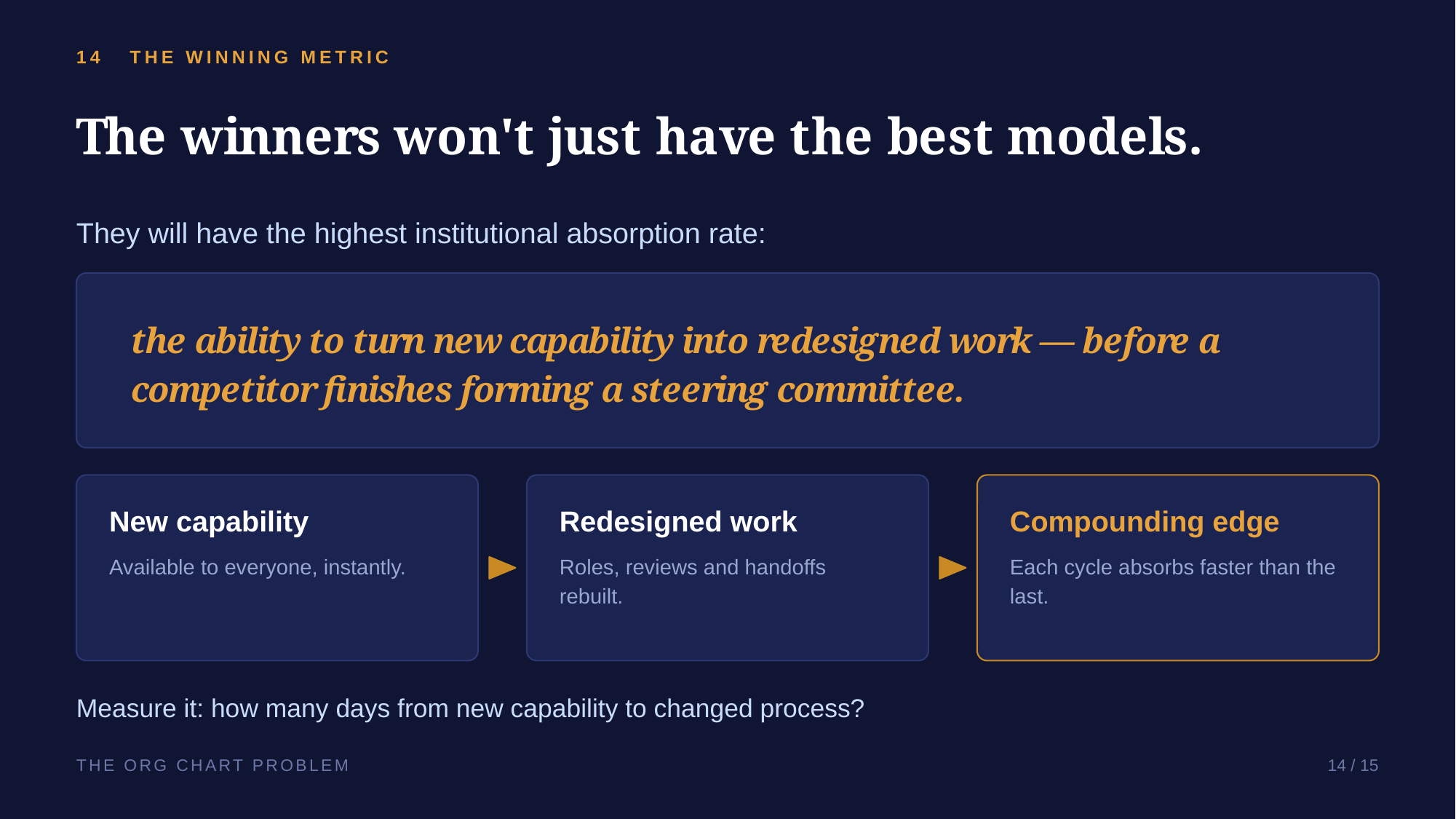
The winners of this cycle won’t simply own the best models. They’ll have the highest institutional absorption rate: the ability to turn new capability into redesigned work before a competitor finishes naming its steering committee.
Absorption is a discipline, not a purchase. It means rewriting the workflow, reassigning the trust, and settling the who-gets-blamed question in advance—so that when capability lands, the organization is already shaped to receive it.
Not all friction is waste
And here is the mistake I most want to warn against: treating every point of friction as an enemy.
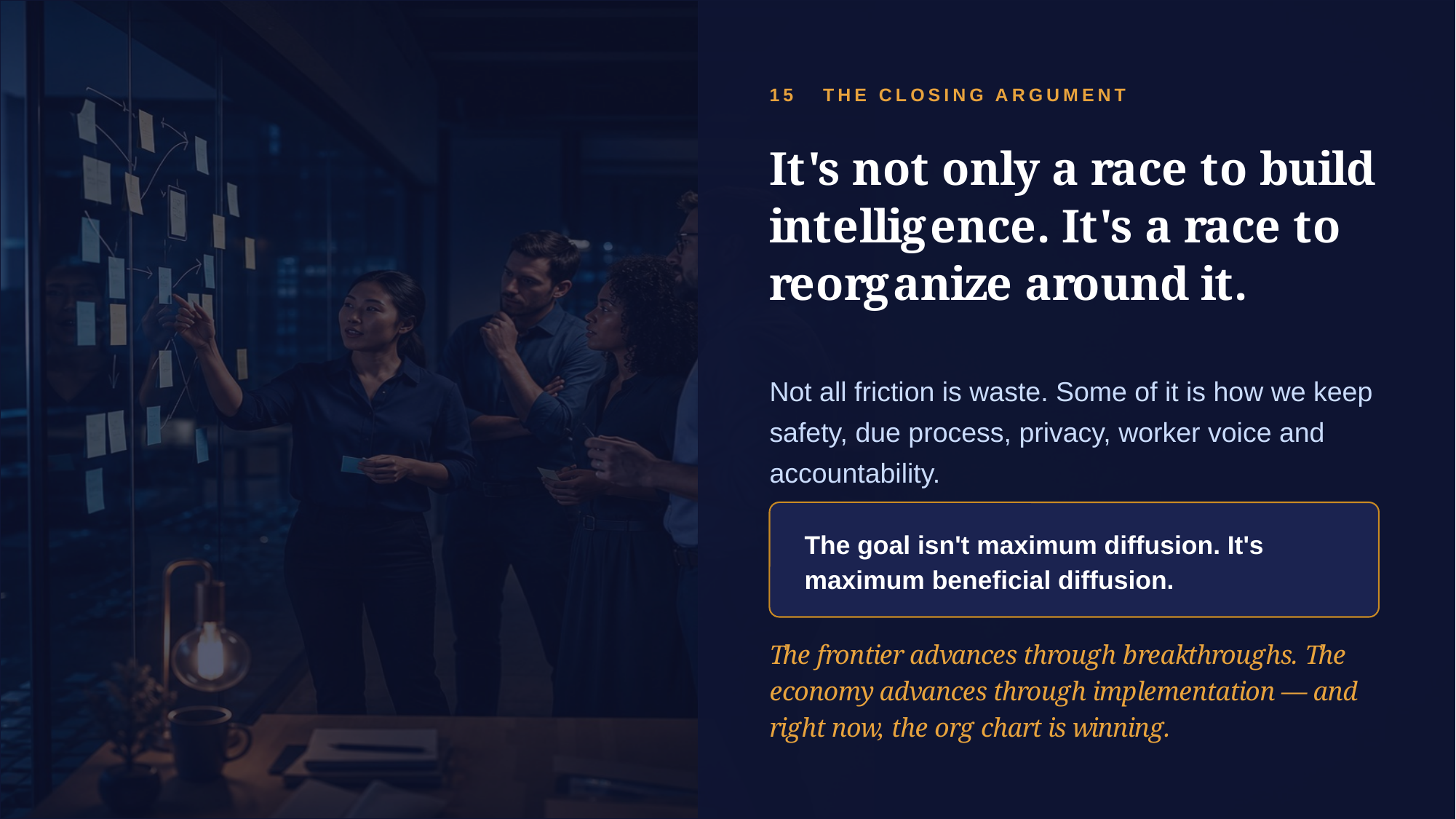
Some friction is pure waste—ritual, turf, and process theater. But some friction is how we preserve safety, due process, privacy, worker voice, and accountability. Strip it all out in the name of velocity and you haven’t built a faster company; you’ve built a faster way to cause harm. The goal was never maximum diffusion. It’s maximum beneficial diffusion.
The race we’re actually in
So let’s be honest about the contest. The AI race is not only a race to build intelligence. It’s a race to reorganize around it.
The frontier advances through breakthroughs. The economy advances through implementation. Those are not the same race, and confusing them is why so many transformation budgets produce so little transformation.
Right now, in most companies, the smartest thing in the building is losing to the seating chart. The org chart is winning. Whoever fixes that—not whoever buys the flashiest capability—wins the decade.