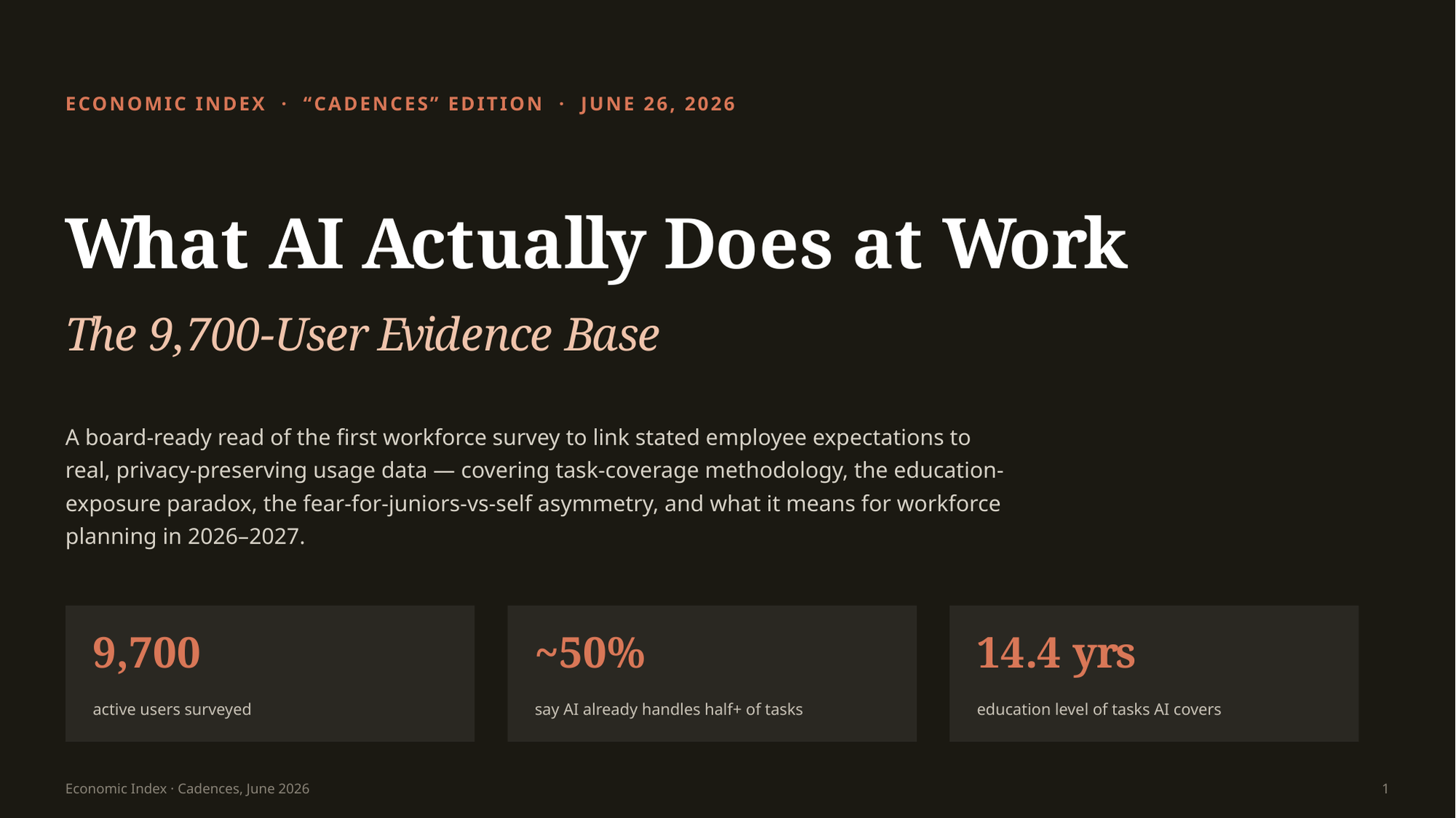
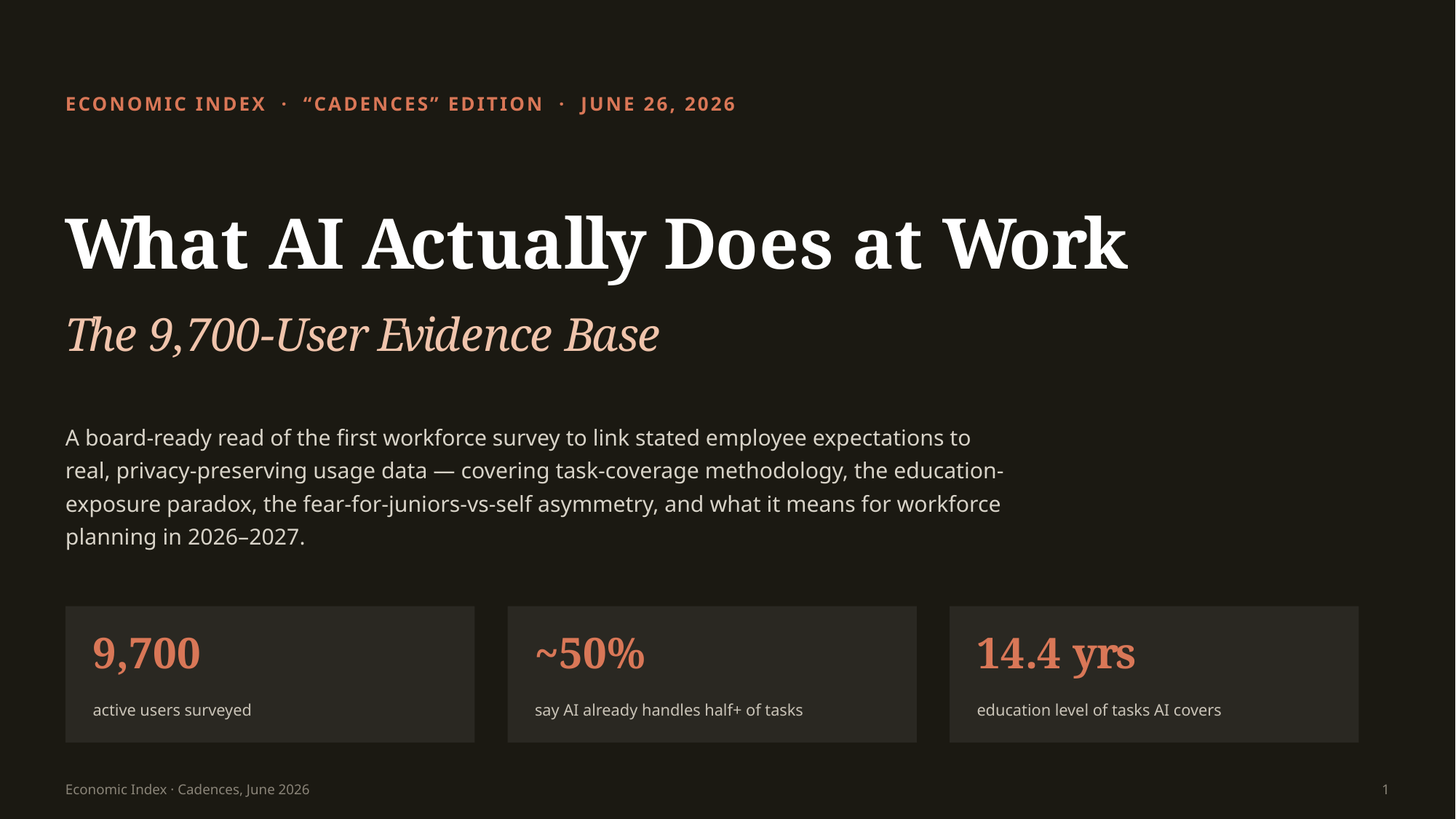
In June 2026, one of the largest AI developers published a study that did something earlier AI-and-jobs research never managed: it asked about 9,700 active users of its assistant how much of their work AI could already do, then checked those answers against the users’ real session logs. The findings are specific. More than a third expect AI to handle most or nearly all of their work tasks within a year, about 10% think it is likely they will lose their own job in that time, and, against the usual narrative, the people who hand the most work to AI are the most optimistic about their careers.
Why this study carries more weight than earlier AI-jobs surveys
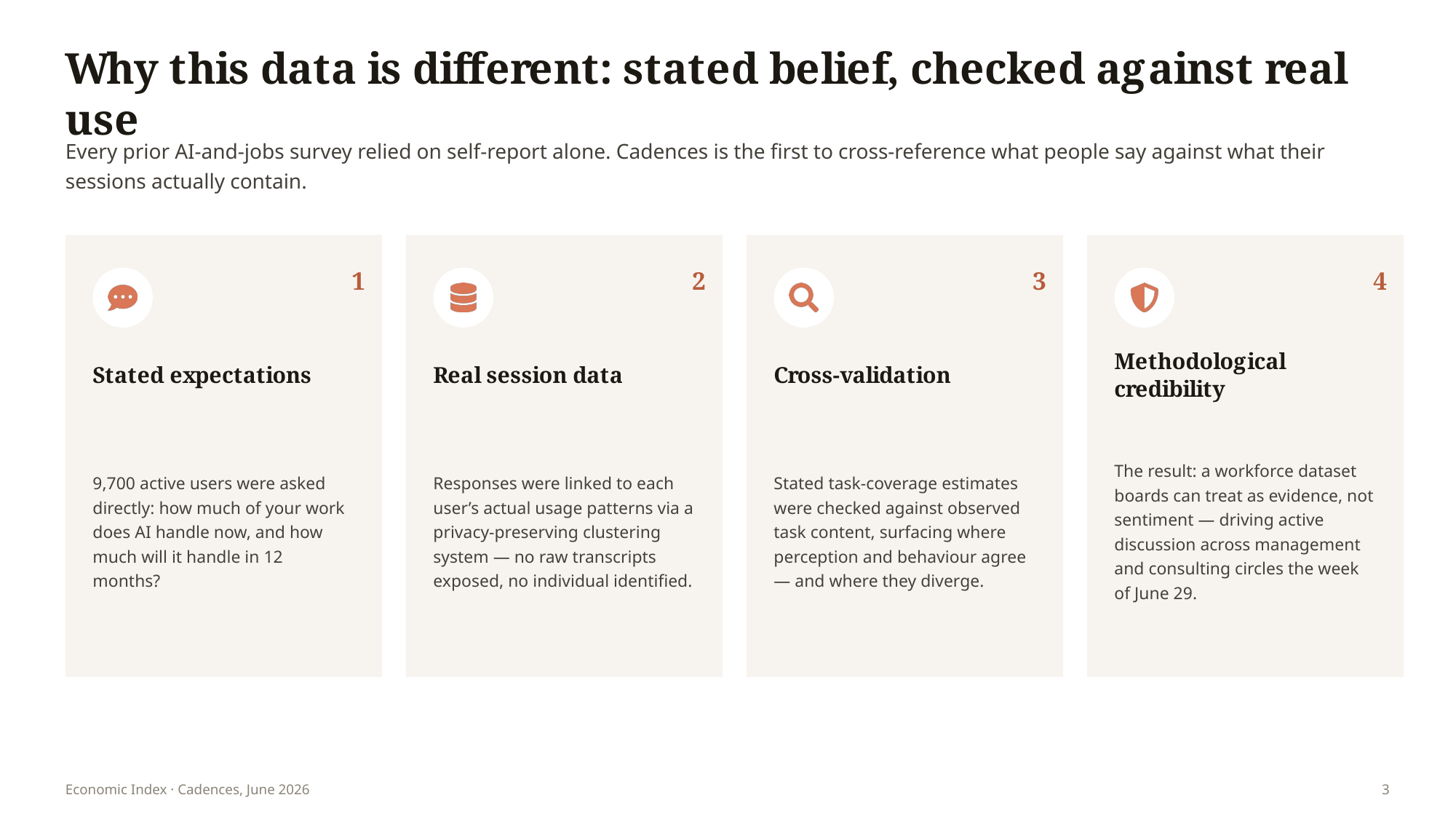
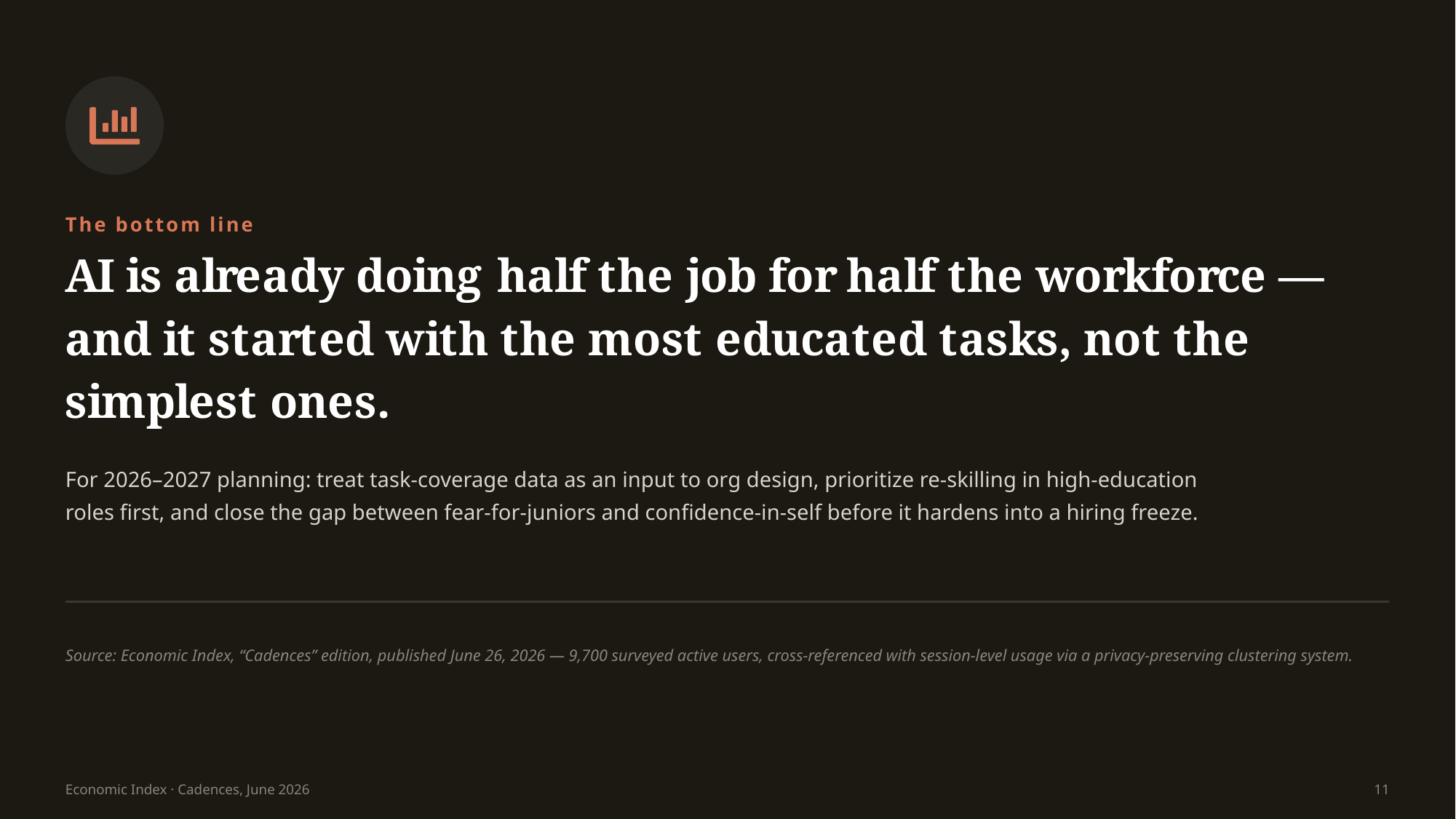
Most workforce forecasts rest on either theoretical estimates of what AI “could” do or self-reported surveys nobody can verify. This one linked roughly 9,700 survey respondents to their actual usage through a privacy-preserving system, in which a separate AI reads transcripts without exposing them to researchers. It also sampled conversations hour by hour rather than in occasional weekly snapshots. That pairing, what people say sitting next to what they actually do, is what makes it hard to dismiss. One caveat matters: the sample skews toward heavy users, with computer and mathematical roles near 30% and management near 23%, so it describes the AI-forward edge of the workforce, not the median worker.
The example below turns this same research into a ready-to-use slide deck, generated by AskDeck from a short brief, for anyone who needs to brief a team or board quickly. The substance, though, stands on its own.
What AI is actually producing at work
Ninety-three percent of tracked conversations now end in a concrete output. Work sessions most often produce documents and reports (about 20%), followed by explanations, email drafts, and analyses. The economically revealing pattern is that compute tracks value: conversations mapped to higher-paid occupations consume far more processing than routine ones, and the more valuable the output, the more both the machine and the user put in.
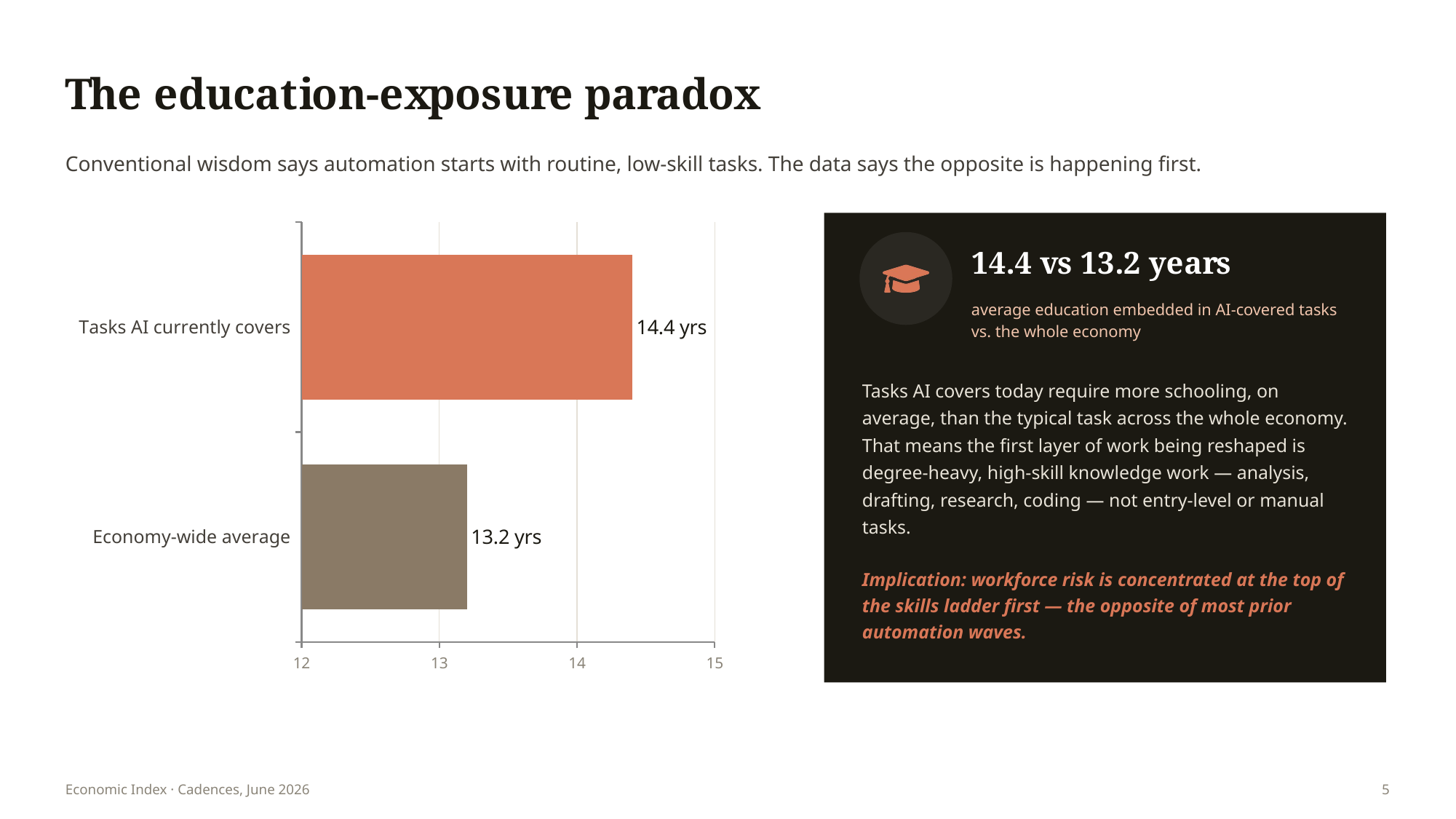
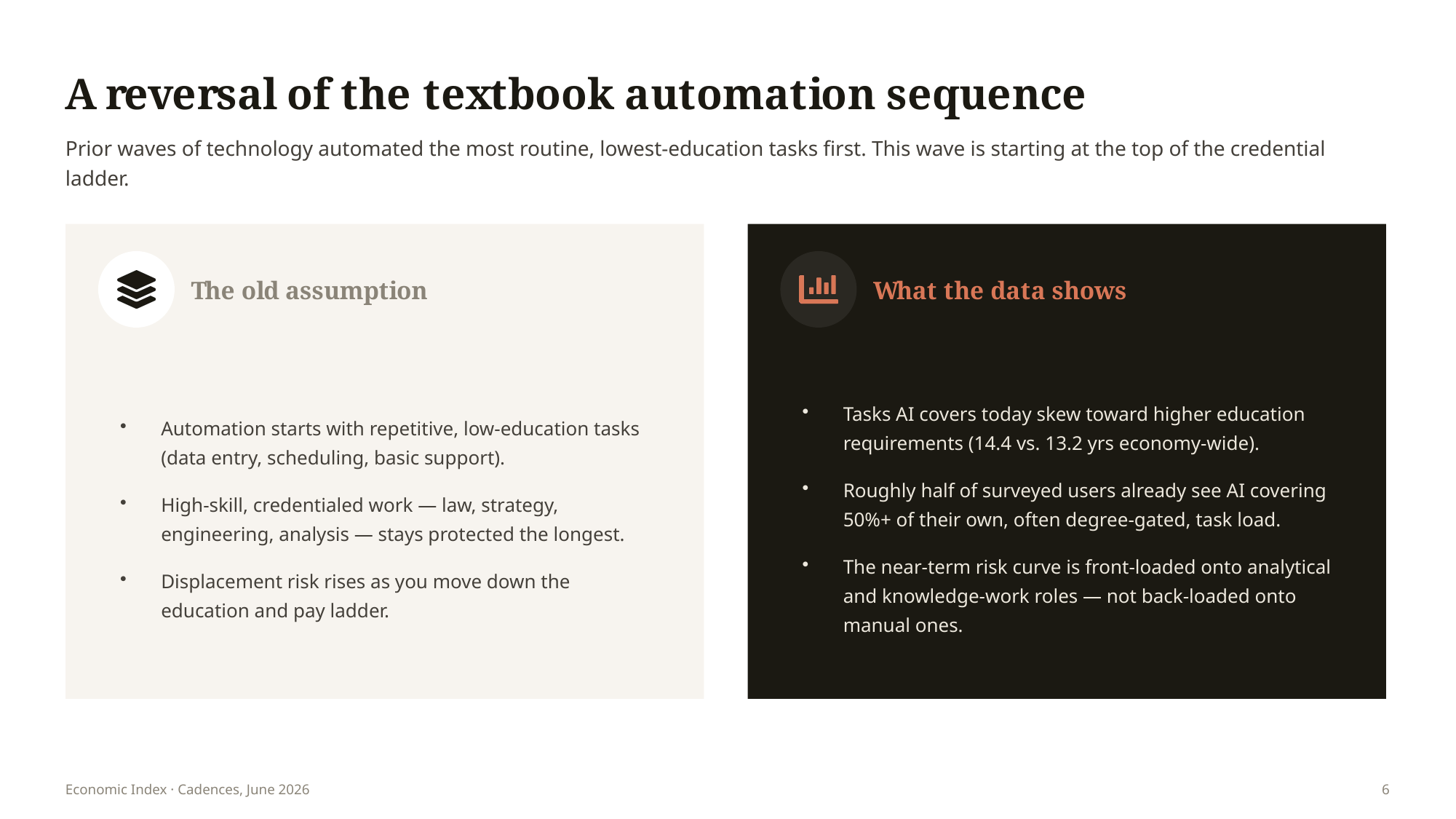
Two details sharpen the picture. AI’s written replies land roughly a year of education above the prompts that request them; outputs like academic papers require sixteen-plus years of schooling to read, and 15% reach doctoral level. And the same task can be delegated very differently: a blog post might take thirteen rounds of back-and-forth in a chat window but a single instruction inside an agentic tool. AI is doing sophisticated work high on the skill ladder, not just clerical cleanup.
How much of your job can AI do?
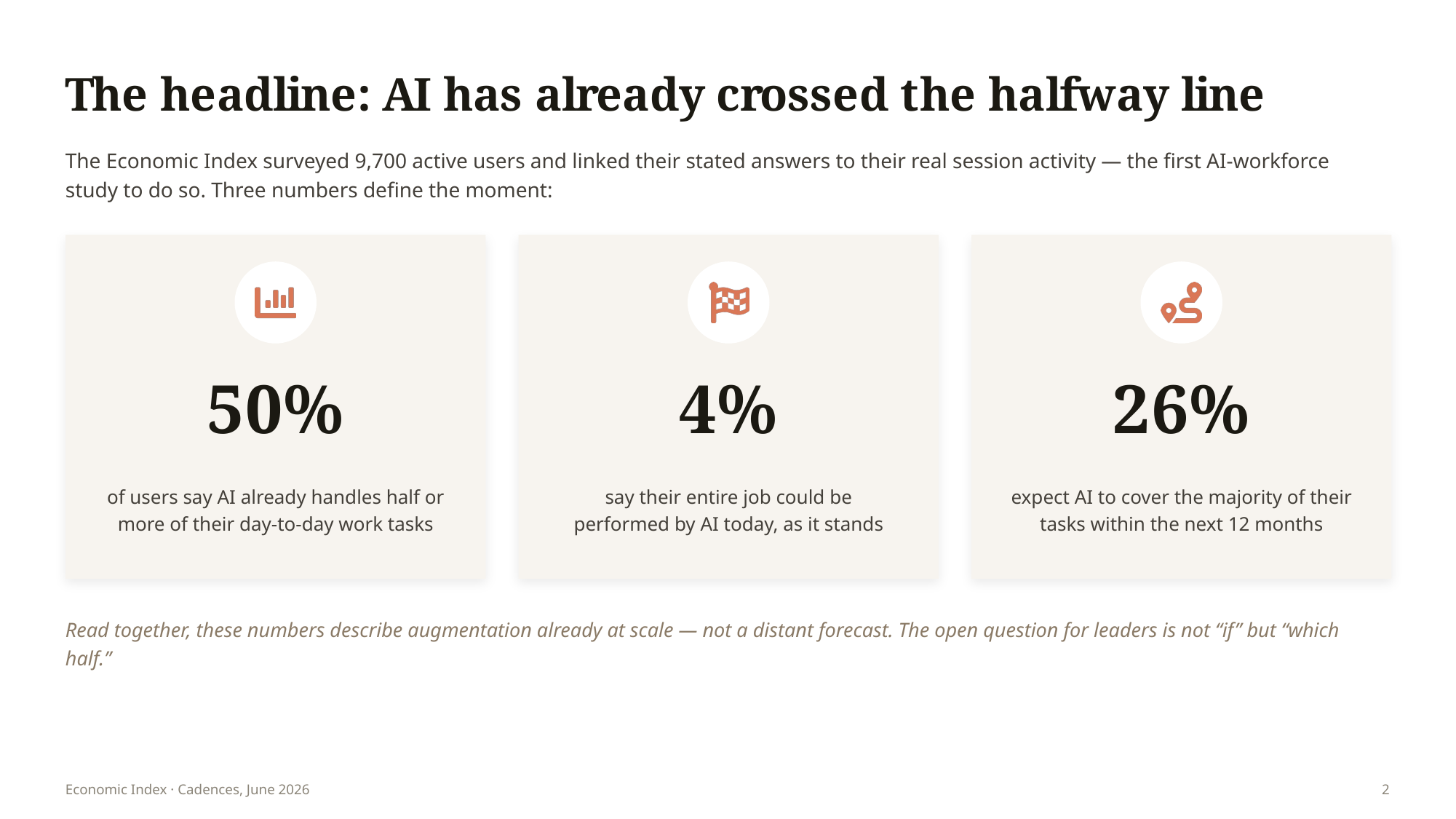
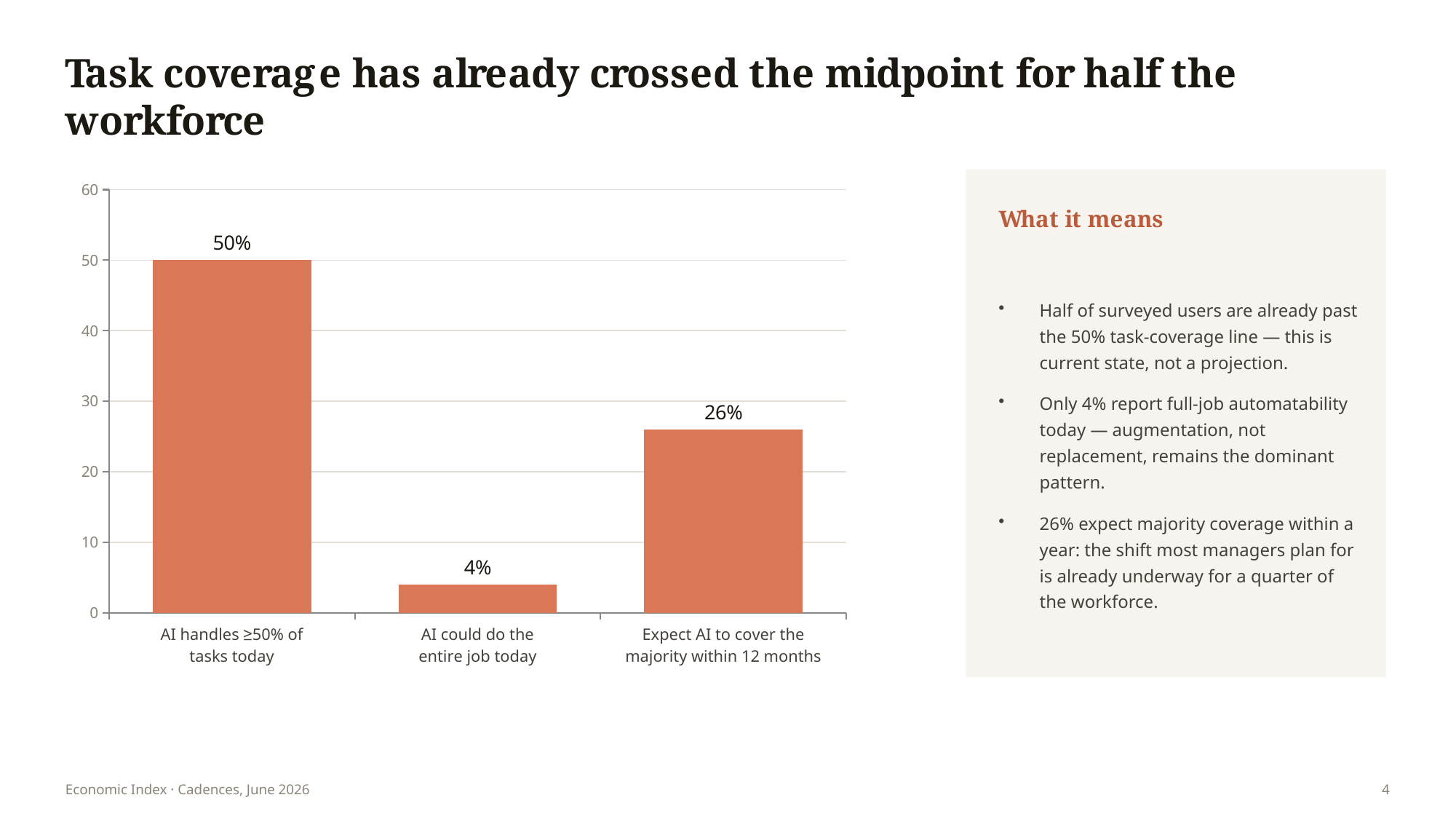
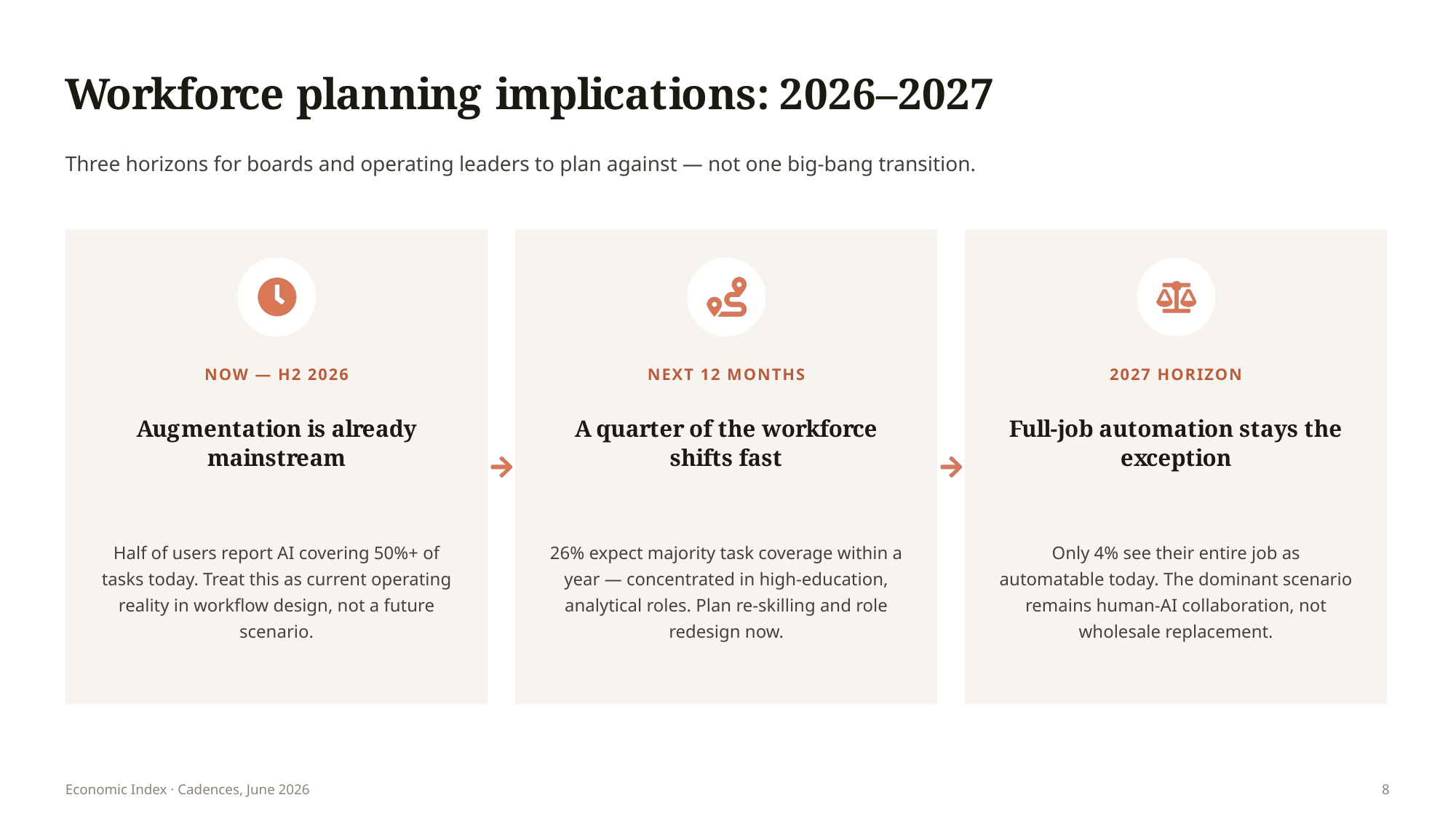
The study split “reported exposure,” what AI can do today, from “anticipated exposure,” what people expect in twelve months. Close to six in ten chose a higher band for next year, and over a third expect AI to handle most or nearly all their tasks. Two results cut against intuition. Reported exposure falls with experience, with workers who have fifteen-plus years rating the share AI can do about ten points lower than first-year workers, and it is lower in wealthier countries. Veterans repeatedly named judgment, context, and relationships as the parts of their jobs AI cannot reach.
The fear-for-juniors gap
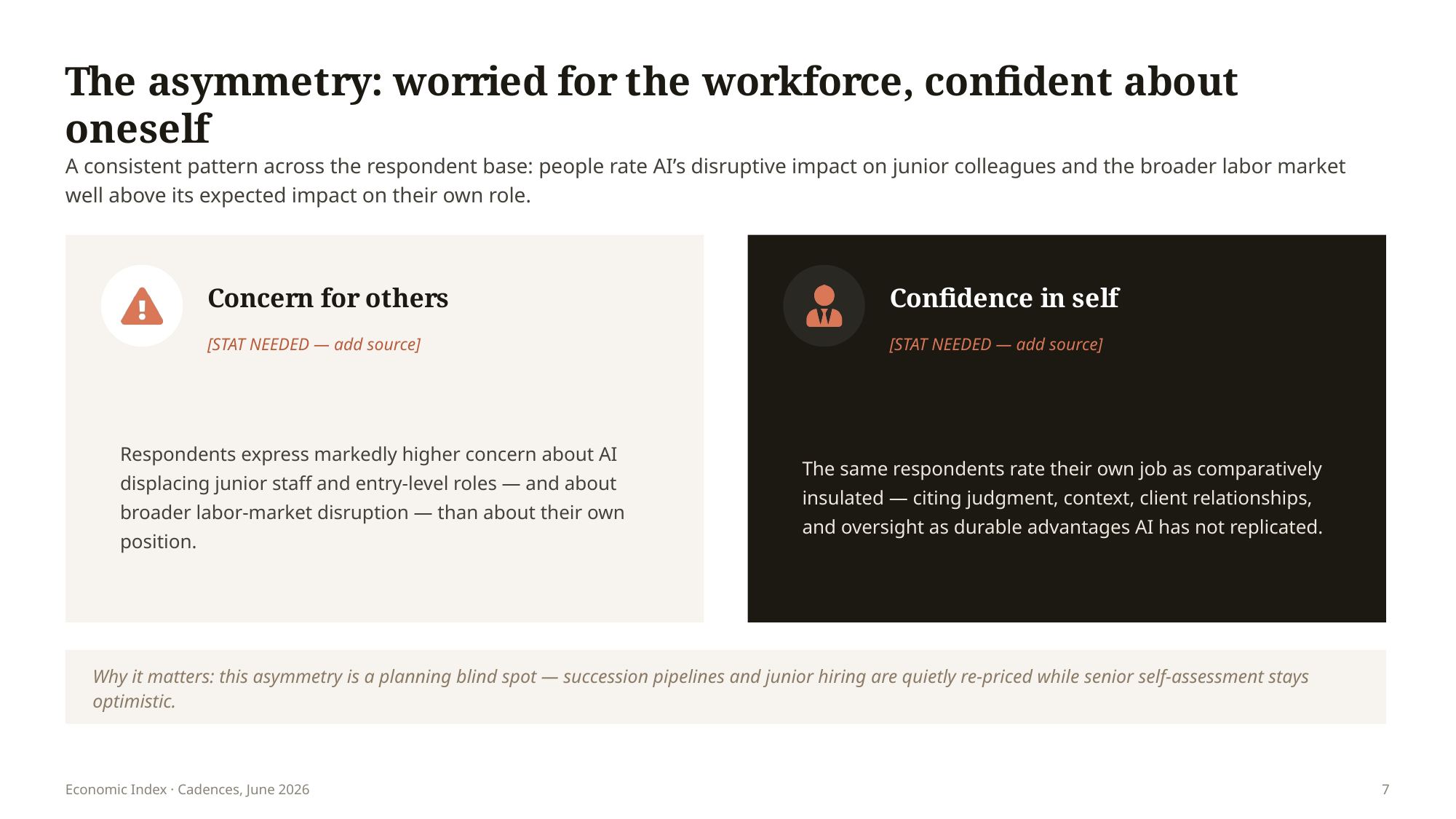
People worry more for others than for themselves. Around 10% rated their own involuntary job loss as likely in the next year, but over a third put a junior colleague’s odds of losing a job above 60%. That asymmetry is the report’s most pointed signal for workforce planning: the entry-level rung, historically where people build the judgment that veterans say AI lacks, is exactly where insiders expect the squeeze.
Why the heaviest users are the most optimistic
The counterintuitive core of the report is that delegation and optimism move together. Across six dimensions, pay, job security, ability to find a new job, meaning, autonomy, and human interaction, people who automate the most are the most positive about AI’s effect on their work. That likely reflects what they experience day to day:
- 86% report faster work, 82% wider scope, and 69% higher quality.
- 57% say AI has made their skills more valuable, and 68% say they learn more with it.
- Over half hope for a future of human-AI collaboration; roughly a third hope the economic gains are shared widely.
Does this mean AI is about to replace knowledge workers?
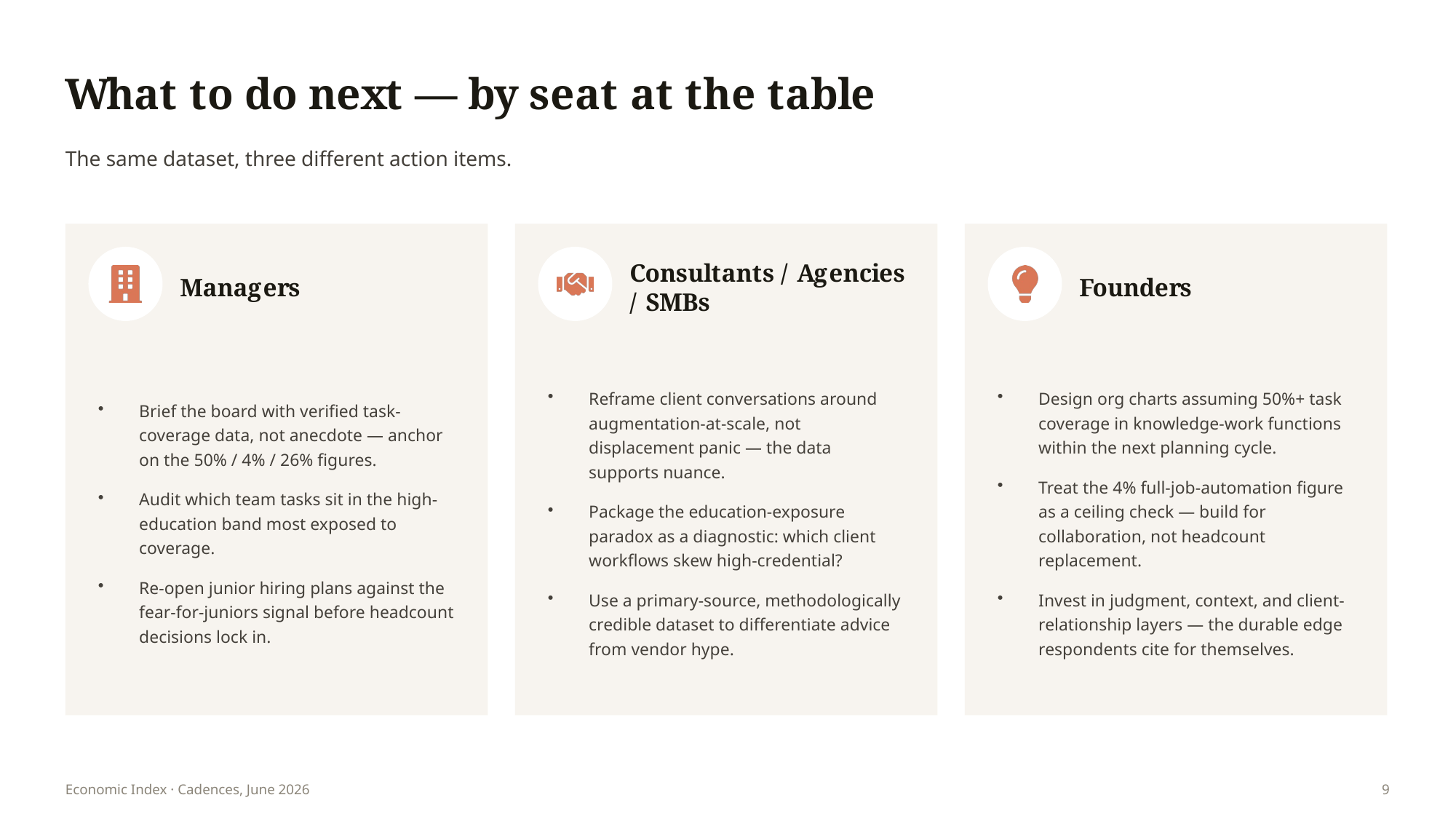
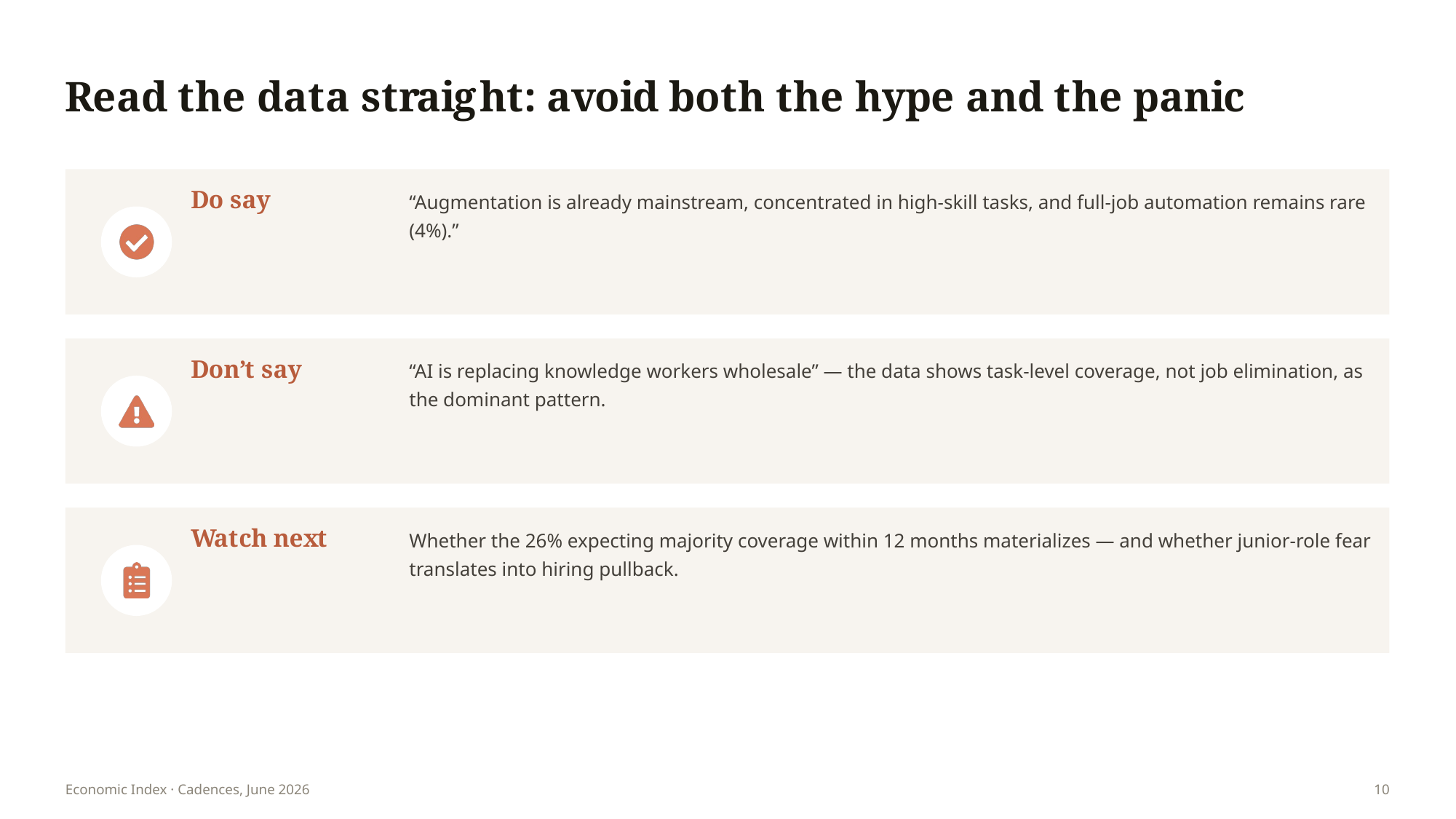
Not on this evidence. The data show fast augmentation, with humans staying involved on the highest-value tasks, more than wholesale replacement, though the fear concentrated on junior roles is real and worth watching.
Which workers are most exposed?
By the users’ own accounts, less experienced workers and those in lower-income countries report AI doing more of their tasks today, while experienced workers report the least.
What did people say they want?
Asked to imagine the economy in ten years, the most common hopes were collaboration with AI on meaningful work, automation of drudgery to free up time, and broadly shared prosperity.
The example deck below was built with AskDeck from a short brief on this report, and you can download and edit it to fit your own team. If you need to turn a dense dataset into something presentable fast, it is worth a look.