Founders too often outsource their story to a template. They open a tool, inherit twelve pre-labeled slides — Problem, Solution, Market, Team, Ask — and start filling in boxes as if the boxes were the point. They are not. By the time the deck looks finished, the founder has answered a hundred small formatting questions and exactly zero large ones. The most important question — why should anyone believe this company will win? — never got asked, because no slide demanded it.
So let me say the thing plainly: the deck is not the pitch. The argument is. A deck is just the vehicle that carries an argument into a room. If the argument is weak, a beautiful vehicle only helps it arrive faster at the wrong conclusion.
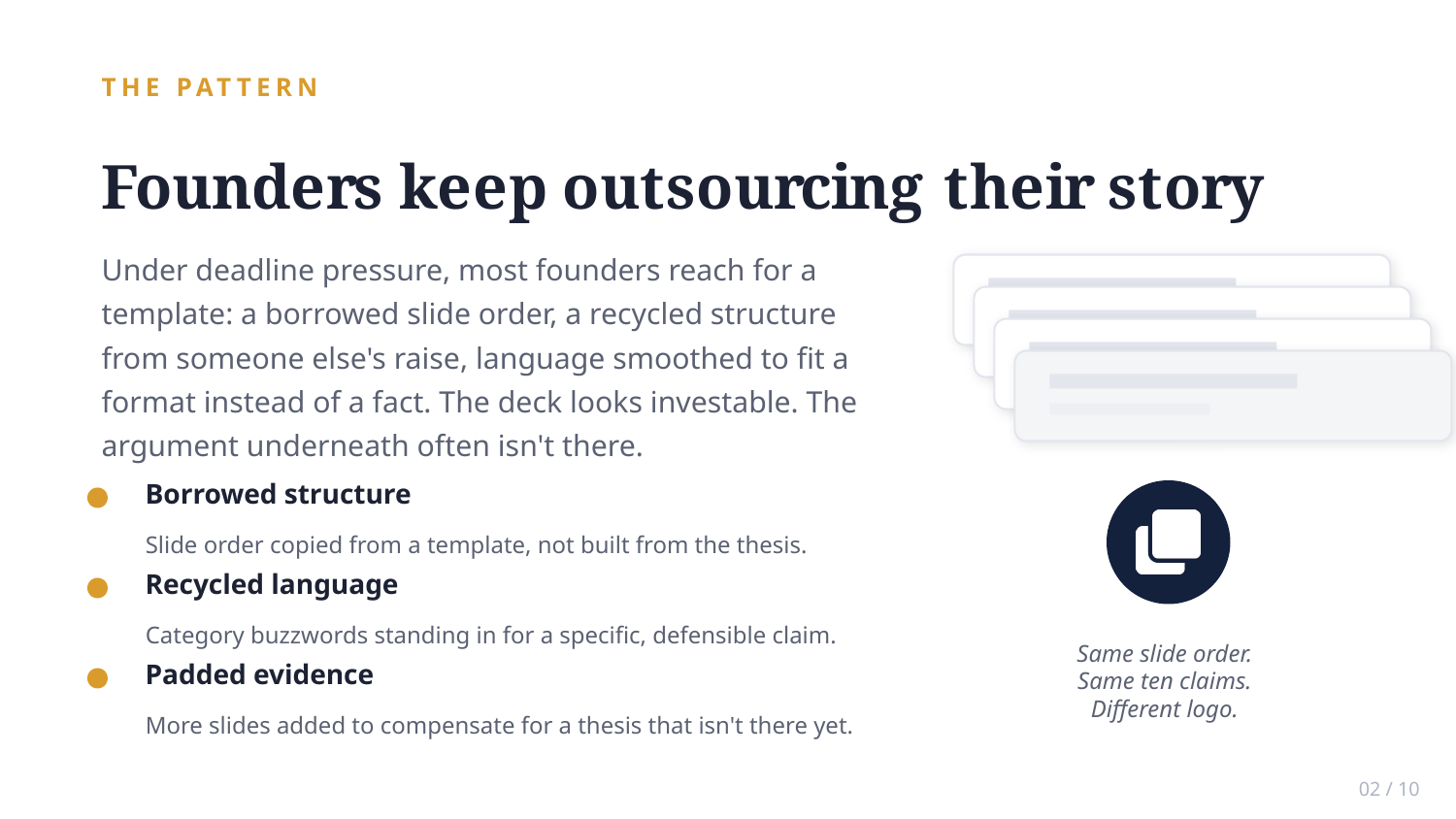
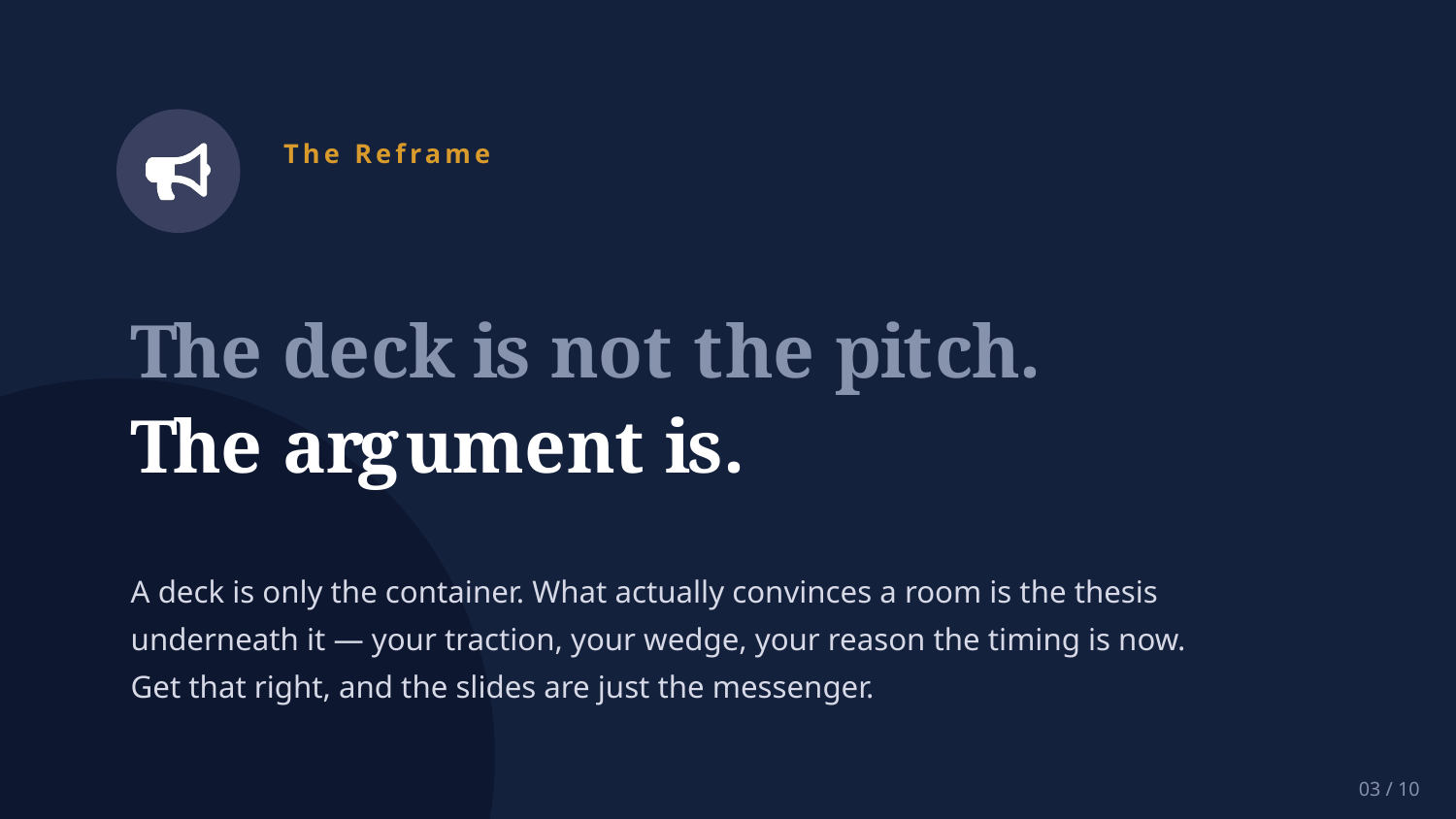
Swipe or scroll sideways to flip through the 10-slide deck →
The template is a trap dressed as a shortcut
Templates feel like leverage. You get structure for free, and structure is comforting when the blank page is staring back at you. But a template optimizes for completeness, not conviction. It rewards you for having a slide about every category an investor might care about, and punishes you not at all for having nothing sharp to say on any of them.
That is exactly backwards. Investors are not grading you on coverage. They are trying to figure out, in a few minutes, whether you understand something about the world that the rest of the market has not priced in yet. A template cannot manufacture that insight. It can only hide the absence of it behind consistent fonts.
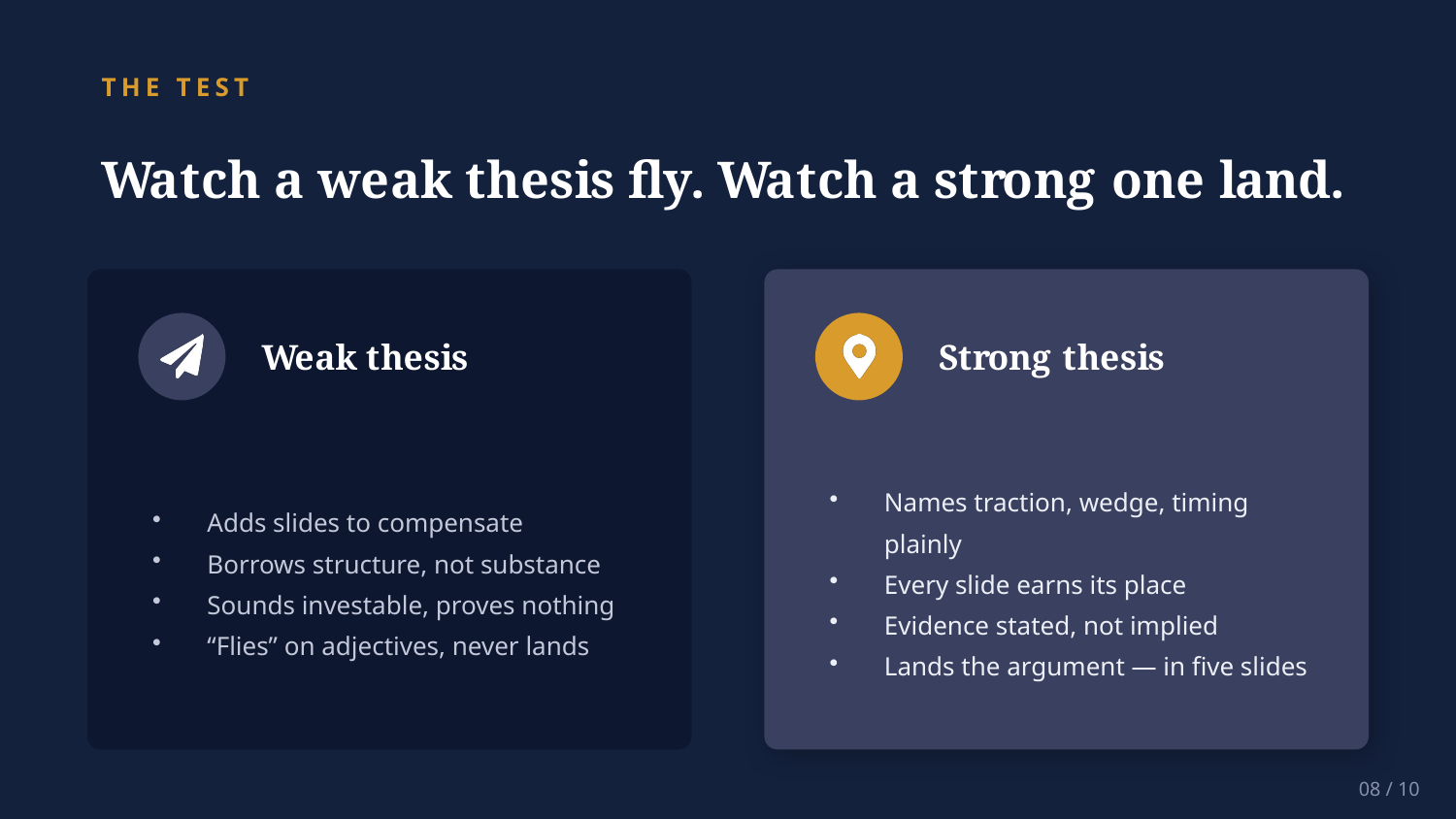
Watch what happens to a weak thesis when you hand it more slides. It spreads. The lack of a wedge becomes three slides on “market opportunity.” The absence of traction becomes a roadmap with a lot of confident arrows. The founder mistakes volume for substance, and the deck grows precisely because the argument cannot stand on its own. More slides are not a sign of a thorough pitch. They are usually a symptom of an unfinished one.
Own the narrative, or someone else will
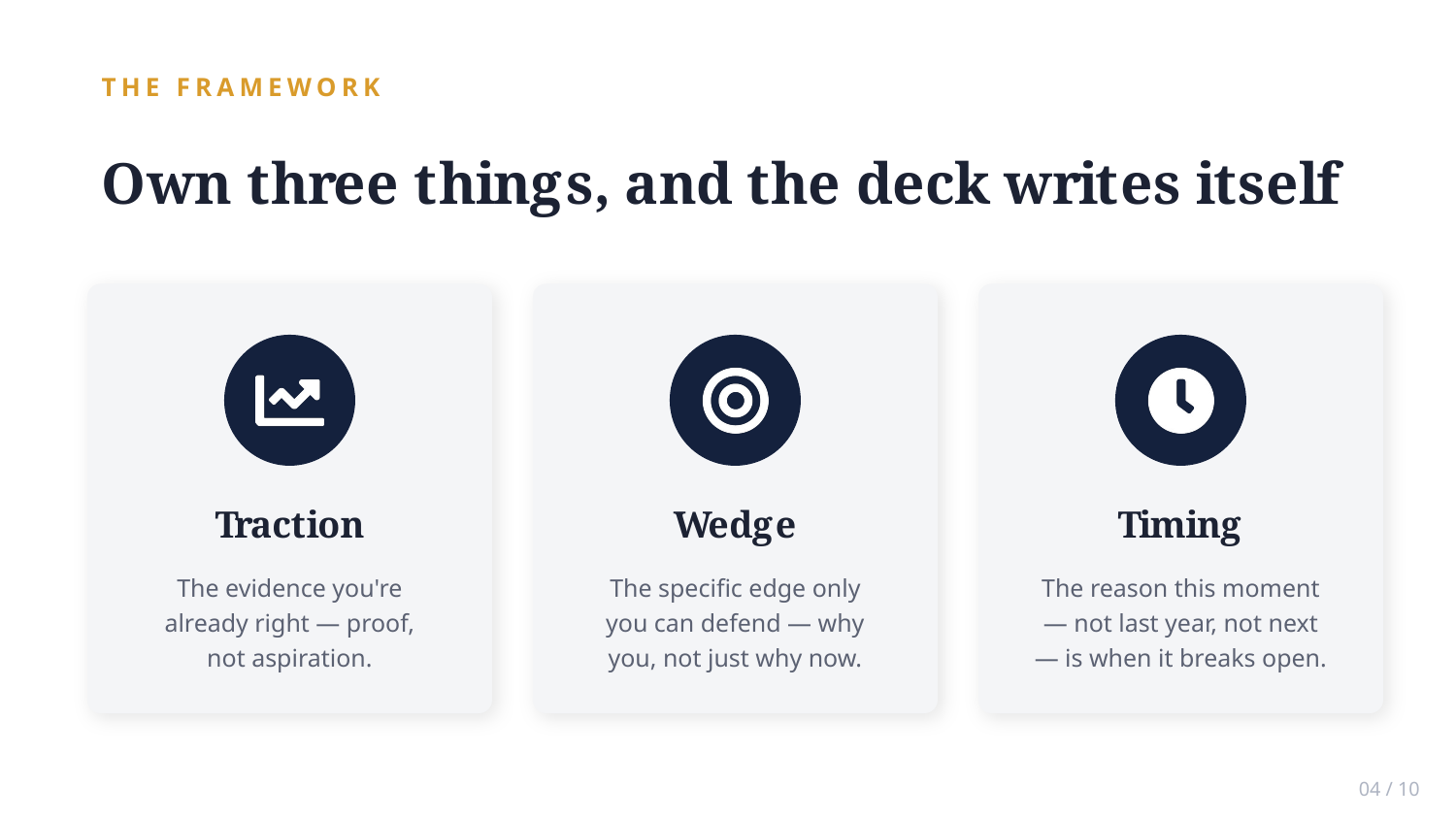
A real pitch rests on three claims, and you — not a template — have to own each one.
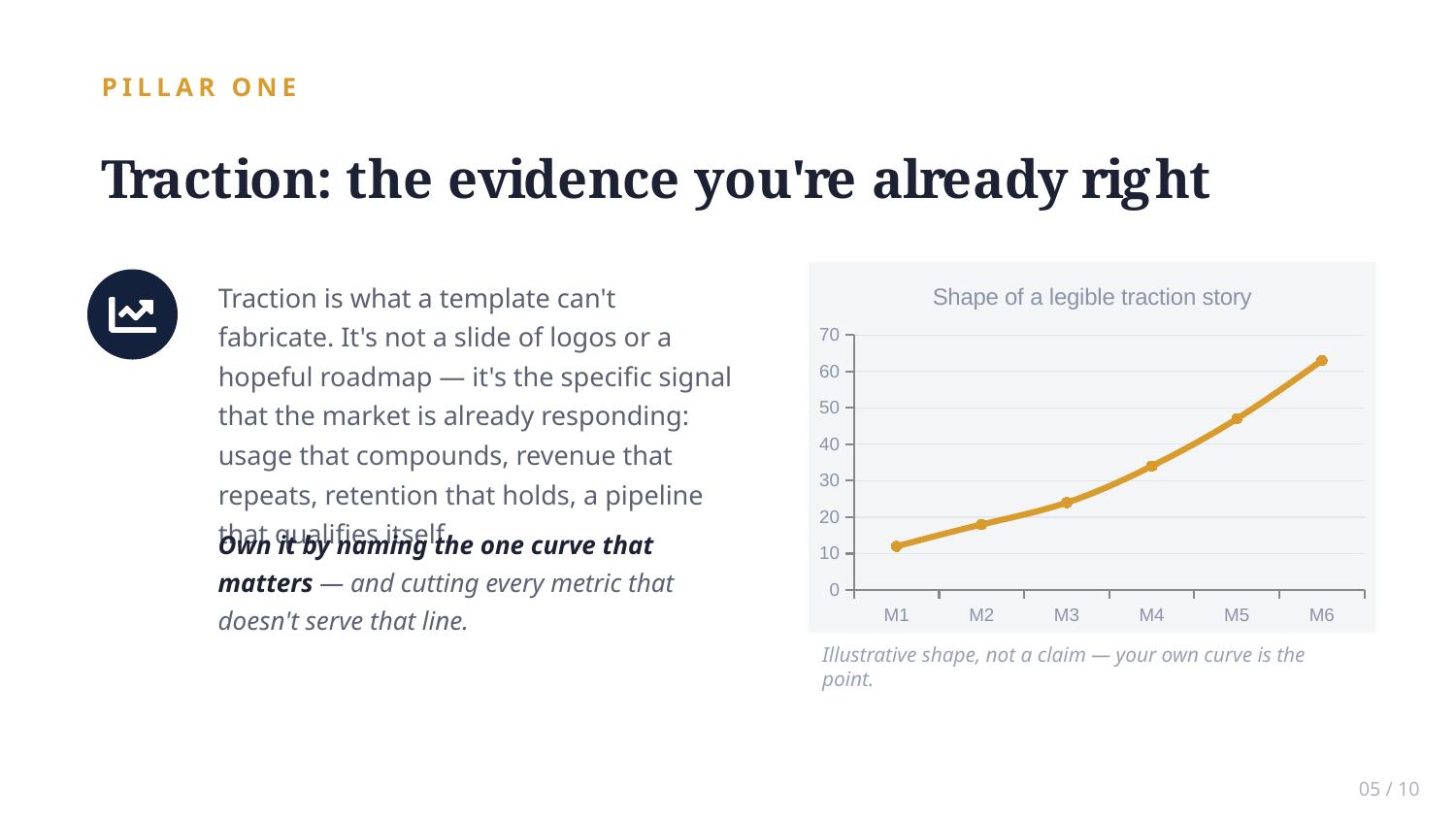
Your traction. Not vanity metrics, not a chart that only slopes up because the axis was chosen kindly. The specific, defensible evidence that something is working: who is paying, how often they come back, what breaks when you try to grow. Traction is the closest thing a young company has to a fact, and facts are what an argument is built from.
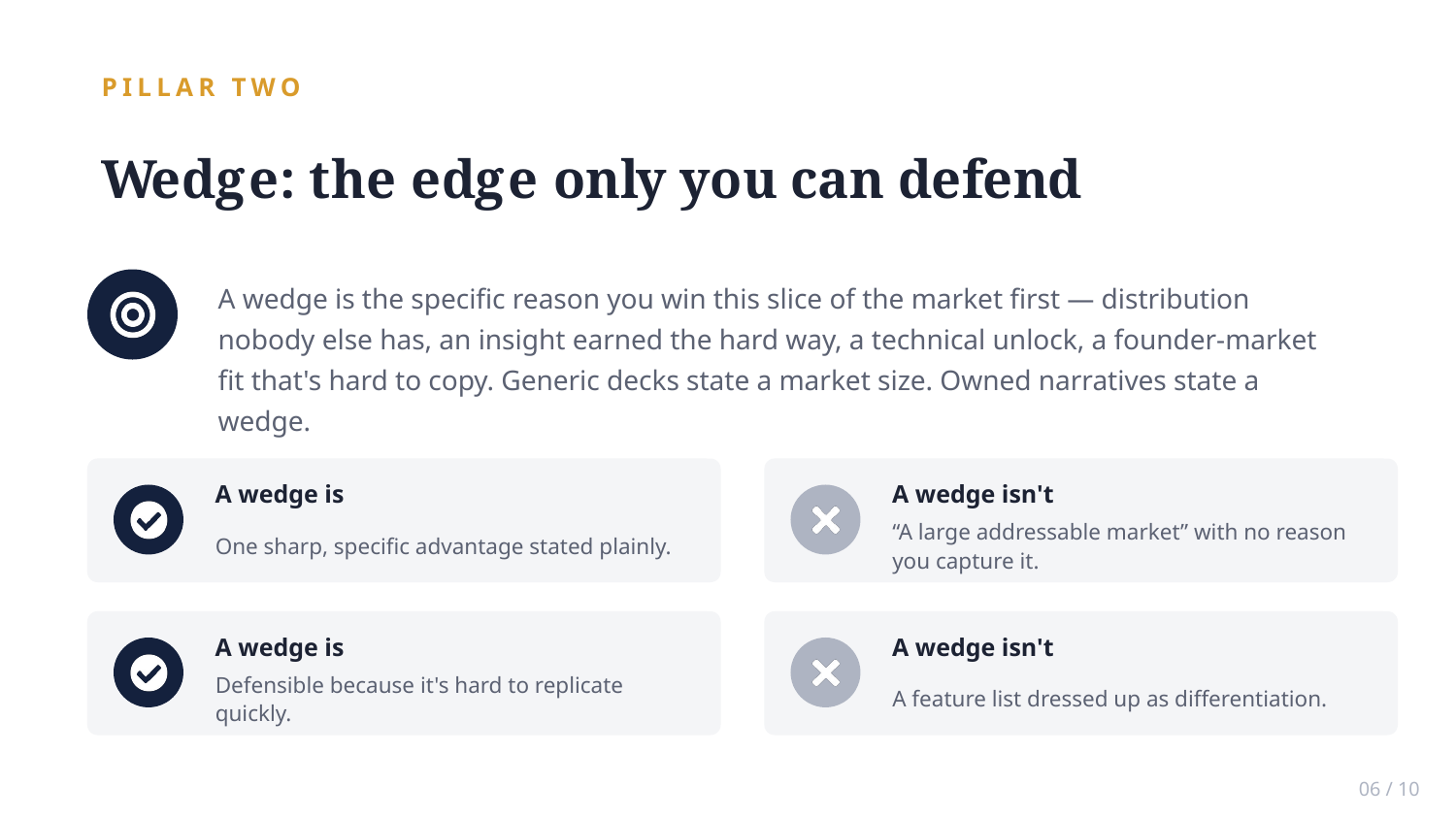
Your wedge. The narrow, unfair thing you do better than anyone, and the reason that narrow thing opens into something enormous. Every durable company started as a wedge that looked too small to matter to the incumbents. If you cannot say your wedge in a sentence, you do not have one yet — you have a category you would like to be in.
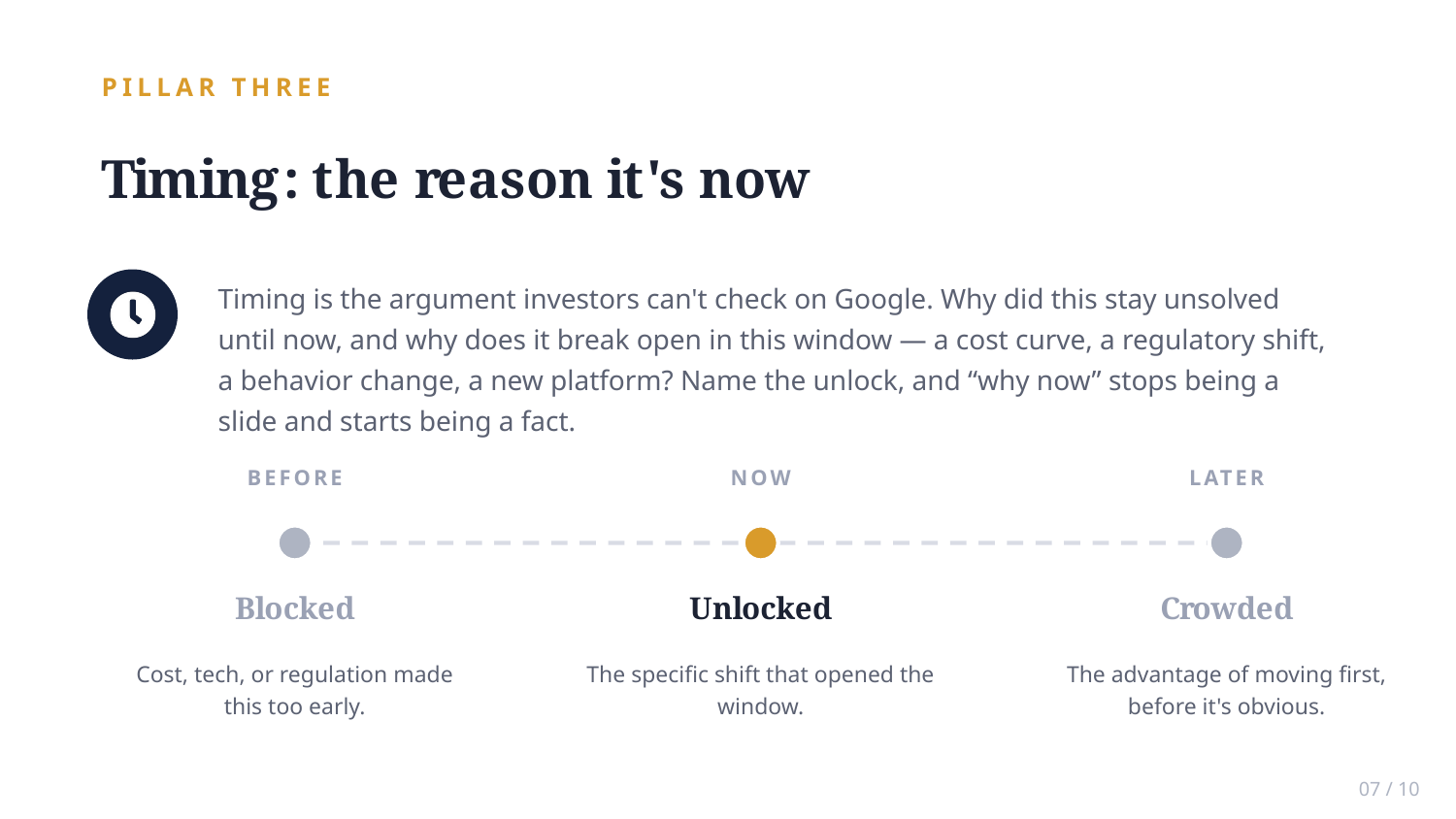
Your timing. The reason now. Not “the market is big,” which is true of every market and therefore explains nothing, but the specific shift — in behavior, in cost, in regulation, in what is newly possible — that makes this the moment your company could not have existed five years ago and will be obvious to everyone in five more. “Why now” is the question that separates a company from a good idea someone has had before.
Those three claims are the argument. String them together and you have a thesis: because this is happening now, we have found this wedge, and here is the early proof it works. That sentence is your pitch. Everything on a slide should exist to make that sentence more believable, and anything that doesn’t should be cut.
What a great deck actually does
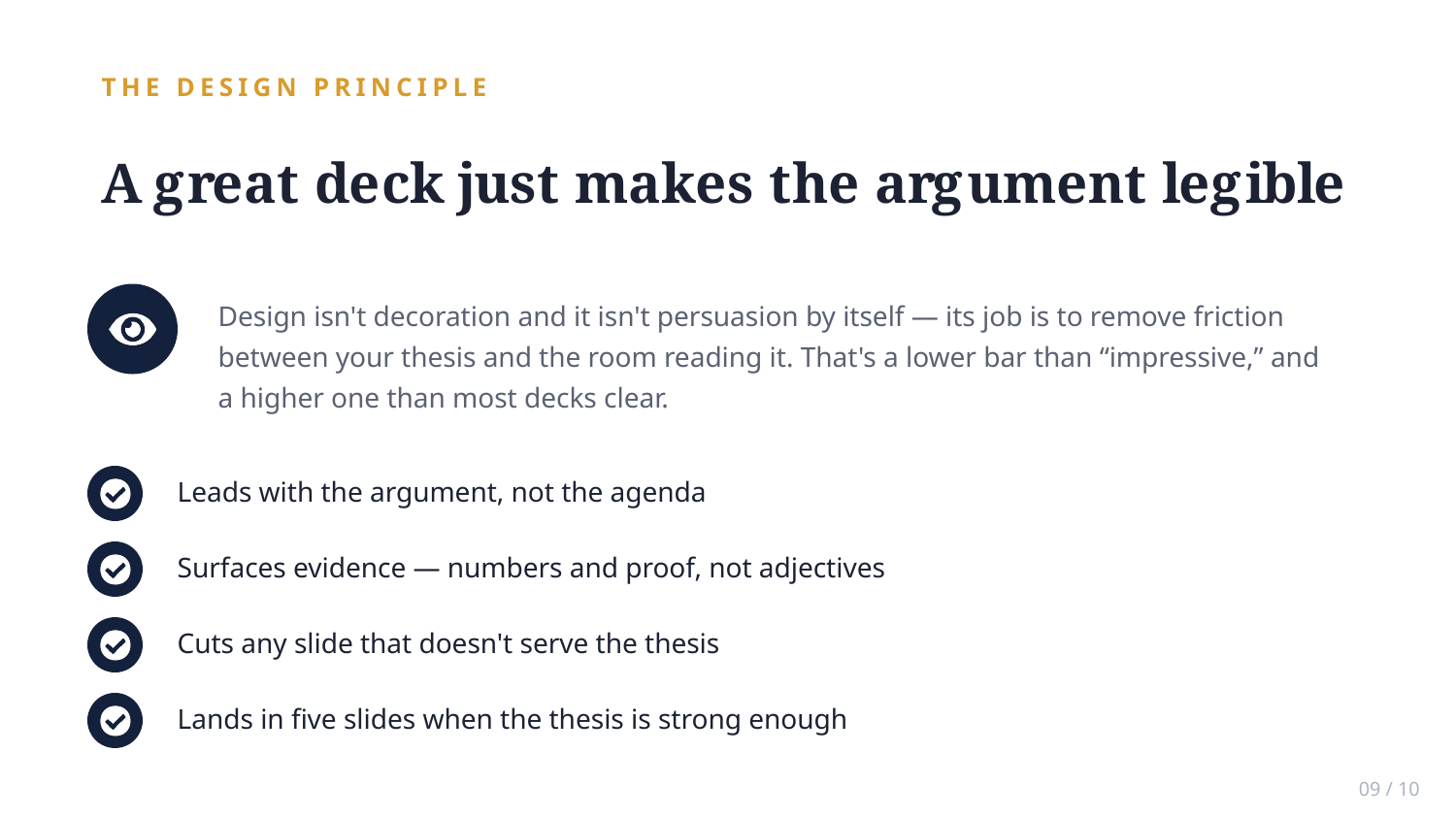
Once you accept that the argument comes first, the deck’s job gets clarifying: it makes the argument legible. It sequences your claims so each one earns the next. It puts the single most important number where the eye lands first. It replaces a paragraph of hedging with one chart that a stranger can read in four seconds. A great deck is an act of respect for the reader’s attention — it removes friction between your insight and their understanding.
That is design in service of an argument, not design as a substitute for one. And here is the tell: when the thesis is strong, the deck gets shorter, not longer. You stop needing the padding, because every slide is load-bearing. A confident argument doesn’t beg. It states, shows, and lands.
I have watched a strong thesis close a room in five slides — problem, wedge, proof, why-now, ask — because there was nothing left to add and nothing worth cutting. And I have watched a weak one sprawl across twenty and still leave the room unconvinced, because no number of slides can answer a question the founder never confronted.
Do the hard part first
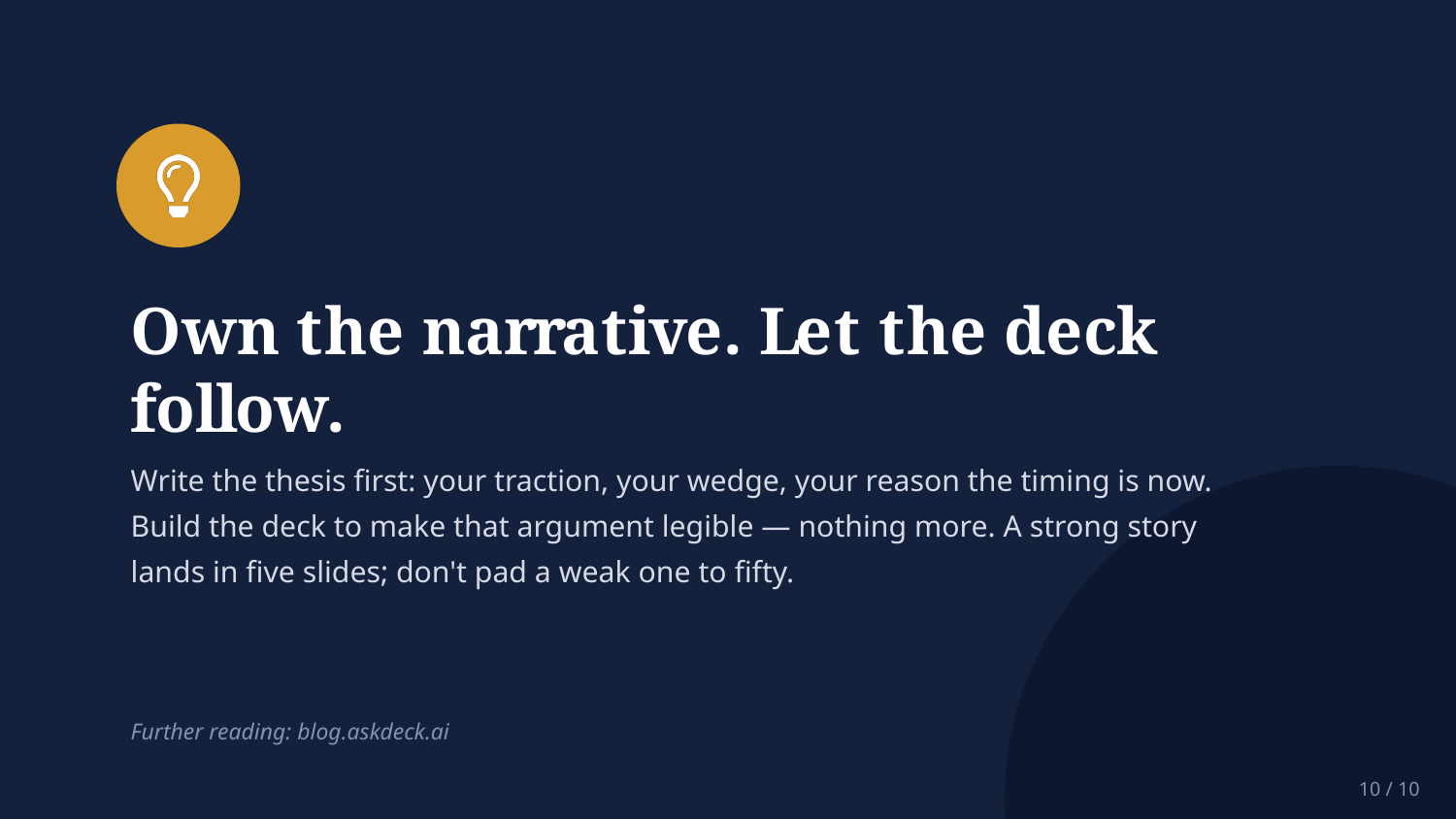
So before you touch a layout, do the uncomfortable work. Write your thesis as one sentence and stare at it until it either holds up or falls apart. Interrogate your own wedge like a skeptic would. Find the version of your traction you would be willing to defend under cross-examination. When that sentence is true and sharp, the deck almost builds itself, because you finally know what every slide is for.
The founders who win the room are not the ones with the prettiest boxes. They are the ones who showed up with an argument so clear that the slides just got out of the way. Own that argument. The template will never own it for you — and if you let it try, it will hand your story back to you with all the conviction sanded off.